
Specimen palms
Imported palm trees in India
Imported palm trees India programmes need species selection, crane access, pit engineering, irrigation establishment, and AMC planned before procurement. Four Leaf scopes specimen palms for hotels, malls, corporate campuses, and developers from site assessment, not catalogue photos alone. Use this guide to compare palms by climate, crown spread, litter, bracing, and handover risk before requesting a site assessment.
Gallery
Category visual guide
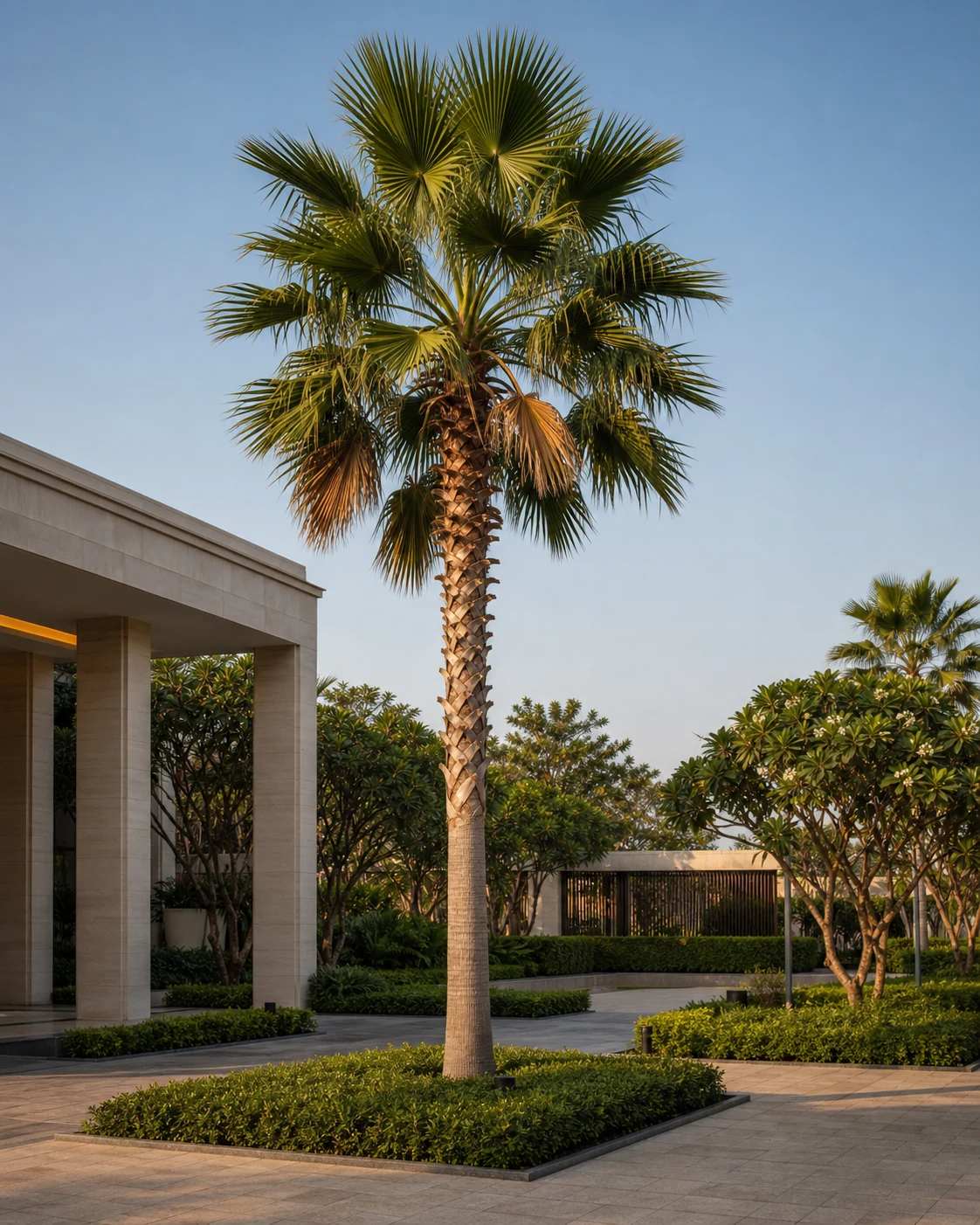
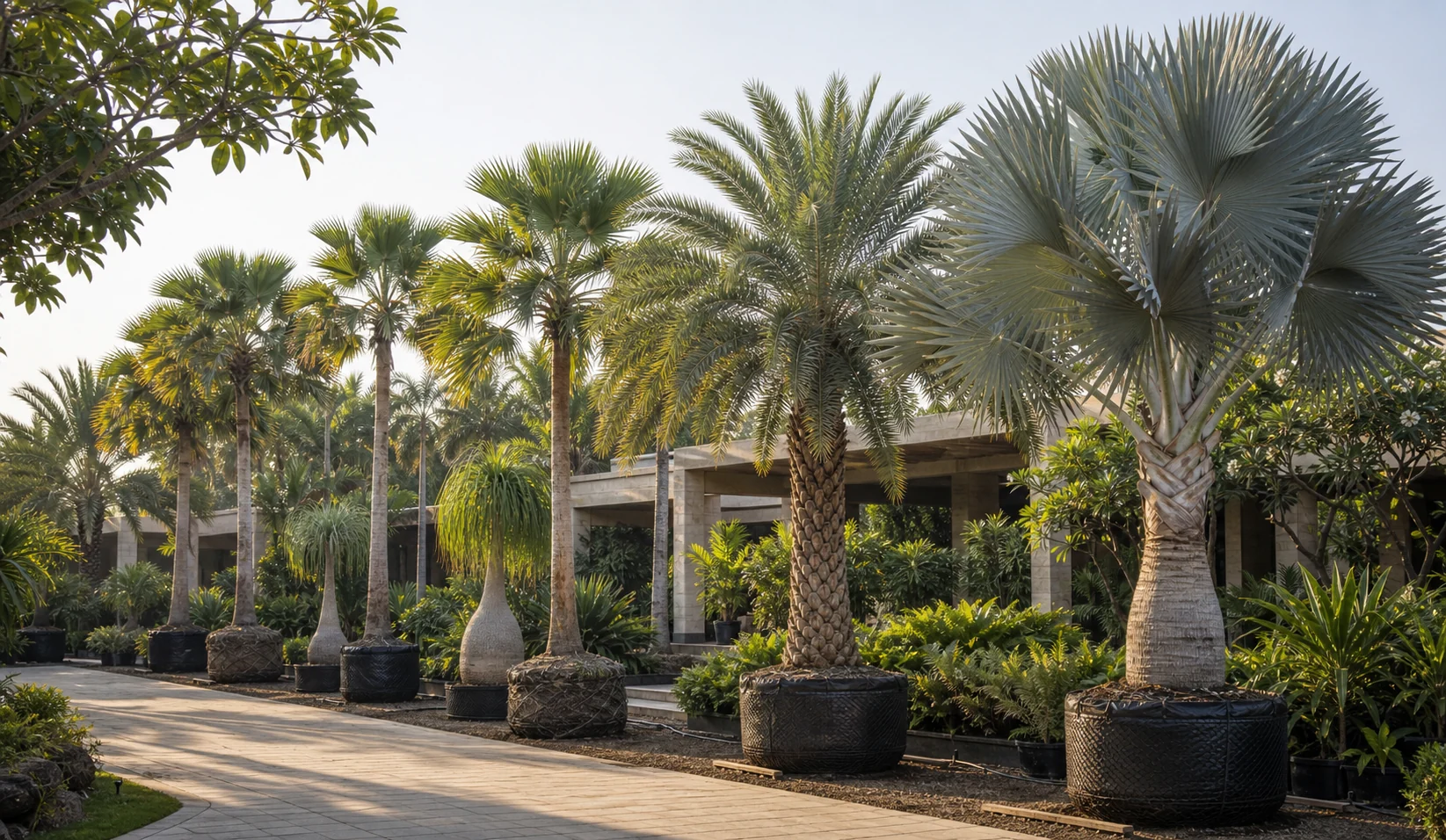
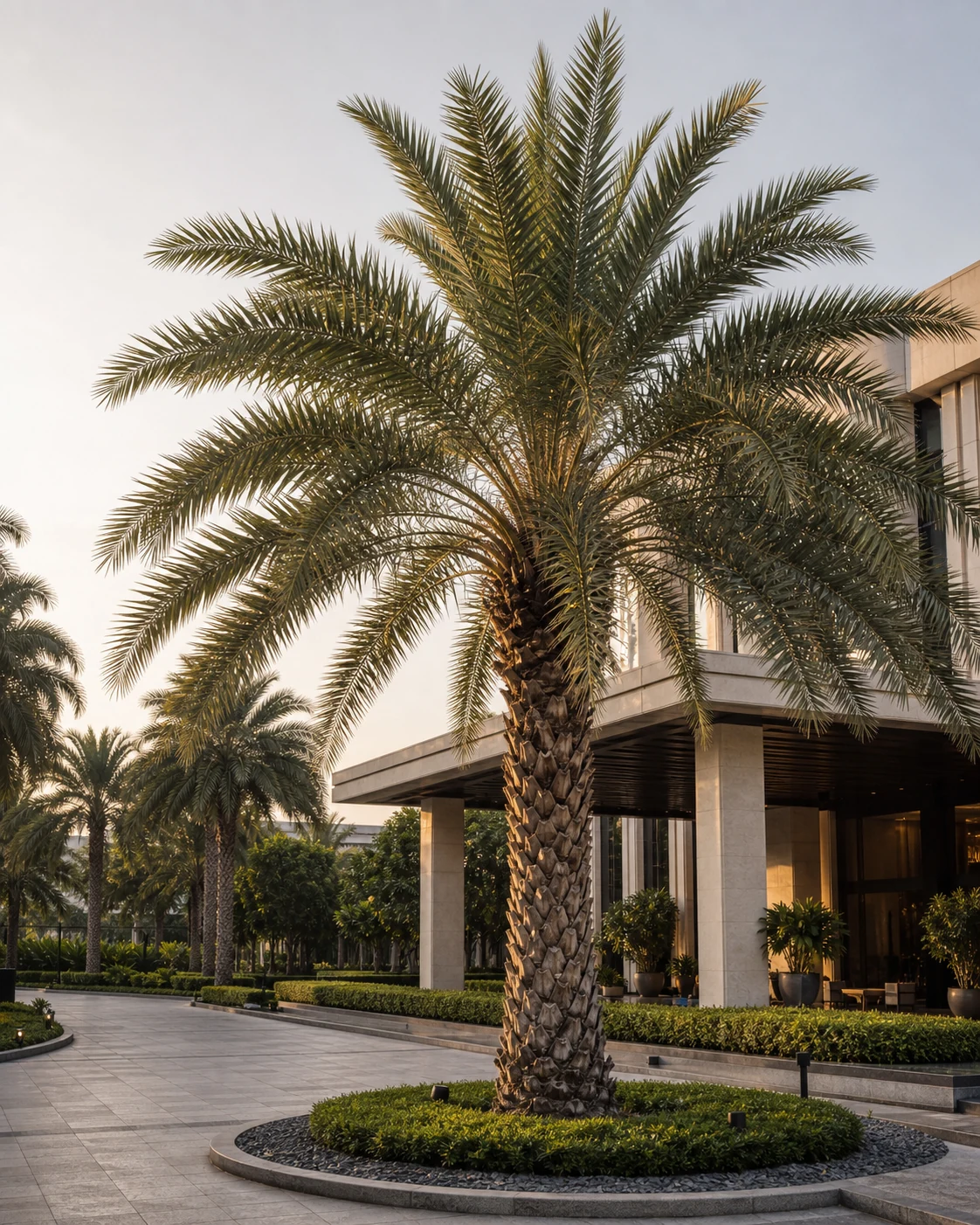
Visual context for placement, scale, handling, and landscape integration.
Section
Where commercial projects use imported palm trees
Specimen palms create strong vertical structure at hotel porte-cocheres, resort pool decks, mall arrivals, clubhouse forecourts, and corporate campus entries. The buyer decision is not only visual height; it is clear-trunk height, crown spread, litter class, wind exposure, rootball handling, and establishment scope. Hotel landscaping, mall landscaping, and corporate campus landscaping pages show the commercial contexts where palms need engineered delivery rather than ornamental selection alone.
Section
Climate, exposure, and city fit
Palm selection changes by city. Coastal Mumbai, Goa, Chennai, and Kochi require salt, humidity, and disease monitoring; Delhi NCR and Jaipur require heat, dust, and winter checks; Bengaluru and Hyderabad need drainage, red soil, and campus access review. Phoenix-class palms can face red palm weevil risk in humid regions, while Bismarckia and fan palms need crown-spread review near traffic and valet lanes. Survival depends on microclimate, drainage, bracing, establishment, and AMC; see imported specimen trees in urban climates before copying a city palette.
Section
Species categories and use zones
Bismarckia and other blue fan palms read as sculptural arrival specimens where crown width has space. Phoenix canariensis and date-palm classes give formal boulevard rhythm but need pest monitoring, clear-trunk measurements, and litter planning. Roystonea and royal-palm classes suit tall, clean-lined avenues where wind and rootball logistics are solved. Lower pool-deck palms need low litter and defined cleanup cadence. Indoor palm substitutes belong in the indoor and atrium trees category, not as replacements for failed exterior exposure.
Section
Crane access, rootball handling, and bracing
Large palms need route surveys before BOQ freeze: truck turning radius, basement loading, finished paving protection, crane outriggers, night work permissions, and guest or tenant perimeters. Specify clear-trunk height and overall height separately so rigging and canopy clearance are not guessed from nursery photos. Rootballs must remain stable through hoist, trolley path, and pit placement. Tall slender trunks need staged bracing until root anchor observations justify removal; removal milestones belong in the installation note, not in informal site memory.
Section
Pit engineering, irrigation, and establishment
Imported palm trees become high-risk when pits pond, emitters are mis-zoned, or establishment watering is left to routine maintenance. BOQs should show pit size, drain layer, soil media, rootball setting level, guying or bracing method, irrigation controller profile, and valve chart handover. Podium and basement-adjacent sites need waterproofing witness before soil fill. Pit build, soil engineering, and bracing detail sit on the installation and soil engineering page; establishment hold discipline sits on acclimatisation.
Section
AMC scope for specimen palms
Palm AMC should separate establishment care from routine landscape maintenance. Establishment scope covers moisture checks, frond sanitation, pest escalation, brace inspections, litter cadence, and controller season profiles. Phoenix-class palms need red palm weevil monitoring where risk is relevant. Pool and valet edges need written litter and frond cleanup scope. See maintenance and AMC scope for imported trees and landscape maintenance service for handover discipline.
Section
Mobilisation and project context
Four Leaf executes pan-India commercial landscape programmes with mobilisation planned from site assessment. Published project references on this site document landscape scope across corporate, hospitality, retail, and institutional programmes; they do not confirm current imported palm stock without enquiry. See the projects hub for named references. For a new palm package, share city, site access, desired clear-trunk height, paving interfaces, handover date, and AMC expectations so species, logistics, and establishment risk can be scoped before procurement.
Section
Procurement, BOQ, and pricing discipline
We do not publish Four Leaf per-tree rate cards. Imported palm tree cost is driven by species, maturity class, clear-trunk height, rootball size, import documentation where applicable, crane complexity, pit engineering, bracing duration, and AMC scope. Compare BOQs on measured dimensions, pest-monitoring lines, irrigation establishment, and access assumptions, not headline tree price alone. See pricing drivers and the compliance workflow page for planning context.
Entries
In this category
Explore
Related categories
Related
Related links
Services, segments, cost, and proof.
- Imported exotic trees hub
- Softscape and horticulture
- Irrigation and water management
- Landscape maintenance (AMC)
- Hotel landscaping
- Mall landscaping
- Corporate campus landscaping
- Commercial landscaping cost guide
- Acclimatisation for imported trees
- Installation and soil engineering
- Imported tree maintenance and AMC
- Pricing drivers
- Import compliance workflow
- Imported specimens in Indian cities
- Projects
- Request a site assessment
- Which imported palm trees work for hotels in India?
- Shortlist by city microclimate, clear-trunk height, crown spread, litter class, wind exposure, and AMC scope. Bismarckia, Phoenix, and royal-palm classes can work in the right setting, but each needs separate drainage, pest, and bracing review.
- How do coastal cities change palm selection?
- Coastal humidity and salt exposure increase disease and pest monitoring needs, especially on Phoenix-class palms. BOQs should include drainage, frond sanitation, red palm weevil monitoring where relevant, and irrigation profiles that avoid crown wetting.
- Should BOQs specify clear-trunk height or overall height?
- Specify both. Clear trunk controls vehicle, guest, and sightline clearance; overall height controls crane rigging, wind exposure, and building lines. Nursery photos without measured dimensions are not enough for procurement.
- When is bracing required for tall specimen palms?
- Fresh transplants with tall slender trunks and heavy crowns need staged bracing until root anchor observations support removal. The installation note should state inspection and removal milestones instead of leaving supports indefinitely.
- Which palms suit pool decks and guest edges?
- Use lower-litter palms near pools and guest circulation, and keep high-frond-drop species away from seating or valet lanes unless cleanup cadence is written into AMC. Species choice should follow use zone, not only visual scale.
- What should imported palm quotations include?
- Compare species, clear-trunk height, overall height, rootball handling, pit and drain build, bracing duration, irrigation establishment, pest monitoring, crane access, and AMC visits. Headline tree price alone hides too much risk.
- Does Four Leaf keep imported palms in stock?
- Stock and sourcing status must be confirmed by enquiry. Four Leaf scopes commercial palm packages from site assessment so city, access, species, logistics, establishment, and AMC are aligned before procurement.