
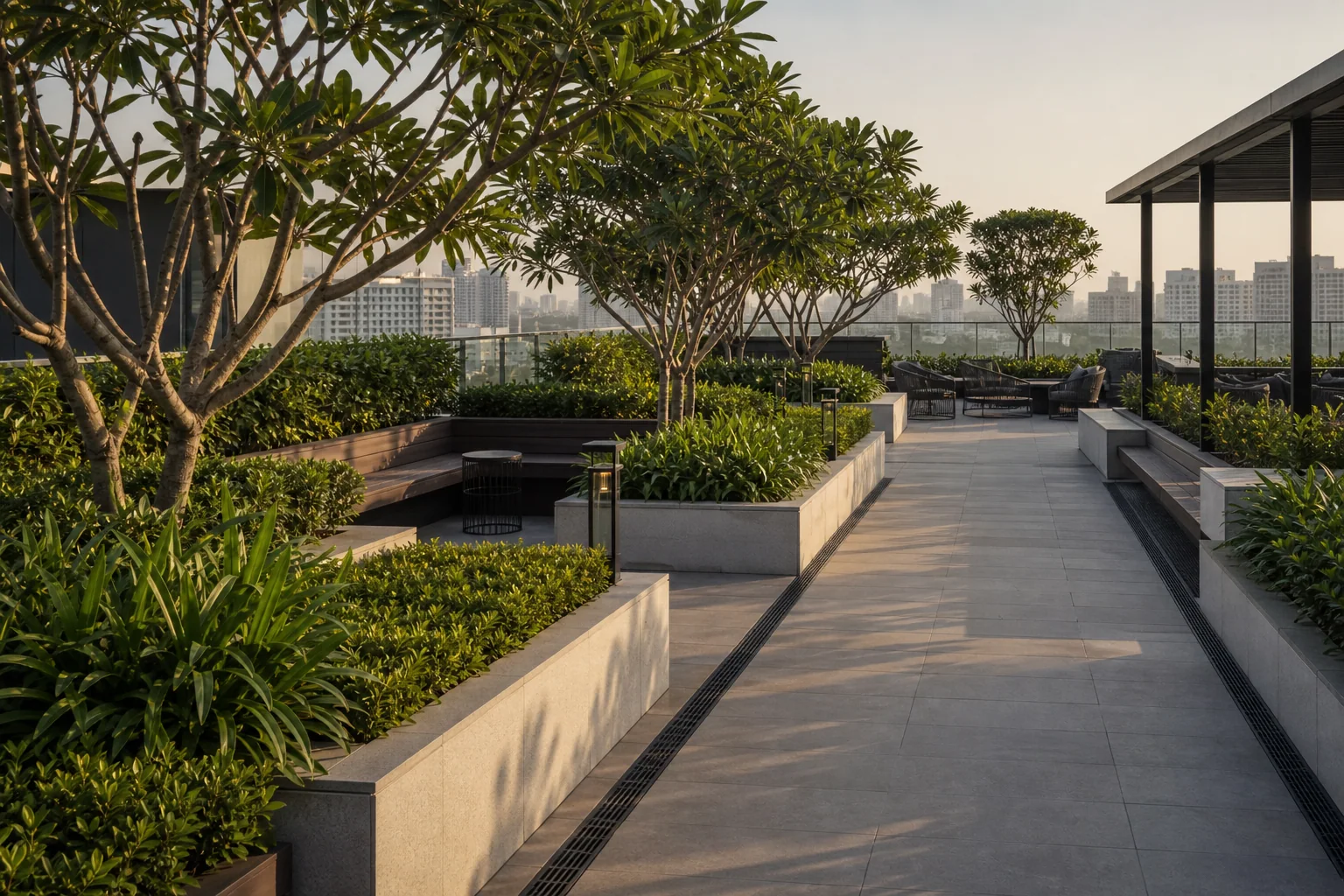
Gallery
Visual scope gallery
Visual references for this service line.
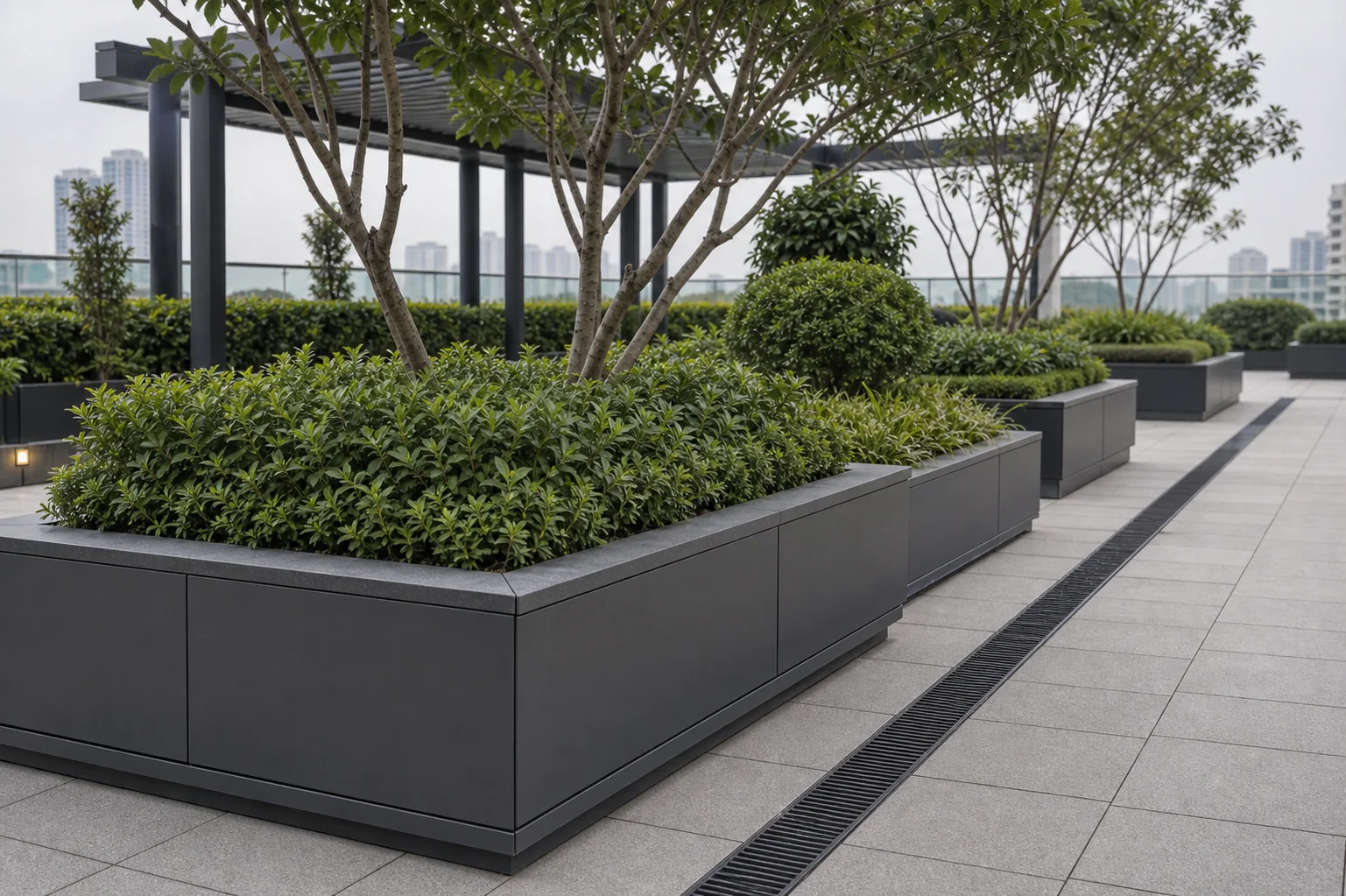

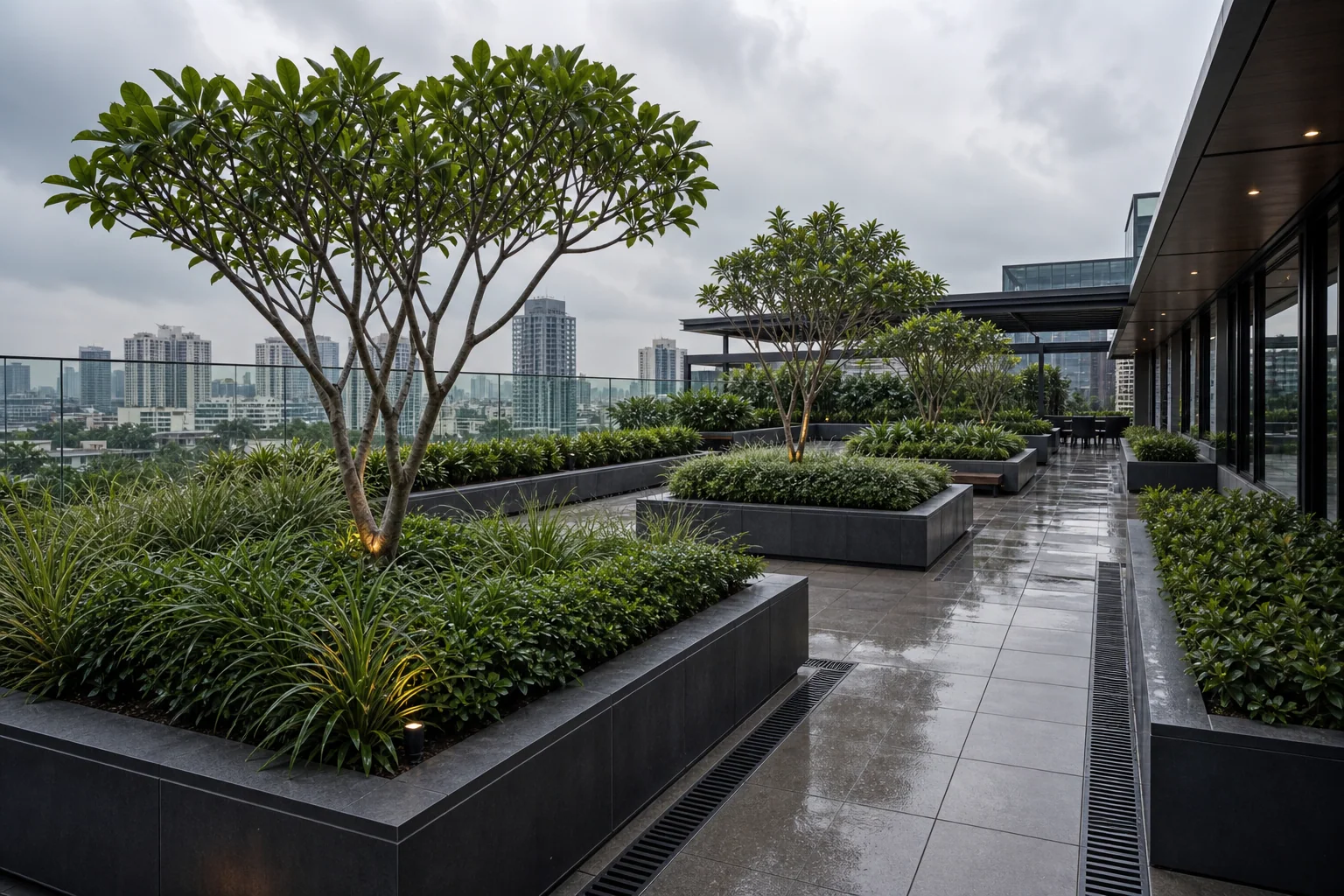

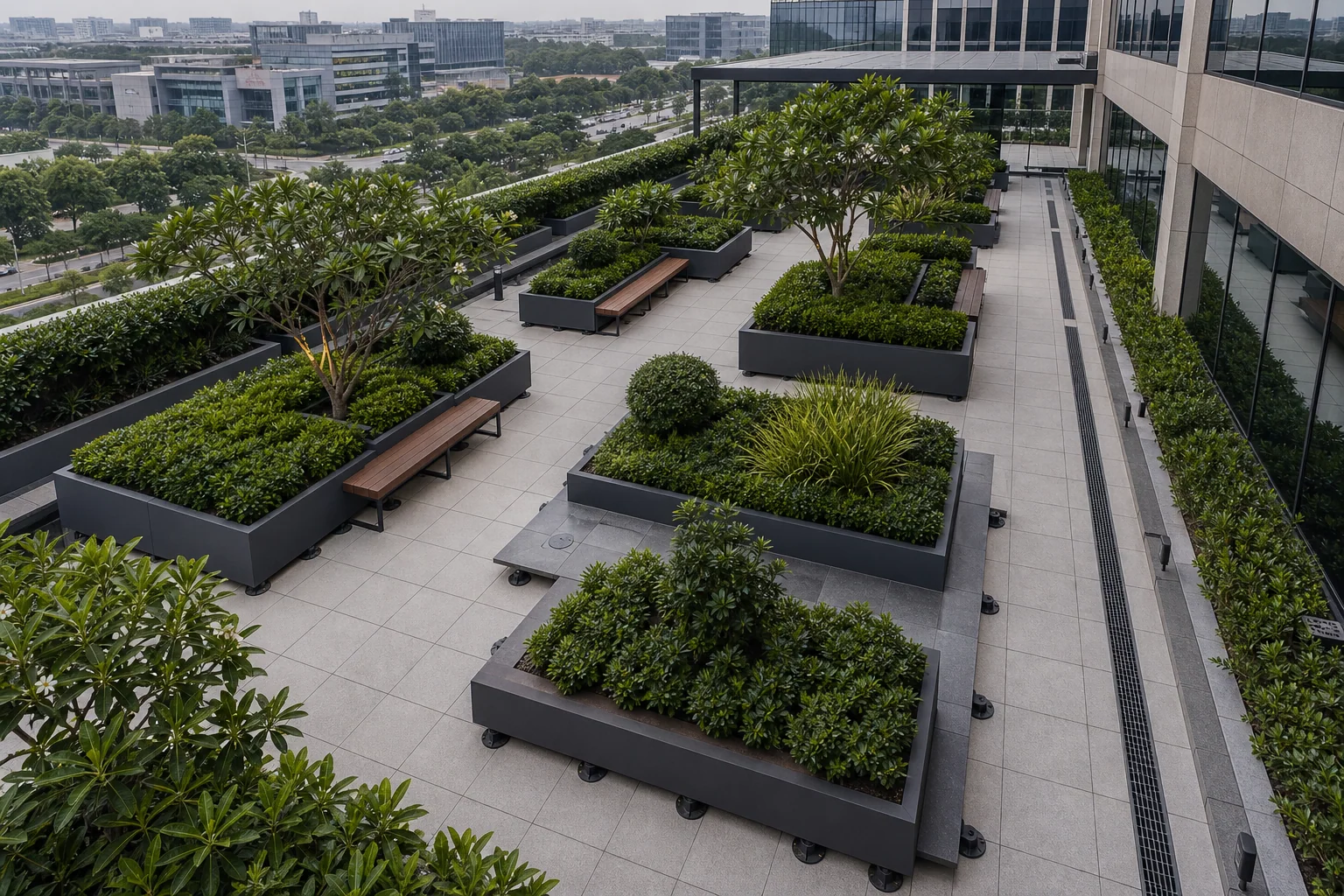
- BOQ-linked scope documentation
- Material specs and submittals
- Phased execution milestones
- Handover and O&M notes
What procurement teams expect from terrace garden landscaping
Terrace garden searches often hide a serious engineering question: whether the slab, waterproofing, drainage, and maintenance access can support the garden safely after opening. On institutional sites, a terrace or podium garden is structural and waterproofing work first, planting second. Procurement teams should expect dead-load schedules tied to saturated growing media, pavers, planters, and crane placement loads. Continuous drainage membranes need inspectable outfalls. Growing media should be engineered and lightweight, not garden-center soil. Irrigation must not compromise the slab below. Wind on high floors desiccates foliage and stresses weak wood, so species selection and balustrade interaction matter. Access for membrane inspection, emitter maintenance, and plant replacement should be designed during DD, not improvised after handover. Green wall or vertical garden modules, where specified, need structural anchorage, header irrigation, and maintenance access coordinated with facade and MEP consultants.
Scope of work and deliverables
A typical podium landscape package follows a clear sequence. First, waterproofing protection during works, drainage layer installation, inspection channels, and planter or modular system build to approved details. Second, growing media supply to specification, planting, turf or durable ground treatments where loads allow, and coordination with hardscape for paving and deck interfaces. Third, drip-led irrigation with remote controllers, outdoor lighting coordination for night use, and vertical garden module installation where the scope includes living walls. Fourth, handover documentation: weight schedules, membrane protection letters, valve charts, and O&M notes for FM teams. Shop drawings are coordinated with structural, waterproofing, and MEP consultants before GFC lock.
Specifications: drainage, growing media, waterproofing, and planters
Specifications should call out compressive strength of drainage elements, filter fabric, growing media pH and organic content, and slip ratings for paved amenity zones. Steel planters need isolation from structure, drainage weeps, and corrosion protection matched to the exposure zone. Timber decks require ventilation and fixing methods that preserve membrane warranties. Tree pits on podiums need planter depth and volume matched to species and engineer dead-load budgets. Specimen trees often need substantial growing volume in engineered planters. Green wall modules specify plant palette, nutrient delivery, and manufacturer compatibility. STP-treated irrigation is feasible when water quality is tested and filtration sits in the O&M scope.
Process, testing, and quality control
Hold points include membrane sign-off or flood test before cover, drainage outfall flow checks at design storm intensity where consultants specify, irrigation pressure tests before paving closes, and first-monsoon observation of plant performance. Mock-ups for green walls prove module density and drip uniformity before full facade installation. Snagging before occupancy addresses ponding, deck movement at expansion joints, emitter misses, and blocked drains. Crane picks for large specimens require lift studies, route permits, and coordination with tower topping schedules. Stage records cover membrane protection, drainage layers, and planter build for FM records.
Risks and failure modes on rooftops and podiums
Top risks are leaks reaching occupied floors below, overloaded slabs from underestimated wet weights, failed drains causing root anaerobia, and plant loss from heat island effect and wind desiccation. Poor coordination with facade cleaning anchors, lightning protection, or solar shade structures creates avoidable rework and coordination risk. MEP access hatches buried under planters frustrate FM teams; those interfaces must be detailed on drawings. Fire regulations on combustible decks and planting depth near parapets vary by authority; early fire consultant input avoids redesign. Pool-on-podium projects stack waterproofing, circulation, and planter zones, so leak investigation paths must be designed in, not assumed.
BOQ and procurement checklist
A procurement-ready BOQ should separate waterproofing protection, drainage layers, growing media volume by planter, planting by module or area, irrigation by hydrozone, green wall panels if applicable, structural steel for planters or pergolas, decking or paver support systems, crane or helicopter lift provisional sums for large specimens, and commissioning hours. Call out establishment visits post-handover in landscape or FM budget. Tie each zone to a drawing index and dead-load reference from the structural engineer. Use the cost guide and terrace garden cost calculator to frame ranges before BOQ lock. Contact us during RFP preparation when structural allowances and drainage layouts are ready for review.
Phasing with tower construction and opening dates
Podium landscapes often complete near tower topping. Crane removal may force delayed large specimens or night lifts in dense metros. Phased handover may open pool decks or sales galleries before full planting; we sequence work to protect finished surfaces from follow-on trades. Developer marketing on podiums sometimes needs earlier visual maturity. That affects container sizes, budget, and survival risk if planted off-season without establishment allowances. Monsoon windows affect transplant timing. Chennai cyclone season and Jaipur dust exposure each inform species and media choices on exposed decks. We workshop phasing in DD before GFC locking.
Handover, documentation, and AMC implications
FM and AMC teams inherit weight schedules, membrane protection method statements, valve charts, and seasonal irrigation programmes at handover. We include as-built planter locations where surveyed, growing media specifications, and O&M notes for green wall module flushing and nutrient dosing. Post-handover, AMC programmes can include establishment visits, emitter cleaning, and plant replacement within scoped allowances; see the landscape maintenance AMC service page for annual contract structure. Landscape workmanship defects follow the main contract terms. Waterproofing warranties stay with the specialist applicator, not Four Leaf. Early AMC overlap during the first monsoon helps crews learn podium hydrozones before turnover to client FM.
Where terrace podium gardens matter across markets
Terrace and podium priorities shift by segment across India. For developers, sales galleries and clubhouse decks need planting that matures on constrained slabs. Hotels need rooftop bars, pool edges, and arrival podiums that survive guest traffic and monsoon. Corporate campuses balance co-working roof terraces with load-mapped furniture zones and light planting. Schools and hospitals carry refuge-area egress rules and heat-island comfort targets on exposed decks. Segment service pages describe procurement language for each buyer type. City pages for Delhi NCR, Gurugram, Mumbai, Bengaluru, and Jaipur note wind exposure, water stress, and logistics differences for local teams. Related scope includes softscape planting palettes, hardscape paved interfaces, irrigation automation, and outdoor lighting. Request a site assessment via contact when BOQ and structural allowances are ready for review.
Relevant projects
A selection of executed landscapes across hotels, campuses, and institutions. Browse the full portfolio on our projects page.
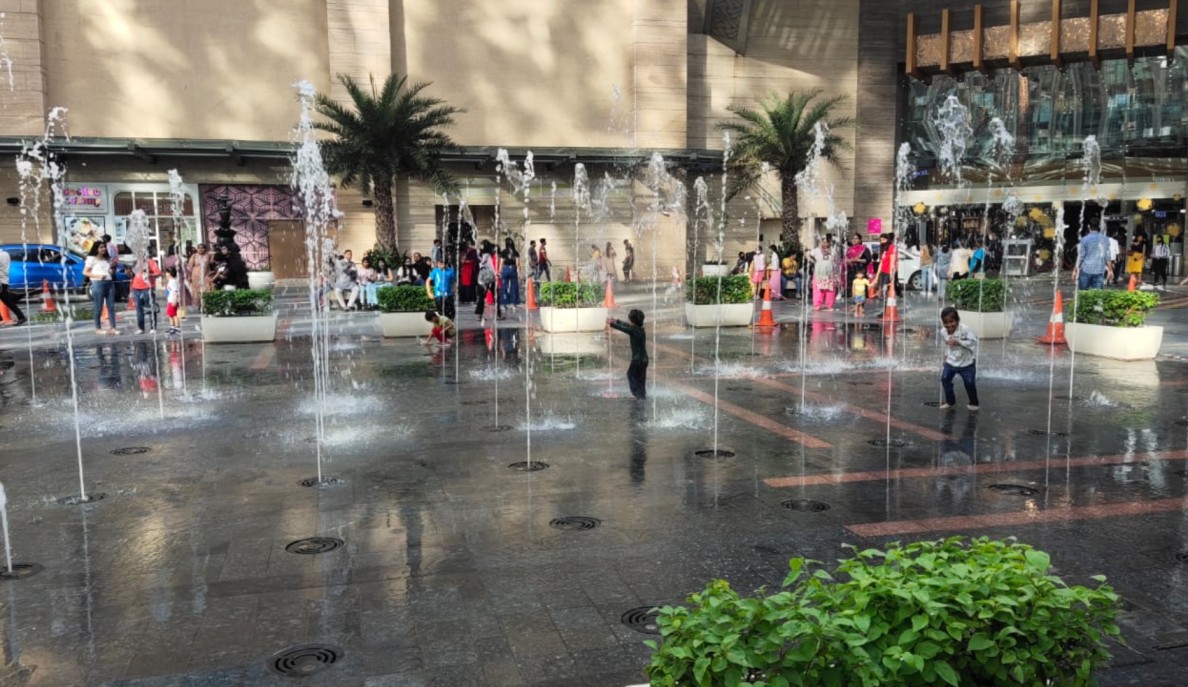
CK Birla Hospital, Gurugram
Gurugram, Haryana
Hospital campus outdoor works — arrival, buffers, patient-visible greens
View project →
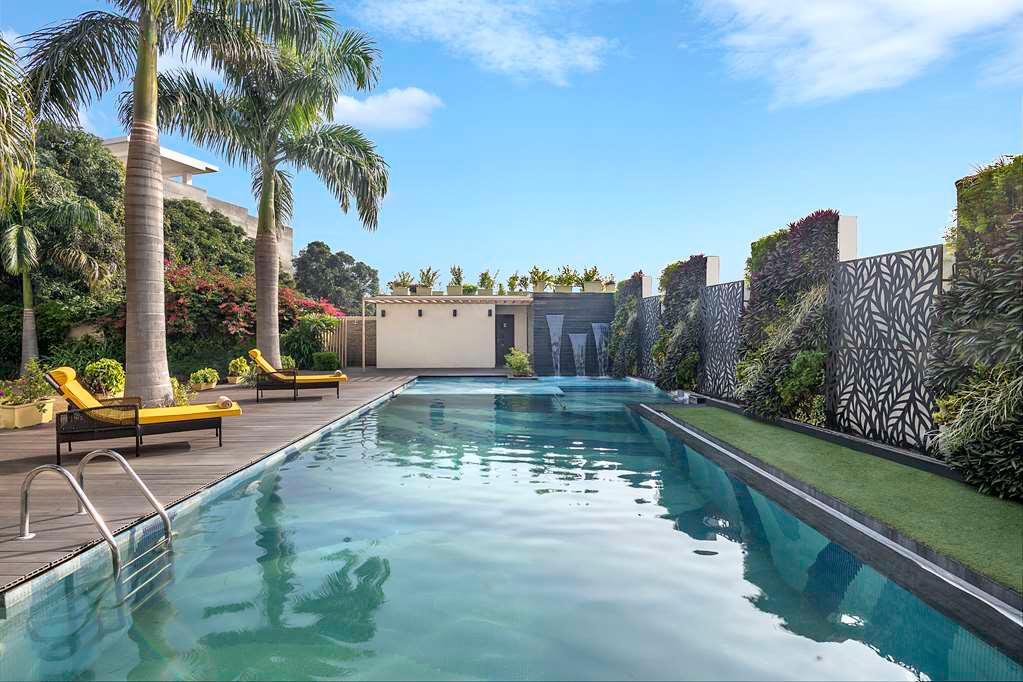
Hero Motocorp, Gurugram
Gurugram, Haryana
Large-format corporate campus outdoor works
View project →
Hilton Garden Inn, Gurugram
Gurugram (Sector 50), Haryana
Hotel arrival and outdoor guest-visible landscape
View project →
Related markets, services, and resources
Procurement teams often cross-reference segment scope with craft pillars. Use these hubs to navigate commercial landscaping execution across India.
Markets
Related services
FAQs
- How does this service fit into broader landscaping services?
- This service is usually specified as one part of a complete landscape package. It links with landscape design services, hardscape, softscape, irrigation, and landscape maintenance AMC depending on the site scope and handover model.
- Can you work on existing slabs with unknown load capacity?
- Only after a structural engineer signs off on dead loads for saturated media, pavers, planters, and live loads during crane placement. We do not guess slab capacity.
- Who warranties waterproofing on podium landscapes?
- Waterproofing remains the specialist applicator's warranty. We protect the membrane during landscape works per agreed method statements and document protection layers at handover.
- How deep must soil be for trees on podiums?
- Species-dependent. Specimen trees often need one to two metres equivalent growing volume. Structural engineers size planters to wet-weight budgets; undersized pits are a primary cause of tree failure on podiums.
- Can STP-treated water feed podium irrigation?
- Yes when water quality is tested and emitters match chemistry. Filtration maintenance and periodic quality checks belong in the AMC or O&M scope when supply varies.
- Do you install vertical gardens or green walls?
- Yes where scope includes living-wall modules integrated with structure, header irrigation, and maintenance access. Module type, plant palette, and nutrient delivery are specified per manufacturer compatibility and coordinated with facade consultants.
- Is artificial turf used on terraces?
- Where clients request it for sports or low-maintenance zones. We disclose heat retention, drainage, and maintenance implications in the specification so FM expectations are clear.
- What wind mitigation is typical on high-floor decks?
- Wind-firm species, staged planting heights, mesh coordination with balustrades, and furniture tie-down points integrated with paving details. Species with thin leaves often fail on upper floors without sub-irrigation.
- What lead time should programmes allow for green walls?
- Modules and plant material often need twelve to sixteen weeks from order confirmation. Programme green wall procurement early alongside facade release, not after civil handover.