
Gallery
Visual scope gallery
Visual references for this service line.
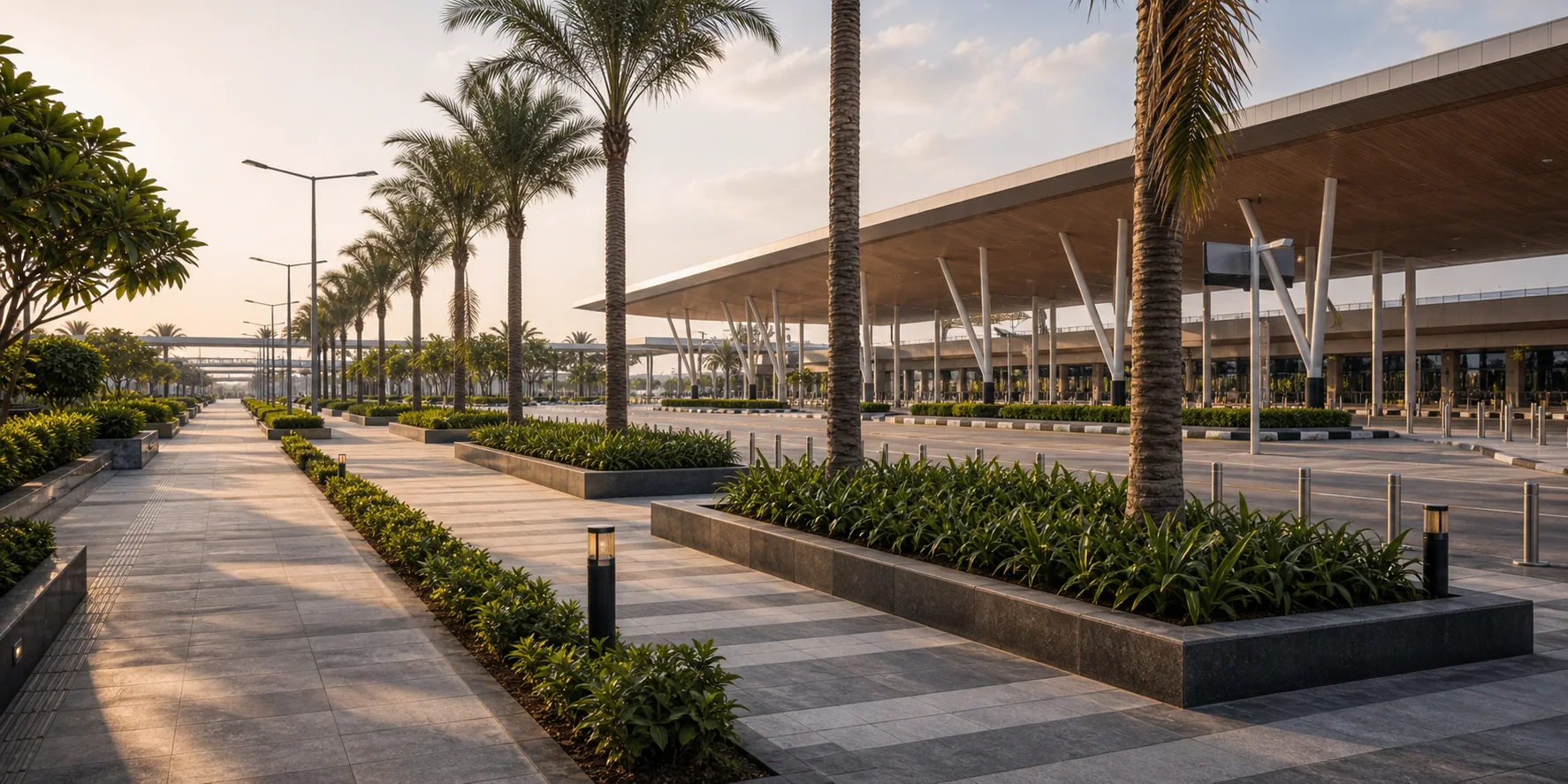
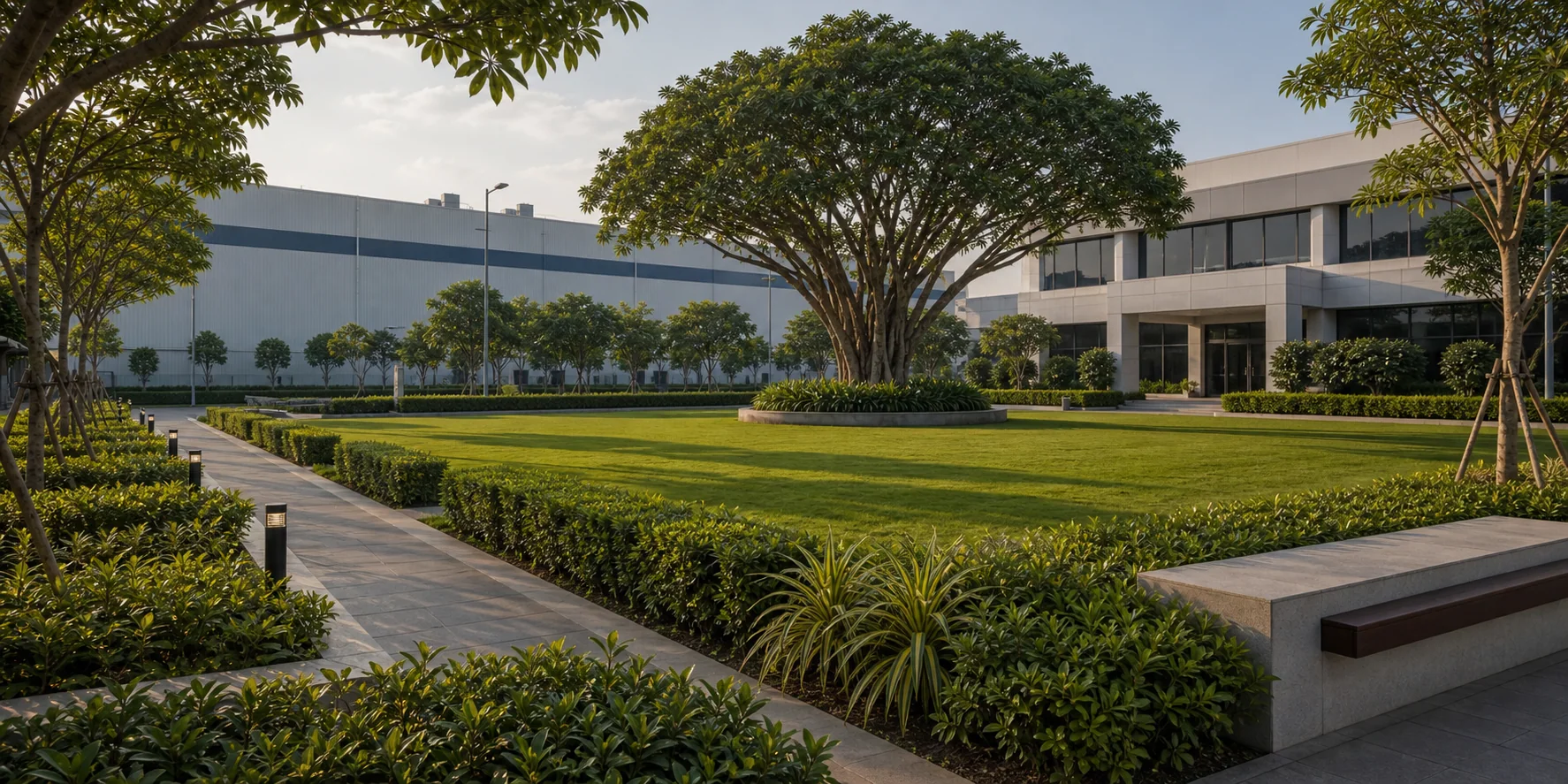
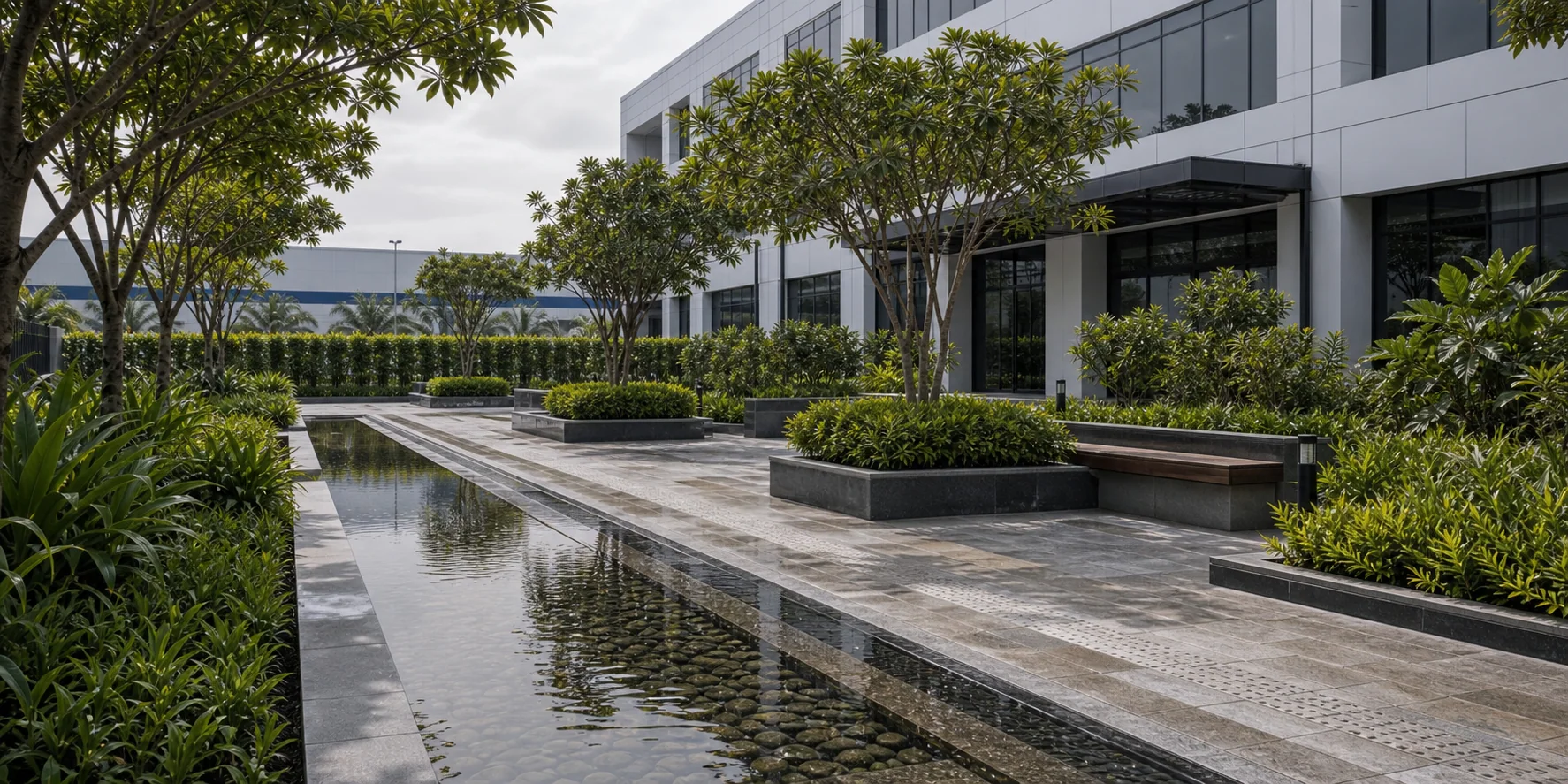
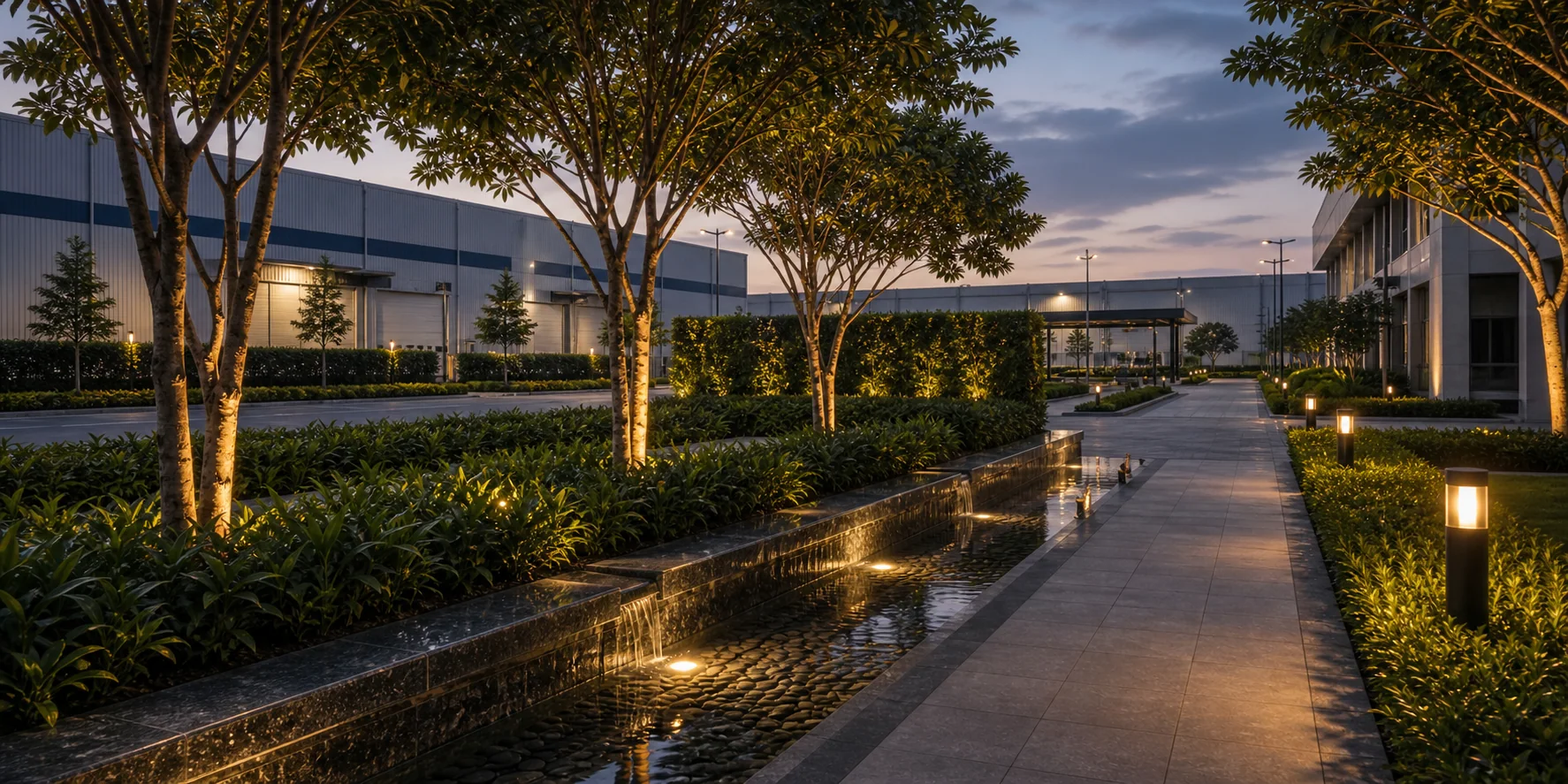
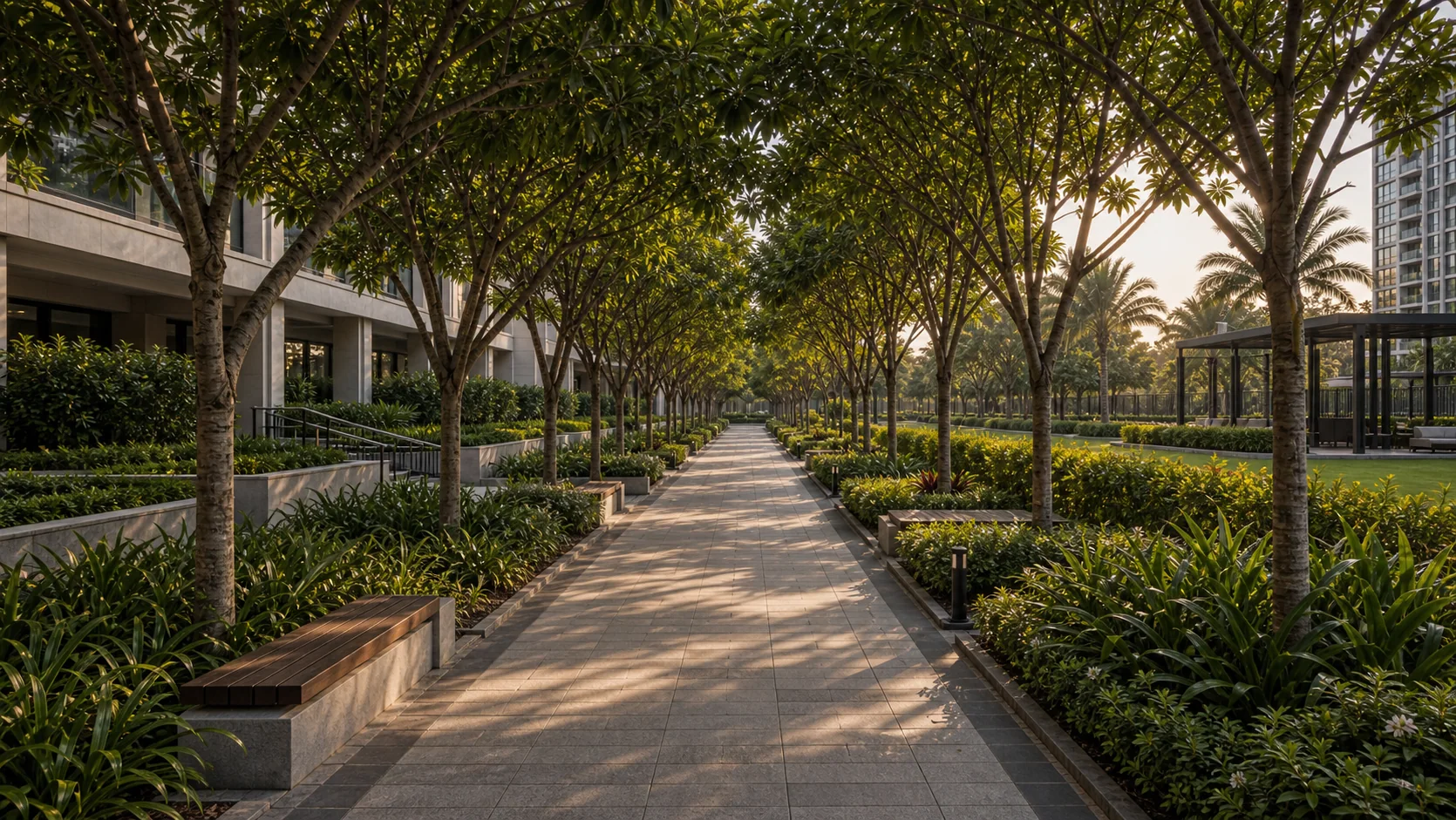
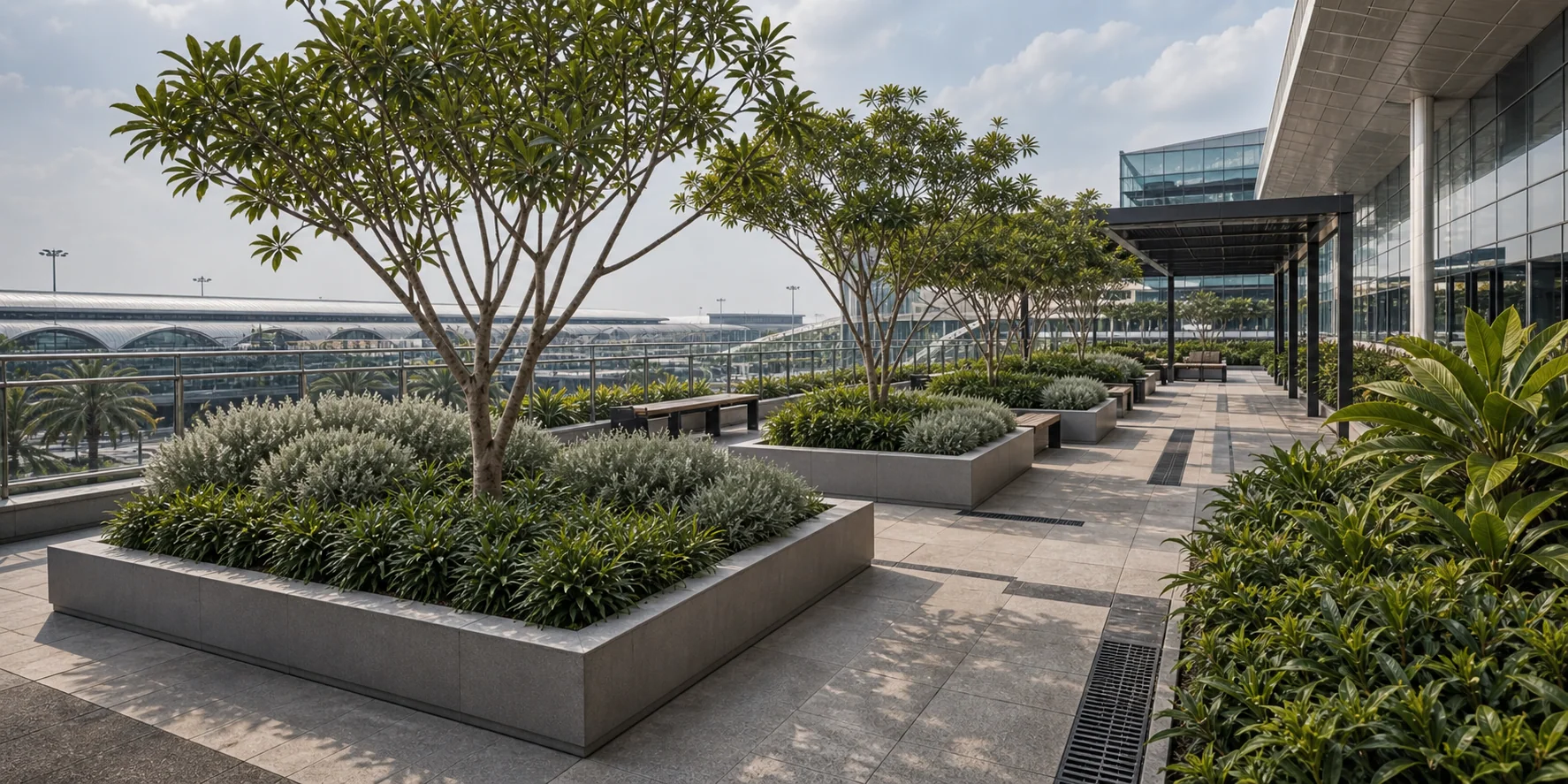
- BOQ-linked scope documentation
- Material specs and submittals
- Phased execution milestones
- Handover and O&M notes
What procurement teams expect from garden landscaping services
Strong softscape and garden landscaping on institutional sites means species matched to microclimate, maintenance budget, and guest or staff visibility, not a catalogue of exotic labels. Canopy trees frame arrivals and shade hardscape. Shrubs and groundcover stabilise slopes and reduce irrigation demand when hydrozones are designed correctly. Soil volume and drainage in planters and at-grade beds must support mature root zones; undersized pits remain a primary cause of tree failure on podiums. Procurement teams comparing landscaping services should expect species schedules with size call-outs, approved nurseries, substitution rules, and establishment care priced in the BOQ or AMC scope, not assumed after handover.
Scope of work and deliverables
A typical softscape package follows a clear sequence. First, excavation and soil preparation with amended growing media per specification, plus drainage layers in planters and tree pit execution. Second, staking and guying, mass shrub and groundcover planting, and instant or seeded turf where specified. Third, mulching, initial fertiliser application, and pest monitoring during establishment. Fourth, coordination with hardscape for pit locations and finished levels, with irrigation for emitter placement and hydrozoning, and with outdoor lighting for uplight setbacks from trunks. Plant material is inspected on arrival for health, root structure, and conformity to caliper or height schedules; rejected stock is replaced before bulk planting proceeds. Deliverables include planting records, nursery certificates where phytosanitary rules apply, and establishment protocols for FM or AMC teams.
Specifications, sourcing, and substitutions
Specifications should state minimum caliper, clear trunk height for avenue trees, container size for shrubs, and density for groundcover. Large specimens need crane access, temporary protection during setting, and pit details verified against mature root volumes. Substitutions require written approval and must preserve design intent; swapping a species with different water demand breaks hydrozoning. We source from approved nurseries with traceability for specimen material. Seasonal availability affects monsoon versus winter planting windows across northern, western, and coastal India. Interstate movement follows phytosanitary documentation where regulations apply. For imported specimen trees, see the imported exotic trees hub for lead times and acclimatization holds.
Process, establishment watering, and quality control
QA covers pit dimensions, drainage outfall checks, rootball handling, backfill appropriate to species, and irrigation wetting depth during establishment. Hold points include the first major tree set, the first completed hydrozone, and turf handover moisture criteria. We photograph critical stages for FM records. Snagging before provisional handover addresses voids, exposed roots, and irrigation coverage gaps. A written establishment protocol hands off watering frequency, mowing height for lawns, and pruning deferrals for young trees. Establishment watering duration depends on species, planting season, and irrigation design; many projects run twelve to twenty-four months, but the contract should state visit frequency and success criteria for your site.
Risks and failure modes in commercial planting
Common failures include root suffocation from compacted or shallow pits, wrong species for reflected heat on podiums, over-irrigation on poorly drained soil, and understaffed maintenance after handover. Pest outbreaks on monoculture hedges spread quickly; diversity and monitoring reduce shock. Transplant shock on large specimens needs structured aftercare; without clear scope, replacement discussions often stall at handover. We flag maintenance-intense palettes early so CAPEX does not imply unsustainable OPEX. Coordination with building facades and service routes helps avoid conflicts with climbers and root zones at interfaces. Developer sales-gallery landscapes sometimes need earlier visual maturity; that affects container sizes, budget, and survival risk if planted off-season without establishment allowances.
BOQ and procurement checklist
Line items should separate soil and amendment volumes, pit excavation, tree supply by size class, shrub and groundcover quantities, turf type and area, mulch volume, staking, crane or handling allowances, and establishment visits for a defined period. Include provisional sums only for genuine discovery items. Tie each zone to a planting plan index. Call out temporary irrigation if permanent systems are late. For hotels, distinguish guest-visible zones from service yards for phasing. BOQ line items should match drawing symbols and zone references so quantities are traceable at tender and handover. The cost guide and landscaping cost calculator help frame ranges before BOQ lock; contact us during RFP preparation for site-specific quantities and species shortlists.
Phasing with hardscape, irrigation, and opening dates
Planting usually follows hardscape completion and active irrigation pressure testing in a zone. Early planting may be limited to hardy species if opening dates slip. For soft openings, guest-visible areas benefit from completed establishment windows where possible; bare soil reads poorly in hospitality contexts. We sequence loading paths to avoid crushing fresh turf. Monsoon lifting windows reduce transplant shock for many deciduous and native species in north and central India; evergreen stock moves year-round with on-site irrigation support. Large caliper trees may need night movement in metros. Post-arrival holding yards on large sites reduce shock before final pitting.
Handover, documentation, and AMC implications
FM and AMC teams inherit species lists, valve charts, and establishment schedules at handover. We include planting schedules, as-built pit locations where surveyed, nursery certificates, and O&M notes for pruning deferrals and seasonal nutrition. Early AMC overlap during establishment helps crews learn hydrozones and species quirks before turnover. Replacement terms for plant establishment are defined in the contract; scope should cover irrigation suspension, trade damage, and aftercare responsibilities. The landscape maintenance AMC service page describes post-handover programmes; irrigation scope defines the schedules softscape crews receive at turnover.
Where softscape services matter across markets
Softscape priorities shift by segment. Hotels focus on arrival impact and pool edges. Corporate campuses balance large turf blocks with podium planting. Hospitals, schools, malls, and industrial sites each carry distinct visibility and maintenance drivers. Segment pages describe procurement language for each buyer type. Delhi NCR, Gurugram, Mumbai, Bengaluru, and Jaipur city pages note climate, nursery logistics, and seasonal windows. For hardscape interfaces, terrace and podium gardens, irrigation automation, outdoor lighting, and AMC after year one, see the related service pages linked below. Request a site assessment via contact when BOQ and planting plans are ready for review.
Relevant projects
Selected projects where planting, lawns, tree canopy, and establishment care support institutional landscaping services across India. Browse the full portfolio on our projects page.
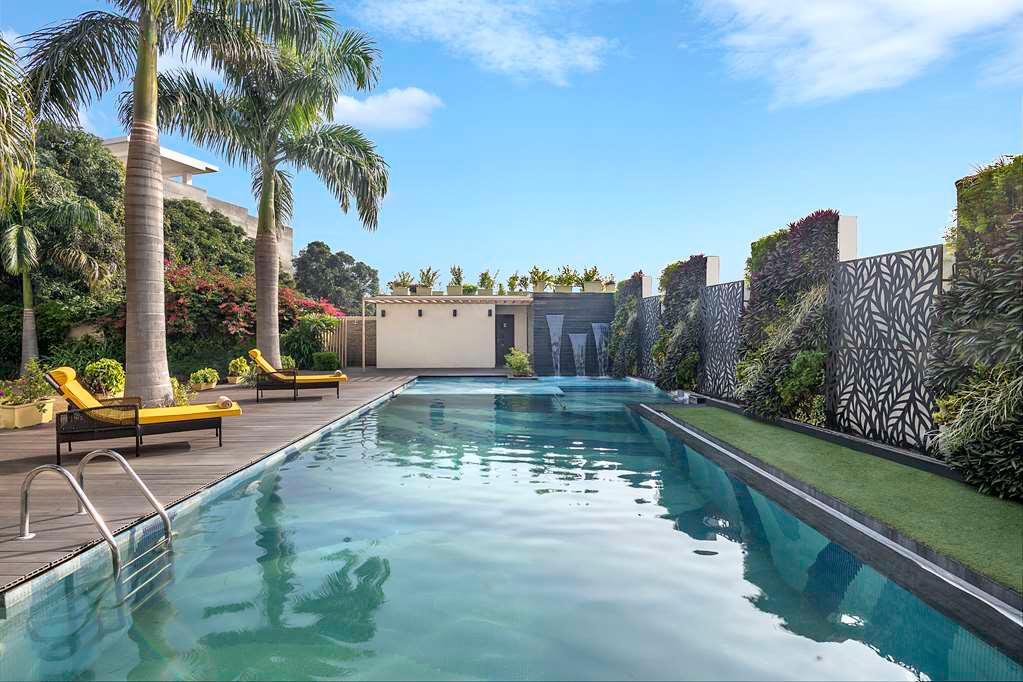
Hero Motocorp, Gurugram
Gurugram, Haryana
Large-format corporate campus outdoor works
View project →
IBM, Noida
Noida, Uttar Pradesh
IT campus outdoor landscape — arrival, courts, parking screens
View project →
Made Easy School, Gurugram
Gurugram, Haryana
Outdoor landscape works for institutional campus context
View project →
Related markets, services, and resources
Procurement teams often cross-reference segment scope with craft pillars. Use these hubs to navigate commercial landscaping execution across India.
Markets
Related services
Cost & tools
FAQs
- Do you supply plants only?
- We execute softscape and garden landscaping services as part of commercial landscape packages at institutional scale. Design-build execution with procurement documentation is our core model; plant-only supply is outside typical scope.
- Can you source large specimen trees?
- Yes, with crane logistics, approved nurseries, and pit details verified against mature root volumes. Lead times and costs scale with caliper and transport distance.
- How long is establishment watering required?
- Duration depends on species, season of planting, and irrigation design. Many projects run twelve to twenty-four months; the BOQ or AMC should state visit frequency and handover criteria for your site.
- Do you install vertical gardens or green walls?
- Vertical and green-wall systems are often scoped under terrace garden packages. We coordinate structure, irrigation, and plant palettes with the broader landscape programme.
- Do you work with landscape architects' planting plans?
- Yes. We value-engineer where invited, execute per approved drawings, and manage substitutions through formal approval.
- How do you handle monsoon planting?
- We favour monsoon windows for many species in north and central India. Scheduling avoids waterlogged pits and aligns delivery to workable weather.
- Is organic fertiliser specified?
- Per project specifications. We can propose programmes that meet client sustainability or green-building reporting requirements when those are contract deliverables.
- What warranty applies to plants?
- Replacement terms for plant establishment are contract-specific. Scope should define what counts as establishment failure and what exclusions apply, such as irrigation suspension or damage by other trades.