
Gallery
Visual scope gallery
Visual references for this service line.
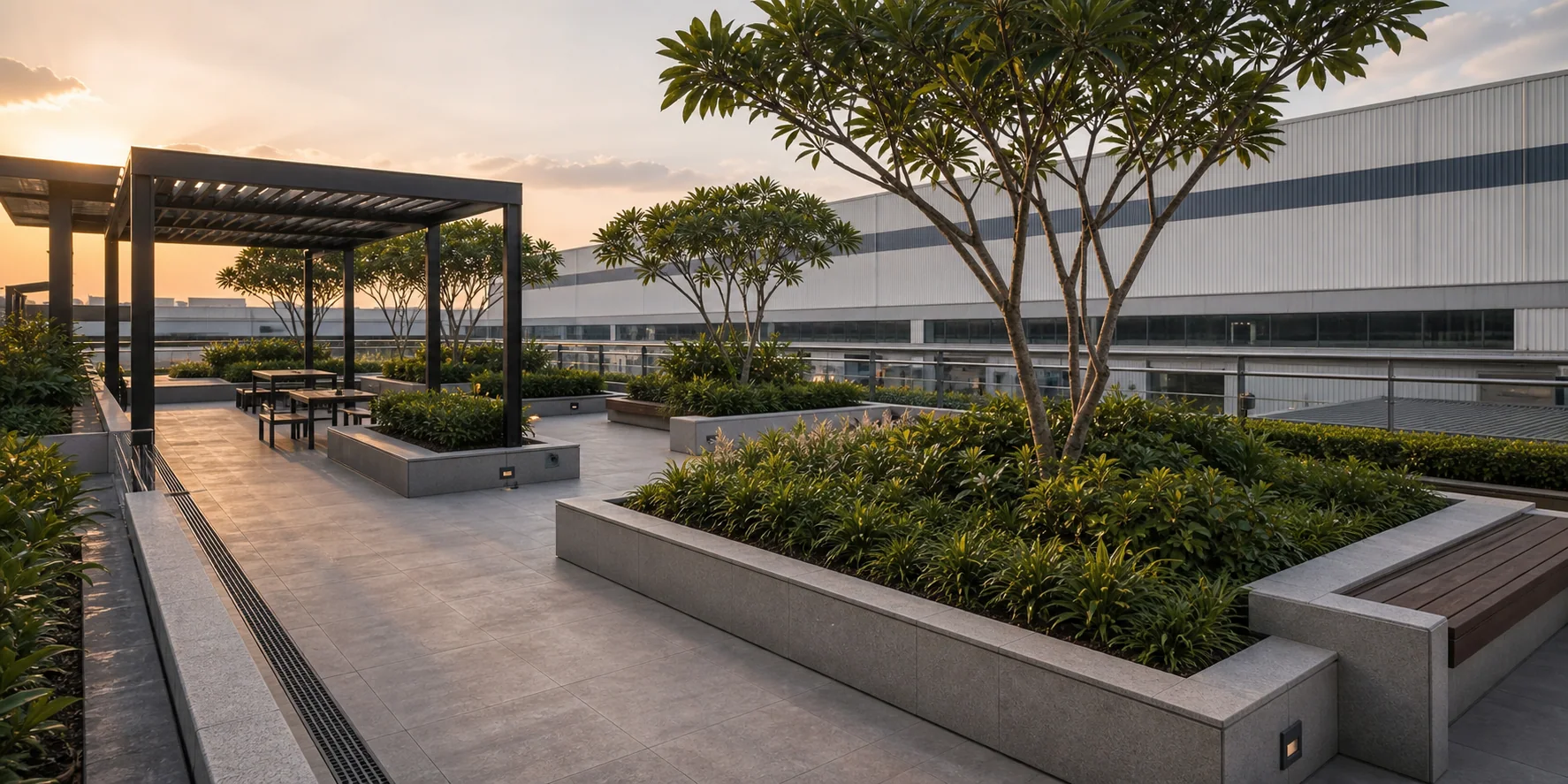
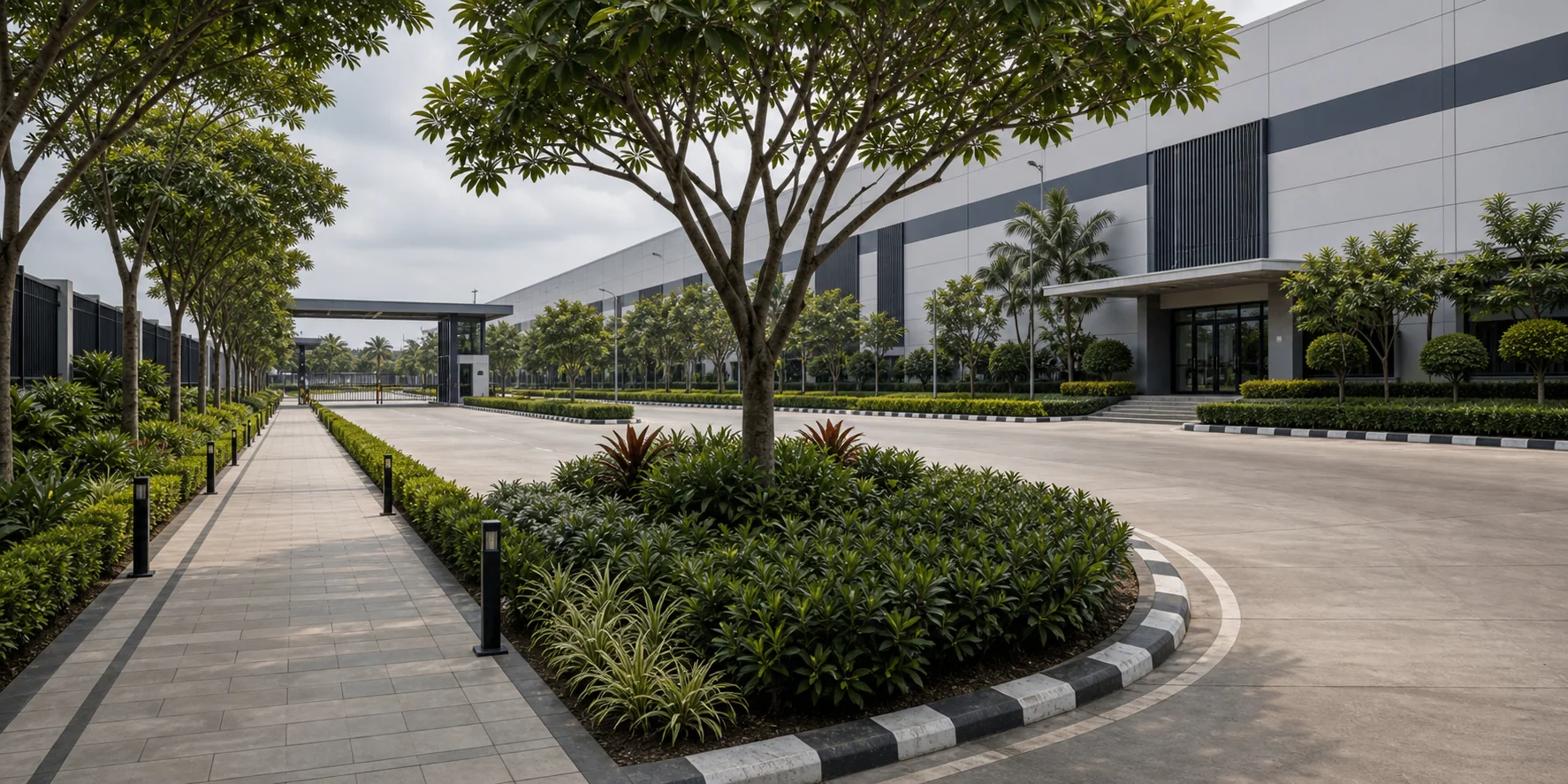
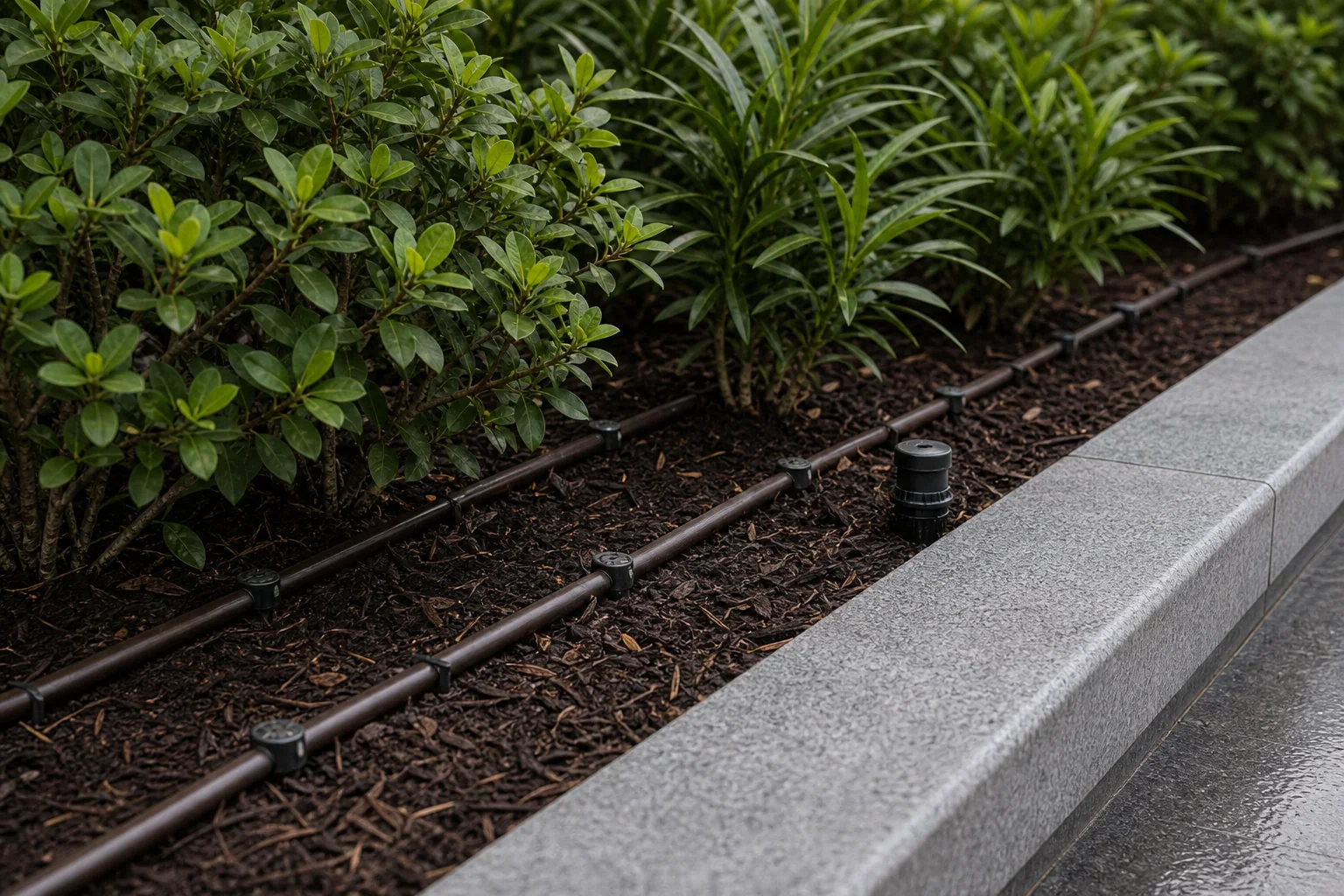
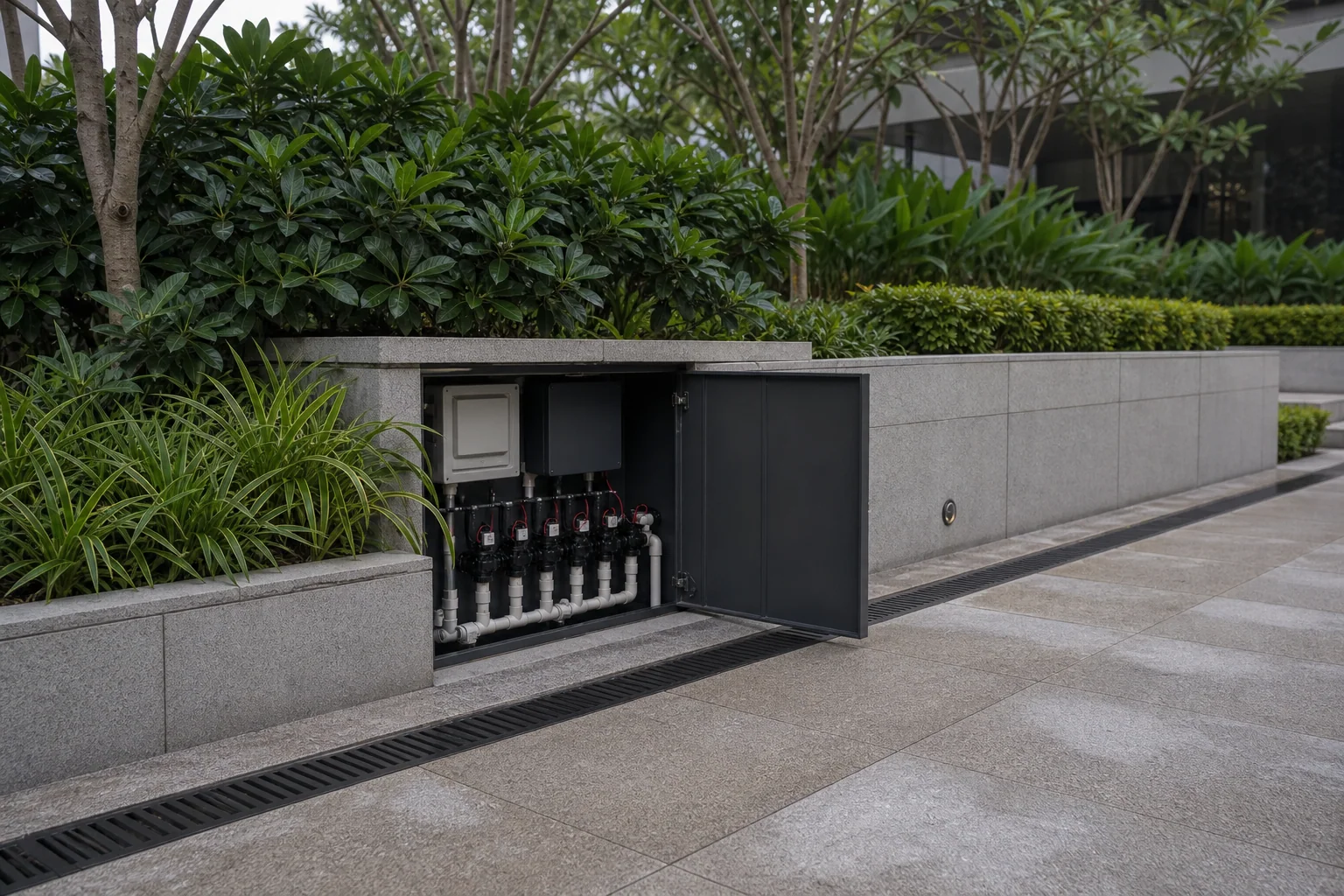
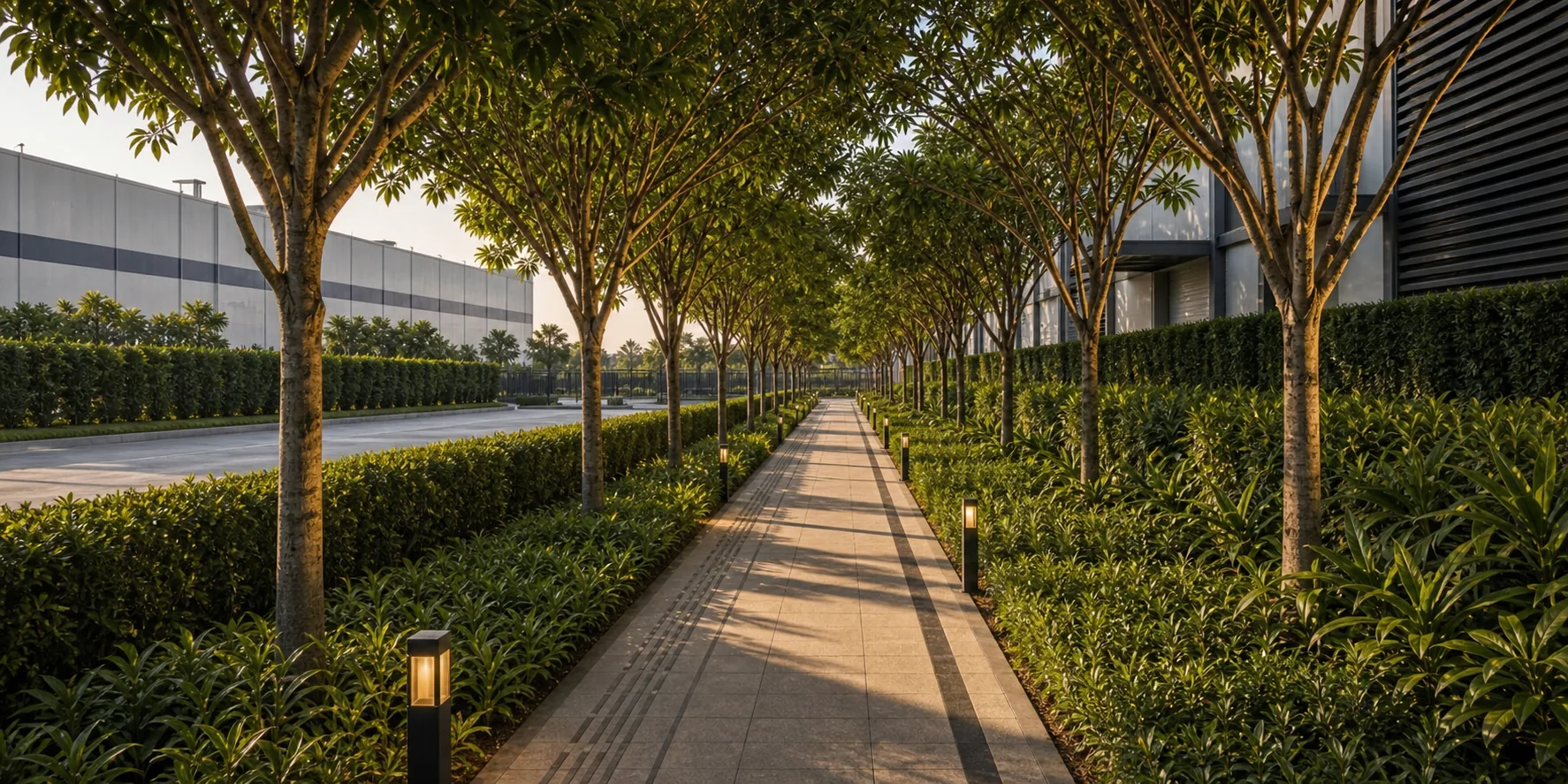
- BOQ-linked scope documentation
- Material specs and submittals
- Phased execution milestones
- Handover and O&M notes
What procurement teams expect from landscape irrigation services
For buyers searching landscaping services or a landscaping contractor, irrigation is one of the first systems to audit because planting failure usually traces back to water design, commissioning, or maintenance discipline. On institutional sites, irrigation is operational infrastructure, not a garden accessory. Strong systems deliver the right wetting depth per hydrozone without runoff onto hardscape or building facades, separate turf from shrubs and trees on distinct valves, and let FM teams adjust schedules seasonally without reprogramming every station manually. Procurement teams should expect hydraulic calculations, valve charts mapped to planting zones, as-laid drawings in CAD and PDF, and controller programmes with monsoon and summer templates. Where water is scarce, flow monitoring and rain sensors can support consumption tracking when the specification calls for them.
Scope of work and deliverables
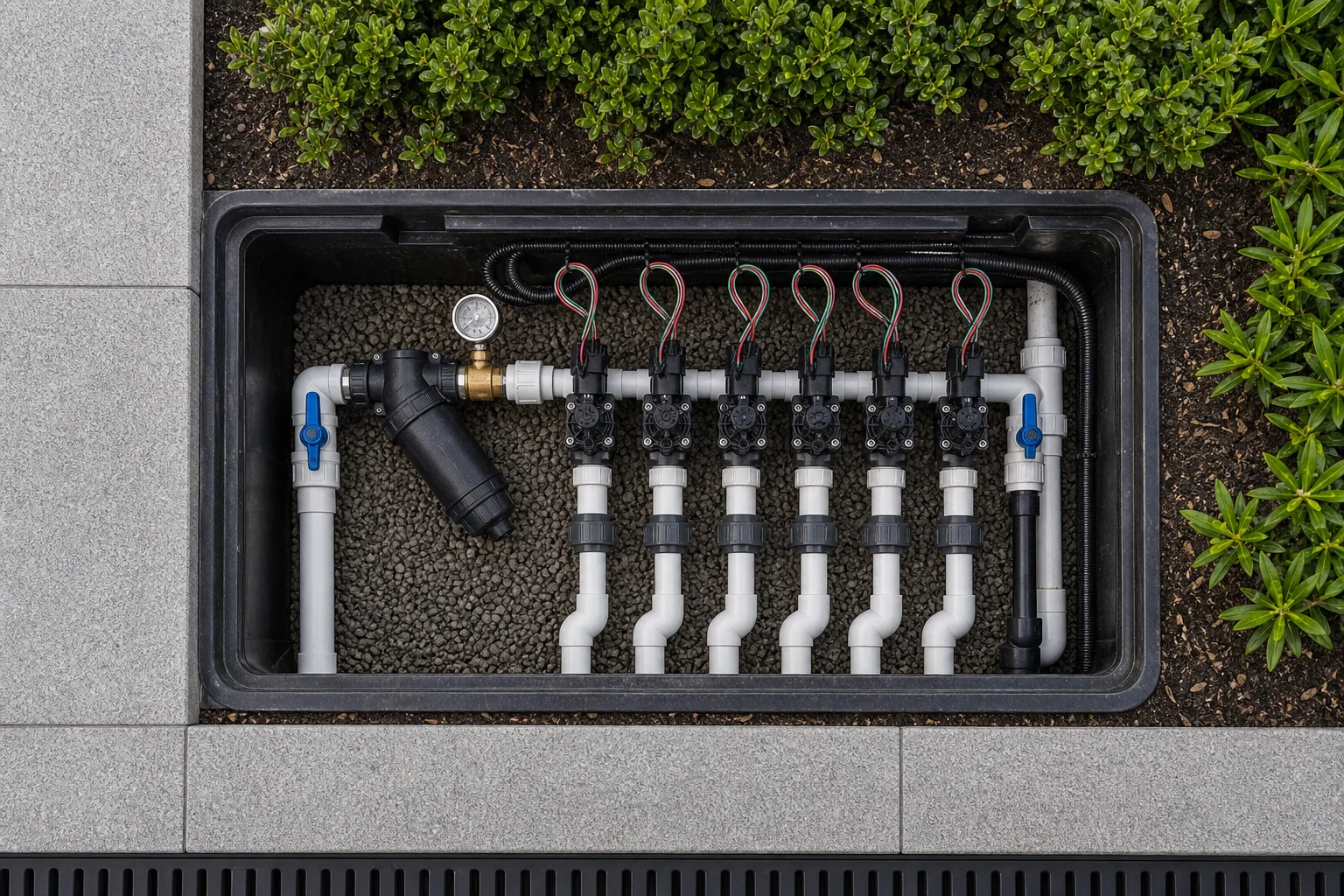
A typical irrigation package follows a clear sequence. First, hydraulic design or design-build from concept, including mainline sizing, lateral layout, and emitter or sprinkler selection per hydrozone. Second, trenching and sleeving coordinated with civil, valve boxes, filtration where needed, pressure regulation, and pump interfaces when the water source requires boosting. Third, wiring, controller installation, flushing, and pressure testing before planting or paving closes over lines. Fourth, zone-by-zone commissioning, FM training, and O&M manuals with valve IDs tied to plan grids. For phased sites, temporary loops may serve establishment zones while permanent headers commission zone by zone. Decoder-based two-wire systems can reduce trench copper on large campuses when the specification allows.
Specifications: drip, spray, controllers, and water sources
Drip suits most shrub beds, groundcover, and many tree pits; spray suits open turf and some groundcovers with matched precipitation rates. Specifications should call out emitter flow, spacing, and pressure compensation on slopes. Controllers range from stand-alone to networked; corporate campuses often want VPN or cloud access for FM, while industrial sites need robust enclosures and surge protection. Many Indian commercial sites blend borewell, municipal, and STP-treated supply; each source may need different filtration and emitter selection. Hard water scales emitters; STP water often benefits from disc filtration and periodic water quality checks when chemistry is uncertain. Pump sizing should cover worst-case simultaneous zone demand with static head documented from tanks to the farthest valve.
Process, testing, and commissioning
Hold points include mainline pressure test before backfill, valve manifold completion before mass planting, and final sign-off before the defect liability clock starts. Commissioning covers zone-by-zone flow verification, sprinkler coverage audit, drip wetting depth checks after run times are set, and controller programme upload with seasonal templates. We train FM on manual operation, seasonal adjustment, and fault finding. Rain sensors and soil-moisture probes are integrated when specified and controller-compatible. BMS or BACnet export for central control rooms is project-specific and must be scoped in MEP coordination, not assumed as standard.
Risks and failure modes to control
Common failures include blocked emitters from dirty water, root intrusion into drip laterals without root barriers, dead zones from poor hydraulic balance, and controller programmes left on summer settings through monsoon. Cross-connection with potable lines must be prevented with approved backflow or air gaps per local rules. On podiums, leaks that reach waterproofing can cause serious damage; pressure testing and detail discipline matter before paving closes. Late irrigation handover stresses new planting; sequencing with softscape is critical. Valve boxes that flood from poor drainage fail solenoids prematurely; manifold locations need service access and positive outfall.
BOQ and procurement checklist
A procurement-ready BOQ should list zones by valve count, pipe classes, emitter and sprinkler types with quantities, controller specification, pump and filtration if applicable, sensors, commissioning hours, and as-built drawing deliverables. Separate provisional sums for owner-supplied bore or booster pumps where civil scope is split. Call out guest-visible hotel zones if brass or concealed detail expectations apply. Industrial green belts with long lateral runs need pipe sizing in the hydraulic calculation, not allowance guesses. Tie each hydrozone to a drawing index and valve ID. The cost guide and irrigation system cost calculator help frame ranges before BOQ lock; contact us during RFP preparation for site-specific hydraulic review.
Phasing with planting, hardscape, and opening dates
Laterals in beds typically follow soil preparation and precede mass planting where possible, or run in parallel with large trees after pits are open. Under hardscape, sleeves and ducts install during civil coordination so paving does not block access. Turf zones commission after sod or seed and initial roll. Irrigation must be pressure-tested before defect liability starts on planting-heavy zones. Developer phases may leave future zones capped and labelled for expansion. Monsoon commissioning includes wet-season programme tuning so new planting does not drown or desiccate during establishment.
Handover, documentation, and AMC implications
FM and AMC teams inherit valve charts, controller programmes, and seasonal adjustment notes at handover. We include as-laid CAD and PDF for field crews, plus O&M manuals, filter cleaning cycles, and pump runbook expectations. Post-handover, AMC programmes can include audits, repairs, emitter cleaning, and programme updates when scoped in the contract; see the landscape maintenance AMC service page for annual contract structure. Defect liability for workmanship follows the main landscape contract terms; manufacturer warranties on controllers, valves, and heads apply per product terms where applicable. Early AMC overlap during establishment helps crews learn hydrozones before turnover to client FM.
Where irrigation landscaping matters across markets
Irrigation landscaping priorities shift by segment across India. Hotels need discreet drip in courtyards and reliable turf at pool edges. Corporate campuses balance large turf blocks with podium planting and sometimes central visibility through smart controllers. Industrial sites and developer clubhouses carry green belts with borewell or STP supply and long lateral runs. Hospitals, schools, and malls each carry distinct hydrozone mixes and maintenance staffing. Segment pages describe procurement language for each buyer type. Delhi NCR, Gurugram, Mumbai, Bengaluru, and Jaipur city pages note water stress, monsoon patterns, and logistics differences. For planting palettes, paved interfaces, terrace gardens, and hardscape sleeves that wrap irrigation, see softscape, hardscape, and terrace garden service pages. Request a site assessment via contact when BOQ and hydraulic drawings are ready for review.
Relevant projects
A selection of executed landscapes across hotels, campuses, and institutions. Browse the full portfolio on our projects page.
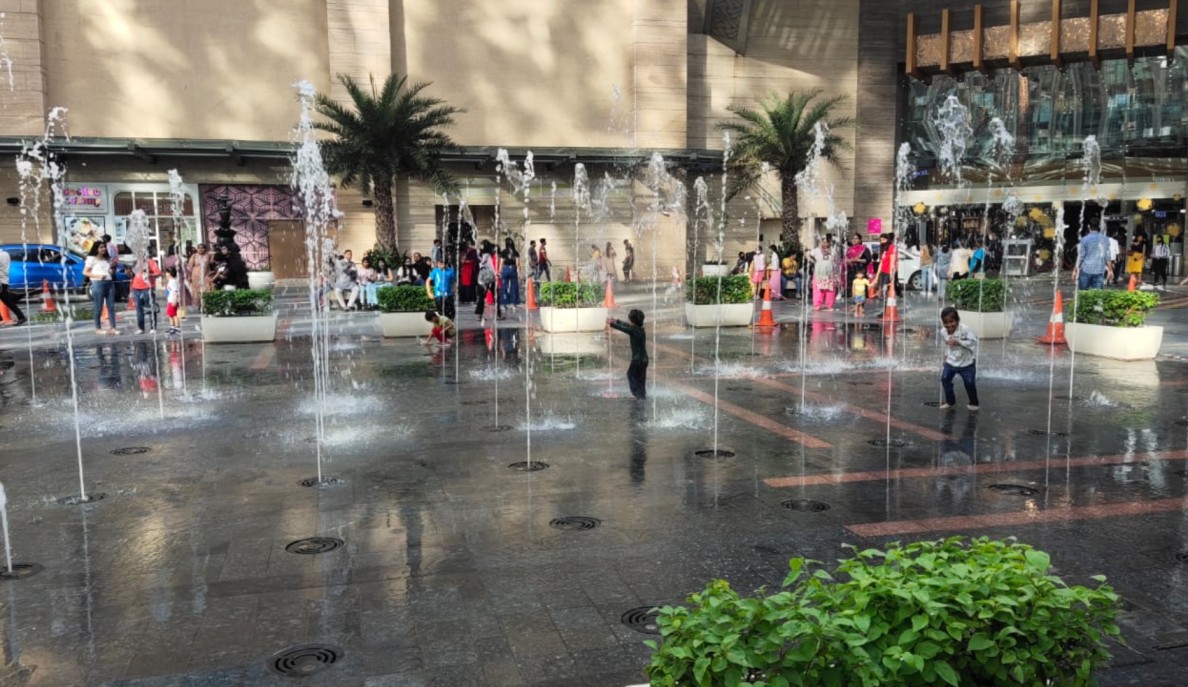
CK Birla Hospital, Gurugram
Gurugram, Haryana
Hospital campus outdoor works — arrival, buffers, patient-visible greens
View project →
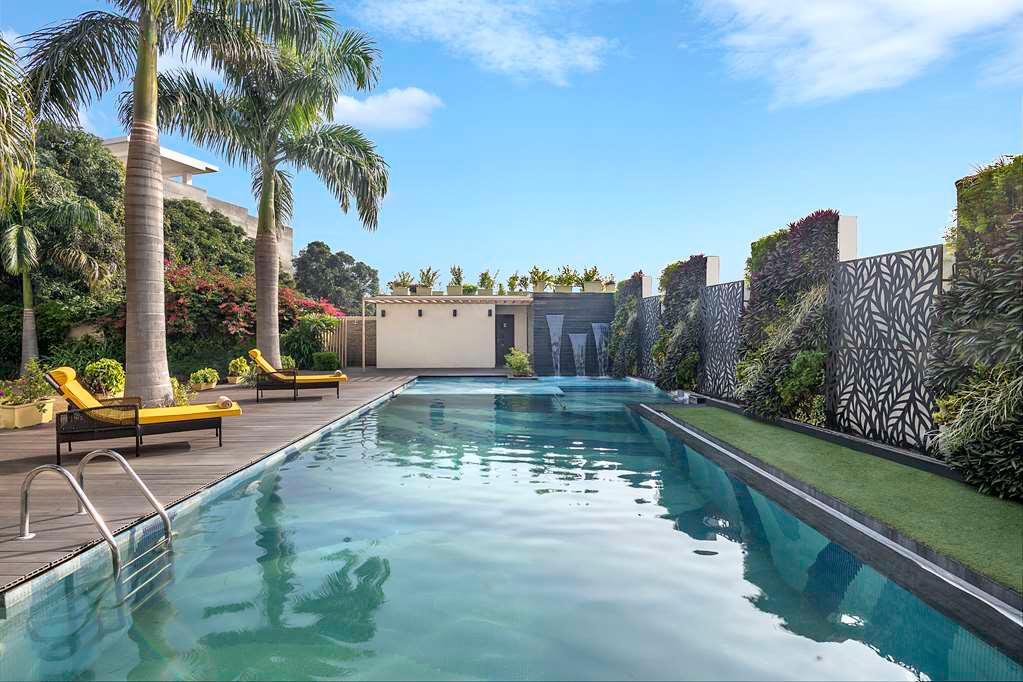
Hero Motocorp, Gurugram
Gurugram, Haryana
Large-format corporate campus outdoor works
View project →
Hilton Garden Inn, Gurugram
Gurugram (Sector 50), Haryana
Hotel arrival and outdoor guest-visible landscape
View project →
Related markets, services, and resources
Procurement teams often cross-reference segment scope with craft pillars. Use these hubs to navigate commercial landscaping execution across India.
Markets
Related services
Cost & tools
FAQs
- How does this service fit into broader landscaping services?
- This service is usually specified as one part of a complete landscape package. It links with landscape design services, hardscape, softscape, irrigation, and landscape maintenance AMC depending on the site scope and handover model.
- Do you design irrigation or only install?
- We design-build for many projects and install to third-party hydraulic designs when the contract is structured that way. When design and installation are split across contractors, accountability for hydraulic performance should be explicit in the tender, with clear hold-point ownership for each party.
- Can you integrate soil moisture sensors and rain sensors?
- Yes, with controller compatibility specified in the BOQ. We recommend them for large turf, podium planting, and sites where monsoon overwatering or dry-season stress is a recurring FM issue.
- How do you handle municipal restrictions and STP-treated water?
- We design for efficiency first: matched precipitation, hydrozoning, and run-time discipline. STP-treated water is feasible when quality is tested and emitters match chemistry; filtration and water quality monitoring belong in the O&M scope when supply quality varies.
- How often should controllers be adjusted after handover?
- At minimum seasonally. Many projects need monthly tweaks during establishment, then quarterly adjustments for mature landscapes. AMC programmes can include scheduled programme audits when scoped in the contract.
- Do you service systems after installation?
- Yes. Zone audits, emitter cleaning, valve repairs, and programme updates are typical AMC contract items when scoped in the annual programme. See the landscape maintenance AMC service page for post-handover options.
- What warranty covers irrigation workmanship?
- Workmanship liability follows the main landscape contract defect liability period. Manufacturer warranties on controllers, valves, pumps, and heads apply per product terms where applicable.
- Can existing irrigation systems be retrofitted?
- Often yes. Zone splitting, emitter upgrades, filtration additions, and controller replacement can yield quick wins. A site audit defines scope, sequencing, and whether retrofit or replacement is more economical.
- Who owns leaks discovered under paving after handover?
- The contract defines liability. We document pressure tests before cover; latent defects traceable to our installation fall under DLP terms. Interfaces with building civil and waterproofing should be agreed before paving closes.