
Gallery
Procurement context
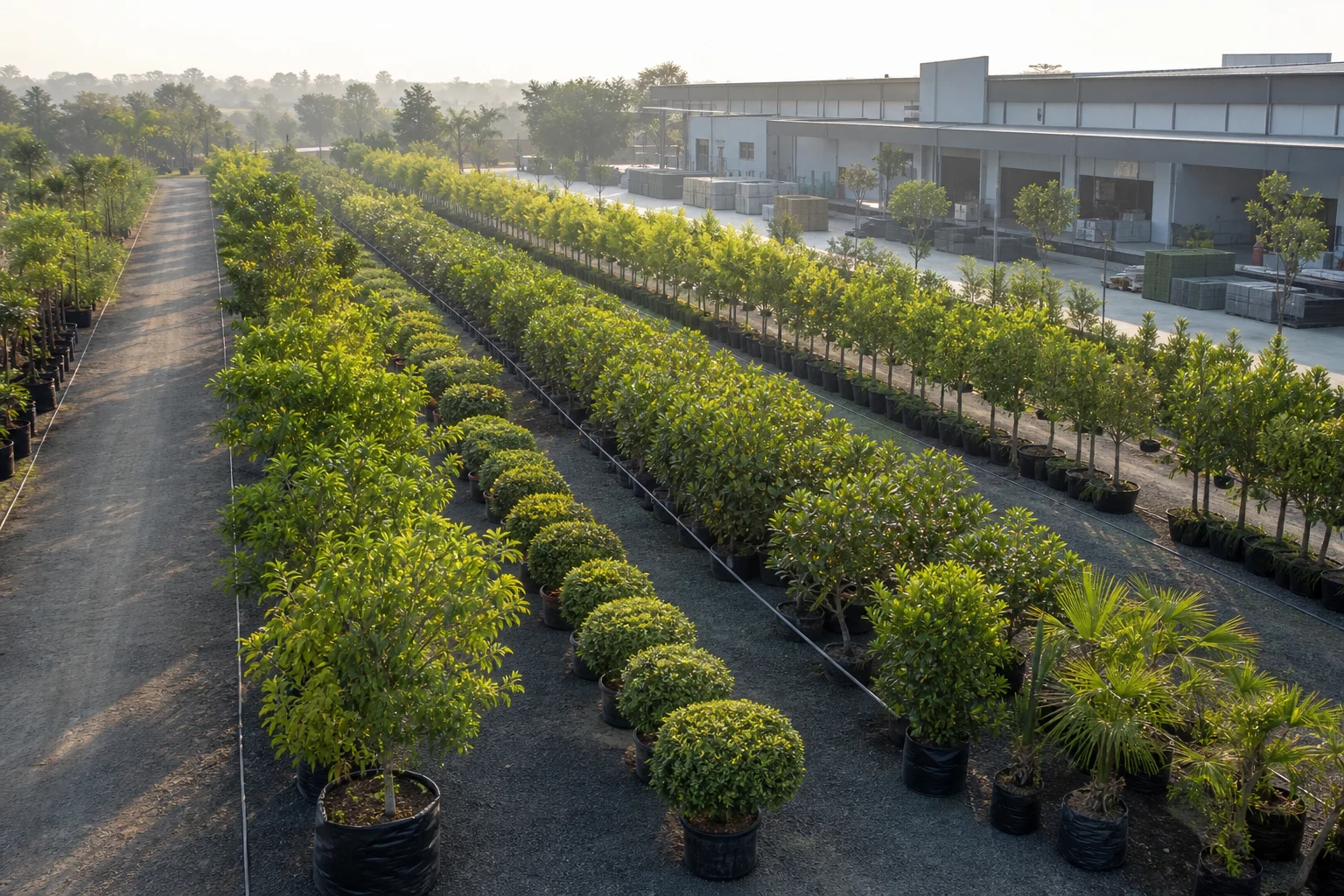
Visual references supporting this guide with landscape scope and detailing context.



What phase sequence should commercial landscape projects follow?
A practical sequence runs civil readiness and drainage observation first, then irrigation mains and controller infrastructure, then hardscape finishes, then softscape and specimen planting, then commissioning, establishment care, and documented turnover to operations.
Each phase needs a named handoff boundary: what civil, MEP, or waterproofing leaves ready, what the landscape contractor verifies, and what evidence is logged before the next package mobilises. Without phase gates, procurement compares one headline completion date while bidders priced different sequencing assumptions for the same BOQ.
Which BOQ and procurement decisions must lock before mobilisation?
Lock package boundaries, unit basis, interface ownership, and exclusion language before site start. Drainage outfalls, podium waterproofing limits, pool and water-feature tie-ins, irrigation connections with civil and MEP, and outdoor lighting termination should appear in BOQ preamble or assumptions, not as post-approval variations.
Define substitution governance, provisional sum discovery triggers, and phasing lines aligned to zone handover dates on occupied properties. Cross-check draft structure with your landscape BOQ format guide and quotation comparison checklist so phase names, hold points, and payment milestones use the same vocabulary through tender closure and before contract approval.
How do occupied-site constraints shape phased delivery?
Hotels, malls, corporate campuses, and live retail estates need phasing that respects guest or tenant continuity, security inductions, night-quiet rules, and safe material movement paths. Sequence work by zone release so arrival courts, podiums, and back-of-house yards do not block each other during partial opening.
Document constraints in the tender assumptions schedule so bidders price the same working-site reality. When constraints are silent, phased remobilisation, night works, and protection rework often appear as variations after scope freeze.
What hold points and acceptance tests protect each phase?
Hold points should match packages: civil base verification, drainage performance observation after controlled wetting or early monsoon exposure, irrigation zone coverage with commissioning records, planting establishment stages with replacement thresholds, and lighting termination checks where in scope.
Procurement should require named evidence at each hold point: hold-point photos or logs, measurement sheets, QA records, and commissioning outputs tied to BOQ line references. Align hold-point names with your landscape QA checklist so site supervision, PMC, FM, and closeout reviewers use one acceptance vocabulary.
What should handover documentation include for FM and closeout teams?
Handover should deliver as-built planting and irrigation layouts, valve charts, controller program notes, O&M manuals for pumps, filtration, and lighting controllers where applicable, snag list ownership with closeout deadlines, and an AMC transition note that separates construction defects from operating scope.
Procurement, PMC, architects, operators, and FM teams all need the same records the tender promised, not informal walkthrough notes. Name deliverable formats and due dates in contract language. Align handover lines with your as-builts and O&M documentation guide and payment milestone structure so closeout expectations stay consistent from BOQ through turnover.
How should snagging be grouped before soft opening and closeout?
Snagging (punch-list rectification) should trace each item to acceptance criteria, responsible party, interface owner, and a closeout deadline tied to soft opening or zone release, not an open-ended defect list.
Group defects by commercial risk: safety and trip hazards first; irrigation leaks, valve access, and drainage ponding; planting establishment failures and root-zone settlement; lighting termination and control faults; then hardscape and finish defects on guest-visible arrival, pool-edge, and podium zones. Link outcomes to retention release and AMC onboarding so corrected items do not reappear as disputed maintenance scope after opening.
How should establishment care bridge construction and AMC?
Establishment care belongs in the construction contract with defined duration, replacement allowances, irrigation tuning responsibilities, and nutrition cycles through the first growing season. Deferring establishment to an informal AMC conversation after handover shifts mortality cost and ownership when outcomes exceed verbal expectations.
If AMC is in scope, tender separate lines for visit frequency by zone, resident versus scheduled crew model, inclusive replacement budget, storm response tiers, and reporting cadence. Model boundaries with the landscape maintenance AMC calculator and align SLA language with your maintenance scope guide before contract approval so construction closeout and operating scope stay comparable.
What common handover mistakes should procurement avoid?
Recurring gaps include: a single practical-completion date without phase evidence, missing irrigation commissioning records, undocumented drainage acceptance after monsoon, establishment care bundled invisibly inside planting lines, and handover packs delivered after FM mobilisation.
A second failure mode is treating turnover as a site walk while retention and AMC tenders assume complete as-builts. Treat unsupported closeout assurances as bid risk until backed by named deliverables, hold points, and signed acceptance logs per package.
When should procurement escalate to a site assessment?
Schedule field validation when levels, soil depth, drainage outfalls, specimen access, podium waterproofing interfaces with civil teams, or occupied-site safety cannot be confirmed from drawings alone. Desk phasing plans often miss live-building constraints that change mobilisation cost and handover sequence.
Request a site assessment through contact once tender documents, phase structure, and handover deliverables are aligned. On institutional scopes above roughly INR 10 lakh, skipping field confirmation before phase lock frequently leads to revised scope, remobilisation, and delayed FM-ready documentation after opening.