

Gallery
Visual scope gallery
Visual references for this service line.
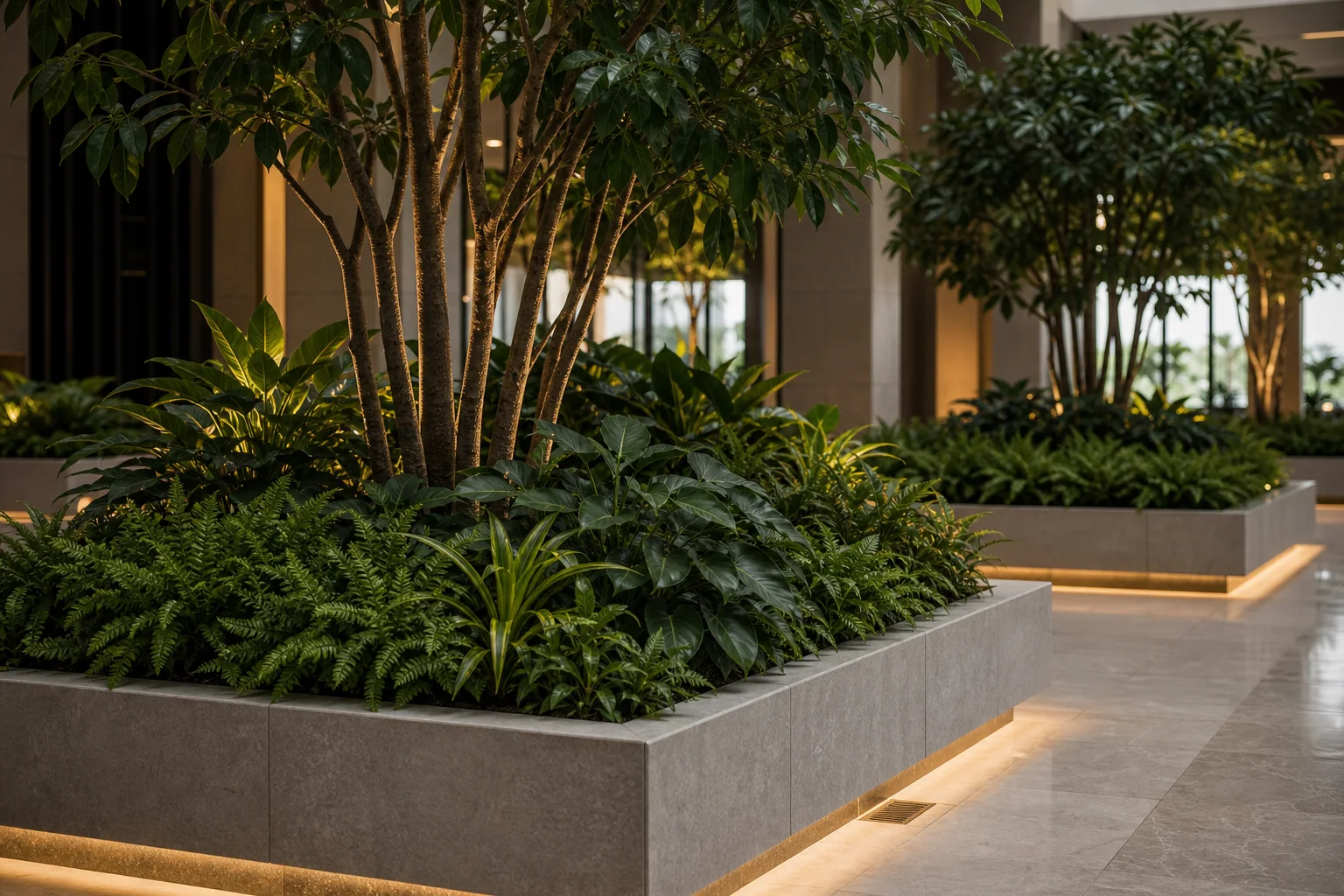
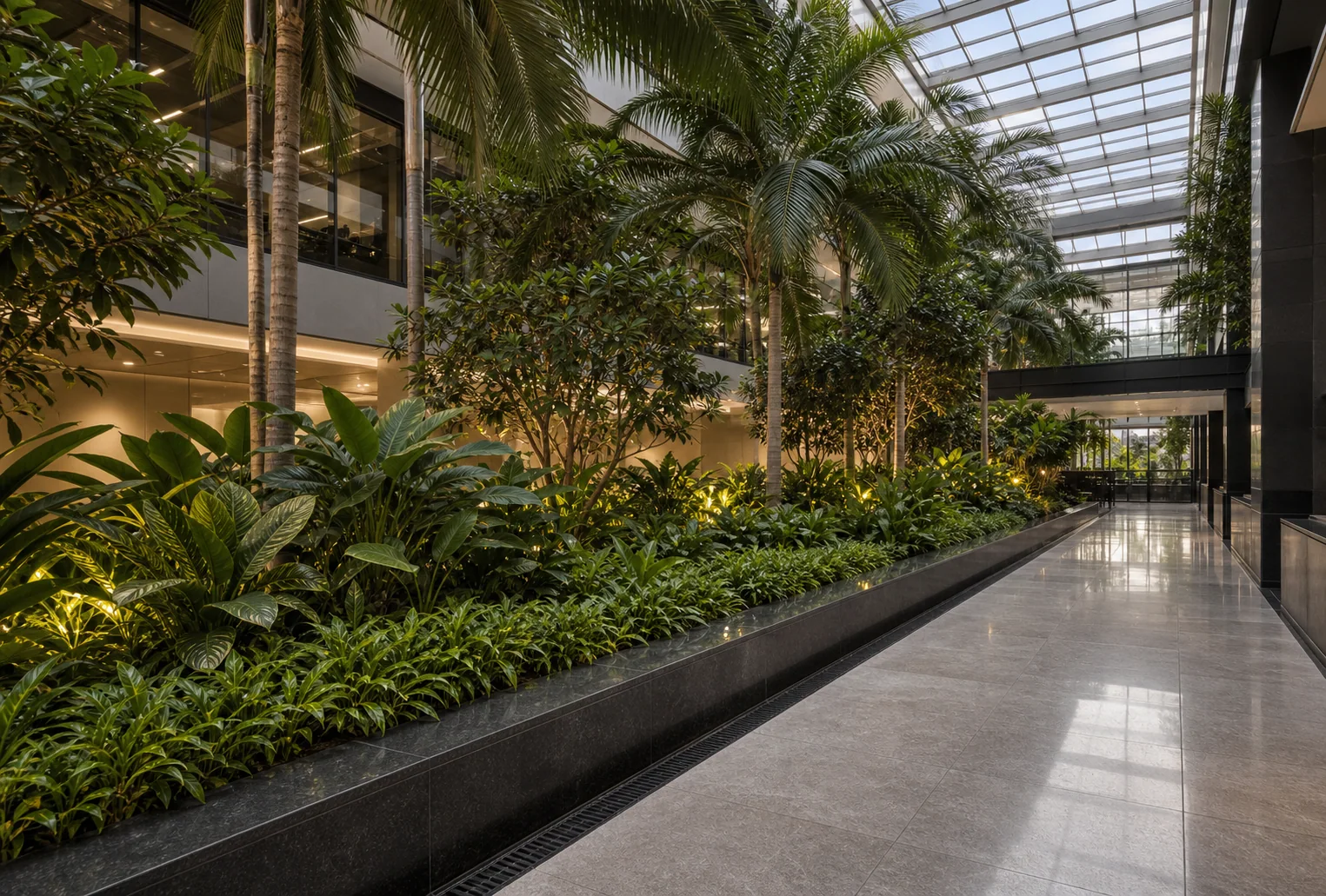


- BOQ-linked scope documentation
- Material specs and submittals
- Phased execution milestones
- Handover and O&M notes
What procurement teams expect from office landscaping services
Office landscaping and indoor plantation should be planned around light, HVAC, cleaning routes, and plant replacement access rather than bought as loose decoration. Indoor planting on commercial sites is judged on survival, slip risk, egress clearance, light fit, and maintenance load. Reception and lift lobbies often carry statement specimens. Open offices use clusters that must not block fire egress or CCTV sightlines. Rental programs convert capex to opex with scheduled refresh. Purchase models suit stable floor plates with in-house watering discipline. Species must match effective light from perimeter glazing, deep floor plates, and LED colour temperature. Sub-irrigation or hand-watering needs drip trays and housekeeping coordination so carpet tiles and marble finishes stay protected. Procurement should expect a light assessment, species schedule by planter ID, visit frequency, replacement allowances, and handover lists mapped to floor plans for CMMS integration.
Scope of work and deliverables
A typical corporate indoor plantation package includes site survey and lux or photosynthetic-light assessment, planter supply or planting into client vessels, growing media suited to interior use, plant supply with an agreed establishment review window, initial styling, and watering schedule documentation. Large specimens may need building lift or crane coordination. Delivery paths through loading docks require floor protection in method statements. Deliverables include planter location registers, species and pot-size schedules, visit calendars, and optional weekly or fortnightly maintenance rounds. We coordinate water points with housekeeping, document saucer and liner requirements for timber and stone floors, and separate capital plant purchase from recurring rental line items where clients prefer opex visibility. Multi-city rollouts use a master species list with metro-specific substitutions where nursery stock or transit climate differs.
Specifications, planters, and species selection
Planter materials (GRP, metal, ceramic, or composite) affect weight, leakage risk, and floor loading. Inner liners are mandatory on finished floors. Decorative metal sleeves must still ventilate roots. Sub-irrigation reservoirs reduce visit frequency but need algae control and odour-aware fertiliser programs. Pesticide use follows interior safety rules. Organic protocols are available when ESG reporting requires them. Low-light-tolerant species suit deep floor plates: Aglaonema, Zamioculcas, and selected palms. Brighter atriums may carry Ficus lyrata or Strelitzia nicolai at scale. High-AC velocity zones desiccate foliage. Species with waxy leaves or diffuser adjustments reduce early failure. We push back on aesthetic-only lists that ignore measured conditions. Wrong species in dark corners decline quickly and inflate replacement costs.
Process, light assessment, and quality control
Process starts with floor-plan review, egress clearances per NBC widths, and light mapping before species lock. QA includes plant health on delivery, saucer integrity, and a post-installation check within the first two weeks. FM training on overwatering (the most common failure on carpeted floors) is offered at handover. Rental contracts include quarterly audits documenting replacements. Purchase contracts define establishment failure windows and exclusions when HVAC or lighting changes. Phased fit-outs in new towers often plant shell-and-core lobbies first, then floor plates as tenants arrive. Mobilisation fees amortise across waves. Plants arrive after substantial cleaning and AC stabilisation. Early install before dust control invites pest and leaf loss. Confidential headquarters may rely on redacted portfolio references only. Scope and pricing still follow surveyed quantities.
Risks and failure modes in occupied interiors
Common failures include fungus gnats, scale on Ficus species, leaf drop from AC blasts, floor damage from saucer overflow, and housekeeping overwatering. Glass-walled huddle rooms can overheat planting banks. Underfloor-air floors need planters on plinths or designated zones only. Festival decor and event moves can damage large specimens. Castors or sectional planters reduce risk. Contracts should separate event damage from baseline AMC. Clients citing WELL or biophilic design without funding maintenance create mismatch between marketing claims and floor reality. Visit schedules and viable palettes must align with budget. We do not overclaim air purification without measured ventilation context. Survival and presentation drive procurement decisions on most corporate sites.
BOQ and procurement checklist
Line items should separate planter supply by size class, plant type and count, sub-irrigation or hand-watering model, visit frequency, and replacement allowance percentage. Add mobilisation for multi-floor towers, lift-wait assumptions, and after-hours charges where applicable. Event refresh and festive decor can be seasonal add-ons. Charge-backs apply when client HVAC changes void light assumptions or events move planters carelessly. Annual escalation uses CPI or fixed steps in multi-year deals. Exit clauses cover wind-down with optional plant buyout. GST billing can align with multi-entity campus cost centres. Survey before quote keeps lift charges and water-point distances transparent in the BOQ rather than surprise invoices later. Contact us during RFP preparation when floor plans and light readings are available.
Phasing with fit-out, handover, and documentation
Indoor planting follows fit-out sequencing: lobbies after marble and AC commissioning, floor plates after carpet and furniture placement where planters define circulation. Handover documentation lists every planter ID on floor plans, species, pot size, next replacement quarter, and housekeeping water discipline notes. Typical engagements reflect desk count or lobby square metres. Smaller one-off enquiries may be referred to partners when scope does not justify full mobilisation. We carry general liability and workmen compensation as required for on-site teams. Combined interior-exterior contracts can bundle with landscape maintenance AMC after exterior handover. Scope boundaries between indoor visits and outdoor crews should be explicit in the tender. Developer sales offices sometimes need temporary high-impact schemes with shorter tenure and faster refresh cycles priced separately.
Maintenance AMC, rental models, and service levels
Maintenance defines response for yellowing alerts, fallen leaves in VIP paths, and overflow incidents. Weekly to fortnightly visits depend on species, sub-irrigation, and season. Hotel lobbies may need night watering windows coordinated with housekeeping chiefs. Rental suits refresh-heavy arrivals where the contractor owns replacement cycles within the contract window. Purchase suits stable offices with disciplined FM watering and client-owned plant assets. SLA documents replacement windows for establishment failure not caused by client environment change. Spa-adjacent zones need humidity-loving species away from chlorine drift. Banquet rotation may temporarily move large planters. Coordination clauses help. For flagged hotels, brand-standard species lists may apply. We source compliance or propose equivalents with written approval. The landscape maintenance AMC service page and AMC calculator help frame recurring care. Terrace and vertical garden scopes cover related podium and green-wall interfaces where planting extends beyond interiors.
Where corporate indoor plantation matters across markets
Indoor scope concentrates in corporate campuses, hotel and resort lobbies, developer sales galleries, hospital waiting areas, and mall management offices. Each segment carries different visibility and visit constraints. Corporate floor plates with hot-desking need planters that define circulation without blocking egress. Headquarters moves every lease cycle may require plant resale or donation logistics documented in asset registers. Hotel arrivals need instant maturity with specimen groups behind reception. Airport hotels with tall atriums need building engineer sign-off on planter point loads. Segment pages for corporate campuses, hotels, malls, hospitals, and developers describe procurement language for each buyer type. Delhi NCR, Gurugram, Mumbai, Bengaluru, and Hyderabad city pages note nursery logistics and metro execution differences. Related crafts include softscape for exterior arrival zones, terrace gardens for podium planting, and vertical garden systems where interior green walls are specified. Request a site assessment via contact when BOQ and floor plans are ready.
Relevant projects
A selection of executed landscapes across hotels, campuses, and institutions. Browse the full portfolio on our projects page.
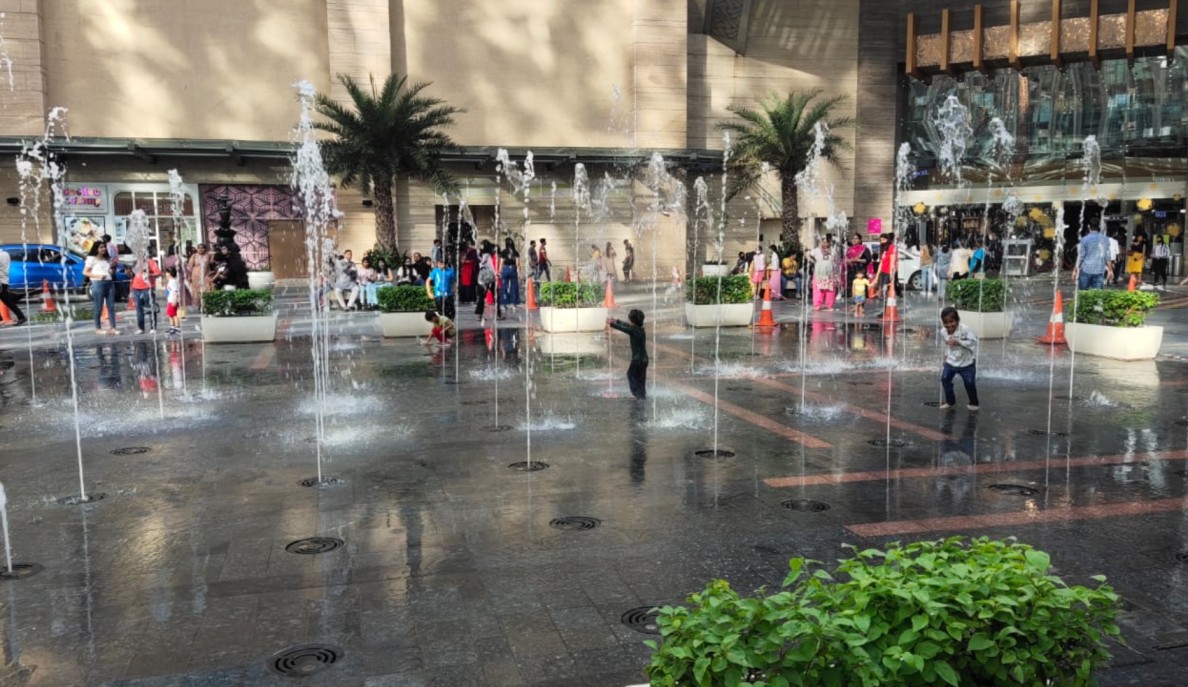
CK Birla Hospital, Gurugram
Gurugram, Haryana
Hospital campus outdoor works — arrival, buffers, patient-visible greens
View project →
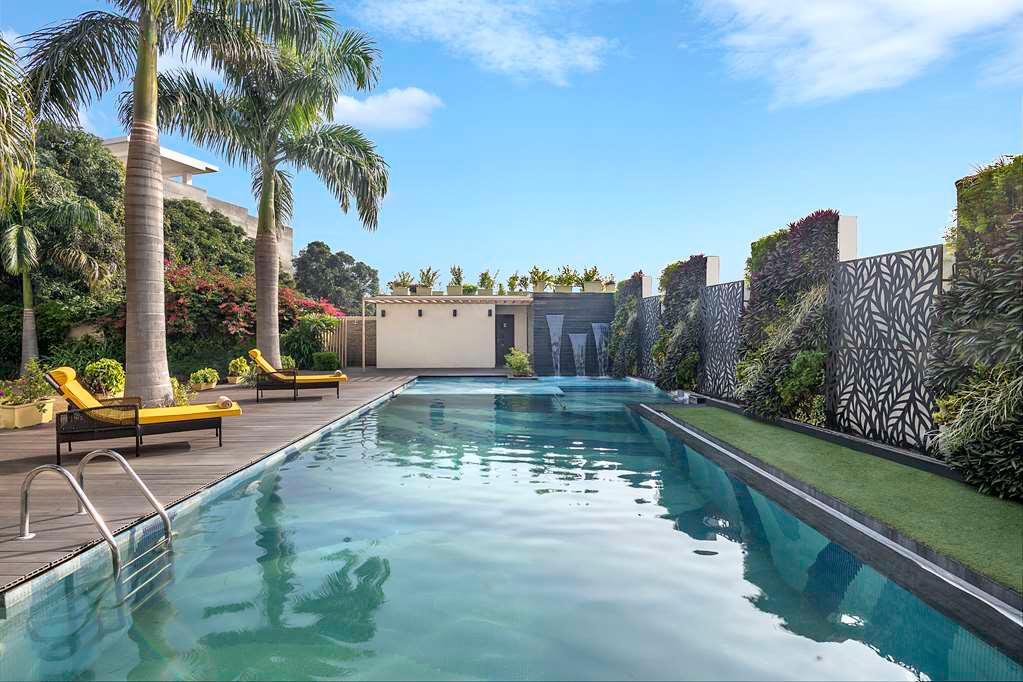
Hero Motocorp, Gurugram
Gurugram, Haryana
Large-format corporate campus outdoor works
View project →
Hilton Garden Inn, Gurugram
Gurugram (Sector 50), Haryana
Hotel arrival and outdoor guest-visible landscape
View project →
Related markets, services, and resources
Procurement teams often cross-reference segment scope with craft pillars. Use these hubs to navigate commercial landscaping execution across India.
Markets
Related services
FAQs
- How does this service fit into broader landscaping services?
- This service is usually specified as one part of a complete landscape package. It links with landscape design services, hardscape, softscape, irrigation, and landscape maintenance AMC depending on the site scope and handover model.
- Should we rent or purchase indoor plants?
- Rental suits refresh-heavy lobbies and sales galleries where quarterly swaps keep presentation sharp. Purchase suits stable offices with in-house watering discipline and longer asset registers. The BOQ should state which model applies by zone.
- Do you install artificial plants?
- Live planting is our core scope. Some clients mix live zones with artificial accents in low-light or inaccessible areas. That is a client-directed specification outside typical horticulture deliverables.
- How often are maintenance visits scheduled?
- Weekly to fortnightly depending on species, sub-irrigation design, and season. Deep floor plates with hand-watering usually need more frequent rounds than sub-irrigated reception planters.
- Can you support green-building or WELL documentation?
- We provide species schedules, maintenance data, and replacement logs when projects require biophilic or sustainability reporting. Claims should match funded visit schedules. Under-maintained planting will not support audit-ready records.
- Do you run pan-India office planting programs?
- Yes, with master species lists and metro-wise execution where our direct team does not sit locally. Single-contract governance with central billing and local crews is common for multi-city headquarters.
- What warranty applies to indoor plants?
- Replacement within an agreed establishment window for failure not caused by client HVAC changes, lighting revisions, or trade damage. Exclusions should be stated in the contract before handover.
- Can you install large atrium trees?
- Feasible with crane or building lift access, structural planter design, long-term light planning, and building engineer review of point loads. Atrium scope is priced separately from desk-cluster planting.
- Can festive decor be bundled with AMC?
- Seasonal line items for Diwali floral, Christmas trees, or event refresh can sit on the AMC rate card. Event plant damage is usually excluded from baseline replacement allowances unless agreed upfront.
- How do you price multi-floor towers?
- From survey of floor plates, lift wait assumptions, water-point distance, species count, and visit efficiency per floor. Quantities and after-hours charges are stated in the BOQ before contract, not added as surprises after scope freeze.