
Gallery
Procurement context
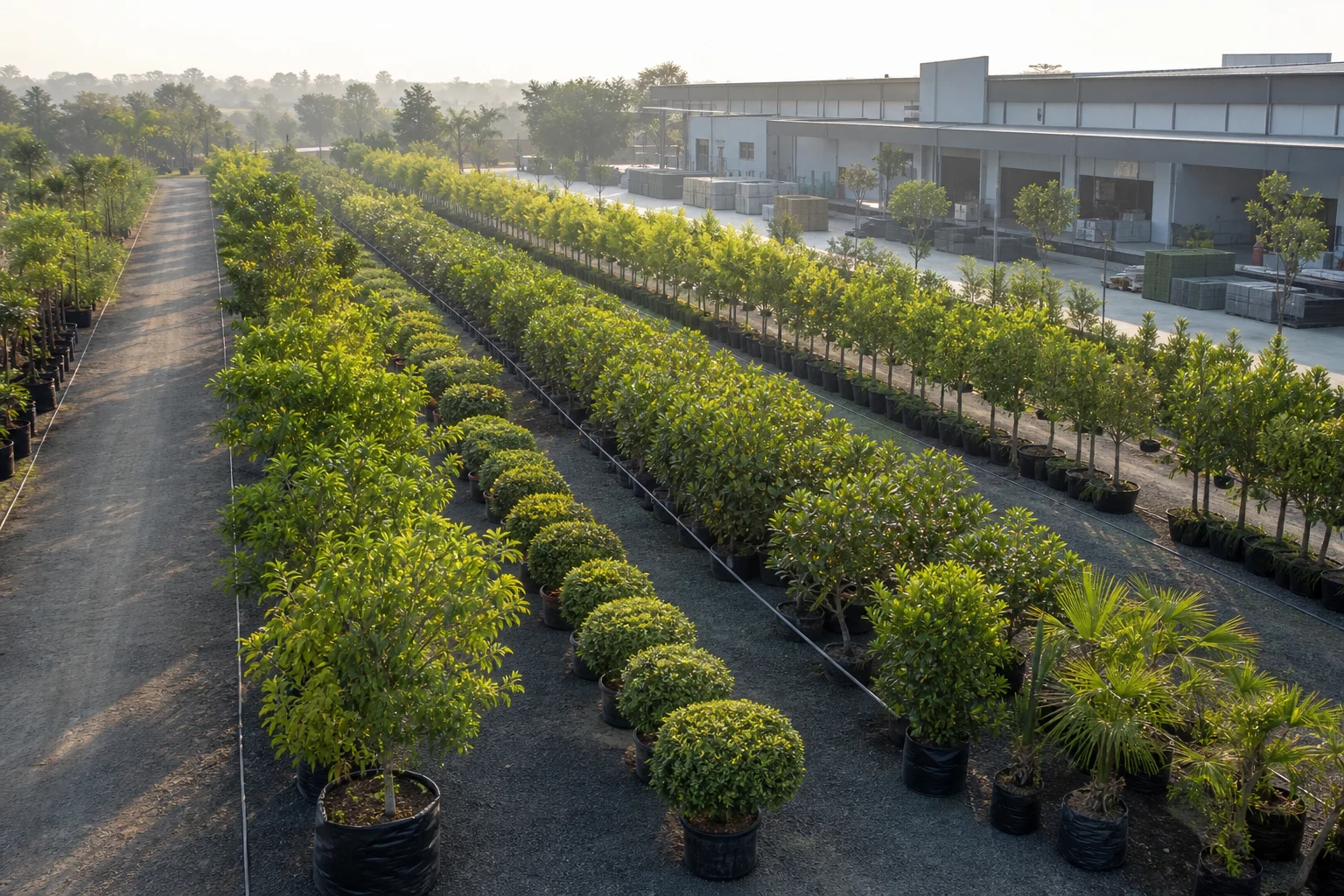
Visual references supporting this guide with landscape scope and detailing context.



What commercial landscape scope should a contractor own?
Confirm the contractor covers the packages your project actually needs: hardscape and civil bases, softscape and establishment care, irrigation zoning and commissioning, outdoor lighting termination, water features where included, and post-handover maintenance if in scope.
For a commercial landscape contractor, scope should be written against drawings - not a lump-sum garden quote. Hotels need arrival courts and podium planting; campuses need circulation planting and storm response; developers need phasing across multiple towers. If the bidder cannot map scope to packages, procurement cannot validate sign-offs later.
Which site constraints and interfaces must be resolved before comparing bids?
Lock interface ownership before award: drainage outfalls and ponding risk, podium or terrace waterproofing boundaries, pool and water-feature limits, electrical cabling and termination for lighting, and irrigation tie-ins with civil and MEP.
Document working-site constraints - access routes, curing windows, occupied-site safety, and monsoon phasing - so exclusions are comparable across bidders. Silent spec drift during value engineering is a common failure mode on Indian commercial sites when substitutions are not tied to written approval.
How should execution phasing and QA hold points be evaluated?
Ask for a phasing plan that protects soft-opening dates on occupied hotels and campuses: hardscape curing, planting windows, irrigation commissioning sequence, and snagging before handover.
The QA plan should name hold points - civil base layers, drainage performance checks, irrigation zone coverage and controller records, planting establishment stages - and what gets signed off at each stage. Acceptance criteria per package reduce punch-list disputes at closeout.
What proof should procurement request from shortlisted contractors?
Request references at commercial scale relevant to your segment - hospitality, corporate, developer, or institutional - and sample deliverables: a redacted BOQ structure, QA checklist excerpt, and handover pack outline.
Review executed project portfolios for scope depth (irrigation, hardscape, establishment), not brochure planting alone. If proof is limited for a specific package, treat that gap as a bid risk rather than assuming capability from residential garden work.
How do you compare BOQs and procurement documents fairly?
Align unit basis first - per square metre, per running metre, per item set - then verify quantities connect to the same take-off assumptions used in drawings.
Compare exclusions line by line: working-site constraints, drainage interfaces, replacement planting during establishment, commissioning scope, and handover documentation. A lower total on mismatched scope is not a saving - it is a dispute waiting at handover. Cross-check with your BOQ format guide and quotation comparison checklist before shortlist lock.
What handover documentation and AMC boundaries belong in evaluation?
A credible handover pack includes as-built records, O&M guidance for pumps, valves, and controllers, valve charts, and a maintenance program structure with responsibilities and cadence.
For AMC, insist on scope boundaries: routine care versus replacement, storm and seasonal response expectations, establishment-period coverage, and how records are maintained. Facilities teams cannot run a landscape they did not receive documented - model AMC scope with your maintenance calculator before final award.
Which red flags signal a weak contractor fit for commercial work?
Vague lump-sum pricing without zone breakdown, no establishment care in the BOQ, inability to describe phasing on occupied sites, and no evidence of commercial-scale delivery are warning signs.
Contractors positioned as residential garden vendors or plant-only suppliers rarely carry the documentation discipline institutional procurement requires. Treat unsupported claims about turnkey delivery as a scope risk until backed by written process and references.
When should procurement schedule a site assessment?
Schedule assessment when drawings cannot confirm interface realities - levels, soil conditions, drainage outfalls, specimen access, and working-site safety on occupied properties.
A site visit reduces change orders because the bid reflects practical access, phasing requirements, and the actual handover timeline. On institutional scopes above roughly INR 10 lakh, skipping site assessment is usually false economy. Request a site assessment through contact once your shortlist and tender documents are aligned.
What is the difference between a garden vendor and a commercial landscape contractor?
A garden vendor typically supplies plants or executes small residential plots with minimal specification. A commercial landscape contractor carries design-build discipline: BOQ alignment, interface sign-offs, irrigation commissioning records, establishment programs, and FM-ready handover.
Procurement for hotels, campuses, and developers should filter for the latter - even when the search phrase includes garden or landscaping - because closeout quality depends on documentation, not planting day photos alone.
How long should establishment care and contractor accountability run after handover?
Establishment care should cover the first growing cycle for key planting - typically including replacement thresholds, irrigation tuning, and seasonal nutrition - with responsibilities written in the BOQ, not assumed.
Define when contractor accountability ends and AMC or in-house FM takes over, including training handover for controllers and storm protocols. Ambiguity here is where post-opening mortality and ponding disputes most often surface.