
Section
What counts as imported or specimen-grade?
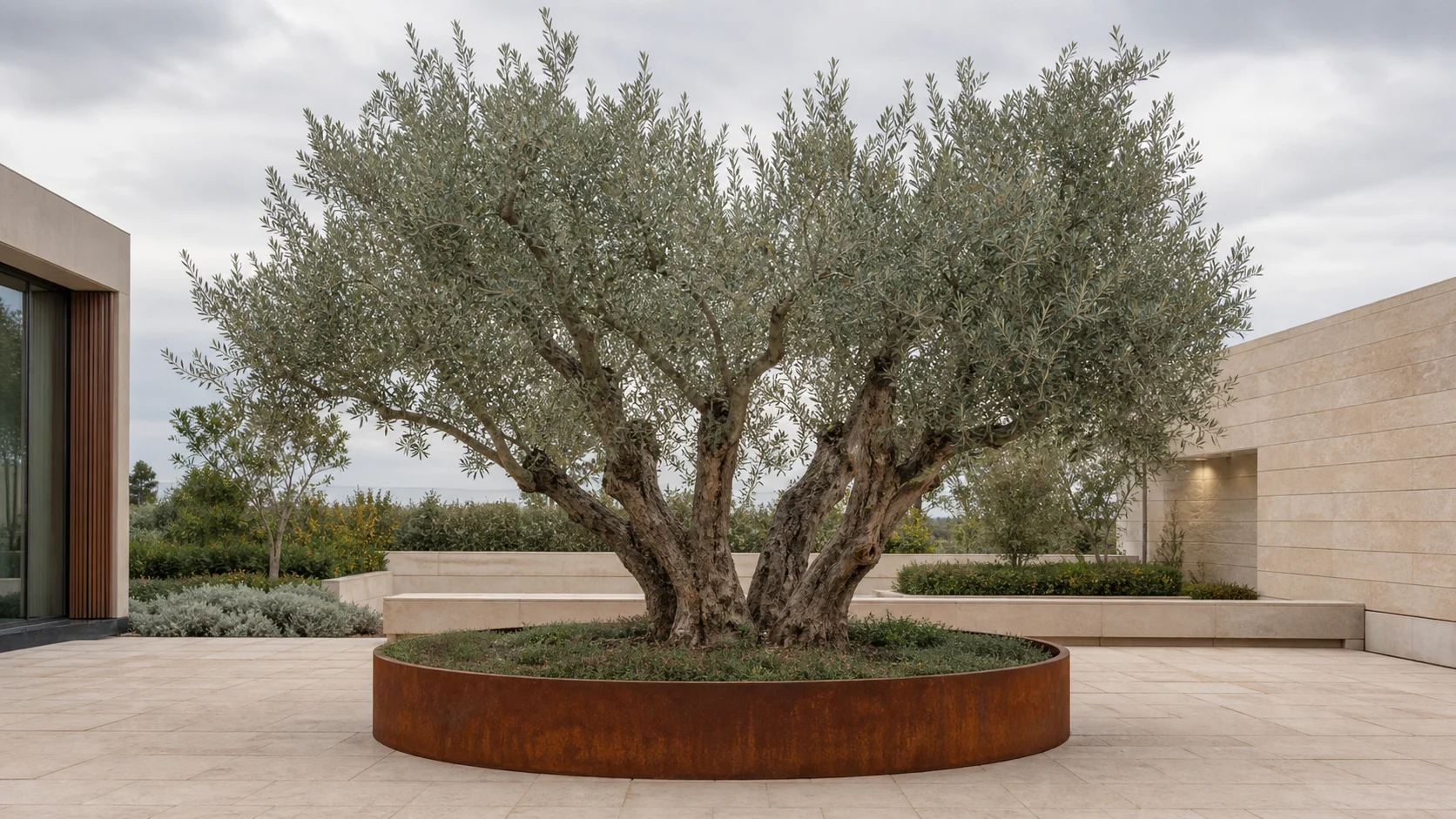
In landscape BOQs, imported and specimen-grade trees are selected for maturity and visual presence at handover — not for low unit cost. The procurement package typically includes species fit review, documentation alignment, rootball handling, pit and soil engineering, bracing where height or wind exposure demands it, and establishment monitoring through an agreed risk window.
- Imported exotic trees: live consignments with phytosanitary and quarantine workflow — lead times and inspection windows must sit in the programme, not after paving is closed.
- Specimen trees: oversize or character forms where trunk line, canopy spread, or caudex scale is the design intent — often the highest ticket line in a softscape BOQ.
- Not in scope here: small potted ornamentals, balcony plants, or catalogue shopping without engineered installation and aftercare boundaries.
Section
Where exotic and specimen trees fit commercial briefs
Section
Species categories for procurement shortlists
Start from category pages when the brief names a visual role — arrival palm, Mediterranean olive, formal topiary, desert sculptural form — rather than a single Latin name. Each category links to species detail pages and typical installation constraints.
Section
Imported trees by city — climate, logistics, and establishment
Section
Import compliance and documentation workflow
- Programme risk: quarantine hold or documentation gaps can miss hotel soft-opening dates — build float before arrival zone paving closes.
- BOQ clarity: separate tree supply, documentation coordination, engineered pit works, crane hire, and establishment visits so tenders compare like-for-like.
- Architect coordination: freeze pit and paving interfaces in GFC before import timing is committed — species submittals follow engineered pit sizes, not the reverse.
Section
From acclimatisation to engineered installation
- Acclimatisation after arrival — shade, irrigation taper, and wind protection through the agreed risk window.
- Pit, soil media, and drainage interface — engineered to civil falls and paving levels; see installation and soil engineering scope.
- Hoist, placement, and bracing — crane or telehandler windows coordinated with site access and guest safety on occupied hotels.
- Irrigation establishment — controller zones and emitter sizing matched to early-stage water demand before AMC handover.
- Snagging and documentation — as-planted schedule, warranty boundaries, and replacement triggers before final retention.
Section
Establishment monitoring and AMC boundaries
Section
How to read pricing for imported specimen trees
Four Leaf does not publish per-tree rate cards online. Quotes reflect maturity size class, species rarity, documentation workflow, engineered installation scope, crane logistics, and aftercare model. Public press ranges below are reporting examples only — not Four Leaf pricing or BOQ benchmarks.
- Economic Times has reported imported trees (via Unique Trees) described as priced in a wide specimen range of approximately ₹10,000 to ₹12,00,000 per tree (reported example).
- Times of India has reported two Spain-born olive trees at a combined ₹84 lakh total (₹42 lakh each) (reported example).
- Public listings may include non-specimen entry-size plants; for example, Exotic Flora lists an olive fruit plant publicly at ₹1,095 (not a specimen install price reference).
Section
Portfolio context without overstated claims
Section
Start a specimen-tree procurement brief
Share destination city, microclimate exposure (wind, salt, shade), crane or hoist access, paving and drainage interfaces, target possession or soft-opening date, and the visual brief — arrival axis, pool deck, atrium, or courtyard focal point. We return a category shortlist, documentation checklist, and install/AMC scope outline after site review.
Gallery
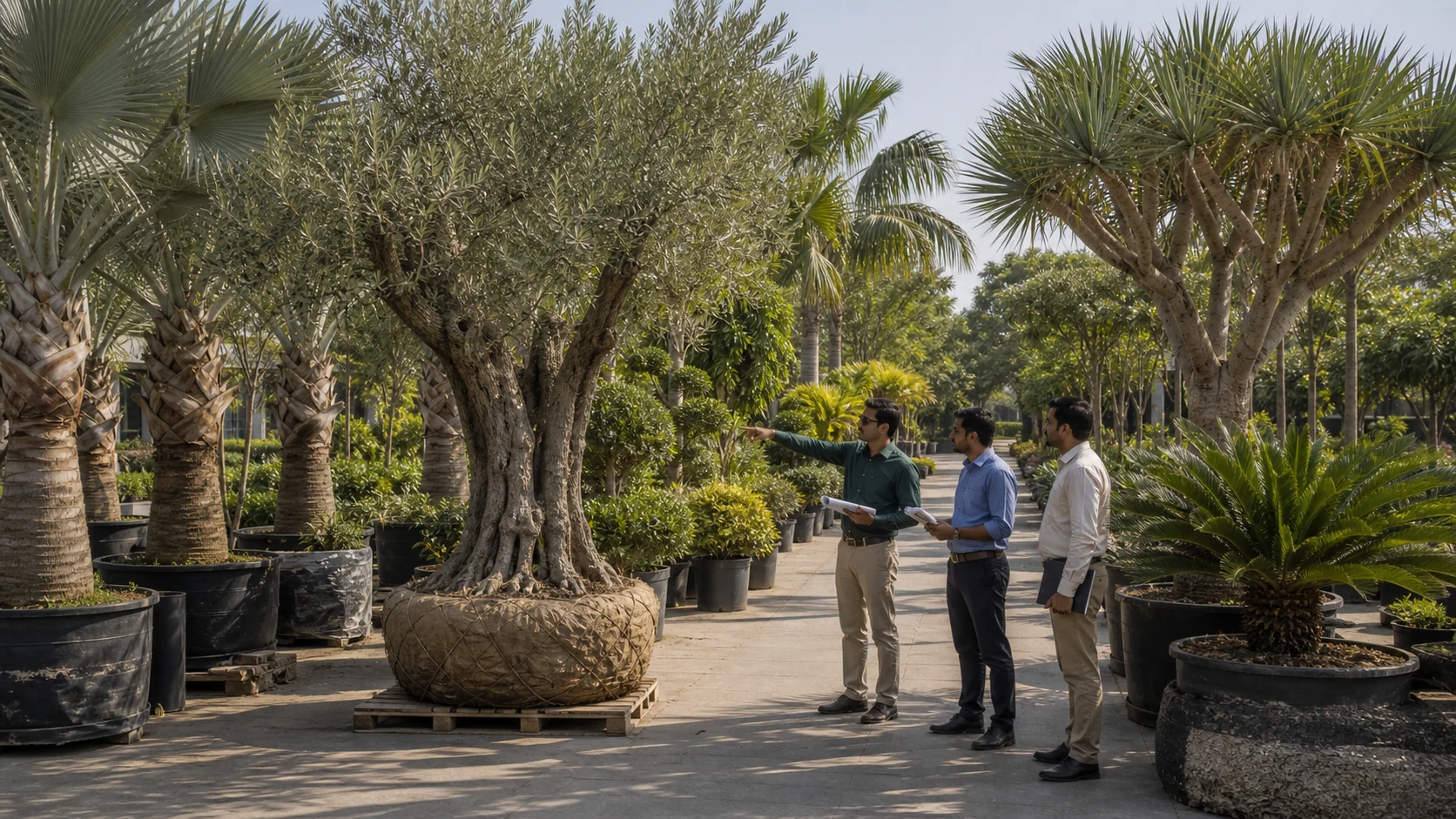
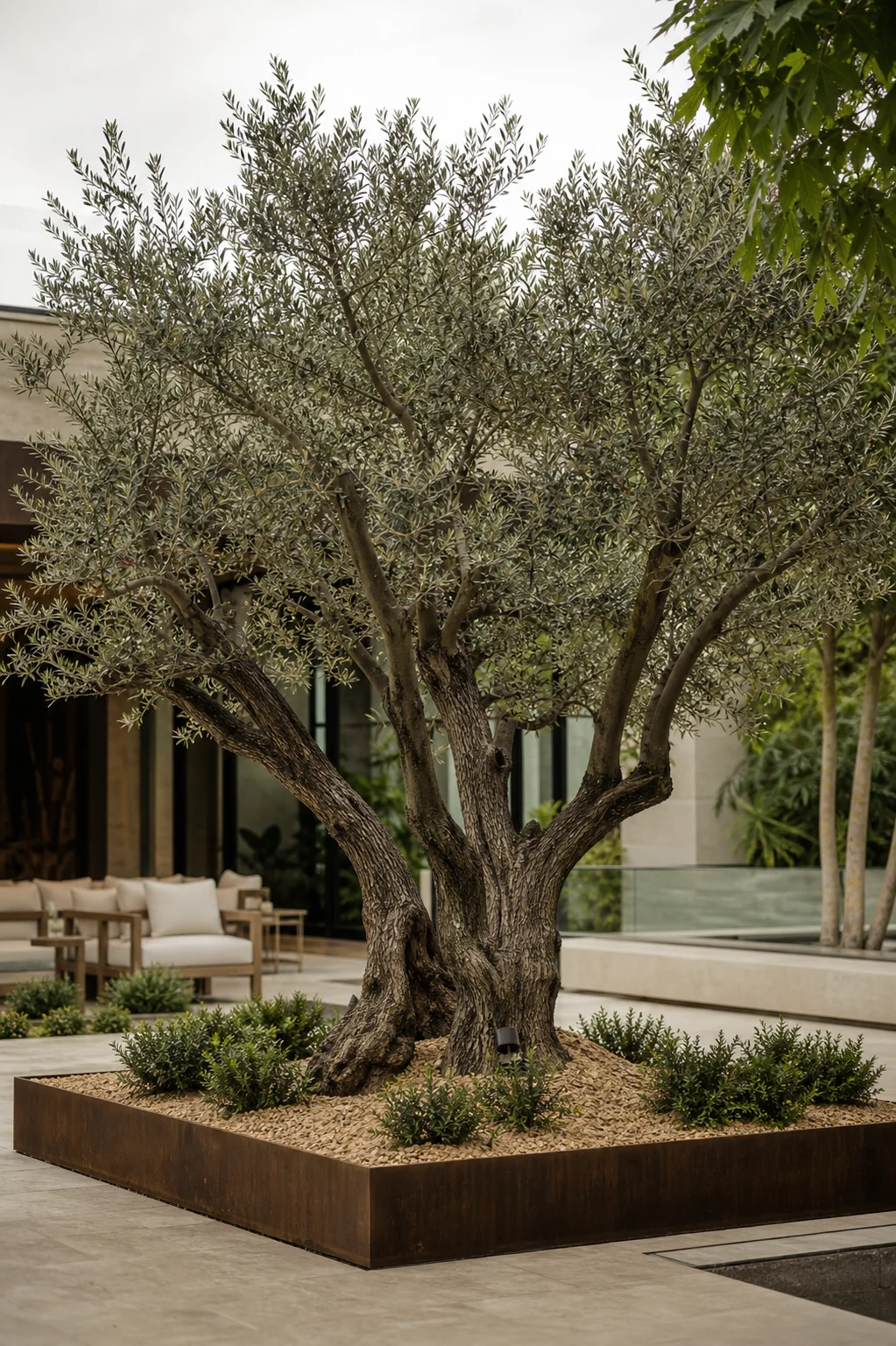
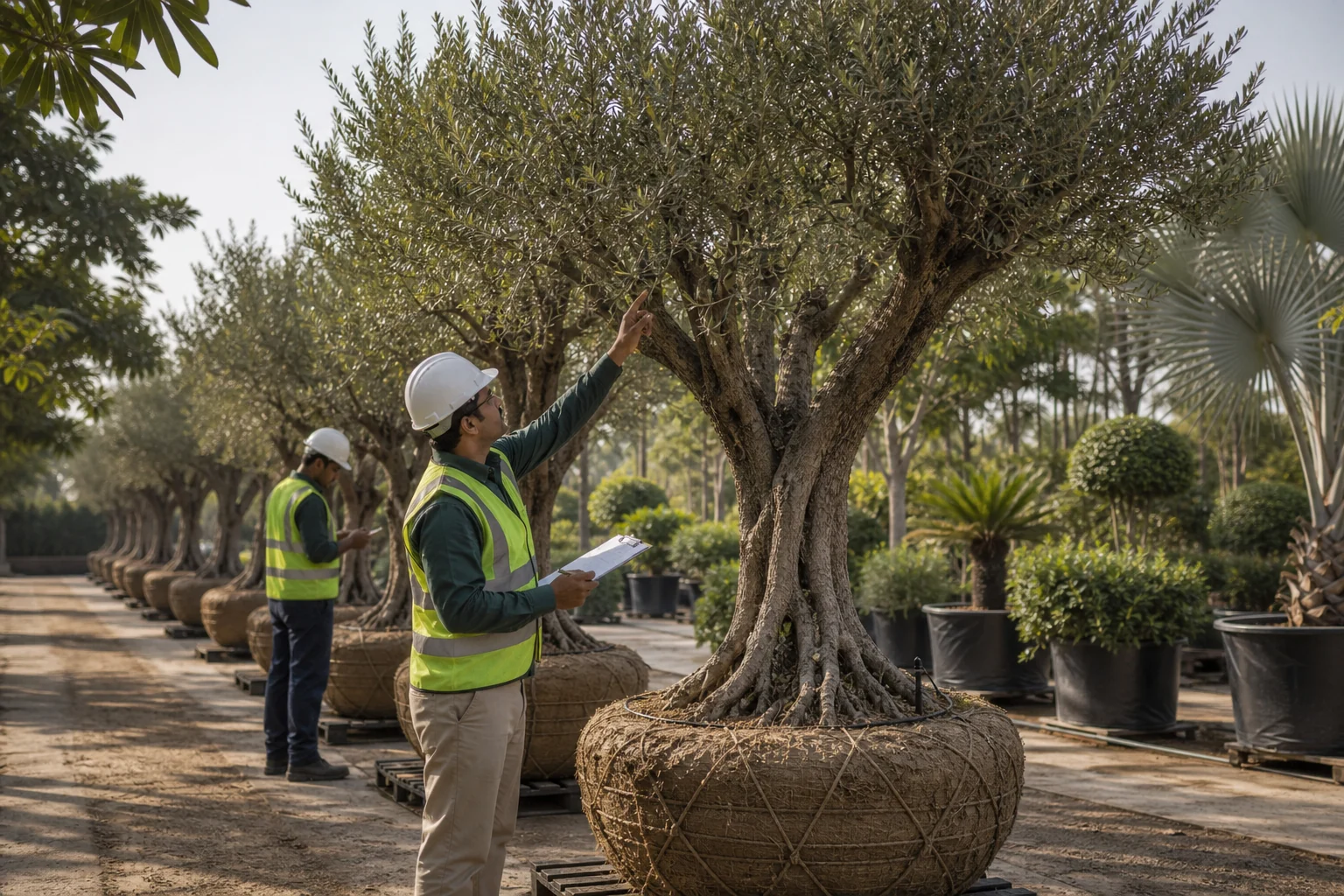
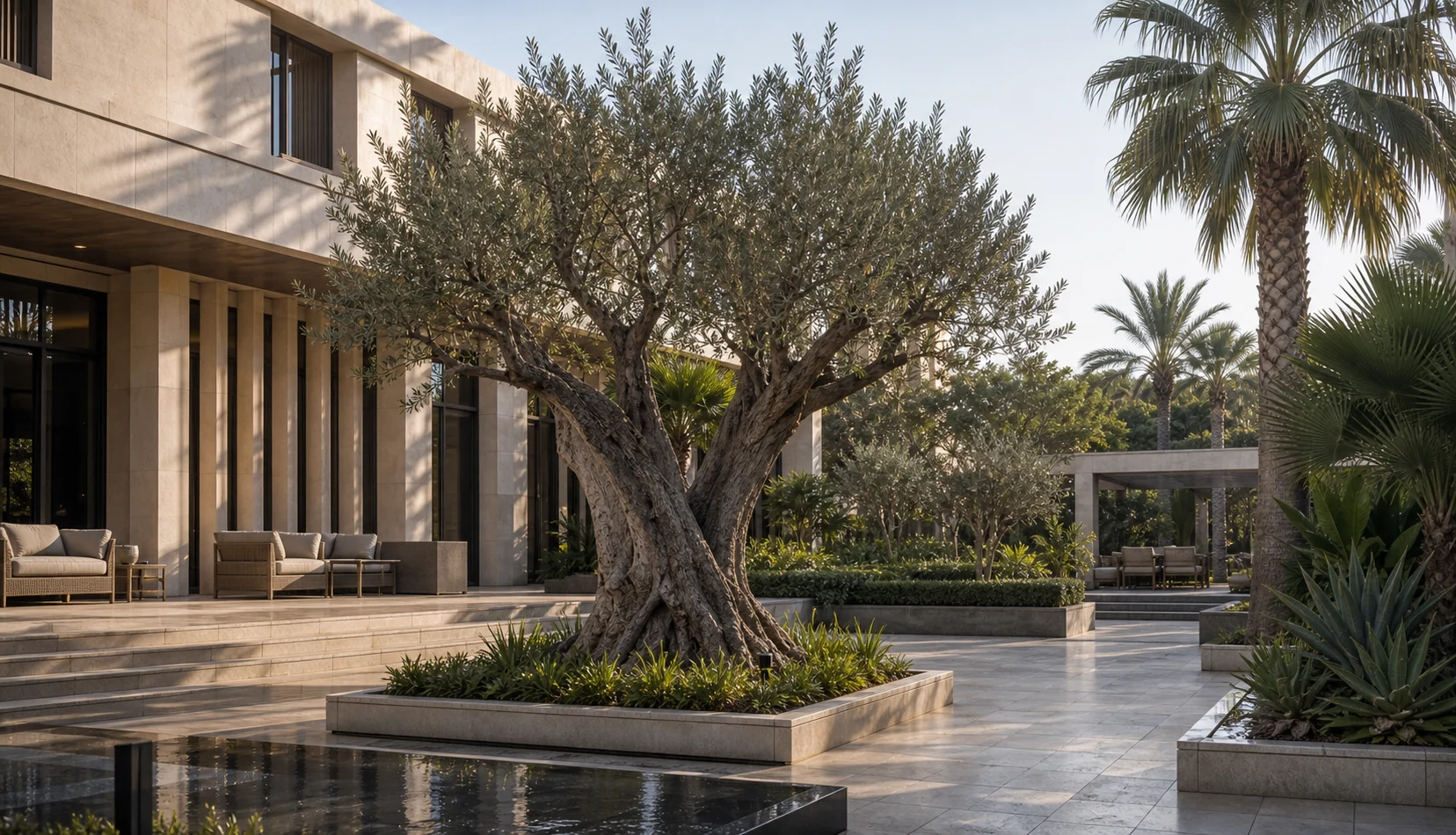
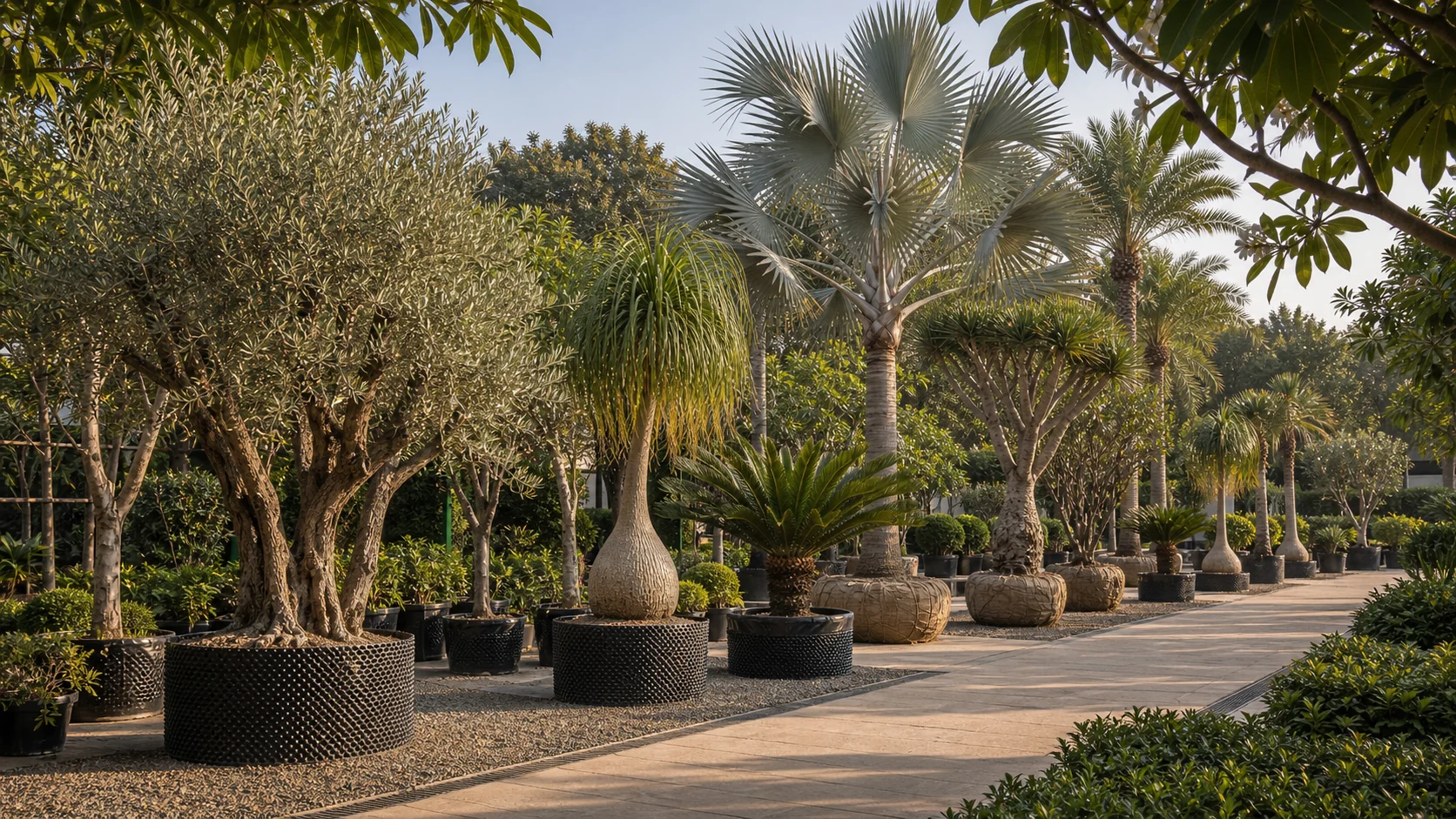
Specimen tree visual guide
Reference views for specimen selection, logistics, placement, and establishment planning.
Supply audit
Latest import / auction results
Date-wise review of specimen lots found at supplier and auction sources — what was added to Four Leaf and which species pages they map to.
Sample data — review pending. Counts below are from manual seed batches, not live auction scrapes.
Latest check
28 Jun 2026
Lots found
34
Added to site
21
Species mapped
19
Recent source checks
28 Jun 2026 — Flemings Nurseries (sample)
14 found · 9 added · 8 matched
21 Jun 2026 — Tall Tree Nursery EU (sample)
11 found · 7 added · 7 matched
14 Jun 2026 — Specimen Trade List — review pending (sample)
9 found · 5 added · 5 matched
Recent lots
- Species page
Bismarckia nobilis — silver-blue, 3.5 m clear trunk
28 Jun 2026 · Flemings Nurseries (sample)
- Species page
Washingtonia robusta — 6 m field-grown
28 Jun 2026 · Flemings Nurseries (sample)
- Species page
Phoenix canariensis — multi-head specimen
28 Jun 2026 · Flemings Nurseries (sample)
- Species page
Roystonea regia — 5 m clear trunk
28 Jun 2026 · Flemings Nurseries (sample)
Categories
Browse by category
Related
Related links
Services, segments, cost, and proof.
- Softscape & horticulture
- Irrigation
- Landscape maintenance (AMC)
- Indoor plantation
- Acclimatisation
- Installation engineering
- Imported tree AMC
- Hotel landscaping
- Resort landscaping
- Corporate landscaping
- Developer landscaping
- For architects
- Cost guide
- Cost calculator
- How to choose a landscape contractor
- Imported trees in Indian cities
- Projects
- Request a site assessment
- What counts as imported or specimen-grade in this vertical?
- Trees sourced for maturity and presence — clear-trunk palms, gnarled olives, large cycad caudexes, trained topiary — installed with engineered pits, drainage interfaces, bracing where height demands it, and a documented establishment plan. Not retail nursery supply or small potted ornamentals.
- Does Four Leaf handle import compliance and documentation?
- We plan procurement around the documentation package exporters should provide — phytosanitary certificate alignment, inspection lead-time, and handover into acclimatisation. This is informational coordination, not legal advice; see import permits & phytosanitary/quarantine for the compliance overview.
- How is pricing approached for imported specimen trees in India?
- We do not publish Four Leaf per-tree rate cards. Quotes reflect maturity size class, rarity, documentation workflow, engineered installation scope, and aftercare model. See pricing drivers for how to read public examples versus BOQ scope.
- Do you provide acclimatisation and AMC after installation?
- Yes — as scoped deliverables. See acclimatisation and maintenance AMC for typical inclusions.
- Can you guarantee survival on every site?
- No ethical supplier can guarantee survival without a site assessment. We reduce risk through species fit, engineered planting, establishment monitoring, and clear aftercare boundaries — but waterlogging, salt spray, and skipped acclimatisation still fail trees that looked fine at dispatch.
- Which cities do you supply imported trees to?
- We mobilise pan-India where programme and logistics support the scope. Start from the Delhi NCR, Mumbai, or Bengaluru city guides for geography-specific constraints.
- How should procurement start a specimen-tree package?
- Share microclimate, access, and the visual brief, then request a site assessment to lock species and pit interfaces before import timing.