
Chennai
Imported specimen trees in Chennai
Chennai’s tropical coastal climate demands specimen-tree specs that treat wind, salt, and monsoon drainage as engineering inputs — tall palms and feature trees can anchor resort and IT arrivals when bracing, pits, and AMC are written for cyclone-exposed microclimates. Procurement teams should note that OMR waterfront parcels and inland IT campuses carry different salt and wind profiles — city-average assumptions fail BOQ review on cyclone-season programmes where bracing duration and litter scope must reflect parcel exposure.
Gallery
Specimen visual guide
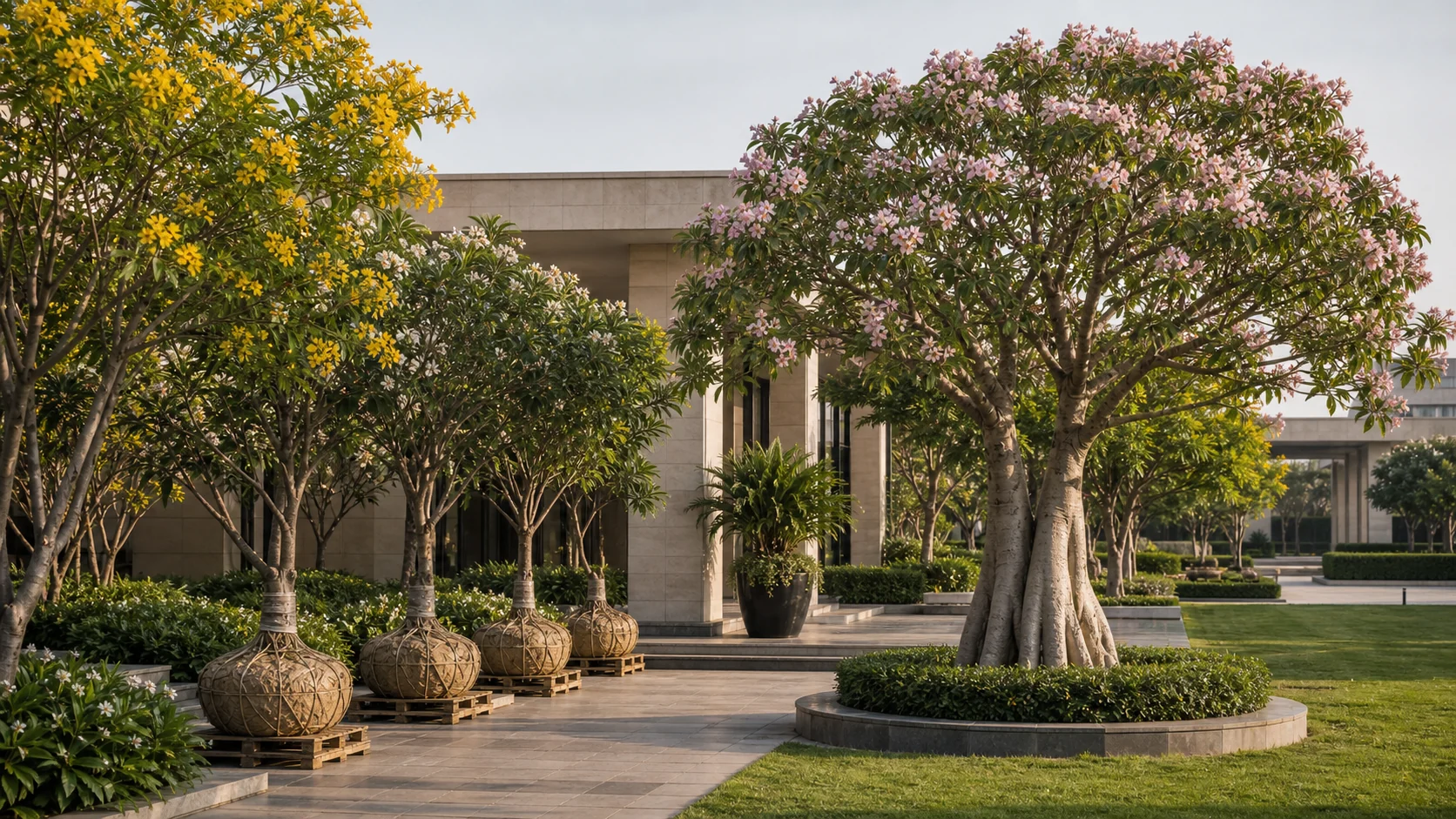
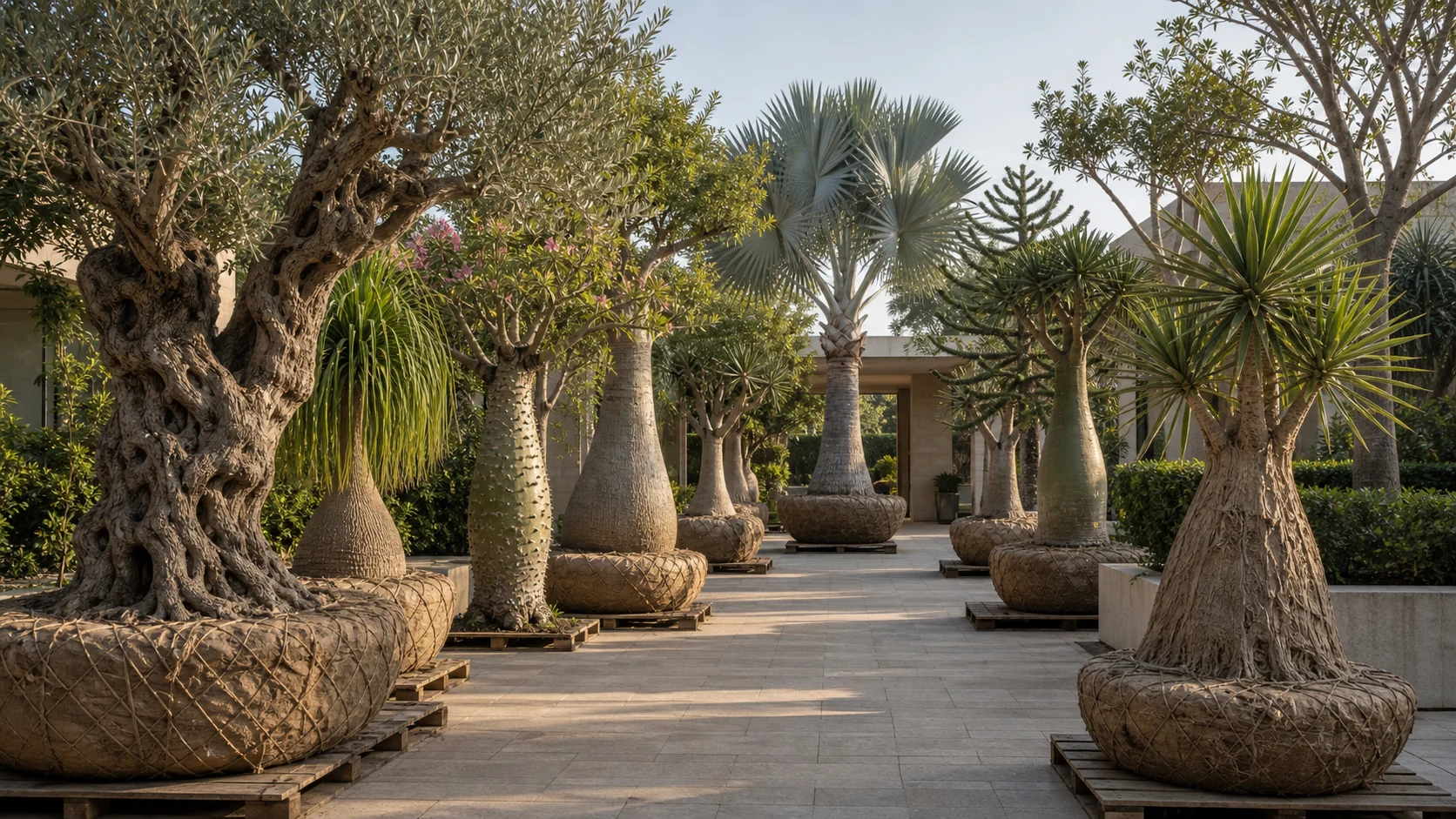
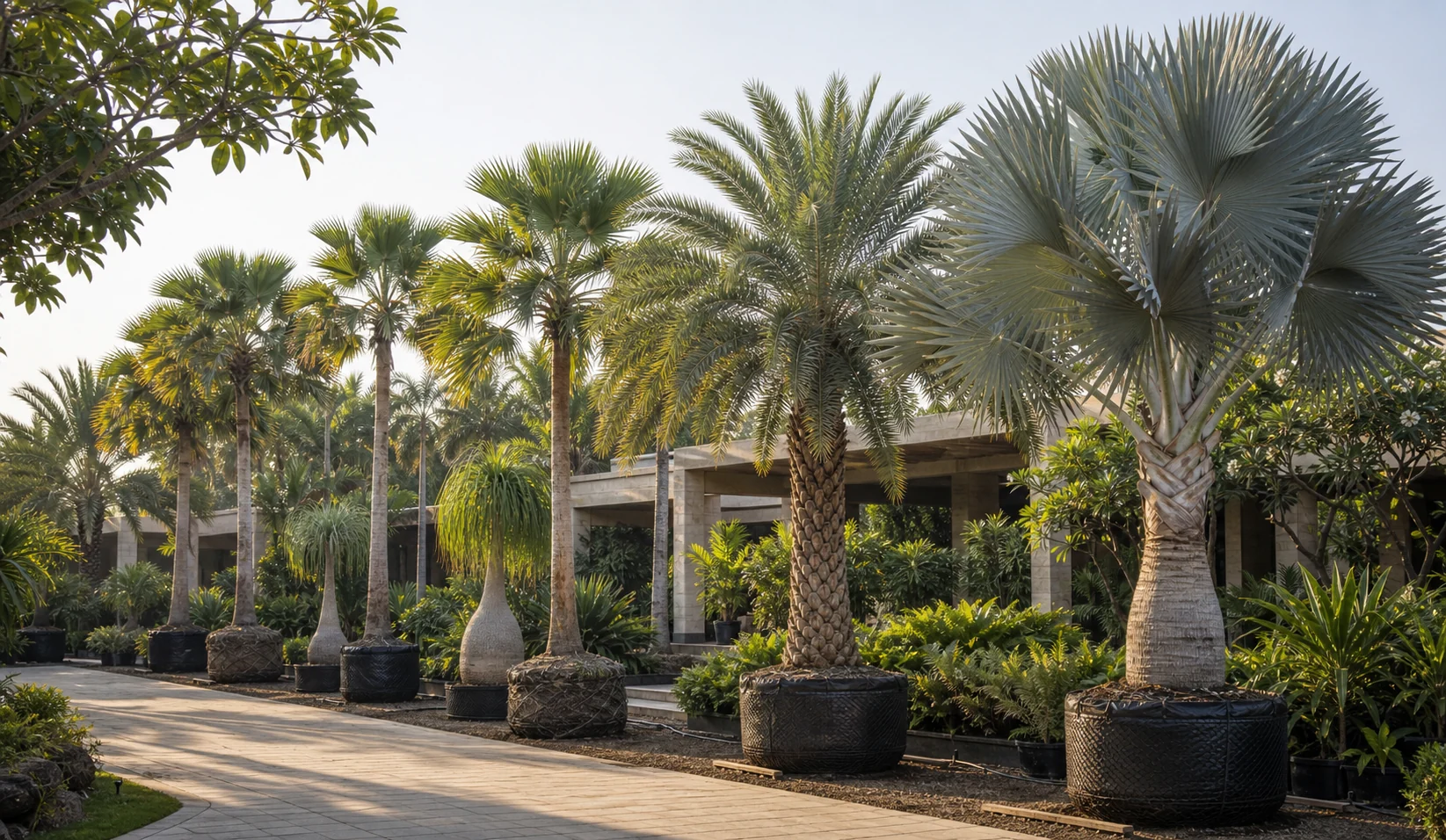
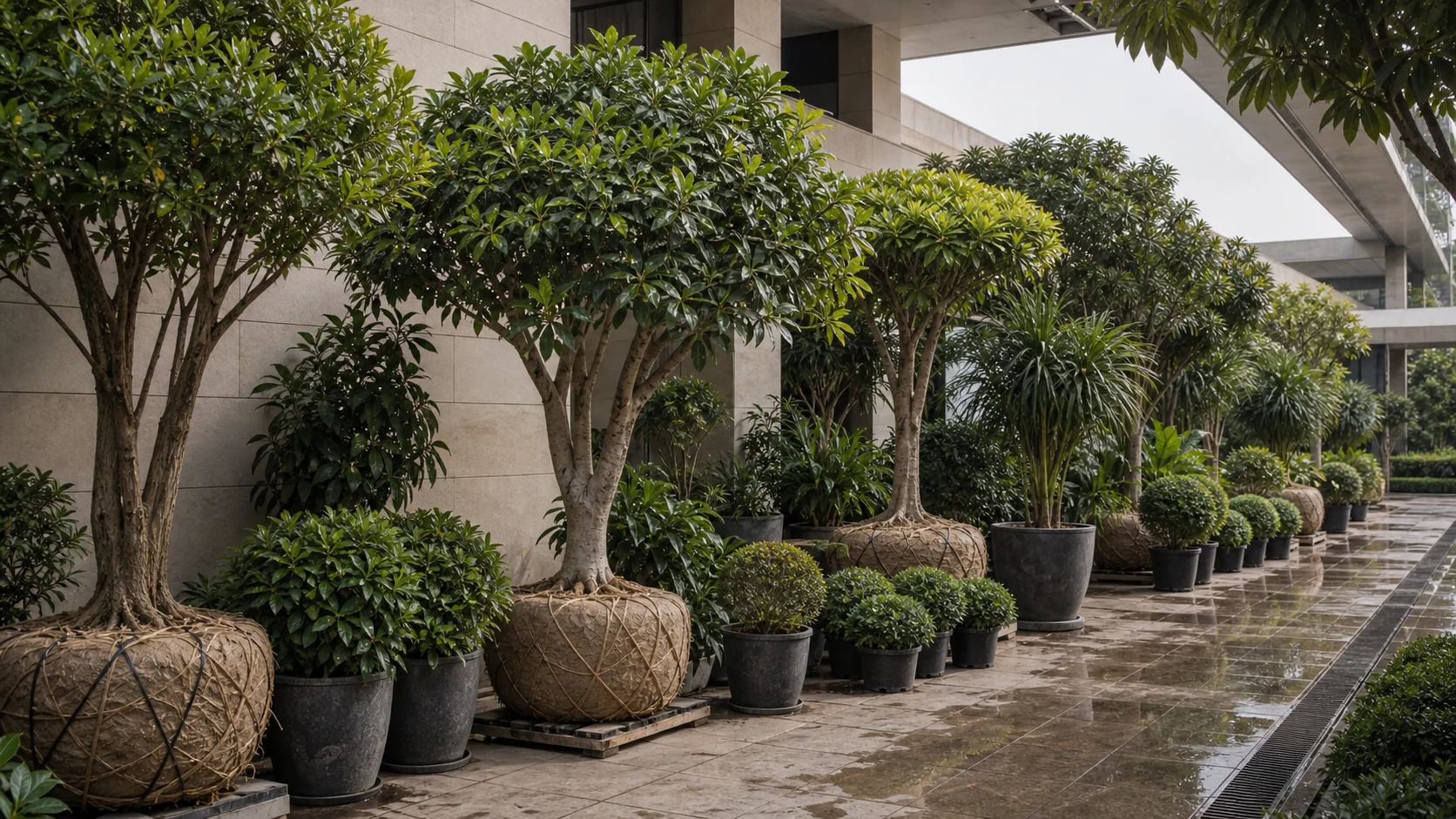
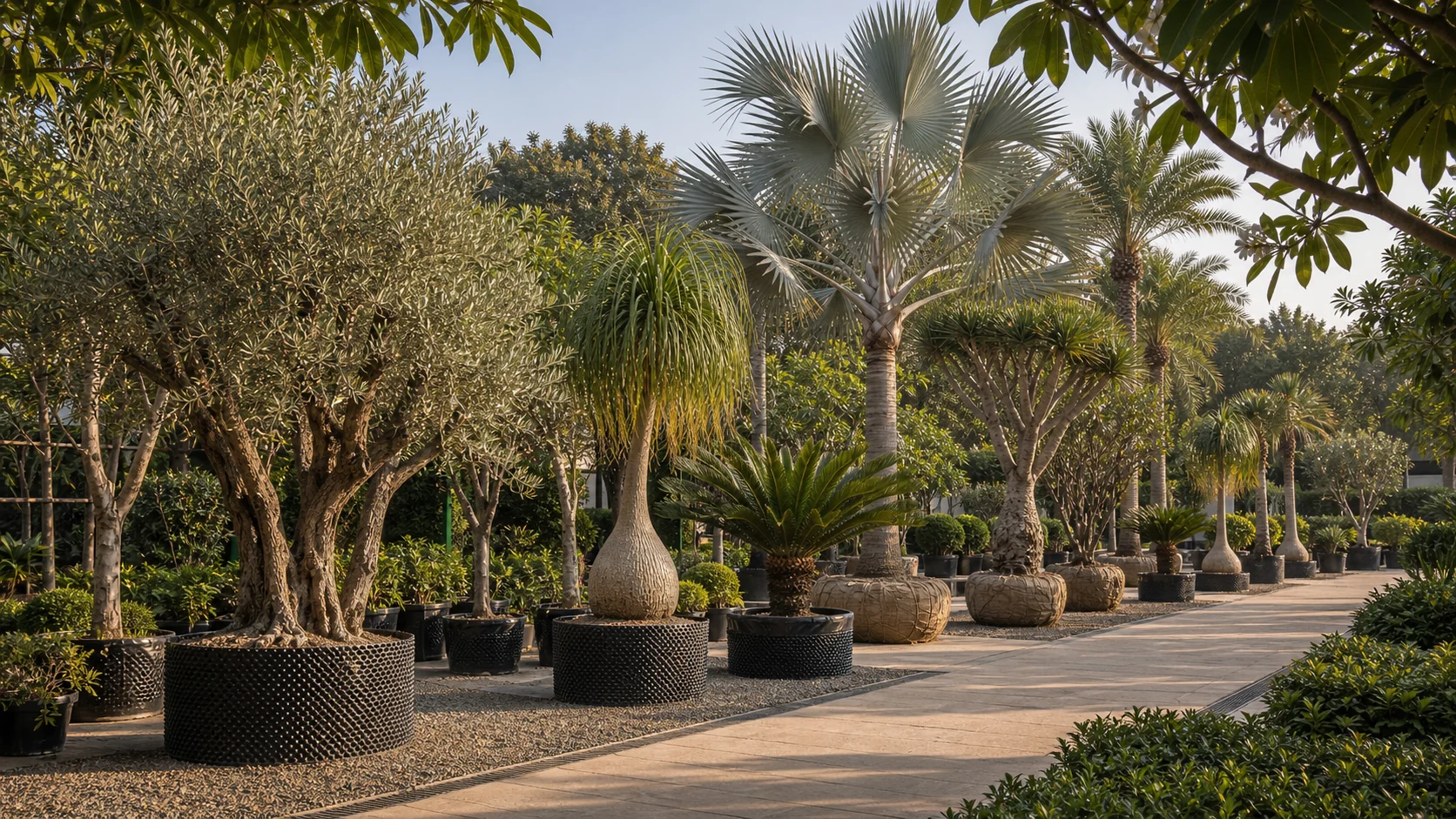
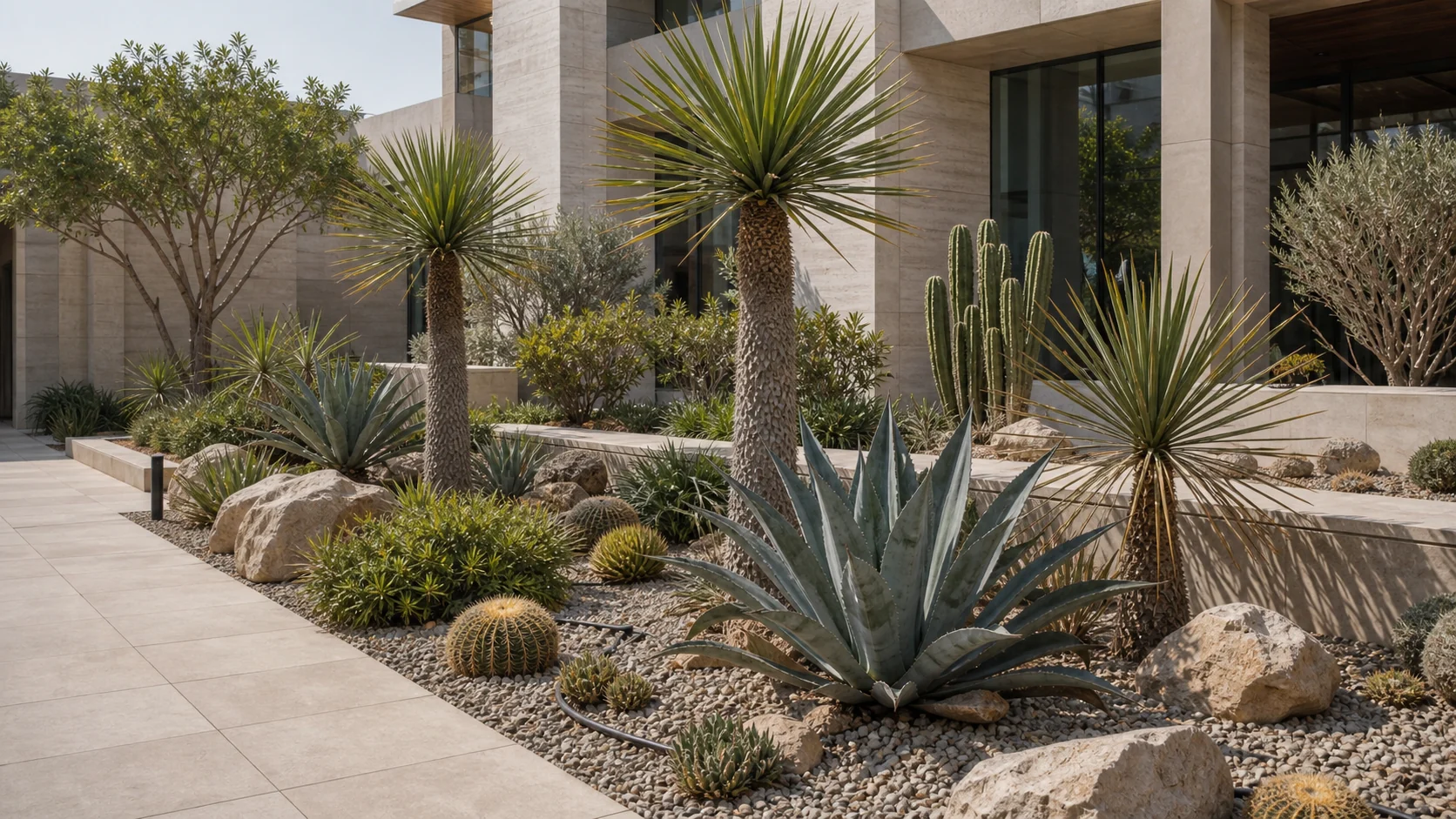
Visual context for placement, scale, handling, and landscape integration.
Section
Tropical coastal climate and cyclone exposure
Persistent humidity and marine influence raise foliar disease pressure on Mediterranean silver foliage and challenge root zones where crowns stay wet from overspray. Pre-monsoon heat builds before intense monsoon delivery tests every podium drain. Cyclone-season wind loads on tall feather palms and wide crowns require bracing plans with documented removal criteria — not indefinite staking. Salt exposure varies between OMR waterfront parcels and inland IT parks — species tolerance must match block exposure, not city averages. Failure modes on poorly drained pits appear within the first monsoon if overflow was value-engineered out. ECR resort corridors add pool-deck litter and guest-safety constraints — species selection should reference litter class on species pages before marketing renders lock tall Phoenix or Caryota classes near guest circulation. Procurement teams should treat red palm weevil monitoring on Phoenix canopies as establishment AMC scope on humid coasts, not optional add-on after possession disputes begin.
Section
Logistics on corridor and campus sites
OMR, ECR, and Sriperumbudur logistics mix resort, IT, and industrial campuses with oversize transport and crane coordination. Night hoists reduce guest and shift disruption on occupied hospitality assets. Crown spread on mature fan palms exceeds many porte-cochère clearances — survey before design freeze. Basement ramps and finished paving need protection during rootball moves. Utility conflicts on older campuses require pit validation before dig. Industrial corridor access may require escorted oversize moves and temporary road closures — programme float should name these hold points before BOQ freeze rather than absorbing delays silently after civil handover.
Section
Resorts, IT parks, and institutional demand
Resorts along ECR specify pool-deck and arrival palms with litter scope and guest-safety setbacks. IT campuses on OMR use architectural statements at lobby approaches and central courts. Hospitals and institutions need ambulance paths and shade without crown conflict on mature specimens. Developer sales galleries on peripheral corridors want maturity for photography — establishment must precede marketing dates honestly. Luxury hospitality on Anna Salai and central corridors adds colonial-era court constraints — mature crown spread may exceed heritage clearance assumptions; structural survey should precede species lock on wide fan palms. Mixed-use retail atria may shift interior specimen scope where exterior salt and humidity profiles fail Mediterranean arrivals — coordinate HVAC and light interfaces outside fragmented landscape packages before BOQ award.
Section
Tropical palette and honest species fit
Robust palms with wind notes suit open arrivals when braced — species pages distinguish self-cleaning behaviour near pools. Olive and Mediterranean taxa need mound drainage and disease monitoring; humid districts punish waterlogging. Foliage and ficoid specimens suit sheltered courts. Flowering trees add colour where petal drop AMC is accepted. Desert taxa only with strict drainage and irrigation caps. Indoor specimens for atrium lobbies require light and HVAC coordination. Category hubs on this vertical group taxa by use case; each species page states cyclone wind and humidity failure modes so procurement can reject dry-region catalogue photos without coastal engineering context.
Section
Anchoring, pits, and establishment
Pit engineering ties to storm overflow and structural slab waterproofing on podium. Rootball handling and orientation protect clear-trunk investment. Acclimatisation reduces shock between nursery hold and cyclone season. Red palm weevil vigilance on Phoenix canopies belongs in establishment scope on humid coasts. Irrigation must avoid nightly crown soaking on salt-stressed silver foliage. STP or municipal supply integration drives emitter and filtration choices — chemistry tests should precede species lock on silver-leaved taxa. Replacement clauses on large transplants should be contract-defined before install when species carry higher cyclone-season risk at maturity.
Section
AMC through monsoon and dry spells
Seasonal controller profiles separate monsoon from dry months. Frond sanitation and litter near guest paths are line items. Disease flags escalate to arborist review — not blanket spray schedules. Bracing removal follows anchor observations. Replacement boundaries on large transplants should be contract-defined before install. FM handover includes valve charts, salt-wash cadence where specified, and escalation triggers for fungal pressure on Mediterranean foliage — reporting supports hospitality audit trails without vague sustainability language disconnected from specified species.
Section
Mobilisation and proof discipline
Four Leaf programmes in Chennai are scoped from site assessment with pan-India mobilisation per contract. Published portfolio entries do not substitute for your site walk or species stock confirmation. Share exposure, access, and handover date for shortlist and pit notes. Honest mobilisation means crane sequencing, acclimatisation hold, and establishment team structure are planned per enquiry — roster history does not confirm specimen availability on your OMR or ECR parcel without survey and species confirmation against salt and cyclone exposure.
Section
Procurement and pricing
Explore
Related
Related
Related links
Services, segments, cost, and proof.
- How does cyclone exposure change palm BOQs in Chennai?
- Bracing duration, crown reduction policy, and species wind tolerance should be specified — open waterfront parcels differ from sheltered IT courts. Engineer notes should state removal milestones tied to root anchor observations, not indefinite staking through cyclone season on ECR resort and OMR IT campus arrivals.
- Can olives survive Chennai humidity?
- On drained mounds with disease monitoring, some sites succeed — waterlogging and crown wetting fail olives; cultivar and fruit decisions matter. Procurement should request submittal photos matched to measured classes and honest peacock-spot escalation paths in establishment AMC on humid coastal blocks.
- What pool-edge palm litter issues should hotels plan for?
- Choose low-litter species per pages or define AMC cleanup cadence — high-frond-drop palms off guest circulation. Pool-deck setbacks and bracing scope should be written before species lock on ECR resort arrivals where guest safety and photography both drive the brief.
- When should cranes be scheduled around monsoon?
- Many teams target pre-monsoon with irrigation live or post-monsoon establishment — hoisting in peak saturation needs explicit risk ownership. Cyclone-season programmes should name bracing duration and anchor observation gates before contract award on tall feather palms at open waterfront parcels.
- Are anchoring and bracing the same scope item?
- Bracing supports fresh transplants until root anchor; anchoring may extend on exposed sites — engineer notes should define removal milestones. Cyclone-season wind on OMR waterfront parcels often extends bracing duration beyond inland IT court assumptions — species wind tolerance should gate submittal approval.
- What documentation applies to imported consignments?
- Phytosanitary and inspection steps per shipment — informational checklist on compliance page; not legal advice. Procurement should align paperwork review to crane schedule so regulated consignments are not hoisted before inspection hold points clear on occupied resort and IT arrivals.
- How does Four Leaf mobilise to Chennai?
- Site assessment first; logistics and establishment planned per contract — no implied local specimen inventory without enquiry. Share OMR versus ECR exposure orientation and pool-deck litter requirements so species shortlist and bracing duration reflect parcel microclimate before marketing renders lock tall palms near guest circulation.
- What documentation should Chennai resort procurement require before crane day?
- Species submittals matched to measured trunk and crown classes, bracing engineer notes with removal milestones, pit and drain drawings signed off against structural waterproofing, and establishment AMC scope naming litter cadence near pool decks. Import consignments need phytosanitary paperwork per shipment aligned to the informational compliance checklist — not assumed complete because stock transited from another coastal city.