
Gallery
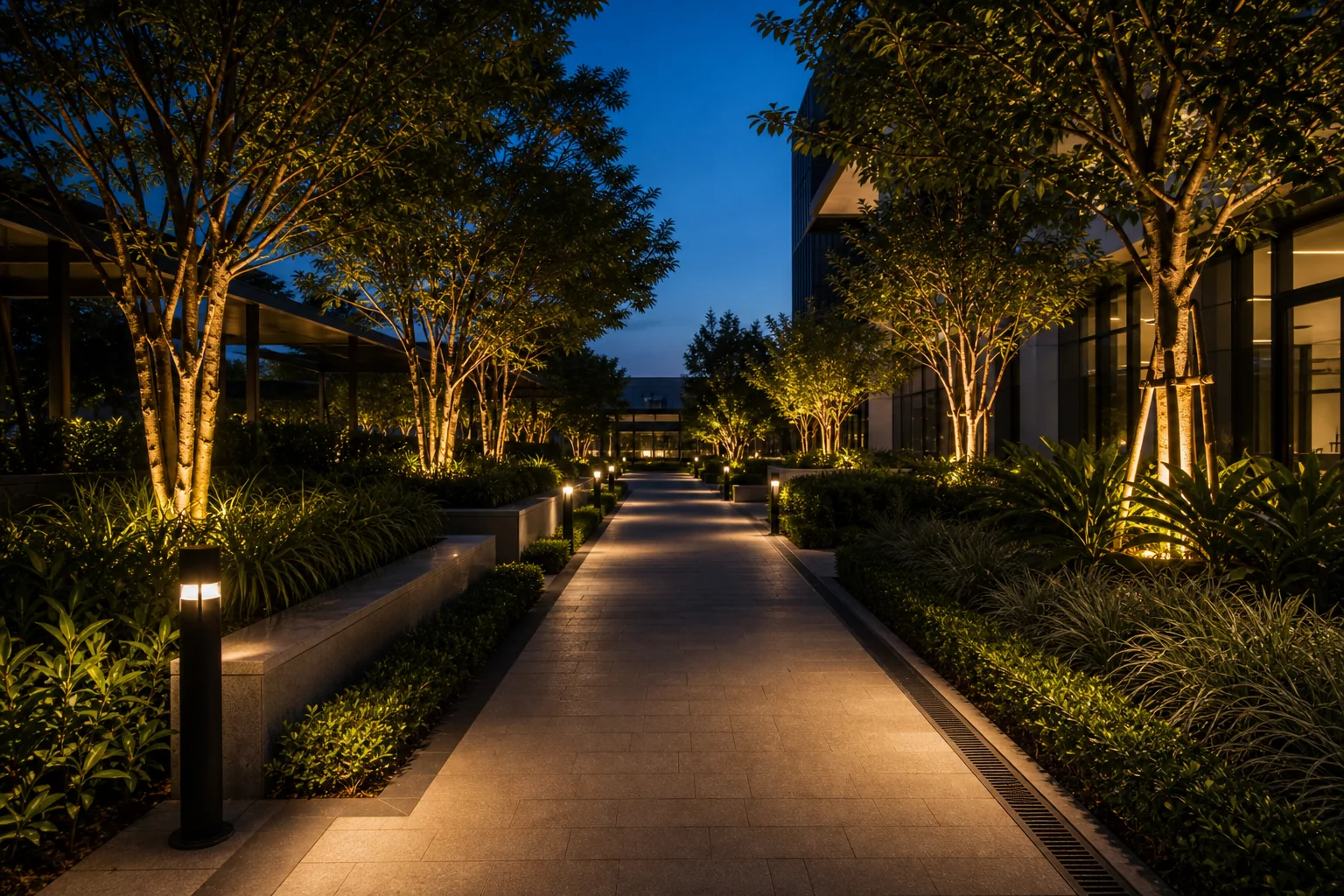
Visual scope gallery
Visual references for this service line.
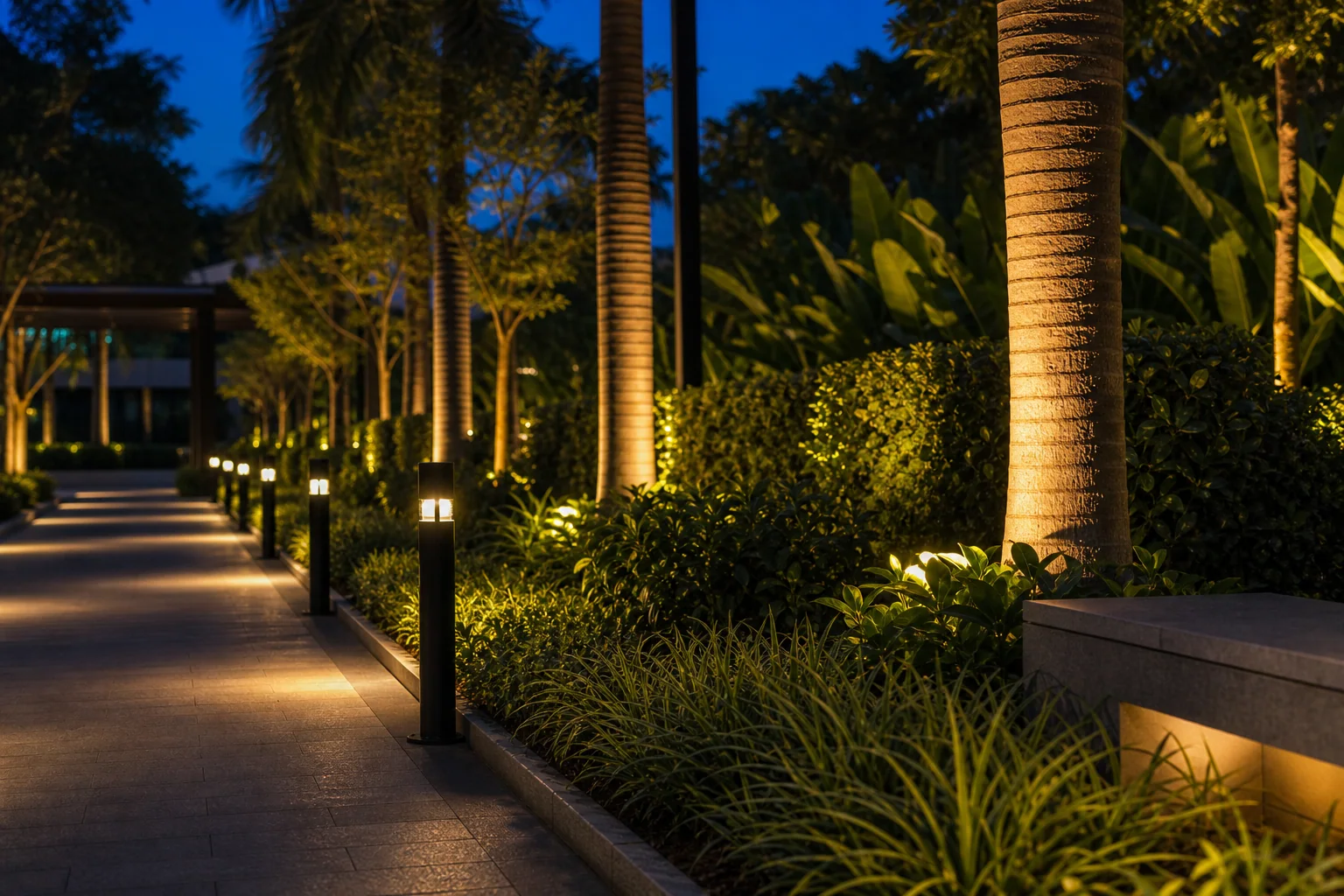
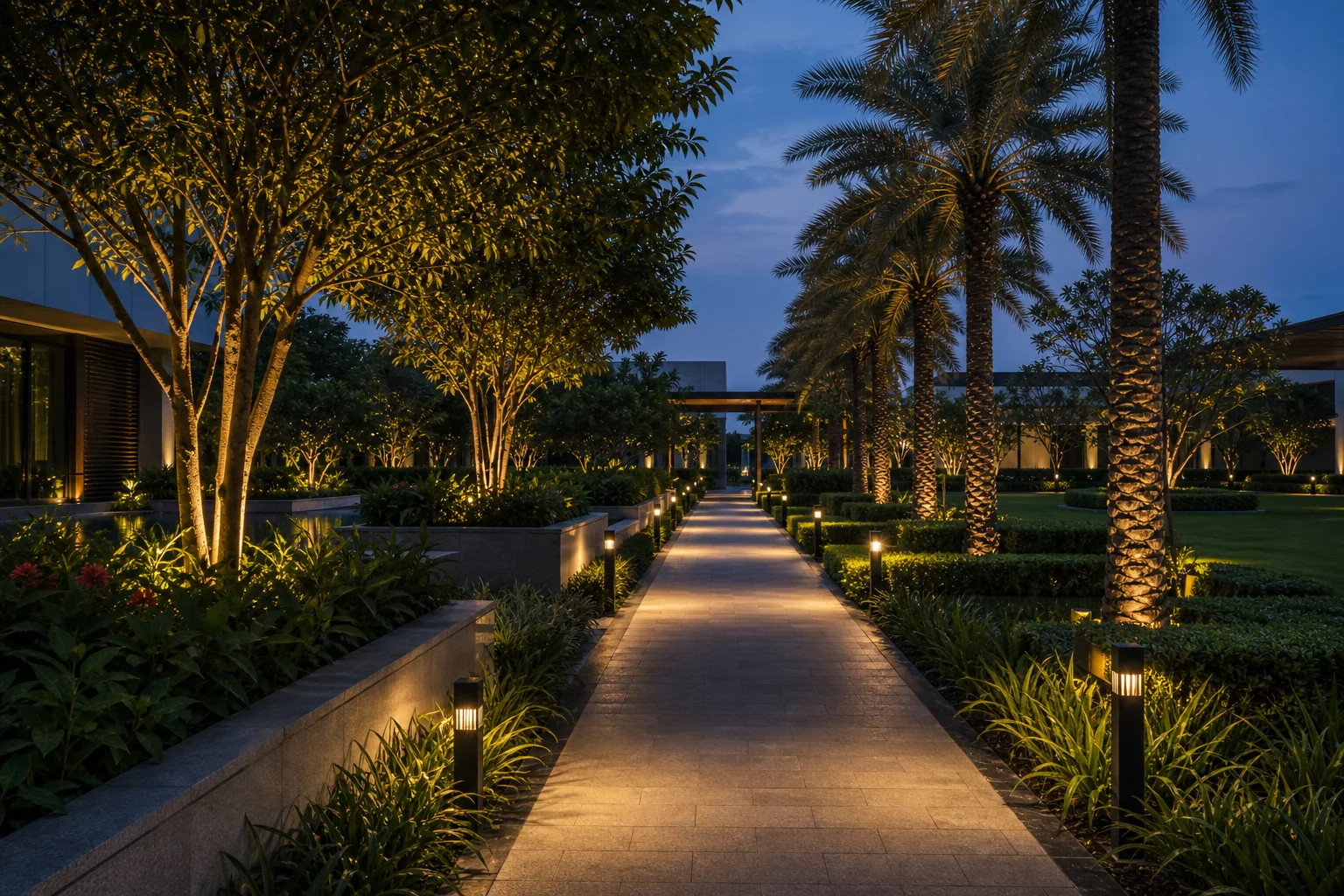
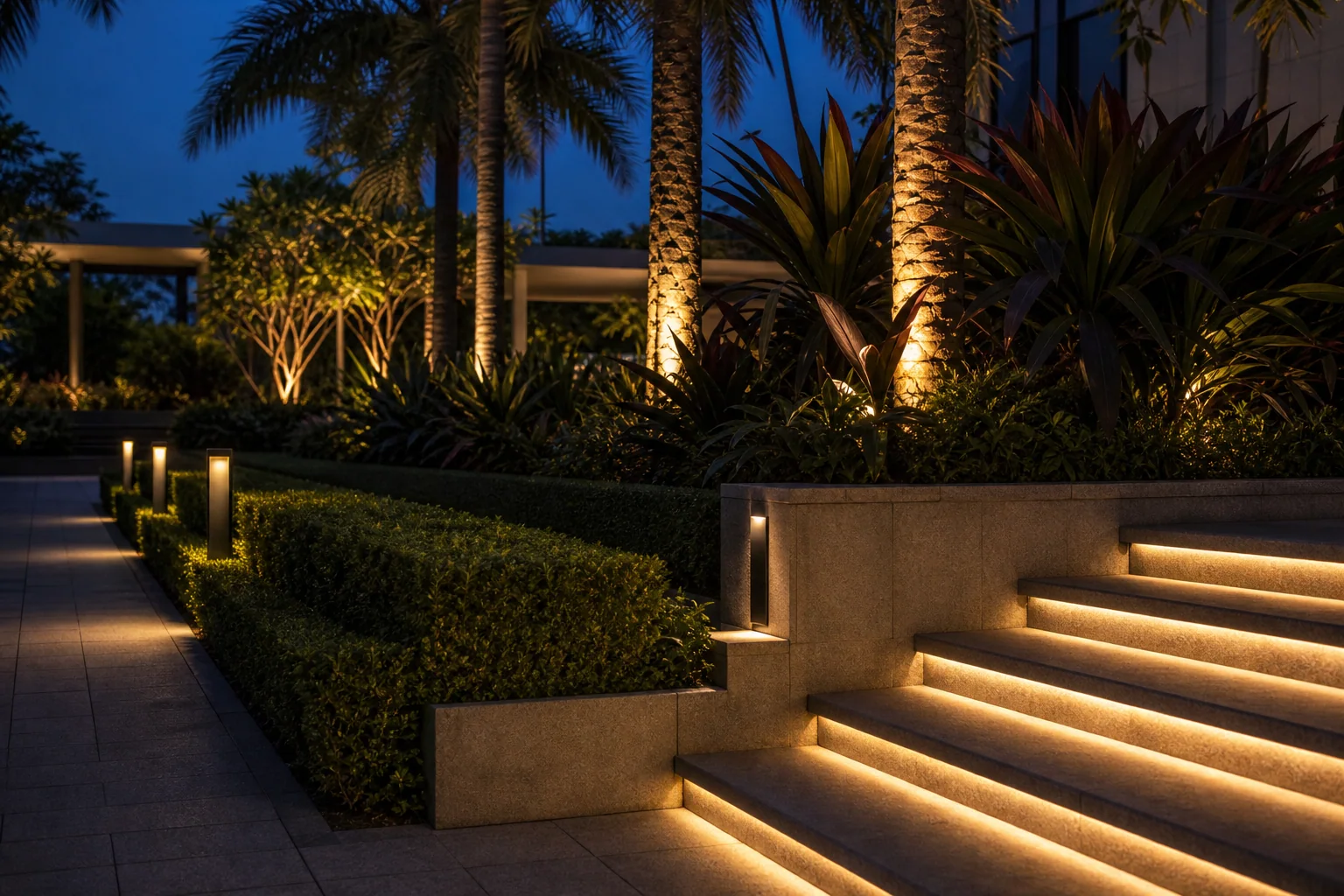
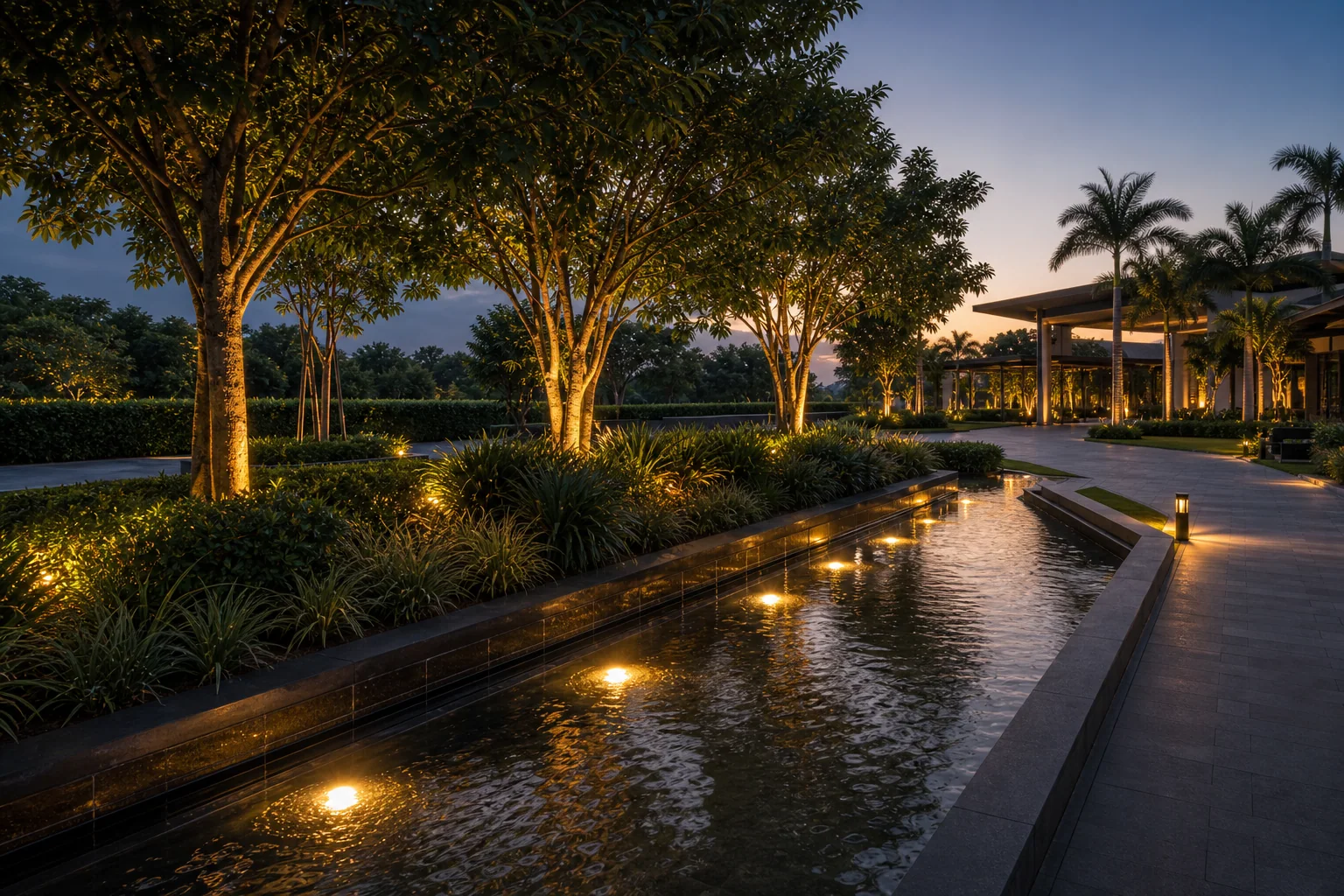
- BOQ-linked scope documentation
- Material specs and submittals
- Phased execution milestones
- Handover and O&M notes
What procurement teams expect from landscape lighting services
For premium landscaping company shortlists, outdoor lighting should be specified as part of the landscape system, not added after paving and planting close access. On institutional sites, landscape lighting is operational infrastructure tied to circulation safety, security sightlines, and brand perception after dark. Strong specifications deliver a clear hierarchy. Safe paths and ramps come first. Architectural features follow. Accent lighting sits where the budget allows. Procurement teams should expect a lighting intent plan aligned with architect or lighting designer briefs when appointed. Colour temperature should stay consistent along guest routes. IP ratings must match splash and monsoon wetting zones. Cable routes should be segregated from irrigation trenches where codes require. Energy use, group control for curfew dimming, and labelled junction points for fault finding should be documented before commissioning, not added during snagging.
Scope of work and deliverables
A typical landscape lighting package follows a clear sequence. First, design coordination from concept or design-build against the lighting intent. This includes fixture schedules, circuit grouping, and transformer or driver locations with maintenance access. Second, trenching or surface containment as agreed, LV cabling, drivers and transformers in ventilated enclosures, fixture installation and aiming, and coordination with civil for core-drilling and hardscape for inground niches. Third, controller or scene integration where specified, earth fault and insulation testing, and as-laid drawings with circuit IDs. Fourth, night commissioning with client walkthrough, scene setting, lux spot checks where criteria are defined, and O&M manuals listing lamp or module types, driver models, and spare part codes. DMX or smart scenes for hotels are coordinated with AV consultants when in scope. Landscape-owned bollards and tree lighting are in our scope. Full facade schemes are usually architect-led. Four Leaf coordinates landscape-owned interfaces, loop tests, and circuit boundaries at agreed termination points.
Specifications: fixtures, IP ratings, glare control, and controls
Fixtures are selected for glare control, cutoff near bedrooms and neighbouring towers, corrosion resistance in coastal or pool chlorine environments, and field-replaceable LED boards and drivers. Bollard heights and spacing follow project lighting study references or IS guidance where applicable. Spike, inground, and underwater fittings each carry different maintenance burdens. Access needs are disclosed in the BOQ. Colour temperature is resolved in lighting intent workshops. Hospitality paths often use 2700-3000K. Corporate exteriors sometimes use 3000-4000K. Group control by astronomical clock or BMS signal lets hotels dim non-critical circuits after midnight without dark security zones. Scene presets for events should be documented so FM can recall them without calling the commissioning programmer. Surge protection on LV feeds matters in lightning-prone monsoon belts.
Process, commissioning, and handover documentation
Hold points include cable route completion before mass planting where trenches cross beds, inground fitting installation after paving tolerance is set, and panel labelling before defect liability starts. Commissioning includes night aiming with client walkthrough, scene setting, lux spot checks against criteria if defined, and labelling at panels to match as-laid drawings. Handover is based on night commissioning and documented test results, not daytime inspection alone. Snagging addresses hot spots, dark zones at steps, uplight backscatter on windows, and overloaded circuits from late scope creep. We train FM on manual override, seasonal timer adjustment, and basic fault finding. Rain and monsoon commissioning confirms no water ingress in inground fittings before handover. As-laid CAD and PDF, circuit schedules, and spare part lists transfer at turnover.
Risks and failure modes to control
Common failures include water ingress in inground fittings, cable cuts during planting, over-aimed glare into guest rooms, and uncoordinated transformer locations in damp pits. Tree growth blocks intended beams. Design should allow adjustment and AMC should budget re-aiming visits. Theft of brass fixtures in public malls needs security fixings. Light spill onto adjacent residential towers draws complaints in dense Delhi NCR and Mumbai contexts. Cutoff bollards and shielded uplights reduce grievances. Pool deck lighting must respect glare into lifeguard sightlines. Uncoordinated facade and landscape circuits leave gaps or double margin. Interface ownership must be explicit in the tender. Solar fixtures are rarely reliable for primary commercial paths. Mains LV is standard for institutional sites.
BOQ and procurement checklist
A procurement-ready BOQ should list fixtures by type and wattage, cable lengths by circuit, drivers, enclosures, control system, commissioning nights, and a spares percentage. Separate facade lighting owned by the facade contractor from landscape-owned fittings to avoid double margin or gaps. Call out imported fixture lead times. Twelve weeks is common and must sit inside civil coordination. Industrial sites need IK-rated bollards near forklift paths. Hotel arrival courts need graded lux transitions so eyes adjust between valet zones and planting beds. Tie each circuit to a drawing index and panel label. The cost guide and outdoor lighting cost calculator help frame ranges before BOQ lock. Contact us during RFP preparation for site-specific fixture and circuit review.
Phasing with hardscape, planting, and opening dates
Early cable routes before planting are ideal. Inground fittings install after paving tolerance is set. Hotels may need phased commissioning per wing opening. Malls may need night-load tests before trading. Developer phases may leave future circuits capped and labelled for expansion. Landscape lighting must coordinate with irrigation trenching so neither trade blocks the other. Temporary construction lighting on large campuses hands off to permanent landscape circuits with panel relabelling when towers open in sequence. Monsoon installation windows affect inground fitting sealing. Programme sealing and commissioning around wet-season dates.
Handover, documentation, and AMC implications
FM and AMC teams inherit circuit schedules, scene documentation, and re-aiming notes at handover. Lighting maintenance is often bundled in landscape AMC or a separate electrical AMC. The contract should state the owner clearly. Annual re-aiming visits catch tree growth and vandalism shifts. Spike-mounted tree lights need repositioning as canopies expand. LED module replacements are faster than legacy lamp changes, but driver compatibility must be logged in O&M manuals. Post-handover, AMC programmes can include lamp or module replacement, driver swaps, scene updates, and night audits when scoped in the contract. See the landscape maintenance AMC service page for annual contract structure. Defect liability for workmanship follows the main landscape contract terms. Manufacturer warranties on fixtures and drivers apply per product terms where applicable.
Where commercial landscape outdoor lighting matters across markets
Lighting priorities shift by segment across India. Hotels layer porte-cochere moonlighting, path bollards, and arrival water features. A clear hierarchy prevents competing focal points. Corporate campuses need security lux at perimeters without dazzle for guards, plus car park bollard rhythm on landscape islands. Malls need safe parking-to-terrace transitions, insect-aware colour temperature on food courts, and documented interfaces with retail facade grazers. Industrial yards need robust IK-rated fittings and vibration-resistant terminations. Segment pages describe procurement language for each buyer type. Delhi NCR, Gurugram, Mumbai, Bengaluru, and Jaipur city pages note light-spill constraints, monsoon ingress risks, and logistics differences. For hardscape levels, water features with submersible fittings, softscape planting that affects beam paths, and irrigation trenches that cross cable routes, see hardscape, water features, softscape, and irrigation service pages. Request a site assessment via contact when BOQ and lighting intent drawings are ready for review.
Relevant projects
A selection of executed landscapes across hotels, campuses, and institutions. Browse the full portfolio on our projects page.
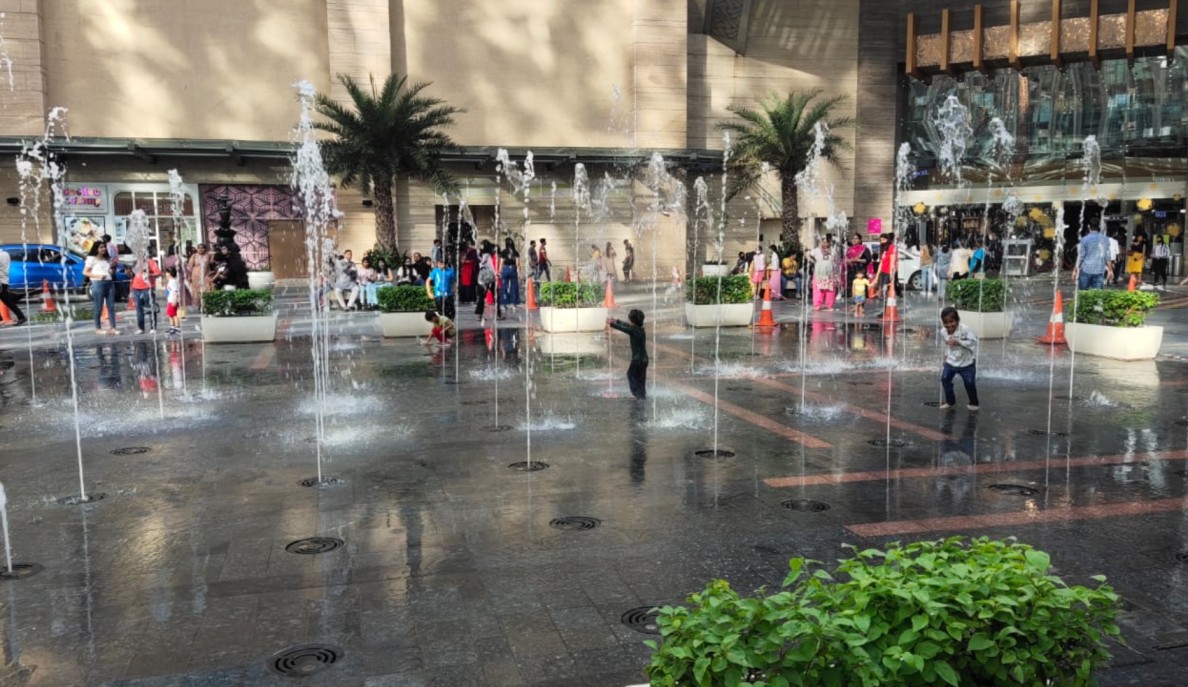
CK Birla Hospital, Gurugram
Gurugram, Haryana
Hospital campus outdoor works — arrival, buffers, patient-visible greens
View project →
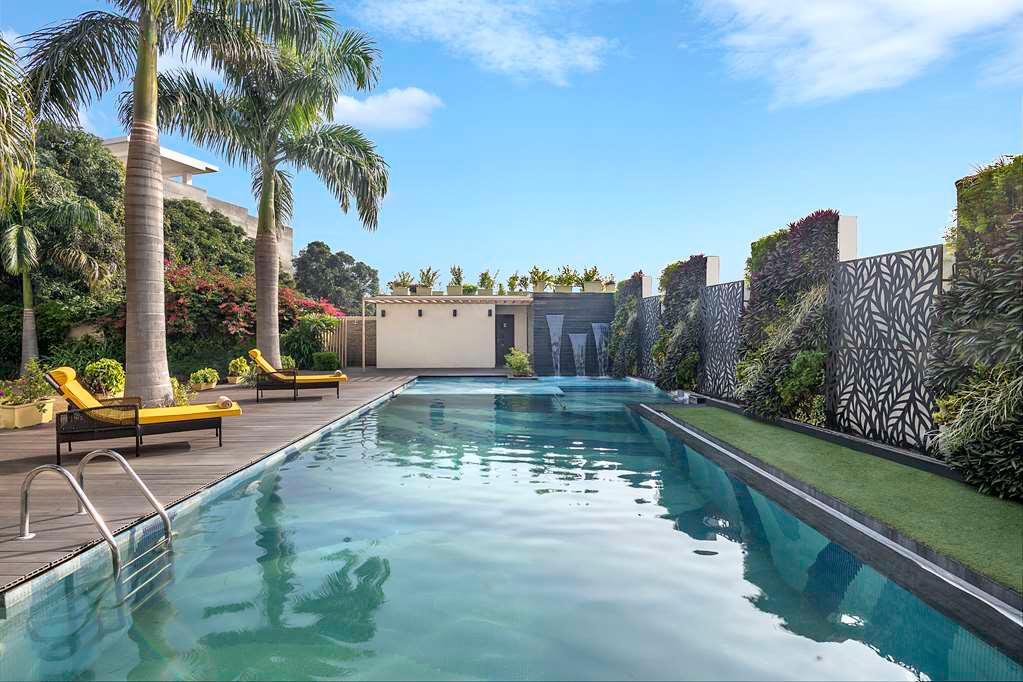
Hero Motocorp, Gurugram
Gurugram, Haryana
Large-format corporate campus outdoor works
View project →
Hilton Garden Inn, Gurugram
Gurugram (Sector 50), Haryana
Hotel arrival and outdoor guest-visible landscape
View project →
Related markets, services, and resources
Procurement teams often cross-reference segment scope with craft pillars. Use these hubs to navigate commercial landscaping execution across India.
Markets
Related services
FAQs
- How does this service fit into broader landscaping services?
- This service is usually specified as one part of a complete landscape package. It links with landscape design services, hardscape, softscape, irrigation, and landscape maintenance AMC depending on the site scope and handover model.
- Do you handle full facade lighting schemes?
- Landscape-owned bollards, path lights, and tree lighting are in our scope. Full facade schemes are usually architect-led. Four Leaf coordinates interfaces, loop tests, and circuit boundaries at agreed termination points.
- Warm white or cool white for commercial landscapes?
- Hospitality paths often use 2700-3000K. Corporate exteriors sometimes use 3000-4000K. Colour temperature is resolved in lighting intent workshops and should stay consistent along guest circulation routes.
- Can solar fixtures serve primary commercial paths?
- Rarely for primary commercial paths due to reliability and lux consistency. Mains LV with group control is standard for hotels, campuses, and malls.
- Who maintains landscape lighting after handover?
- Often bundled in landscape AMC or a separate electrical AMC. The contract should state the owner. Re-aiming, module replacement, and scene updates can be scoped in the annual programme when agreed upfront.
- Can you programme dimmable scenes and event presets?
- Yes with compatible drivers and controllers. Scenes should be specified early to avoid retrofit cost. FM training and written recall instructions belong in the handover pack.
- What IP rating applies near pool decks and splash zones?
- Typically IP65 or better on deck zones subject to splash. Exact rating per electrical consultant and local code. Monsoon wetting on planted paths needs comparable ingress protection for inground fittings.
- How do you address light pollution and neighbour complaints?
- Cutoff fixtures, shields, curfew dimming, and graded transitions reduce spill onto adjacent towers and bedrooms. Dense NCR and Mumbai sites need early coordination with architect and neighbour interface reviews.
- What lead times should procurement allow for imported fixtures?
- Imported fittings may need twelve weeks. Programme into civil coordination and hold landscape cable routes until fixture schedules are confirmed to avoid rework.