
Gallery
Procurement context
Visual references supporting this guide with landscape scope and detailing context.


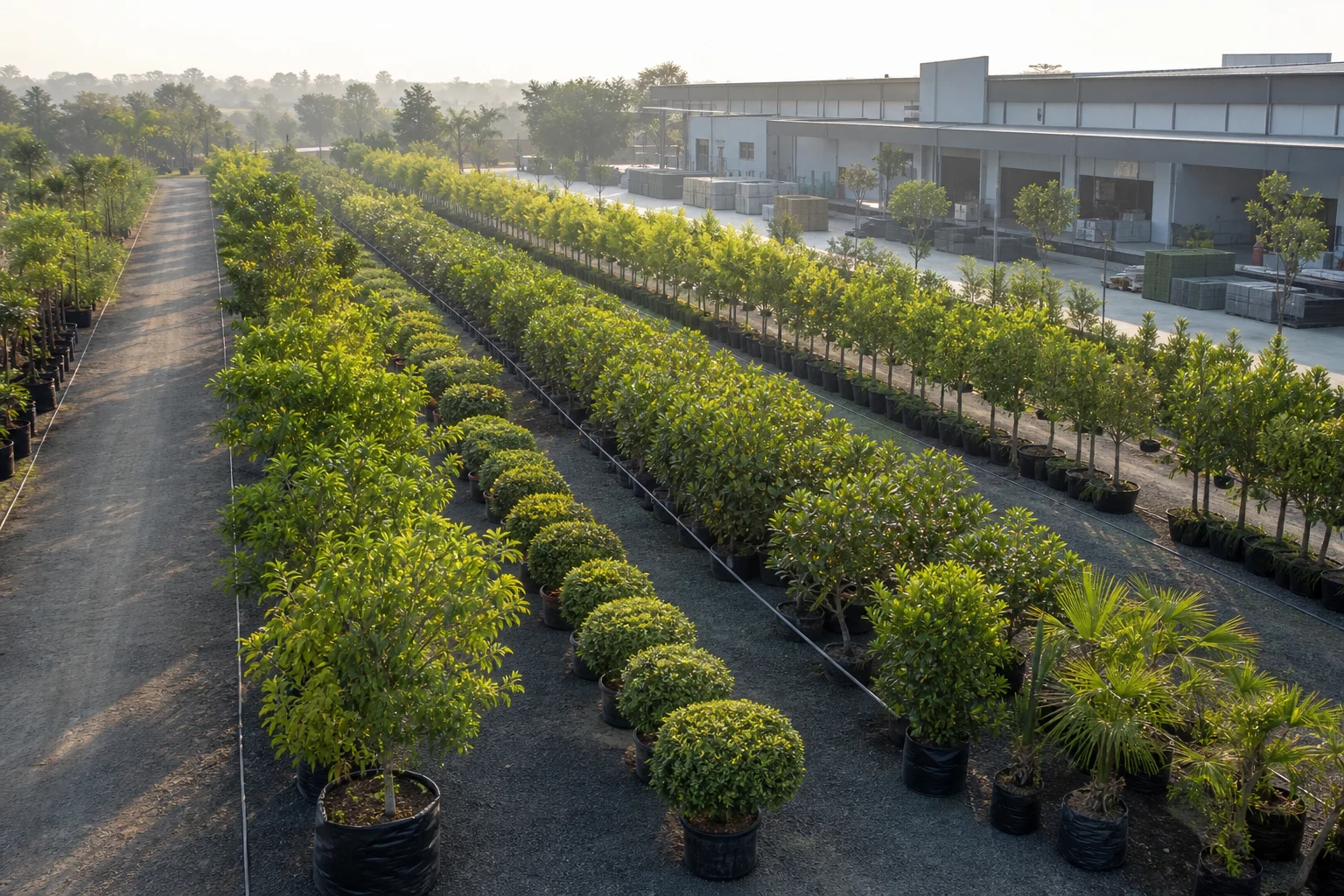

What scope and packages should a commercial landscape QA checklist cover?
Organize QA by execution packages that match BOQ sign-off reality: civil bases and hardscape, softscape and horticulture, irrigation and water management, water features, outdoor lighting, and establishment care where in scope. Each package needs named hold points, evidence requirements, and acceptance ownership before the next package mobilises.
A checklist that stops at a generic garden walkthrough leaves procurement comparing one completion date while contractors priced different verification depth. Align package names with your landscape BOQ format guide so tender, site supervision, PMC, and FM teams use the same vocabulary from mobilisation through closeout.
Which site constraints and civil interfaces need hold points first?
Before softscape and hardscape finishes, verify base layers, levels, edges, and interface boundaries where drainage, paving, podium waterproofing, and planter walls meet civil scope. Record what is ready, who signed off, and what remains open so rework traces to the correct package instead of absorbing landscape delays.
Occupied-site constraints belong in the QA preamble: night-quiet rules on live hotels, phased zone release, specimen tree access through active buildings, and monsoon curing windows. When constraints are undocumented, hold points get skipped under schedule pressure and defects surface after finishes are installed.
How do you verify drainage and irrigation before hardscape and planting closeout?
Drainage QA checks at each hold point: slopes and fall lines; inlet positions; channel continuity through paving and planter walls; outfall behavior under controlled wetting or early monsoon observation; and timing before hardscape and planting closeout. Verify early because drainage corrections after finishes are usually expensive, slow, and disputed across civil and landscape interfaces.
Irrigation commissioning should include pressure zone mapping, valve and controller checks, handover settings for programs and run times, coverage observation against design intent, and leak tests at tie-in points with civil and MEP. Document what was tested, what was adjusted, and what becomes part of as-builts so FM teams maintain without guessing. Model irrigation scope assumptions with the irrigation system cost tool when BOQ zone counts or controller tiers are still being validated.
What planting establishment checks belong in the QA sequence?
Establishment QA should define stages through the first growing season: planting alignment to schedule, root-zone preparation, initial irrigation tuning, watering and nutrition cadence, replacement thresholds, mortality reporting frequency, and contract duration. Routine care during establishment is not the same as AMC scope; procurement should see replacement allowances and period in contract language, not informal after handover discussion.
Specimen trees, hedge lines, turf establishment, and podium planters each need observable criteria: plant health at installation, staking or guying where specified, mulch and edge finish, and aftercare logs with dates and actions. Good records make AMC onboarding faster and reduce disputes when mortality exceeds verbal expectations after soft opening.
How should snagging and acceptance be structured before handover?
Acceptance should run as a punch list with rectification ownership, interface party, and closeout deadline tied to zone release or soft opening. Group items by risk so teams can scan quickly: safety and trip hazards; irrigation leaks and valve access; drainage ponding; planting establishment failures; lighting termination and control faults; then guest-visible hardscape and finish defects.
Agree measurement and sign-off per package, especially for interfaces visible to operations teams. Link snagging outcomes to retention release and payment milestones so corrected items do not reappear as disputed maintenance scope after turnover. Cross-check snagging grouping with your hotel soft-opening snagging guide when hospitality timelines drive acceptance.
What documentation and as-builts should each QA checkpoint produce?
Each hold point should name its evidence: photos or logs, measurement sheets, commissioning notes, as-builts, O&M references, valve charts, controller program notes, and planting zone records where relevant. As-builts should capture installed reality for irrigation layouts, lighting termination points, and hardscape or planting zone boundaries, not redrawn design intent that never matched site conditions.
Include O&M guidance and a maintenance program outline with responsibilities and cadence so FM can execute AMC with clear boundaries. Procurement should require deliverable formats and due dates in contract language. Align documentation lines with your as-builts and O&M handover guide and project phases guide so closeout expectations stay consistent from BOQ through turnover.
How does the QA checklist connect to BOQ, payment milestones, and AMC scope?
Hold-point names in the QA checklist should map to BOQ packages and payment milestone triggers so verification depth is priced and released consistently. When QA language sits only in a site memo, bidders price different observation effort and retention disputes follow incomplete evidence at practical completion.
Establishment care belongs in construction QA; AMC belongs in operating scope with separate visit frequency, replacement budget, storm response tiers, and reporting cadence. Model AMC boundaries with the landscape maintenance AMC calculator before contract approval. Cross-check QA hold points with your rate analysis guide, quotation comparison checklist, and RFP tender checklist so evaluation matrices reward comparable verification discipline.
What common QA gaps cause rework after scope freeze?
Recurring gaps include: drainage accepted only by visual walk before monsoon, irrigation commissioned without zone records, establishment care bundled invisibly inside planting lines, lighting termination undocumented for FM, and subcontractor handoffs with no named sign-off per package.
A second failure mode is treating QA as a single practical-completion walk while retention and AMC tenders assume complete as-builts. Treat unsupported closeout assurances as bid risk until backed by named hold points, evidence requirements, and signed acceptance logs per package.
When should procurement escalate to a site assessment?
Schedule field validation when levels, soil depth, drainage outfalls, podium waterproofing interfaces, specimen access, or occupied-site safety cannot be confirmed from drawings alone. Desk QA plans often miss live-building constraints that change hold-point sequence and mobilisation cost.
Request a site assessment through contact once tender documents, BOQ hold points, and handover deliverables are aligned. On institutional scopes above roughly INR 10 lakh, skipping field confirmation before QA lock frequently leads to revised scope, remobilisation, and incomplete FM-ready documentation after opening.