
Gallery
Procurement context
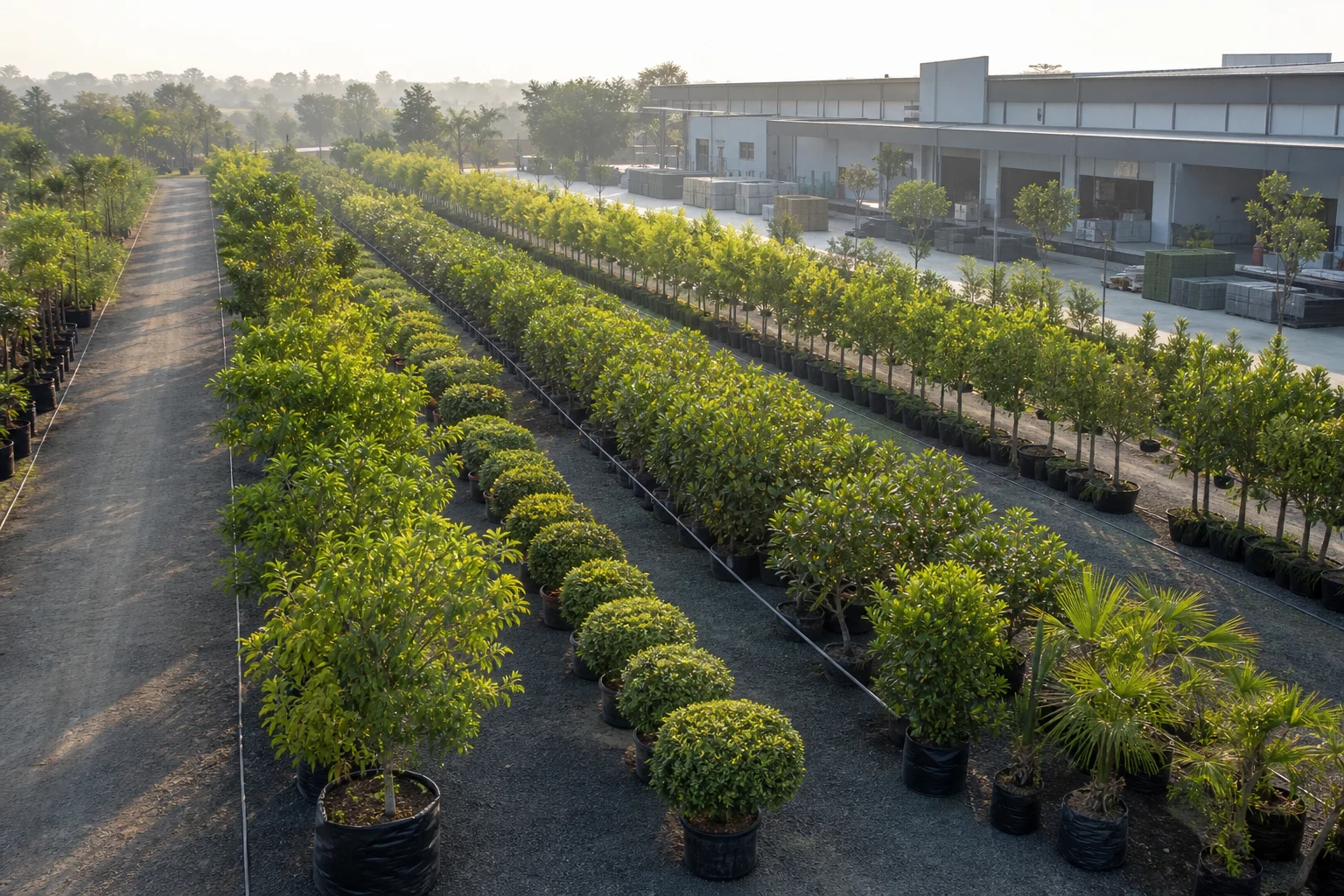
Visual references supporting this guide with landscape scope and detailing context.



What package structure should a commercial landscape BOQ use?
Organize the BOQ into packages that match execution and sign-off reality: hardscape and civil bases, softscape and horticulture, irrigation and water management, water features, outdoor lighting, and maintenance or establishment care where in scope.
Each package should carry its own interface responsibility so procurement can validate contractor sign-offs without guesswork. Keep arrival planting separate from pool-edge or service-yard scope where both exist, and align phasing lines with zone handover dates. A single lump-sum garden line hides the structure bidders will price differently.
Which site constraints and interfaces belong in BOQ language?
Document interface ownership explicitly: drainage outfalls and ponding risk, podium or terrace waterproofing boundaries, pool and water-feature tie-ins, electrical termination for lighting, and irrigation connections with civil and MEP.
Working-site constraints also belong in the BOQ preamble or assumptions schedule: night-quiet rules on occupied hotels, monsoon curing windows, specimen tree access through live buildings, and phased handovers across multiple zones. When constraints are silent, bidders price different site realities under the same heading and procurement loses comparability.
How should unit basis and quantities be specified?
Set unit basis consistently across packages: square metres for turf and paving, running metres for kerbs and hedge lines, per-item sets for specimen trees or feature planters, and lump sums only where discovery logic is defined.
Quantities must map to the same take-off assumptions used in drawings and planting schedules. When a line uses a provisional sum, state the discovery trigger (soil depth, rock encounter, specimen availability, waterproofing repair extent) so the final value is not arbitrary. Procurement should reject BOQs where bidders can reinterpret measurement rules after contract approval.
How do exclusions and provisional sums protect bid comparability?
Exclusions should be explicit and tied to interfaces: drainage observation after monsoon, planter-edge waterproofing repairs, irrigation controller programming, replacement planting during establishment, and storm debris response in the first season.
Assumptions should trigger a written approvals process when substitutions or scope changes arise during substitution review. Provisional sums without discovery logic create scope gaps after scope freeze. Cross-check exclusion language with your quotation comparison checklist before shortlist lock so gaps are visible desk-side, not on site after mobilisation.
What QA and acceptance checkpoints belong in the BOQ?
Include acceptance checkpoints per package: civil base layer verification, drainage performance observation, irrigation zone coverage with controller records, planting establishment stages with replacement thresholds, and lighting termination where in scope.
The BOQ should indicate what evidence is recorded at each hold point and what becomes part of as-builts and O&M handover. QA language tied to payment milestones reduces punch-list gaps at closeout. Align hold-point names with your landscape QA checklist so tender, site supervision, and FM teams use the same vocabulary.
How should establishment care and AMC lines appear in the BOQ?
Establishment care belongs in the construction BOQ with defined duration, replacement allowances, irrigation tuning responsibilities, and nutrition cycles through the first growing season. Deferring establishment to an AMC conversation after handover shifts cost and ownership when mortality exceeds informal expectations.
If AMC is in scope, tender separate lines for visit frequency by zone, resident versus scheduled crew model, inclusive replacement budget, storm response tiers, and reporting cadence. Model AMC boundaries with the landscape maintenance AMC calculator before tender release so construction BOQ and operating scope stay comparable across bidders.
What handover documentation should the BOQ require from day one?
A BOQ that enables handover specifies deliverables: as-built planting and irrigation records, valve charts, controller program notes, O&M guidance for pumps and filtration, and a maintenance program outline with responsibilities and cadence.
Procurement should require these artifacts as named contractual deliverables with formats and due dates. FM teams operating hotels, malls, and campuses need the same records the tender promised. Align BOQ handover lines with your project phases, documentation, and payment milestone guides so closeout expectations are consistent from tender through turnover.
What common BOQ mistakes cause scope gaps after scope freeze?
A common gap is a headline total without package breakdown: procurement compares lump sums while bidders priced different establishment durations, irrigation zone counts, or hardscape curing assumptions.
Silent interface exclusions often follow: ponding after monsoon, planter leakage at podium edges, dry spots in arrival irrigation zones. Missing phasing lines on occupied sites can force night works or remobilisation as variations.
Bundled garden pricing without zone logic, missing establishment care lines, and vague provisional sums are warning signs. Treat unsupported scope claims as risk until backed by written process, hold points, and comparable deliverables in the BOQ structure.
When should procurement use cost tools alongside BOQ drafting?
Use the commercial cost guide and landscaping cost calculator to sanity-check scenario ranges (area, planting intensity, irrigation depth, lighting scope) before tender release or when rebidding after scope change.
Specialist calculators for irrigation, outdoor lighting, terrace gardens, and AMC help procurement test whether BOQ unit rates sit inside plausible bands for the specified specification tier. Tools inform assumptions; they do not replace BOQ discipline or site-specific interface validation.
Cross-check draft BOQ structure with your rate analysis guide and RFP tender checklist so documents, bidder breakdowns, and evaluation matrices stay aligned through tender closure.
What should procurement do after the BOQ is ready?
Circulate the BOQ with drawings, specifications, and assumption schedules to shortlisted bidders; require rate breakdowns that map to packages and hold points. Document the comparison matrix and variance notes in the evaluation record before contract approval.
Schedule a site assessment when levels, soil conditions, drainage outfalls, specimen access, or working-site safety on occupied properties cannot be confirmed from drawings alone. Field validation closes the gap between desk BOQ and executable phasing.
Request a site assessment through contact once tender documents, BOQ structure, and shortlist criteria are aligned. On institutional scopes above roughly INR 10 lakh, skipping site validation often leads to revised scope and cost after mobilisation.