
Gallery
Procurement context
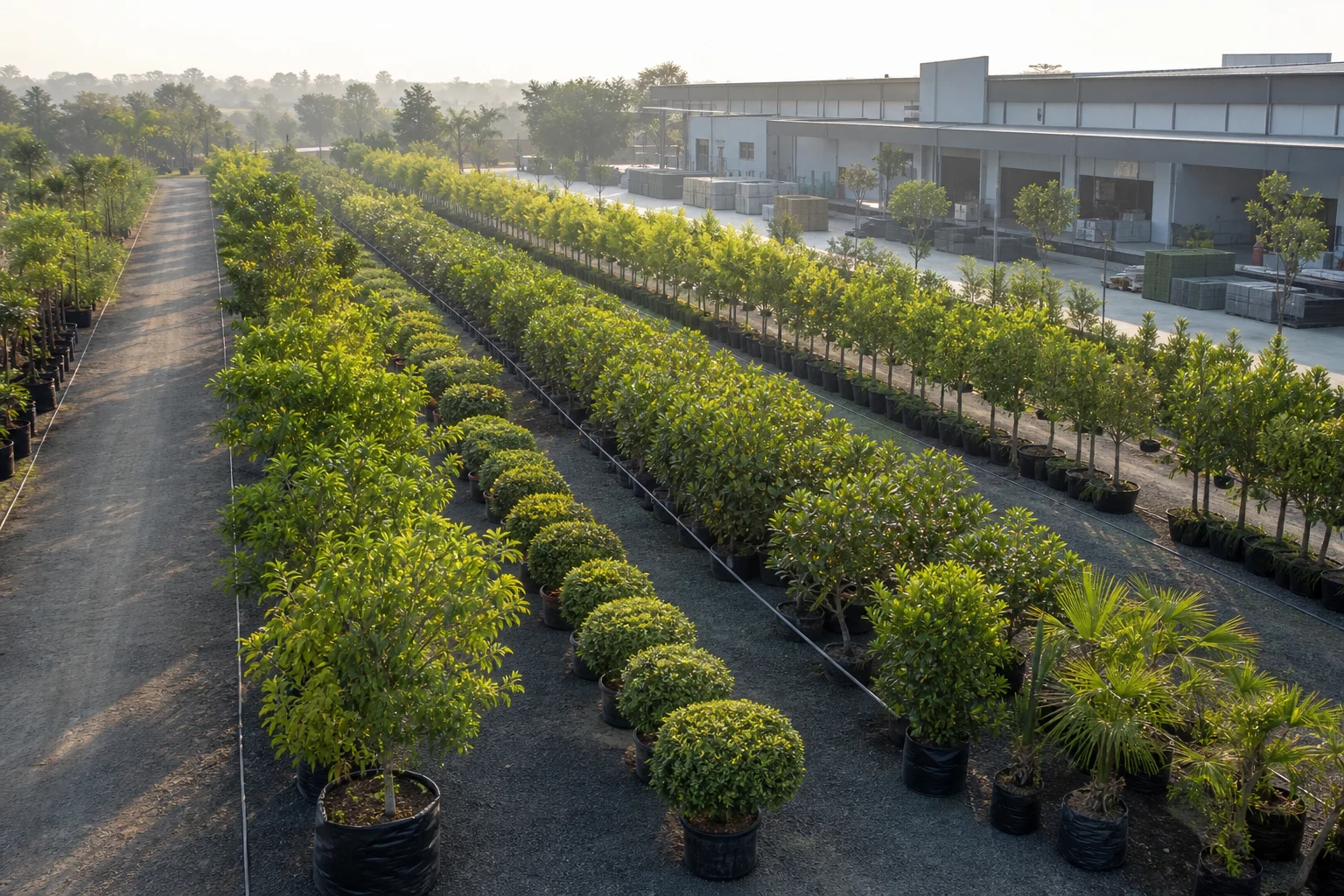
Visual references supporting this guide with landscape scope and detailing context.



Why do landscaping quotations look comparable but fail at handover?
Most handover gaps trace to mismatched scope rather than headline price alone. Bidders price different unit bases, establishment durations, irrigation zone counts, or interface responsibilities under the same BOQ heading.
On Indian commercial sites, silent exclusions for drainage observation, monsoon curing, specimen access, and handover documentation are common. A lower total on unequal deliverables is not comparable scope. It shifts cost to variations, punch lists, and FM gaps after opening.
What BOQ structure must be locked before comparing quotations?
Confirm package boundaries match execution reality: hardscape and civil bases, softscape and horticulture, irrigation and water management, outdoor lighting, water features where included, and establishment care or AMC lines where in scope.
Each package should carry interface ownership so sign-offs are verifiable. If one bidder prices a lump-sum garden line and another breaks out zone phasing, irrigation commissioning, and establishment care separately, procurement cannot rank them without re-normalising. Align tender documents with your landscape BOQ format guide before quotations arrive.
Which unit basis and quantity assumptions must match across bids?
Lock measurement rules first: square metres for turf and paving, running metres for kerbs and hedge lines, per-item sets for specimen trees or feature planters, and lump sums only where discovery logic is defined.
Quantities must connect to the same take-off assumptions in drawings and planting schedules. When a line uses a provisional sum, compare bidders on the same discovery trigger (soil depth, rock encounter, specimen availability), not on unvalidated provisional amounts.
Reject comparisons where bidders reinterpret unit basis after submission. Procurement should require rate breakdowns mapped to packages before shortlist lock.
Which site constraints and interface exclusions distort quotation totals?
Compare exclusions line by line: drainage outfalls and ponding risk, podium or terrace waterproofing boundaries, pool and water-feature tie-ins, electrical termination for lighting, and irrigation connections with civil and MEP.
Working-site constraints belong in the comparison matrix: night-quiet rules on occupied hotels, monsoon curing windows, specimen tree access through live buildings, and phased handovers across multiple towers. When constraints are silent, bidders price different site realities.
Cross-check exclusion schedules with your RFP tender checklist and rate analysis guide so desk-side review catches gaps before mobilisation.
How should procurement build a landscaping quotation comparison matrix?
Create a matrix with rows for each BOQ package and columns for each bidder. Record unit basis, quantity logic, exclusions, provisional sums, establishment duration, commissioning scope, and handover deliverables, not only extended totals.
Flag variances where assumptions differ: irrigation zone count, hardscape curing period, replacement planting thresholds during establishment, storm response in the first monsoon, and as-built documentation format.
Document variance notes in the evaluation record before contract approval. A comparison matrix turns subjective price conversations into auditable procurement decisions.
What QA and acceptance commitments must appear in comparable quotations?
Ask each bidder to name hold points: civil base layer verification, drainage performance observation, irrigation zone coverage with controller records, planting establishment stages with replacement thresholds, and lighting termination where in scope.
Procurement should confirm what evidence is recorded at each hold point and what becomes part of as-builts and O&M handover. QA language tied to payment milestones reduces punch-list gaps at closeout. Align hold-point names with your landscape QA checklist so tender, site supervision, and FM teams share vocabulary.
How do establishment care and AMC boundaries change quotation rankings?
Establishment care belongs in the construction quotation with defined duration, replacement allowances, irrigation tuning responsibilities, and nutrition cycles through the first growing season. Bidders who defer establishment to an informal AMC conversation often under-price construction and over-price operations later.
If AMC is in scope, compare visit frequency by zone, resident versus scheduled crew model, inclusive replacement budget, storm response tiers, and reporting cadence. Model AMC boundaries with the landscape maintenance AMC calculator before contract approval so construction and operating scope stay comparable.
A quotation with thin establishment or AMC lines can rank higher on total cost of ownership once those gaps are normalised.
Which phasing and timeline assumptions must be aligned across bids?
For occupied sites, validate that phasing protects safety, continuity windows, and soft-opening snagging. Compare critical path assumptions: planting lead times, irrigation commissioning sequence, hardscape curing windows, and zone handover dates.
Bidders who assume single-phase mobilisation on a multi-tower developer site or a live hotel often under-price remobilisation and night works. Timeline assumptions should appear in writing, not only in a headline completion date.
What red flags signal a landscaping quotation is not comparable?
Warning signs include lump-sum garden pricing without zone breakdown, no establishment care in the BOQ, vague provisional sums without discovery triggers, absent irrigation commissioning lines, and no handover documentation deliverables.
Quotations that cannot explain quantity take-offs for hardscape, softscape, and irrigation packages, or that omit interface sign-off discipline, are scope risks, not comparable scope. Residential garden pricing patterns may not fit institutional procurement unless scope is explicitly small-format.
When should procurement schedule a site assessment before shortlist?
Schedule a site visit when drawings cannot confirm interface realities: levels, soil condition discovery, drainage outfalls, specimen access routes, and working-site safety on occupied properties.
Field validation closes the gap between desk quotations and executable phasing. On institutional scopes above roughly INR 10 lakh, skipping site assessment often leads to revised scope and cost after mobilisation.
Request a site assessment through contact once tender documents, comparison matrix criteria, and shortlist rules are aligned.
What should procurement do after landscaping quotations are compared fairly?
Circulate variance notes to shortlisted bidders and require written clarification on assumptions that affect ranking. Lock the comparison record, including exclusions reconciled, hold points accepted, and handover deliverables confirmed, before contract approval.
Use the commercial cost guide and landscaping cost calculator to sanity-check normalised totals against plausible scenario bands for area, planting intensity, and irrigation depth. Specialist calculators for irrigation, outdoor lighting, and AMC help test whether normalised rates sit inside specification tiers.
Move to contract approval only when deliverables, not headline totals, are genuinely comparable across bidders.