
Market segment
School Landscaping in India
K-12 and university campuses need landscapes that support duty-of-care planning, parent circulation, and facilities routines - not only look presentable on inauguration day. Four Leaf delivers school landscaping across India with zone-wise BOQ discipline, holiday-window phasing, and handover documentation facilities teams can run. Scope spans arrival and drop-off courts, supervised play edges, assembly lawns, sports interfaces, and screening belts. Named references on our public roster include Delhi Public School Gurugram, The British School New Delhi, The Heritage School Gurugram, GEMS Education, and Made Easy Schools - individual project references, not institutional endorsements. Request a site assessment to align scope before tender lock.


Section
Buyers and decision drivers
School landscape procurement is rarely a single sign-off. Trustees, principals, and procurement teams need BOQ-ready scope with clear civil, MEP, and landscape interfaces. Facilities management cares about irrigation reliability, term-aligned mowing cycles, and SLA-backed response after handover. Architects and safety advisors need play-edge setbacks, CCTV sightlines, and documentation discipline for submittals and as-built closeout. We attend pre-bid walks focused on arrival flows, pick-up and drop-off geometry, playground adjacency, and where students congregate during assemblies. Scope can run from a focused arrival upgrade to a full campus exterior package - inside an EPC landscape lot or as nominated subcontract.
Section
Typical school campus landscape scope
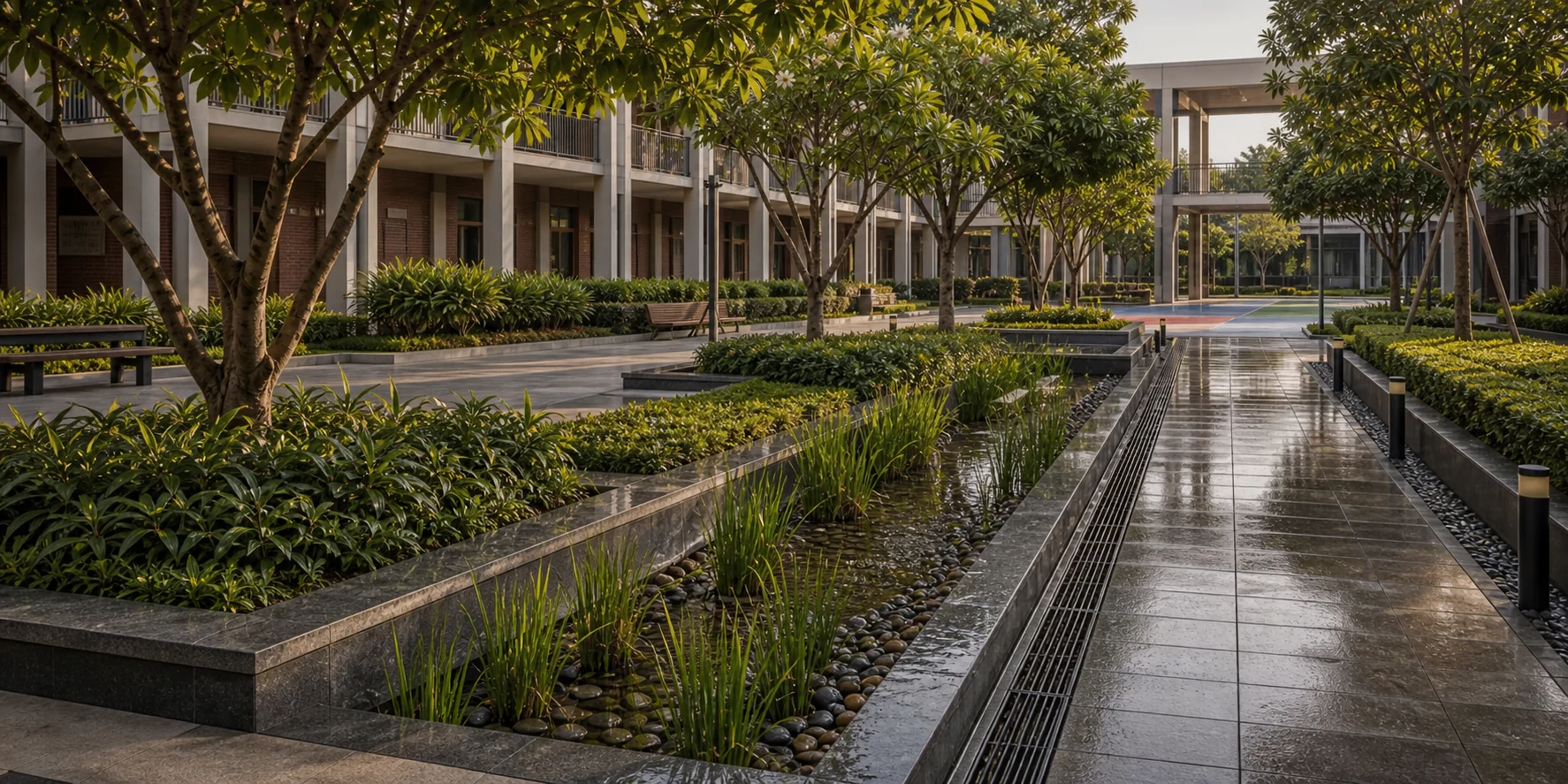
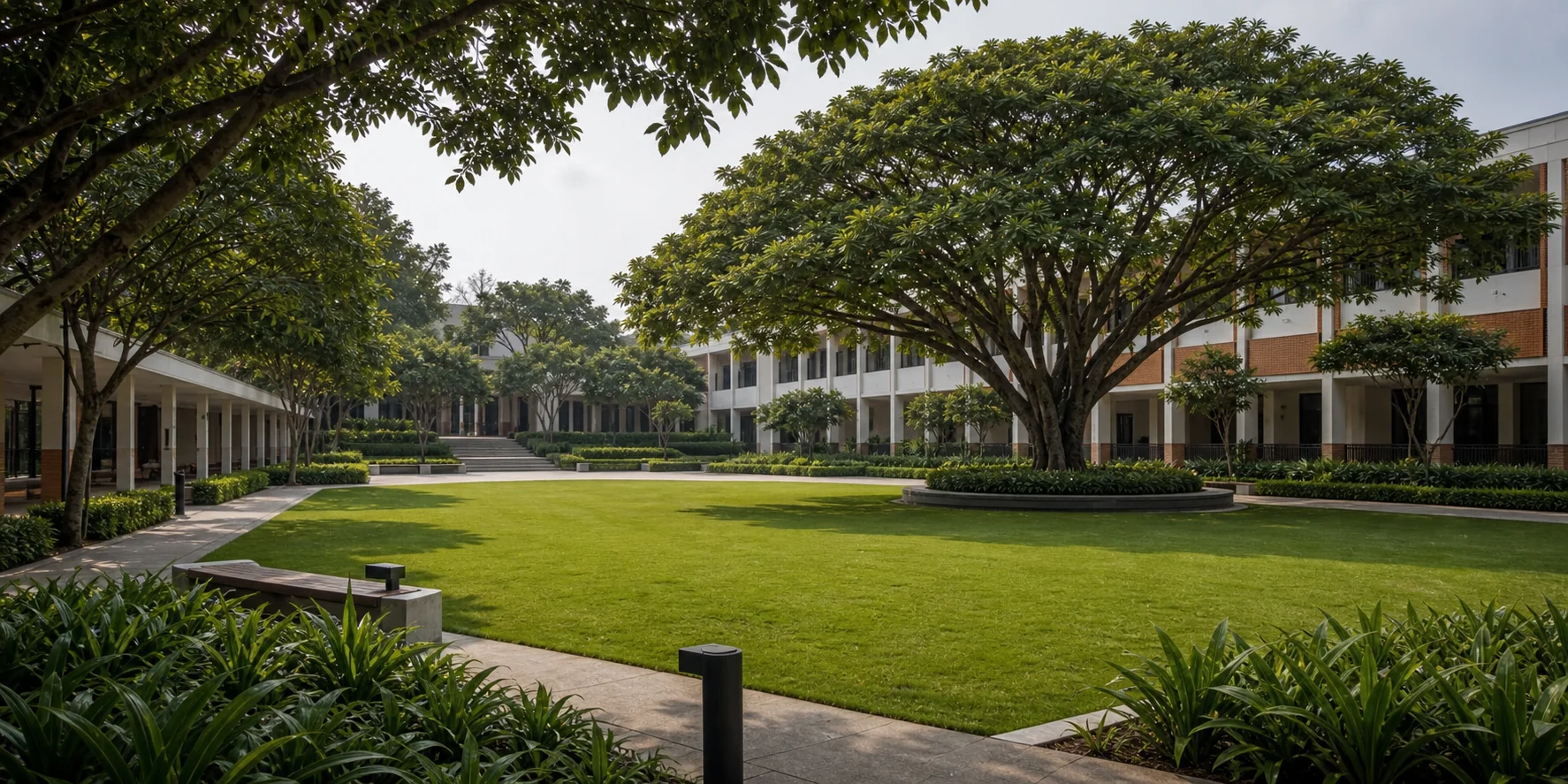
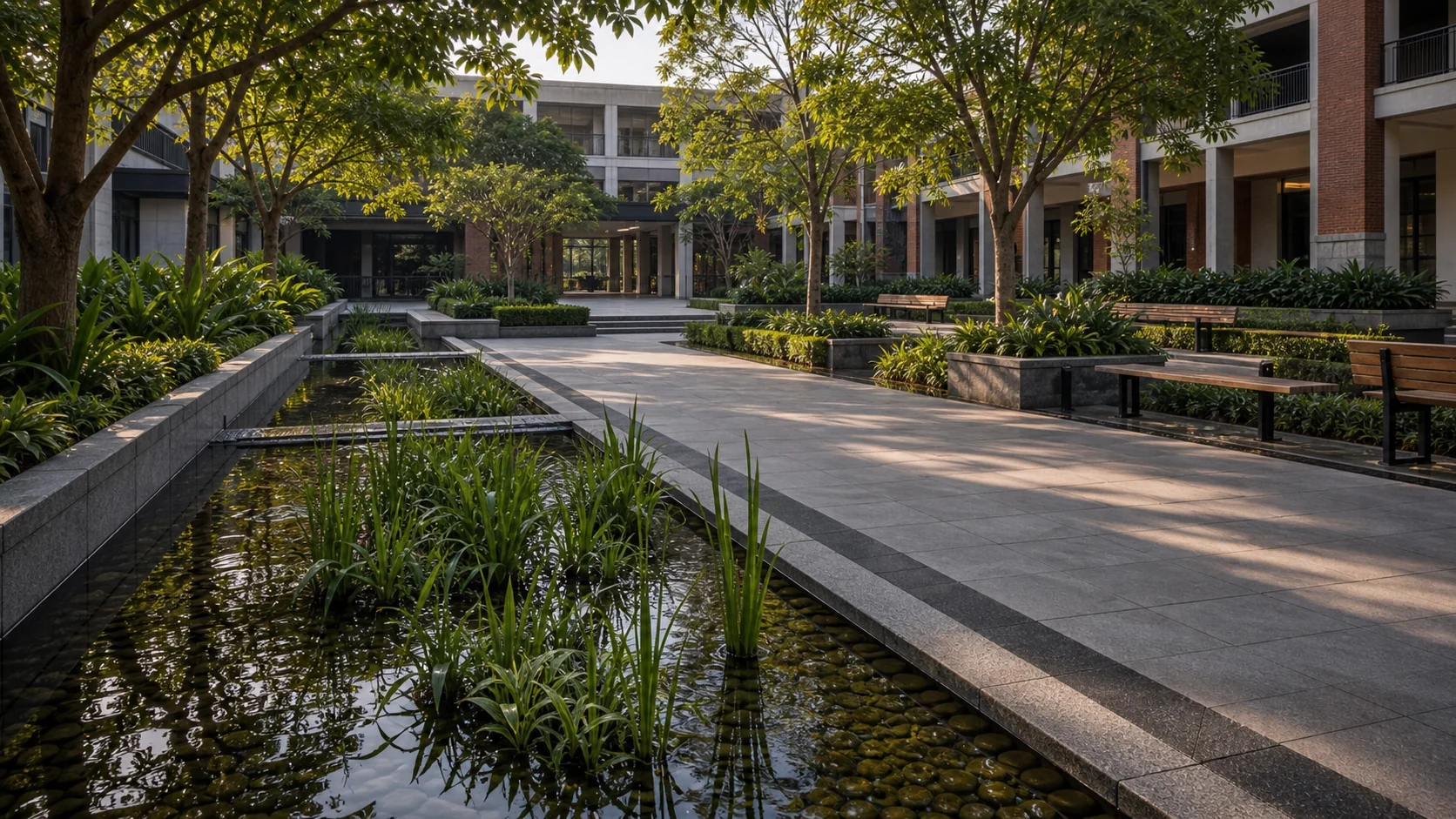
School campus landscaping usually includes arrival courts and parent circulation paths, playground belts and outdoor learning terraces, assembly lawns, sports-field interfaces, and perimeter screening where the master plan requires buffers. Hardscape is specified for slip resistance, drainage falls, and accessible transitions at gates and assembly zones. Planting stays controlled near play edges - with low-allergen and non-toxic priorities where governance teams require documented palette discipline. Shade trees and hedges improve comfort without blocking staff sightlines or CCTV coverage. Irrigation, outdoor lighting where in scope, and establishment care are scoped so the site remains safe and operable after handover - not only presentable at ribbon-cutting.
Section
Duty-of-care and supervised-campus planning
This is where school landscaping becomes operational design, not decoration. Play areas receive fall-zone logic, maintainable surface selections, and planting buffers that reduce thorn and contact hazards near equipment edges. Arrival and internal paths are detailed for wet-season slip resistance, drainage falls, and kerb geometry that parents and staff can supervise confidently. Planting placement preserves sightlines for security staff and CCTV; growth-controlled hedges stay below visibility-critical heights. Drainage and water management reduce standing water that attracts insects or creates slick edges after monsoon peaks. Where board or governance policy requires non-toxic compliance language, we support documentation discipline - material submittals, substitution control, and maintenance SOPs tied to the installed palette.
Section
Holiday phasing and academic calendar constraints
Schools can only tolerate construction that respects term calendars and exam windows. We phase execution around holiday breaks, scheduling noisy works when student presence is lowest and calmer works for establishment before reopening. Segregated work zones and protective barriers keep dust and debris away from daily pedestrian lanes. During active terms, access-control plans prevent parents and students from entering unsafe construction adjacency. Monsoon sequencing matters: drainage layer work early, establishment watering windows before peak rain, and protected edges where contractor traffic crosses finished surfaces. Closeout includes snag lists mapped to school zones and a handover checklist for facilities so the landscape transitions from build-ready to term-ready.
Section
Term AMC and FM handover
Year-one establishment is heavier than steady-state AMC: irrigation tuning, replacement planting at wear hotspots, and hedge cycles that preserve sightlines through the academic session. Handover delivers controllers, valve charts, O and M manuals, and maintenance SOPs aligned to the installed palette and irrigation zones. Term AMC aligns with academic rhythms - mowing and edging cycles, storm debris response, irrigation valve checks, and drainage grate clearing after monsoon peaks. Multi-year AMC with CPI escalation is common when procurement wants a long-term OPEX baseline; SLA response for irrigation faults and ponding complaints is priced explicitly. Use our landscape maintenance AMC calculator when budgeting steady-state OPEX after the defect liability period.
Section
BOQ and tender checklist for school campuses
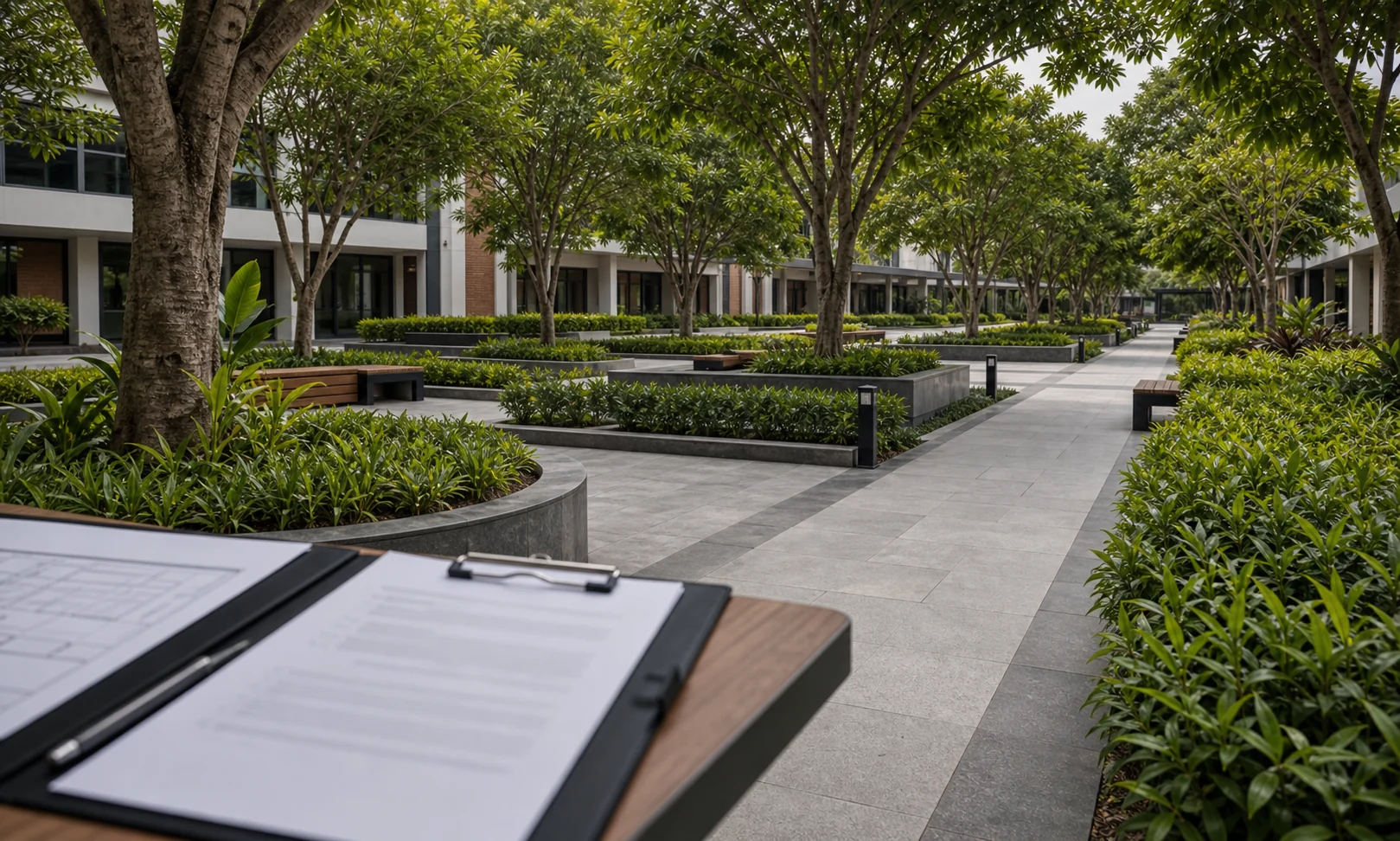
Procurement-ready BOQ should separate work into zones: arrival and access paving, playground surfacing and fall-zone boundaries, planting areas by soil or media depth class, irrigation distribution with valves and controllers, outdoor lighting fixtures with control points where in scope, and drainage layer stacks tied to civil outfalls. Exclusions must be explicit - what belongs to civil, MEP, and landscape - so tender comparisons stay honest. Provisional sums belong only to genuine discovery items; mock-ups and substitution approval workflows are priced when your procurement cycle expects verification. Closeout deliverables belong in the BOQ narrative: snagging checklists, DLP expectations, as-built drawings, training days for FM, and an audit trail for approved substitutions. Compare quotations using structured BOQ line items from our BOQ format guide and RFP checklist - not lump-sum narratives alone.
Section
Failure modes we design out
In school environments, small landscape failures become safety and reputation risks. Slick arrival edges after monsoon cleaning, uneven turf from repeated play cycles, and irrigation overspray onto walkways all create visible pain for facilities and administration teams. Thorn-bearing planting near playground perimeters, allergenic species adjacency, and hedge overgrowth into CCTV sightlines are addressed through honest palette discipline and growth-control schedules in the AMC. Waterlogging at gates and assembly zones is reduced by correct falls and drainage interfaces tied to civil outfalls. Mitigation is disciplined site audit, specification discipline, protected-area sequencing, and a closeout checklist that ties each zone to maintenance ownership.
Section
Sports field and playground interfaces
Sports landscaping must support supervision, ball play, and long-term edge stability. Playground-to-sports transitions, around-field planting buffers, and circulation paths for coaches need clear sight triangles and durable walkway detailing. Planting setbacks and soil media constraints protect field markings and ball-impact zones; irrigation zones avoid overspray onto high-wear turf. Where sports areas meet paved paths, transitions are detailed to reduce tripping risk. Tree pits and planter edges are built to survive heavy wear without trapping moisture that causes surface slickness. Shade trees improve comfort without blocking key visibility points for staff and CCTV. Hardscape, irrigation, and lighting scope can be packaged separately on our service pages when the architect splits disciplines.
Section
School landscaping across India
Headquartered in Delhi NCR, we mobilise teams nationally. Monsoon intensity, heat stress, water quality, and construction pace vary by state - species and irrigation commissioning adapt while method stays consistent. NCR education corridors repeat arrival dust, holiday-window phasing, and Gurugram mobilisation themes; Made Easy School Gurugram is the verified project reference on our portfolio hub. National buyers start here for scope and BOQ discipline; city pages cover local logistics for Delhi NCR, Mumbai, Bengaluru, and other metros. This is a segment procurement page - not a city doorway - so operational constraints and tender language stay national while mobilisation adapts to each site.
Section
How to engage
Share a site plan showing arrival and gate zones, approximate parent and student flows, playground and sports-field boundaries, and CCTV sightlines that planting must preserve. Note target handover date, holiday-window constraints, and whether works must stay partially occupied during term time. Attach BOQ drafts or architect drawings if available so we can review units, exclusions, and interfaces before pricing. After document review we propose phased development, a BOQ structure for comparable tender evaluation, and an AMC transition aligned to facilities ownership. Request a site assessment via contact - include campus location and procurement timeline for routing. Architects coordinating multi-discipline packages can start from our for-architects hub for interface checklists.
Proof
Relevant projects
A selection of executed landscapes in this segment. Browse the full projects portfolio.
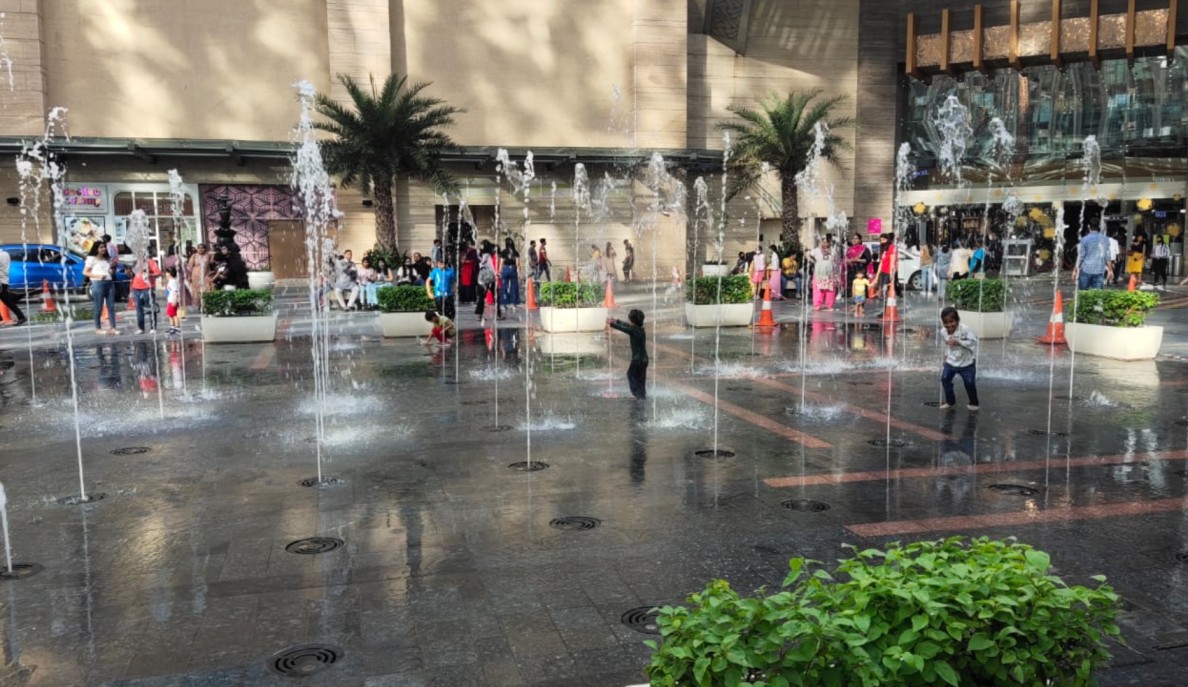
Made Easy School, Gurugram
Gurugram, Haryana
View project →
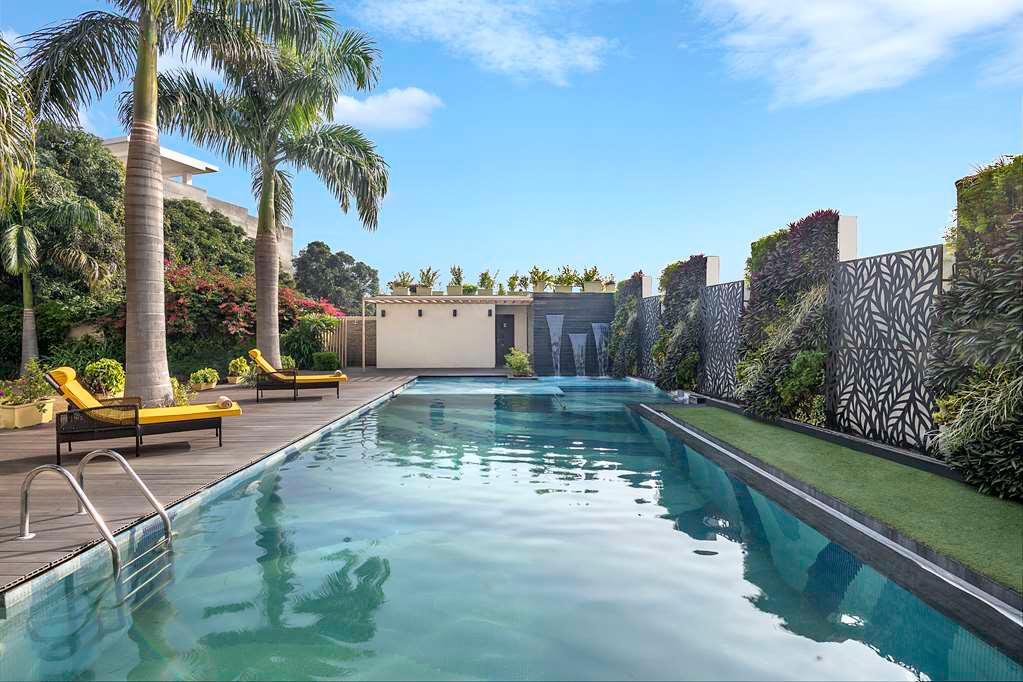
CK Birla Hospital, Gurugram
Gurugram, Haryana
View project →
Hero Motocorp, Gurugram
Gurugram, Haryana
View project →

Hilton Garden Inn, Gurugram
Gurugram (Sector 50), Haryana
View project →
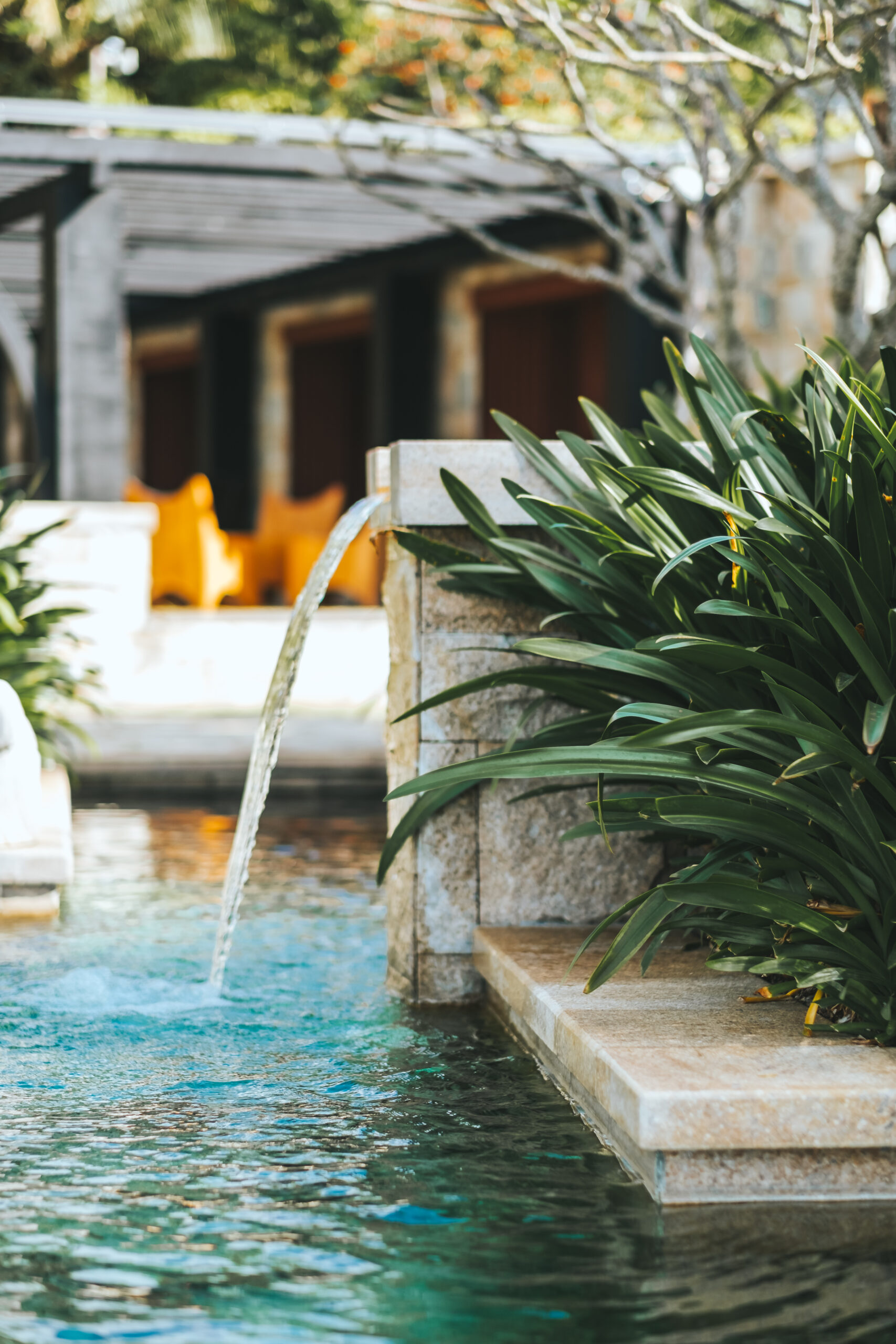
IBM, Noida
Noida, Uttar Pradesh
View project →

Larsen & Toubro Campus, Faridabad
Faridabad, Haryana
View project →
Services, cities, and resources
Commercial landscaping procurement spans craft pillars and buyer contexts. Use these links to navigate execution scope, cities, and procurement guides.
Services
Other segments
Cost & tools
FAQs
- How is school landscaping different from regular commercial landscaping?
- School landscaping is planned as part of duty-of-care operations: supervised circulation, play-edge logic, parent pick-up and drop-off flows, sightlines for staff and CCTV, and academic-calendar phasing. Surfaces are specified for slip resistance and drainage falls; planting supports documented palette discipline near play zones; irrigation, lighting, and AMC handover keep the site operable - not only attractive.
- How do you plan playground areas for supervised use?
- We treat playgrounds as safety zones with defined boundaries. That includes slip-resistant, maintainable surface systems, fall-zone logic, and controlled edges near play equipment. Planting buffers reduce thorn and contact hazards, and maintenance SOPs keep fall-zone boundaries from degrading over the term.
- Do you use non-toxic or low-allergen planting near children?
- Yes - school landscaping requires careful plant selection near play and learning zones. We avoid high-risk hazards such as thorn-bearing adjacency and we consider low-allergen expectations in the planted palette. When governance teams need language confirmation, we support documentation discipline with approvals and substitution control.
- How do you phase works during exams and holidays?
- We schedule noisy works into agreed holiday windows and protect active learning paths with segregated work zones. Sequencing avoids reopening delays by planning establishment care windows in advance, and we provide an access-control plan so parents and students never enter unsafe construction adjacency.
- What should a school landscaping BOQ include?
- A procurement-grade BOQ should split work by zones: arrival and access paving, playground surfacing and fall-zone boundaries, planting areas by media depth class, irrigation with mainline, laterals, zones, controllers, and isolation valves, drainage layer stacks, and sports interfaces. Include explicit civil, MEP, and landscape boundaries and list closeout deliverables such as as-builts, snagging packs, and FM-ready O and M manuals.
- What does term AMC cover during the academic year?
- Term AMC typically covers lawn mowing and edging, hedge and shrub cycles that preserve sightlines, storm debris response, irrigation valve checks, and drainage grate clearing after peak monsoon. We also plan replacement planting allowances tied to realistic wear hotspots and provide defined response expectations for irrigation and drainage issues that affect day-to-day operations.
- How do you avoid irrigation problems on school grounds?
- We design irrigation zones for microclimates and isolation points so faults can be handled quickly by facilities. Controllers and valve access are planned within school operational routines, and commissioning checks are documented. During handover, facilities receive O and M manuals and valve charts that match the installed zones.
- Do you design for visibility and CCTV sightlines?
- Yes. Sightlines are treated as part of safety. Planting placement and growth control preserve lines of sight for staff and CCTV coverage, and we avoid overgrowth near key corridors and assembly areas. Outdoor lighting decisions avoid glare that interferes with supervision and learning visibility.
- Which school projects appear on your public roster?
- Named references include Delhi Public School Gurugram, The British School New Delhi, The Heritage School Gurugram, GEMS Education, and Made Easy Schools - individual project references from our clients and projects narrative, not institutional endorsements. Made Easy School Gurugram has a dedicated project summary on our portfolio hub.
- Can you build while the school is operating?
- In most cases, yes - if your schedule allows it. We phase by zone, keep segregated access routes, and protect finished surfaces from contractor traffic. Our work plan includes dust and debris control, continuous snagging discipline, and a clear hypercare plan for the first reopening weeks where needed.