
Gallery
Procurement context
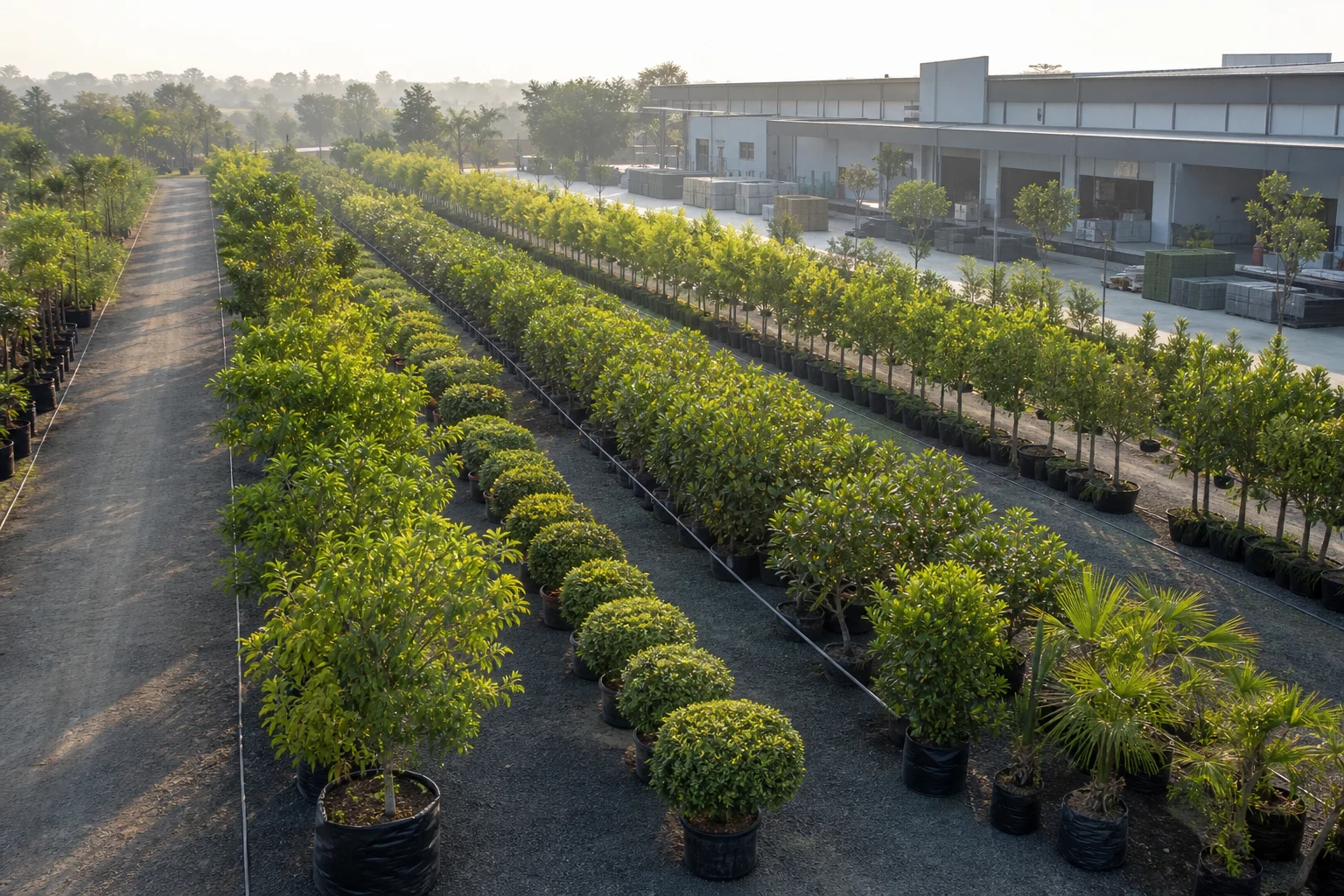
Visual references supporting this guide with landscape scope and detailing context.



What should AMC scope separate from routine care?
Write AMC as scheduled routine care plus defined escalation triggers: storm debris, drainage anomalies after monsoon bursts, irrigation failures in guest-visible zones, establishment mortality above agreed thresholds, and lighting-adjacent planting where in scope.
Separate included cycles (mowing, hedge trimming, bed weeding, scheduled irrigation checks) from pass-through or rate-card items (major tree work, vandalism recovery, event load-in damage, capital irrigation repairs). Without that split, bidders under-price routine visits and defer replacements until FM escalates informally.
Which site constraints should shape SLA response times?
Response windows should reflect working-site conditions: night-quiet rules near hotel guest rooms, security inductions for after-hours mall access, hospital spray restrictions near air intakes, and monsoon access limits on podiums or basements.
Document zone priorities - front arrival, pool edge, podium planting, service yard - so SLA tiers match where failure is visible to guests or auditors. One blanket response time for the entire estate can mask degradation in lower-priority zones.
How do you define response times and escalation in an SLA?
Agree response and rectification windows by incident class, not as universal legal standards. Common procurement categories include irrigation failure in arrival zones, visible replant needs above the included replacement allowance, drainage observation after heavy rain, and debris blocking circulation paths.
Include escalation steps when access is blocked - occupied hotel floors, live retail hours, or safety holds after storms - so maintenance has a documented alternate window instead of stalling. Tie escalation to ticketing or CAFM integration where your FM team already tracks closure.
What reporting cadence should FM teams receive under the SLA?
Request a reporting structure FM can audit: monthly zone snapshots with closed punch items, seasonal observations (pre-monsoon irrigation audit, post-monsoon fungal pressure notes), and storm response logs with timestamps.
Define deliverable format - PDF pack, portal upload, or ticket closure with photo evidence - and how records connect to as-builts, valve charts, and O&M guidance received at handover. Reporting without traceability to installed assets is cosmetic, not operational.
What BOQ line items make AMC scope comparable across bidders?
Tender BOQ should state, at minimum: site area by zone, tree counts by size class, linear hedge metres, turf area, irrigation valve count, visit frequency, resident versus scheduled crew model, and any inclusive plant replacement budget as a percentage or unit rate.
Separate line items for specialist tree work, event support, STP water quality testing, and capital recommendations so headline per-acre rates are not compared on mismatched assumptions. Cross-check structure with your BOQ format guide and quotation comparison checklist before shortlist lock.
How should handover documentation connect to the maintenance program?
Handover should deliver as-built planting and irrigation records, controller program notes, valve charts, O&M guidance for pumps and filtration, and a maintenance program outline with responsibilities and cadence.
AMC scope builds on what was commissioned at turnover: irrigation zone logic, establishment care completion, and drainage acceptance notes. Where records are incomplete, agree a baseline update window in the SLA rather than leaving species, valve IDs, and seasonal programmes undefined. Align handover expectations with your project phases and documentation guides before AMC tender release.
What acceptance checks prevent AMC disputes after commissioning?
Define acceptance tests during commissioning and early establishment: drainage performance observation, irrigation coverage verification with controller records, planting establishment stages with replacement thresholds, and signed QA hold points per package.
Procurement should insist AMC pricing references the accepted baseline - not drawings alone - so post-opening mortality or ponding disputes trace to agreed outcomes rather than after-the-fact corrections. Link acceptance logs to the handover pack your FM team will operate.
What common SLA and AMC mistakes should procurement avoid?
Watch for four recurring gaps: vague assurances without response windows, lump-sum AMC without zone breakdown, no establishment overlap between installer and maintenance vendor, and silent exclusions for storm response or replacement planting.
A second failure mode is treating SLA as legal boilerplate while the BOQ omits visit frequency - facilities teams then inherit a contract that reads well but cannot be enforced shift by shift. Model scope with the AMC calculator and monsoon readiness checklist before final award.
How can procurement validate a bidder's maintenance realism?
Ask for sample maintenance plans tied to similar commercial contexts - hotels with night operations, campuses with large turf blocks, malls with event recovery - and verify proposed schedules match seasonal risks in your city cluster.
Review maintenance service scope structure, redacted reporting samples, and how the bidder defines replacement versus routine care. If proof is limited for a segment or zone type, treat that gap as bid risk rather than assuming capability from residential garden references.
What should procurement do next?
Draft SLA language and AMC BOQ structure from this framework, align with handover and QA checklists already in your tender pack, and run budget scenarios through the landscape maintenance AMC calculator.
When zone priorities, drainage interfaces, or occupied-site access cannot be confirmed from drawings alone, request a site assessment through contact so SLA tiers and AMC pricing reflect field realities before contract signature.