
Gallery
Procurement context
Visual references supporting this guide with landscape scope and detailing context.



What should hotel landscape snagging cover before soft opening?
Organize snagging by packages that match BOQ sign-off reality: arrival courts and hardscape finishes, softscape and specimen planting, irrigation and water management, outdoor lighting, water features and pool-edge landscape where in scope, and establishment care through the first guest-facing weeks. Each package needs named acceptance criteria, evidence requirements, and rectification ownership before zone release.
A walkthrough that stops at visual impressions leaves operations teams absorbing defects after occupancy stress rises. Align snagging vocabulary with your landscape BOQ format guide and landscape QA checklist so tender, site supervision, hotel operations, and FM teams use the same package names from mobilisation through soft opening.
Which hospitality site constraints shape snagging timelines?
Hotels and resorts face constraints that change snagging sequence: guest arrival continuity, security inductions, night-quiet rules on live buildings, phased zone release between arrival courts and back-of-house yards, and monsoon curing windows that affect planting establishment evidence.
Document constraints in tender assumptions so bidders price the same working-site reality. When constraints are silent, night works, protection rework, and remobilisation often appear as variations after scope freeze. That pushes snagging past soft-opening dates that marketing and operations already committed to.
How should drainage and irrigation be checked before guest arrival?
Drainage snagging should verify slopes and fall lines, inlet positions, channel continuity through paving and planter walls, and outfall behavior under a controlled wetting or outfall test. Do not accept a dry-day visual walk alone. Ponding at arrival courts, podium planters, and pool decks is a guest-safety risk within the first operational week.
Irrigation commissioning should include pressure zone mapping, valve and controller checks, program settings for run times, coverage observation against design intent, and leak tests at tie-in points with civil and MEP. Document what was tested, adjusted, and handed to FM. Model irrigation scope assumptions with the irrigation system cost tool when BOQ zone counts or controller tiers are still being validated against tender lines.
What planting establishment evidence should procurement record?
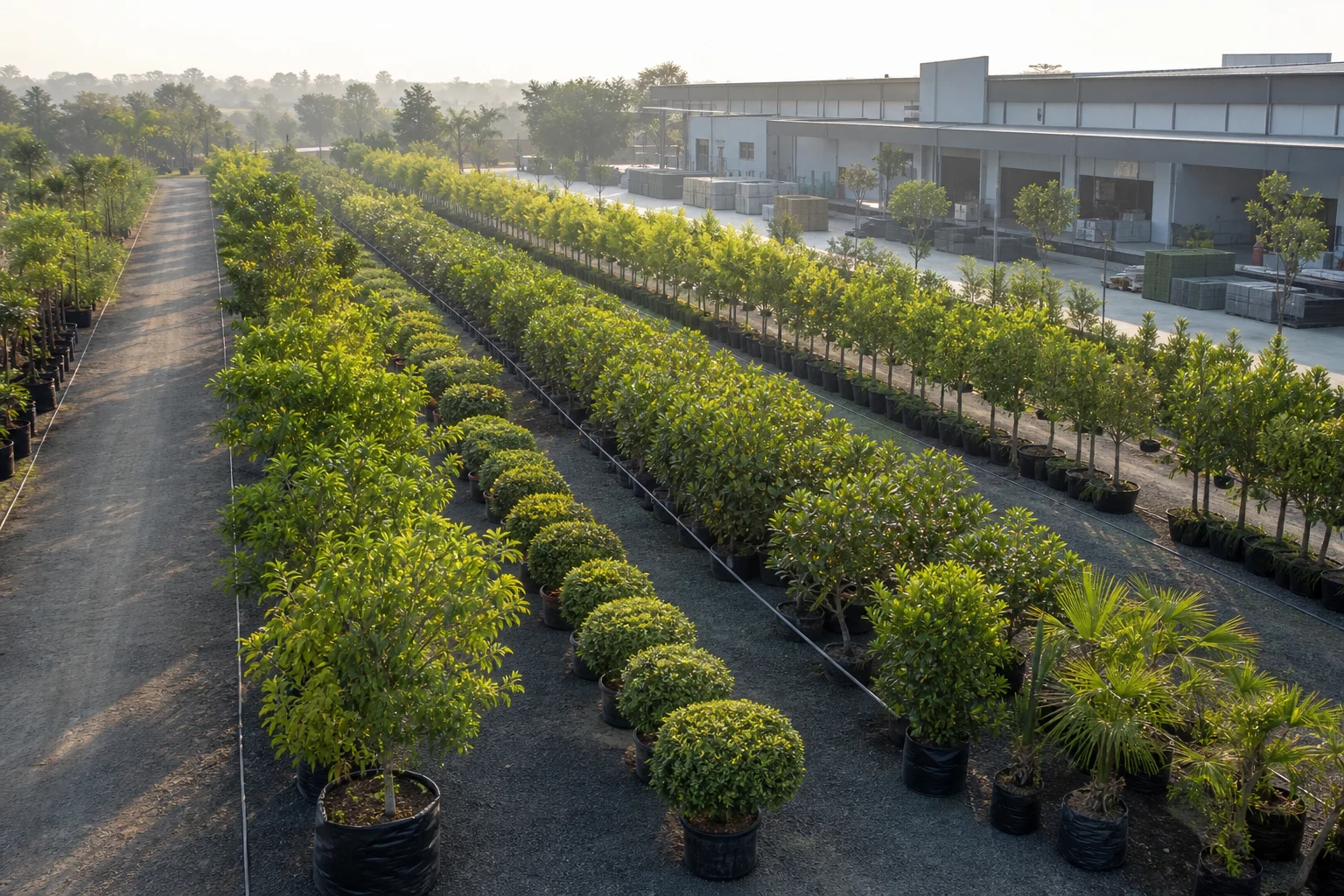
Establishment snagging should record plant health at installation, root-zone preparation, staking or guying where specified, mulch and edge finish, initial irrigation tuning, and aftercare logs with dates and actions. Specimen trees, hedge lines, turf, and podium planters each need hotel-specific acceptance thresholds. Do not use one generic horticulture sign-off for every package.
Procurement should separate establishment care in the construction contract from AMC operating scope. Good records at snagging make AMC onboarding faster and reduce disputes when mortality exceeds verbal expectations after soft opening. Cross-check establishment language with your maintenance SLA guide before contract approval.
How do outdoor lighting and electrical interfaces get snagged?
Lighting snagging should include circuit checks, control behavior, glare review, and dark-zone checks at arrival, pathway, and feature zones. Confirm controller labels and termination boundaries are documented for FM handover. Dark arrival courts, glare at drop-offs, and unlabeled controllers surface on night one when operations teams lack as-built reference.
If lighting is bundled inside landscape BOQ lines, acceptance should connect to the same interface assumptions used during commissioning and to outdoor lighting scope documentation. Model lighting package assumptions with the outdoor lighting cost tool when fixture counts or control tiers are still being compared across bids.
How should snagging connect to BOQ hold points and payment milestones?
Snagging items should trace to BOQ packages and payment milestone triggers so rectification depth is priced and released consistently. When snagging language sits only in a site memo, bidders price different punch-list effort and retention disputes follow incomplete evidence at zone release.
Group defects by commercial risk for faster closeout: safety and trip hazards first; irrigation leaks and valve access; drainage ponding; planting establishment failures; lighting termination and control faults; then guest-visible hardscape and finish defects on arrival, pool-edge, and podium zones. Link outcomes to retention release with your payment milestones guide so corrected items do not reappear as disputed maintenance scope after opening.
What handover documentation should FM receive after snagging closeout?
Snagging closeout should deliver as-built planting and irrigation layouts, valve charts, controller program notes, snag list with rectification dates and responsible parties, O&M references for pumps and lighting controllers where applicable, and an AMC transition note that separates construction defects from operating scope.
Procurement, hotel operations, PMC, and FM should receive the same evidence pack the tender promised. Informal walkthrough notes are not a substitute. Align deliverable formats with your as-builts and O&M handover guide and project phases guide so closeout expectations stay consistent from BOQ through turnover.
How does snagging transition into AMC and establishment care scope?
Establishment care belongs in the construction contract with defined duration, replacement allowances, irrigation tuning responsibilities, and nutrition cycles through the first growing season. Snagging outcomes should clarify what was corrected under construction scope versus what becomes routine AMC visits, storm response, and replacement budgets.
Model AMC boundaries with the landscape maintenance AMC calculator before contract approval. If hotel operators expect arrival-court perfection on day one while establishment care runs 90-180 days, state that tension in tender language. Do not leave it to a post-opening dispute between construction retention and operating AMC budgets.
What common hotel snagging gaps cause disputes after soft opening?
Recurring gaps include: drainage accepted only by visual walk before monsoon, irrigation commissioned without zone records, establishment care bundled invisibly inside planting lines, lighting termination undocumented for night operations, and subcontractor handoffs with no named sign-off per package.
A second failure mode is treating snagging as one pre-opening walk while retention and AMC tenders assume complete as-builts. Require named hold points, evidence requirements, and signed acceptance logs per package before closeout, especially when marketing dates compress rectification windows.
When should procurement request a site assessment before soft opening?
Schedule field validation when levels, soil depth, drainage outfalls, podium waterproofing interfaces, specimen access through live buildings, or occupied-site safety cannot be confirmed from drawings alone. Desk snagging plans often miss live-hotel constraints that change hold-point sequence and mobilisation cost.
Request a site assessment through contact once tender documents, BOQ hold points, and handover deliverables are aligned. On hospitality landscape scopes above roughly INR 10 lakh, skipping field confirmation before snagging lock frequently leads to revised scope, remobilisation, and incomplete FM-ready documentation after soft opening.