
Royal palm
Royal palm (Roystonea regia)
Royal palm is the formal avenue palm: a smooth grey trunk (often slightly bulging), bright green crownshaft, and fast vertical growth that reads instantly at hotel porte-cochères and symmetrical arrival courts — when the brief is height and ceremony, not a compact courtyard palm.
Spec
At a glance
- Botanical name
- Roystonea regia
- Family
- Arecaceae
- Common names
- Royal palm, Cuban royal palm
- Origin
- Cuba, southern Florida, Caribbean
- Plant type
- Solitary feather palm
- Mature height
- Often 15–25 m+ in tropical conditions
- Trunk / form
- Smooth grey “concrete-like” trunk; prominent green crownshaft
- Crown spread
- Moderate to wide pinnate crown; fronds arch outward
- Growth rate
- Fast in warm, well-fed sites
- Light
- Full sun
- Water needs
- Moderate to high — benefits from steady moisture and feeding
- India climate suitability
- Coastal and inland tropical India (Goa, Kerala, Chennai, Mumbai humid coast); weaker in prolonged cool winters
- Cold/heat & salt/wind tolerance
- Heat-tolerant; moderate salt tolerance; wind can shred fronds on exposed ridges
- Typical supply size
- Clear-trunk avenue classes 4–8 m+ [Unverified]
- Lead time (sourcing)
- [Unverified] nursery holding and transport for large clear-trunk classes
- Install considerations
- Heavy crown lifting; avenue spacing; nut/frond-drop setbacks; bracing on tall transplants
- Maintenance level
- Moderate — frond and fruit/nut removal, feeding, wind-damage tidying
- Cautions
- Very tall → heavy frond and nut drop; plan setbacks from glazing, parking, and guest paths
Supply
Latest import activity
- Imported on
- 28 Jun 2026
- Source
- Flemings Nurseries (sample)
- Availability
- On request
- Lot
- Roystonea regia — 5 m clear trunk
Gallery
Specimen visual guide
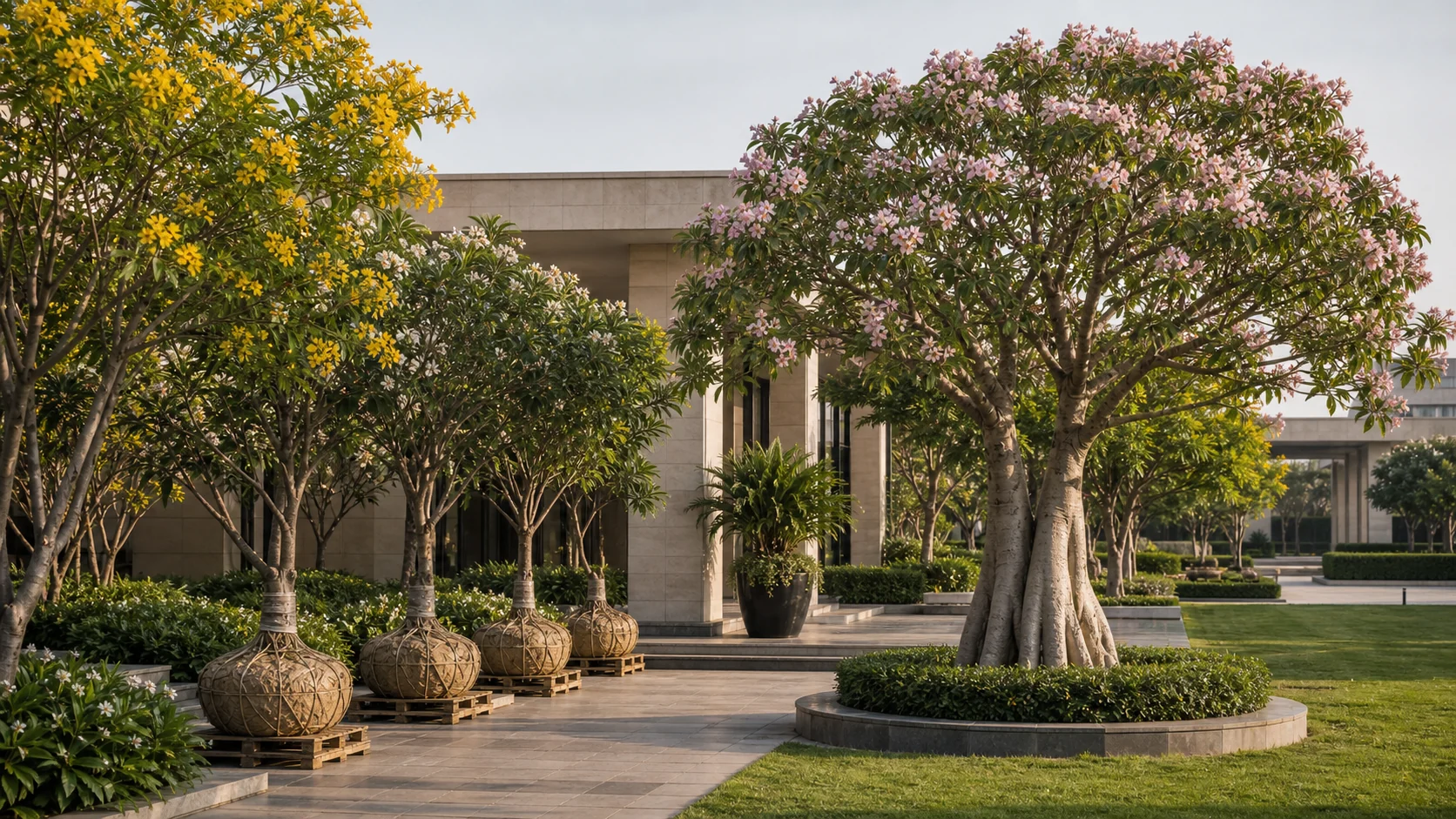
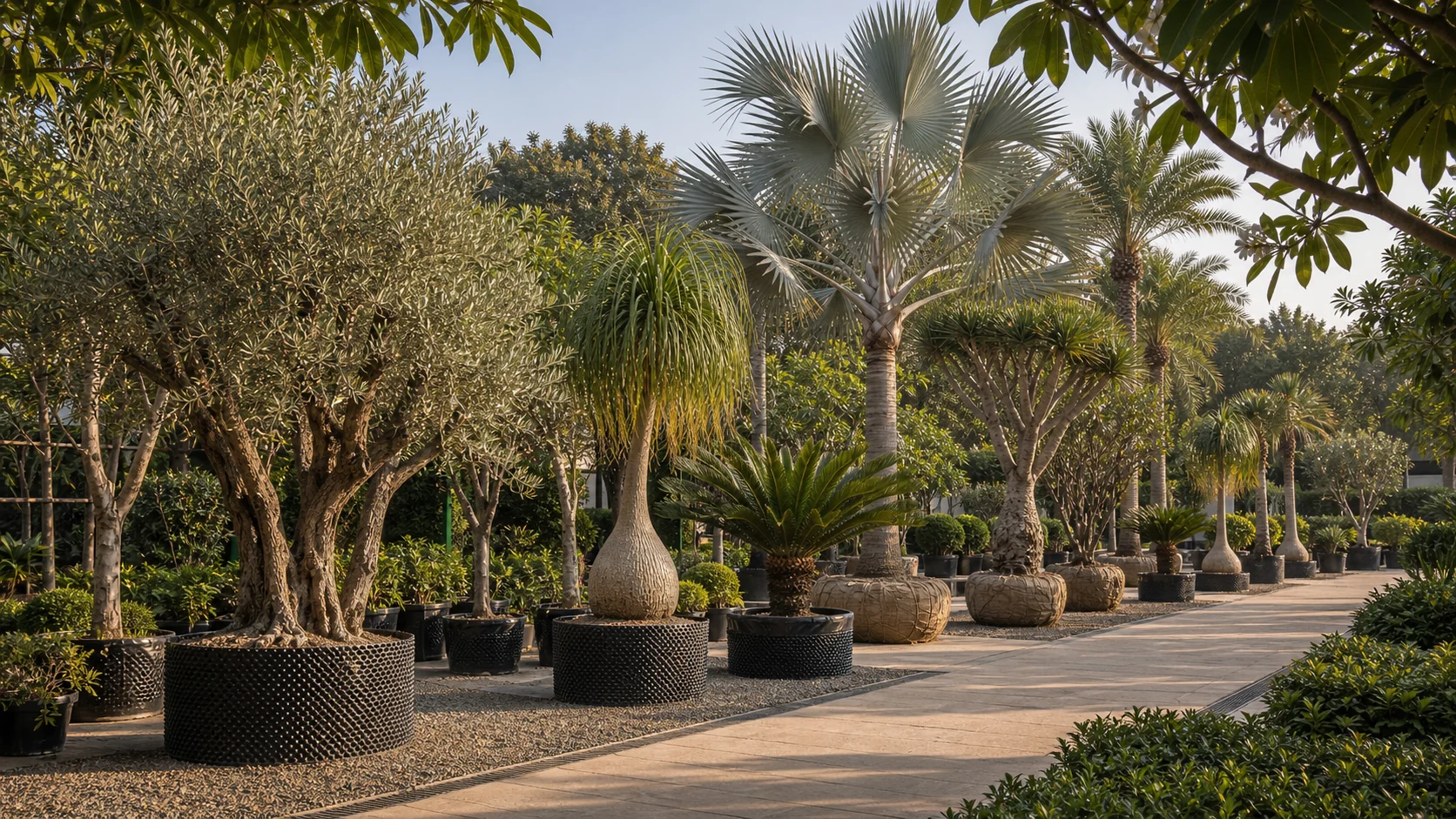
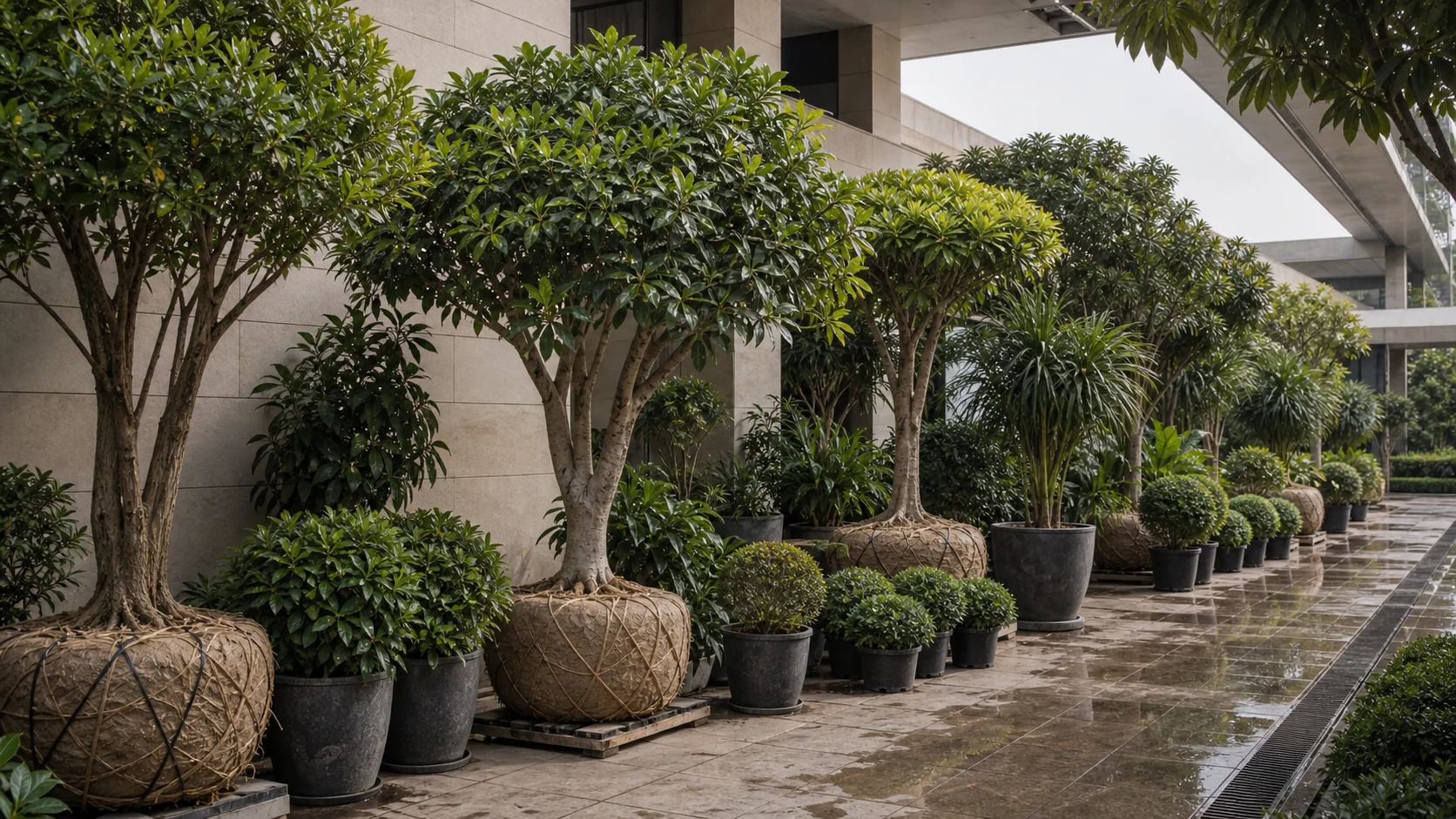
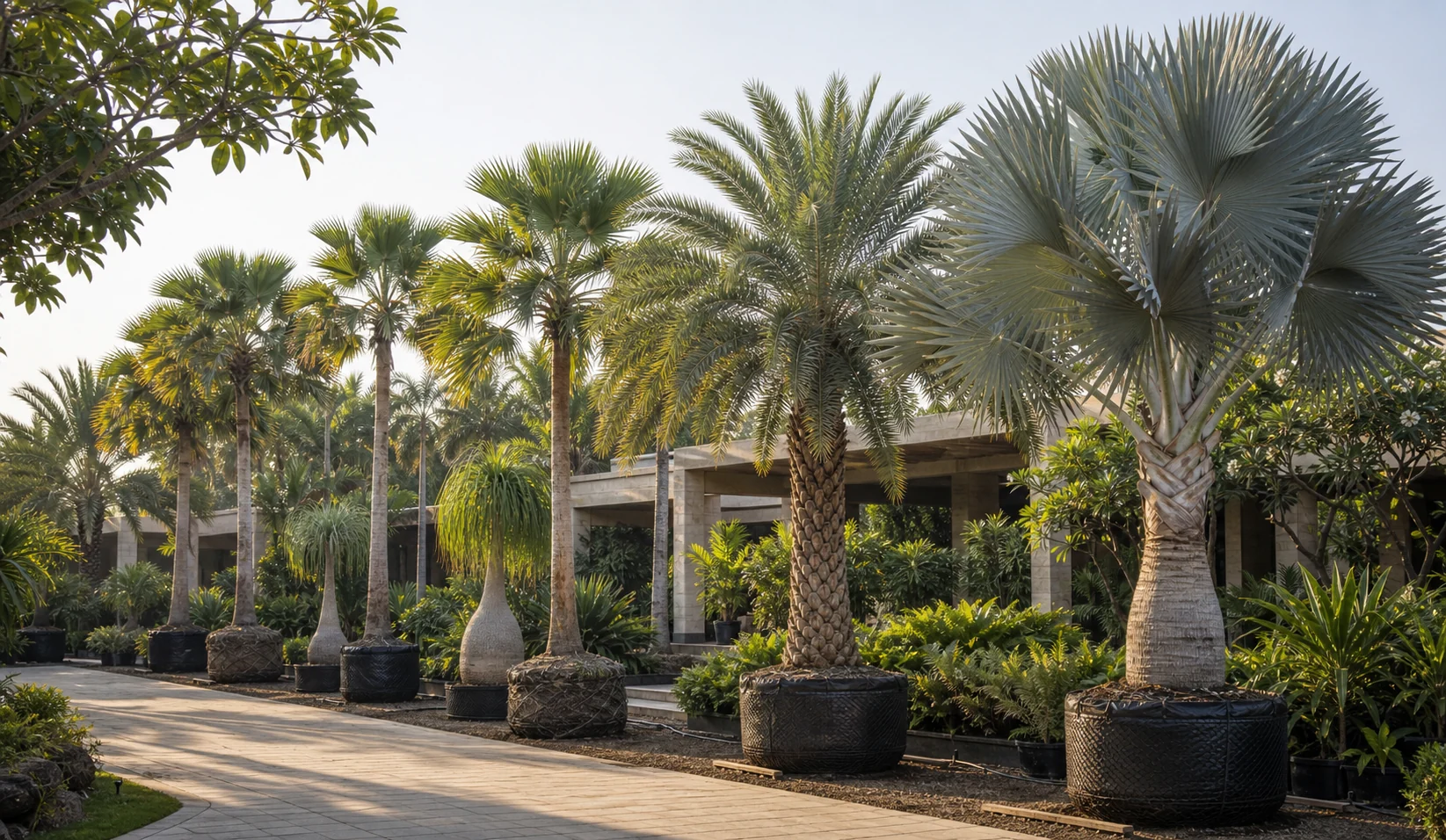
Visual context for placement, scale, handling, and landscape integration.
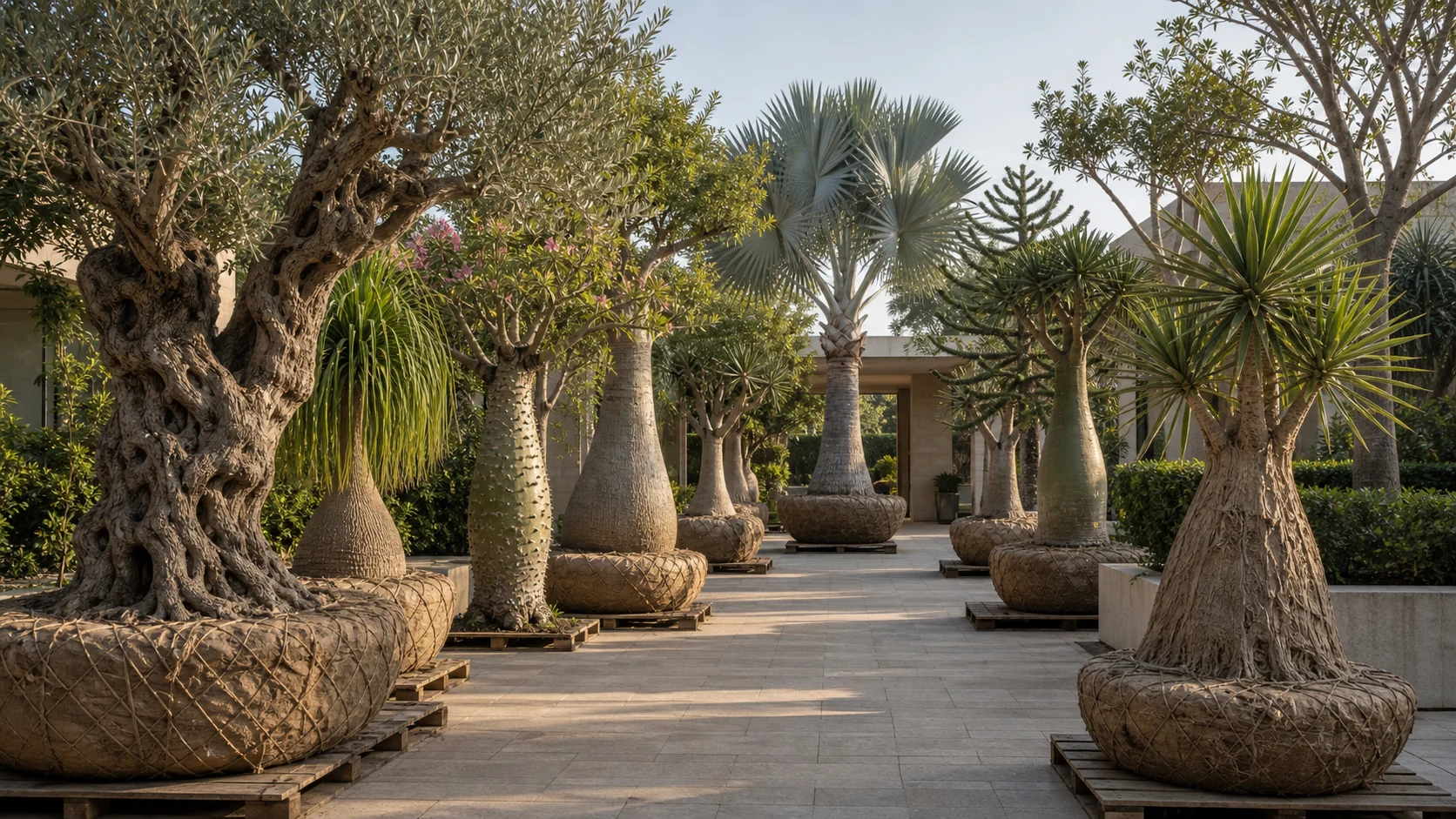
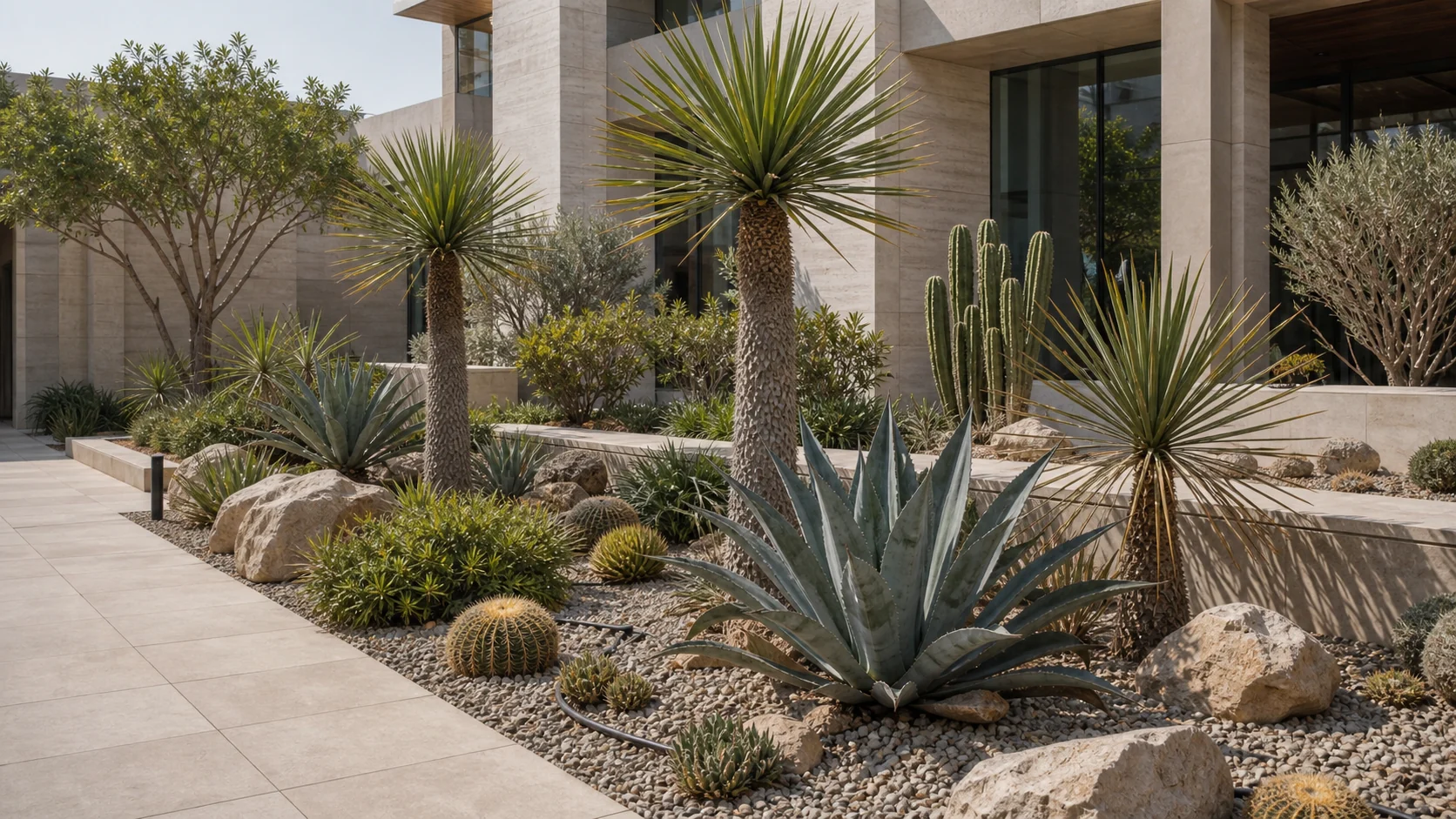
Section
Where it's used in premium projects
Royal palm is specified for symmetrical avenue rhythm — porte-cochère allées, clubhouse drives, resort entries, and formal forecourts where the brief is vertical ceremony rather than a low courtyard tree. Landscape architects pair it with hardscape symmetry; procurement should BOQ clear-trunk height, crown fullness, and lifting access as separate lines from generic “palm supply.”
Section
Climate & site suitability in India
It performs best in warm, humid tropical and coastal subtropical sites with reliable irrigation establishment. In north-India winters or prolonged dry heat without feeding, crowns can look thin. Exposed coastal ridges need a wind review — shredded fronds are common where crowns sit above parapets. It is a poor fit for tight courtyards that will be outscaled within a decade.
Section
Sourcing & acclimatisation
Avenue-grade Roystonea is bought on clear-trunk height, trunk caliper, and crown balance — fast growth means designers often specify younger, taller trunks rather than waiting decades for girth. Documentation for imported lots should follow India’s plant quarantine workflow. [Unverified: typical holding time at nursery gate before site placement.] Acclimatisation should include a written feeding and irrigation schedule for the first two monsoons.
Section
Installation (pit, soil, drainage, bracing)
Pits must be sized for the rootball mass of a tall feather palm — drainage layers are still required despite moisture preference. Tall clear-trunk specimens usually need triangulated bracing until root plate stability is demonstrated. Avenue lines need a surveyed spacing grid so crowns do not collide as trunks lean slightly toward light.
Section
Establishment & AMC
AMC should cover scheduled removal of senescing fronds and fallen nuts along guest routes, controlled-release feeding (yellowing crowns often trace to nitrogen/potassium neglect), and irrigation audits during the first dry season. Document who owns frond-drop safety along porte-cochères — this species is not self-cleaning in the Indian maintenance sense buyers expect from foxtail palms.
Section
Cost drivers
Explore
Related
Related
Related links
Services, segments, cost, and proof.
- Softscape & horticulture
- Irrigation & water management
- Landscape maintenance (AMC)
- Hotel & resort landscaping
- Luxury resort & spa landscaping
- Mall & retail landscaping
- Corporate campus landscaping
- Projects
- Commercial landscaping cost guide
- Pricing drivers (imported trees)
- Import compliance workflow
- Request a site assessment
- What spacing should we allow for a royal palm avenue?
- Plan for both trunk line and future crown overlap — mature Roystonea crowns spread outward and the trunk may lean. Surveyed spacing with a 10–15 year crown envelope avoids later crown collisions along porte-cochères.
- How do we manage frond and nut drop on guest routes?
- Schedule frond removal before senescent leaves detach over parking and entries, and sweep nuts during fruiting — AMC scope should name frequency and exclusion zones under glass canopies.
- Is royal palm a good fit for exposed coastal hotels?
- It can work on sheltered coasts with feeding and irrigation, but exposed ridge lines often show wind-shredded fronds — a wind study beats assuming “coastal palm” hardiness.
- Why does the trunk look grey and smooth?
- The characteristic concrete-like grey trunk and green crownshaft are cultivar traits buyers specify for formal avenues — verify trunk form on nursery photos before locking BOQ height classes.
- What documentation is needed if palms are imported?
- Live plants require phytosanitary certificate and inspection per India’s plant quarantine framework — align with your compliance workflow before shipment dates (informational, not legal advice).
- How is cost formed for avenue-grade royal palms?
- Clear-trunk height, crown fullness, quantity, lifting, bracing, and AMC — compare quotations on scope, not a catalogue per-tree rate.