
Canary Island date palm
Canary Island date palm (Phoenix canariensis)
The classic grand boulevard date palm — massive pinnate crown, optional trimmed “pineapple” trunk base, and salt- and drought-toughness once established — specified when the arrival must read as Mediterranean resort scale, with biosecurity planning for red palm weevil in India.
Spec
At a glance
- Botanical name
- Phoenix canariensis
- Family
- Arecaceae
- Common names
- Canary Island date palm, pineapple palm
- Origin
- Canary Islands
- Plant type
- Solitary feather palm
- Mature height
- Often 12–20 m+; very large crown
- Trunk / form
- Thick trunk; dense arching pinnate fronds; sculpted crown base when trimmed
- Crown spread
- Very wide and heavy
- Growth rate
- Moderate to moderately fast with feeding
- Light
- Full sun
- Water needs
- Low to moderate once established
- India climate suitability
- Warm temperate to tropical India; strong on coast and dry-summer inland with irrigation
- Cold/heat & salt/wind tolerance
- Heat-, drought-, and salt-tolerant; basal leaf spines; wind loads on huge crown
- Typical supply size
- Large clear-trunk specimen grades [Unverified]
- Lead time (sourcing)
- [Unverified] large pineapple-trimmed classes
- Install considerations
- Extreme weight; spine-safe handling; bracing; biosecurity-clean tools
- Maintenance level
- Moderate to high — pruning, pest monitoring, crown sculpting
- Cautions
- Red palm weevil & Fusarium risk in India; vicious basal spines; enormous setbacks
Supply
Latest import activity
- Imported on
- 28 Jun 2026
- Source
- Flemings Nurseries (sample)
- Availability
- Available
- Lot
- Phoenix canariensis — multi-head specimen
Gallery
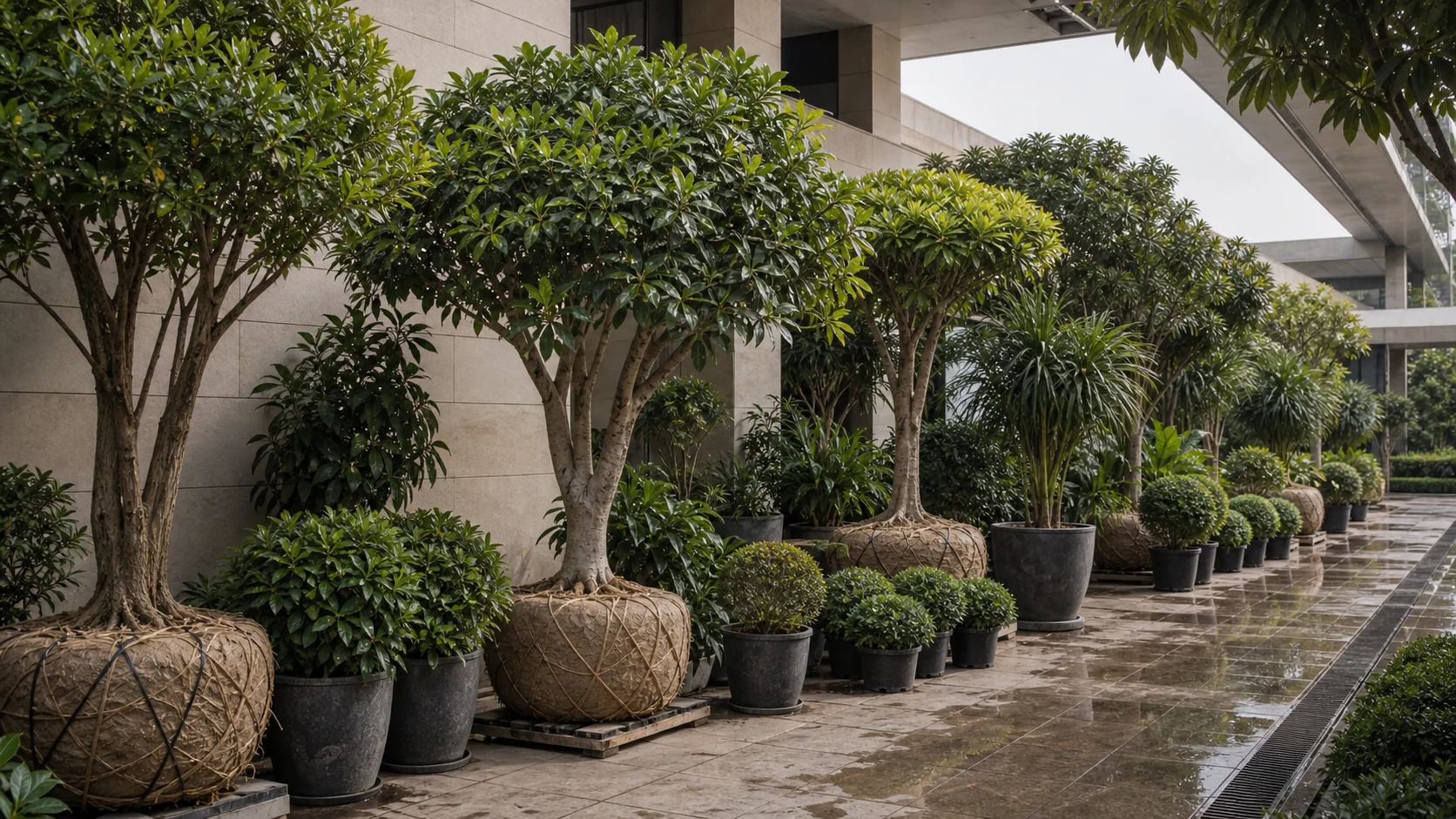
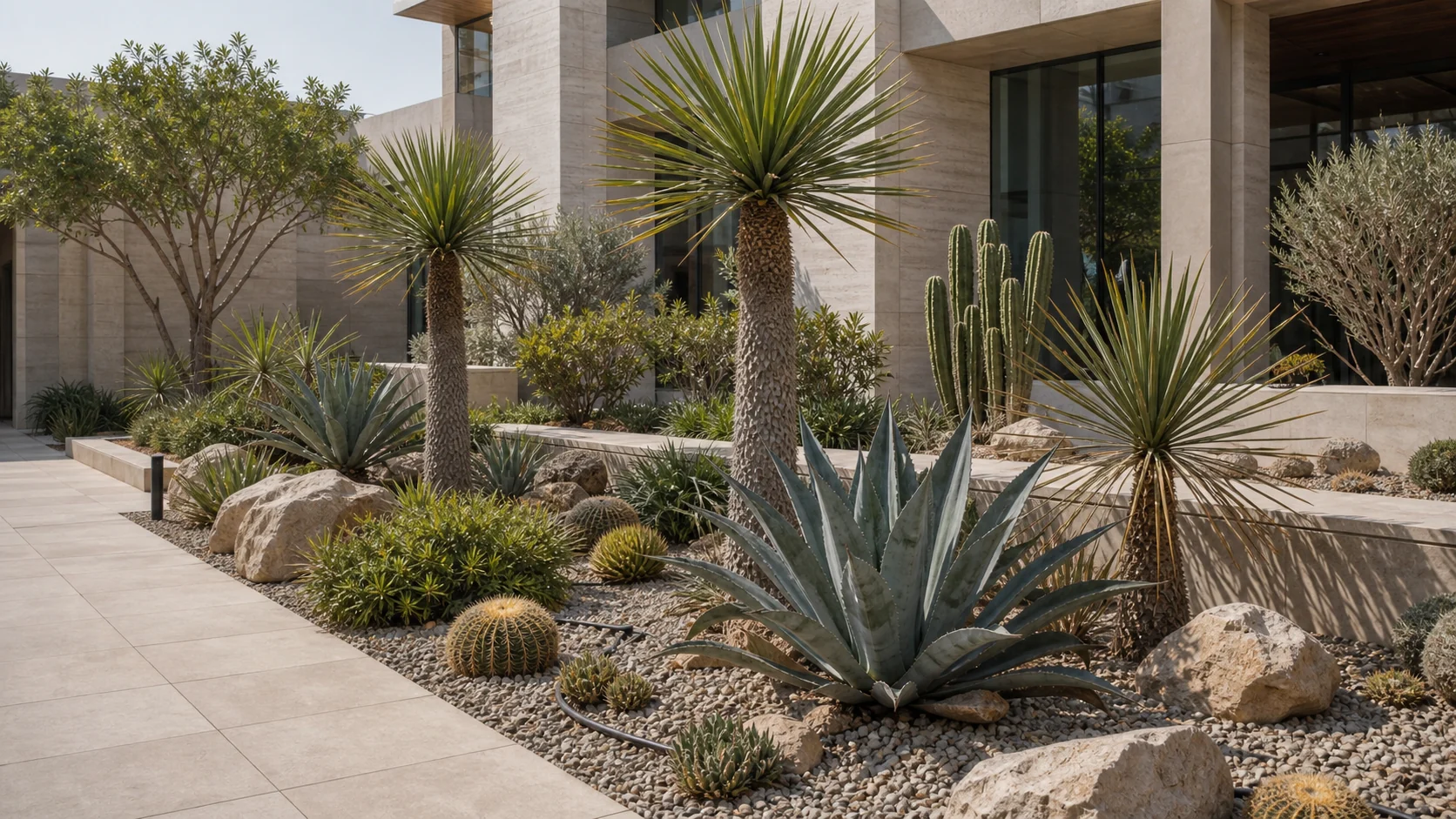
Specimen visual guide
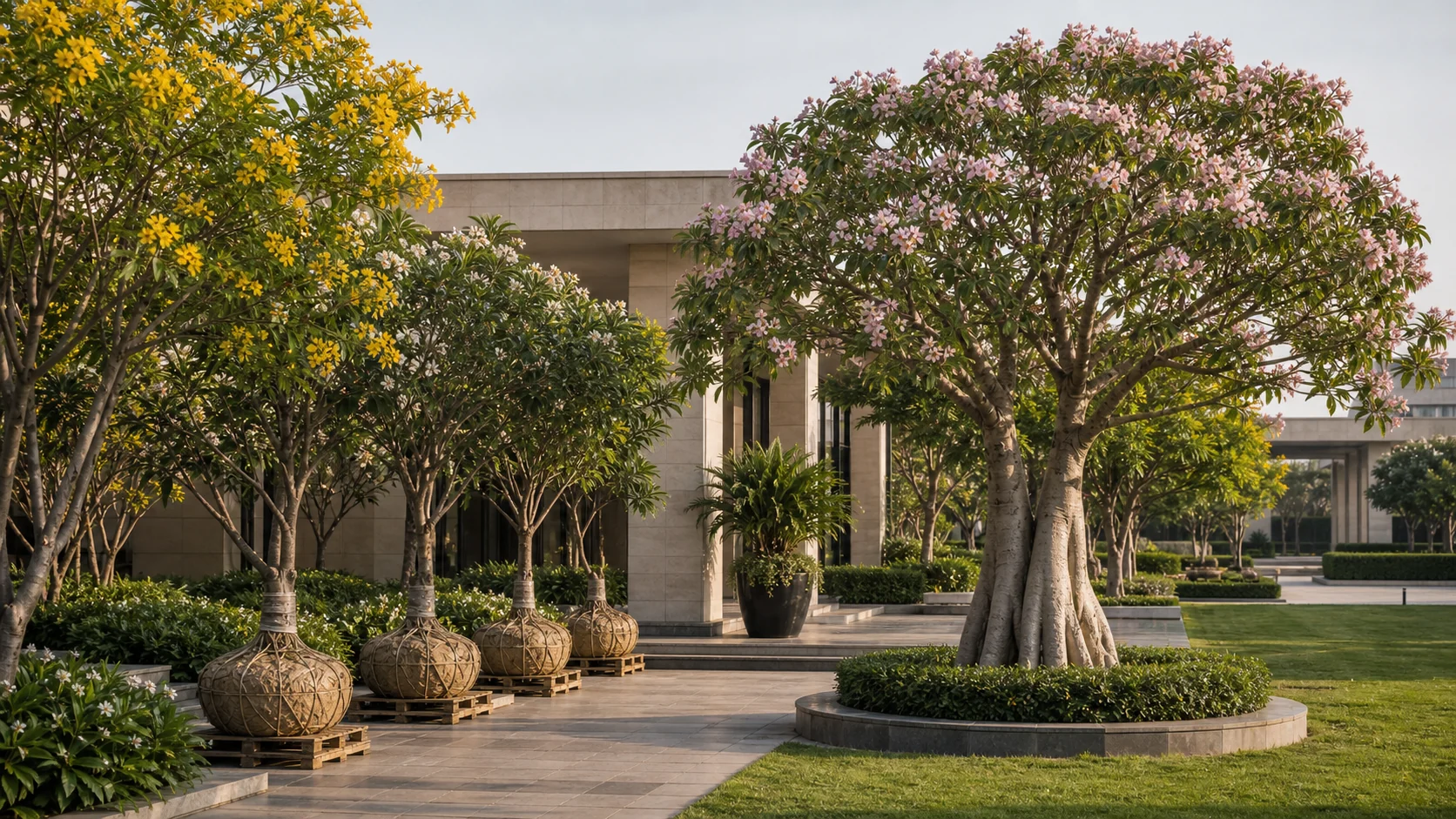
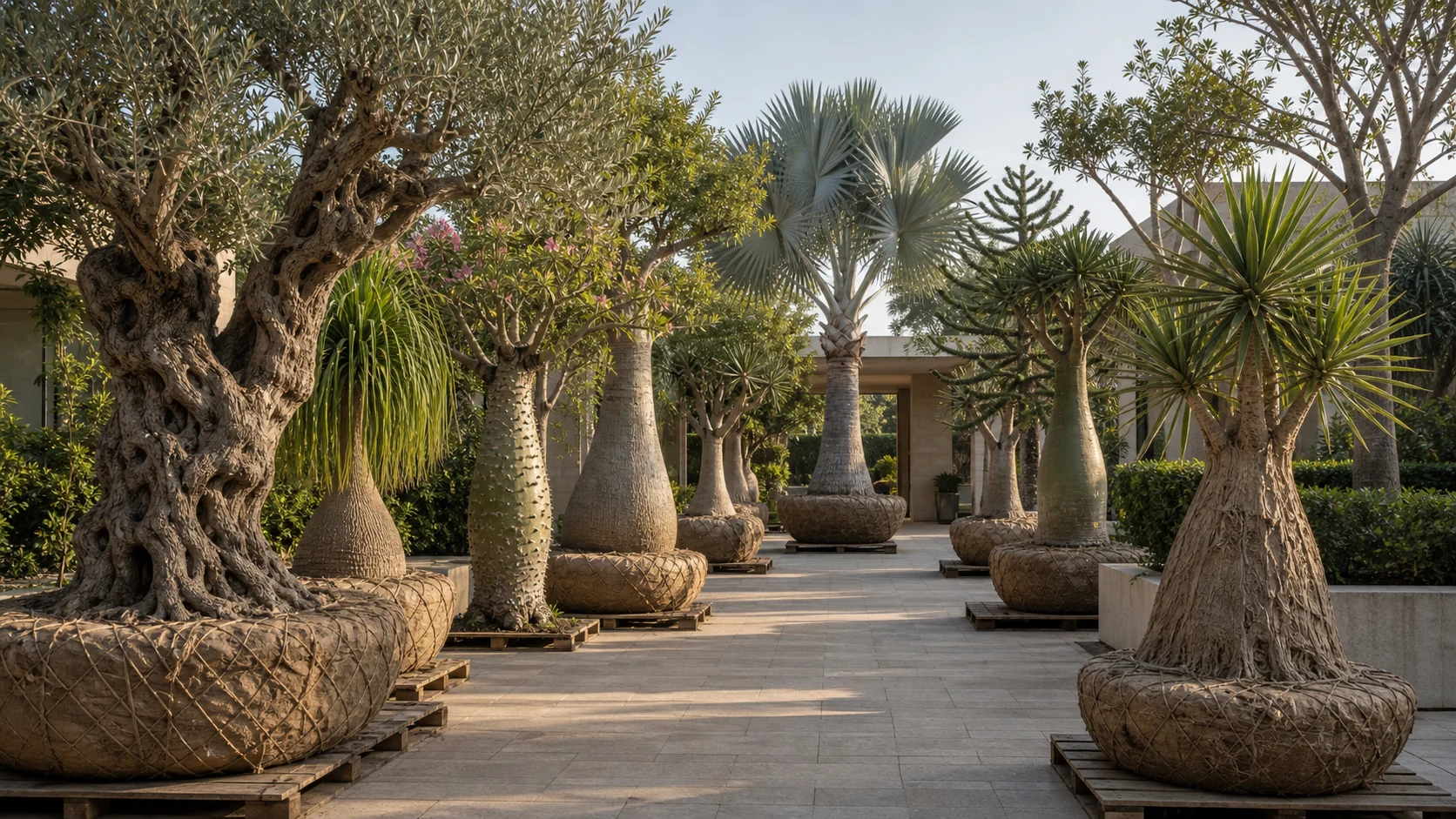
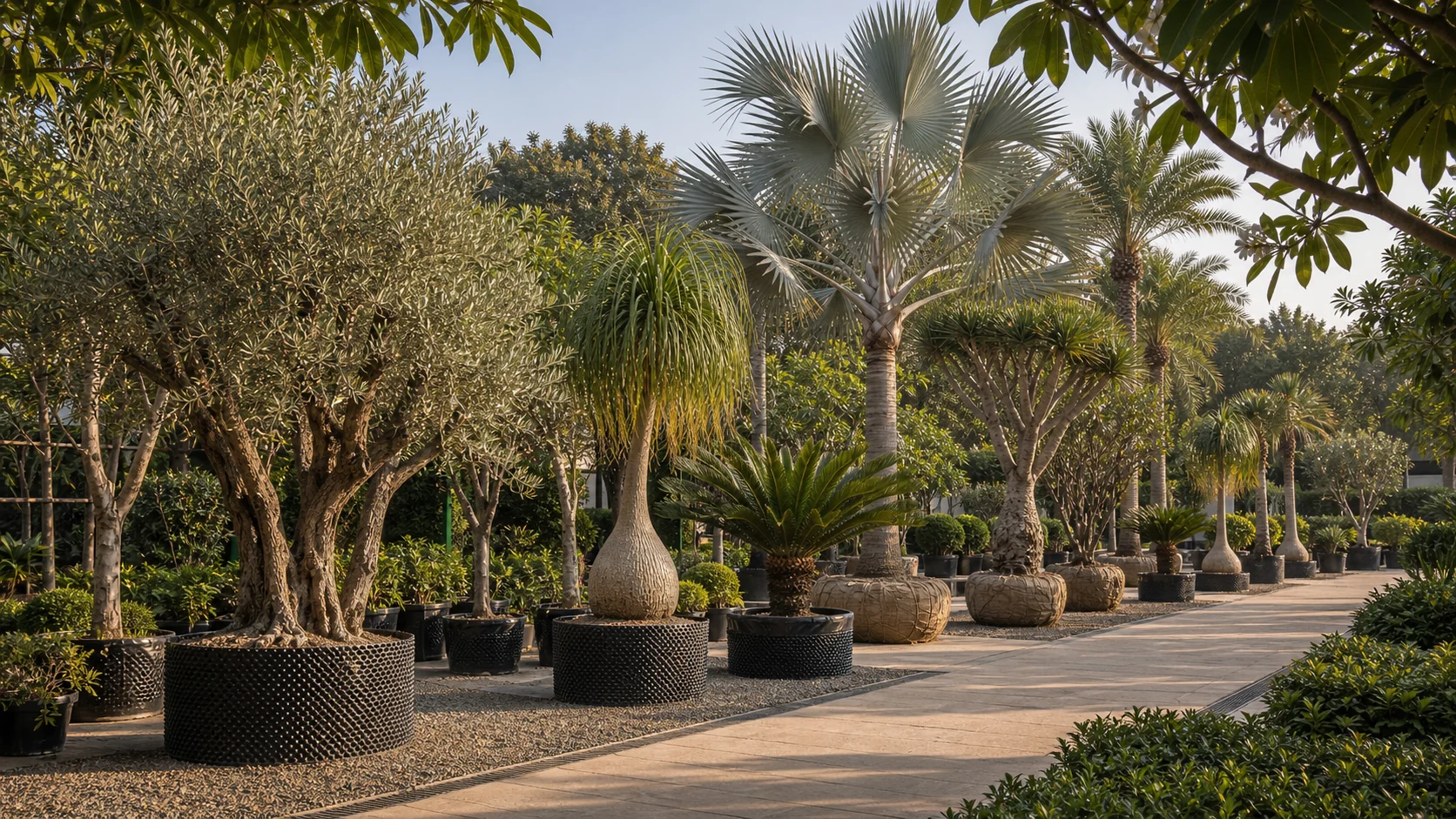
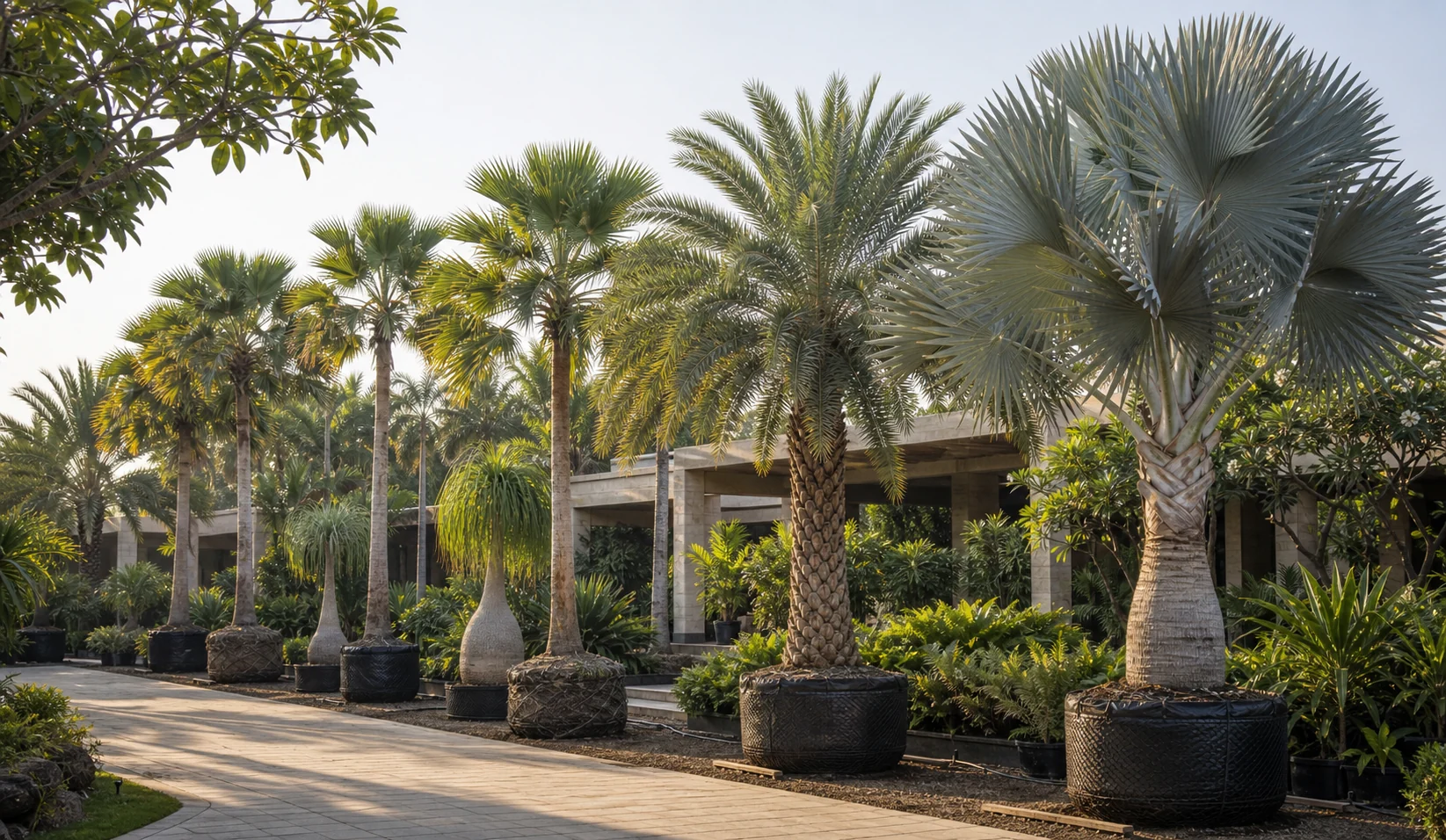
Visual context for placement, scale, handling, and landscape integration.
Section
Where it's used in premium projects
Phoenix canariensis anchors resort boulevards, marina entries, and formal hotel forecourts where designers want the iconic pineapple-trimmed trunk silhouette. It is specified as a signature pair or allée, not filler — procurement must plan spine-safe rigging, pest monitoring, and crown weight in the lifting method statement.
Section
Climate & site suitability in India
Coastal Gujarat, Maharashtra, Goa, Karnataka, and Tamil Nadu coasts suit established plants; inland heat works with irrigation establishment. Cold pockets in north-India hills are marginal for young stock. Salt spray tolerance helps sea-front hotels, but cyclone exposure demands bracing and frond management plans.
Section
Sourcing & acclimatisation
BOQs should state clear-trunk height, pineapple trim style, and crown fullness — trimmed bases are labour-intensive at nursery. Imported lots need quarantine documentation; domestic large stock still needs pest-free nursery certification. [Unverified: typical lead time for 6–8 m clear-trunk classes.] Hold under monitored irrigation before site hoisting.
Section
Installation (pit, soil, drainage, bracing)
Pits must accommodate massive rootballs with drainage — date palms tolerate drought but not anaerobic pits during establishment. Rigging teams need spine PPE and clean, disinfected pruning tools to reduce Fusarium transfer. Multi-season bracing is common until root plate stability is proven on exposed sites.
Section
Establishment & AMC
AMC must include red palm weevil monitoring (pheromone traps, regular crown inspections, rapid reporting) and sterile pruning practices — this is non-optional on Indian commercial sites. Define who maintains pineapple trim versus natural skirt. Track basal frond hygiene where staff work near trunks.
Section
Cost drivers
Explore
Related
Related
Related links
Services, segments, cost, and proof.
- Softscape & horticulture
- Irrigation & water management
- Landscape maintenance (AMC)
- Hotel & resort landscaping
- Luxury resort & spa landscaping
- Mall & retail landscaping
- Corporate campus landscaping
- Projects
- Commercial landscaping cost guide
- Pricing drivers (imported trees)
- Import compliance workflow
- Request a site assessment
- What is red palm weevil risk for Canary Island date palm in India?
- Phoenix canariensis is highly susceptible — AMC should specify monitoring frequency, trap placement, crown access, and escalation if fronds collapse asymmetrically; early detection beats crane re-removal.
- How much space does the crown need at maturity?
- Treat as a very wide heavy crown — plan setbacks from façade glazing, light poles, and pool decks beyond trunk centreline alone.
- Are basal leaf spines a site safety issue?
- Yes — rigging, pruning, and guest paths near trimmed bases need PPE rules and physical setbacks so maintenance staff are not working inside the spine zone unprotected.
- Does the pineapple trim affect cost?
- Sculpted crown bases require skilled nursery or AMC labour — specify trim style on BOQ or accept natural skirt and budget frond removal differently.
- Can it live on a salty marina front?
- Established plants tolerate coastal salt better than many tropical palms — still engineer drainage and wind bracing on exposed quays.
- What should import documentation include?
- Phytosanitary certificate and inspection workflow for live palms — coordinate with your compliance page checklist before shipping (informational, not legal advice).