
Foxtail palm
Foxtail palm (Wodyetia bifurcata)
Foxtail palm is the premium clean-modern feather palm — plumose fronds, smooth grey trunk, self-cleaning habit that drops spent fronds cleanly, and strong use grouped or solo near pools and paving where litter-sensitive clients reject messy date palms.
Spec
At a glance
- Botanical name
- Wodyetia bifurcata
- Family
- Arecaceae
- Common names
- Foxtail palm
- Origin
- Cape York Peninsula, Australia
- Plant type
- Solitary feather palm
- Mature height
- Often 9–12 m in landscape settings
- Trunk / form
- Smooth grey ringed trunk; bushy plumose crown
- Crown spread
- Compact relative to height — neat foxtail silhouette
- Growth rate
- Moderately fast in warm climates
- Light
- Full sun for best form
- Water needs
- Moderate establishment; drought-tolerant once rooted
- India climate suitability
- Tropical and warm subtropical India; protect young plants from cold
- Cold/heat & salt/wind tolerance
- Heat-tolerant; moderate salt; young plants cold-sensitive; can lean if crowded
- Typical supply size
- Triple-trunk or single clear-trunk classes [Unverified]
- Lead time (sourcing)
- [Unverified] popular SKU — nursery allocation matters
- Install considerations
- Drainage; full sun spacing; triple planting alignment
- Maintenance level
- Low litter — self-cleaning; moderate feeding
- Cautions
- Cold when young; nutrient deficiency shows as yellowing; avoid deep shade
Supply
Latest import activity
- Imported on
- 14 Jun 2026
- Source
- Specimen Trade List — review pending (sample)
- Availability
- On request
- Lot
- Wodyetia bifurcata — foxtail palm cluster
Gallery
Specimen visual guide
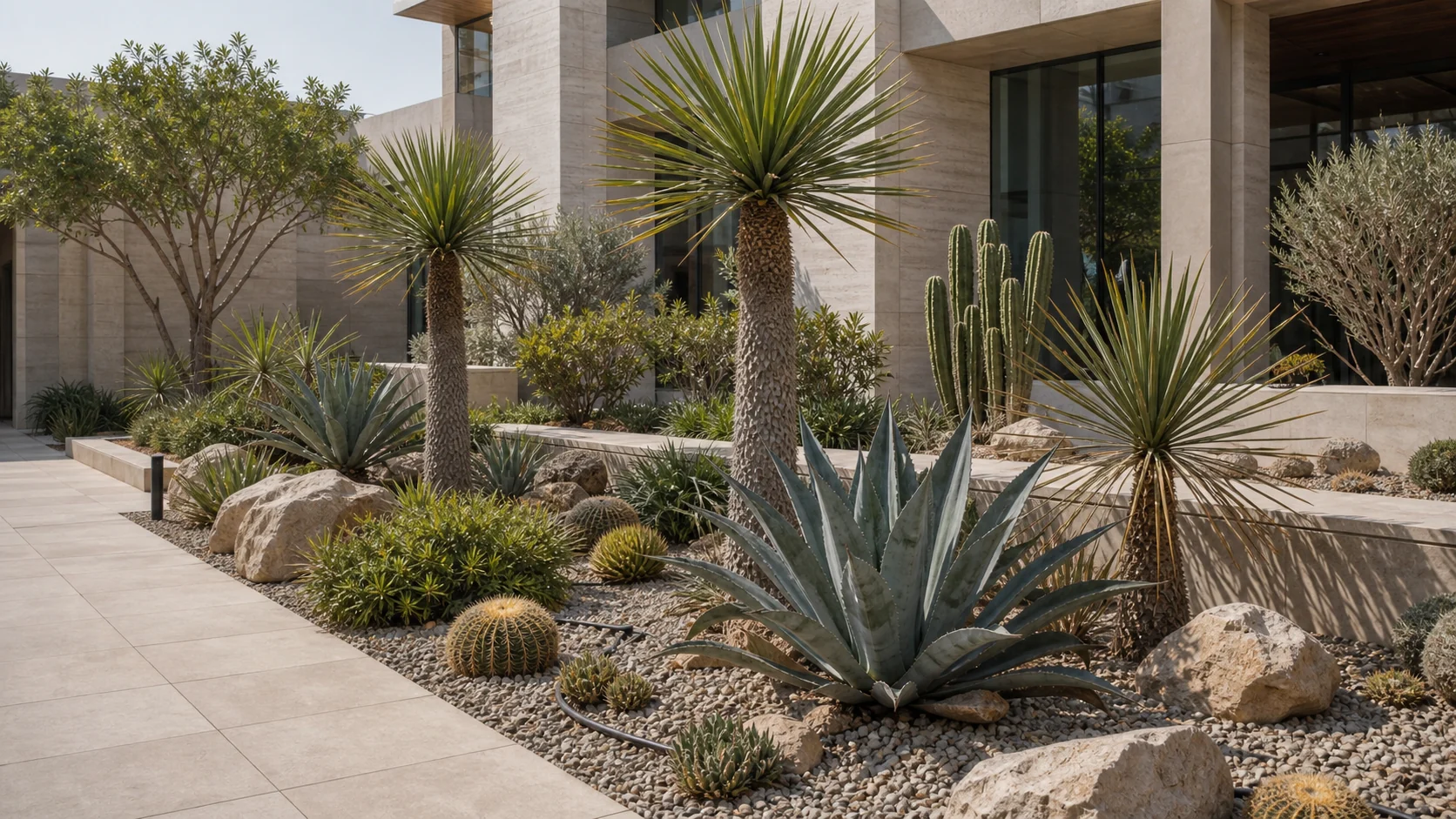
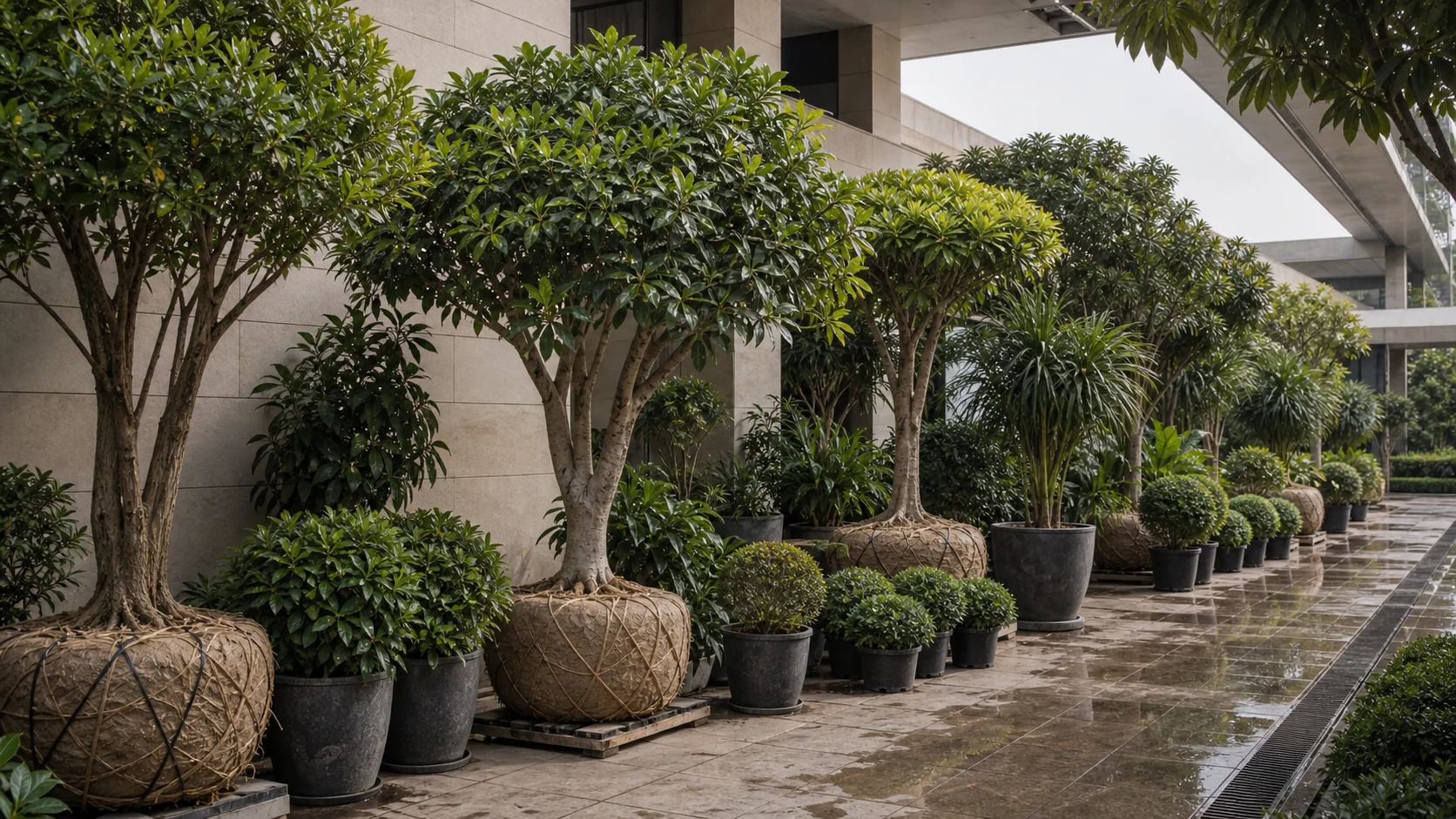
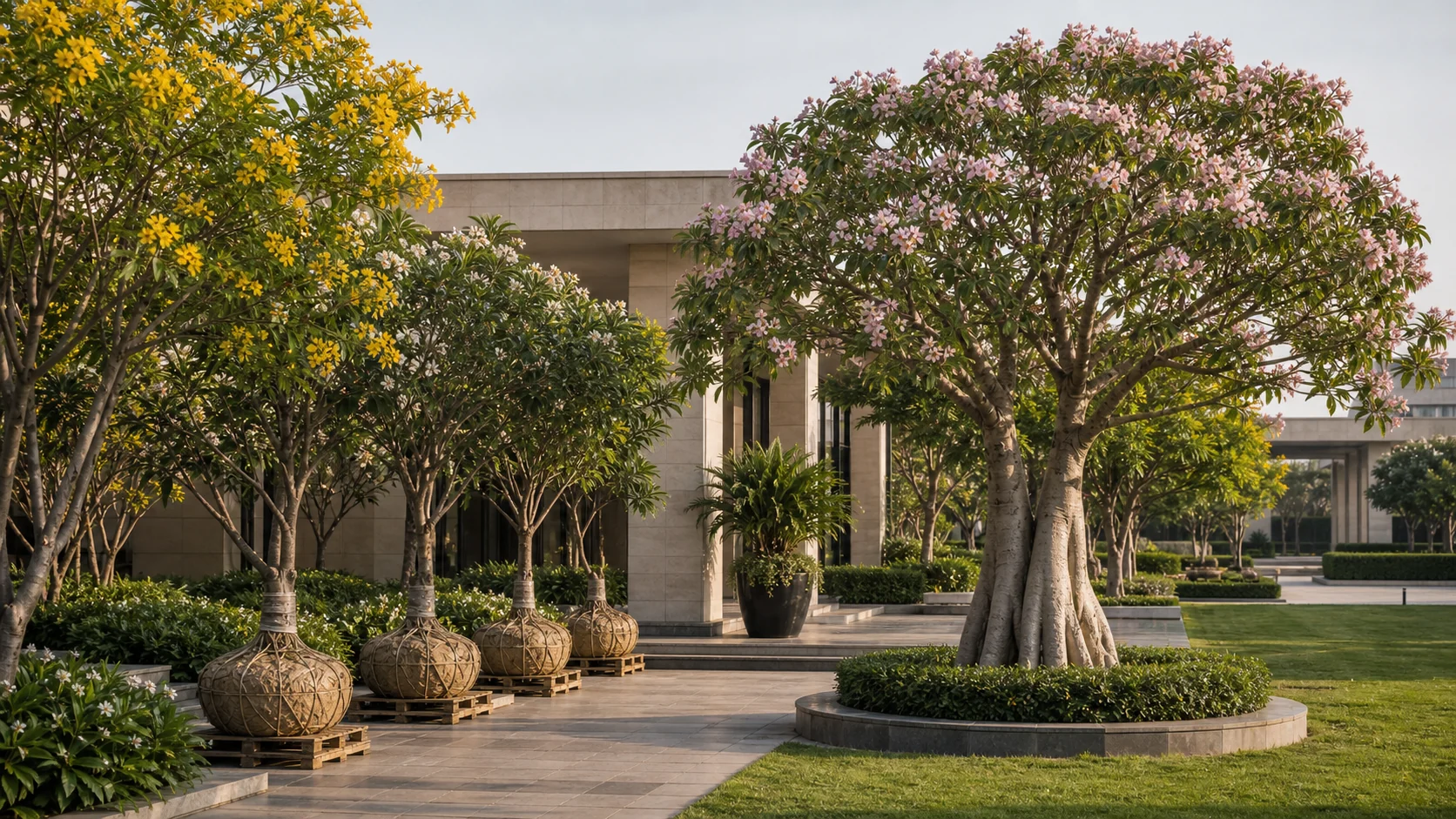
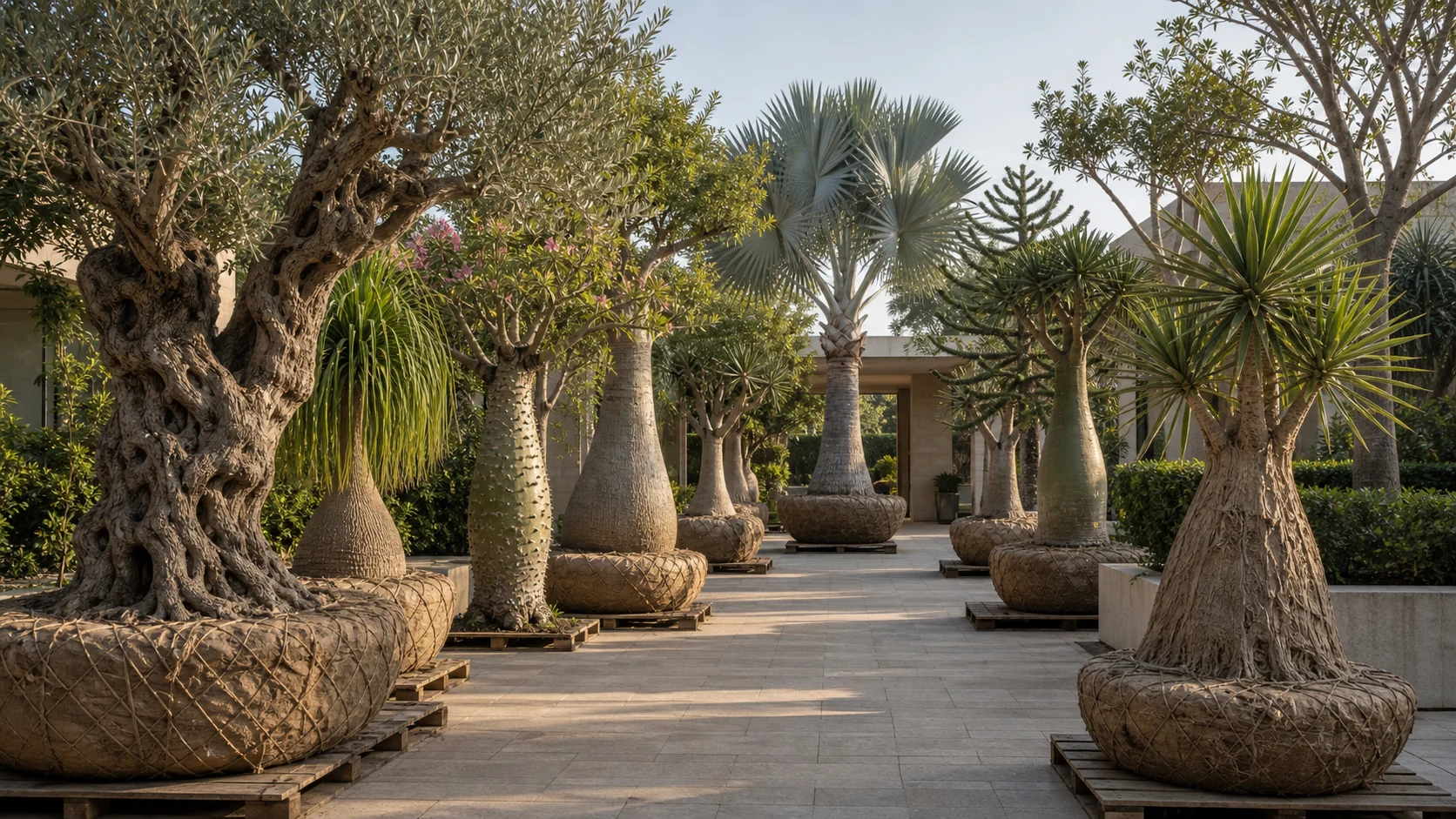
Visual context for placement, scale, handling, and landscape integration.
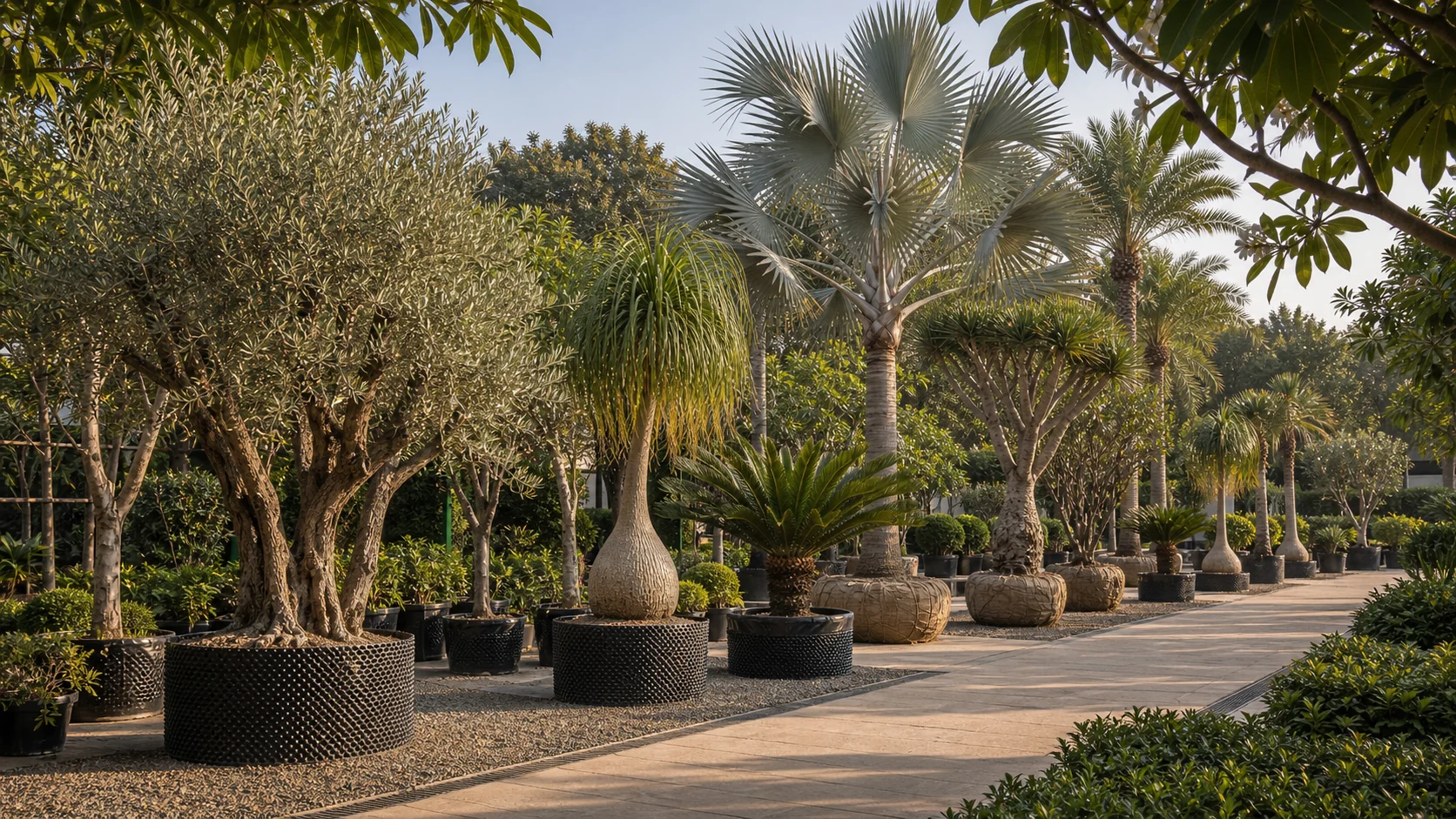
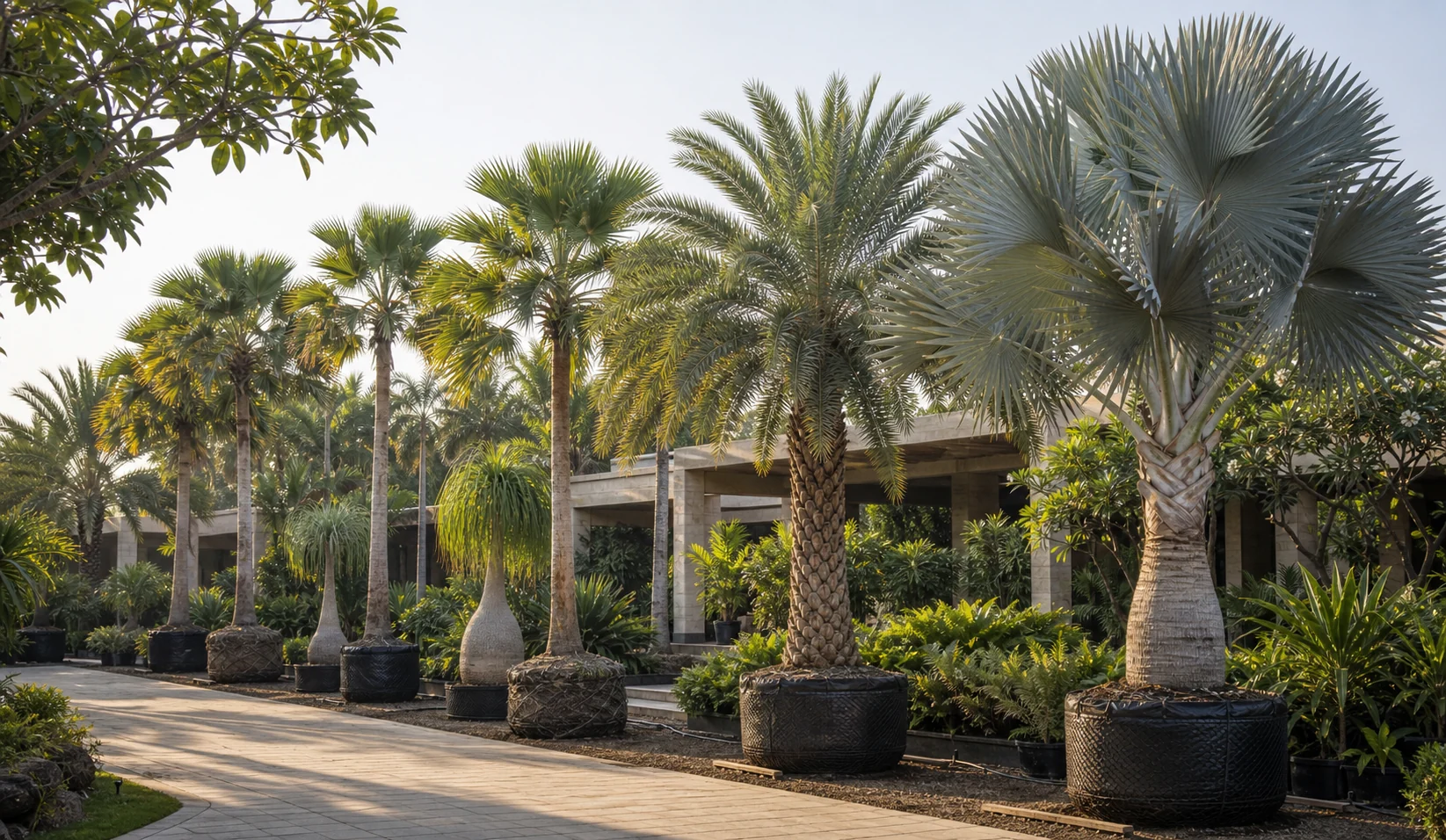
Section
Where it's used in premium projects
Specified beside pools, club terraces, modern villa entries, and grouped triples at hotel drop-offs where frond litter would stain paving — the foxtail silhouette reads contemporary against glass and stone. Designers repeat it when maintenance teams reject Canary Island date palm debris.
Section
Climate & site suitability in India
Warm coastal and inland tropical India suits established plants; young stock needs winter protection north of roughly 20°N latitude in bad years. Full sun is essential — shaded specimens lean and open crowns. Free drainage prevents root rot during monsoon establishment.
Section
Sourcing & acclimatisation
Single versus triple-trunk groups should be nursery-grown as a set, not field-spliced on site without agreement. Clear-trunk height and crown bushiness are the visual KPIs. [Unverified: import versus domestic nursery mix for commercial projects.] Hold with consistent feeding — magnesium deficiency shows early as yellow foxtails.
Section
Installation (pit, soil, drainage, bracing)
Drainage-first pits; triple groups need one shared irrigation zone but separate rootballs. Light bracing may be needed on tall singles in wind corridors. Do not plant under building overhangs — crowns need sky.
Section
Establishment & AMC
Self-cleaning means AMC focuses on nutrient balance, occasional potassium/magnesium correction, and irrigation checks — not weekly frond sweeping. Monitor lean on crowded groups. Replacement policy for cold-damaged young crowns should be pre-agreed in hill stations.
Section
Cost drivers
Explore
Related
Related
Related links
Services, segments, cost, and proof.
- Softscape & horticulture
- Irrigation & water management
- Landscape maintenance (AMC)
- Hotel & resort landscaping
- Luxury resort & spa landscaping
- Mall & retail landscaping
- Corporate campus landscaping
- Projects
- Commercial landscaping cost guide
- Pricing drivers (imported trees)
- Import compliance workflow
- Request a site assessment
- Why is foxtail palm called self-cleaning near pools?
- Spent fronds detach cleanly relative to date palms — less brown litter on pool decks, though establishment still needs debris control for the first year.
- Single trunk versus triple planting — what should BOQ state?
- Specify nursery-grown triple alignment and trunk height spread — field grouping without nursery planning yields uneven crowns visible at arrival.
- How cold-hardy is foxtail palm when young?
- Young plants are damaged in unusual north-India cold snaps — avoid hill-station exposure until trunks mature, or budget frost protection the first two winters.
- Can foxtail palm live in partial building shade?
- No — crowns become sparse and trunks lean; full sun placement is a design requirement, not a preference.
- What nutrients matter in AMC?
- Magnesium and potassium deficiencies yellow plumose fronds — soil tests on engineered media beat generic NPK guessing.
- How do we benchmark supplier cost?
- Compare trunk class, triple versus single, establishment irrigation weeks, and AMC feeding — not catalogue per-tree pricing.