
Giant fishtail palm
Giant / Mountain fishtail palm (Caryota obtusa)
Caryota obtusa is the solitary giant fishtail — very tall bipinnate crowns, relatively fast for its scale, and whole-palm death after one spectacular terminal flowering — with authentic Himalayan-to-India provenance for estates and tall atriums that can fund replacement.
Spec
At a glance
- Botanical name
- Caryota obtusa (syn. C. gigas)
- Family
- Arecaceae
- Common names
- Giant fishtail palm, mountain fishtail palm, toddy palm
- Origin
- Himalayan foothills, NE India, South-East Asia
- Plant type
- Solitary giant feather palm
- Mature height
- Often 12–20 m+ in tropical landscape
- Trunk / form
- Single stout trunk; massive bipinnate fishtail fronds
- Crown spread
- Very large
- Growth rate
- Relatively fast for a large solitary palm
- Light
- Full sun to bright light
- Water needs
- Moderate to high in establishment
- India climate suitability
- Humid subtropical and tropical India; native authenticity in Himalayan belt contexts
- Cold/heat & salt/wind tolerance
- Moderate warmth; whole-palm monocarpic death; irritant fruit
- Typical supply size
- Large clear-trunk specimens [Unverified]
- Lead time (sourcing)
- [Unverified] giant class availability
- Install considerations
- Heavy crown lifting; replacement CAPEX in brief; crane access
- Maintenance level
- Moderate until terminal flowering — then removal
- Cautions
- Entire palm dies after flowering; great height; irritant fruit
Gallery
Specimen visual guide
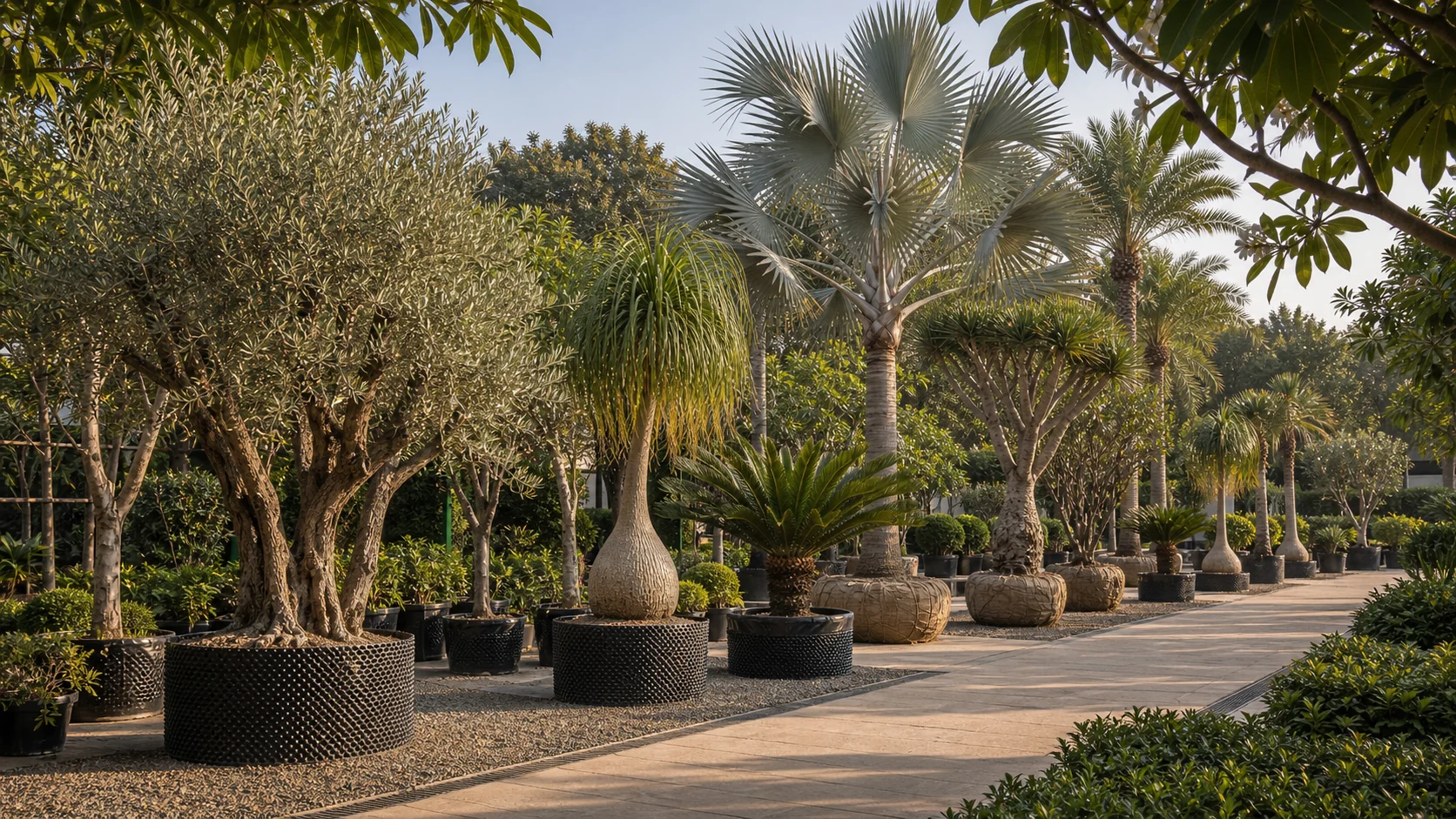
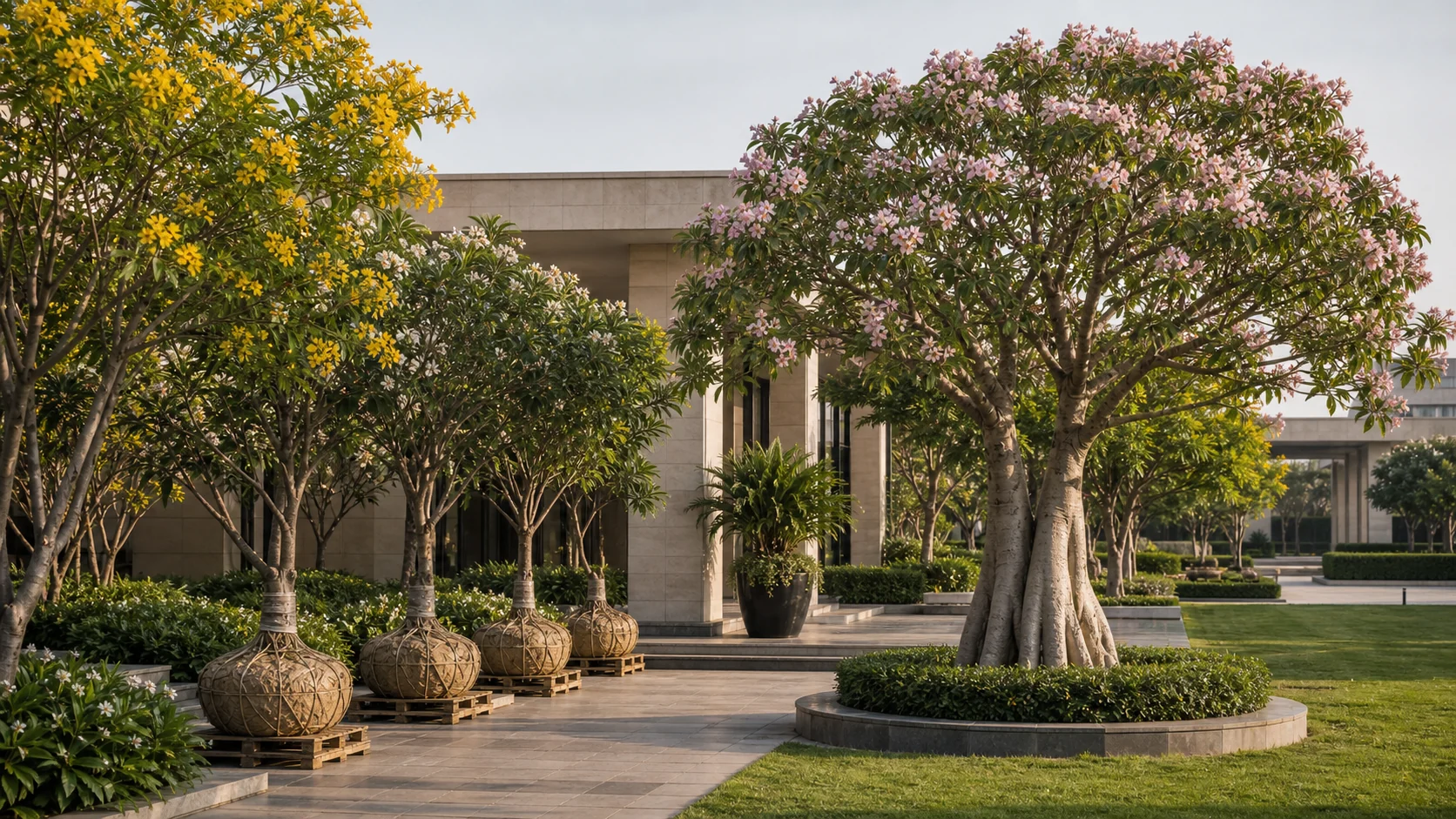
Visual context for placement, scale, handling, and landscape integration.
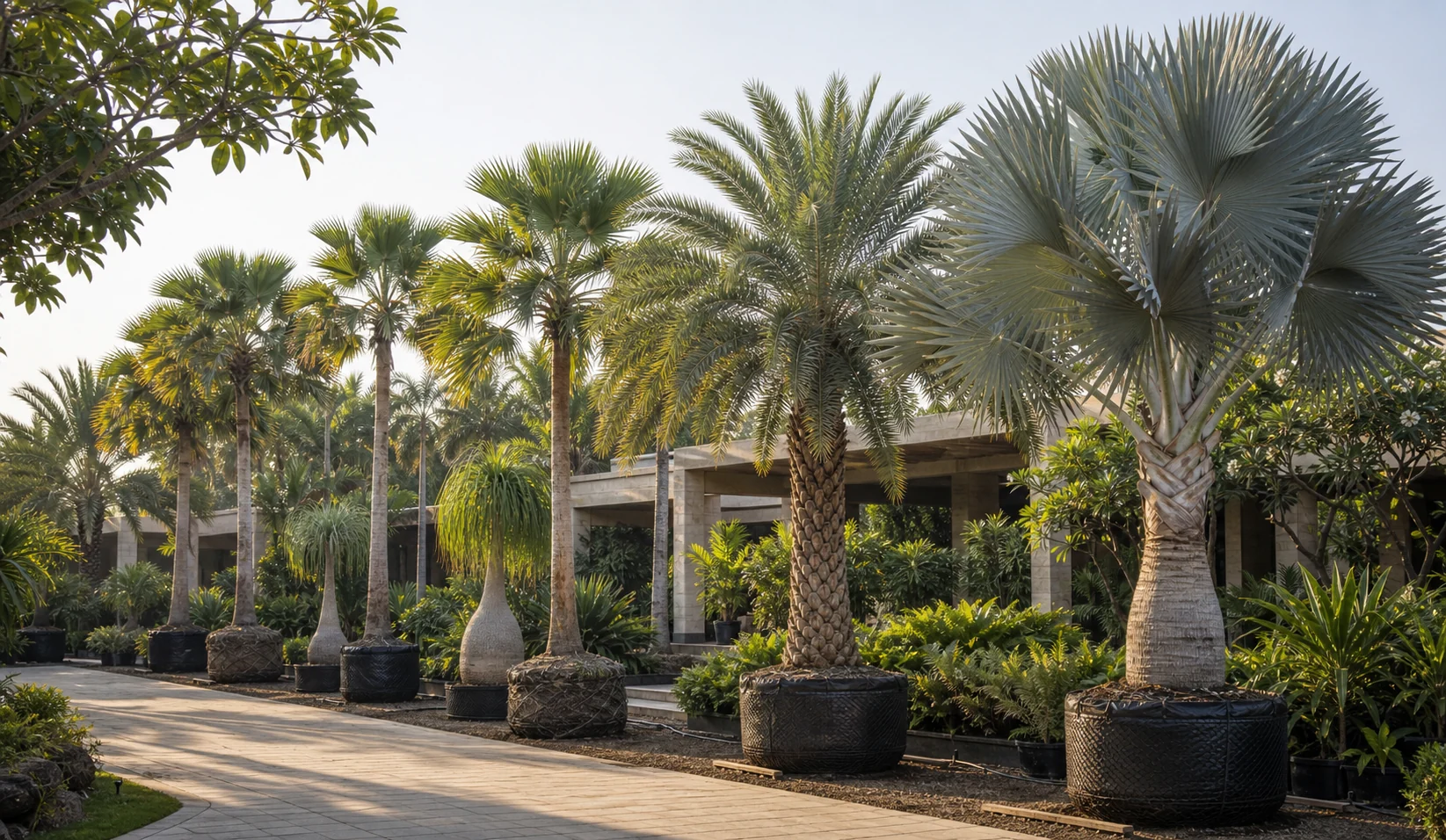
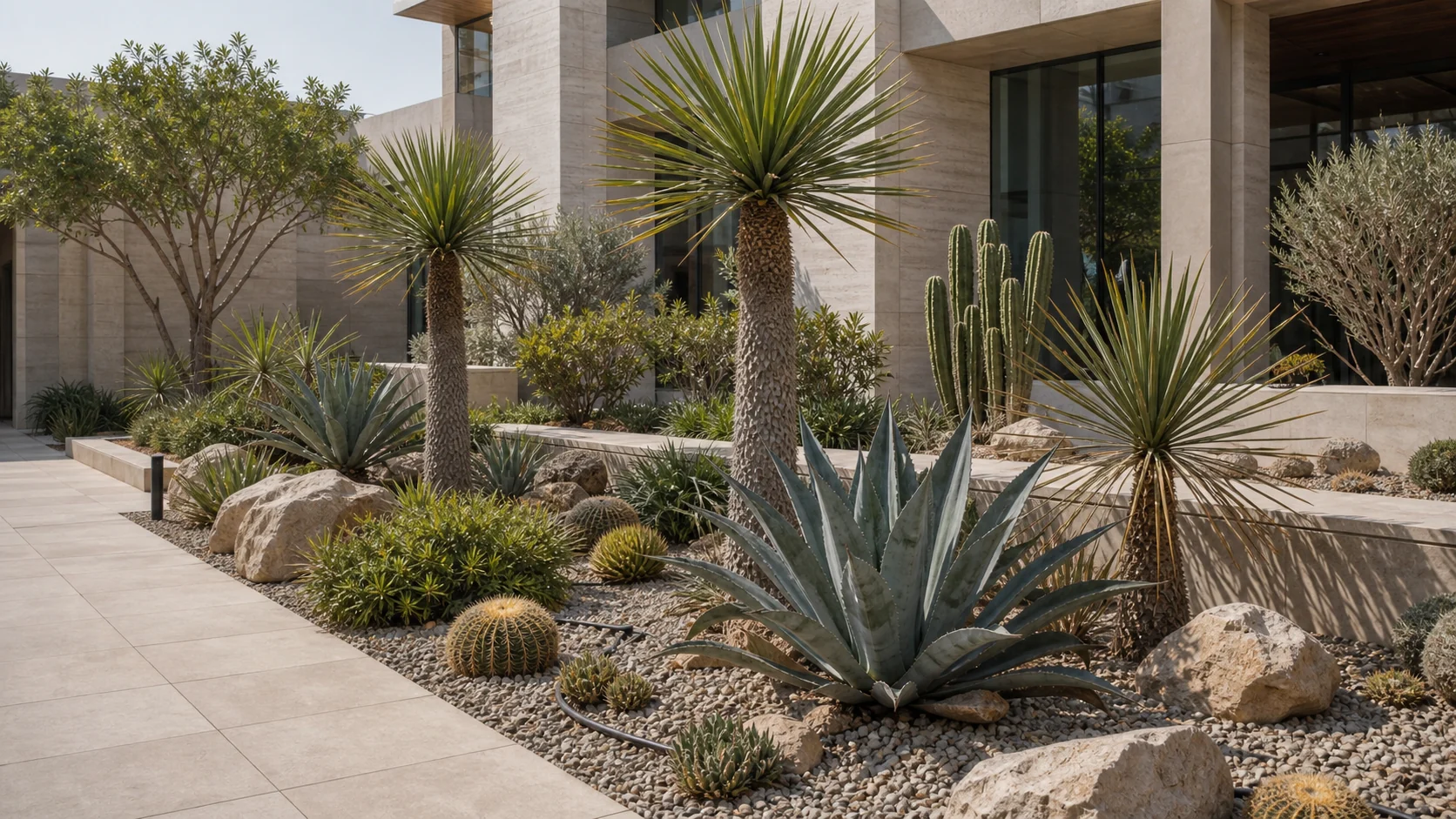
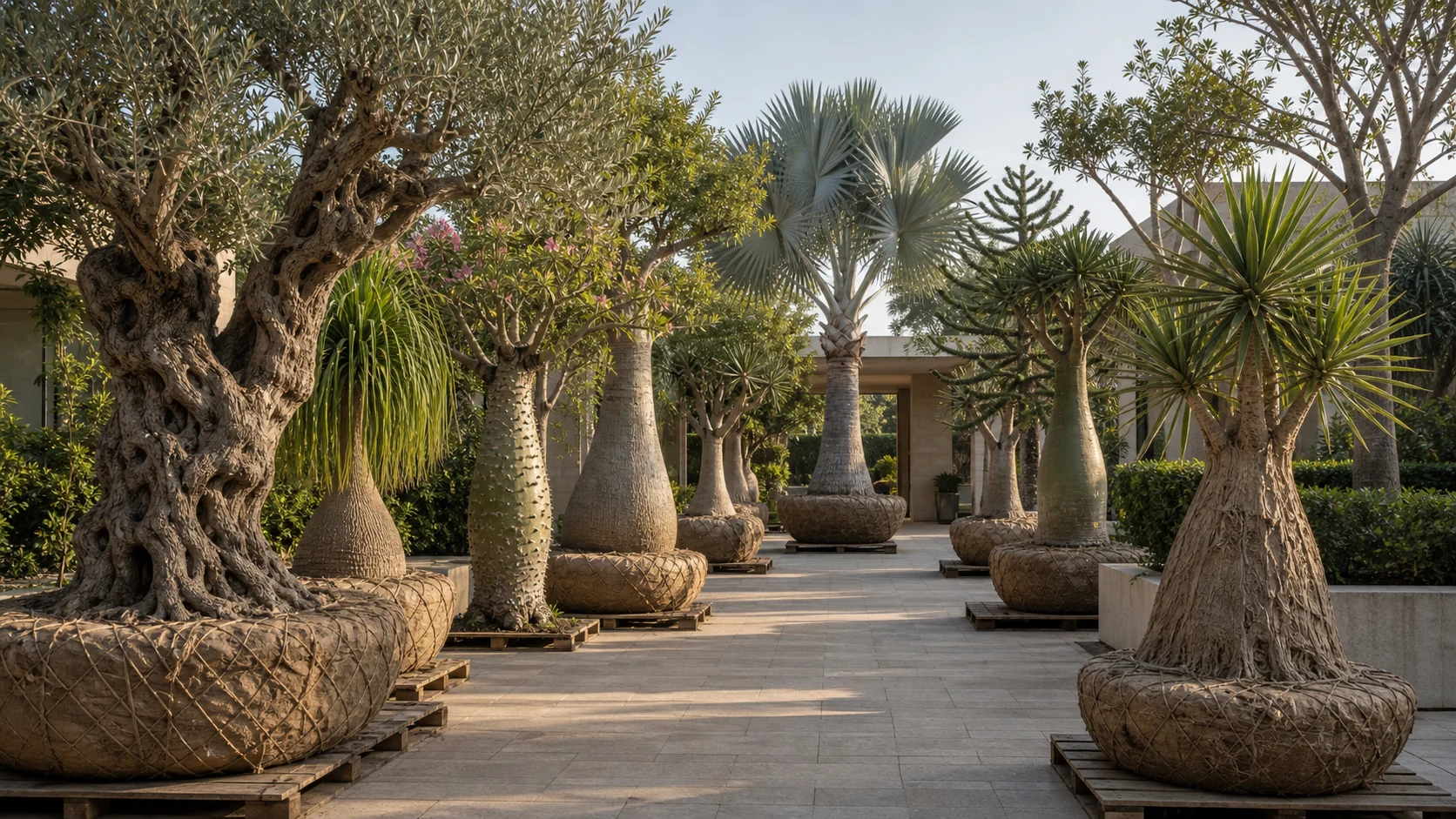
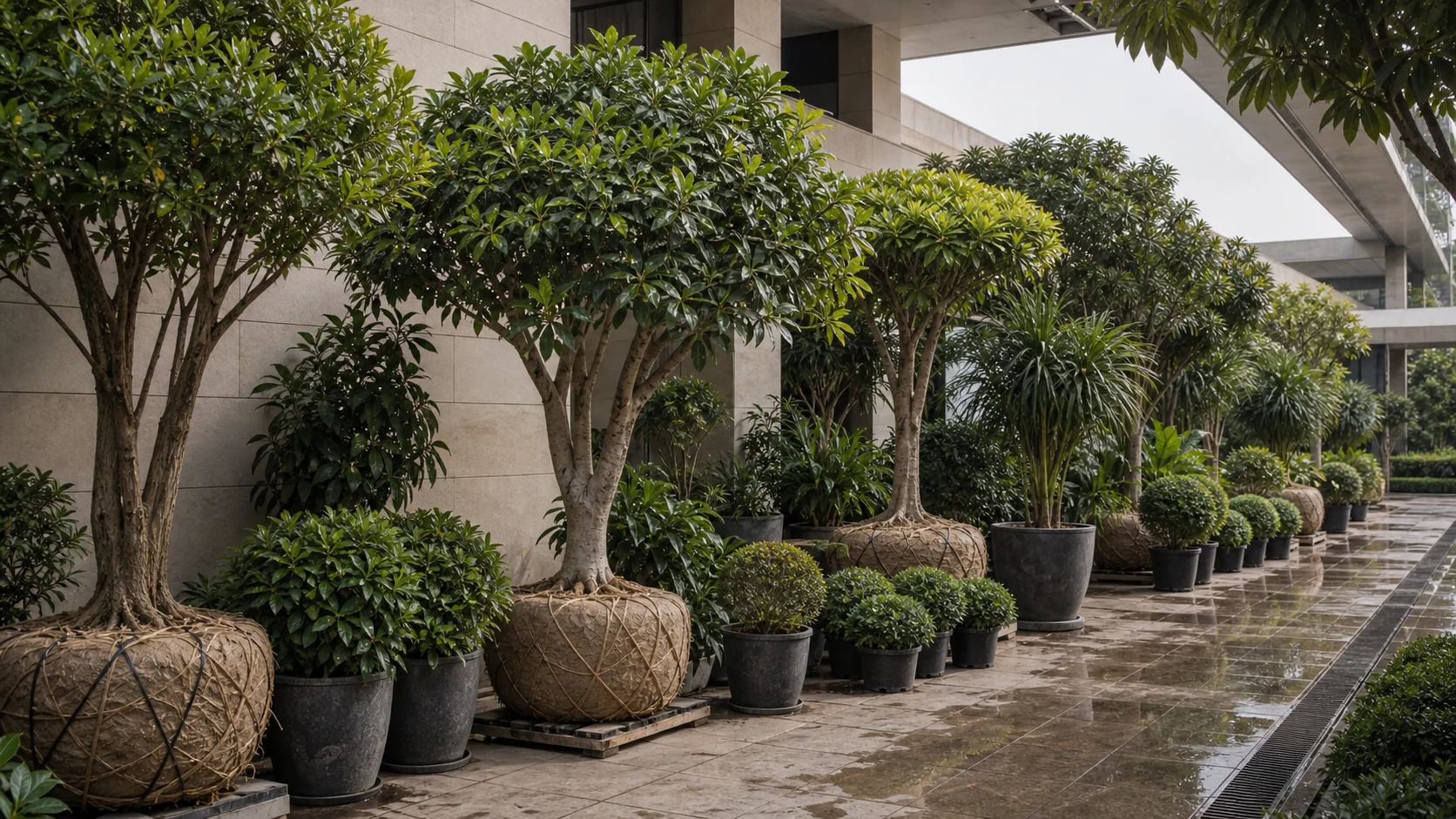
Section
Where it's used in premium projects
Used as a single landmark — tall atrium centrepieces, estate arrival features, and institutional botanical statements where fishtail geometry must read at height. Native-to-India Himalayan provenance supports authentic regional storytelling on NE and hill-station projects, not generic “imported palm” copy.
Section
Climate & site suitability in India
Warm humid sites with space suit it; cramped courts are overrun within years. Terminal flowering triggers whole-palm death — facilities must accept a future removal crane visit, unlike clustering Caryota mitis. Fruit irritant hazards mirror other fishtails — route guest paths accordingly.
Section
Sourcing & acclimatisation
Buy crown presence at delivery — relative fast growth still does not deliver instant estate scale from small liners. State monocarpic replacement in the landscape masterplan. [Unverified: field-dig lead time for 6 m+ clear-trunk classes.] Documentation where stock moves across state quarantine lines still applies.
Section
Installation (pit, soil, drainage, bracing)
Large rootball pits with drainage; multi-season bracing for tall fishtail crowns in wind. Survey ultimate height against glass atriums — obtusa outgrows many interior volumes. Plan removal access decades ahead for the post-flowering die-off event.
Section
Establishment & AMC
AMC watches for terminal inflorescence emergence — when flowering completes, schedule whole-palm removal and replacement, not merely frond trimming. Until then, maintain steady moisture and feeding; irritant fruit handling rules apply throughout the palm's life.
Section
Cost drivers
Explore
Related
Related
Related links
Services, segments, cost, and proof.
- Softscape & horticulture
- Irrigation & water management
- Landscape maintenance (AMC)
- Hotel & resort landscaping
- Luxury resort & spa landscaping
- Mall & retail landscaping
- Corporate campus landscaping
- Projects
- Commercial landscaping cost guide
- Pricing drivers (imported trees)
- Import compliance workflow
- Request a site assessment
- What is the monocarpic lifespan of Caryota obtusa?
- The entire palm dies after one terminal flowering cascade — programme removal and replacement in CAPEX; do not market it as a permanent canopy without that plan.
- How tall does giant fishtail palm grow in India?
- Often well above single-storey architecture — verify atrium and façade clearance at BOQ stage, not after crown lift blocks maintenance access.
- Is Caryota obtusa native to India?
- Yes — Himalayan foothills and NE India are within its native range; use that authenticity angle on regional projects versus generic imported-palm language.
- How does obtusa differ from Caryota mitis on a BOQ?
- Obtusa is one solitary giant that dies whole; mitis is a clustering screen where individual stems die after flowering but the clump remains.
- What safety rules apply to fishtail fruit?
- Oxalate irritant crystals — PPE for crews, no guest handling, and removal before fruit falls on circulation routes.
- How should cost be compared?
- Include clear-trunk class, crane scope, bracing, and a stated replacement allowance after flowering — not headline per-tree pricing.