
Hyderabad
Imported specimen trees in Hyderabad
Hyderabad’s dry heat and expanding IT-and-hospitality corridor favour many warm-climate specimens when drainage and irrigation are engineered — but proximity to nursery hubs does not replace import documentation, acclimatisation, or crane planning on mature architectural trees. Deccan plateau summers stress fresh transplants without live establishment irrigation; procurement should treat monsoon drainage on new tech parks as a BOQ requirement even when the climate is marketed as dry.
Gallery
Specimen visual guide
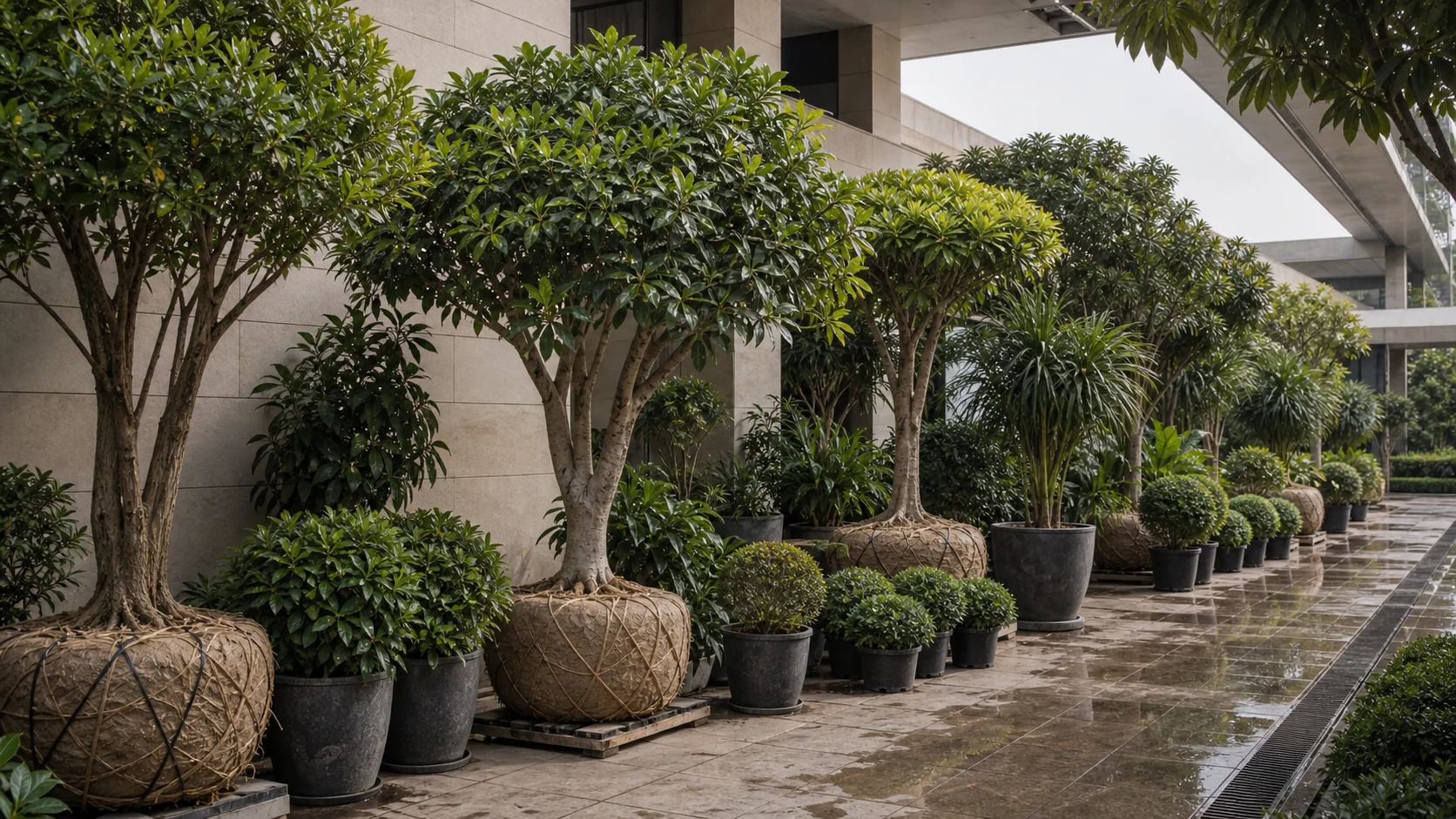
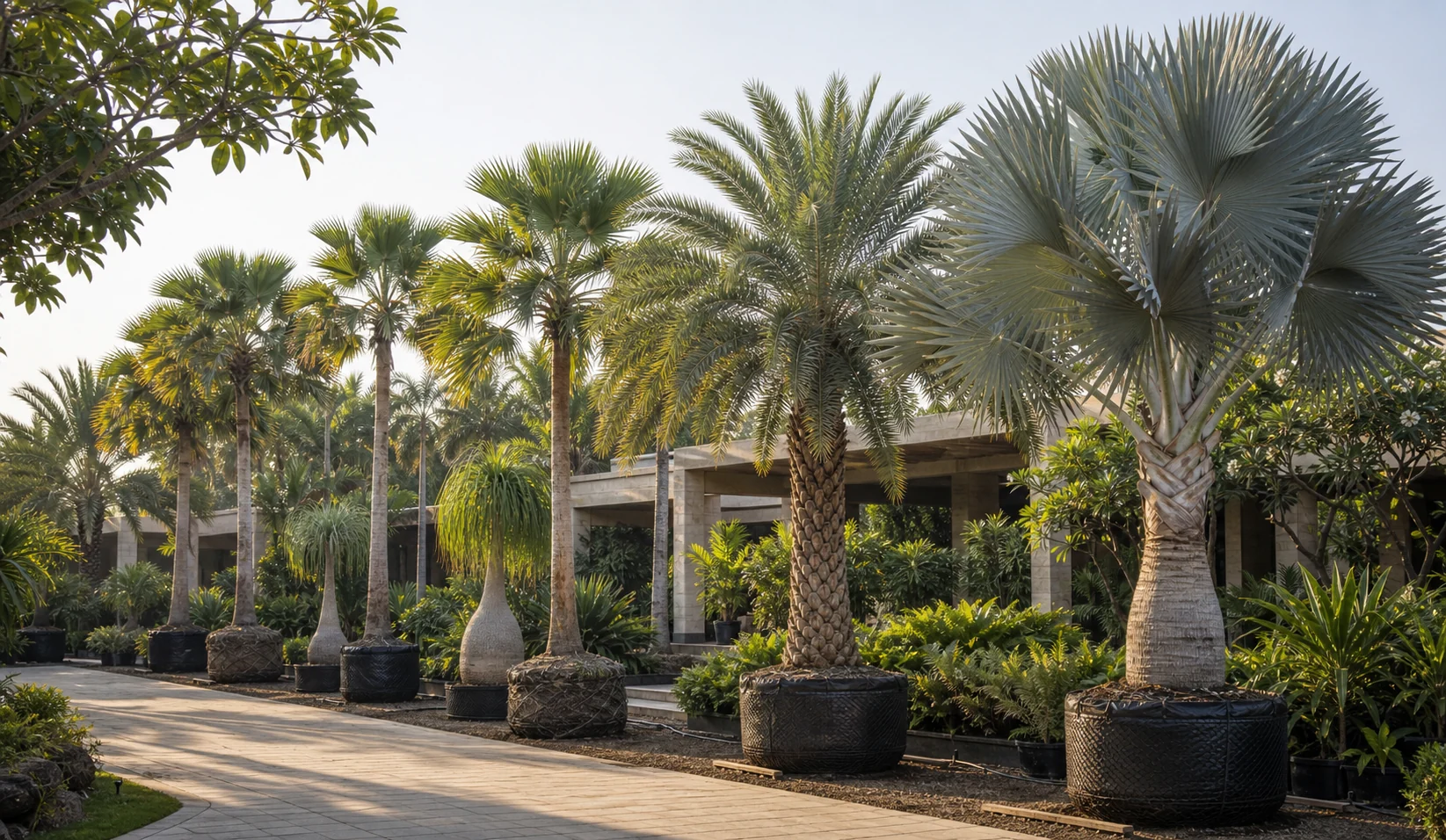
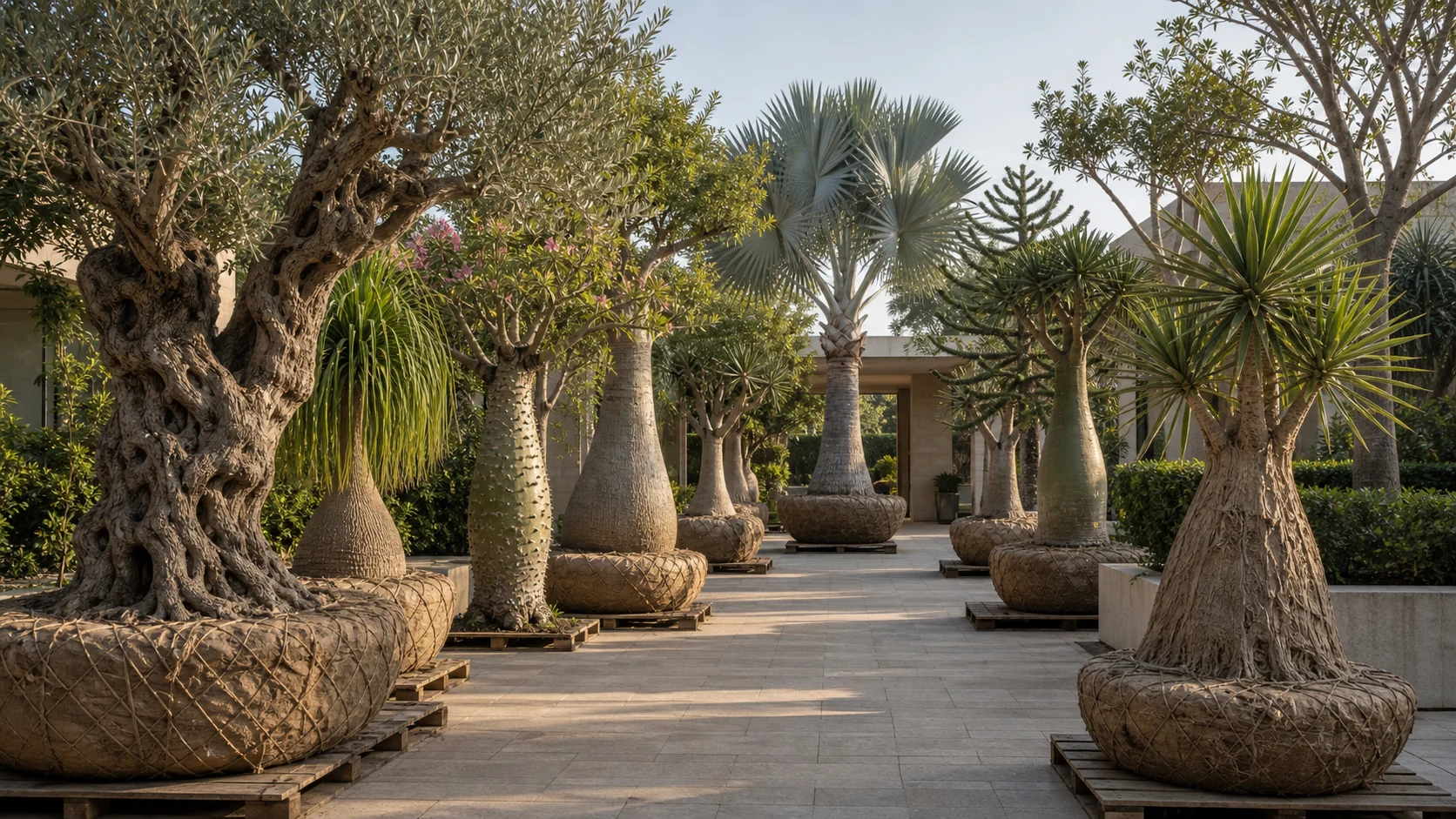
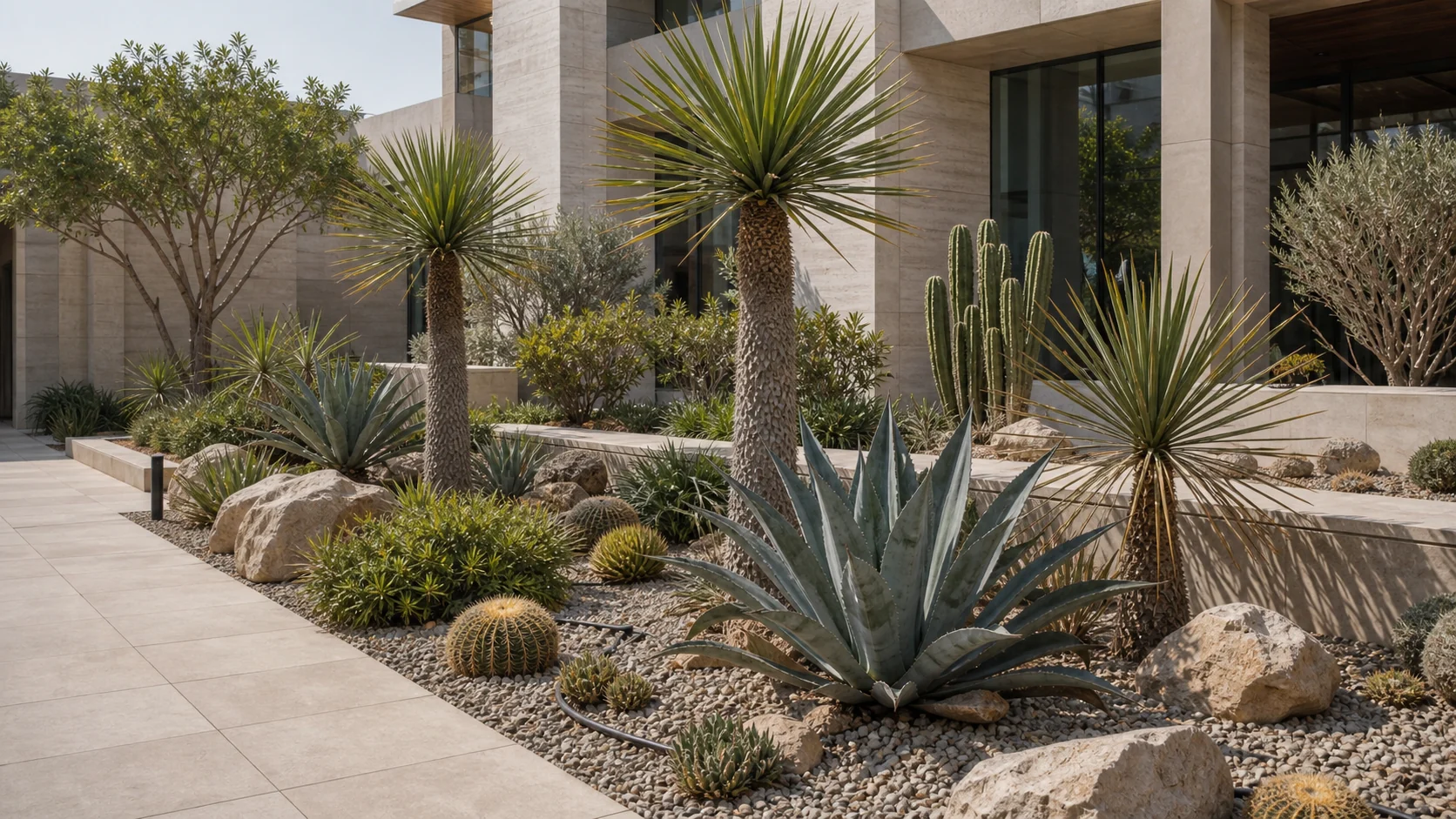
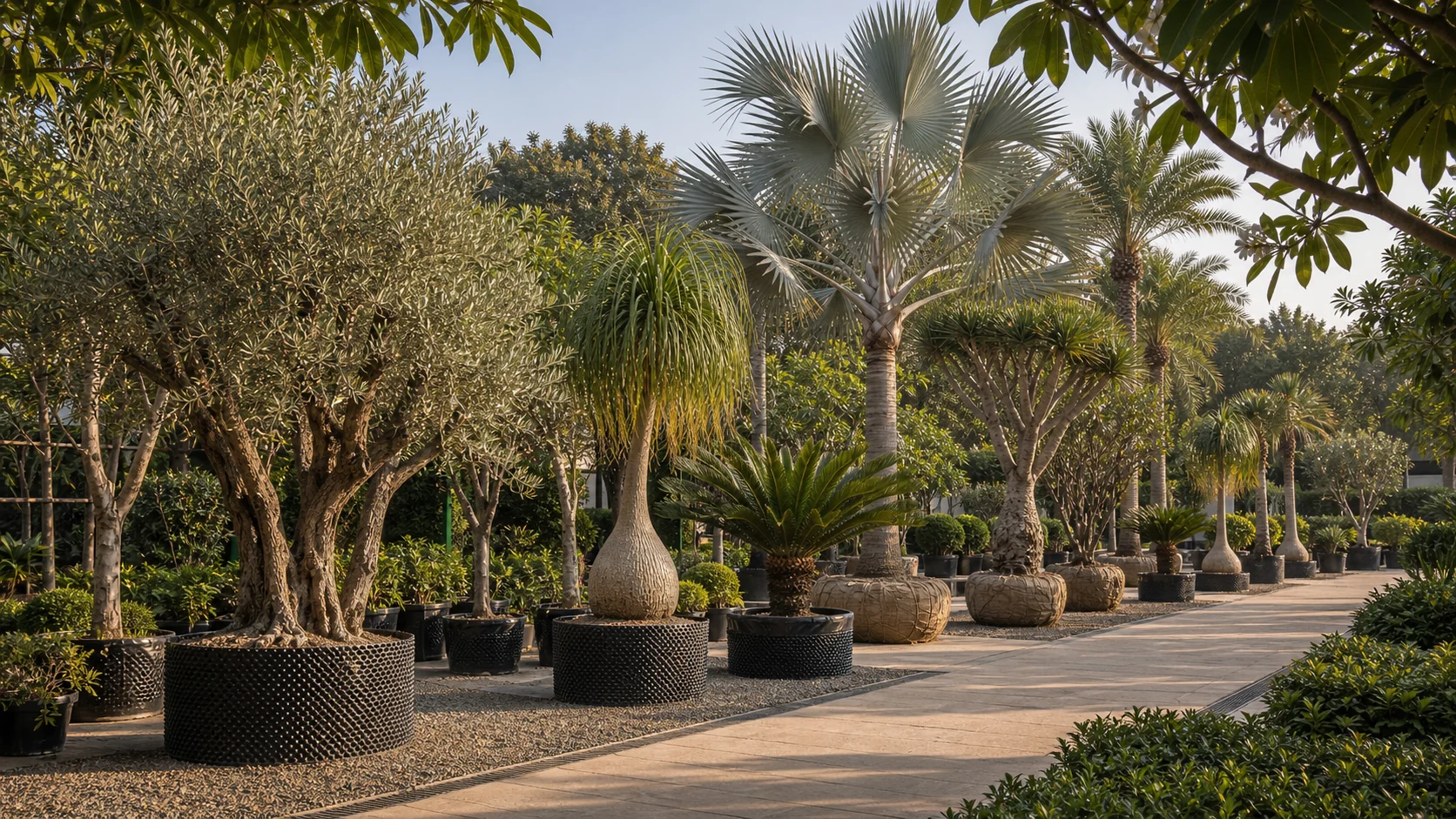
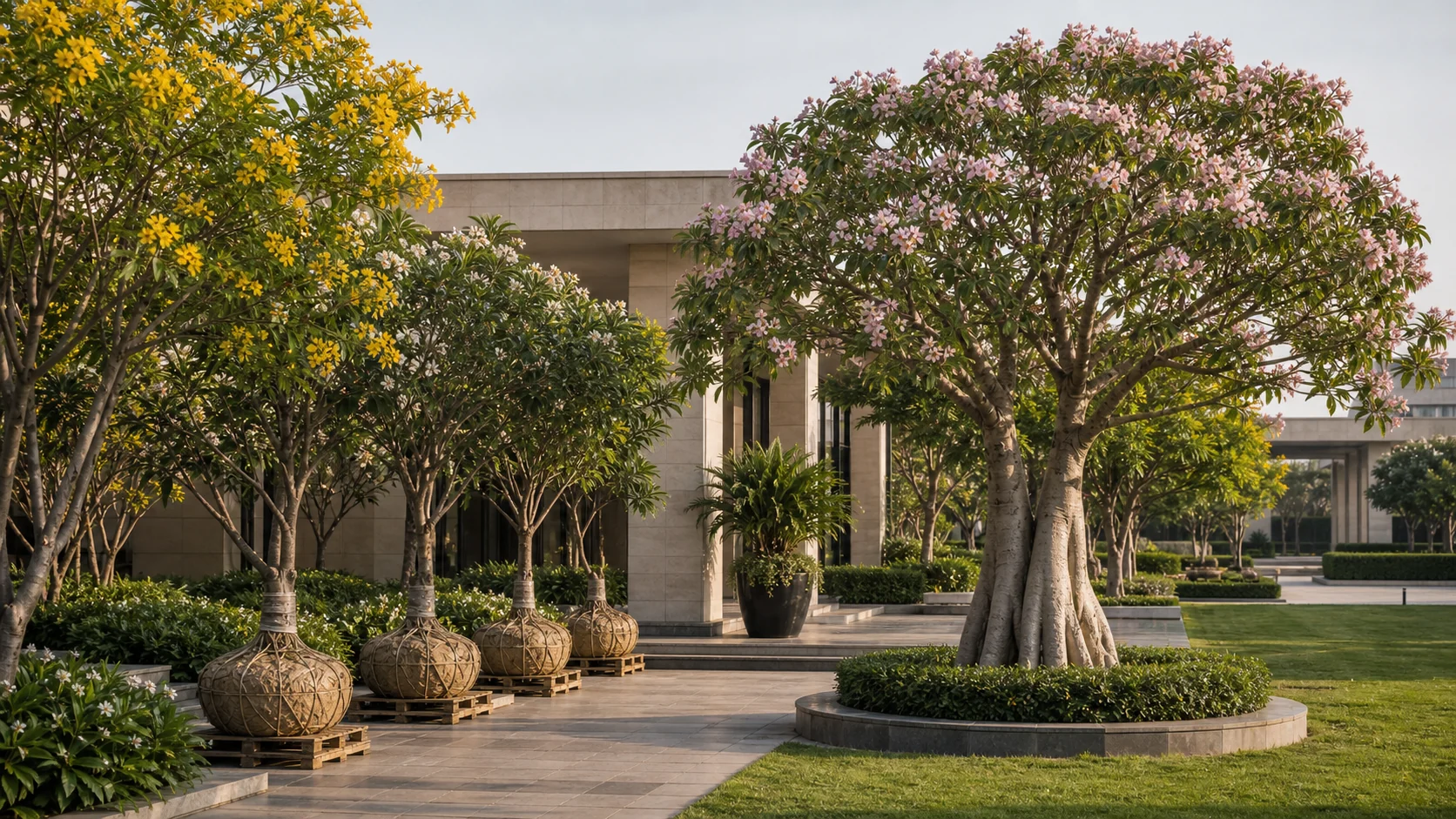
Visual context for placement, scale, handling, and landscape integration.
Section
Climate and heat management
Summer temperatures on the Deccan plateau stress fresh transplants without establishment irrigation — dry heat tolerates olives, many palms, and desert-adapted taxa when roots are not waterlogged in unexpected monsoon spells. June to September monsoon exposes cut-and-fill on new tech parks; podium pits need overflow design. Winter is mild relative to north India, yet sudden weather swings still check young Mediterranean stock on exposed arrivals. Wind on open Financial District plazas influences bracing duration on tall palms. Microclimate varies between HITEC City glass canyons and drier west-corridor plots — species fit is block-specific. Kokapet and Financial District towers on open plazas face higher wind loads than sheltered Gachibowli courts — bracing duration and species wind notes should reflect parcel exposure, not city averages. Procurement should request submittal photos matched to measured trunk caliper and crown spread before marketing renders lock species on occupied campus programmes.
Section
Sourcing proximity versus engineered install
Telangana and neighbouring states host nursery concentration that helps logistics for some stock classes — procurement should still verify botanical ID, maturity class, and health on submittals, not assume interchangeability. Imported gnarled olives and regulated taxa carry documentation workflows independent of local nursery convenience. Acclimatisation hold in open sun preserves crown form before crane day. Field-grown mature palms need rootball integrity checks before award. BOQ must separate supply from engineered pit, crane, bracing, and AMC — nursery tag price is not install package. Local sourcing does not waive phytosanitary steps on regulated consignments; paperwork should be requested per shipment and aligned to the informational compliance checklist, not assumed complete because stock originated nearby.
Section
IT parks, hotels, and developer arrivals
HITEC City, Gachibowli, and Kokapet corridors specify corporate arrival maturity — palms and formal planting on axes visible from lobby glazing. Hospitality along ORR and airport proximity repeats pool-deck and porte-cochère statements with litter and bracing written in scope. Developer clubhouses on west corridor plots use specimen trees for sales narrative; show-flats need honest establishment windows before marketing photography. Hospital and institutional campuses require circulation clearance on mature crown spread. GIFT-adjacent and pharma campus corridors add security and shift-traffic constraints — crane windows should be written with facility teams before species lock on wide fan palms that exceed default porte-cochère clearances.
Section
Species categories for Hyderabad sites
Palms suit wide arrivals with bracing — Phoenix, Washingtonia, and statement fan palms each carry distinct litter and pest notes on species pages. Olive and Mediterranean groves work on drained sites with sun; fruit management near paving is a procurement decision. Desert and succulent trees align with dry heat when monsoon drainage is engineered — over-irrigation kills more than heat. Topiary and formal evergreens suit hotel axes with clipping cadence in AMC. Cycads add sculptural form in courtyards with toxicity awareness on public sites. Category hubs group taxa by use case; procurement should shortlist from species pages with honest monsoon drainage notes rather than copying humid-coast palettes that fail on undrained podium pits after the first wet season.
Section
Installation and irrigation establishment
Engineered pits on podium and clay sites need drain layers and overflow ties into civil storm design. Bore water chemistry varies — emitter selection without tests creates warranty risk. Crane paths on occupied campuses require security coordination. Bracing stays until anchor metrics are documented. Irrigation commissioning before handover prevents FM teams guessing seasonal profiles on high-value specimens. Podium waterproofing witness before soil fill is routine on tech parks where landscape scope trails slab completion — pit interfaces with structural drawings should be validated before dig, not improvised on crane day.
Section
AMC and performance tracking
Establishment AMC should name moisture bands, pest monitoring on Phoenix canopies, frond sanitation, and bracing removal gates. Routine AMC defines litter scope near entries and escalation to arborist review on disease flags. Replacement boundaries protect owner and contractor on large transplants. Reporting supports facility audits without vague green claims. Snagging ties to approved planting plans; FM handover includes valve charts, seasonal controller shifts, and staking removal rules defined before install rather than debated after possession.
Section
Mobilisation and honest proof framing
Four Leaf executes pan-India programmes scoped from site assessment — Hyderabad mobilisation plans logistics, establishment, and documentation per contract. Do not assume published roster entries equate to specimen stock on your site without enquiry. Request a site assessment to align species, access, and pit interfaces. Share handover date, bore-water availability, and campus security rules so crane sequencing and acclimatisation hold can be planned against monsoon calendars rather than optimistic marketing photography deadlines.
Section
Pricing and compliance
Explore
Related
Related
Related links
Services, segments, cost, and proof.
- Does Hyderabad nursery proximity reduce specimen risk?
- It can shorten logistics for some classes — engineered install, acclimatisation, drainage, and AMC still govern survival on mature trees. Verify botanical ID and maturity class on submittals; proximity to nurseries does not replace pit engineering or documentation on regulated imports.
- Which imported trees suit dry Hyderabad heat?
- Many palms, olives on drained mounds, and desert-adapted taxa — each species page states monsoon drainage requirements honestly. Shortlist by block microclimate on open Financial District plazas versus sheltered Gachibowli courts; dry-heat tolerance does not remove overflow engineering from podium pits.
- How should IT park BOQs specify palms?
- Clear-trunk height, overall height, crown spread, bracing weeks, and litter scope — match submittal photos to measured classes. Include pit and drain build, acclimatisation visits, and establishment moisture bands so supplier comparisons are not reduced to headline per-tree figures.
- Is import documentation still needed for local nursery stock?
- Imported and regulated consignments yes — procurement should request paperwork per shipment; see compliance page for informational checklist. Local nursery stock still needs botanical ID verification and health submittals matched to measured maturity class before award on occupied campus programmes.
- When is the best establishment window?
- Often post-monsoon into winter mild period if irrigation is live — summer plantings need heavier establishment discipline. Hoisting during peak monsoon saturation needs explicit risk ownership in contract; pre-monsoon windows require irrigation commissioned before rootball placement on Deccan plateau sites.
- Can desert trees work on Hyderabad hospitality sites?
- Yes with drainage and irrigation governance — monsoon overwatering is the common failure, not daytime heat. Emitter placement and seasonal controller profiles should cap irrigation after handover; desert taxa on hospitality sites still need litter and bracing scope on open plazas.
- How does Four Leaf mobilise to Hyderabad?
- From site assessment and contract scope — pan-India execution with planned logistics, not implied local inventory. Share campus security rules, bore-water availability, and handover date so crane sequencing and acclimatisation hold align to monsoon calendars rather than optimistic marketing photography deadlines on HITEC City programmes. Honest mobilisation means establishment team structure is planned per enquiry, not assumed from roster history alone.
- How should Hyderabad compare local nursery versus imported specimen BOQs?
- Match maturity class, botanical ID, rootball integrity, pit engineering, documentation fees, and AMC boundaries — local proximity does not replace acclimatisation hold or phytosanitary steps on regulated consignments. Supplier comparisons should line-item crane days and establishment visits rather than headline nursery tags that omit engineered install on occupied IT campuses.