
Mexican fan palm
Mexican fan palm (Washingtonia robusta)
Washingtonia robusta delivers fast, slender vertical height — the fan palm chosen when the brief is quick skyline rhythm along boulevards, not a low courtyard tree — with a dead-frond petticoat unless maintenance budgets regular cleaning.
Spec
At a glance
- Botanical name
- Washingtonia robusta
- Family
- Arecaceae
- Common names
- Mexican fan palm, sky duster palm
- Origin
- North-west Mexico
- Plant type
- Solitary fan palm
- Mature height
- Often 20–30 m+ — among the tallest fan palms
- Trunk / form
- Very slender trunk; small fan crown relative to height
- Crown spread
- Moderate fan crown; dead fronds form “petticoat” if untrimmed
- Growth rate
- Fast vertical growth in warm climates
- Light
- Full sun
- Water needs
- Low to moderate once established
- India climate suitability
- Warm India; common in dry-tropical and coastal cities; outscales small sites
- Cold/heat & salt/wind tolerance
- Heat- and drought-tolerant; moderate frost hardiness; wind can shred fans
- Typical supply size
- Tall slender field-grown trunks [Unverified]
- Lead time (sourcing)
- [Unverified] height class availability
- Install considerations
- Very tall rigging; utility-line clearance; petticoat fire/safety policy
- Maintenance level
- Moderate to high if petticoat removed; lower if skirt tolerated
- Cautions
- Outgrows courtyards; sightline and wire conflicts; combustible dead skirt if neglected
Supply
Latest import activity
- Imported on
- 28 Jun 2026
- Source
- Flemings Nurseries (sample)
- Availability
- Incoming
- Lot
- Washingtonia robusta — 6 m field-grown
Gallery
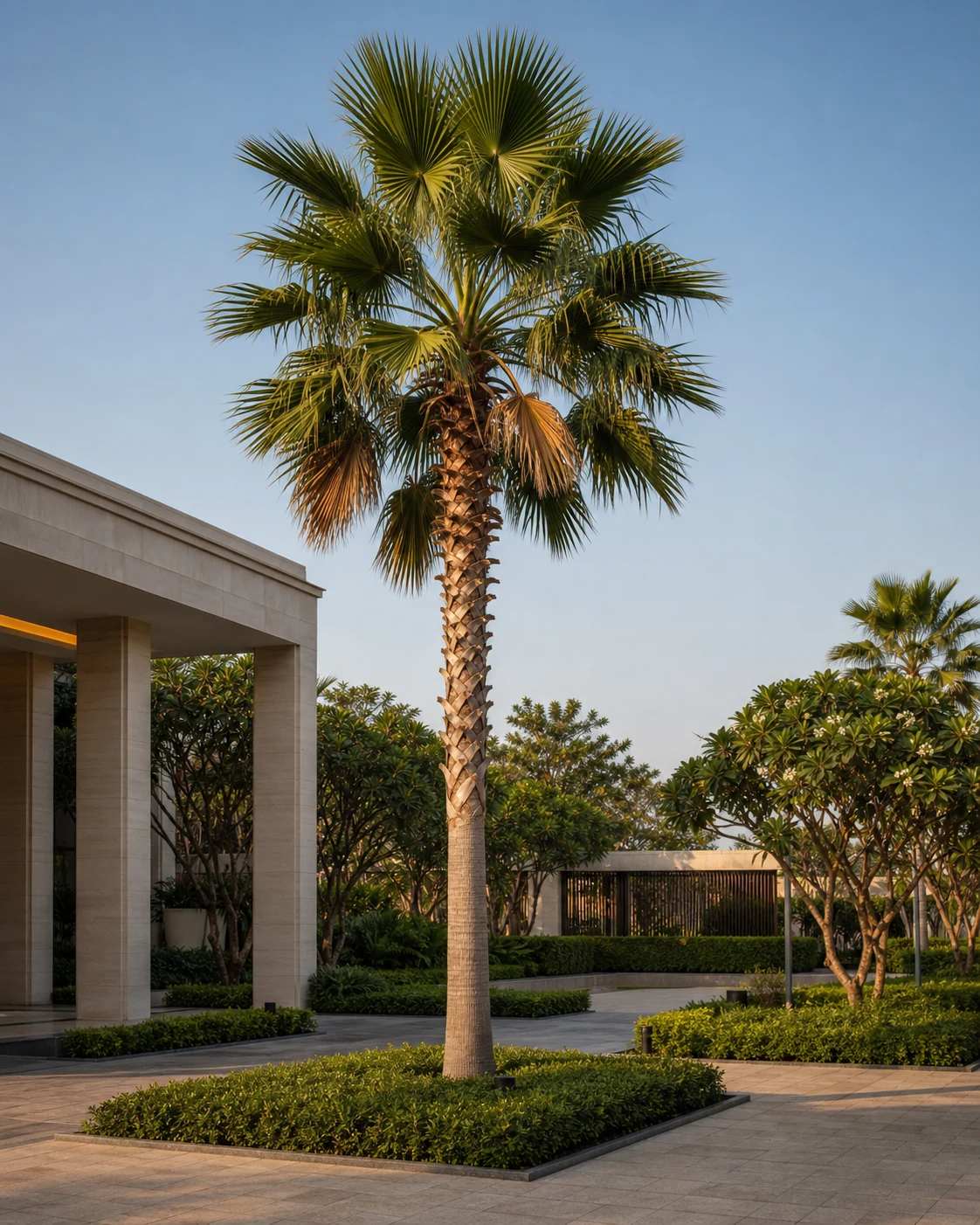
Specimen visual guide
Visual context for placement, scale, handling, and landscape integration.
Section
Where it's used in premium projects
Designers use Washingtonia robusta for fast vertical punctuation along wide roads, resort perimeters, and large campus edges where height is wanted within years, not decades. It is the wrong palm for intimate courtyards — the trunk keeps climbing while the fan crown stays relatively small aloft.
Section
Climate & site suitability in India
Warm metros and dry-tropical corridors suit it; humid interiors grow it but petticoat maintenance becomes urgent. Verify ultimate height against aviation easements, high-tension lines, and neighbour sightlines — this species routinely exceeds initial landscape sections.
Section
Sourcing & acclimatisation
BOQ by trunk height in metres, caliper, and whether petticoat is nursery-trimmed. Fast growth means buyers sometimes under-specify mature height — document a 20-year silhouette. [Unverified: typical domestic field-dig lead times for 8–12 m trunks.]
Section
Installation (pit, soil, drainage, bracing)
Slender trunks still need adequate root volume — do not shrink pits because the trunk looks narrow. Tall specimens need guy wires until stable. Plan crane reach for future petticoat removal — maintenance access is a lifecycle cost, not an afterthought.
Section
Establishment & AMC
AMC must decide petticoat policy: fire-safety and aesthetics favour regular dead-frond stripping; natural skirts lower labour but increase pest harbourage and wind sail. Irrigation can taper after year two in many Indian sites but establishment summers need consistency.
Section
Cost drivers
Explore
Related
Related
Related links
Services, segments, cost, and proof.
- Softscape & horticulture
- Irrigation & water management
- Landscape maintenance (AMC)
- Hotel & resort landscaping
- Luxury resort & spa landscaping
- Mall & retail landscaping
- Corporate campus landscaping
- Projects
- Commercial landscaping cost guide
- Pricing drivers (imported trees)
- Import compliance workflow
- Request a site assessment
- How fast does Washingtonia robusta gain height?
- In warm Indian sites with irrigation and feeding it is among the fastest vertical palms — programme sightline reviews early because courtyards can be outscaled within a decade.
- Washingtonia robusta versus Washingtonia filifera?
- Robusta is taller, faster, and more slender — filifera is shorter, stouter, and often better for smaller desert gardens; do not swap them on BOQ without redesign.
- Who maintains the dead-frond petticoat?
- AMC should state removal frequency and crane access — neglected skirts are a fire and pest risk on commercial sites, not a “natural look” decision facilities can ignore.
- Is it suitable next to a six-storey hotel court?
- Usually no — specify it only where ultimate height and maintenance access are acceptable to ownership and utilities.
- Does it tolerate coastal salt?
- Moderately — still review wind exposure; fans shred on exposed parapets.
- How do we compare quotations?
- Match trunk metres, petticoat trim at delivery, lifting, bracing weeks, and AMC petticoat policy — not per-tree headlines.