
Imported olive tree
Imported olive tree in India (Olea europaea)
Imported olive tree India programmes need drainage-honest pits, trunk-character BOQs, and import documentation aligned before crane day, not nursery tag comparisons alone. Four Leaf scopes gnarled Olea europaea for hotel arrivals, villa courtyards, and clubhouse forecourts across drier Gujarat, Rajasthan, and open Deccan sites. Request a site assessment to shortlist trunk class, drainage, and establishment AMC.
Spec
At a glance
- Botanical name
- Olea europaea
- Family
- Oleaceae
- Common names
- Olive, European olive
- Origin
- Mediterranean (Spain, Italy, Greece - typical import provenance)
- Plant type
- Evergreen fruiting specimen tree
- Mature height
- Often 5-10 m+; ancient gnarled specimens shorter and wider
- Trunk / form
- Old specimens: gnarled, characterful multi-trunk or single trunk; silver foliage
- Crown spread
- Moderate evergreen crown; open Mediterranean silhouette when old
- Growth rate
- Slow to moderate - ancient character is bought, not rushed
- Light
- Full sun for fruit and tight silver foliage
- Water needs
- Low once established; dislikes waterlogging - excellent drainage required
- India climate suitability
- Best in drier warm India (Gujarat, Rajasthan, parts of Deccan); engineered drainage in wet or coastal humid cities
- Cold/heat & salt/wind tolerance
- Heat- and drought-tolerant; root rot and peacock spot in humid wet soils; moderate coastal salt with drainage
- Typical supply size
- Gnarled mature imported specimens - trunk character graded on photography
- Lead time (sourcing)
- Mediterranean field hold and import clearance for mature grades; confirm timelines on enquiry
- Install considerations
- Rootball on gnarled stock; engineered drainage; fruit drop planning; import paperwork alignment
- Maintenance level
- Moderate - fruit and litter, peacock spot monitoring in humid sites, structural prune
- Cautions
- Root rot in waterlogging or high humidity; fruit stains paving unless fruitless cultivar or management scope; large old specimens costly with import documentation
Supply
Latest import activity
- Imported on
- 28 Jun 2026
- Source
- Flemings Nurseries (sample)
- Availability
- On request
- Lot
- Olea europaea — ancient gnarled trunk
Gallery
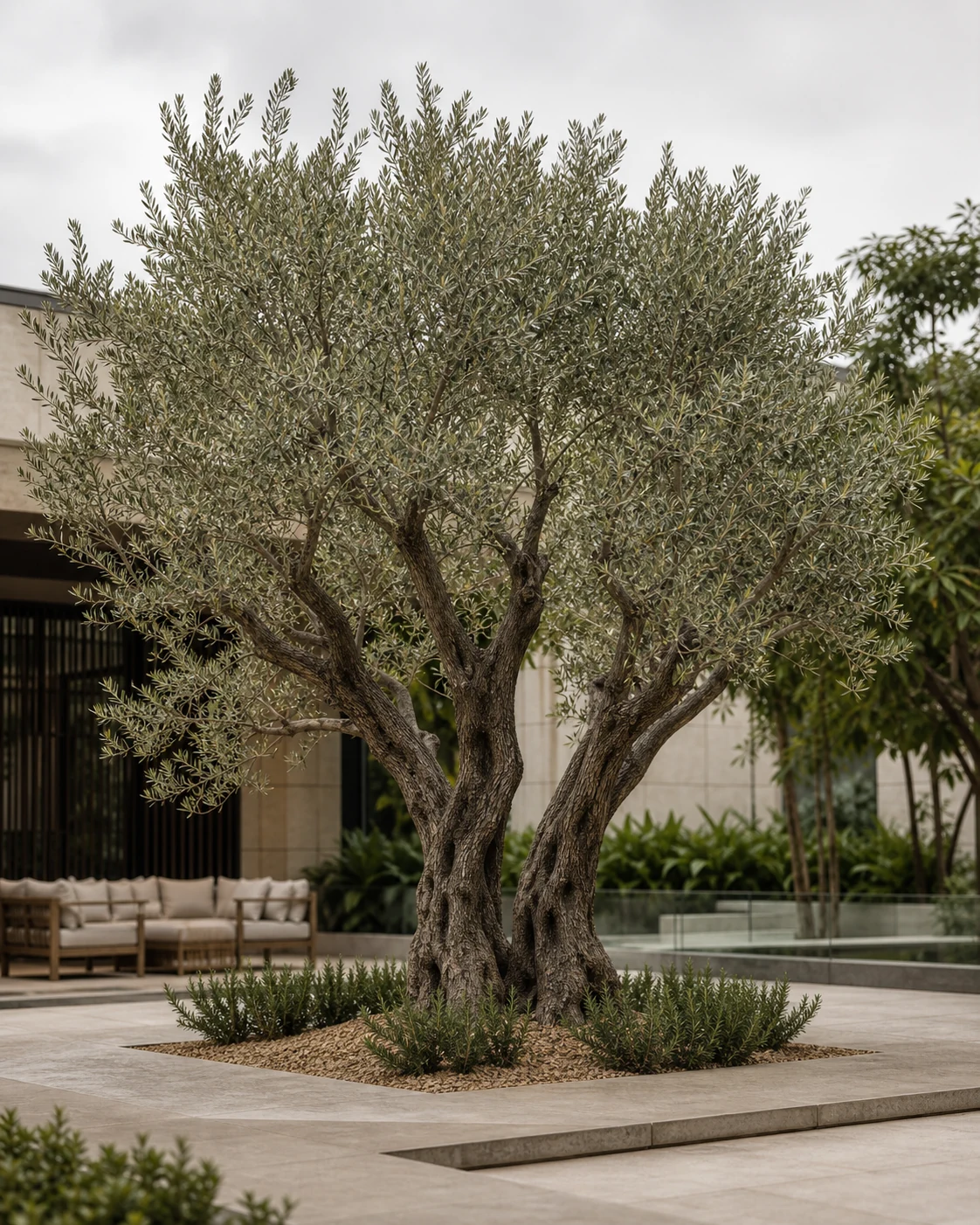
Specimen visual guide
Visual context for placement, scale, handling, and landscape integration.
Section
Where commercial programmes specify imported olive trees
Imported olive trees anchor Mediterranean arrival stories at hotel porte-cocheres, villa courtyards, winery-inspired estates, and clubhouse forecourts where the gnarled trunk reads as sculpture and silver foliage frames signage. Designers BOQ trunk character - twist, bifurcation, plate bark - separately from foliage volume because old Olea europaea is a sculptural specimen, not hedge fill. Pair with companion Mediterranean topiary such as cypress, holm oak, and bay when the masterplan is Iberian, not generic evergreen massing. See the olive and Mediterranean trees category and hotel landscaping segment for arrival-scale context.
Section
Climate and site constraints in India
Olives tolerate heat and drought but fail when roots sit wet; monsoon clay, high humidity, and coastal waterlogging drive root rot and peacock spot on silver leaves. Drier Ahmedabad, Rajasthan, and open Deccan sites succeed with gravel drainage; humid Chennai or Mumbai coasts need engineered mounds, cultivar review, and honest owner messaging about fruit and foliage disease pressure. Fruiting needs sun and seasonal rhythm; do not promise commercial olive oil yields without specialist horticulture and regional trial data. Survival depends on microclimate, drainage, bracing, establishment, and AMC; see imported specimen trees in urban climates.
Section
Sourcing, import documentation, and acclimatisation
Mature gnarled specimens are sourced on trunk photography, estimated field age, and import documentation: phytosanitary certificate, customs clearance, and nursery provenance chain for live Olea europaea. Mediterranean export hold times vary by grade and season; confirm against programme dates before BOQ freeze. Acclimatise in open sun so silver foliage and trunk character are visible before crane day; shaded holding produces loose ornamental crowns unsuitable for arrival photography. Import documentation alignment is summarised on the compliance workflow page (informational, not legal advice). Hold discipline sits on the acclimatisation page.
Section
Pit engineering, drainage, and installation
Gnarled trunks are rigid and heavy; rigging must protect plate bark, not twist historical wood. Pits require engineered drainage layers, no irrigation overspray on crowns in humid districts, and overflow routes for monsoon storms. Fruiting trees need paving choice locked early: fruitless selections, seasonal netting, or accepted stain risk on light stone. Bracing is usually light on mature olives, but wind on newly transplanted large rootballs still needs anchor checks. Pit build, soil engineering, and bracing detail sit on the installation and soil engineering page.
Section
Establishment and AMC handover
Early AMC monitors root moisture; over-irrigation after install is a common failure mode in humid India even for drought-tolerant Mediterranean species. Schedule fruit drop cleanup on guest paving; peacock spot needs foliage monitoring, not blanket fungicide without arborist direction. Structural prune for clearance only, while preserving gnarled trunk form. Import documentation copies should stay in facility files for audit trails alongside the compliance workflow page. See maintenance and AMC scope for imported trees and our landscape maintenance service for how establishment and routine care are separated in contract.
Section
Mobilisation and project context
Four Leaf executes pan-India commercial landscape programmes with mobilisation planned from site assessment; olive packages need honest drainage, crane access, and cultivar surveys before species lock. Published project references on this site document landscape scope on corporate, hospitality, retail, and institutional programmes and do not confirm current gnarled olive stock without enquiry. See the projects hub for named references. New olive specimen packages need site assessment before trunk class, logistics, and import timing lock. Share microclimate, paving interfaces, and intended handover photography dates so establishment windows can be planned against monsoon calendars.
Section
Procurement, BOQ, and pricing discipline
We do not publish Four Leaf per-tree rate cards. Imported olive tree cost is driven by gnarled trunk age class, Mediterranean provenance, live-plant import documentation, crane and rootball handling, engineered drainage in wet microclimates, and AMC fruit and disease scope, not a catalogue per-tree rate. Public category coverage has shown wide market ranges for mature imported specimens, but those figures are not Four Leaf pricing. Compare BOQs on trunk photography, provenance paperwork, drainage engineering, fruit management scope, and crane lines, not headline figures alone. See pricing drivers; request a site assessment to lock species, drainage, and AMC before import timing.
Explore
Related
Related
Related links
Services, segments, cost, and proof.
- Imported exotic trees hub
- Olive and Mediterranean trees
- Acclimatisation for imported trees
- Installation and soil engineering
- Maintenance and AMC scope
- Imported trees in Ahmedabad
- Imported trees in Hyderabad
- Softscape and horticulture
- Irrigation and water management
- Landscape maintenance (AMC)
- Hotel and resort landscaping
- Projects
- Commercial landscaping cost guide
- Pricing drivers (imported trees)
- Import compliance workflow
- Request a site assessment
- Will imported olive trees fruit in India?
- Many specimens flower and fruit in warm dry sites with sun and drainage; commercial oil production is a separate specialist question. Fruit drop and paving staining still need management scope on hospitality sites before paving material lock.
- Why does trunk character dominate the BOQ?
- Old Olea europaea develops plate bark and twisted wood that photographs as sculpture at arrivals; designers BOQ trunk twist, bifurcation, and bark character separately from crown volume.
- What drainage is required in humid Indian cities?
- Engineered mounds and dry root zones are essential; waterlogging and high humidity cause root rot and peacock spot despite drought-tolerant marketing. Compare pit and drain build across suppliers, not nursery photos from drier sites.
- Should projects choose fruiting or fruitless olives?
- Fruitless or low-fruit cultivars reduce paving stain near pools and entries; fruiting specimens need seasonal cleanup scope in AMC. Decide before paving material lock and irrigation zoning.
- What import documentation applies to live olive trees?
- Mature live Olea europaea imports need phytosanitary certificates, species-accurate invoices, and Indian plant-quarantine inspection per shipment; align timelines with the compliance workflow before crane dates (informational, not legal advice).
- How do olives pair with other Mediterranean planting?
- Cypress, holm oak, and bay topiary complete Iberian arrival stories; olives supply gnarled trunk sculpture, companions supply clipped geometry. See related species pages before masterplan lock.
- How should imported olive quotations be compared?
- Match trunk photography, provenance paperwork, pit and drain build, fruit management scope, bracing days, acclimatisation hold, and crane lines, not headline per-tree figures from public category coverage alone.