
Cypress topiary
Italian cypress topiary (Cupressus sempervirens)
Cupressus sempervirens topiary delivers the narrow dark-green column and spiral conifer silhouette of Tuscan drives — dramatic on axis. Humid Indian coasts invite canker and spider mites; we position cypress honestly for dry, cooler regions with sun and sharp drainage, not as a default Mumbai hedge.
Spec
At a glance
- Species
- Cupressus sempervirens
- Family
- Cupressaceae
- Origin
- Mediterranean
- Available trained forms
- Column, spiral, paired avenue columns
- Foliage
- Dark green scale-like evergreen
- Size range available
- 2–6 m columns typical at supply [Unverified]
- Growth rate
- Moderate upright — buy height for instant axis
- Clipping frequency / AMC
- 2–3 formal trims/year on spirals; minimal on tight columns
- Light
- Full sun
- Water
- Low to moderate once established
- India climate suitability
- Best in dry interior and cool hills; humidity drives canker on coasts
- Indoor / outdoor
- Outdoor only
- Drainage
- Essential — wet feet trigger decline
- Cautions
- Humidity canker and mites in humid India; needs sun + drainage
Gallery
Specimen visual guide
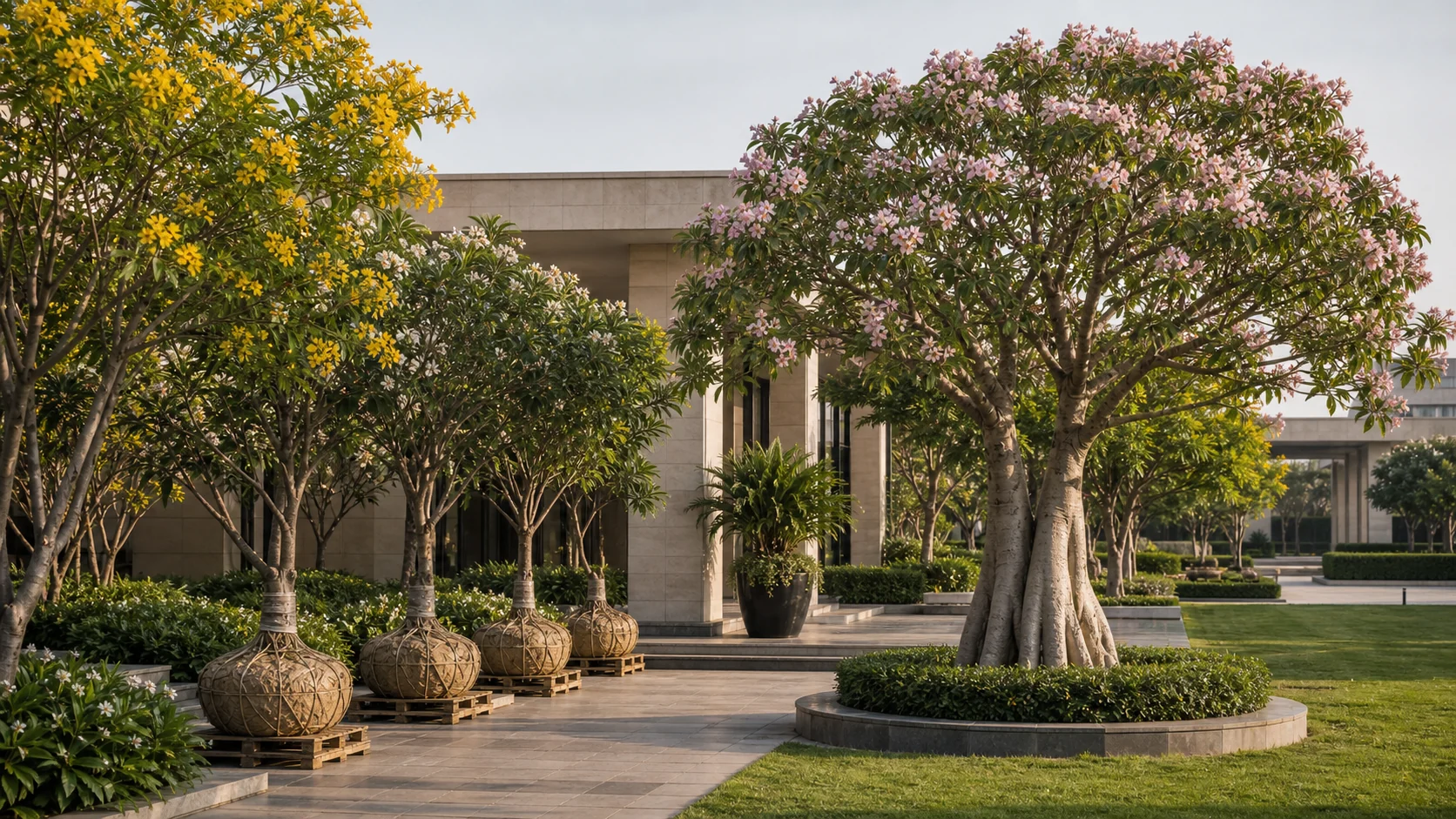
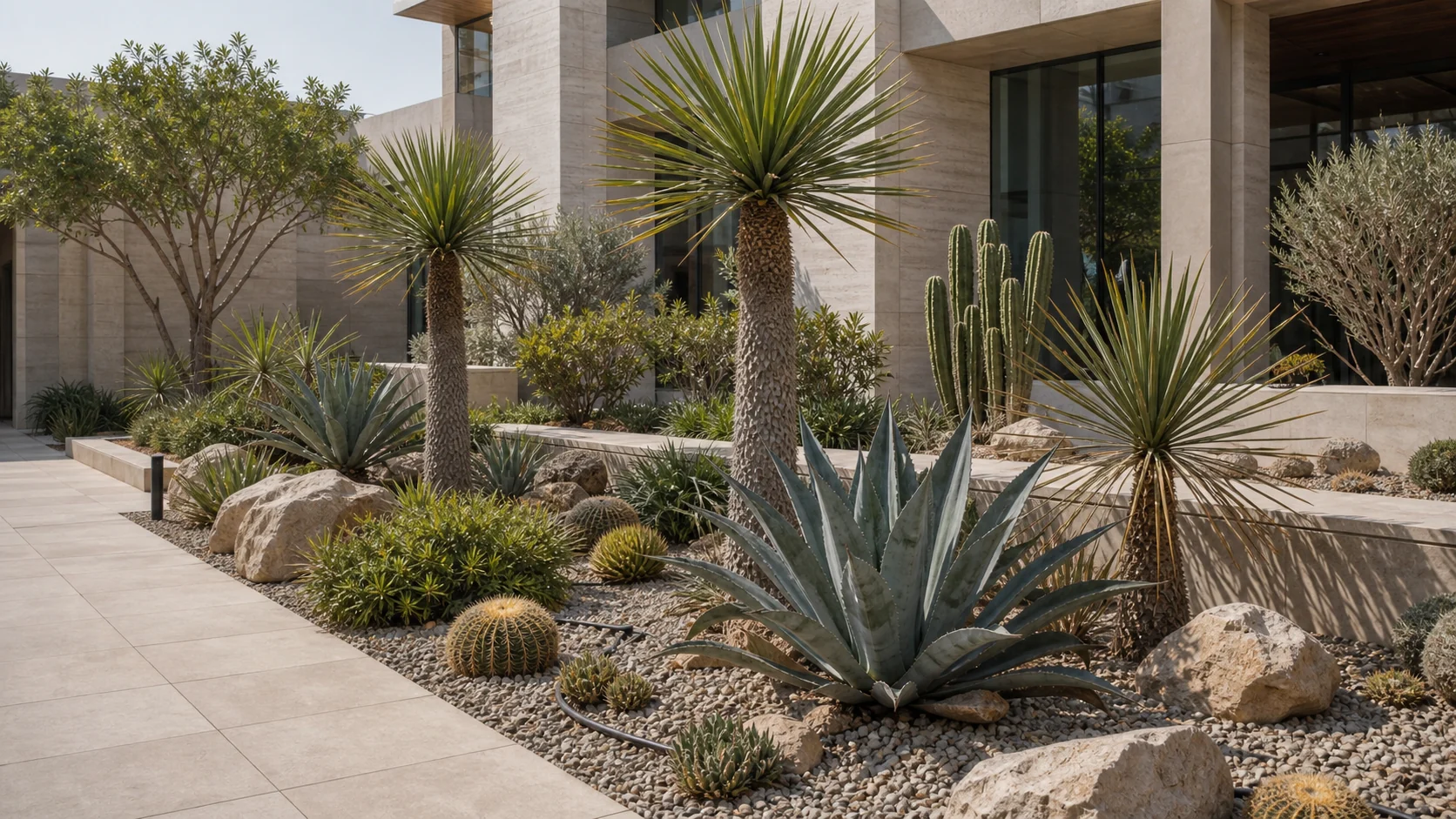
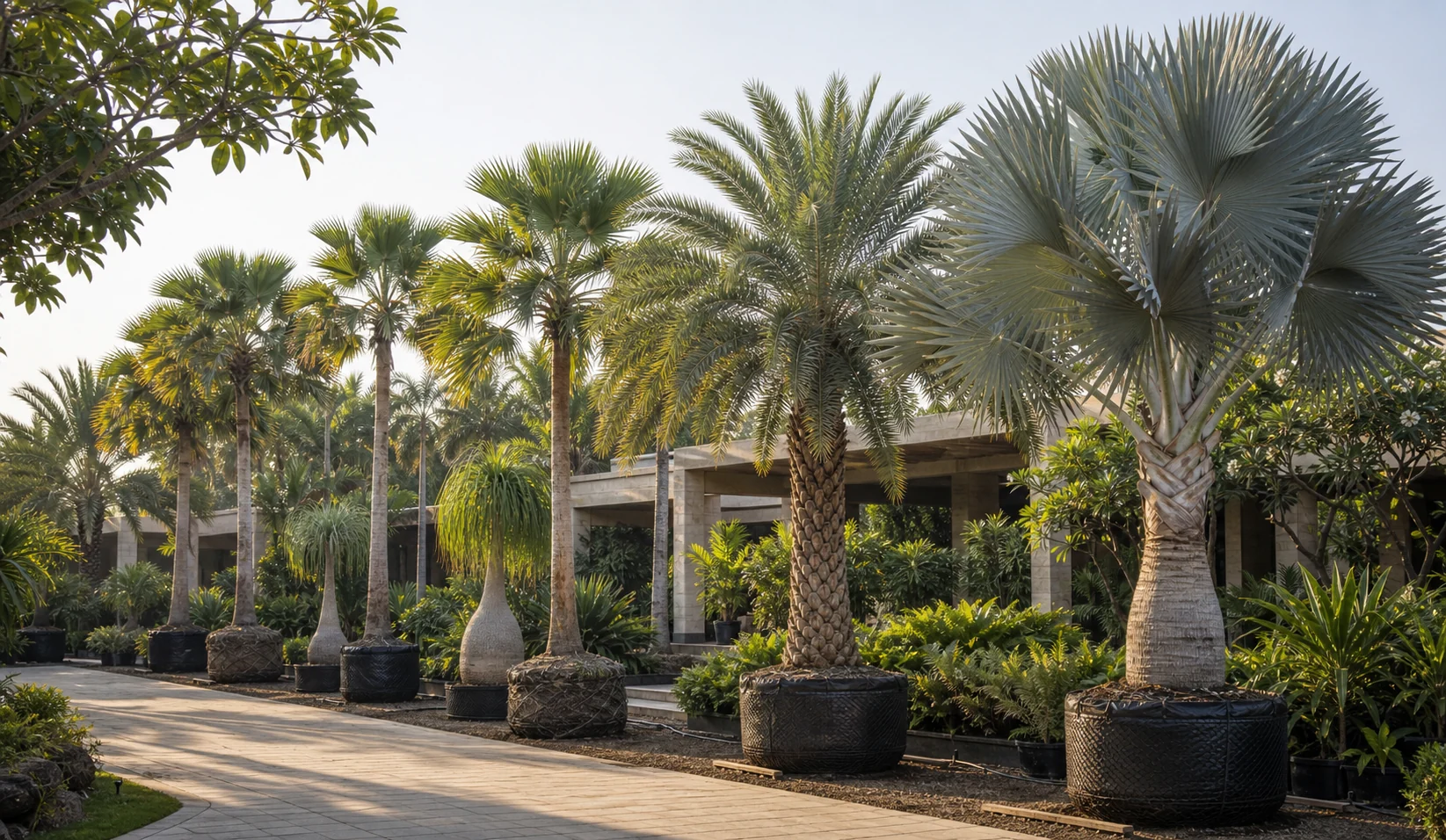
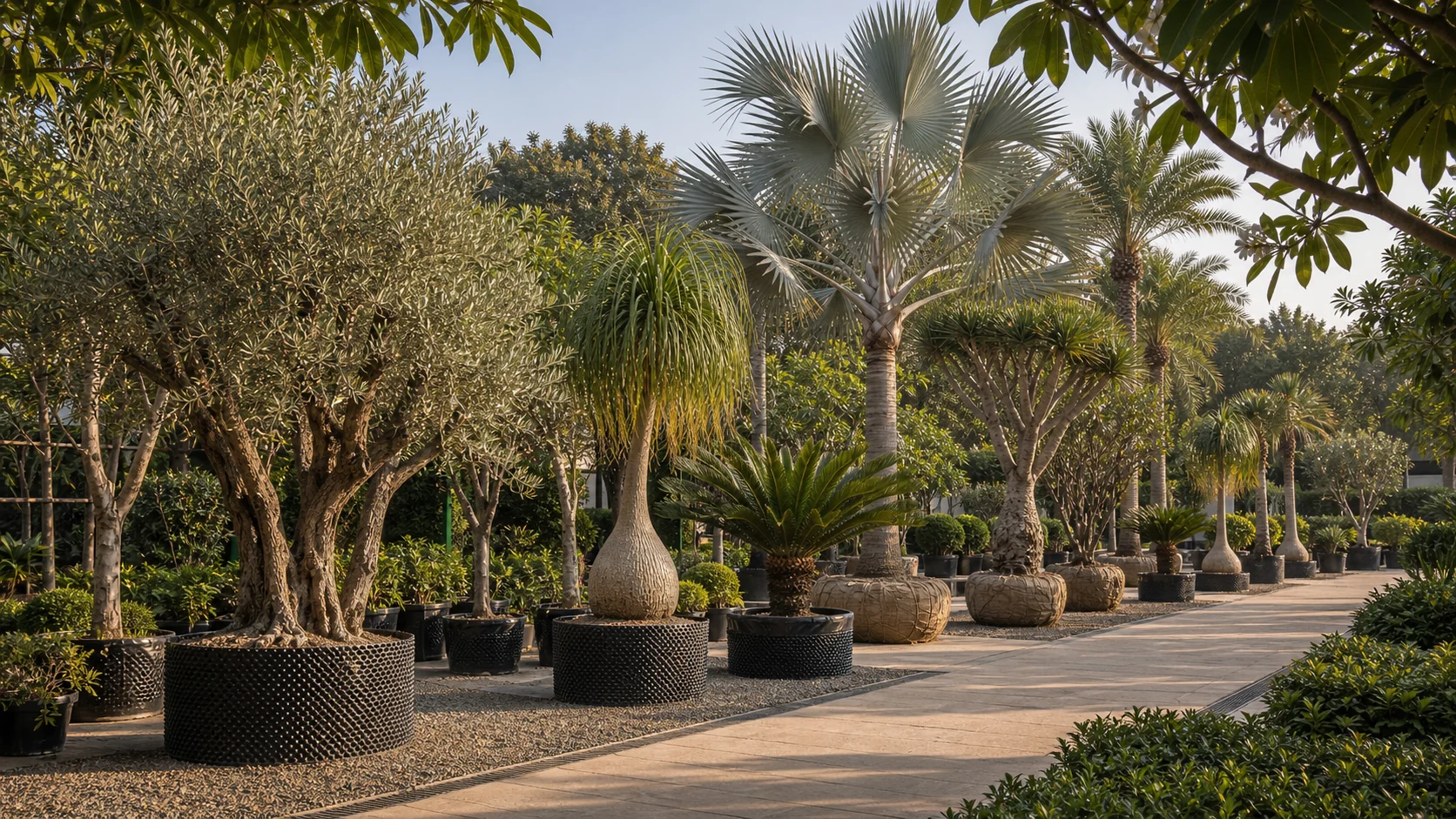
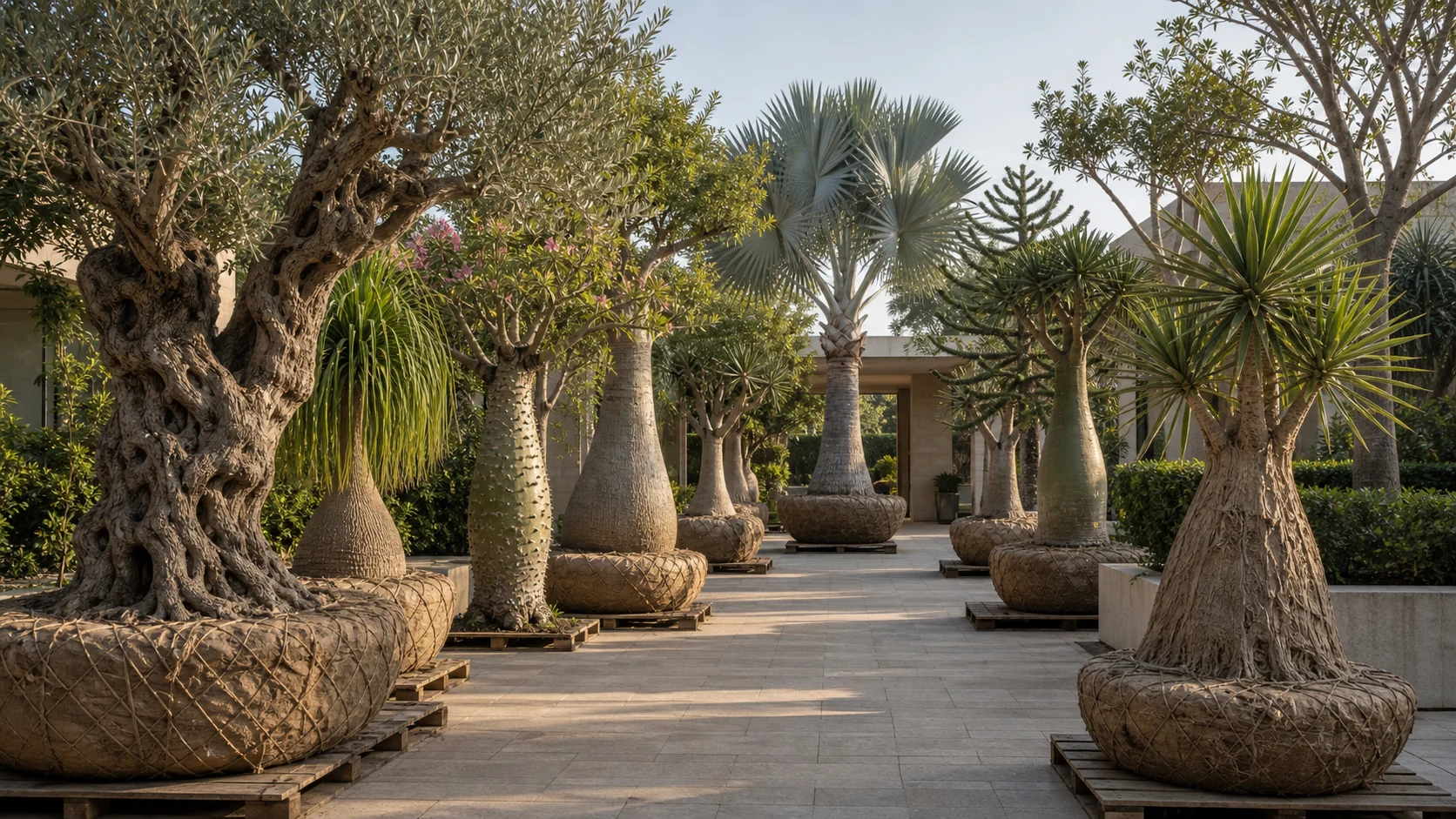
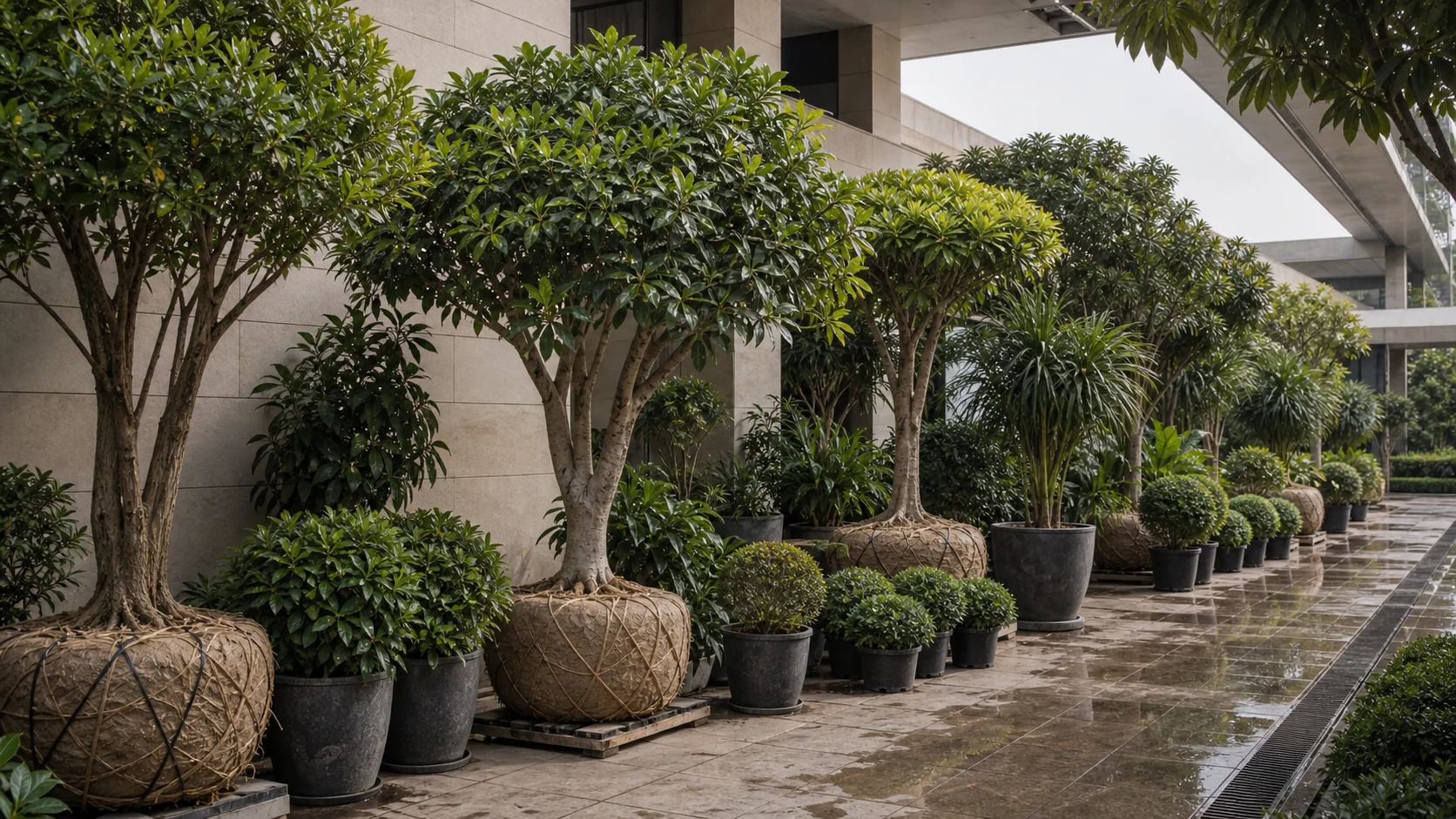
Visual context for placement, scale, handling, and landscape integration.
Section
Where it's used in premium projects
Cypress columns frame villa entries, winery roads, and chapel courtyards imported from Mediterranean briefs — always in pairs or alleys. Spirals accent sculpture niches when dry air can be guaranteed.
Section
Climate & site suitability in India
Rajasthan and Gujarat dry sites outperform humid Chennai without fungicide programmes. Monsoon weeks with poor airflow brown interiors — space columns for sun penetration. Do not mass as coastal windbreak without salt-tolerance review.
Section
Sourcing & acclimatisation
Specify spiral vs column training at purchase — retraining mature columns is slow. [Unverified: India-grown vs imported Italian forms.] Reject plants with resinous canker lesions.
Section
Installation (containers, anchoring, drainage)
Plant on mounds with free drainage; stake tall columns until roots anchor. Wind alleys need guy wires first monsoon. Keep mulch off trunks to reduce collar rot.
Section
Establishment & AMC (clipping rhythm)
Monitor for canker staining after humid spells — prune into healthy wood with sterilized tools. Mite outbreaks show bronzing — horticultural oil per label, not random nitrogen. Spiral forms need scheduled trim before monsoon flush.
Section
Cost drivers
Explore
Related
Related
Related links
Services, segments, cost, and proof.
- Softscape & horticulture
- Irrigation & water management
- Landscape maintenance (AMC)
- Hotel & resort landscaping
- Luxury resort & spa landscaping
- Mall & retail landscaping
- Corporate campus landscaping
- Projects
- Commercial landscaping cost guide
- Pricing drivers (imported trees)
- Import compliance workflow
- Request a site assessment
- What topiary forms suit Italian cypress?
- Tight columns and spirals — the narrow natural habit suits vertical axis design more than wide balls.
- Why does cypress struggle in humid India?
- Canker fungi and spider mites thrive in humid coastal cycles — dry cooler regions with sun and drainage perform better.
- Can cypress spirals live on a Mumbai terrace?
- High risk without exceptional drainage and airflow — dry hill terraces or interior courtyards outperform coastal humidity defaults.
- How much clipping do spirals need?
- Several formal trims per year to hold line — budget specialist topiary AMC, not generic hedge crews.
- Is cypress salt-tolerant on marine fronts?
- Moderate at best — rinse salt and avoid direct marine gale exposure without a species review.
- What import steps apply to cypress topiary?
- Conifer imports need phytosanitary paperwork and quarantine inspection — note training form on labels (informational, not legal advice).
- How should cypress column BOQs be compared?
- Match trained height, spiral vs column, staking first monsoon, and canker-aware AMC — not generic conifer supply.