
Ficus topiary
Ficus topiary (Ficus microcarpa / benjamina)
Ficus topiary is the heat-loving Indian default for standards, multi-tier clouds, braids, and fast-restored geometry when Mediterranean subjects fail — microcarpa and benjamina forms dominate resort arrivals. Aggressive roots outdoors and benjamina leaf-drop on relocation are the honest trade-offs behind the crisp clip.
Spec
At a glance
- Species
- Ficus microcarpa, F. benjamina (trained forms)
- Family
- Moraceae
- Origin
- Tropical Asia — widely grown in India
- Available trained forms
- Standard, braid, cloud (niwaki-style tiers), multi-ball, hedge
- Foliage
- Glossy evergreen; benjamina weeping, microcarpa smaller leaf
- Size range available
- 1–4 m standards common; clouds wider [Unverified]
- Growth rate
- Fast — frequent clip holds line
- Clipping frequency / AMC
- Every 3–4 weeks in growing season for formal surfaces
- Light
- Full sun to bright shade — benjamina tolerates interior better
- Water
- Moderate; consistent moisture reduces leaf drop
- India climate suitability
- Excellent — among the best topiary subjects for Indian heat and humidity
- Indoor / outdoor
- Both — benjamina interiors; microcarpa outdoor courts
- Drainage
- Tolerates range; avoid prolonged waterlogging
- Cautions
- Aggressive roots near paving; benjamina drops leaves on move/stress
Gallery
Specimen visual guide
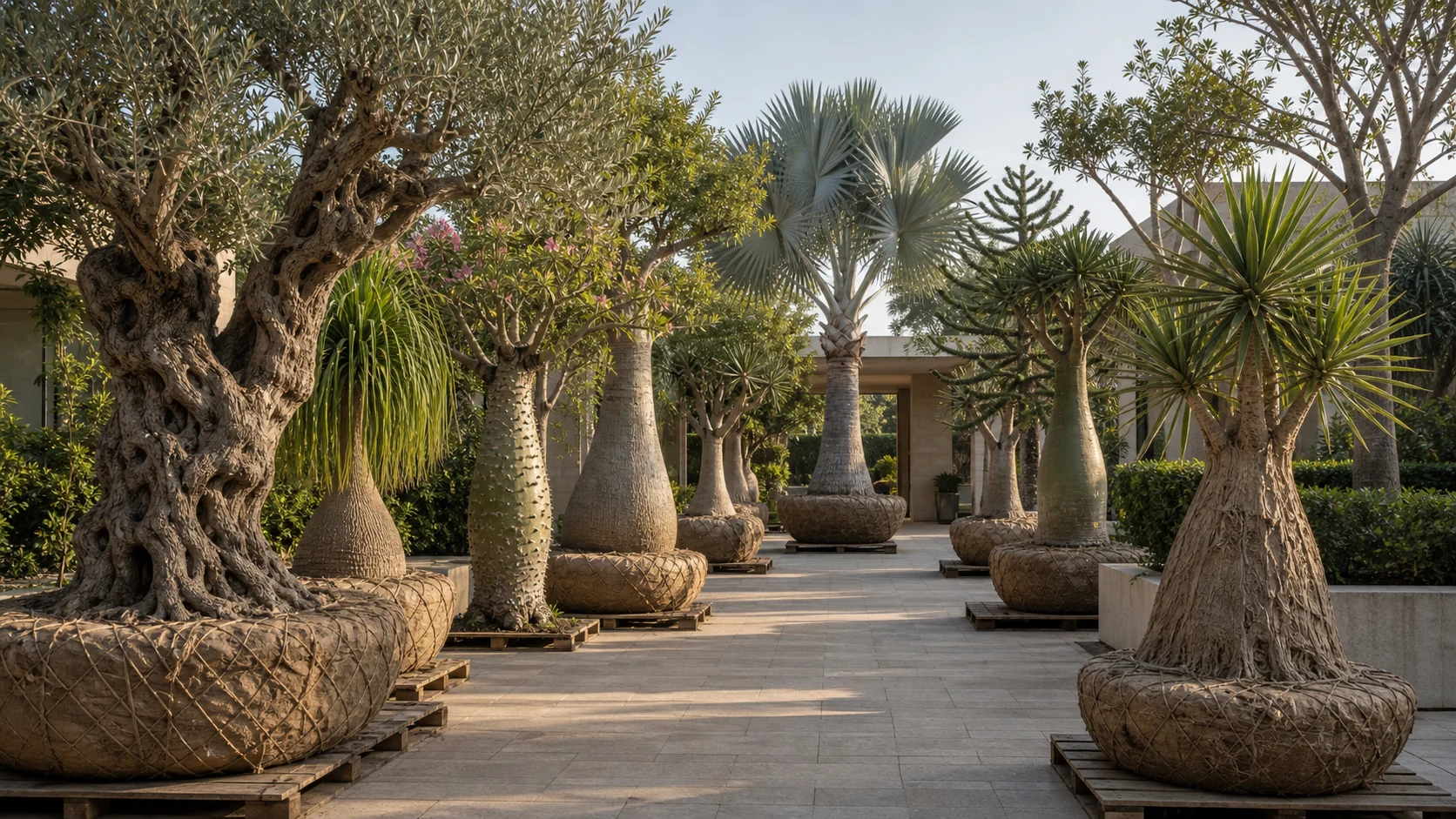
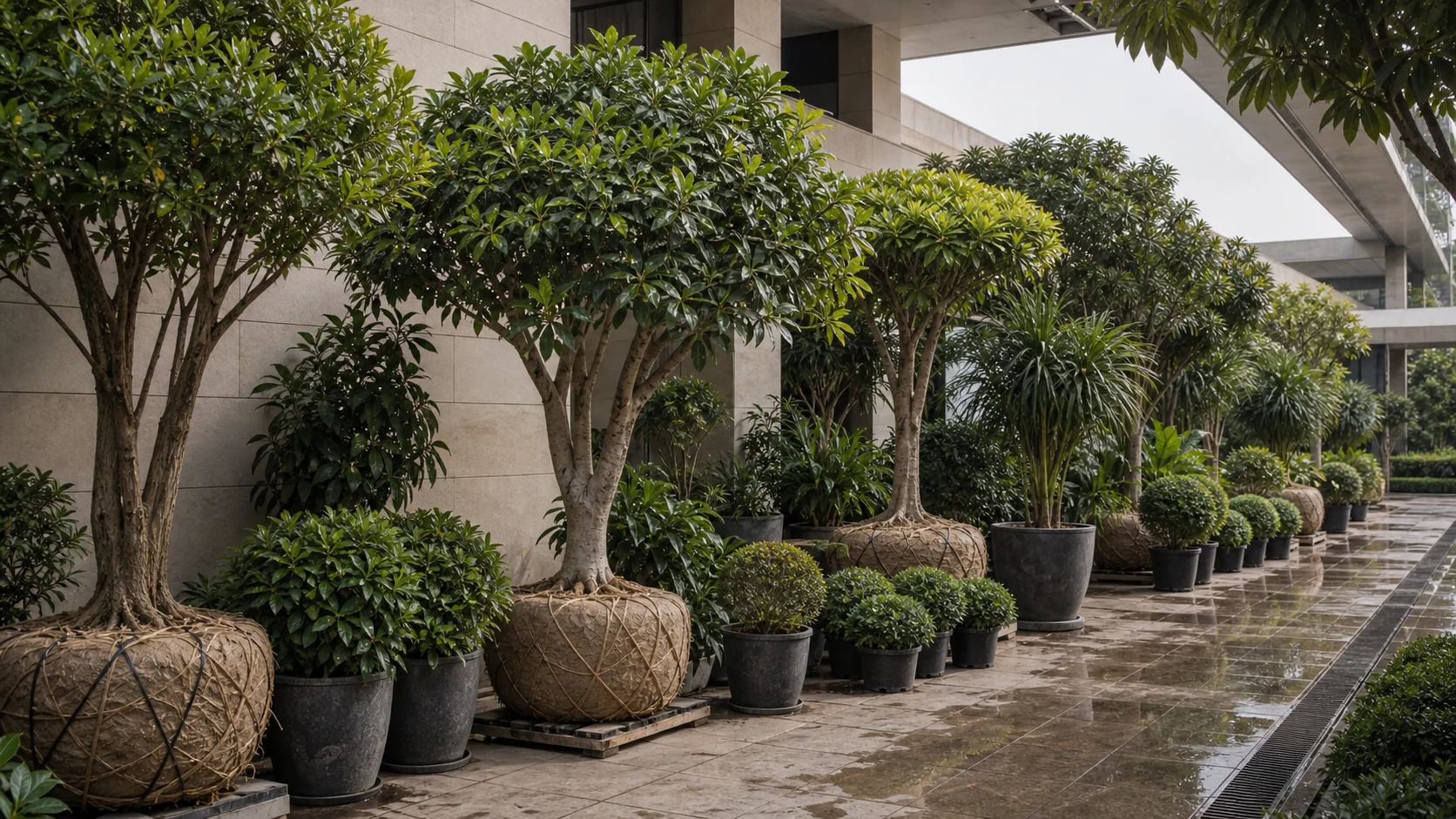
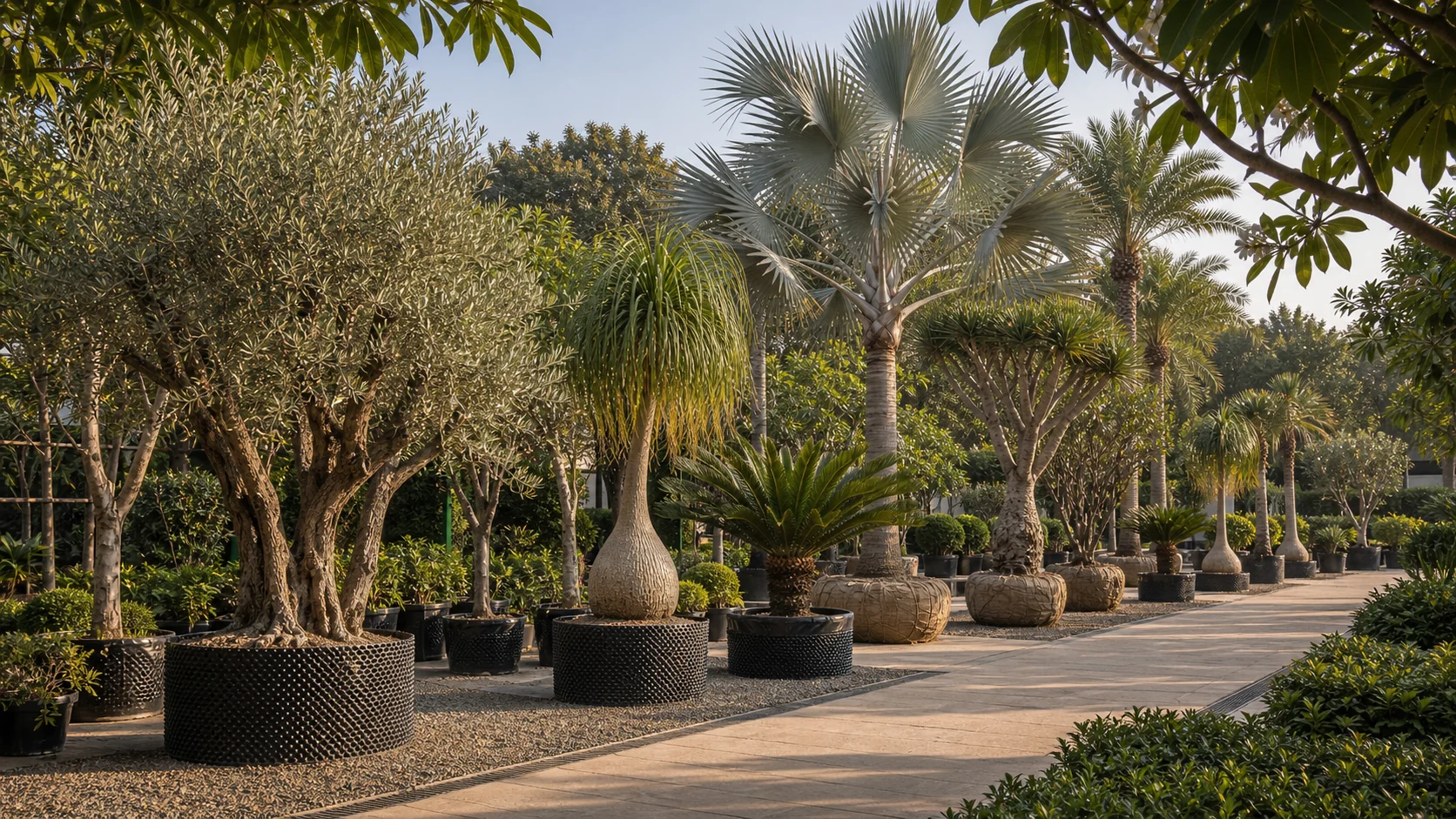
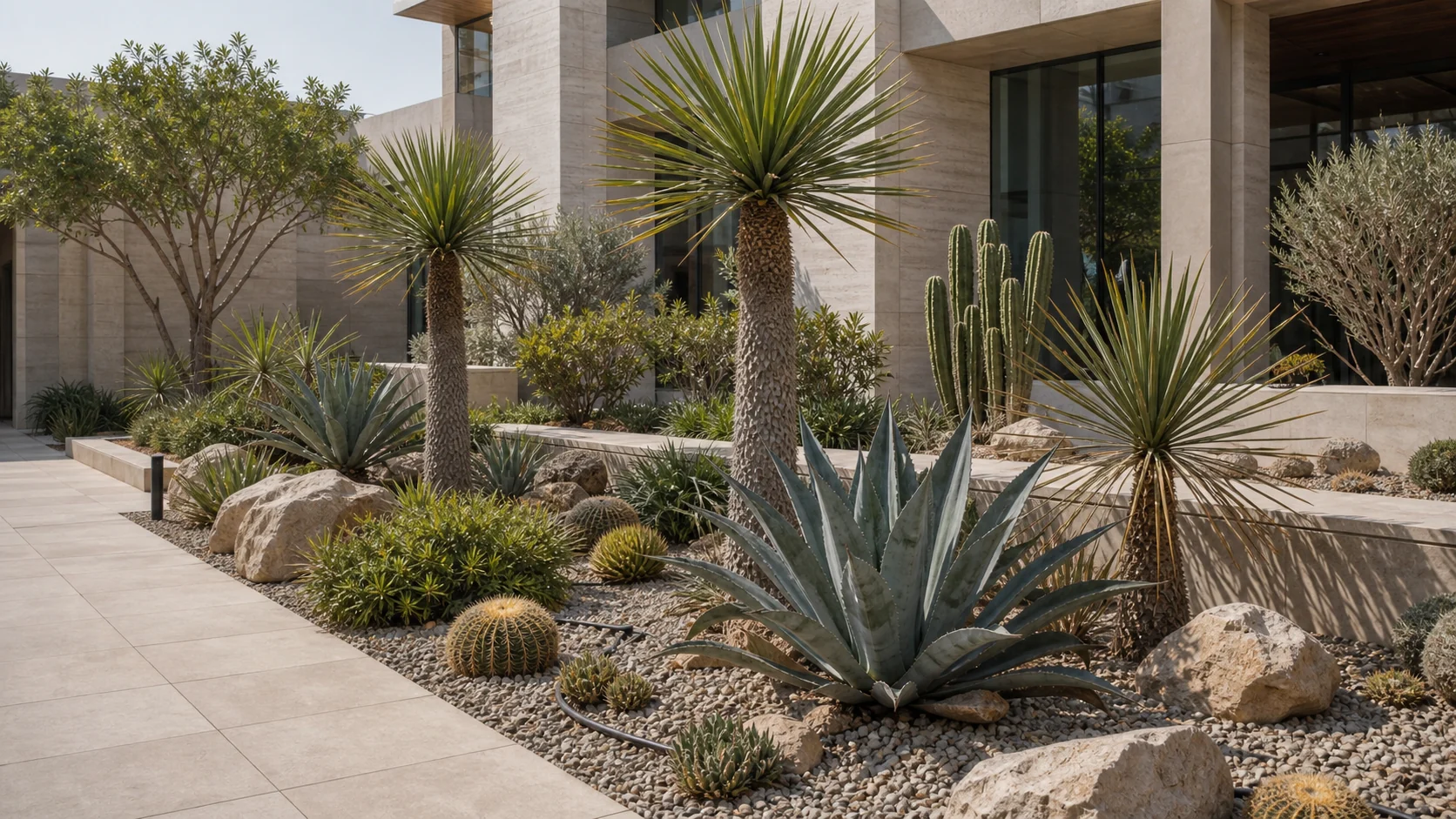
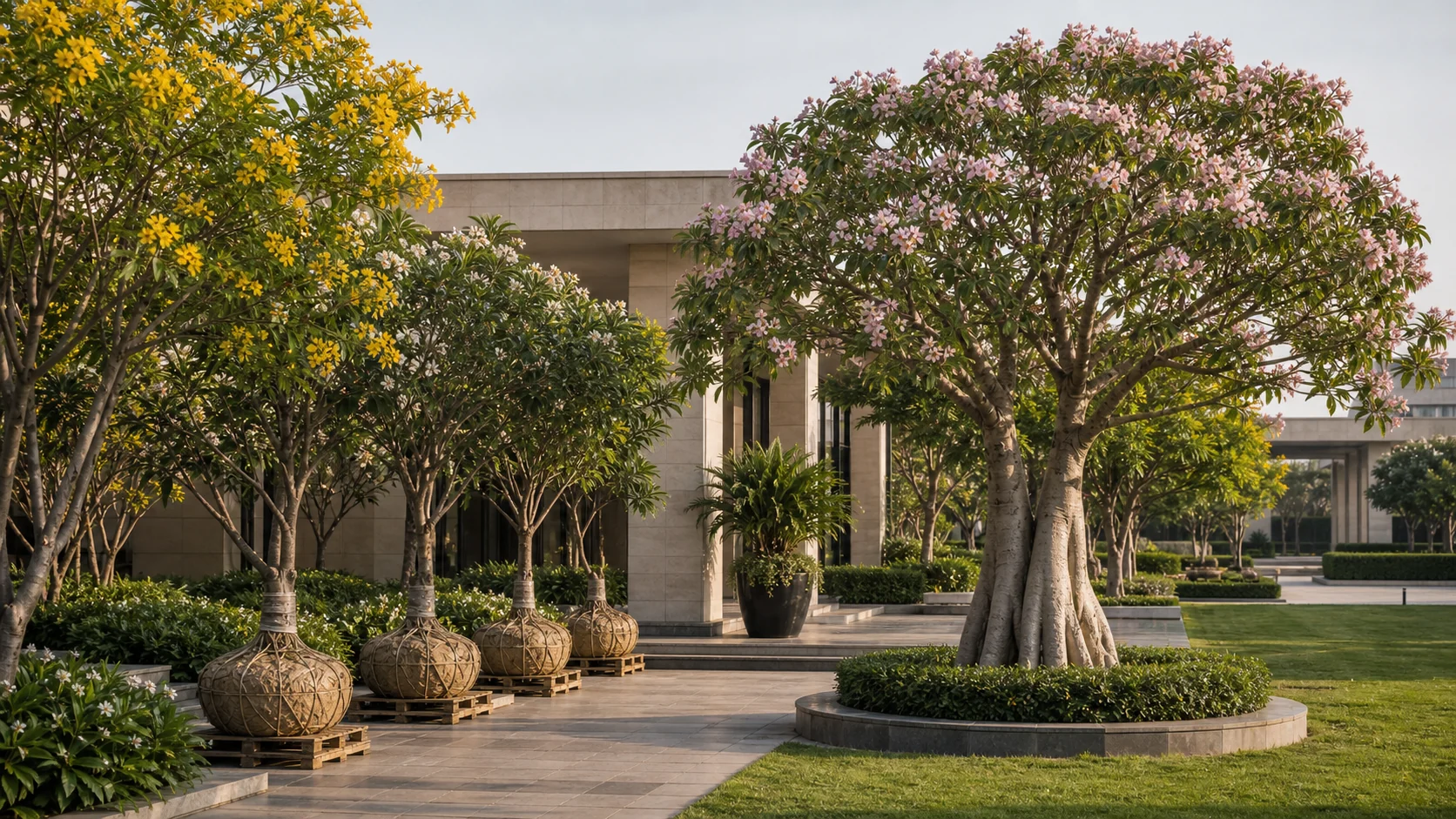
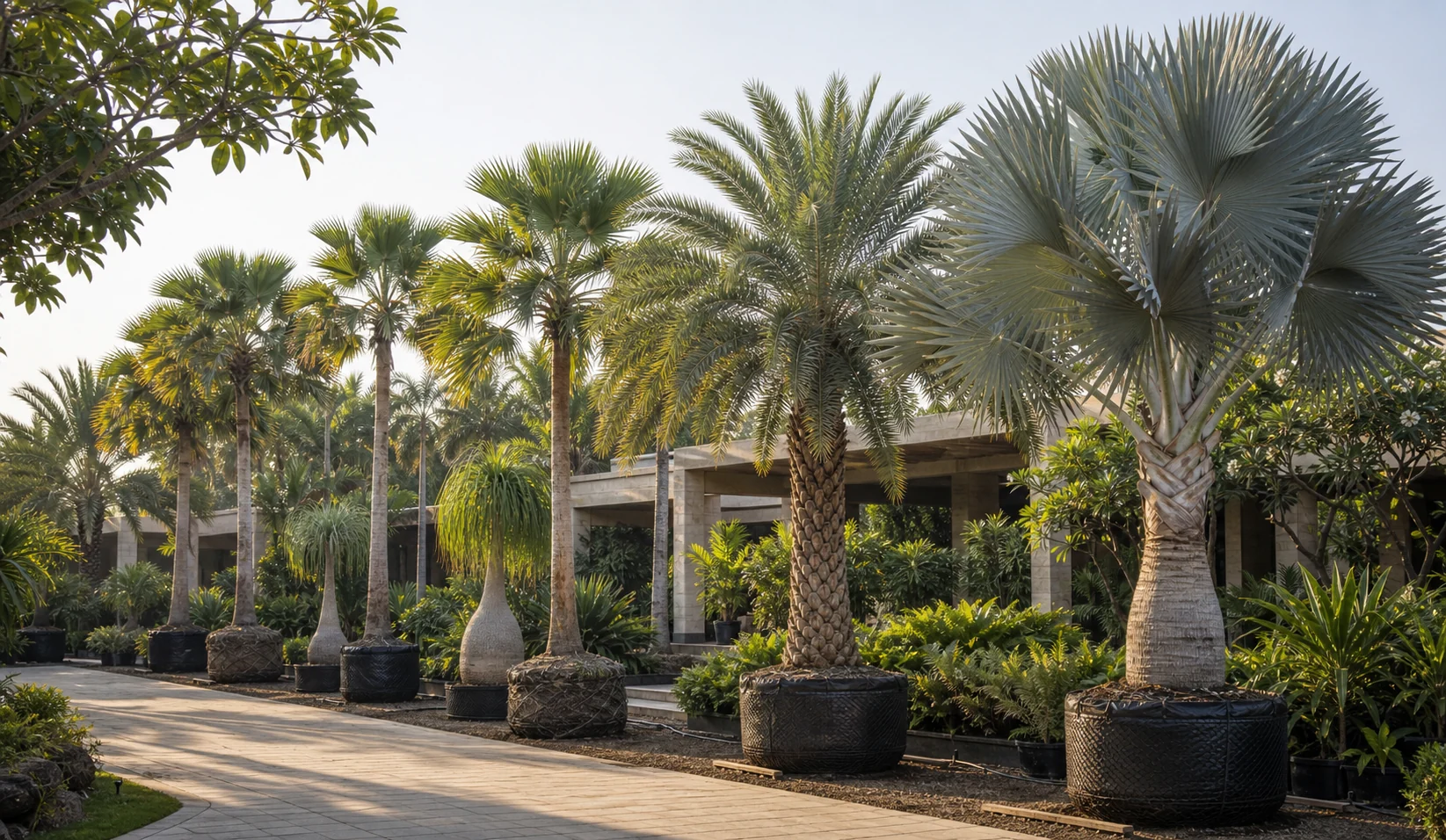
Visual context for placement, scale, handling, and landscape integration.
Section
Where it's used in premium projects
Ficus clouds and braids anchor Indian five-star arrivals where designers need immediate scale — pair root barriers with hardscape. Benjamina standards suit covered drive courts; microcarpa handles open sun.
Section
Climate & site suitability in India
Lowland humidity is workable with clip discipline — unlike box or thuja. Relocation shock on benjamina needs acclimatisation shade and stable irrigation. Roots lift paving if planted without barriers within 3 m of stone.
Section
Sourcing & acclimatisation
Document braid layer count and cloud tier spacing at purchase — retraining takes seasons. [Unverified: India field-grown vs container cloud stock.]
Section
Installation (containers, anchoring, drainage)
Root barriers within 2 m of paving; large pots on decks to contain roots. Stake standards until stiff; wire cloud tiers with padded ties. Acclimatise benjamina before full sun after nursery shade.
Section
Establishment & AMC (clipping rhythm)
Clip after flush hardening — over-clipping bare wood is slower to recover than box but faster than conifers. AMC includes root scout near drains yearly. Interior specimens need leaf-clean and consistent light to avoid drop.
Section
Cost drivers
Explore
Related
Related
Related links
Services, segments, cost, and proof.
- Softscape & horticulture
- Irrigation & water management
- Landscape maintenance (AMC)
- Hotel & resort landscaping
- Luxury resort & spa landscaping
- Mall & retail landscaping
- Corporate campus landscaping
- Projects
- Commercial landscaping cost guide
- Pricing drivers (imported trees)
- Import compliance workflow
- Request a site assessment
- Why is ficus topiary popular in India?
- Heat and humidity tolerance with fast regrowth after clip — holds geometry where box and thuja fail on lowland sites.
- What forms are available?
- Standards, braids, cloud tiers, multi-ball heads, and hedges — specify microcarpa vs benjamina for sun vs interior.
- Do ficus roots damage paving?
- Yes outdoors — use root barriers, pots, or set back from stone within recommended distances.
- Why does benjamina drop leaves after install?
- Relocation stress — stable light, moisture, and acclimatisation shade reduce drop until roots establish.
- How often should ficus clouds be clipped?
- Roughly every 3–4 weeks in active growth — budget specialist crews, not annual hedge cuts.
- What compliance applies to ficus topiary?
- Domestic production is common; imported forms still need phytosanitary documentation (informational, not legal advice).
- How should ficus topiary BOQs be compared?
- Match form type (braid/cloud/standard), stem height, root barrier scope, and clip AMC frequency.