
Boxwood topiary
Boxwood topiary (Buxus spp.)
Buxus topiary is the Mediterranean fine-leaf standard for balls, cones, spirals, and low hedges — when the brief demands crisp geometry. In much of India, box blight and heat-humidity stress make long-term success unlikely without cool dry air; we specify it honestly and route hot-humid sites to Ficus, Euonymus, or Podocarpus substitutes.
Spec
At a glance
- Species
- Buxus sempervirens / microphylla cultivars
- Family
- Buxaceae
- Origin
- Europe, Mediterranean, East Asia (cultivars)
- Available trained forms
- Ball, cone, spiral, low hedge, parterre edging
- Foliage
- Tiny evergreen leaves — tight clip surface
- Size range available
- 30 cm balls to 2 m standards [Unverified]
- Growth rate
- Very slow — buy finished form
- Clipping frequency / AMC
- Monthly touch during growing season; formal clip 3–4×/year in viable climates
- Light
- Bright light; partial shade in harsh midday heat
- Water
- Even moisture — hates wet and dry extremes
- India climate suitability
- Poor in hot-humid coastal and monsoon basins — box blight risk; best in cool dry hills or climate-controlled courtyards
- Indoor / outdoor
- Outdoor courtyards in viable microclimates; interior short-term display only
- Drainage
- Sharp drainage — crown rot in wet clay
- Cautions
- Box blight; heat/humidity stress — suggest Ficus, Euonymus japonicus, or Podocarpus on hot-humid BOQs
Gallery
Specimen visual guide
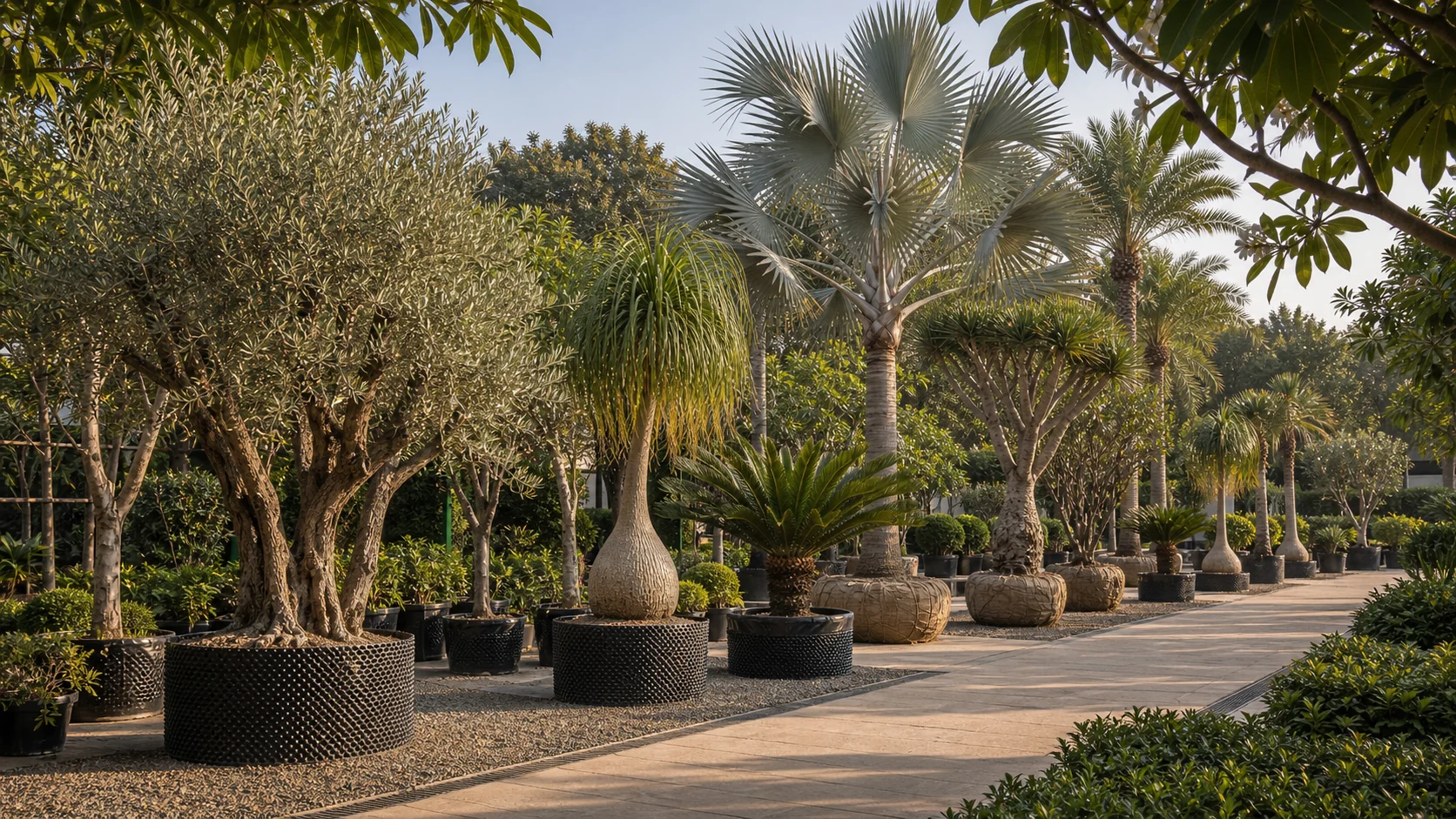
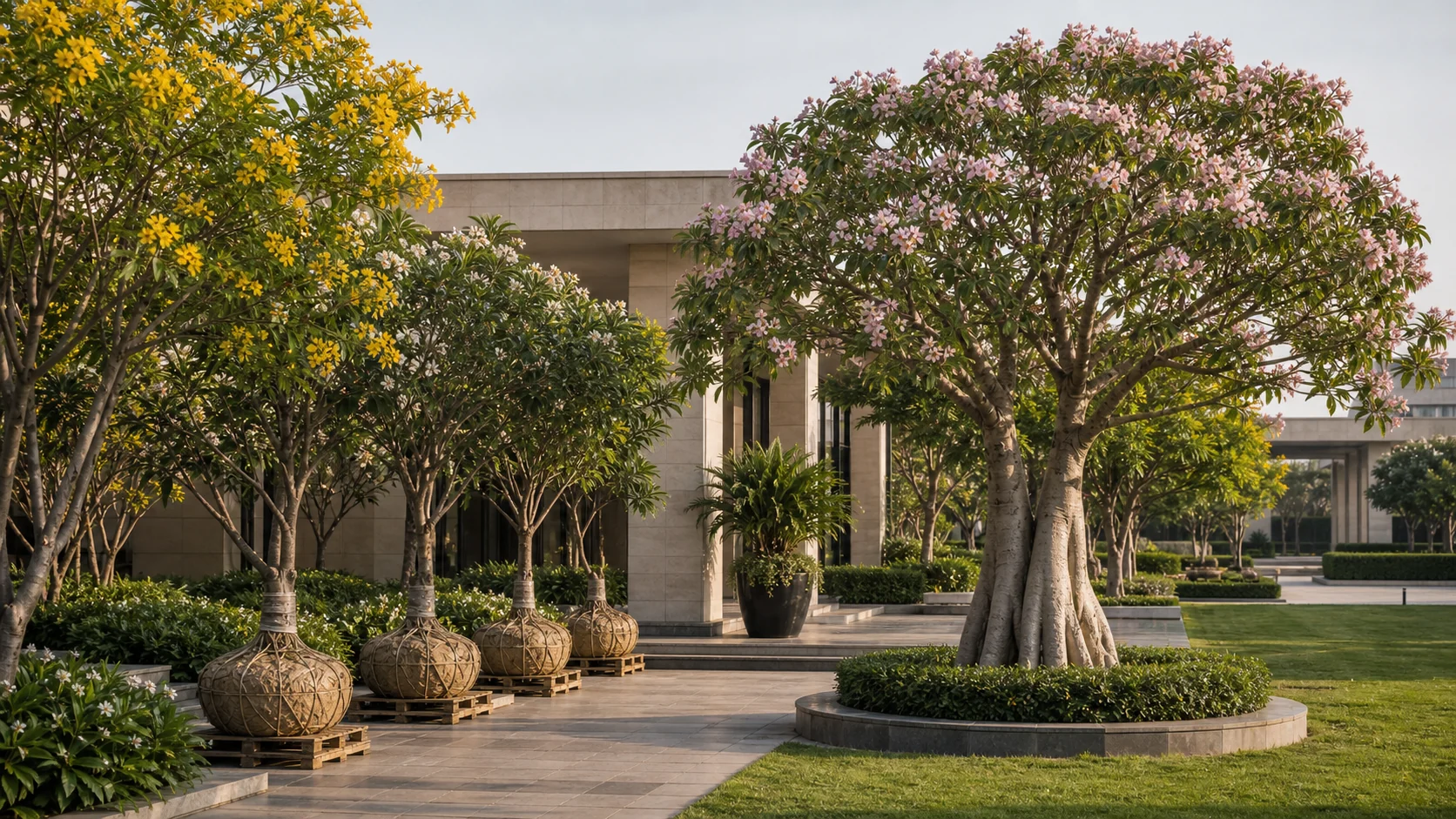
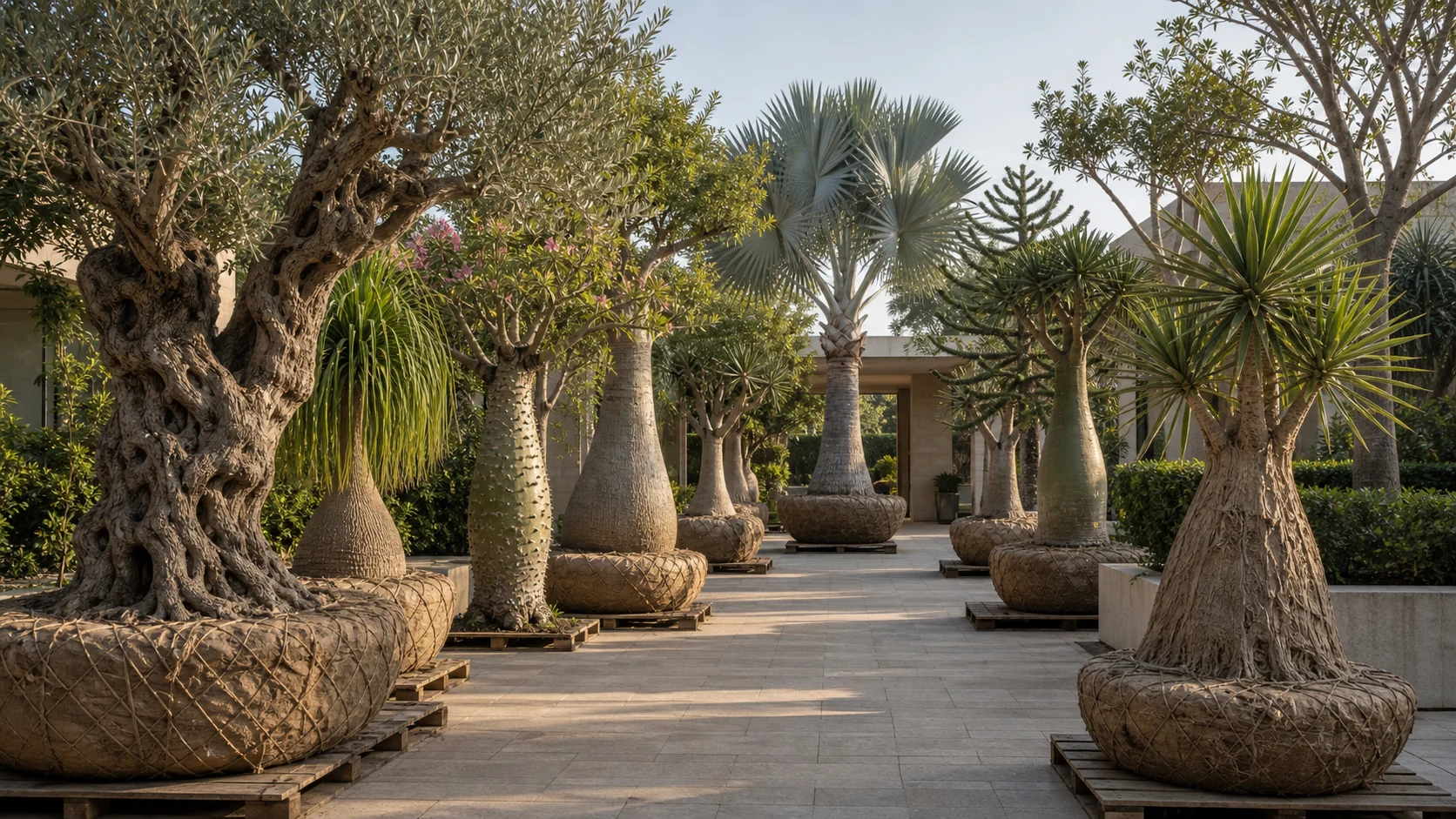
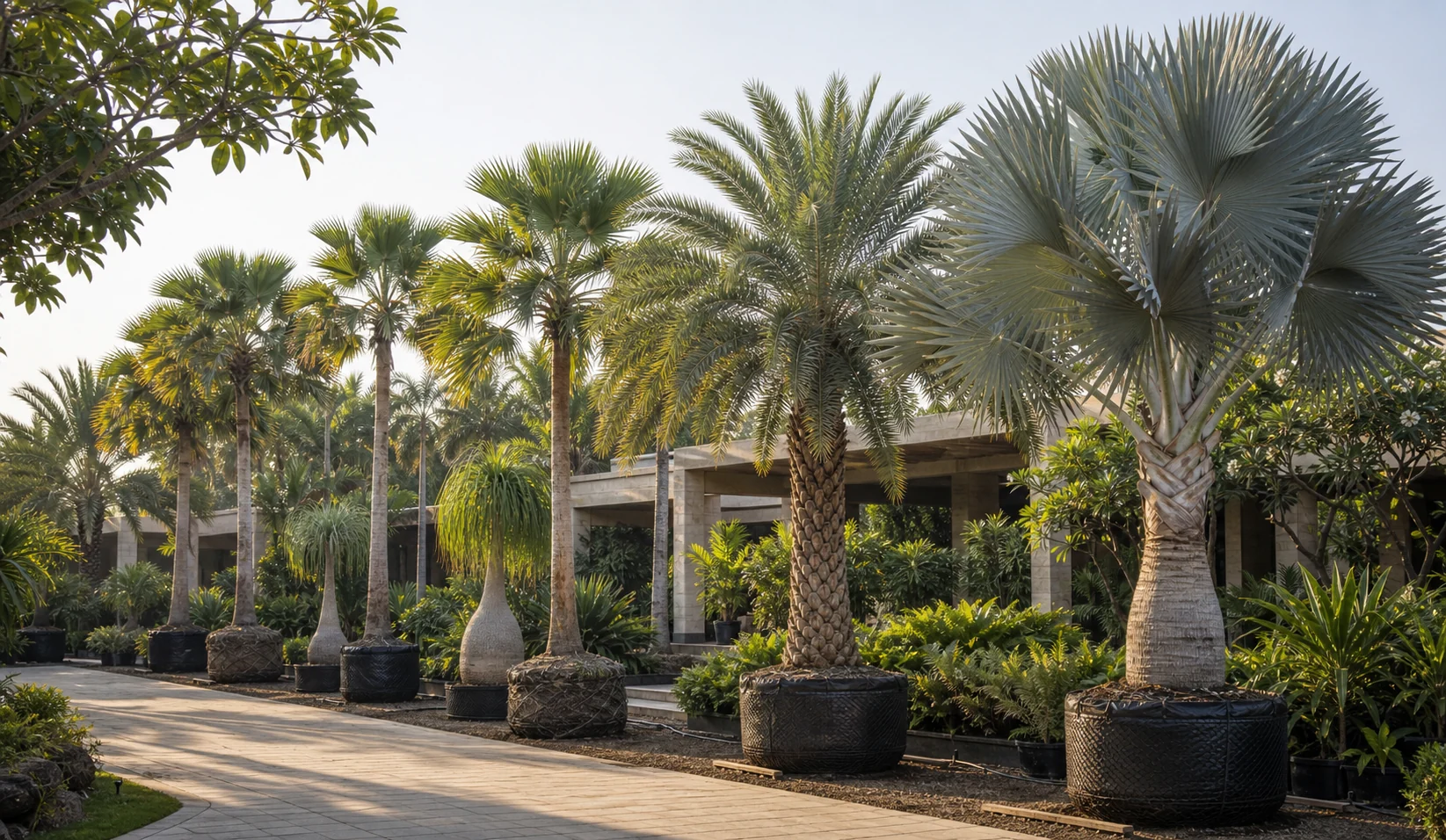
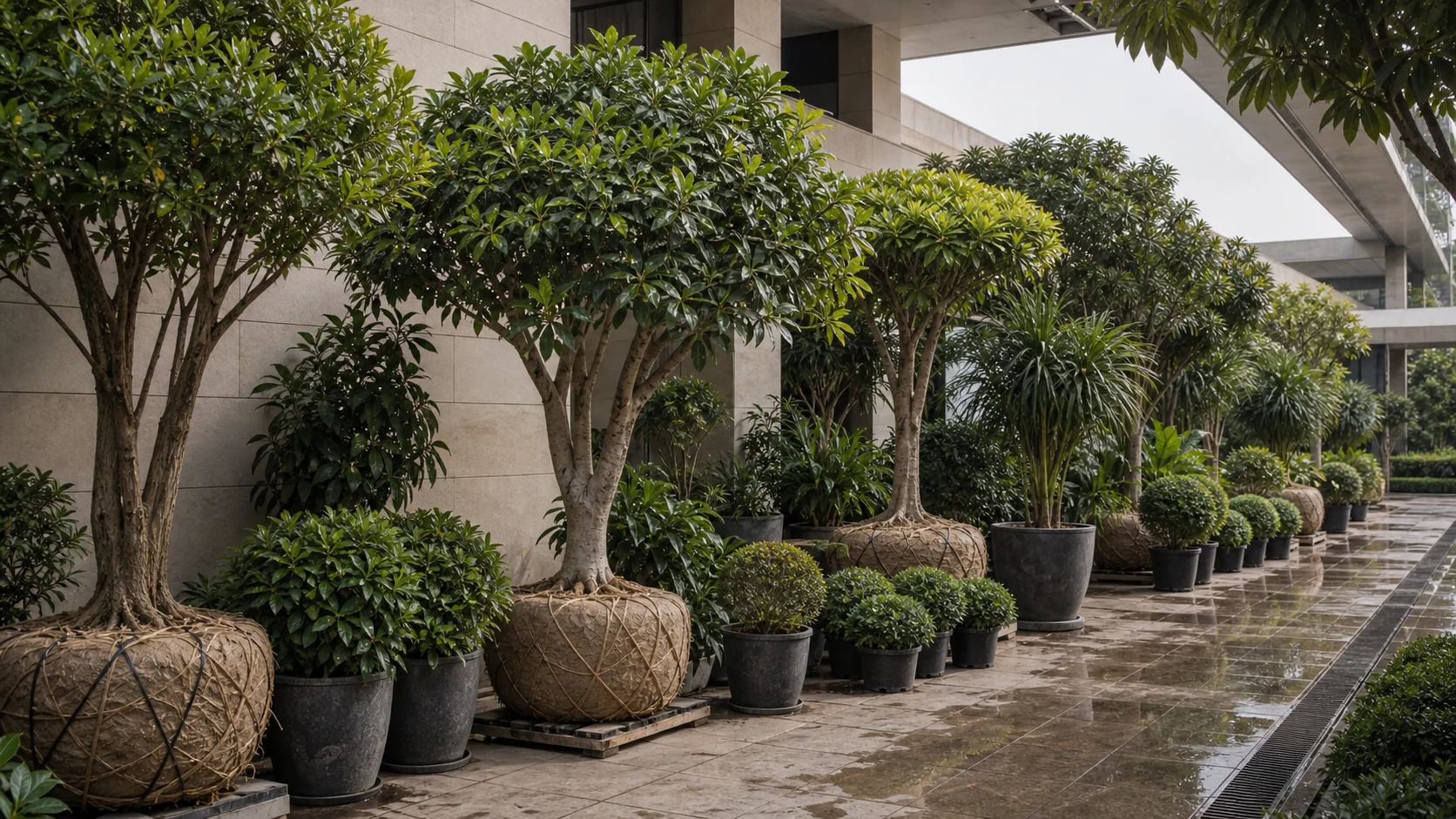
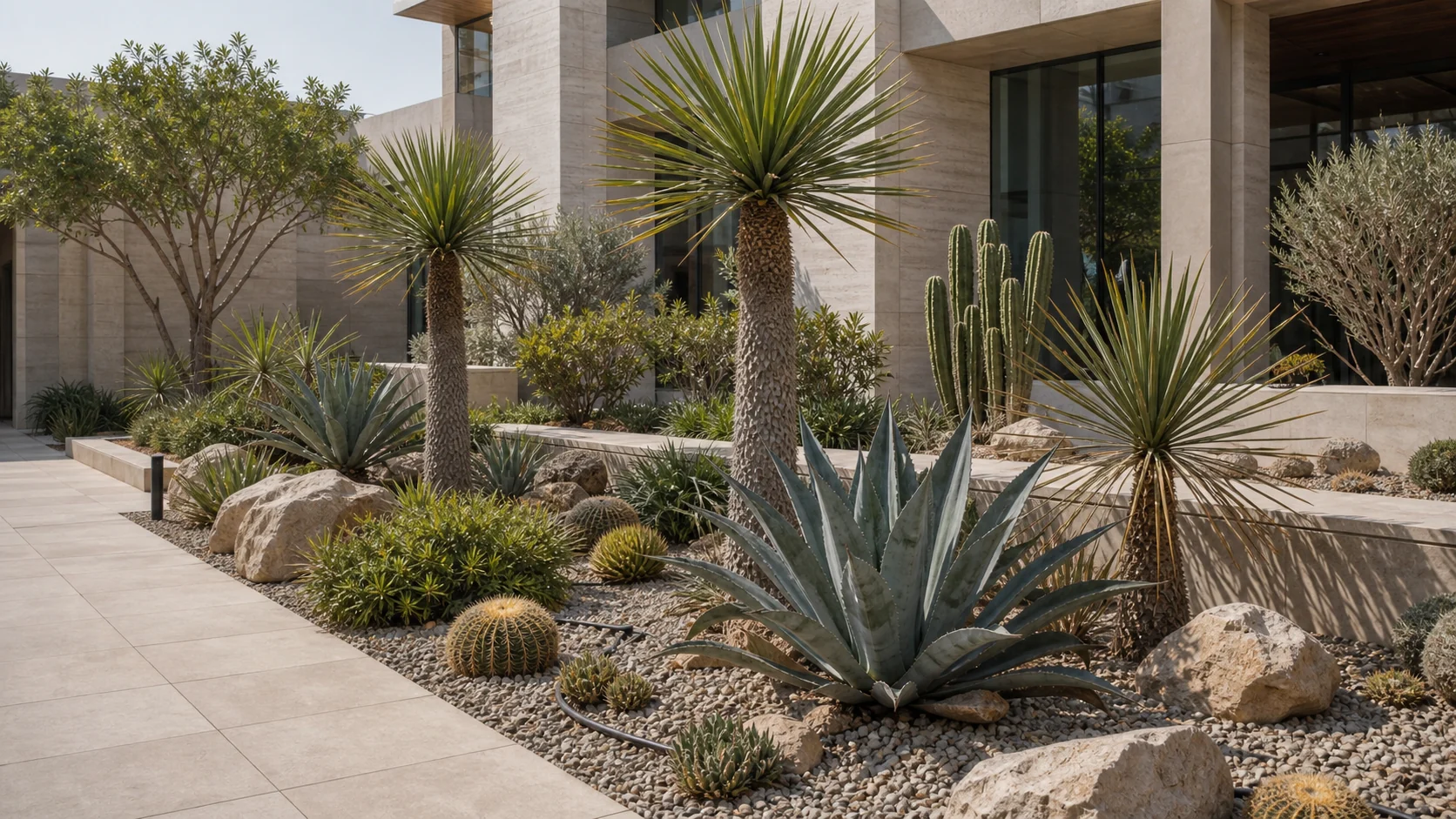
Visual context for placement, scale, handling, and landscape integration.
Section
Where it's used in premium projects
Box anchors parterre sketches, European villa entries, and wine-country resort moods where fine leaf texture must read at close range. Procurement on Indian coastal projects should default to substitute species unless the microclimate is demonstrably cool-dry.
Section
Climate & site suitability in India
Humid Chennai and Mumbai monsoon cycles favour blight and defoliation — do not promise decade-long balls without fungicide programmes and airflow. Hill stations with dry winters may hold clips; lowland heat pushes teams toward podocarpus or ficus for the same geometry.
Section
Sourcing & acclimatisation
Buy pre-trained forms with tight surfaces — slow growth cannot recover a lost line in one season. [Unverified: India nursery pre-topiary vs imported EU forms.] Inspect for blight lesions at delivery.
Section
Installation (containers, anchoring, drainage)
Plant in gritty loam mounds; keep crowns dry in monsoon. Root barriers if adjacent to aggressive groundcovers. For blight-prone sites, document species substitution on drawings before install.
Section
Establishment & AMC (clipping rhythm)
AMC is clipping-heavy with sterilized tools between plants if blight is regional. Monitor for defoliation after heat waves — do not compensate with overwatering. When box fails, replace with heat-tolerant topiary subjects rather than repeated replant of the same genus.
Section
Cost drivers
Explore
Related
Related
Related links
Services, segments, cost, and proof.
- Softscape & horticulture
- Irrigation & water management
- Landscape maintenance (AMC)
- Hotel & resort landscaping
- Luxury resort & spa landscaping
- Mall & retail landscaping
- Corporate campus landscaping
- Projects
- Commercial landscaping cost guide
- Pricing drivers (imported trees)
- Import compliance workflow
- Request a site assessment
- Does boxwood topiary survive Indian heat and humidity?
- Often poorly in hot-humid lowlands — box blight and stress defoliation are common; cool dry hills or courtyards work better; specify Ficus, Euonymus, or Podocarpus for many coastal BOQs.
- What forms are standard for Buxus?
- Balls, cones, spirals, and low parterre hedges — always buy pre-trained lines; slow growth cannot rebuild geometry in one season.
- How often should box be clipped in viable sites?
- Touch monthly during growth; formal reclip several times per year — frequency rises if substitute species with faster growth are used instead.
- What is box blight in practice?
- Fungal dieback and bare patches on leaves — spreads with humidity and unsterilized tools; prevention beats cure on Indian monsoon sites.
- Can box live indoors in atriums?
- Short-term display only — low humidity and light mismatch stress plants; long-term interior topiary should use Ficus or Podocarpus.
- What import paperwork applies to box topiary?
- Live topiary imports need phytosanitary certificates and quarantine inspection — blight-free declarations matter (informational, not legal advice).
- How should box quotations be compared?
- Match finished form size, blight-risk AMC scope, and microclimate viability — not generic shrub rates.