
Holm oak topiary
Holm oak topiary (Quercus ilex)
Quercus ilex topiary brings evergreen oak presence to clipped standards, cubes, and pleached screens — Mediterranean drought tolerance once established. It is slow and dislikes humid Indian heat without airflow; specify for dry courts and large estates, not tight humid courtyards expecting instant pleach closure.
Spec
At a glance
- Species
- Quercus ilex
- Family
- Fagaceae
- Origin
- Mediterranean
- Available trained forms
- Standard, cube, pleached screen, large ball
- Foliage
- Dark glossy evergreen oak leaves
- Size range available
- 2–5 m pleach panels; large standards [Unverified]
- Growth rate
- Slow — years to close pleach
- Clipping frequency / AMC
- 2–3 structural clips/year; pleach tie-in monthly first years
- Light
- Full sun
- Water
- Low to moderate once established
- India climate suitability
- Best in dry belts; struggles in humid heat without space
- Indoor / outdoor
- Outdoor large sites only
- Drainage
- Good drainage; tolerates drought
- Cautions
- Slow; dislikes humid heat; large ultimate size
Gallery
Specimen visual guide
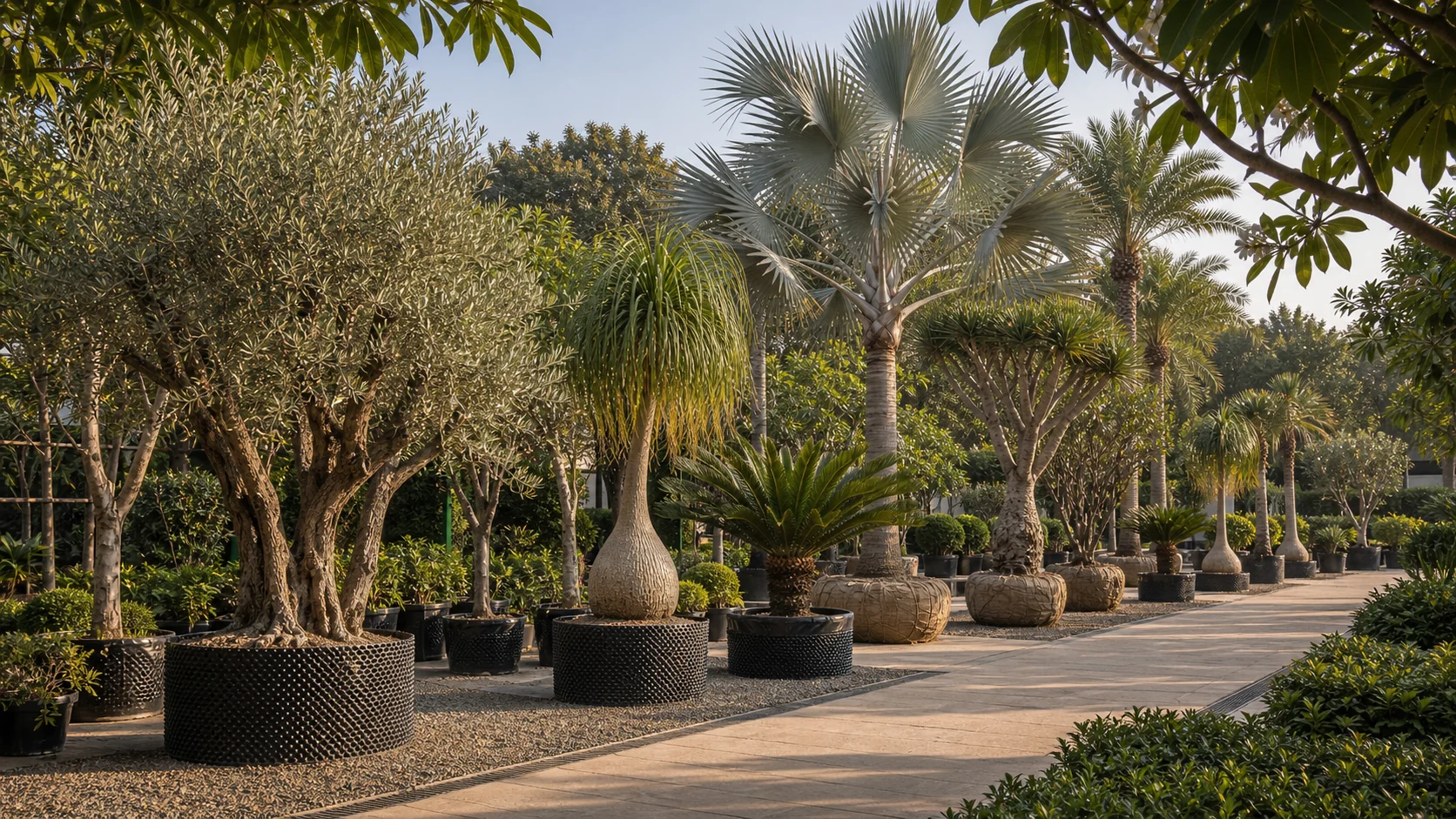
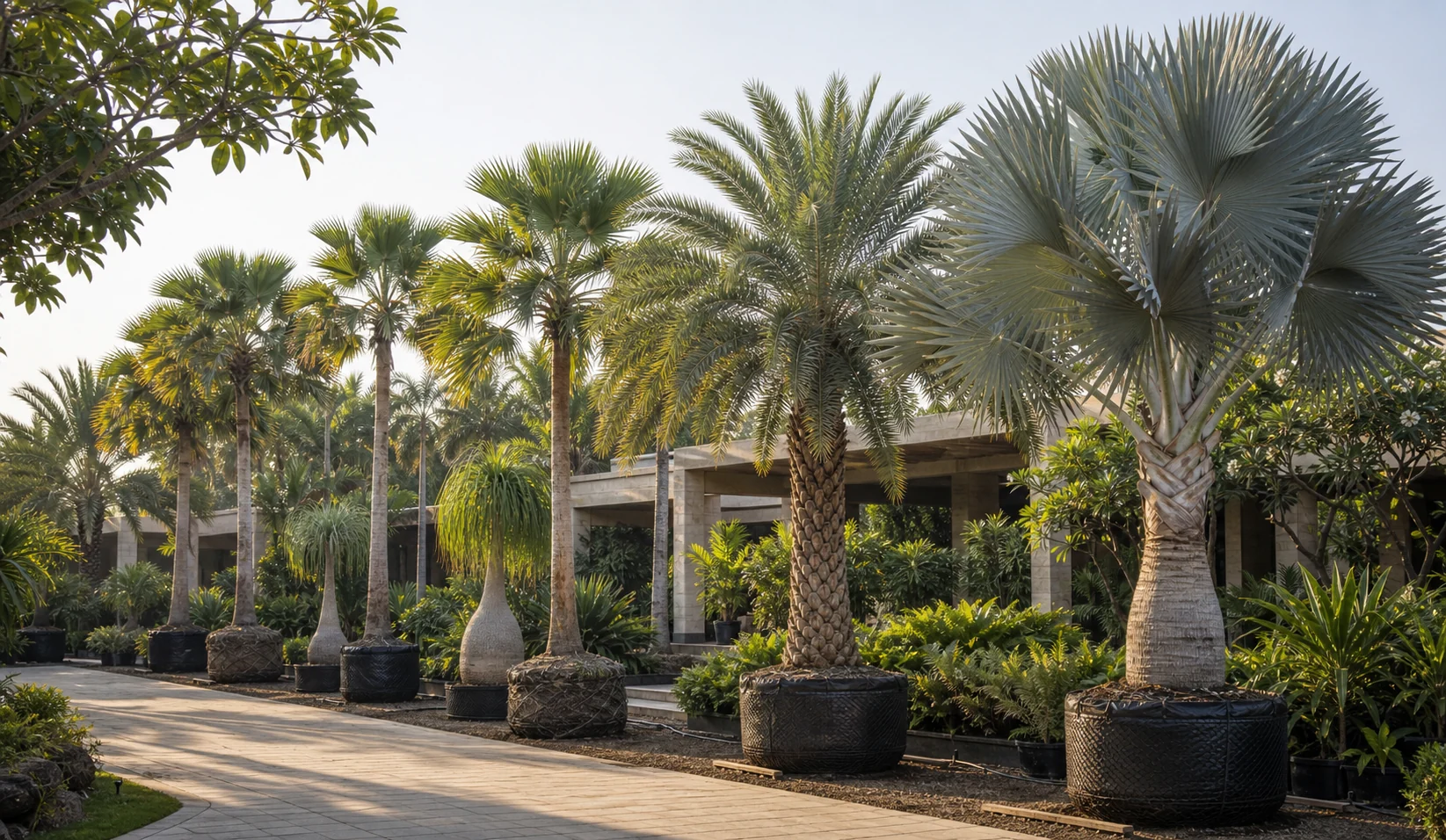
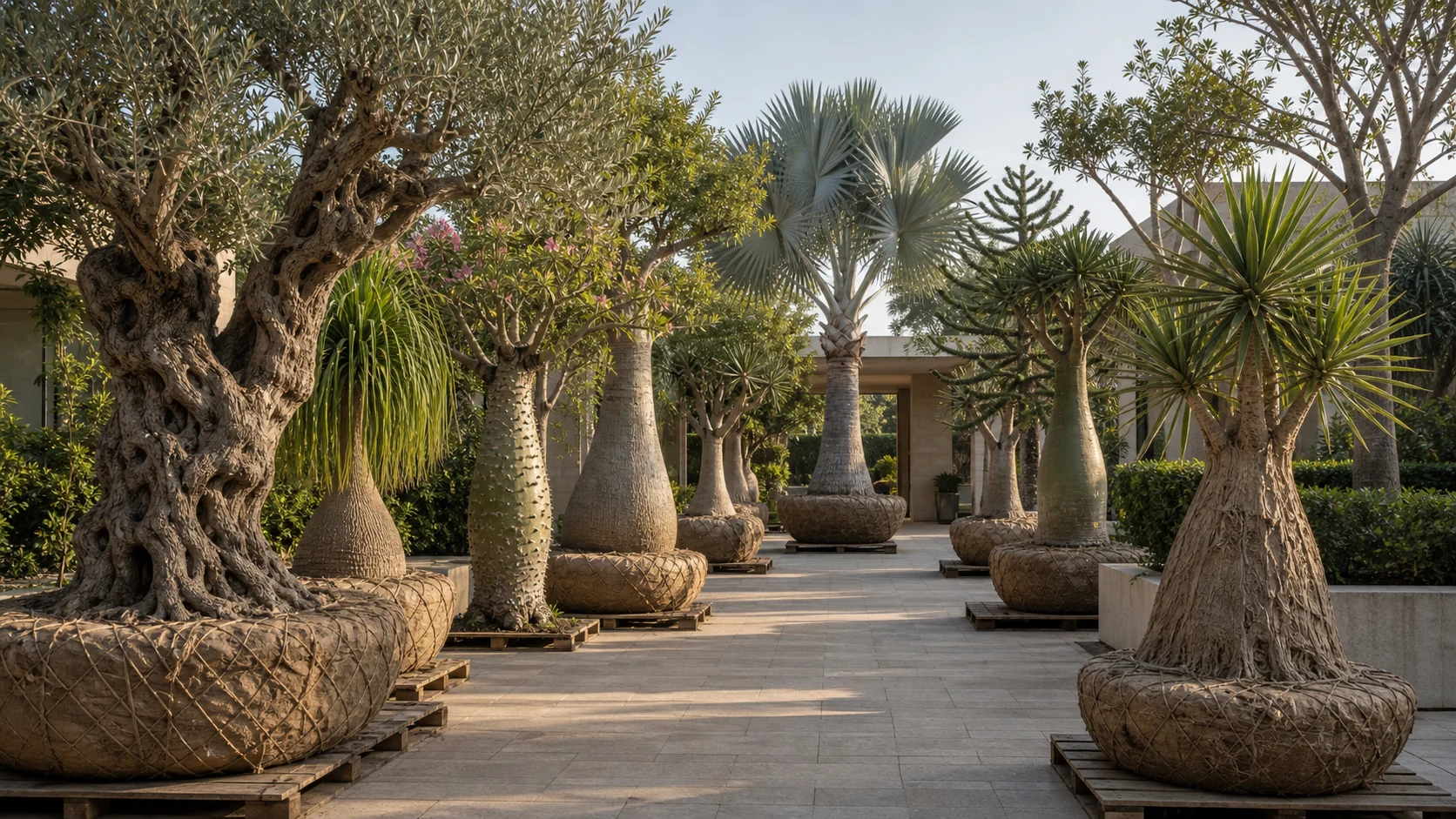
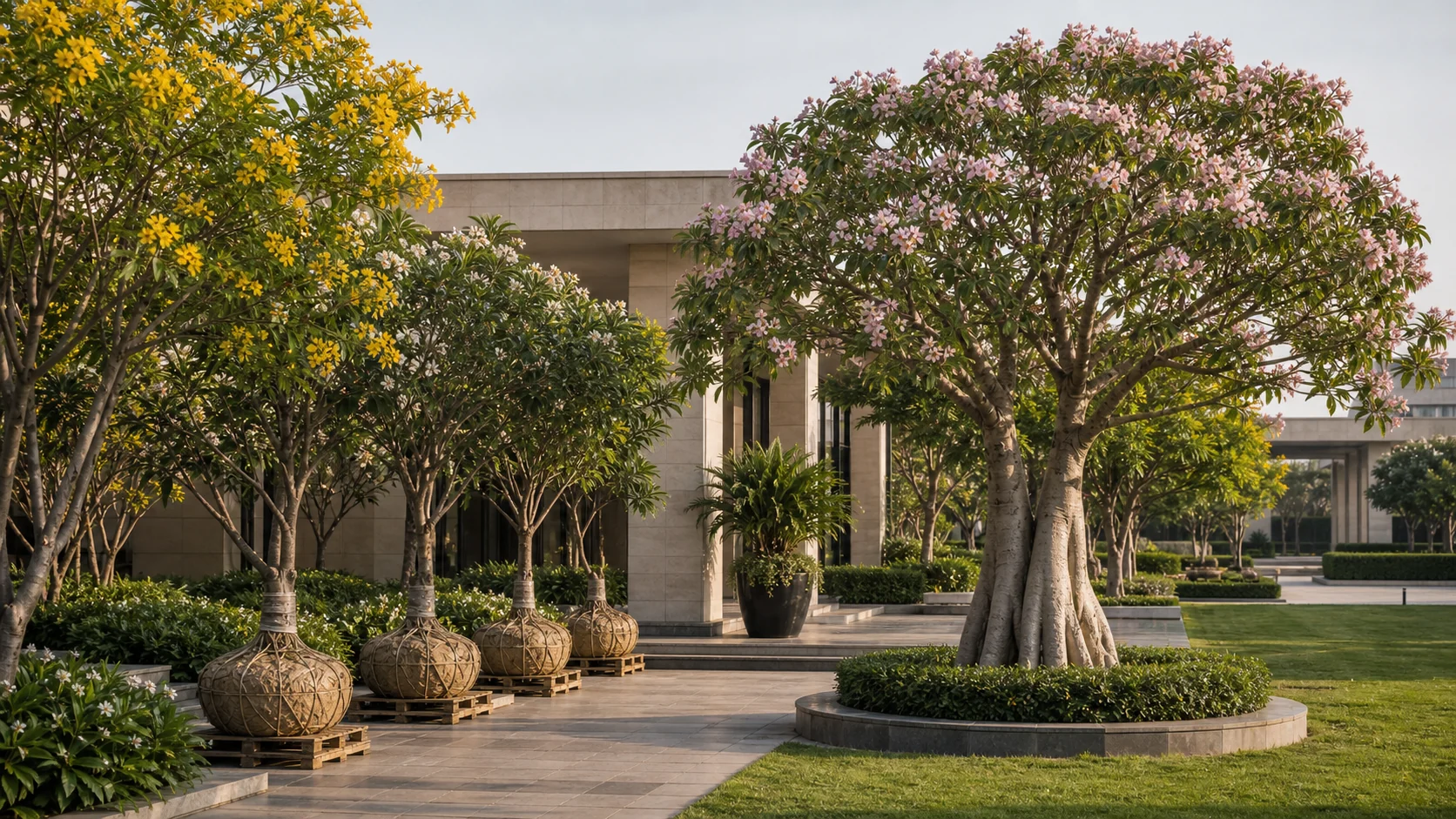
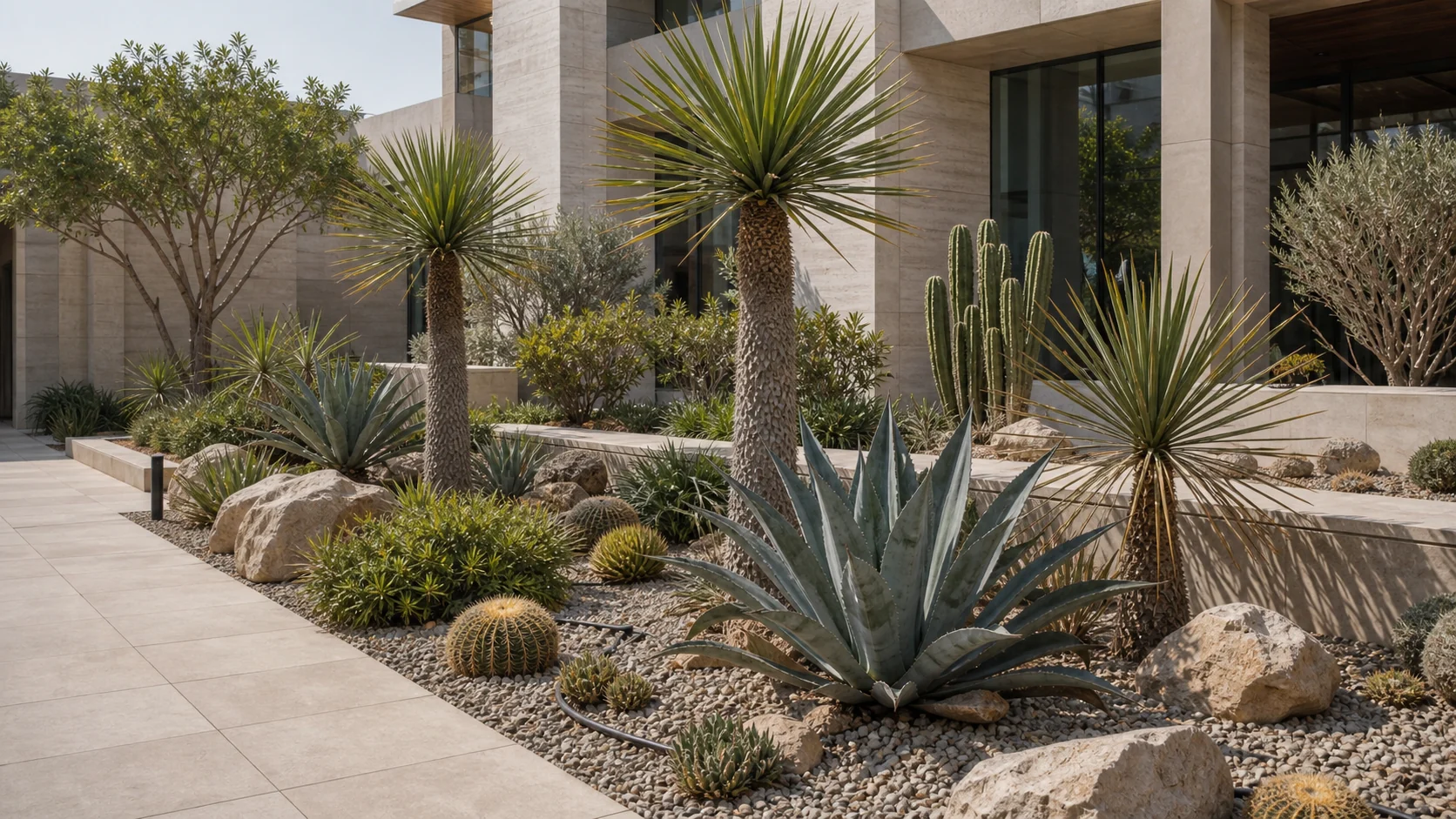
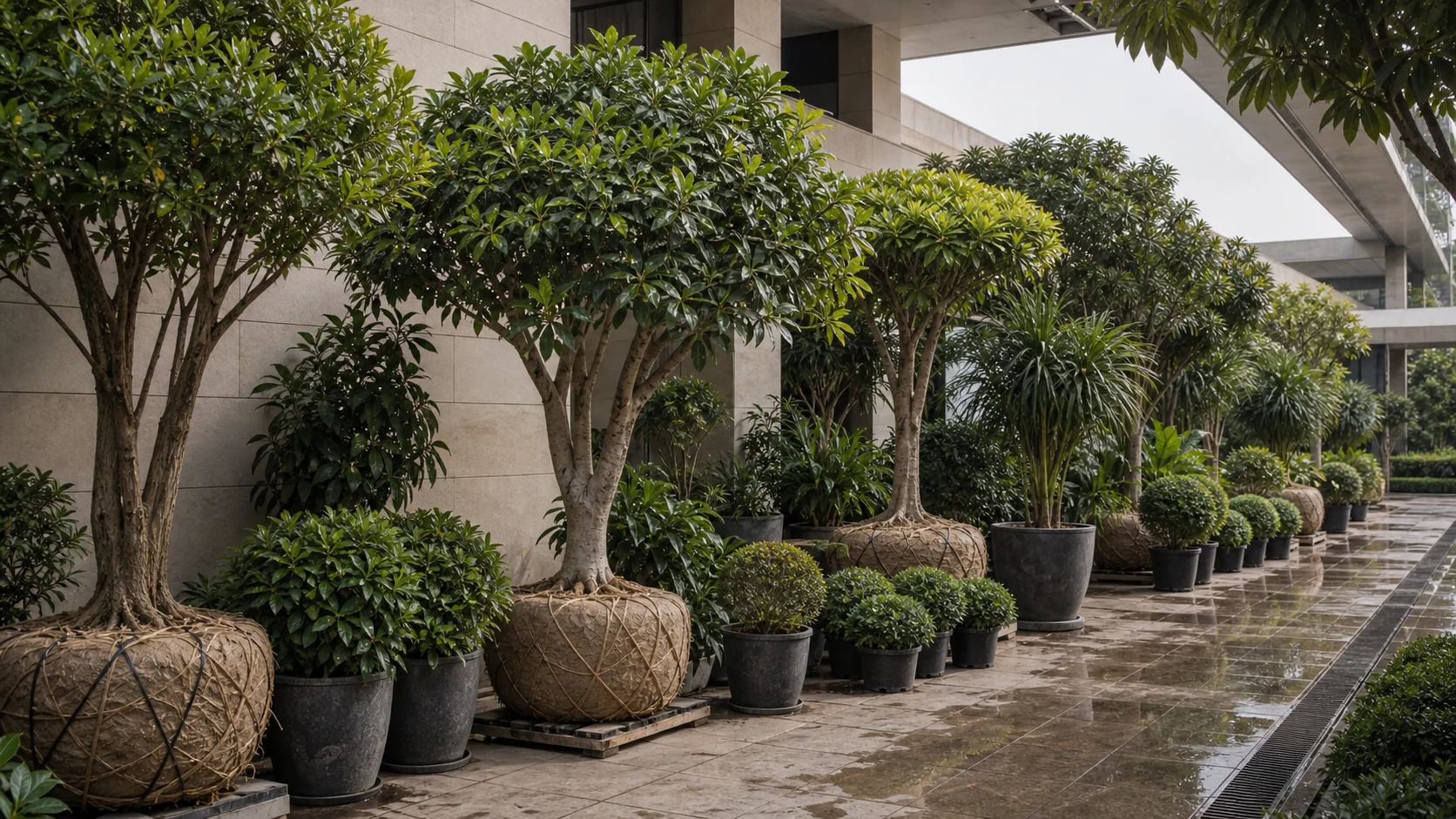
Visual context for placement, scale, handling, and landscape integration.
Section
Where it's used in premium projects
Holm oak pleached screens divide winery estates and large villa parcels where Mediterranean mood is contractual — not for small humid courtyards. Standards anchor gravel courts with oak gravitas.
Section
Climate & site suitability in India
Dry Rajasthan and Gujarat estates outperform humid coastal pleach without airflow. Large ultimate size demands civil planning — do not plant pleach roots under narrow pavements. Summer heat OK with deep occasional irrigation.
Section
Sourcing & acclimatisation
Pleach requires pre-trained panels or clear stem lines — closing gaps takes seasons. [Unverified: India pleach stock vs imported panels.]
Section
Installation (containers, anchoring, drainage)
Deep pits for large root volume; pleach frames wired to steel or timber — engineer wind on exposéd ridges. Mound drainage in clay. Root barriers near structures.
Section
Establishment & AMC (clipping rhythm)
Pleach tie-in is year-one AMC heavy — clip side planes on dry days. Scale soil volume to slow growth expectations; do not force fast closure with nitrogen. Monitor leaf miner and oak pests regionally.
Section
Cost drivers
Explore
Related
Related
Related links
Services, segments, cost, and proof.
- Softscape & horticulture
- Irrigation & water management
- Landscape maintenance (AMC)
- Hotel & resort landscaping
- Luxury resort & spa landscaping
- Mall & retail landscaping
- Corporate campus landscaping
- Projects
- Commercial landscaping cost guide
- Pricing drivers (imported trees)
- Import compliance workflow
- Request a site assessment
- What is holm oak pleached topiary?
- Elevated horizontal screens on clear trunks — requires frames, tie-in AMC, and years to close gaps on slow Quercus ilex.
- Does holm oak suit humid Indian coasts?
- Often poorly in tight humid courtyards — dry large estates with airflow perform better; consider podocarpus for small humid sites.
- How slow is Quercus ilex topiary growth?
- Slow — buy pre-trained size; pleach closure is a multi-season programme, not one install event.
- Is holm oak drought-tolerant in India?
- Yes once established in dry belts — still needs occasional deep irrigation on terraces, not zero water forever.
- How large can pleached ilex ultimately grow?
- Large — civil planning for height and root spread is mandatory on long-term estate BOQs.
- What import paperwork applies to holm oak?
- Large tree imports need phytosanitary and quarantine inspection — pleach forms must match docs (informational, not legal advice).
- How should pleached ilex BOQs be priced?
- Match panel dimensions, frame steel, pre-trained stem height, and multi-year tie-in AMC — not shrub ball rates.