
Installation & engineering
Installation: soil engineering & bracing
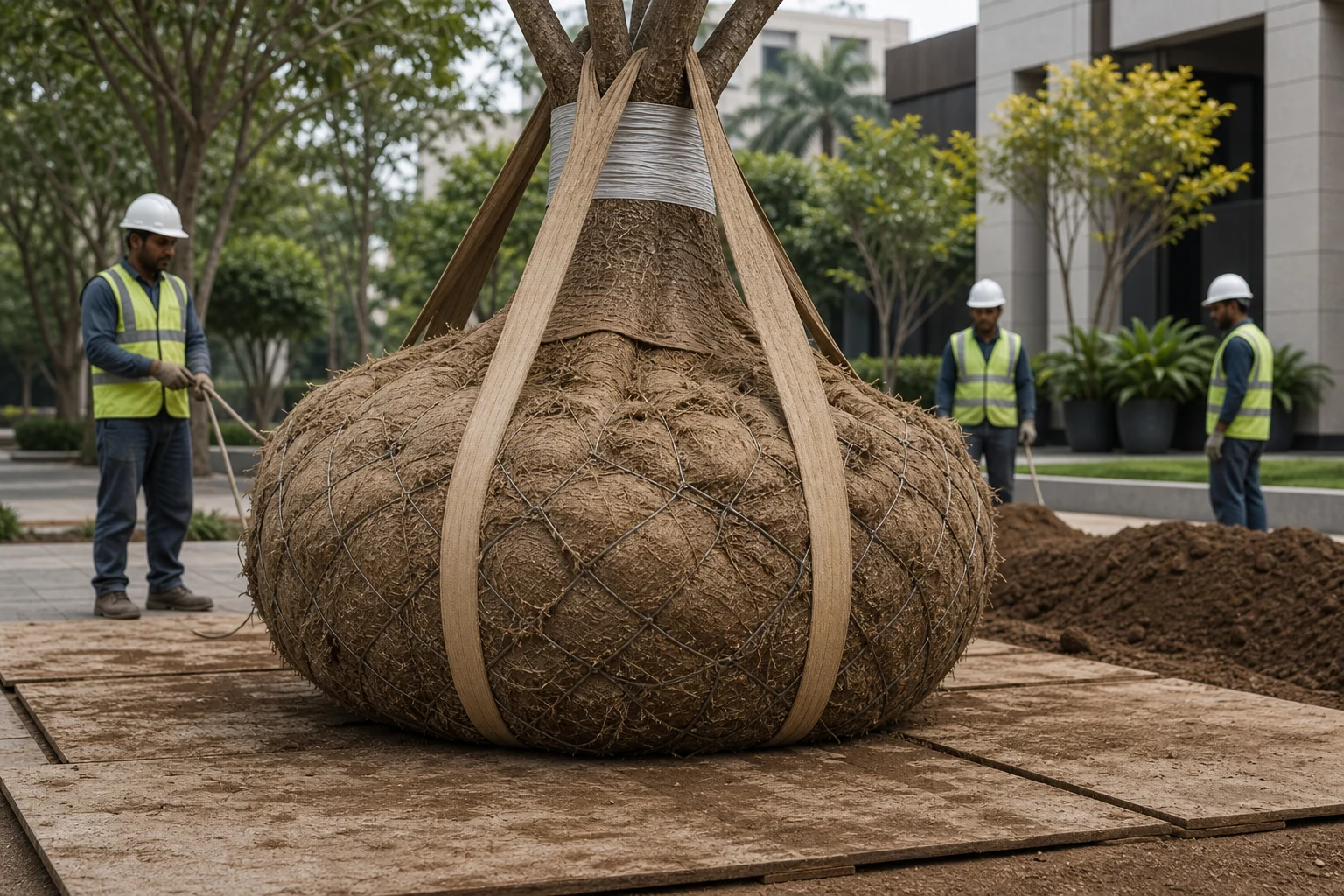
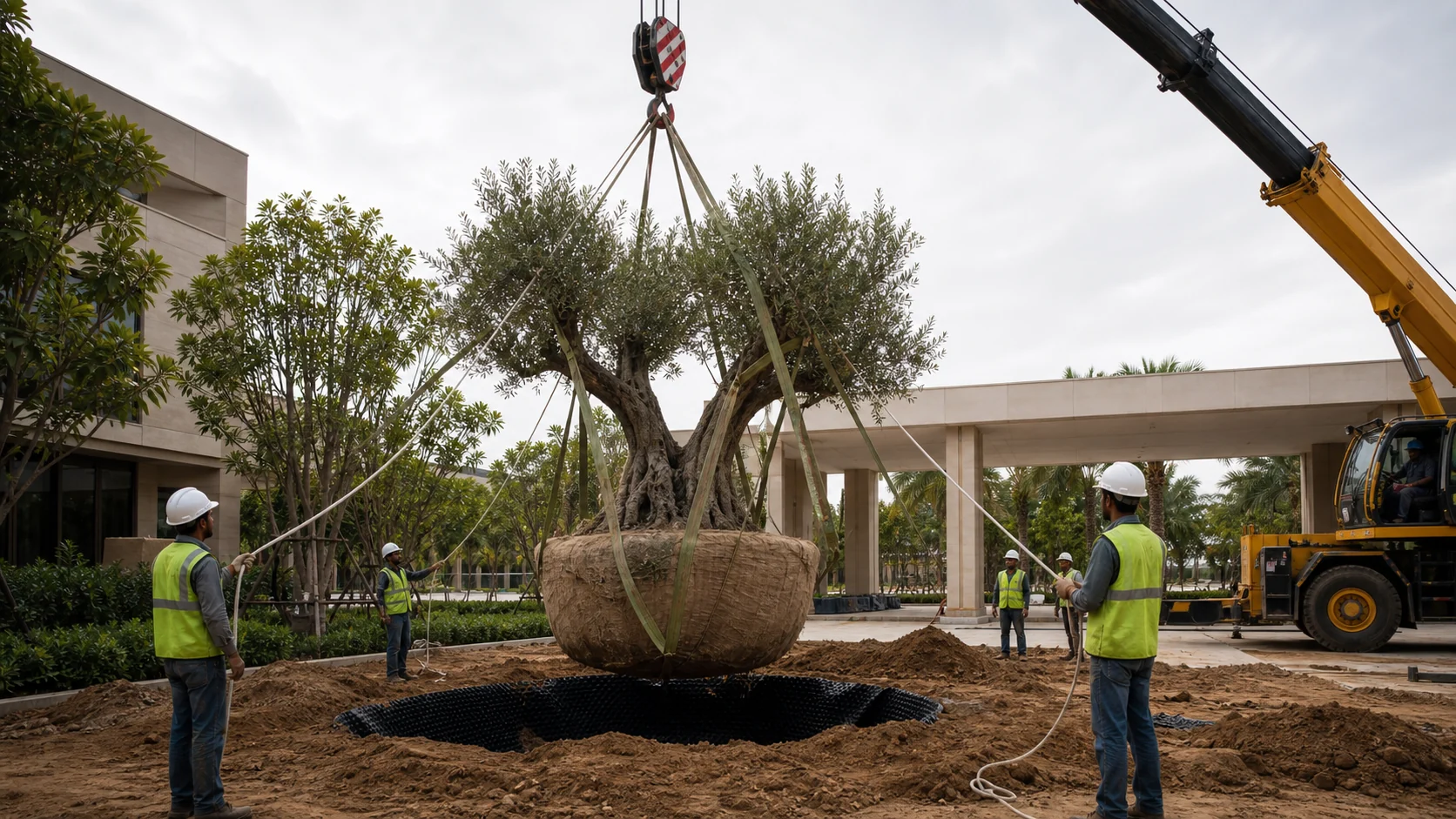
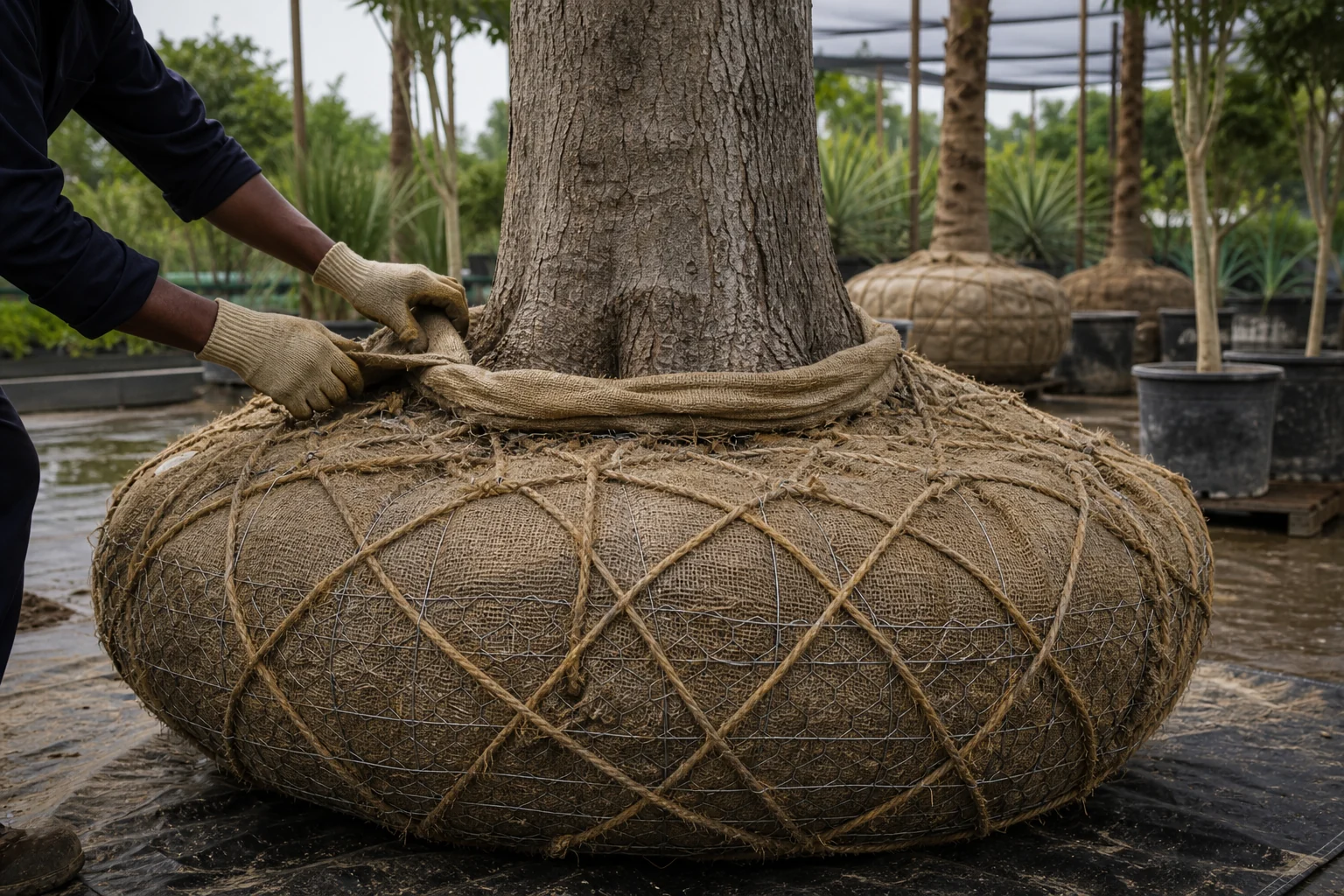
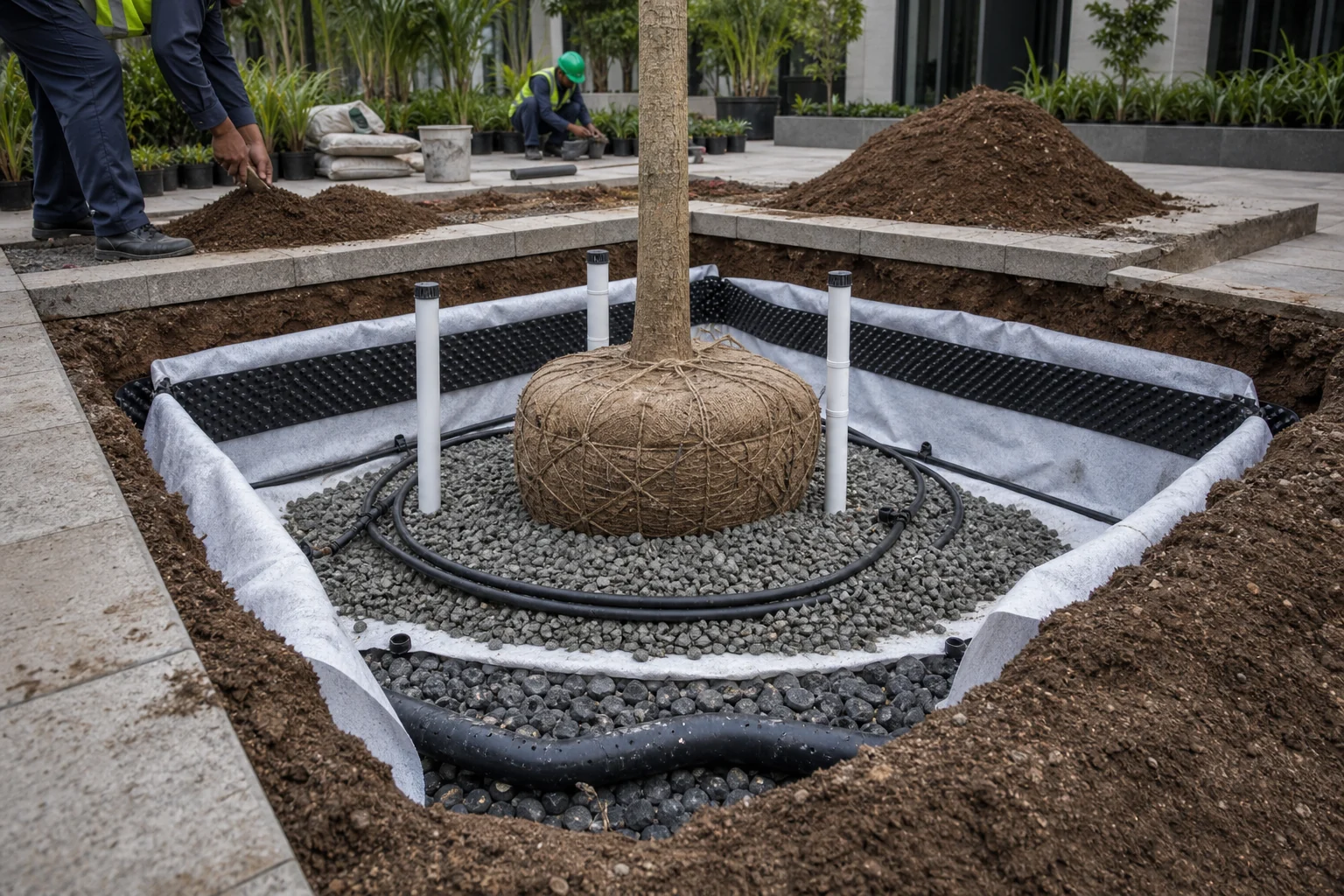
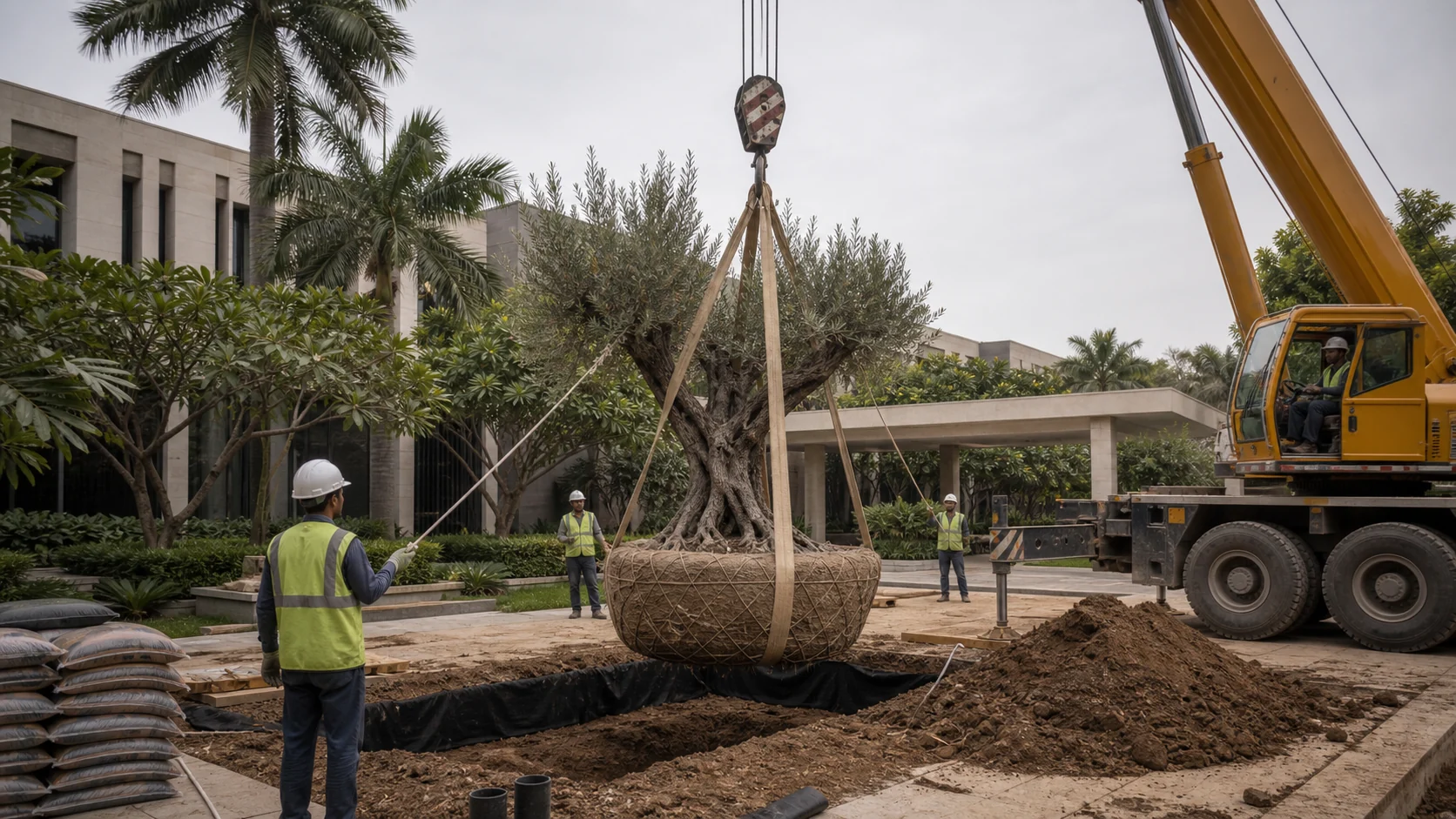
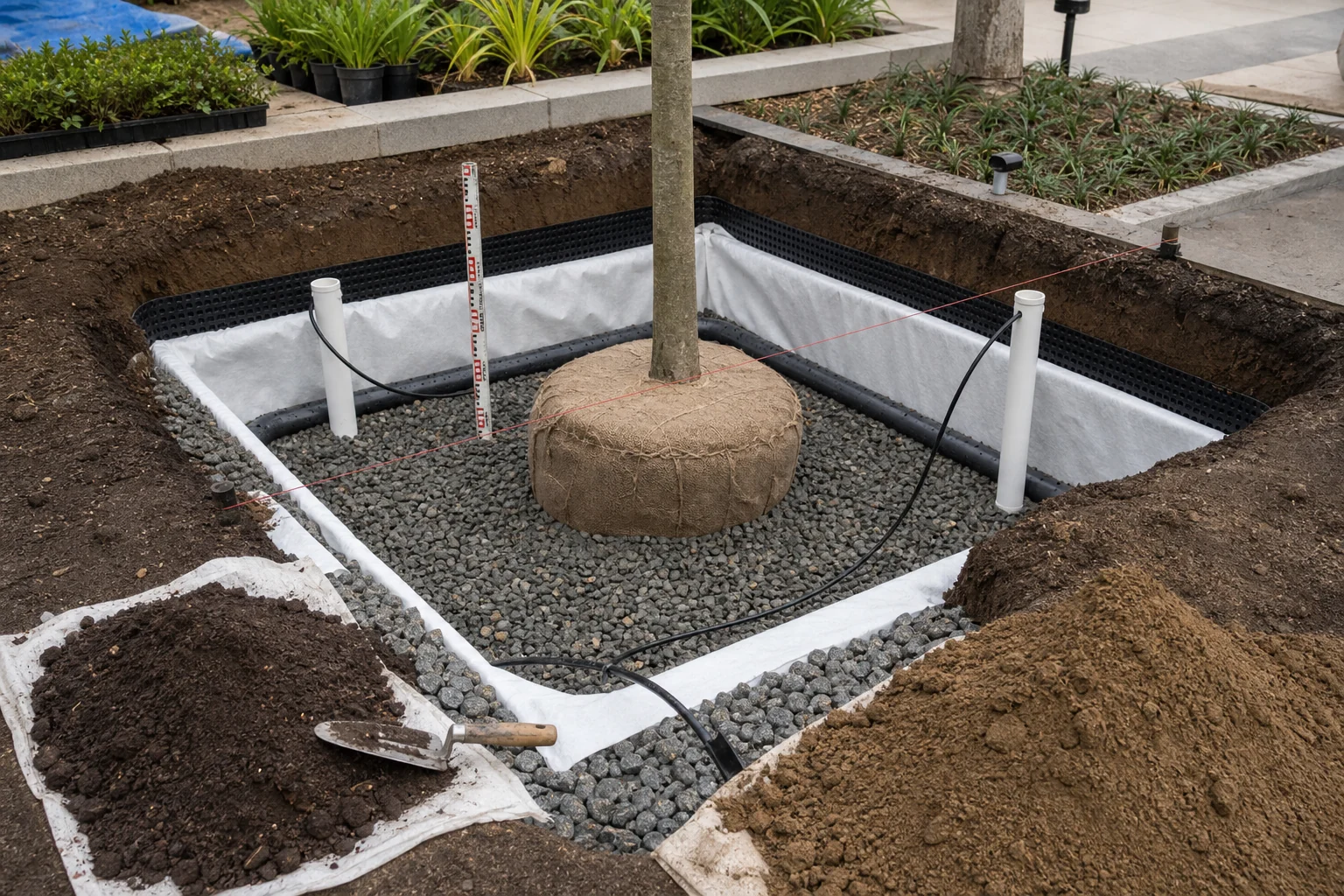
Engineered pits, soil media, drainage interfaces, lifting plans, and bracing for tall specimens — the scope item that protects maturity investment.
Gallery
Specimen visual guide
Visual context for placement, scale, handling, and landscape integration.
Section
Pit and soil media
Match pit volume to rootball, specify engineered backfill, and integrate podium or terrace drainage membranes where applicable.
Section
Bracing and wind
Height and crown spread drive bracing type, duration, and inspection points — especially for palms and narrow fastigiate forms.
Section
Irrigation establishment
Temporary and permanent irrigation must be commissioned before handover; tie to the project irrigation package for 12–24 month establishment.
Related
Related links
Services, segments, cost, and proof.
- Softscape & horticulture
- Irrigation & water management
- Landscape maintenance (AMC)
- Hotel & resort landscaping
- Luxury resort & spa landscaping
- Mall & retail landscaping
- Corporate campus landscaping
- Projects
- Commercial landscaping cost guide
- Pricing drivers (imported trees)
- Import compliance workflow
- Request a site assessment
- What pit and soil-media basics apply to mature tree installs?
- Engineered pit volume, drainage layer, and soil interface matching rootball porosity — not backfill from random site spoil.
- What drives bracing type and duration?
- Height, crown mass, wind exposure, and rootball stability — bracing milestones should be written with removal dates, not permanent stakes.
- How do podium and terrace installs differ from ground planting?
- Structural waterproofing, load limits, and drain paths are architectural deliverables — tree scope assumes accepted slab interfaces before plant arrival.
- Should irrigation be commissioned before handover?
- Yes — establishment cannot be signed off on dry or flooded zones; commissioning records belong in handover pack.
- When is soil engineering outside standard landscape scope?
- Large specimens on poor native soil, podium fills, or clay with monsoon ponding need geotech-informed media — flag early in design development.