
Bay laurel topiary
Bay laurel topiary (Laurus nobilis)
Laurus nobilis topiary delivers aromatic evergreen balls, standards, and pyramids for kitchen gardens and Mediterranean villa entries — leaves usable in culinary plantings when policy allows. It tolerates moderate Indian heat but collapses in waterlogged monsoon pits; scale and sooty mould follow stress.
Spec
At a glance
- Species
- Laurus nobilis
- Family
- Lauraceae
- Origin
- Mediterranean
- Available trained forms
- Ball, standard, pyramid, lollipop
- Foliage
- Aromatic glossy evergreen leaves
- Size range available
- 50 cm balls to 3 m standards [Unverified]
- Growth rate
- Moderate — buy large forms for instant presence
- Clipping frequency / AMC
- Every 5–6 weeks in growth for formal lines
- Light
- Full sun to partial shade
- Water
- Moderate — hates waterlogging
- India climate suitability
- Good in dry-moderate belts with drainage; struggles in wet clay
- Indoor / outdoor
- Outdoor; pots on sunny terraces
- Drainage
- Mandatory sharp drainage — crown rot in wet soils
- Cautions
- Scale and sooty mould; dislikes waterlogging
Supply
Latest import activity
- Imported on
- 21 Jun 2026
- Source
- Tall Tree Nursery EU (sample)
- Availability
- On request
- Lot
- Laurus nobilis — cloud-pruned topiary
Gallery
Specimen visual guide
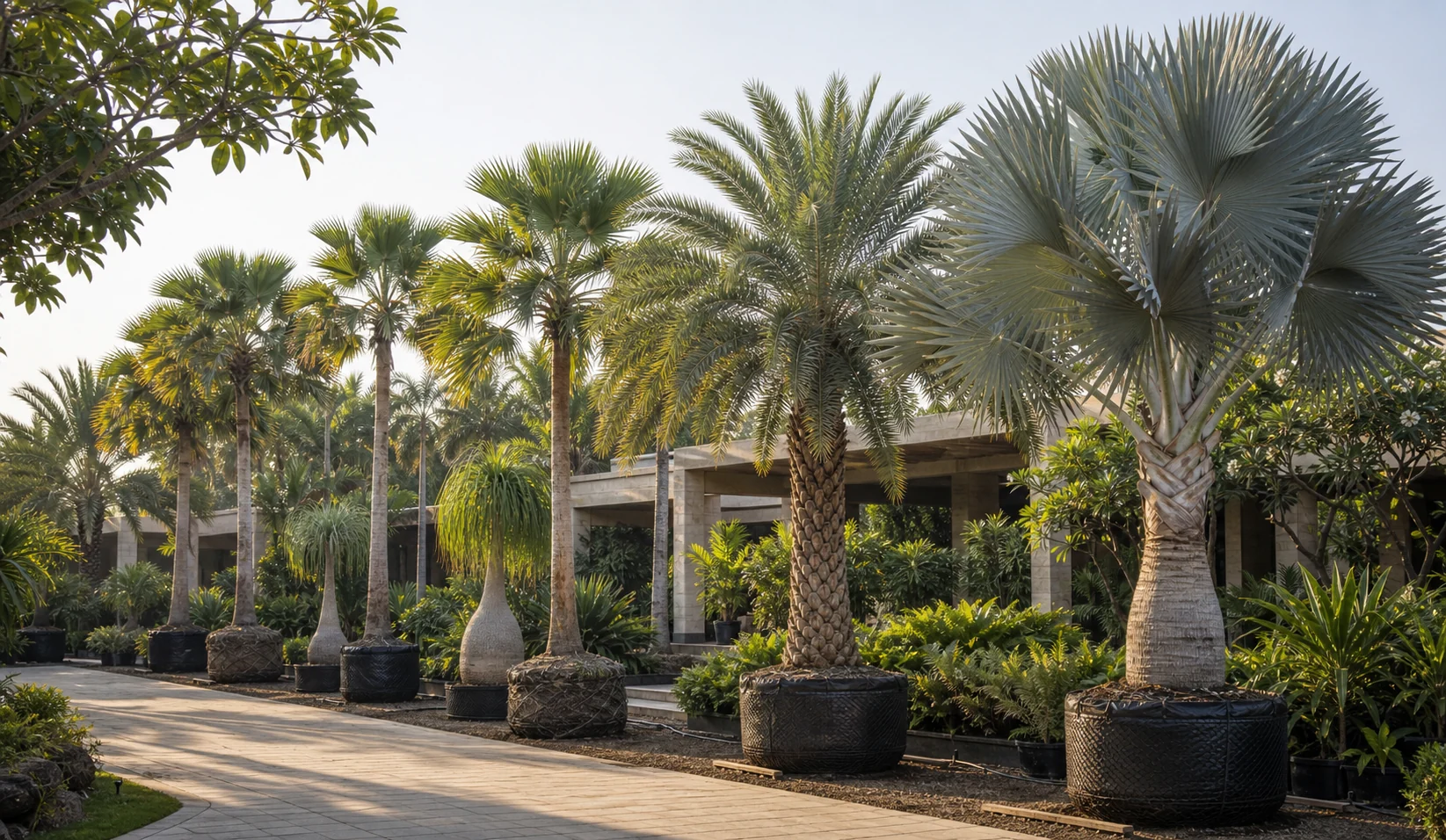
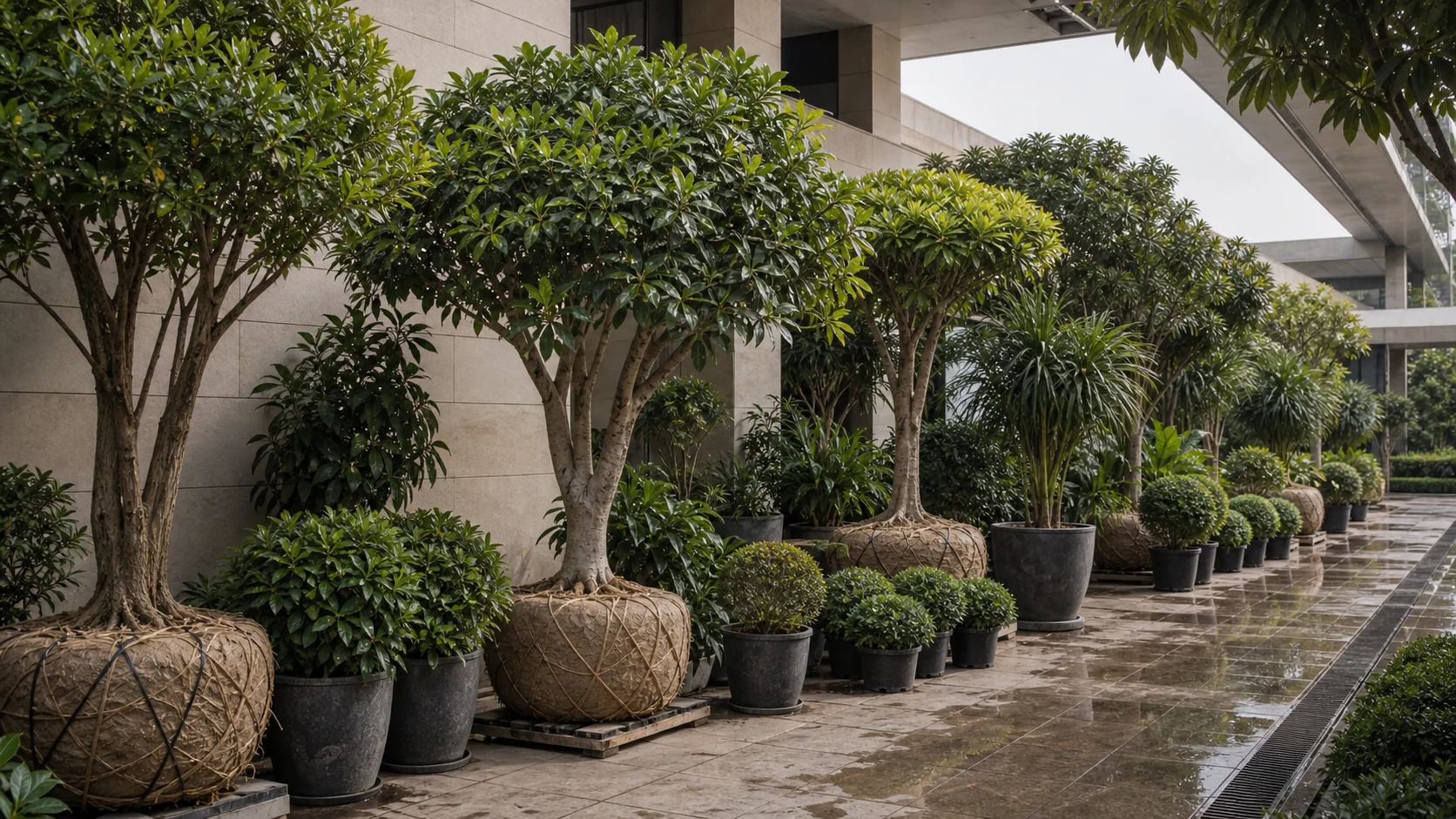
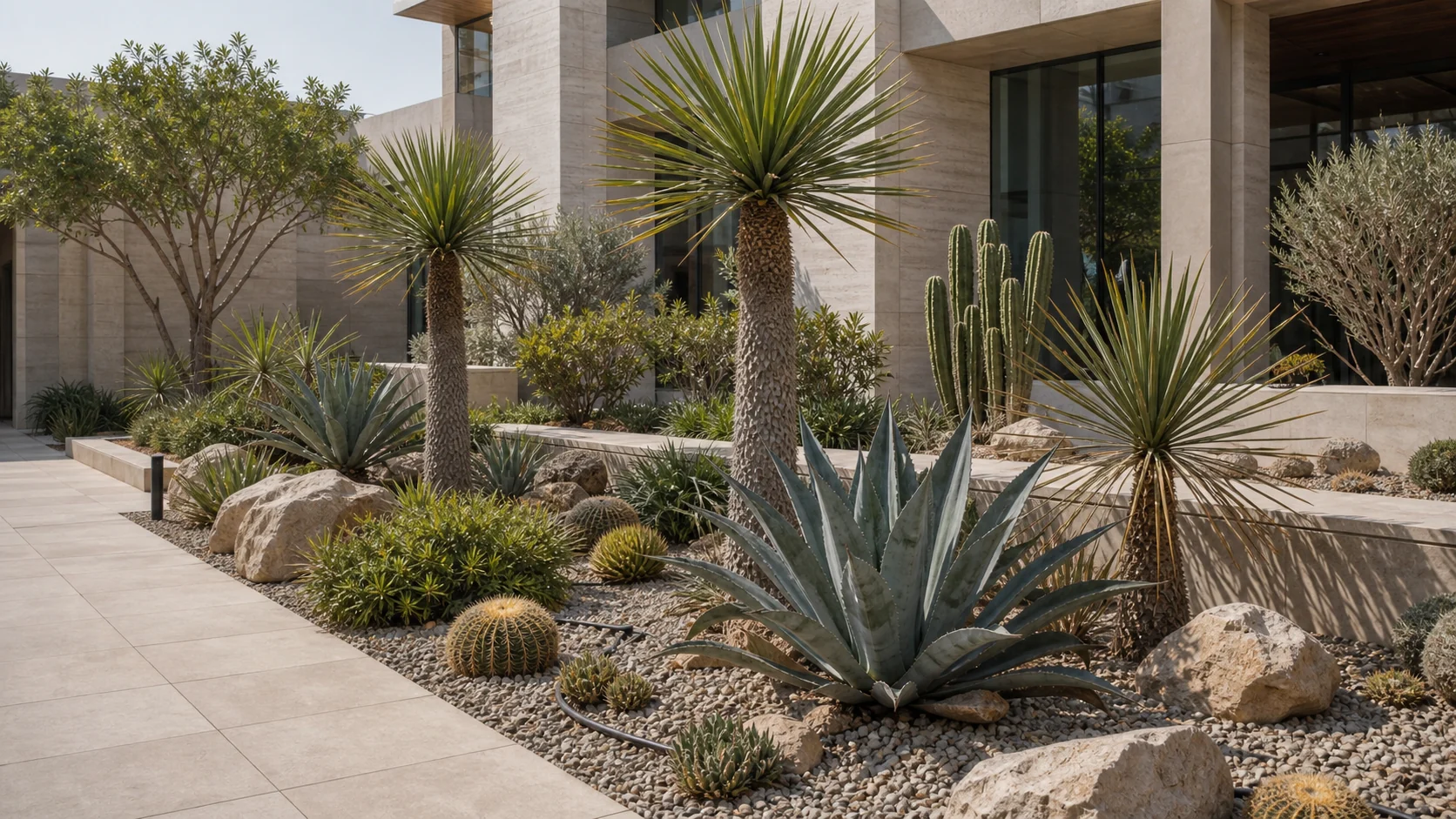
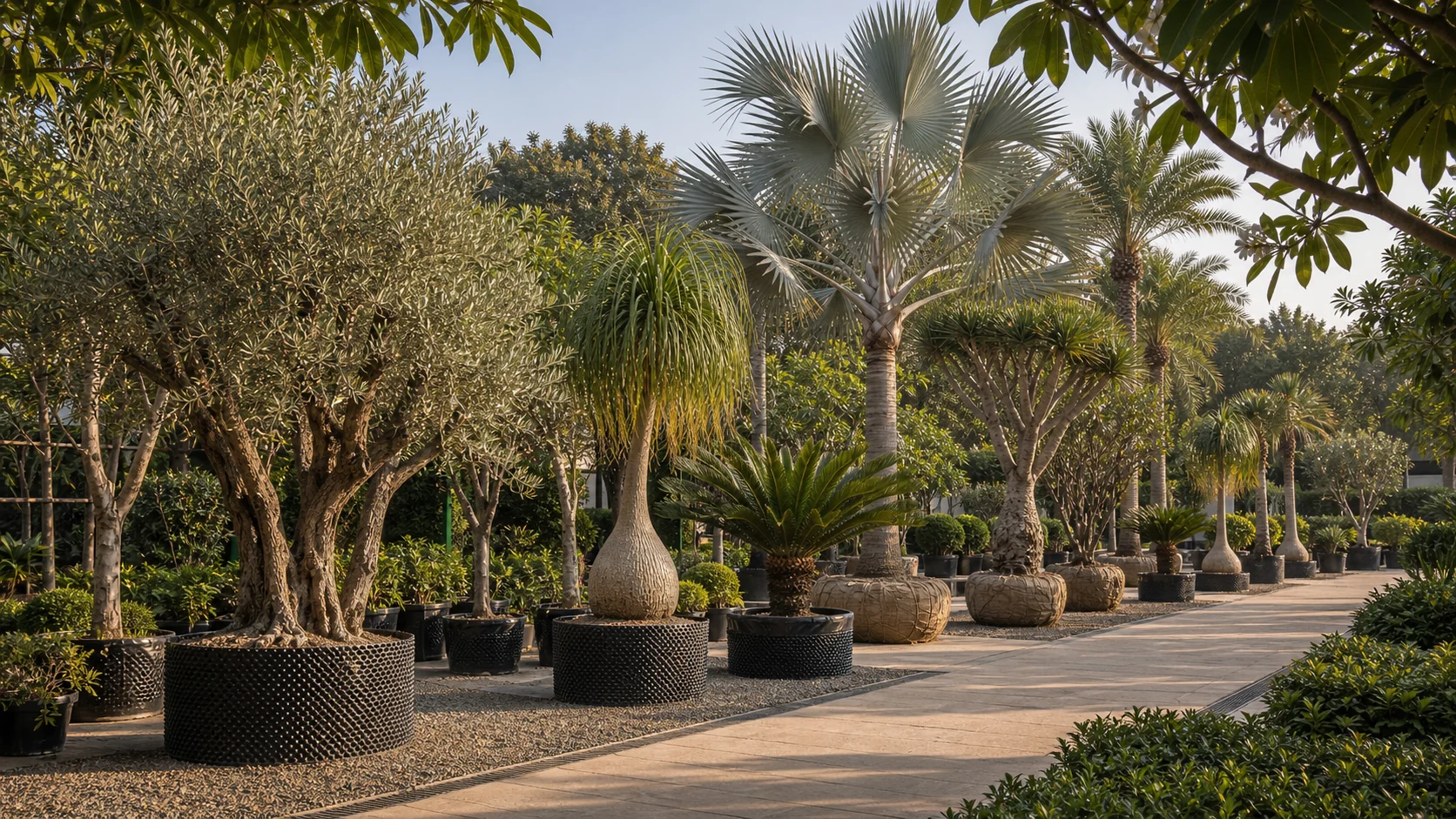
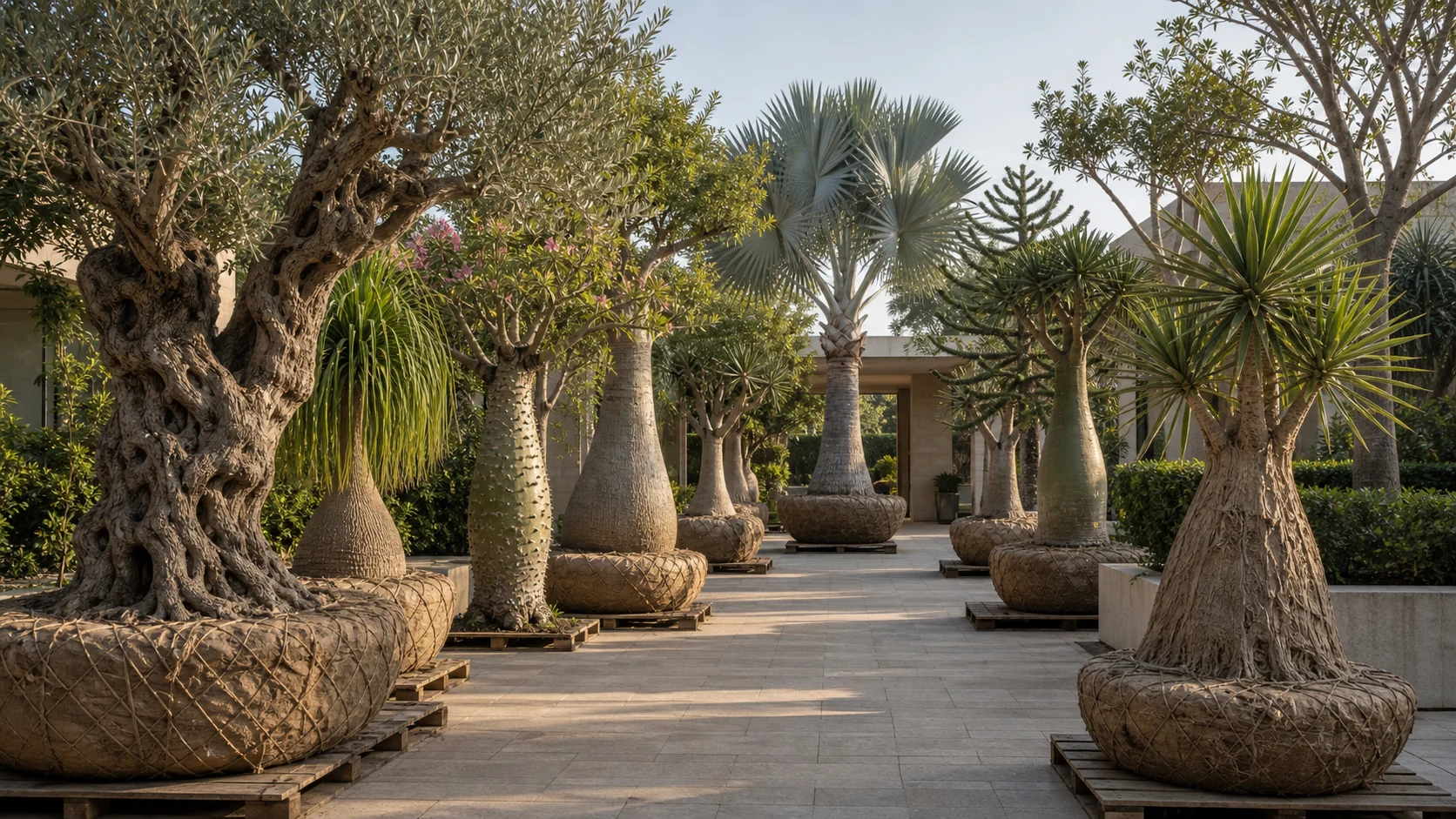
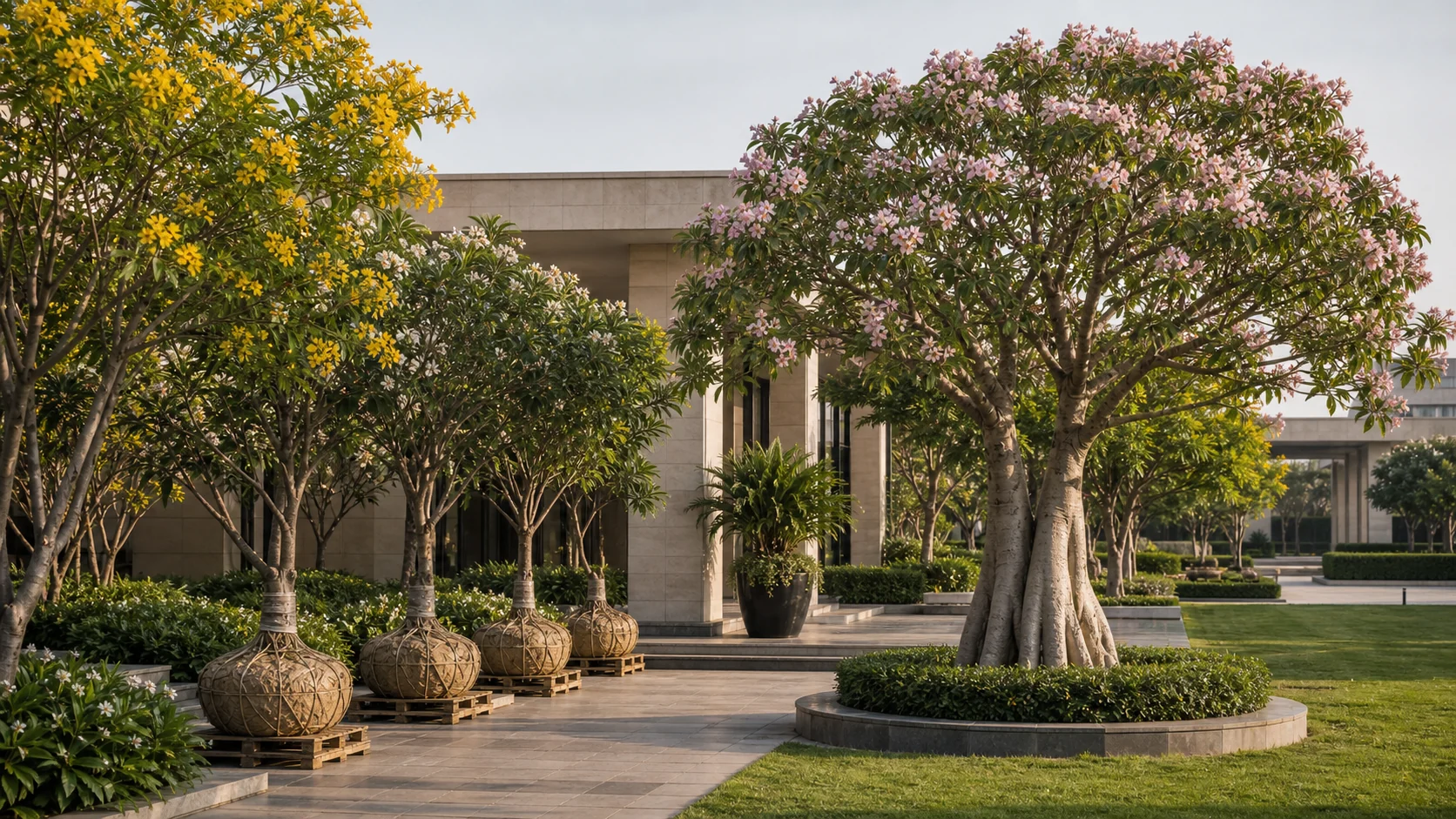
Visual context for placement, scale, handling, and landscape integration.
Section
Where it's used in premium projects
Bay standards flank herb garden entries and winery tasting terraces — aromatic story sells the specimen. Balls repeat along raised stone planters where drainage is guaranteed.
Section
Climate & site suitability in India
Moderate heat OK with irrigation; monsoon clay without mounds kills crowns. Coastal humidity increases scale — monitor undersides. Hill frost rare in tropics but browns tips — clip out in spring.
Section
Sourcing & acclimatisation
Specify standard trunk height and ball diameter — aromatic trade sometimes ships thinner standards. [Unverified: India pot-grown vs imported Mediterranean stock.]
Section
Installation (containers, anchoring, drainage)
Mounded gritty loam; crown above grade. Pots need large volume for tall standards — root-bound bays drop leaves. Keep away from salty marine gale unless rinsed.
Section
Establishment & AMC (clipping rhythm)
Clip after new flush hardens; culinary harvest removes clip surface — schedule harvest before guest events. Oil for scale per label; fix drainage before fungicide sprays for sooty mould.
Section
Cost drivers
Explore
Related
Related
Related links
Services, segments, cost, and proof.
- Softscape & horticulture
- Irrigation & water management
- Landscape maintenance (AMC)
- Hotel & resort landscaping
- Luxury resort & spa landscaping
- Mall & retail landscaping
- Corporate campus landscaping
- Projects
- Commercial landscaping cost guide
- Pricing drivers (imported trees)
- Import compliance workflow
- Request a site assessment
- What topiary forms suit bay laurel?
- Balls, standards, pyramids, and lollipops — aromatic foliage is a bonus for kitchen-adjacent plantings.
- Are bay leaves usable from topiary plants?
- Yes where policy allows culinary harvest — schedule harvest before events because clipping removes formal surface.
- Does bay tolerate Indian summer heat?
- Moderate heat with irrigation works; waterlogged monsoon soil is the common failure, not temperature alone.
- Why does sooty mould appear on bay?
- Often follows scale honeydew — treat scale and improve airflow; fix overwatering stress first.
- Can bay standards live in pots on terraces?
- Yes with large pots, sun, and drainage — root-bound pots cause leaf drop and thin heads.
- What import steps apply to bay topiary?
- Live imports need phytosanitary certificates and quarantine inspection (informational, not legal advice).
- How should bay topiary BOQs be compared?
- Match trunk height, ball diameter, pot volume, and clip/harvest AMC calendar.