
Ahmedabad
Imported specimen trees in Ahmedabad
Ahmedabad’s arid heat and dust exposure suit many desert-adapted and Mediterranean specimen taxa when irrigation establishment is engineered — architectural olives and statement palms anchor Gujarat hospitality and estate arrivals if monsoon drainage and wind planning are in the BOQ. Short monsoon bursts still test pit drainage on podium sites — dry-climate marketing does not remove overflow engineering from specimen BOQs on SG Highway, GIFT City, and Gandhinagar corridors where over-irrigation after handover kills more stock than daytime heat.
Gallery
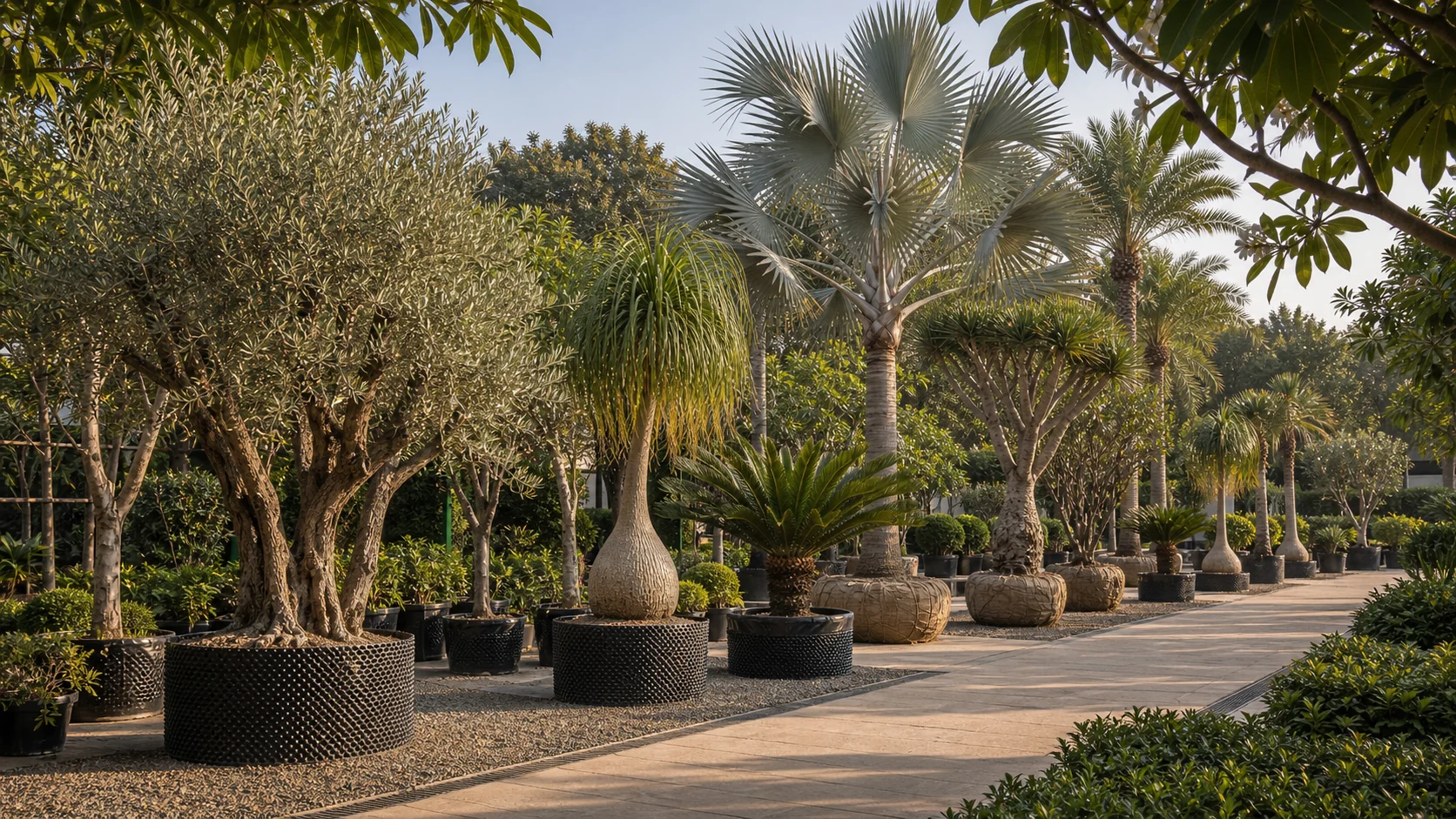
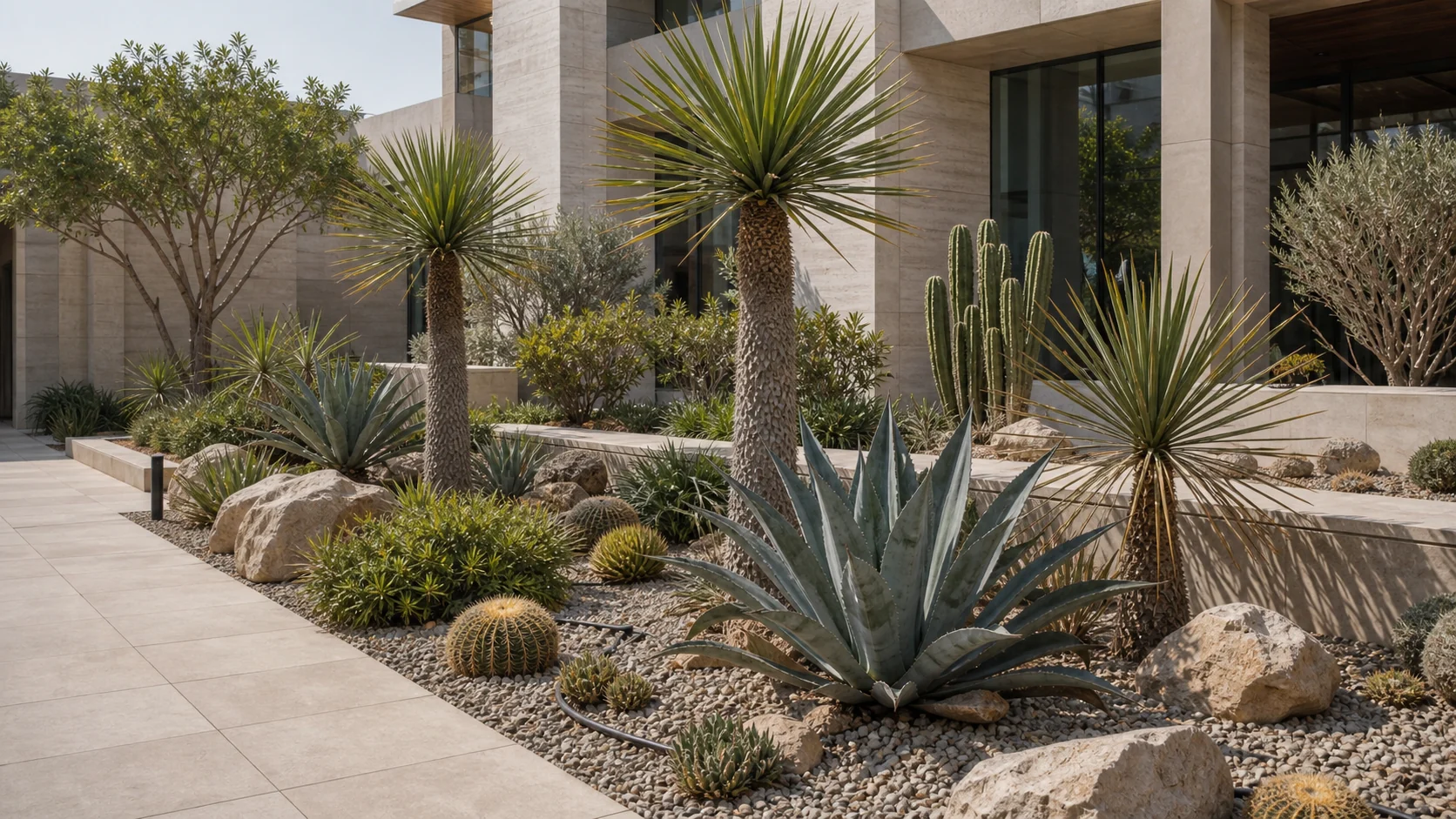
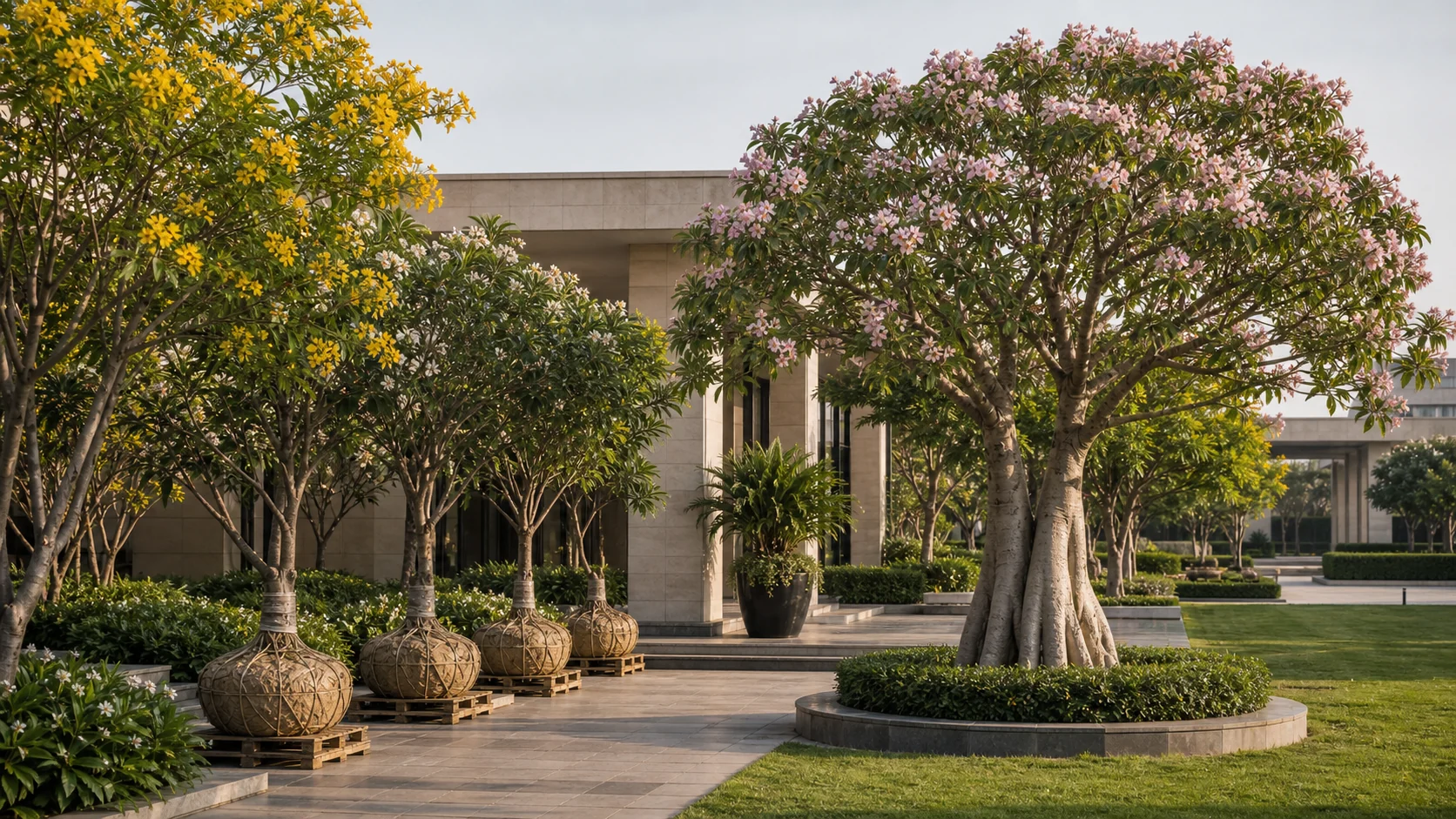
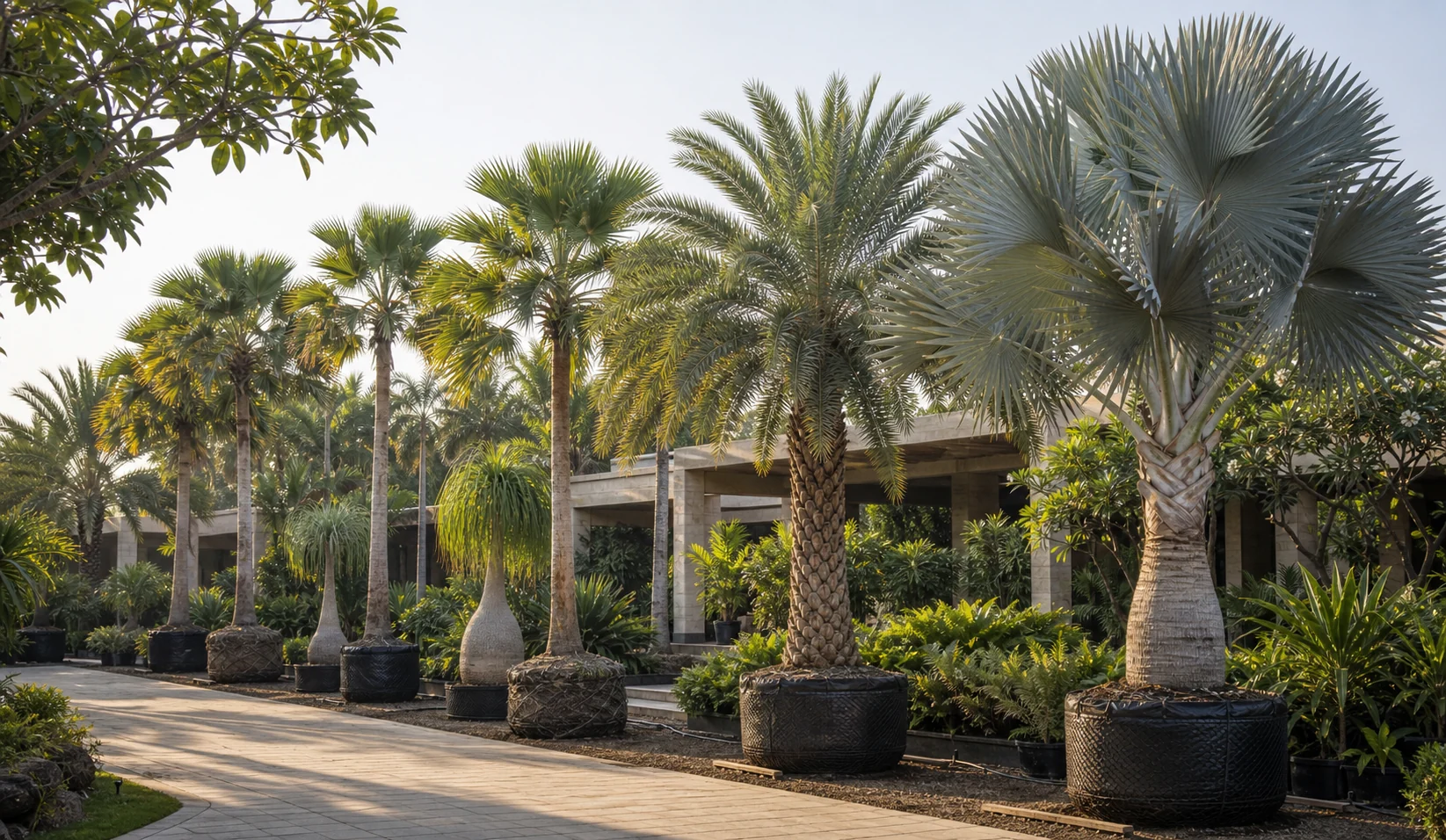
Specimen visual guide
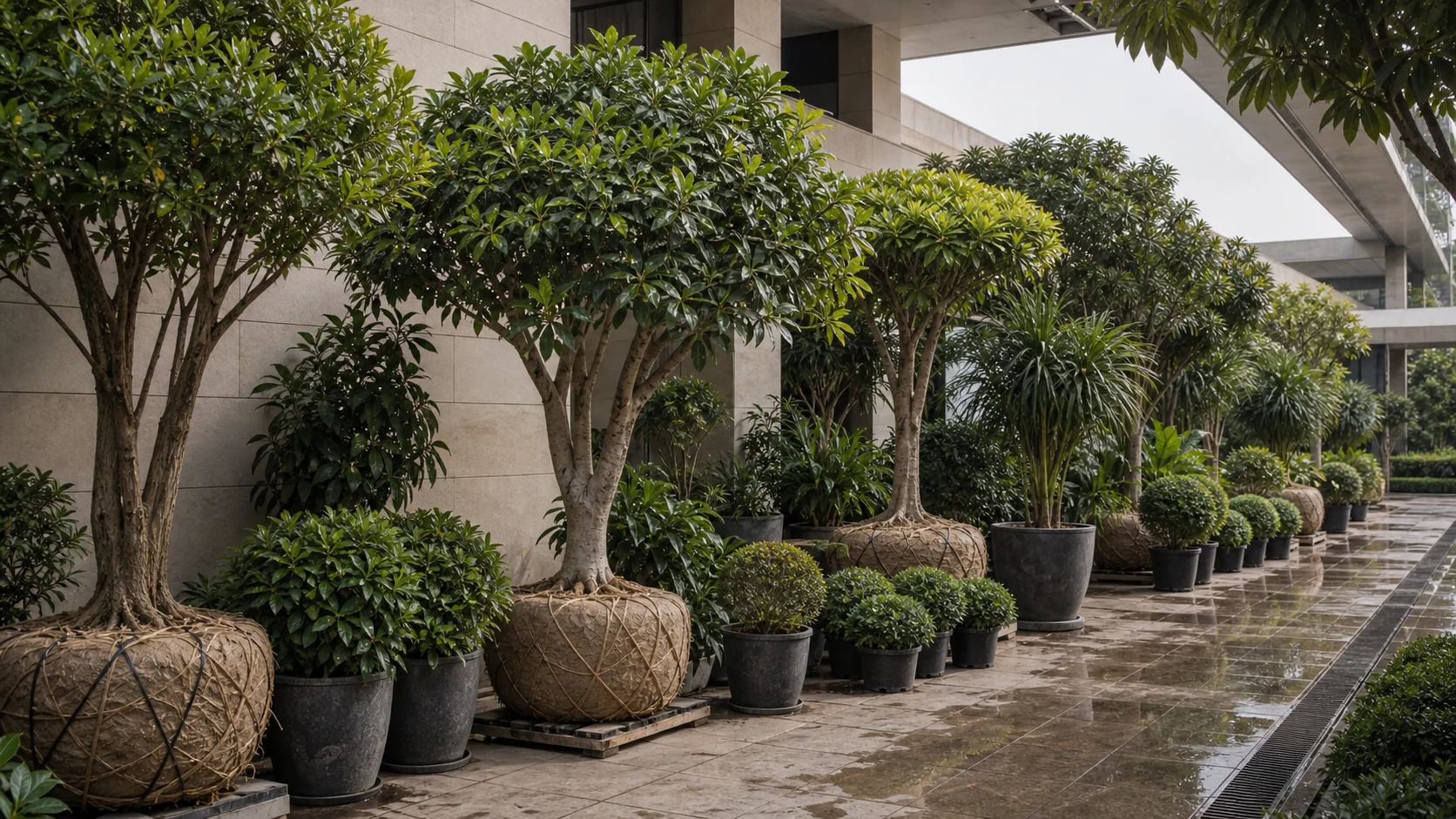
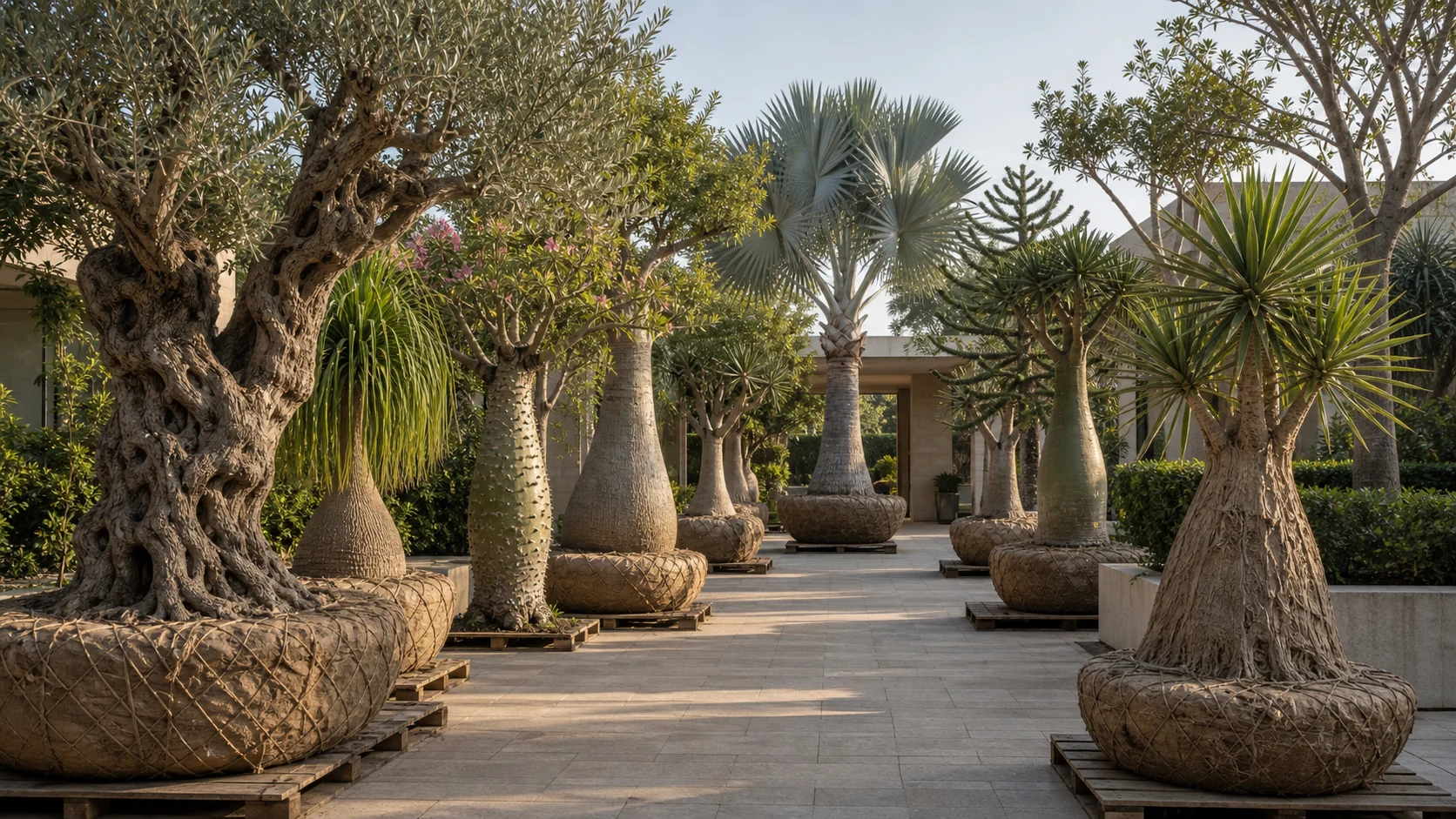
Visual context for placement, scale, handling, and landscape integration.
Section
Arid heat, dust, and seasonal monsoon
Summer heat is intense and dry on open plazas — establishment irrigation must be commissioned before marketing photography on new hospitality assets. Short monsoon bursts still test pit drainage on podium and clay sites; overflow cannot be assumed away because the climate is marketed as dry. Dust from adjoining construction coats foliage on arterial corridors — wash cadence belongs in AMC near arrivals. Wind on open SG Highway and Gandhinagar parcels influences bracing on tall palms. Winter nights are milder than north India but microclimate still varies between riverfront humidity pockets and dry west plots. Sabarmati riverfront and central-corridor parcels may carry higher humidity than dry west plots — species fit should reflect block exposure, not Gujarat-wide assumptions from arid marketing copy. GIFT City institutional campuses add height and security coordination on tall specimens — crane paths and escorted oversize moves should be written before species lock on mature fan palms exceeding default porte-cochère clearances.
Section
Logistics on corridor and estate sites
Expressway and ring-road corridors mix oversize transport with live hotel and corporate operations. Estate and villa plots on periphery need crane paths across finished drives — protection in BOQ. Security on corporate and institutional campuses gates inductions. Crown spread on fan palms and olives exceeds many porte-cochère assumptions — survey before freeze. GIFT City and Gandhinagar institutional campuses add security and height coordination on tall specimens — crane paths and escorted oversize moves should be sequenced before BOQ freeze on mature rootballs that cannot wait for ad-hoc access approvals after civil handover on occupied hospitality and corporate assets.
Section
Hospitality, corporate, and estate demand
Hospitality along airport and SG Highway corridors specifies Mediterranean and desert statements at arrival and pool decks. Corporate campuses in GIFT City and Gandhinagar use architectural scale at lobby approaches. Developer clubhouses and villa sales plots want day-one maturity — establishment windows must be honest. Institutional campuses need circulation clearance on mature specimens. Luxury estate and villa plots on periphery corridors repeat sales-gallery maturity targets — BOQ should separate specimen engineering from mass softscape so value-engineering does not strip drainage build or establishment visits before handover photography. Procurement on arid Gujarat sites should compare supplier BOQs on dust-wash cadence, monsoon overflow build, and bore-water emitter specification rather than headline per-tree figures from public press category examples.
Section
Desert, olive, and palm palettes
Desert and succulent trees align with arid heat when monsoon pits drain — over-irrigation is the primary killer. Gnarled olives suit many Gujarat sites with sun and drainage — public press has cited high-value olive transplants in the region as category examples, not Four Leaf rates. Palms on wide arrivals need bracing and litter scope near pools. Topiary and formal evergreens on hotel axes with clipping AMC. Flowering specimens where seasonal drop is accepted. Avoid humid-coast species assumptions on dry plots without irrigation governance. Category hubs group desert, olive, and palm taxa by use case; each species page states monsoon drainage and dust exposure failure modes for arid Gujarat microclimates on SG Highway and GIFT City hospitality forecourts.
Section
Irrigation establishment and pit engineering
Bore water chemistry varies — test before emitter lock. Pits on engineered fill need geotech-aligned media. Acclimatisation in open sun preserves crown form. Bracing until anchor metrics met on tall specimens. Monsoon overflow tied to civil storm — even arid cities get wet feet in undrained pits. Podium waterproofing witness before soil fill is routine on fast-track towers — pit interfaces with structural drawings should be validated before dig, not improvised on crane day when landscape scope trails civil completion on SG Highway and GIFT City hospitality programmes.
Section
AMC in dry climate operations
Dry-season bands versus monsoon profiles on controllers. Dust wash on arrival foliage where specified. Litter and frond management near guest paths. Pest monitoring per species notes. Replacement boundaries on large transplants defined pre-install. FM handover with valve charts and escalation paths. Establishment visits should taper against measurable anchor and moisture metrics — not end arbitrarily at possession when summer heat or monsoon saturation still threaten fresh transplants on poorly monitored irrigation schedules. Snagging ties to approved planting plans; variations log against drawing revision so estate and hospitality FM teams inherit accurate seasonal controller profiles for arid Gujarat microclimates.
Section
Mobilisation and enquiry
Four Leaf scopes Ahmedabad programmes from site assessment with pan-India mobilisation per contract. Roster references do not confirm specimen availability without walk. Request a site assessment for species, drainage, and access alignment. Share handover date, bore-water chemistry, and estate or campus security rules so crane sequencing and acclimatisation hold can be planned against monsoon calendars rather than optimistic sales-gallery photography deadlines on SG Highway and GIFT City hospitality programmes.
Section
Procurement and pricing
Explore
Related
Related
Related links
Services, segments, cost, and proof.
- Why is Ahmedabad strong for desert and olive specimens?
- Dry heat and sun suit many taxa when drainage and irrigation are engineered — monsoon waterlogging still fails drought-marketed stock. Compare BOQs on pit scope, overflow ties to storm design, and establishment visits rather than headline per-tree figures from press examples.
- How should dust be managed on arrival specimens?
- Foliage wash cadence near entries can sit in AMC — emitter placement should limit crown disease from overspray. Dust from adjoining construction on arterial corridors may require seasonal wash frequency distinct from humid-coast AMC assumptions copied from other city briefs.
- Which palms suit Gujarat hotel forecourts?
- Shortlist by crown spread, litter, and wind on species pages — bracing scope on open plazas. Include pit and drain build, acclimatisation hold, and litter scope near pool decks so supplier comparisons reflect engineered install on hospitality forecourts.
- Do olives need special drainage in Ahmedabad?
- Free-draining pits and controlled irrigation — fruit and paving decisions before material lock. Gnarled olives on Gujarat hospitality sites need acclimatisation hold and dust-wash cadence in AMC near arrivals where adjoining construction coats silver foliage during dry-season establishment bands.
- Can humid-coast species be copied to Ahmedabad?
- Only with honest species-page review — dry plots punish wrong humidity assumptions even without coastal salt. Desert and olive palettes align with arid heat when monsoon pits drain and irrigation caps sit in AMC after handover — over-irrigation kills more established specimens than daytime heat on SG Highway hospitality forecourts.
- What import docs apply to mature olives?
- Live-plant paperwork per consignment — informational checklist on compliance page; not legal advice. Procurement should request paperwork per shipment and align review to crane schedule on GIFT City and estate programmes before regulated consignments reach site.
- How does Four Leaf mobilise to Ahmedabad?
- Site assessment first; logistics per contract — pan-India execution without implied local stock.
- How should Ahmedabad estate projects specify desert and olive specimens?
- Line-item pit engineering with monsoon overflow, bore-water chemistry tests before emitter lock, acclimatisation hold in open sun, and AMC scope naming dust wash and irrigation caps after handover. Maturity class and provenance documentation drive cost more than moderate growth rate — compare BOQs on crane scope and establishment visits, not headline figures from public press category examples cited as journalism context only on SG Highway estate programmes.