
Cycads & Cycas
Cycads & Cycas
Cycads/Cycas are planned for their distinctive form and long-life presence. For procurement, the focus should be on fit to site conditions, stable installation interfaces, and structured early-stage care so the tree’s shape and health remain intact.
Gallery
Category visual guide
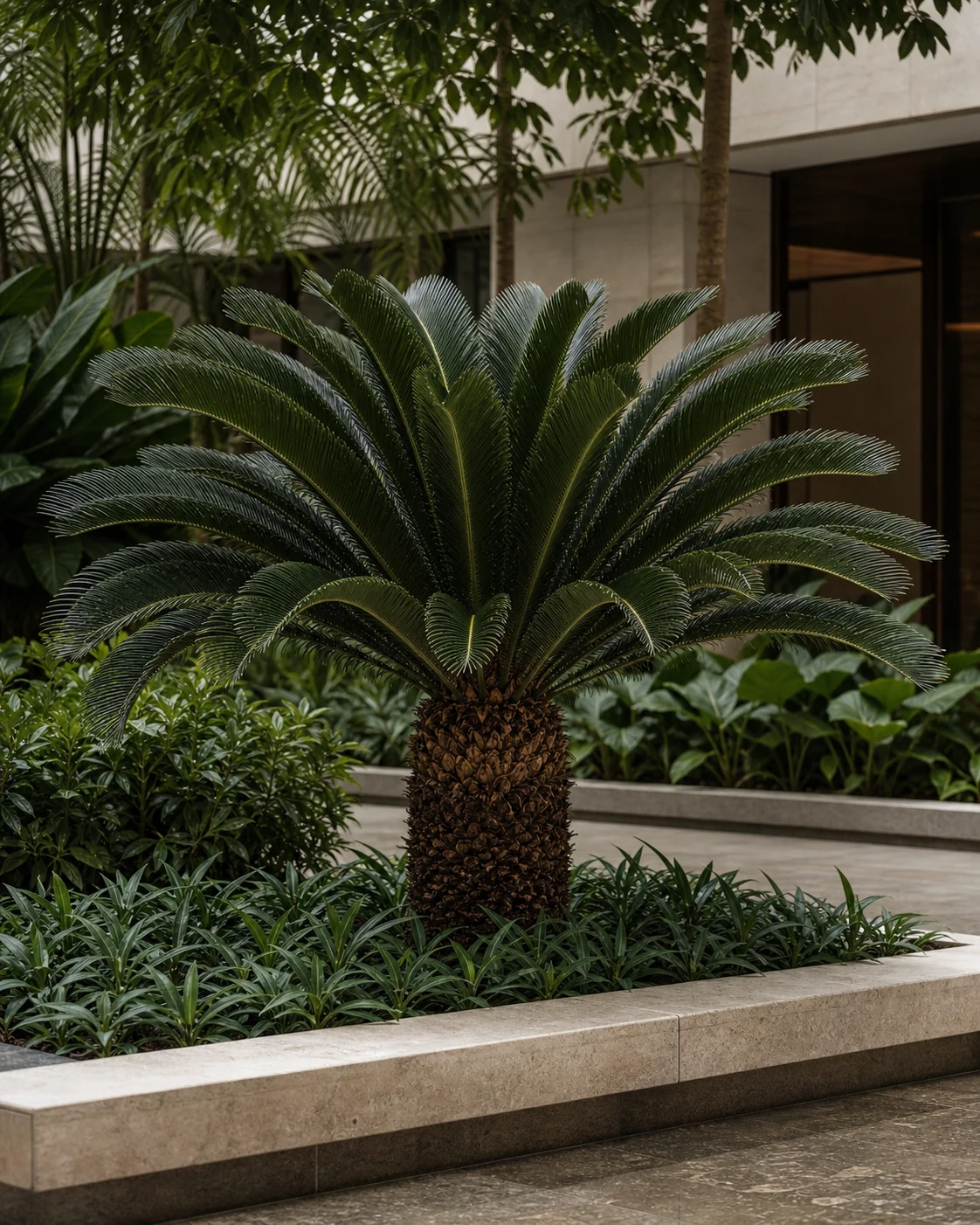
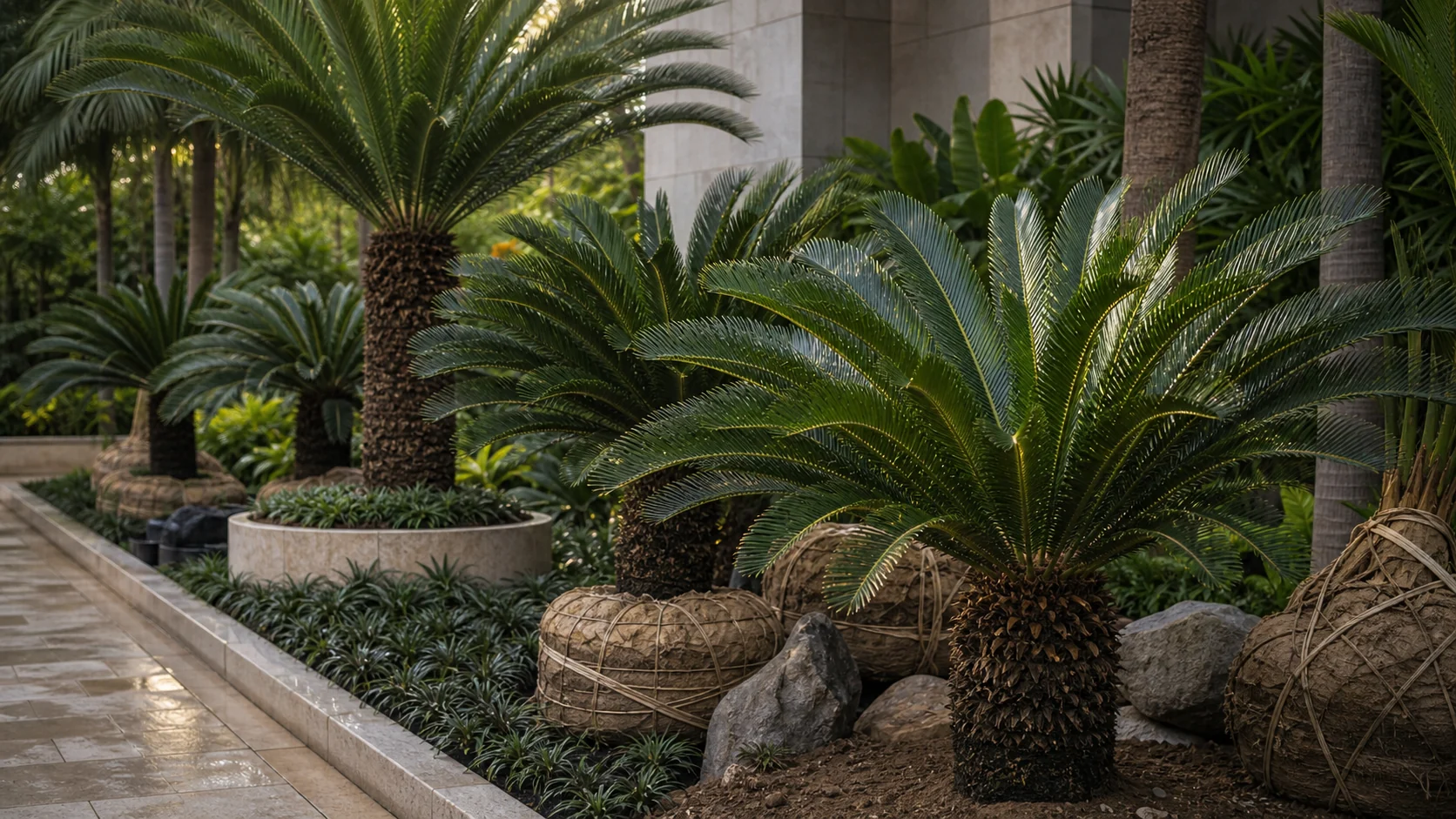
Visual context for placement, scale, handling, and landscape integration.
Section
Planning around installation interfaces
Mature cycads are sensitive to handling and planting depth. Your installation plan should define the pit/soil interface, drainage approach, and the inspection checkpoints that confirm acceptance criteria before close-in.
Section
Establishment care and maintenance scope
Establishment care should include monitoring, routine care boundaries, and clear escalation rules. Aftercare/AMC scope should be documented so facility teams know what is routine versus what becomes a replacement discussion.
Section
Why cycads are specified (form & longevity)
Cycads sell a fossil silhouette — symmetrical crowns, stout caudexes, and decades of presence without the litter of broadleaf shade trees. Hotels and estates use them as formal sentinels flanking arrivals and courts where palms would read tropical but designers want sculptural restraint.
Section
Toxicity & CITES sourcing in India
All cycads are toxic, especially seeds — programme away from children, pets, and foraging zones. Many genera face international trade controls; procurement should collect species ID, nursery provenance, and export documentation before funds release. [Unverified] Typical India clearance duration by origin. This section is informational, not legal advice — qualified quarantine counsel interprets transactions.
Entries
In this category
Explore
Related categories
Related
Related links
Services, segments, cost, and proof.
- Are cycads toxic to pets and children?
- Yes — all parts are toxic, seeds especially (e.g. sago palm). Specify away from playgrounds, pet zones, and edible gardens; maintenance PPE for seed/fruit handling.
- What CITES and legal import documentation should procurement request?
- Many cycads face international trade controls — request species ID, nursery provenance, and export paperwork before payment. [Unverified] India clearance timelines vary by origin. Informational only, not legal advice.
- Why does extreme slowness make cycads costly at size?
- Height and caudex diameter are bought from years of field growth — small plants read immature at hotel openings. Budget for size class, not hope.
- Why are planting depth and handling so sensitive?
- Buried caudexes rot; rough handling breaks roots on slow plants — specialist install teams and inspection before backfill are standard on mature cycad BOQs.
- How do Vietnam field-grown cycads differ from compact sago palms?
- Large pectinata-type imports read taller with longer leaflets; revoluta stays compact rosette — ID on tags must match owner expectations and toxicity protocols.