
Vietnam cycas (pectinata)
Vietnam cycas (Cycas pectinata)
The Vietnam cycas trade line is field-grown Southeast Asian stock identified here as Cycas pectinata — large caudex, arching longer leaflets than compact revoluta, sold for instant tropical gravitas. Slug remains cycas-vietnam for URL continuity; toxicity and CITES/legal sourcing are mandatory on every specification, with import paperwork verified before install.
Spec
At a glance
- Botanical name
- Cycas pectinata
- Family
- Cycadaceae
- Origin
- Vietnam / Southeast Asia — field-grown for export
- Type
- Cycad — large field specimen
- Trunk / form
- Tall woody caudex with terminal arching rosette — instant height at supply
- Leaf
- Longer, arching pinnate leaves vs compact revoluta — lighter green tone often
- Mature size
- Field plants often 2–4 m caudex at supply; very slow additional trunking
- Growth rate
- Very slow after install — size bought at purchase
- Light
- Bright light to full sun — avoid deep shade holding
- Water
- Moderate; caudex rot if waterlogged
- Drainage
- Raised gritty beds — essential for heavy caudex in monsoon
- India climate suitability
- Frost-free lowlands with drainage; not for waterlogged clay courts
- Hardiness
- Heat OK; protect caudex from cold wet on hills
- Toxicity
- All parts toxic — seeds and flour from stems historically dangerous — pets/children risk
- CITES / legal sourcing
- CITES applies — import documentation and legal provenance required [Unverified: per-shipment permit class]
- Typical supply size
- Large field-dug caudex by height/girth class [Unverified]
- Maintenance
- Old leaf strip; cone/seed removal; scale watch; legal doc file on site
- Cautions
- Toxic; CITES/legal sourcing; slow; verify species ID vs other imported Cycas
Gallery
Specimen visual guide
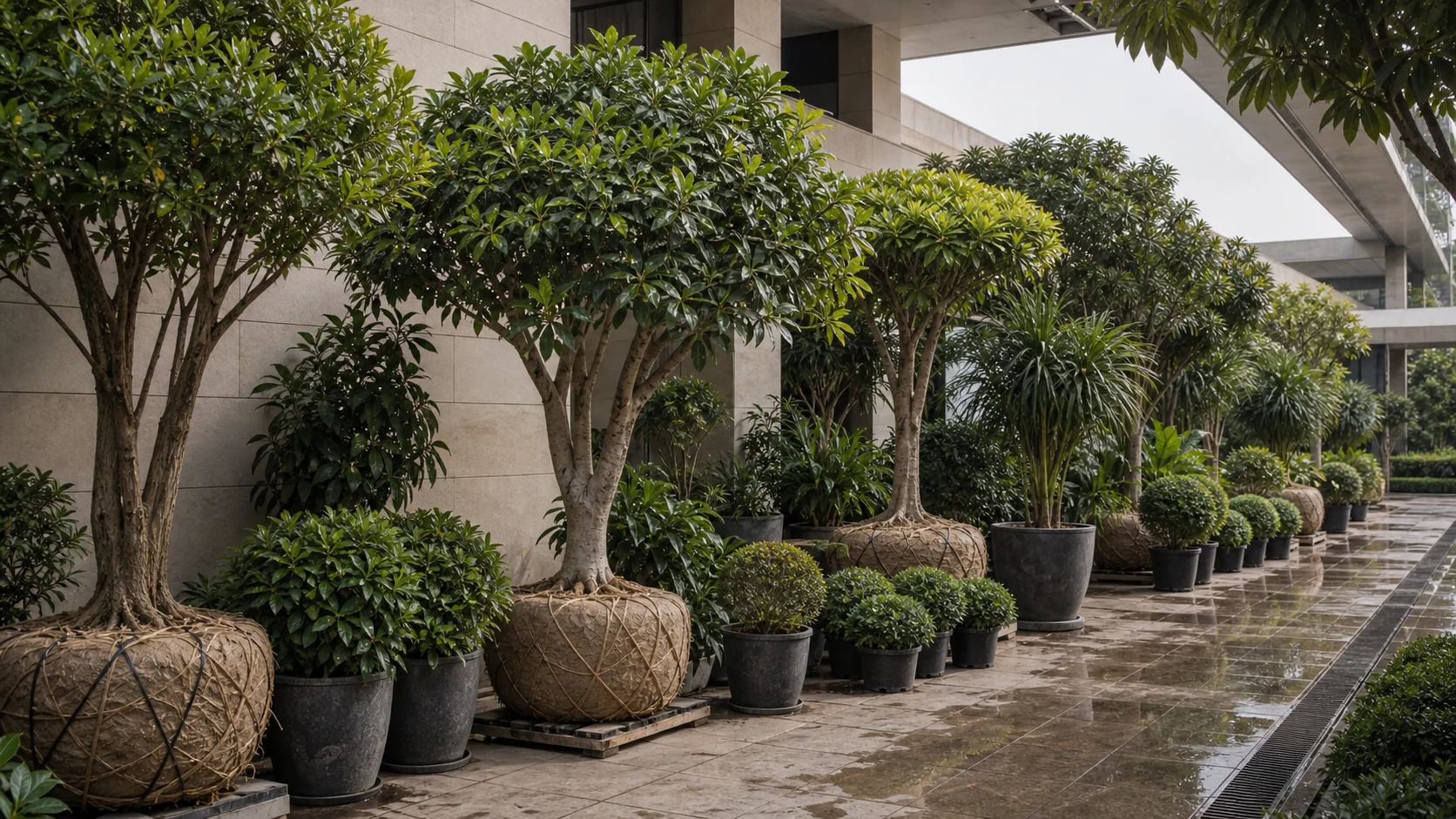
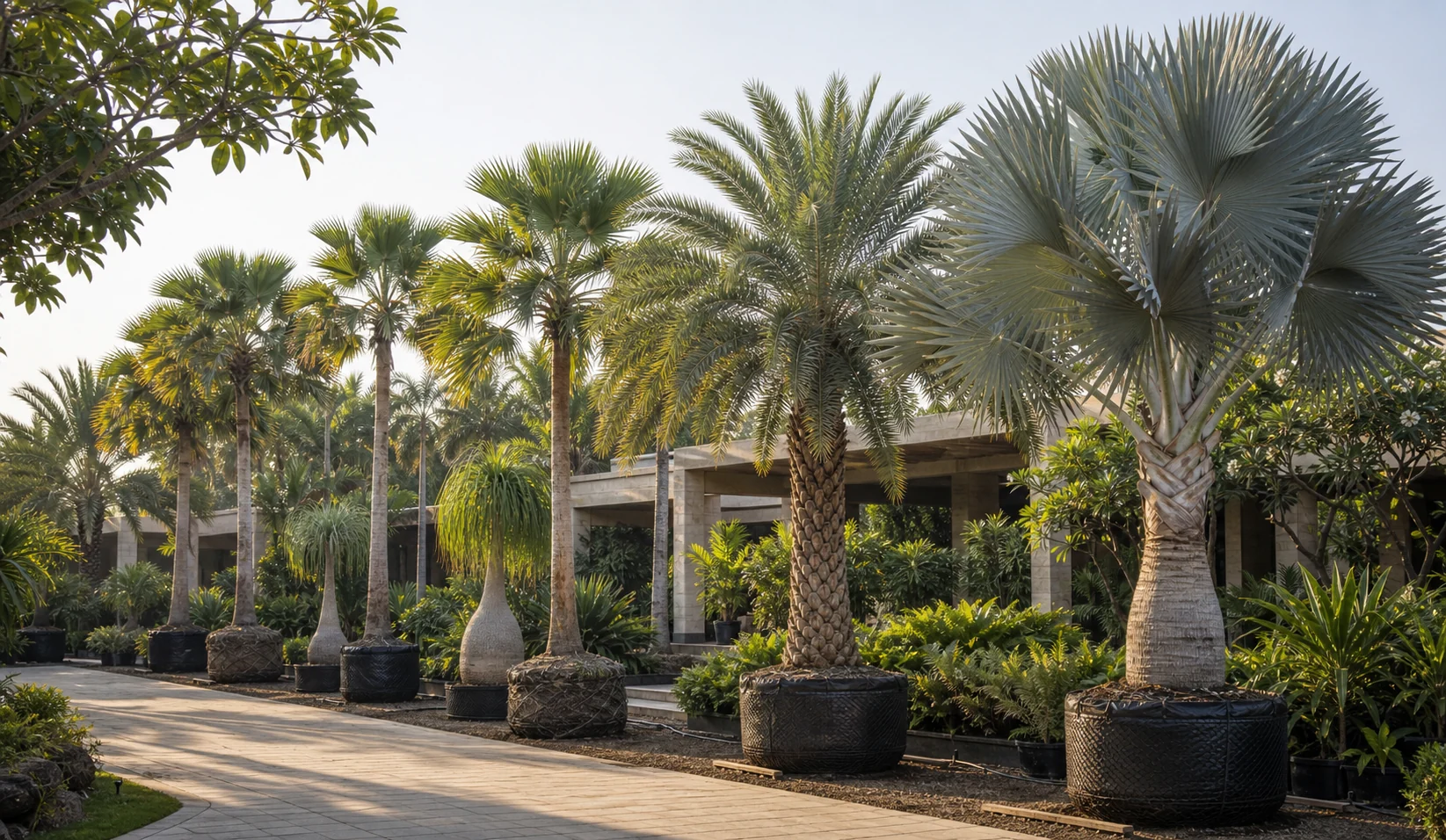
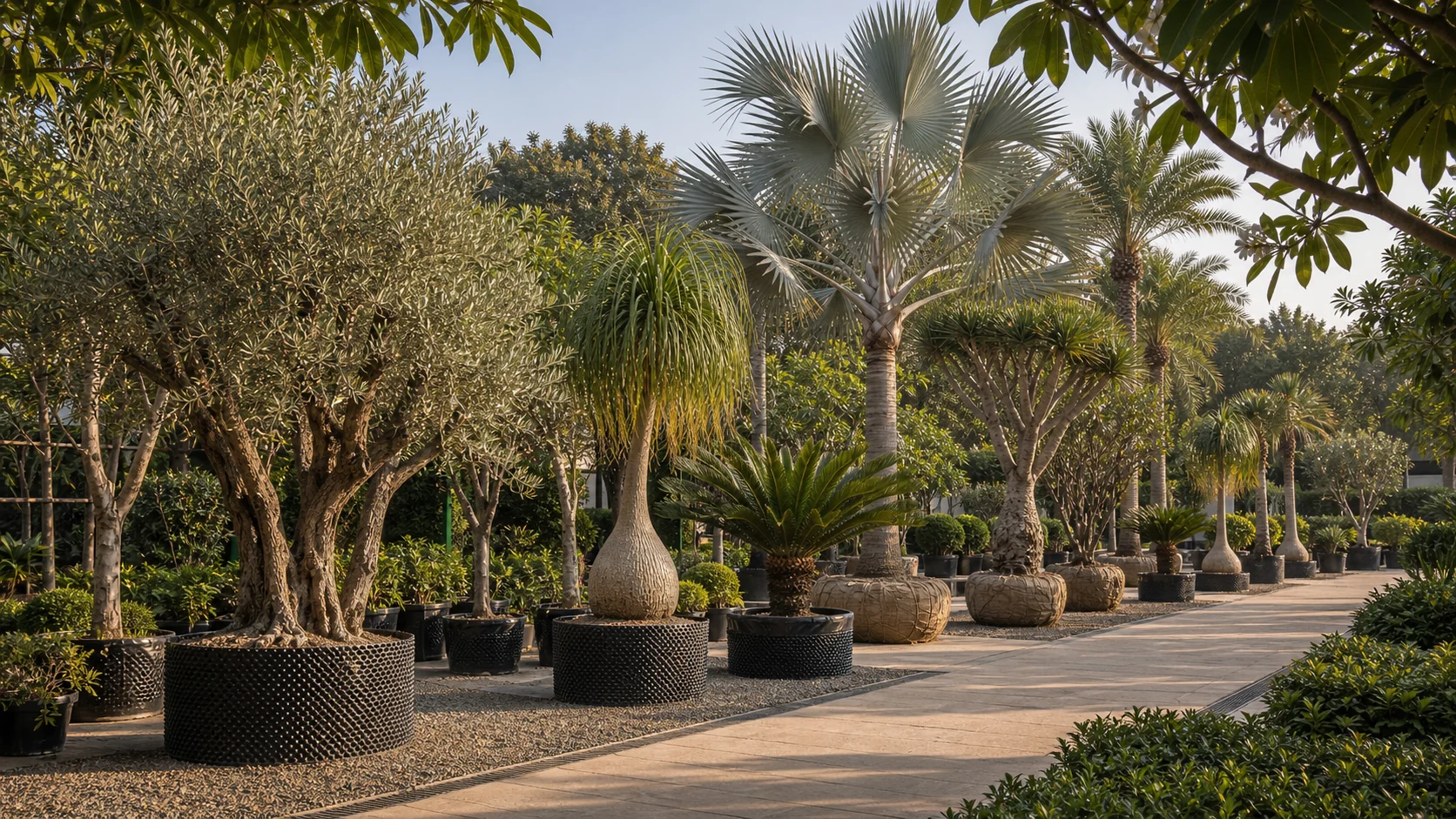
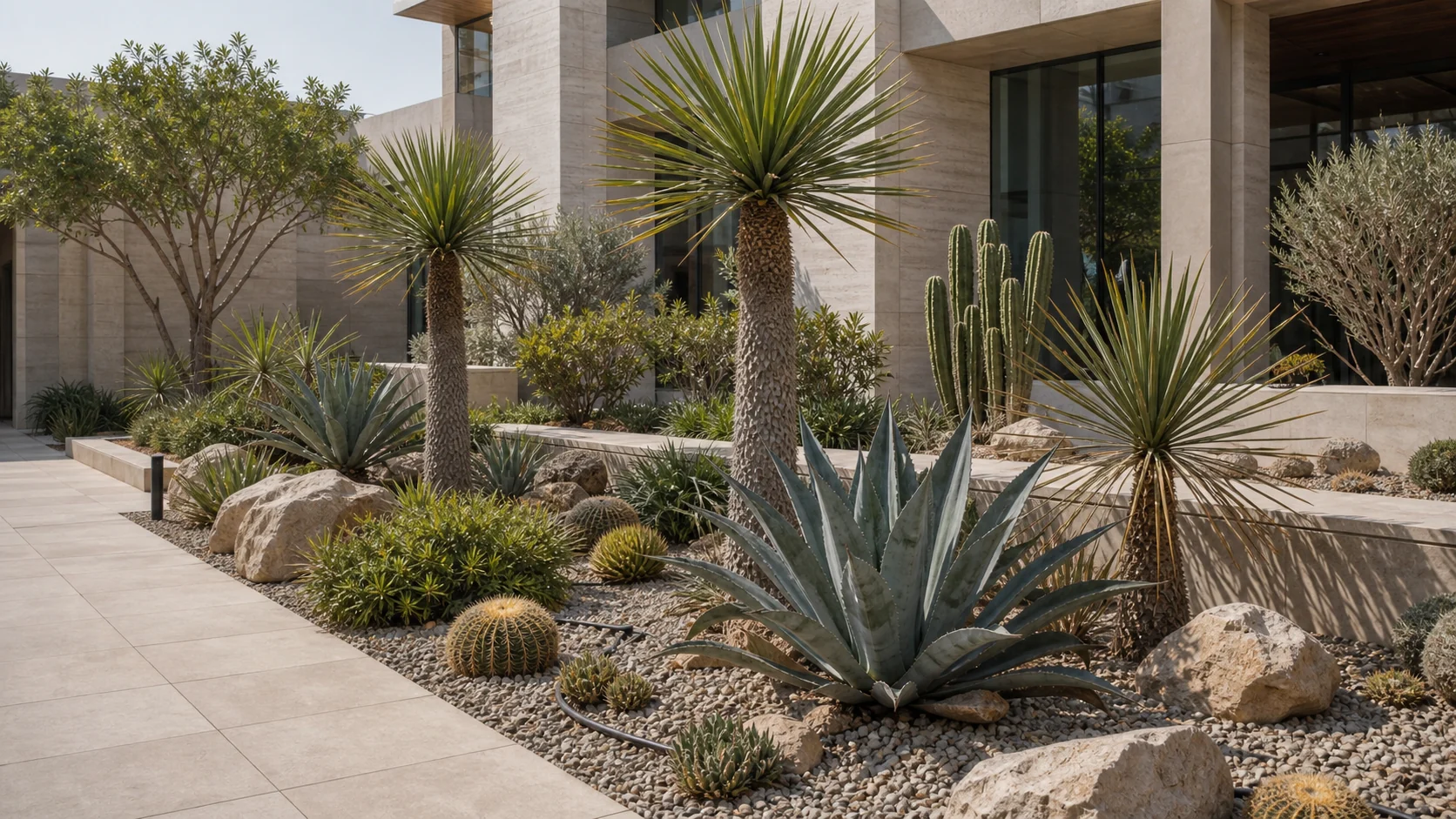
Visual context for placement, scale, handling, and landscape integration.
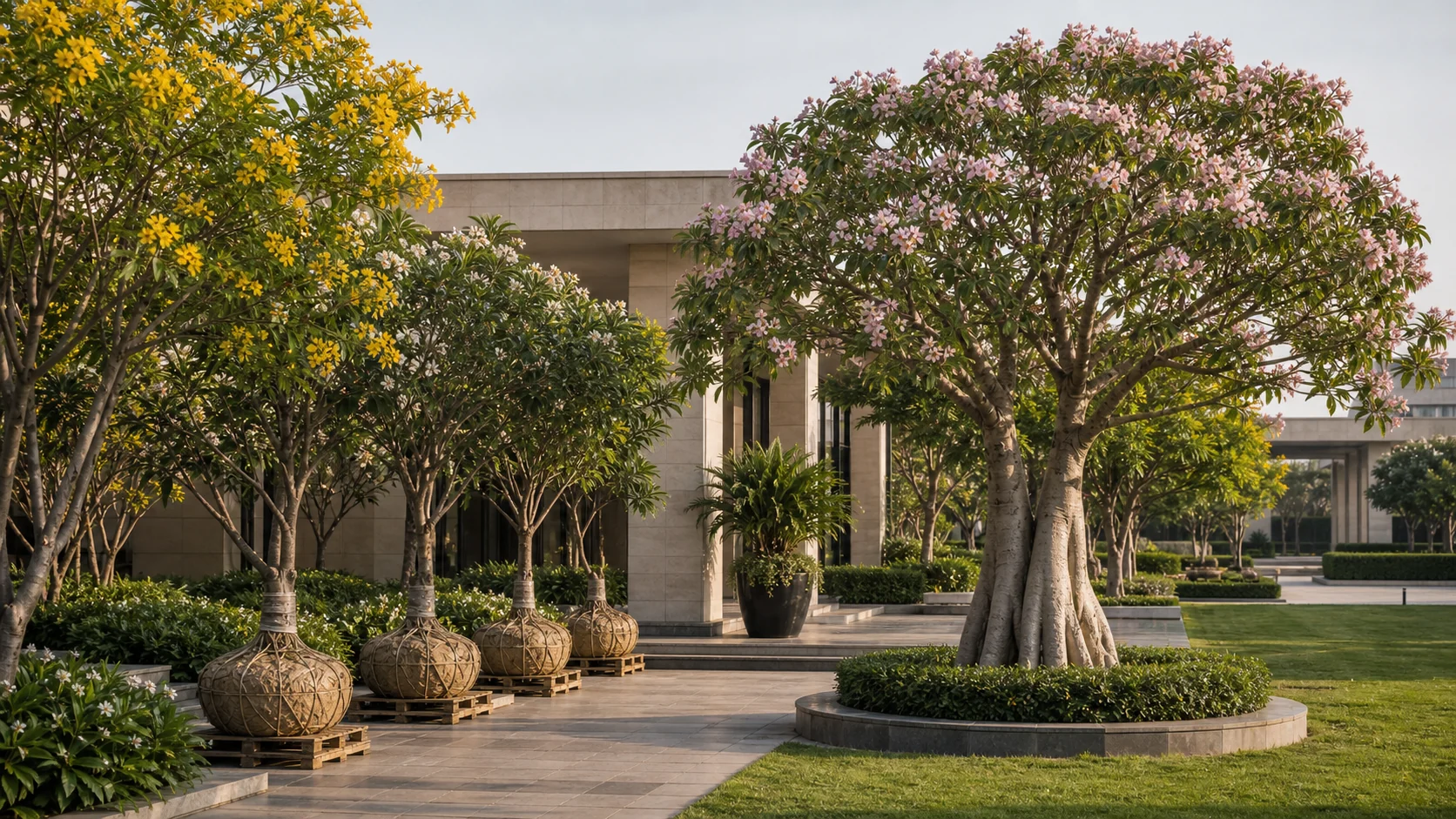
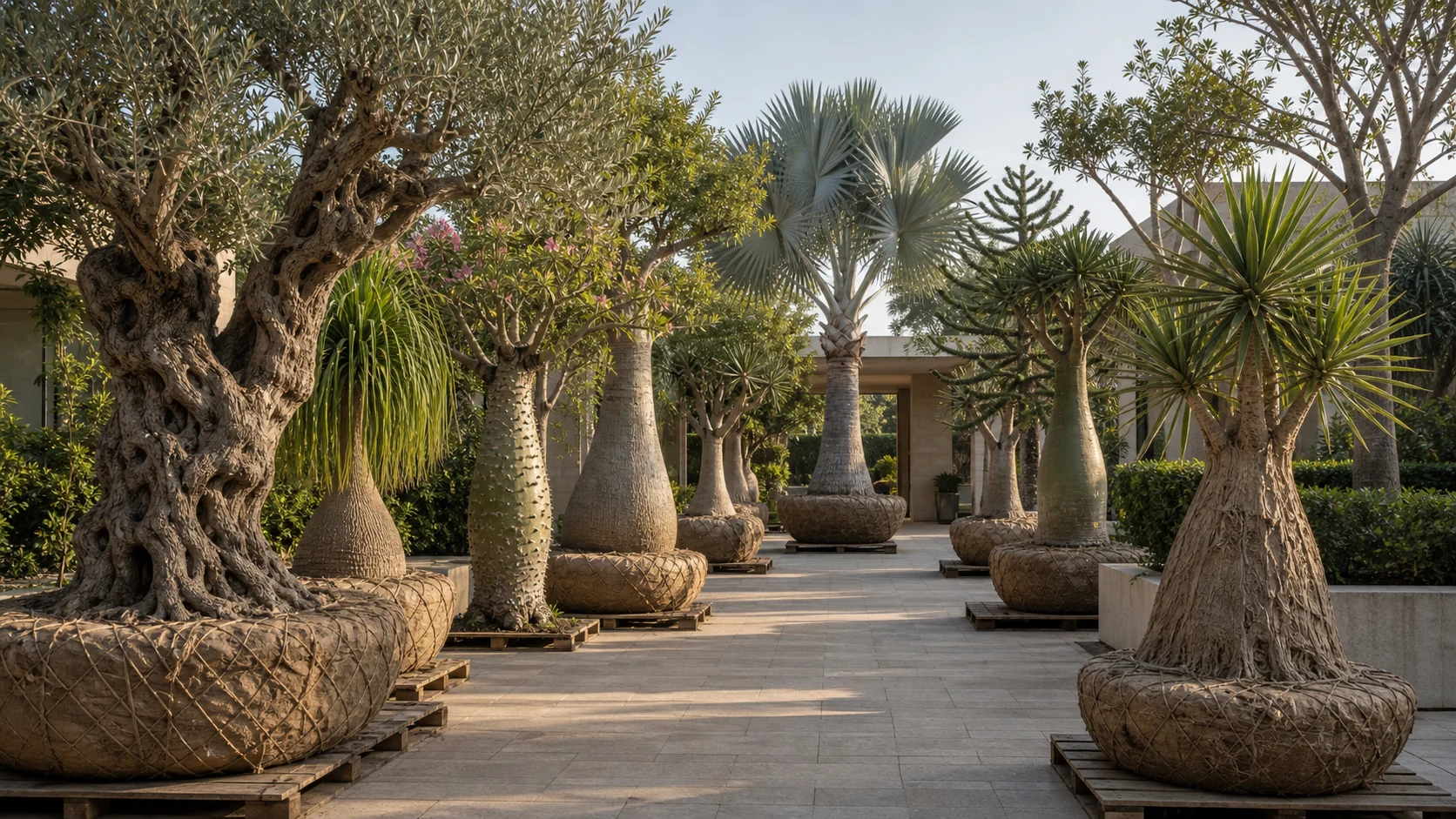
Section
Where it's used in premium projects
Vietnam-labelled pectinata specimens anchor arrival courts and golf clubhouse islands where a tall cycad must read without waiting decades — pair crane scope and toxicity signage with design. Do not market as revoluta interchangeably.
Section
Climate & site suitability in India
Same drainage discipline as revoluta — larger mass rots faster in wet pits. Arching leaves need space — do not cram against walls where fronds brown. Hill frost damages foliage tips; plains recover with leaf strip.
Section
Sourcing & acclimatisation (CITES/legal)
Confirm Cycas pectinata on invoices and phytosanitary docs — not generic 'Cycas Vietnam'. [Unverified: import permit class and re-export chain for Vietnam field stock.] Reject if legal paperwork is incomplete before payment milestones.
Section
Installation (planting, drainage, handling)
Crane and caudex padding mandatory — field digs need root prune hygiene and mycorrhiza-friendly backfill per nursery protocol. Mound plant; toxic handling PPE for crews. CITES file copy to client compliance folder.
Section
Establishment & AMC
Year-one irrigation modest — overwatering kills caudex while teams expect palm sympathy water. Strip brown old leaves, do not cut into meristem. Female cones: seed hazard protocol near guests. AMC includes legal doc retention, not just horticulture.
Section
Cost drivers
Explore
Related
Related
Related links
Services, segments, cost, and proof.
- Softscape & horticulture
- Irrigation & water management
- Landscape maintenance (AMC)
- Hotel & resort landscaping
- Luxury resort & spa landscaping
- Mall & retail landscaping
- Corporate campus landscaping
- Projects
- Commercial landscaping cost guide
- Pricing drivers (imported trees)
- Import compliance workflow
- Request a site assessment
- What species is the Vietnam cycas page?
- Cycas pectinata — Southeast Asian field-grown cycad; slug cycas-vietnam kept for URL continuity while botanical ID is explicit.
- How is pectinata different from Cycas revoluta visually?
- Often taller field caudex at supply with longer arching leaflets — revoluta is tighter, darker, more formal Japanese rosette.
- What toxicity risks apply?
- All parts toxic — seeds especially; treat like hazardous plant material near pets, children, and food prep zones.
- What CITES paperwork is required?
- Verify legal import or nursery chain documentation before purchase — [Unverified: permit class varies by source country] (informational, not legal advice).
- Can field-dug Vietnam cycads install in monsoon clay?
- Only with raised gritty mounds and crane-set drainage — wet pits rot large caudex faster than small pot plants.
- Why keep slug cycas-vietnam if species is pectinata?
- URL continuity for existing links — content identifies Cycas pectinata clearly in h1, attributes, and compliance sections.
- How should Vietnam cycad BOQs be priced?
- Match caudex girth, crane, CITES documentation, species-verified invoices, and seed-hazard AMC — not generic palm planting.