
Sago palm
Sago palm (Cycas revoluta)
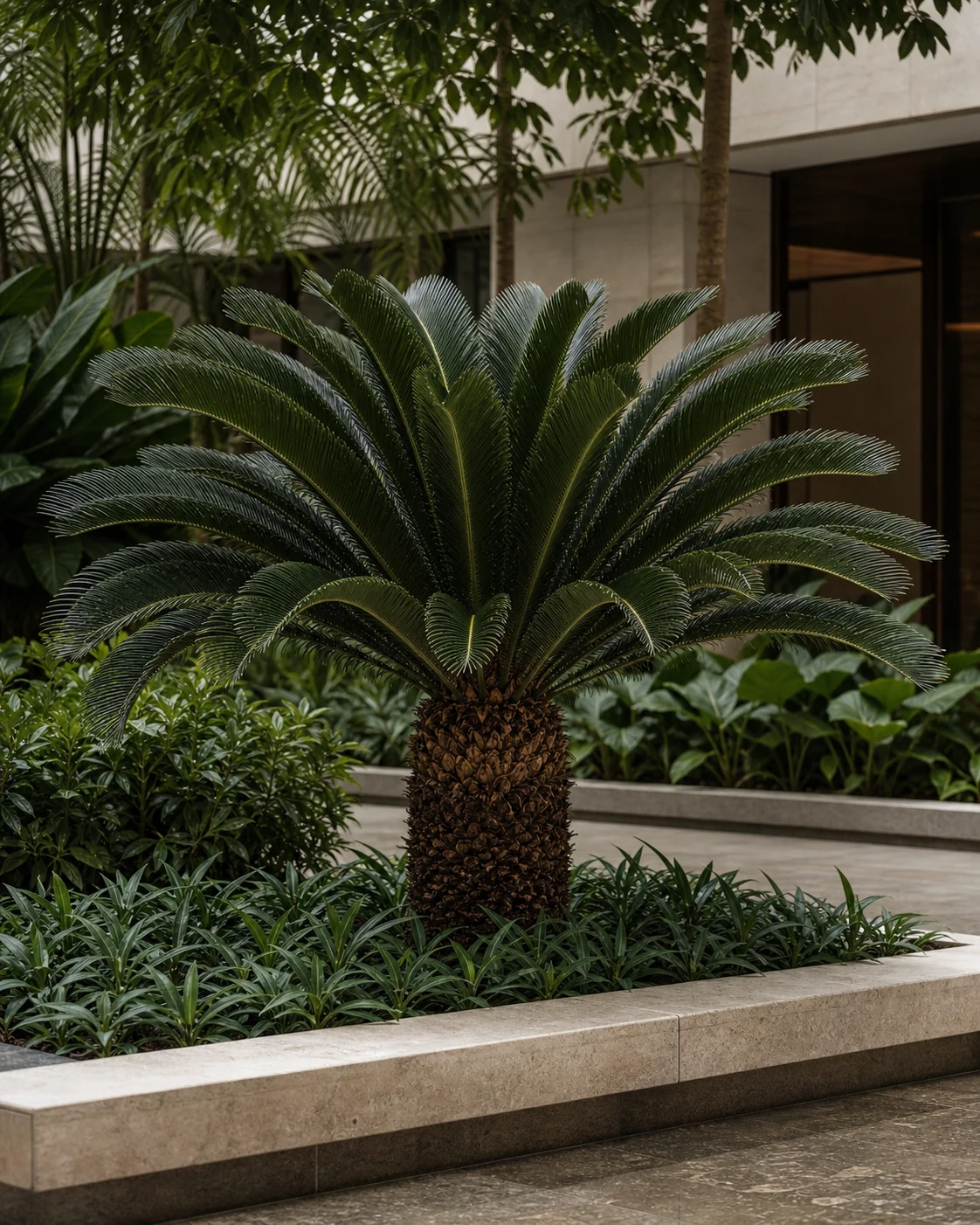
Cycas revoluta is the classic sago palm — stiff symmetrical dark rosette on a woody caudex, not a true palm. Very slow growth makes supply size the design decision; all parts are toxic, especially seeds, and cycads sit under CITES scrutiny — legal sourcing must be documented on every BOQ.
Spec
At a glance
- Botanical name
- Cycas revoluta
- Family
- Cycadaceae
- Origin
- Japan / southern Japan islands
- Type
- Cycad (not a palm)
- Trunk / form
- Woody caudex with terminal rosette — often subterranean early, trunking with age
- Leaf
- Stiff dark green pinnate leaves — symmetrical formal rosette
- Mature size
- Often 2–3 m trunk height over decades in India; rosette 1–1.5 m spread
- Growth rate
- Very slow — buy trunk height and leaf count
- Light
- Full sun to bright shade — sun for tight rosette
- Water
- Moderate; drought-tolerant once established — hates wet caudex
- Drainage
- Sharp drainage mandatory — caudex rot in monsoon clay
- India climate suitability
- Strong in frost-free lowlands and coastal resorts with drainage
- Hardiness
- Heat OK; frost damages leaves on hills
- Toxicity
- All parts toxic — seeds especially dangerous to pets and children
- CITES / legal sourcing
- Cycads listed under CITES — verify legal nursery or import documentation per consignment
- Typical supply size
- Field-grown caudex specimens by trunk height class [Unverified]
- Maintenance
- Remove old leaves cleanly; scale monitoring; keep seeds off ground if female coning
- Cautions
- Toxic; very slow; scale insect; CITES/legal sourcing required
Supply
Latest import activity
- Imported on
- 28 Jun 2026
- Source
- Flemings Nurseries (sample)
- Availability
- Incoming
- Lot
- Cycas revoluta — 1.2 m trunk height
Gallery
Specimen visual guide
Visual context for placement, scale, handling, and landscape integration.
Section
Where it's used in premium projects
Revoluta flanks formal resort entries and villa courtyards where a palm-like silhouette must read without true palm roots — pairs with stone and uplighting on the rosette. Specify caudex height, not 'instant palm' expectations.
Section
Climate & site suitability in India
Lowland India succeeds with drainage; wet monsoon pits rot caudex. Hill frost browns leaves — clip out and recover in plains. Female plants coning need seed hazard management near play areas.
Section
Sourcing & acclimatisation (CITES/legal)
Require CITES-relevant paperwork for imported caudex stock — [Unverified: typical India re-export documentation for revoluta field plants.] Reject soft caudex or foul smell at delivery. Acclimatise in open bright light.
Section
Installation (planting, drainage, handling)
Plant caudex high on gritty mound — never bury growing point. Heavy specimens need crane plans and pad slings on old leaves. Toxic plant signage near playgrounds per client policy.
Section
Establishment & AMC
Minimal nitrogen — cycads are not hedge shrubs. Old leaf removal is cosmetic AMC, not aggressive prune into crown. If female cones form, remove seeds promptly in pet zones. Scale: oil per label on undersides.
Section
Cost drivers
Explore
Related
Related
Related links
Services, segments, cost, and proof.
- Softscape & horticulture
- Irrigation & water management
- Landscape maintenance (AMC)
- Hotel & resort landscaping
- Luxury resort & spa landscaping
- Mall & retail landscaping
- Corporate campus landscaping
- Projects
- Commercial landscaping cost guide
- Pricing drivers (imported trees)
- Import compliance workflow
- Request a site assessment
- Is Cycas revoluta a true palm?
- No — a cycad with pinnate leaves and woody caudex; different roots, pests, and toxicity than Arecaceae palms.
- How toxic is sago palm to pets?
- All parts are toxic — seeds are especially dangerous; keep coning females away from pet zones and remove seeds promptly.
- Why does CITES matter for revoluta?
- Cycads are CITES-regulated — verify legal nursery origin or import permits before purchase (informational, not legal advice).
- How fast does revoluta trunk in India?
- Very slow — buy the height and rosette you need; do not under-specify expecting one season of catch-up.
- What drainage prevents caudex rot?
- Gritty raised mounds with no perched water — monsoon clay pits are the common failure mode.
- What quarantine applies to imported cycads?
- Live cycad consignments need phytosanitary certificates, species-accurate labels, and Indian quarantine inspection (informational, not legal advice).
- How should revoluta specimens be quoted?
- Match caudex height, leaf health, crane scope, toxicity signage scope, and CITES documentation — not palm tree rates.