
Macrozamia moorei
Macrozamia moorei
Macrozamia moorei is the large Australian cycad with stout trunk and big symmetrical crown — very slow, long-lived, and costly at mature sizes. Toxicity applies to all macrozamia tissues; CITES and protected-species sourcing must be verified — we do not assume wild harvest is legal.
Spec
At a glance
- Botanical name
- Macrozamia moorei
- Family
- Zamiaceae
- Origin
- Eastern Australia (Queensland / NSW)
- Type
- Cycad — large trunking macrozamia
- Trunk / form
- Stout barrel trunk with terminal crown
- Leaf
- Large symmetrical pinnate fronds — bold texture
- Mature size
- Large trunk over decades; supply girth defines instant impact
- Growth rate
- Extremely slow — decades to maximum size
- Light
- Full sun to bright shade when established
- Water
- Low to moderate; hates wet caudex
- Drainage
- Sharp drainage — especially for heavy trunk
- India climate suitability
- Frost-free subtropical with drainage; protect from monsoon wet feet
- Hardiness
- Heat OK with water discipline; frost rare in target sites
- Toxicity
- Macrozamia toxins — seeds and tissues dangerous; historical poisoning risk documented
- CITES / legal sourcing
- CITES and protected-species scrutiny — accredited nursery sourcing only [Unverified]
- Typical supply size
- Large trunk girth classes — extremely limited [Unverified]
- Maintenance
- Minimal — old frond strip; cone/seed hazard; scale watch
- Cautions
- Toxic; CITES/protected sourcing; extremely slow → costly at size
Gallery
Specimen visual guide
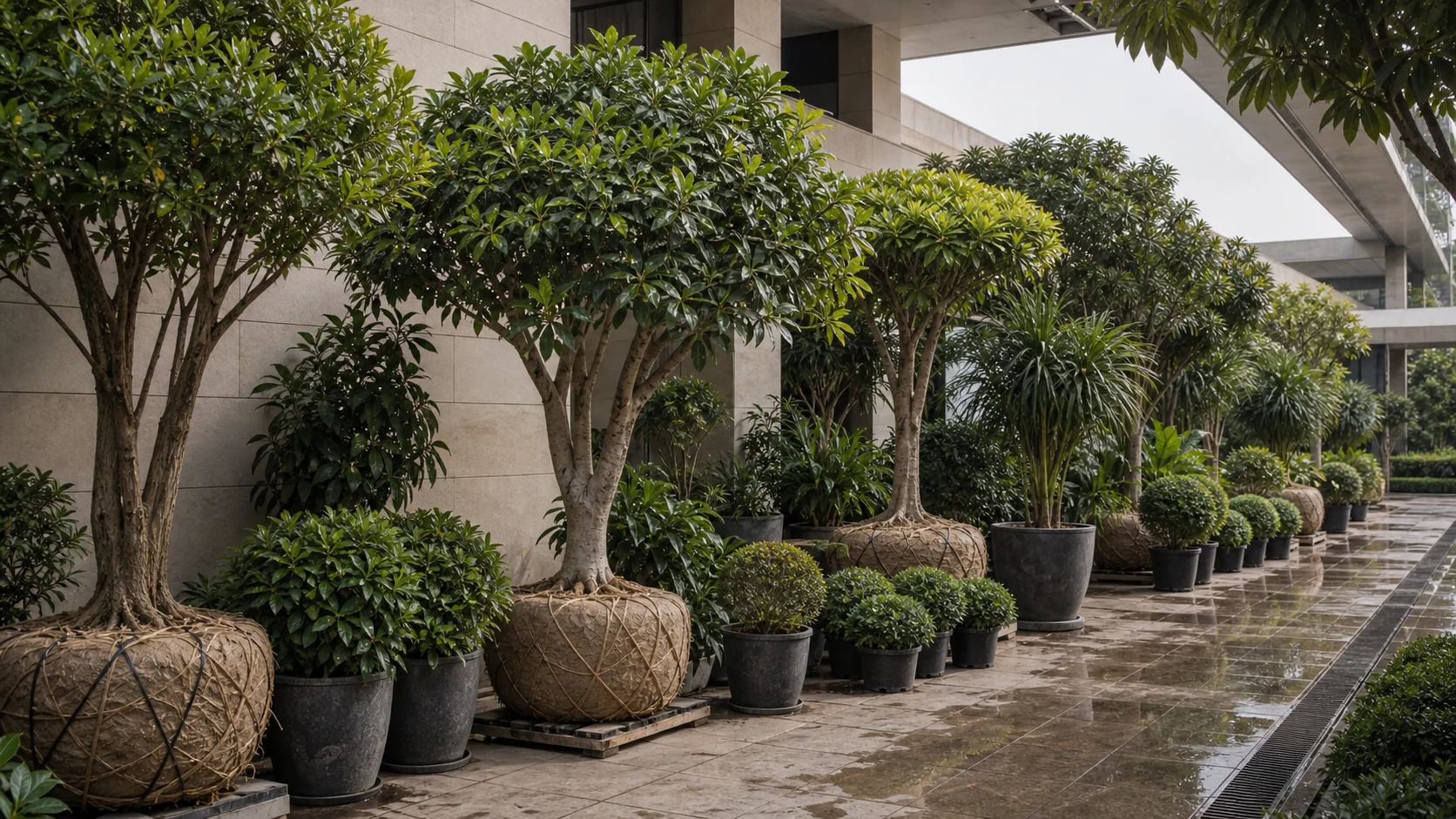
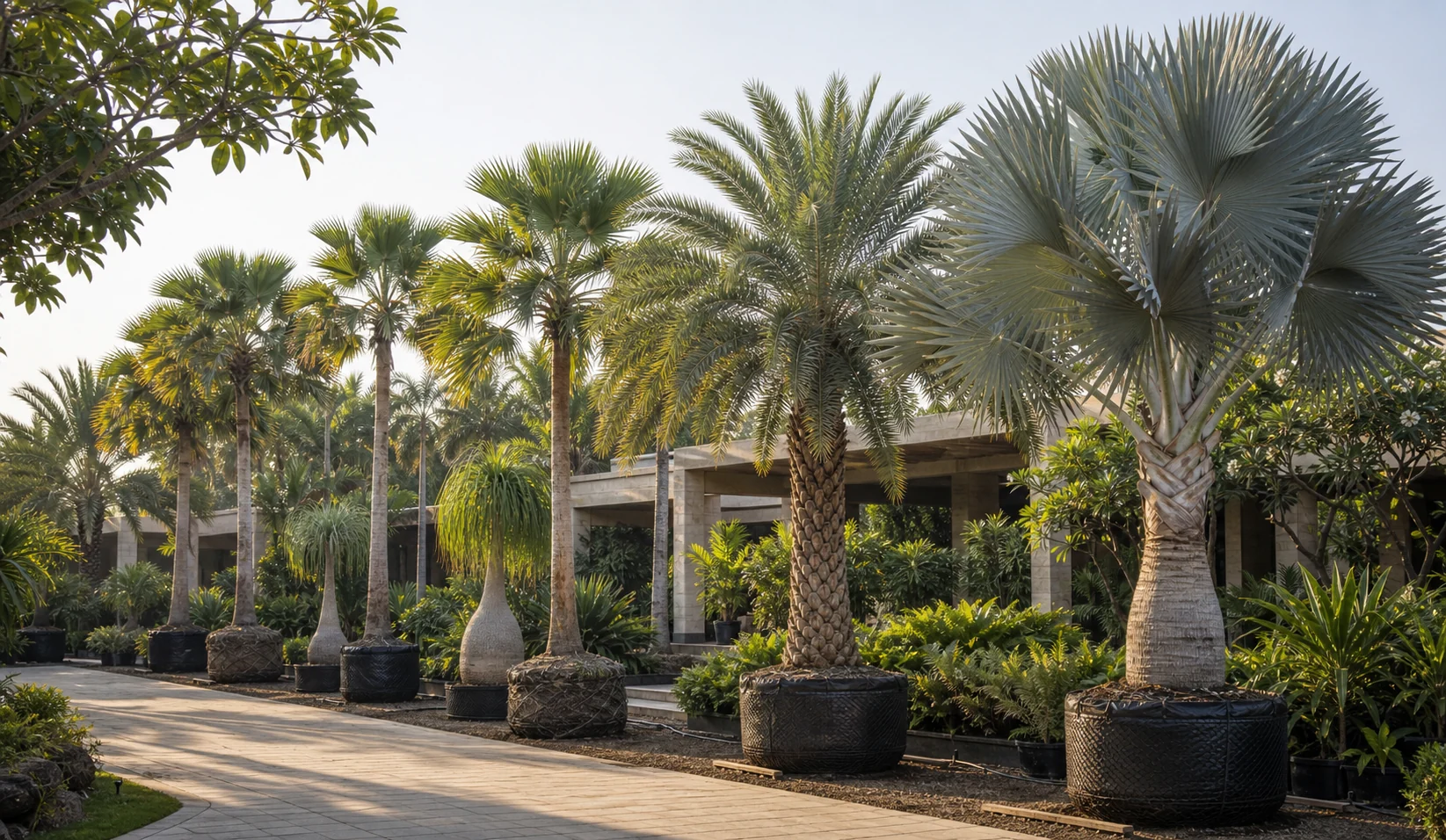
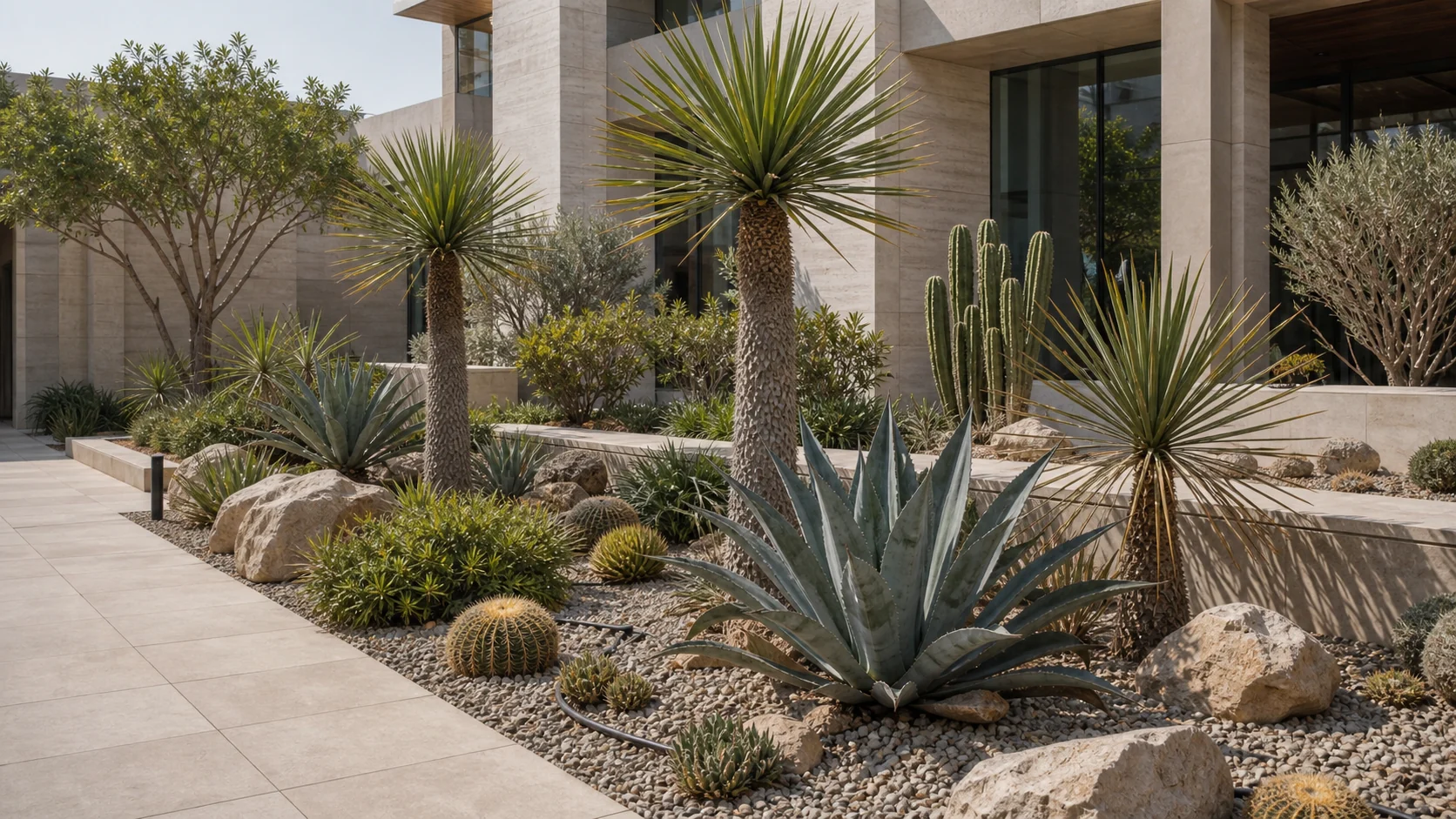
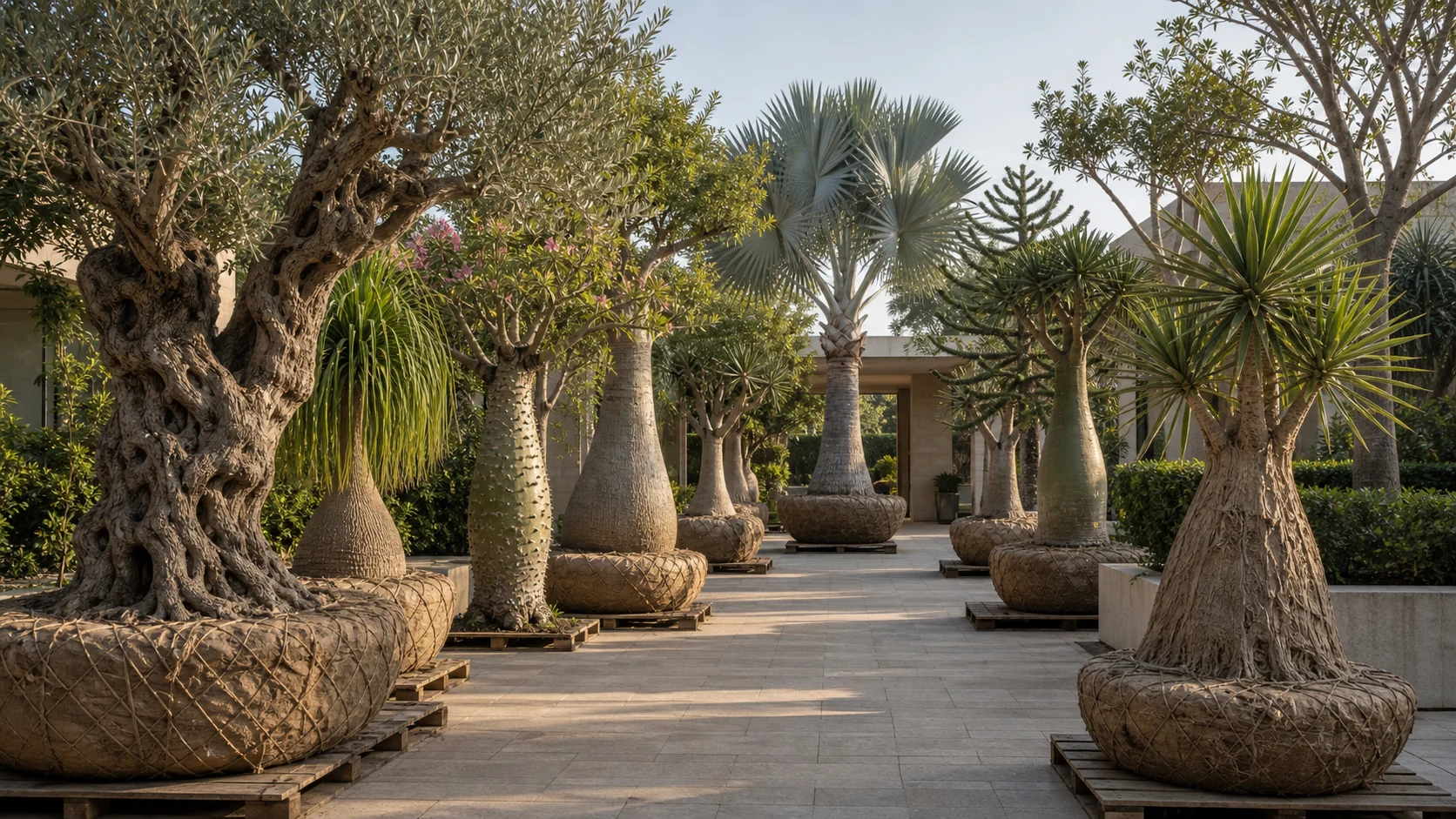
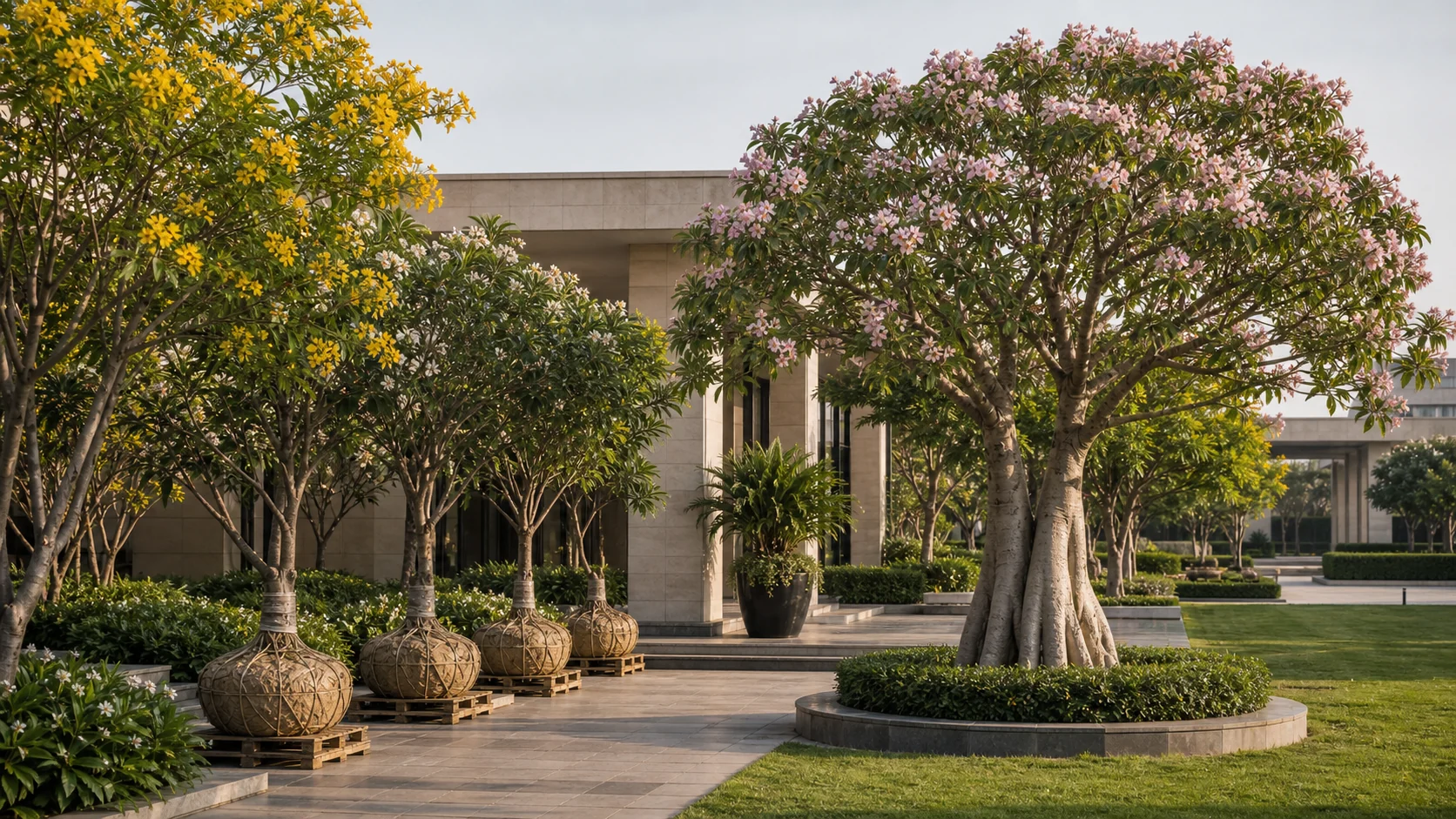
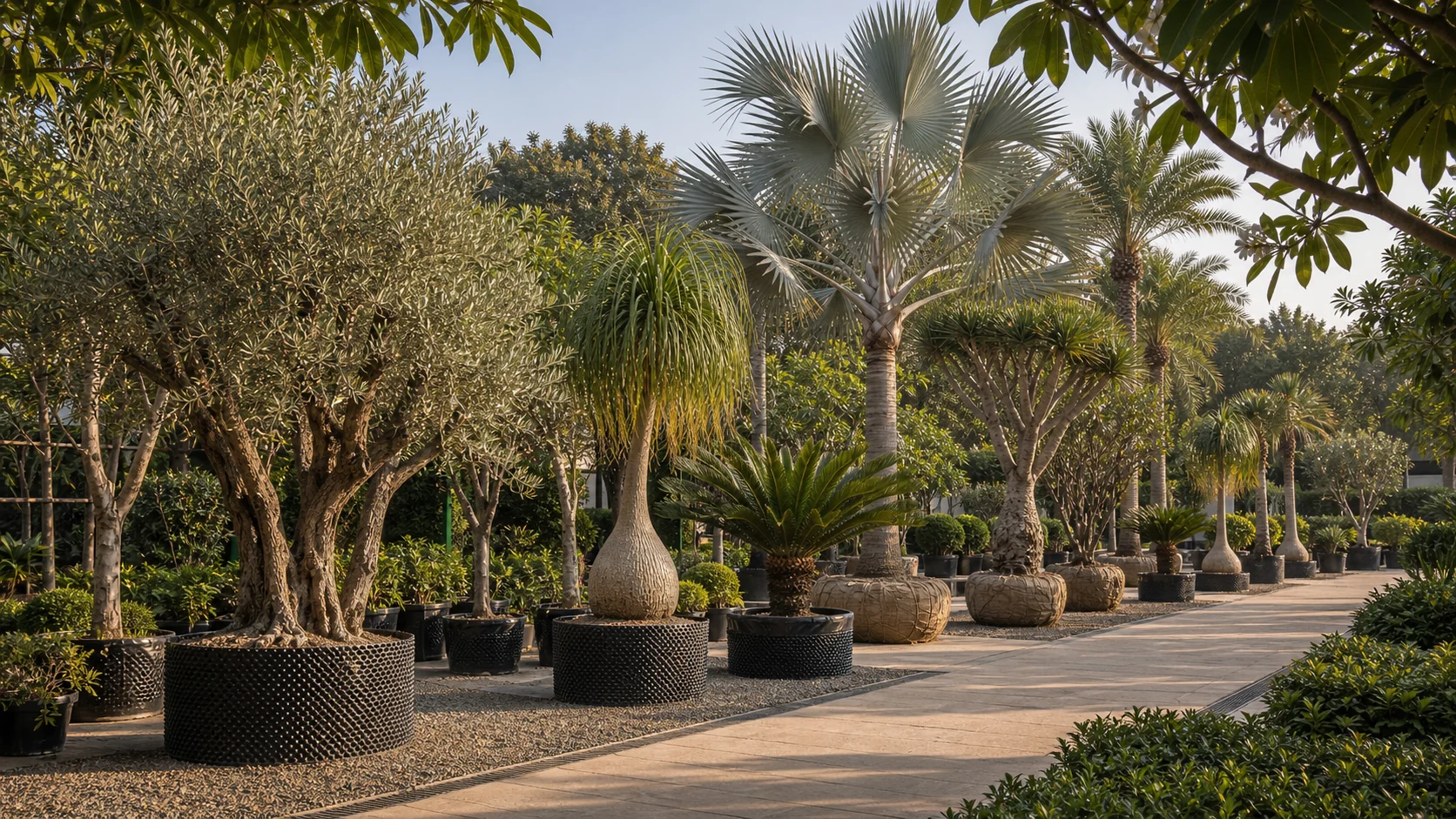
Visual context for placement, scale, handling, and landscape integration.
Section
Where it's used in premium projects
Moorei is the collector cycad for estate masterplans where Australian sculpture and decades-long horizon matter — not for fast-opening sites needing instant canopy. Pair legal provenance review with design milestones.
Section
Climate & site suitability in India
Subtropical India mirrors parts of Queensland climate when drainage is engineered — do not plant in clay bowls. Extremely slow growth means design teams must buy girth, not hope. Toxic seed cones near guests are unacceptable without removal protocol.
Section
Sourcing & acclimatisation (CITES/legal)
Require accredited nursery provenance — wild dug moorei is a compliance failure. [Unverified: India import availability and CITES appendix treatment for moorei consignments.]
Section
Installation (planting, drainage, handling)
Heavy trunk crane set on mound; toxic PPE; legal file to client. Root ball hygiene for field plants — follow nursery post-dig protocol.
Section
Establishment & AMC
Minimal irrigation after establishment — moorei rots with palm-style overwatering. Strip old fronds cleanly. AMC is decades-long monitoring, not hedge clipping. Cost reflects age at supply, not install week labour alone.
Section
Cost drivers
Explore
Related
Related
Related links
Services, segments, cost, and proof.
- Softscape & horticulture
- Irrigation & water management
- Landscape maintenance (AMC)
- Hotel & resort landscaping
- Luxury resort & spa landscaping
- Mall & retail landscaping
- Corporate campus landscaping
- Projects
- Commercial landscaping cost guide
- Pricing drivers (imported trees)
- Import compliance workflow
- Request a site assessment
- How large does Macrozamia moorei become?
- Stout trunk with large crown over decades — buy girth at supply because post-install growth is extremely slow.
- Why is moorei costly compared to revoluta?
- Age at supply, rarity, legal sourcing, and decades-long growth — you pay for years already in the trunk.
- What toxicity applies?
- Macrozamia toxins in tissues and seeds — treat as hazardous near pets, children, and food areas.
- Can wild-collected moorei be specified?
- No — require accredited nursery provenance and CITES-legal chain; wild harvest is a compliance failure.
- What CITES paperwork is needed?
- Verify appendix listing and permits per consignment — [Unverified: shipment-specific class] (informational, not legal advice).
- Does moorei suit fast-opening hotel sites?
- Only if large pre-grown trunk is budgeted — not for small plugs expecting quick presence.
- How should moorei BOQs be priced?
- Match trunk girth, provenance documentation, crane, toxicity/cone AMC, and decades-long ownership — not revoluta or pectinata rates.