
Kolkata
Imported specimen trees in Kolkata
Kolkata’s heavy monsoon and year-round humidity reward specimen-tree specs that treat rootball integrity, drainage, and fungal monitoring as procurement requirements — architectural maturity is achievable on hotel and institutional entries when establishment AMC is contractually explicit. Riverside blocks and inland campus parcels carry different exposure profiles — procurement should gate species selection per site rather than assume city-average tolerance for Mediterranean silver foliage on undrained podium pits.
Gallery
Specimen visual guide
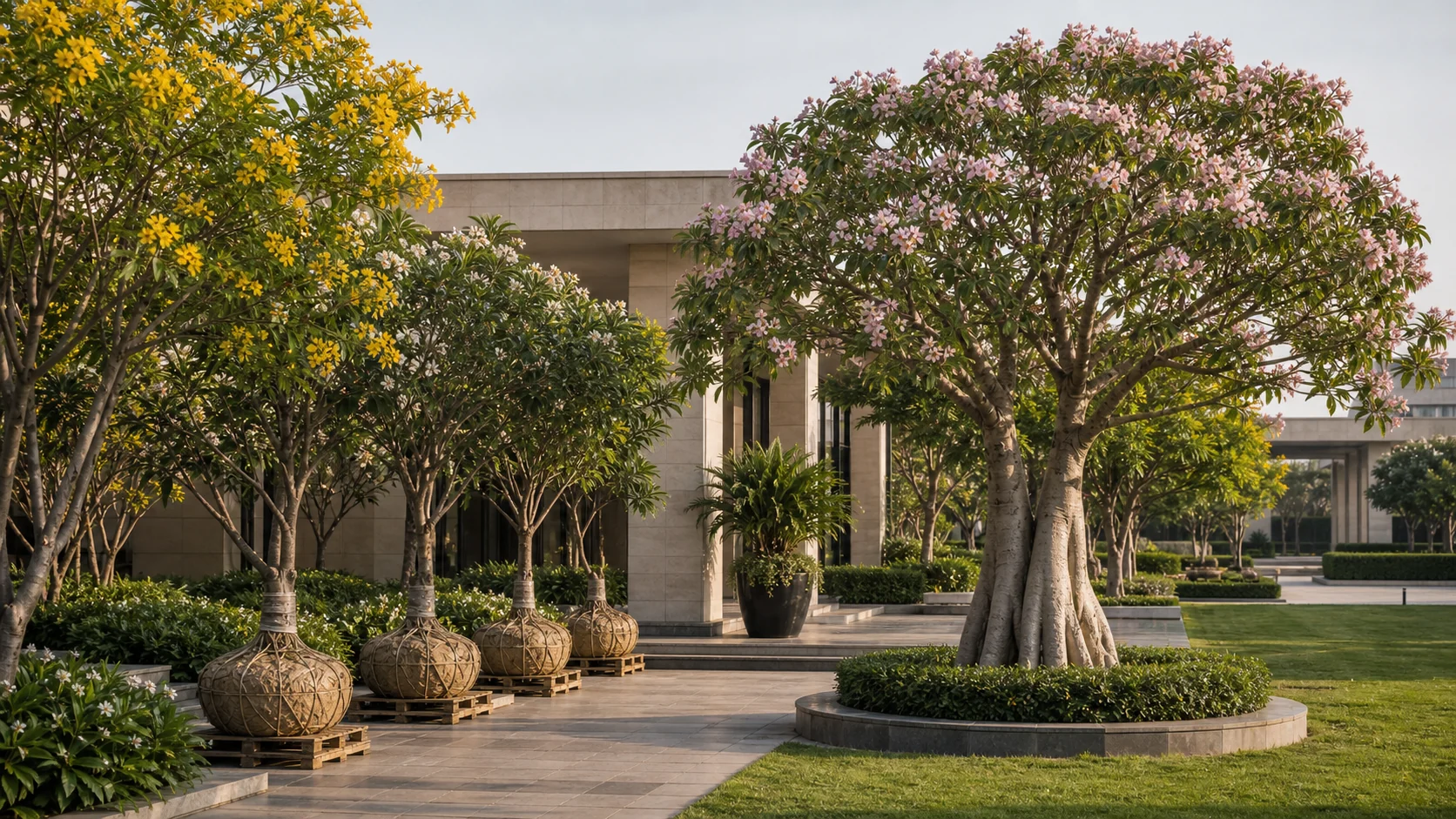
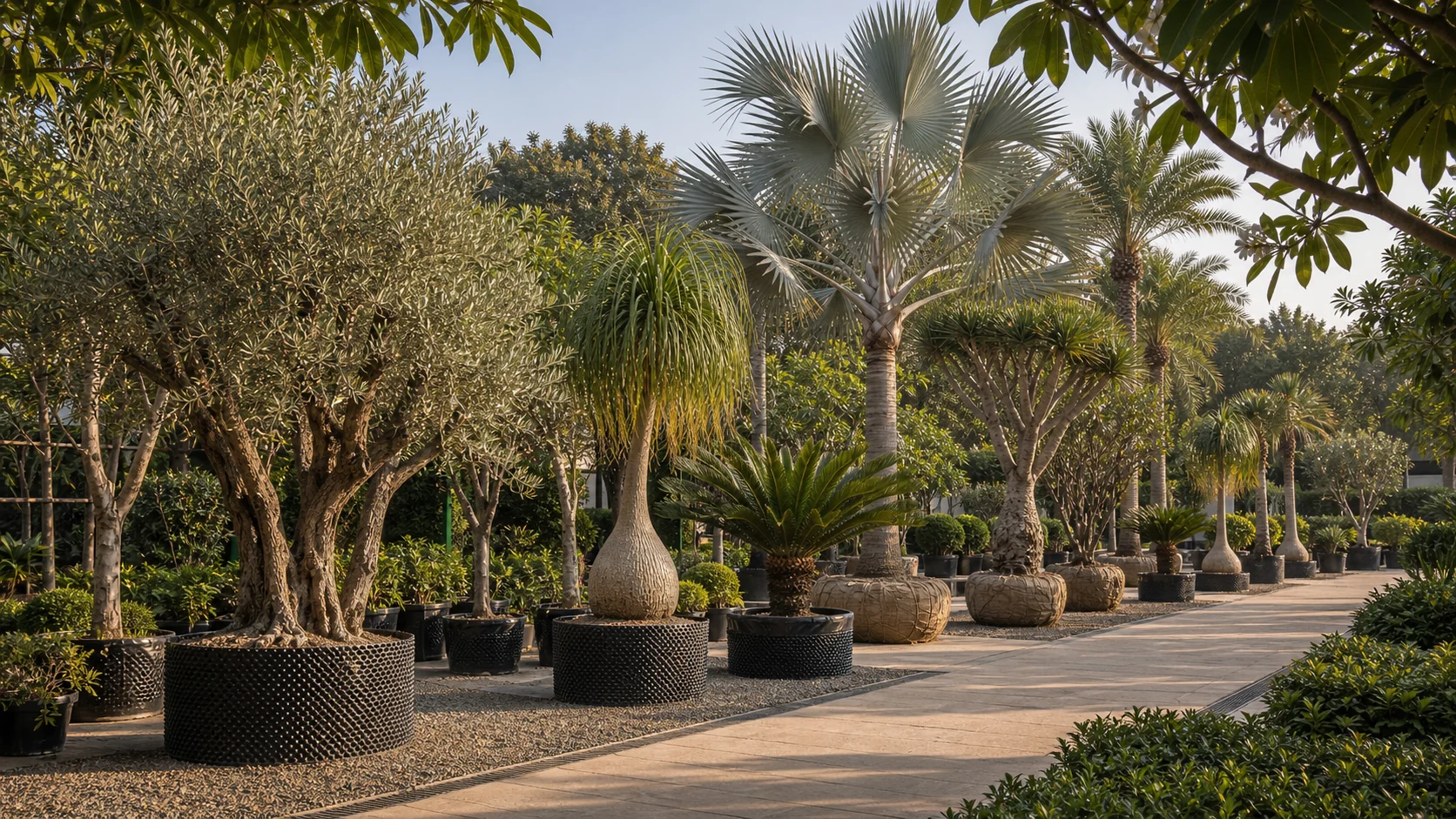
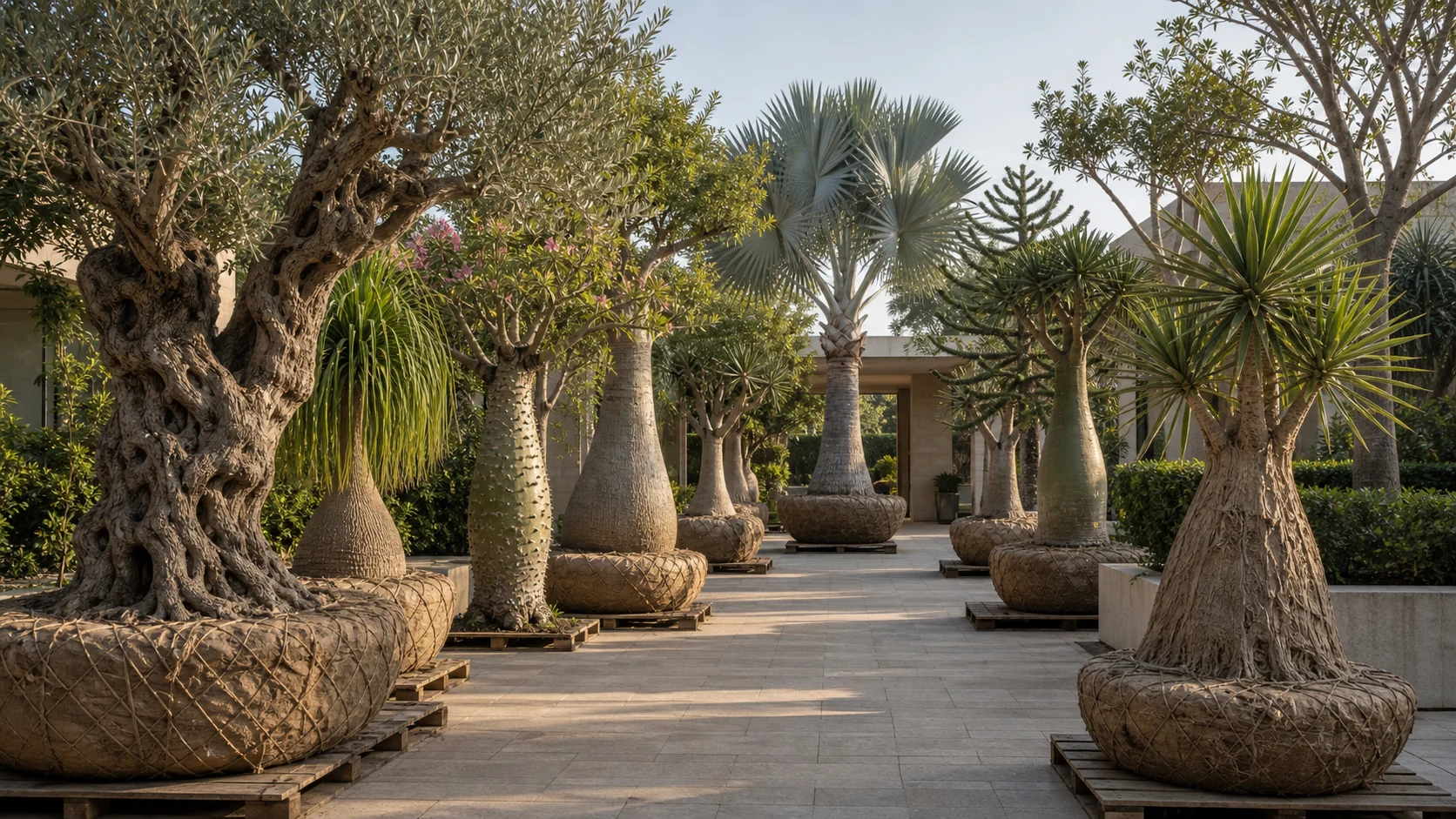
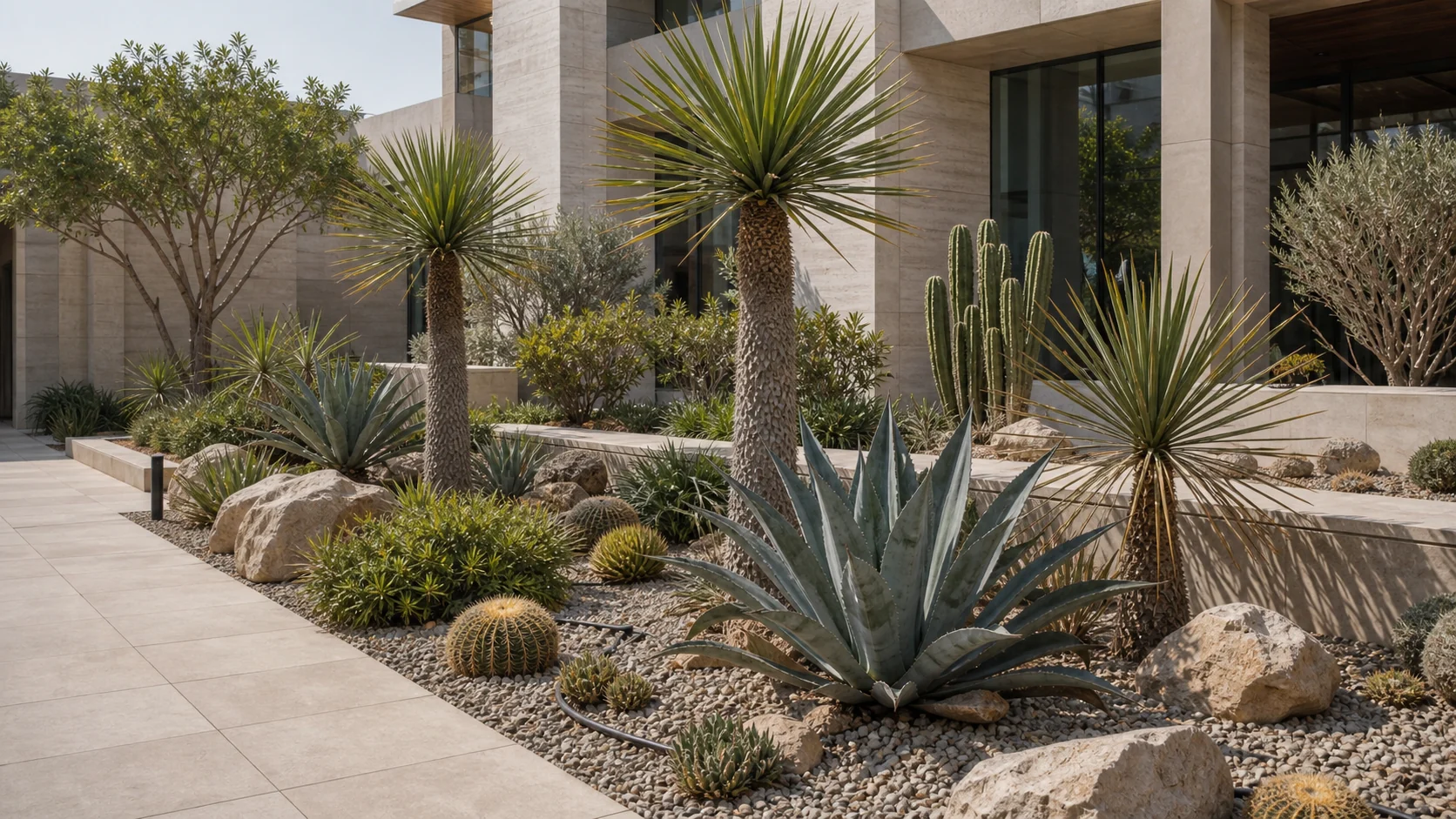
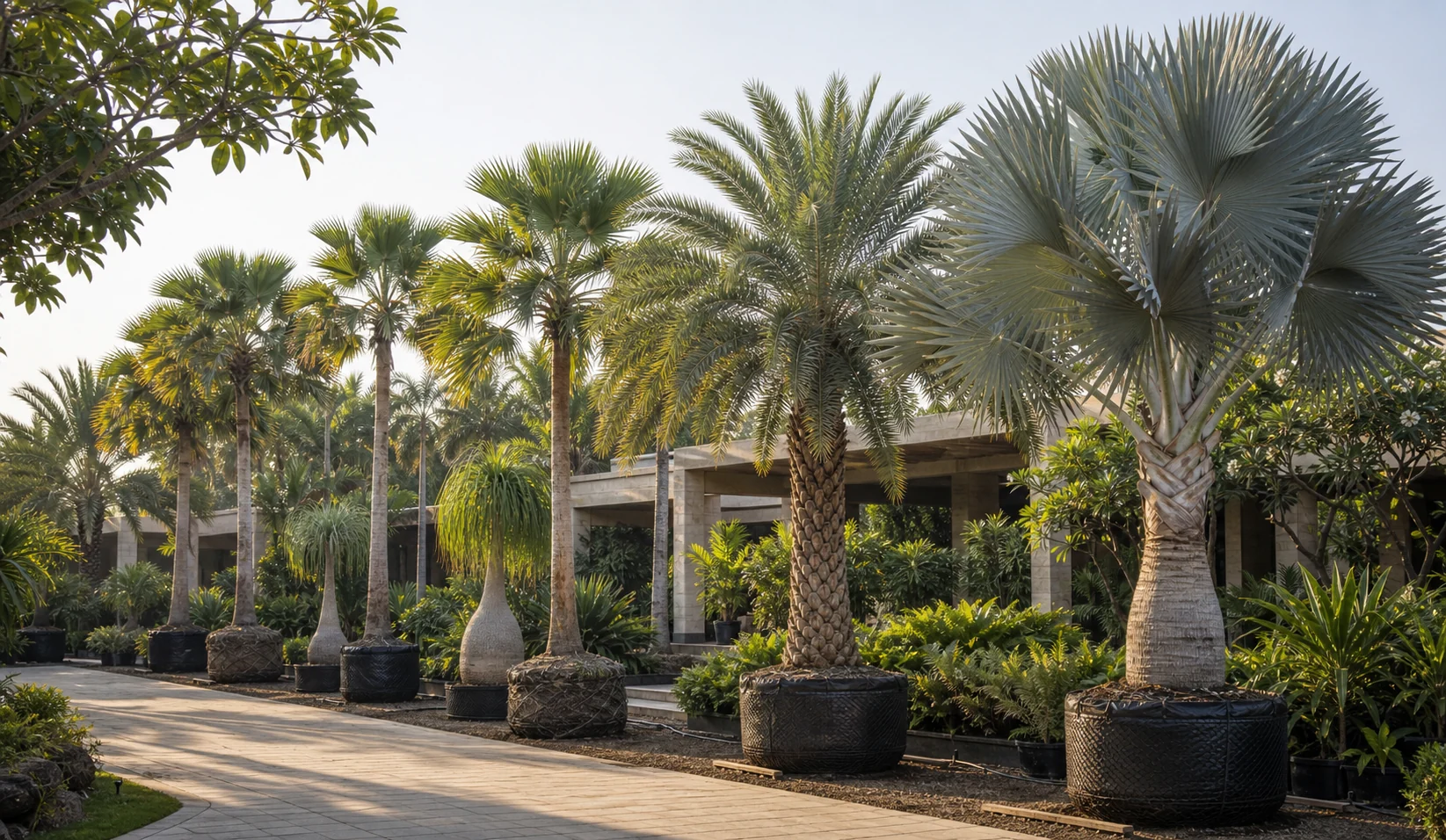
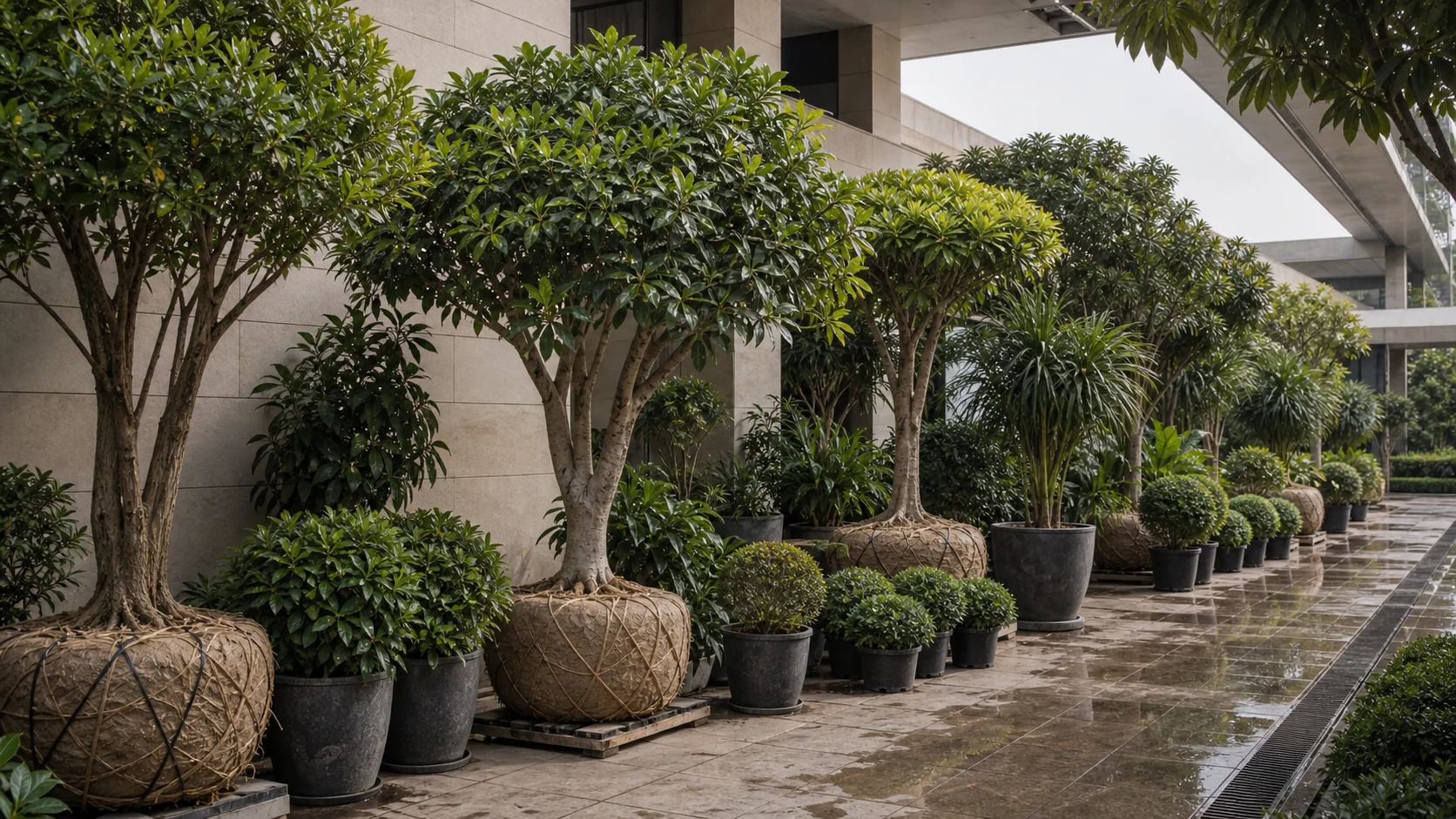
Visual context for placement, scale, handling, and landscape integration.
Section
Humid subtropical climate and monsoon load
High humidity year-round raises foliar disease pressure on Mediterranean silver foliage and stresses root zones where drainage lags. Monsoon delivers sustained wet periods that expose undrained podium and clay pits — waterlogging kills drought-marketed olives and many desert taxa faster than heat. Pre-monsoon heat still demands establishment irrigation discipline. Cyclone-influenced wind on exposed parcels affects bracing on tall palms. Microclimate varies between riverside humidity and inland campus blocks — species pages should gate each location honestly. New Town and Rajarhat corridors on fill soils need geotech-aligned pit media; copying dry-city specs without drainage review often fails within the first wet season. Hospital and university campuses should separate specimen packages from mass softscape so drainage build and fungal monitoring are not bundled into lump-sum shrub lines at award. Operators planning across East Kolkata wetlands and inland Rajarhat should not assume one drainage template fits both — preliminary geotech and percolation notes belong in the specimen brief before species lock.
Section
Rootball handling and logistics
Heavy monsoon soils complicate crane and trolley moves — finished paving protection and pit access roads should be in BOQ. Riverside parcels add salt and humidity variables near the waterfront. Night hoists reduce disruption on occupied hotels and hospitals. Crown spread on mature specimens exceeds many colonial-era court clearances — survey structures before species lock. Utility congestion in older institutional campuses demands pit validation. Park Street and central-corridor heritage contexts add structural clearance constraints — mature fan palms and wide olive canopies may exceed default court assumptions; survey should precede marketing renders where guest circulation cannot close for improvised crane-day rigging.
Section
Hospitality, institutional, and commercial demand
Luxury and upper-upscale hotels specify arrival palms and sculptural statements at porte-cochère and courtyard scales. Corporate and IT pockets in Rajarhat and Salt Lake repeat campus arrival patterns with security coordination. Hospitals and universities need specimen placement that respects ambulance paths and term-time safety zones. Retail and mixed-use atria may shift to interior specimens where exterior humidity profiles fail Mediterranean specs. Institutional buyers should separate specimen-tree packages from mass shrub and turf lines so engineered install scope survives tender review. Heritage corridors in central Kolkata add overhead constraints — survey mature crown spread before marketing renders lock wide fan palms or gnarled olives in colonial-era courts. Mixed-use towers with ground-floor retail and upper residential decks often split exterior specimen scope by level — wind and exposure on amenity terraces rarely match sheltered courtyard conditions at grade.
Section
Species fit under humidity pressure
Robust palms with documented disease notes suit open entries when braced and drained — Phoenix canopies need monitoring cadence in AMC. Olive and Mediterranean taxa require mound drainage and honest peacock-spot messaging; many humid sites should select alternate focal trees. Ficus and foliage specimens suit sheltered courts with root management. Flowering trees belong where petal and fruit drop scope is written. Desert taxa only with exceptional drainage and irrigation caps. Indoor atrium categories serve lobby volumes with measured light. Category hubs group taxa by use case; each species page states humidity and fungal failure modes so procurement can reject dry-region catalogue photos without honest cultivar review.
Section
Drainage, establishment, and fungal vigilance
Engineered pits with drain layers and overflow are mandatory — not value-engineered. Acclimatisation with monitored moisture reduces transplant shock. Irrigation should avoid nightly crown soaking on disease-prone foliage. Establishment AMC names fungal flag escalation to arborist review — not blanket fungicide schedules. Bracing removal follows anchor documentation. Rootball rigging and planting-depth discipline matter more in saturated monsoon soils; improvised handling on crane day increases mortality on large transplants when pit prep was underspecified. On clay-heavy sites common in older city blocks, overflow connection to storm networks should be validated with civil — specimen pits that pond after the first monsoon are a frequent snag on handover photography schedules.
Section
AMC and facility handover
Wet-climate AMC includes frond sanitation, litter near entries, seasonal controller profiles, and reporting for audit. Replacement boundaries on large transplants protect owner and contractor. FM teams receive valve charts and escalation triggers. Establishment visits taper on measurable root-zone and anchor criteria. Snagging ties to approved planting plans; variations log against drawing revision so handover packs reflect actual emitter placement and fungal monitoring on silver Mediterranean foliage near guest circulation. University term calendars and hospital audit cycles may restrict pesticide or heavy irrigation windows — AMC scope should name blackout periods and alternative establishment protocols for sensitive public entries.
Section
Mobilisation and proof framing
Four Leaf executes pan-India programmes from site assessment — Kolkata mobilisation is planned per contract with honest logistics. Do not assume portfolio names imply specimen stock on your site without enquiry. Request a site assessment to align species, drainage, and access. Share riverside versus inland exposure, handover date, and institutional term-time constraints so crane sequencing and acclimatisation hold align to monsoon calendars rather than optimistic possession photography deadlines.
Section
Procurement and pricing
Explore
Related
Related
Related links
Services, segments, cost, and proof.
- Why is rootball integrity critical in Kolkata monsoon?
- Saturated soils increase handling damage and planting-depth errors — rigging and pit prep should be specified, not improvised on crane day. Monsoon programmes should name rootball integrity checks on submittals and replacement boundaries on large transplants before contract award.
- Can olives succeed in Kolkata humidity?
- Only on exceptional drainage with disease monitoring — many sites should choose alternate focal species per honest species-page guidance. Persistent moisture punishes waterlogging faster than heat alone; mound planting and emitter placement should limit crown wetting on silver foliage near guest entries.
- What fungal pressure should AMC cover?
- Foliar flags on silver Mediterranean leaves and root-zone saturation — escalation paths, not automatic spray programmes. Establishment AMC should name inspection cadence and arborist review triggers before routine handover to FM teams.
- Which palms suit humid Kolkata arrivals?
- Species with documented humidity and wind behaviour — litter class near hotel entries must be in scope. Bracing duration on cyclone-exposed parcels should tie removal milestones to root anchor observations, not calendar guesswork.
- How should hospitals specify specimen trees?
- Circulation clearance, term-time work zones, and establishment irrigation without slip hazards near entries. Mature crown spread on Phoenix and Washingtonia classes must respect ambulance paths — survey before species lock on hospital arrivals where circulation constraints exceed default porte-cochère clearances.
- When is planting safest in the annual cycle?
- Often post-monsoon establishment with irrigation commissioned — mid-monsoon hoists need explicit risk ownership. Saturated soils increase rootball handling damage; rigging and pit prep should be specified in BOQ, not improvised when monsoon compresses crane windows on occupied sites.
- How does Four Leaf mobilise to Kolkata?
- Site assessment first; logistics per contract — no implied local inventory without enquiry. Share riverside versus inland exposure, institutional term-time constraints, and handover date so crane sequencing and fungal monitoring align to monsoon calendars rather than optimistic possession photography.
- When should Kolkata procurement prefer interior atrium over exterior Mediterranean specs?
- When exposure and drainage constraints make exterior olive or silver-foliage specs high-risk — interior volumes need measured lux, HVAC, and container engineering coordinated outside fragmented landscape packages. Atrium trees do not fix a failed exterior humidity choice; they serve a different brief with separate procurement and establishment scope tied to lobby handover.