
Cauliflory trees
Cauliflorous specimen trees
Rare flowering trees with blooms on trunks and branches — collector-grade specimens for resorts, botanical showcases, and estate statements.
Gallery
Category visual guide
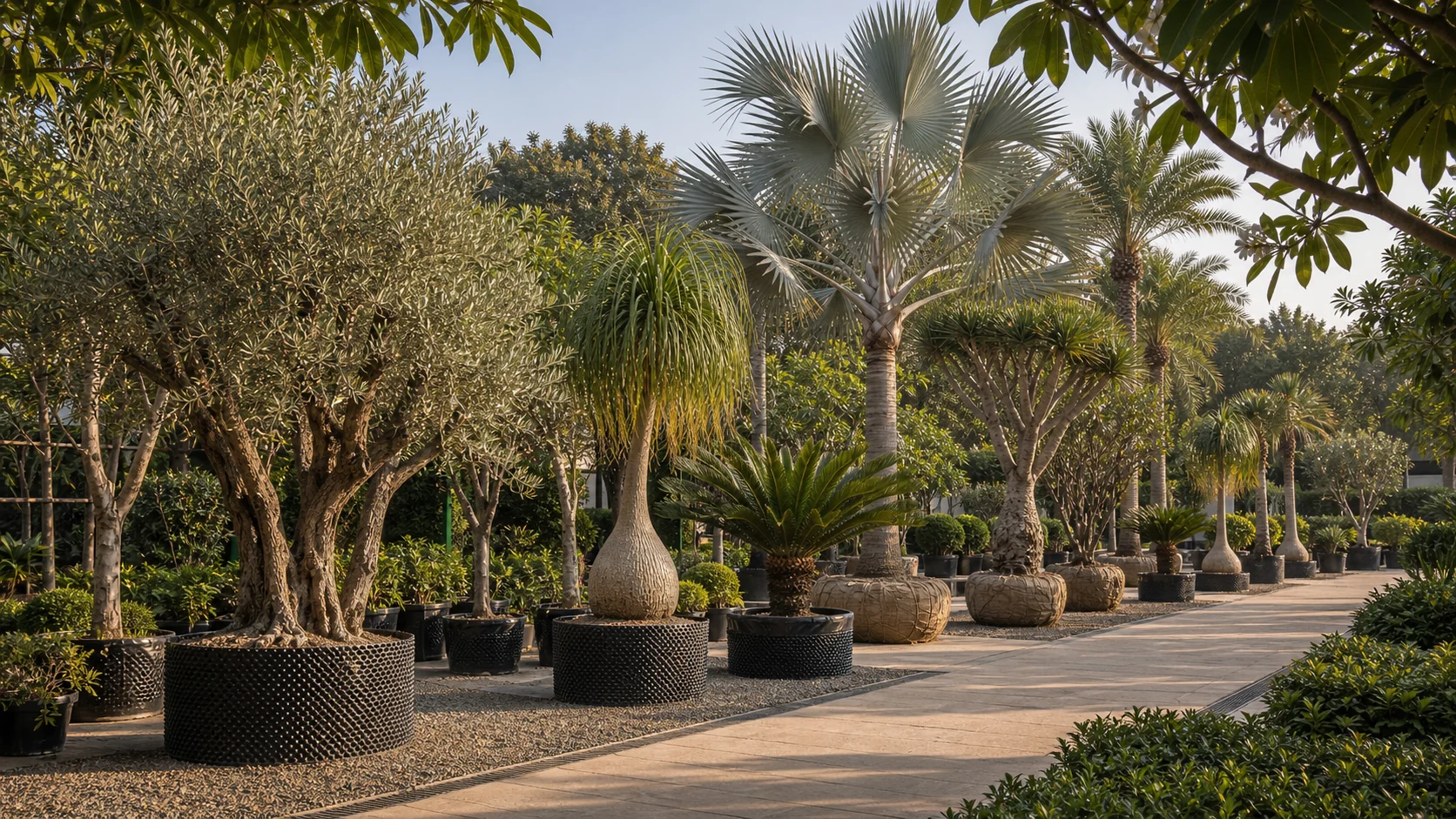
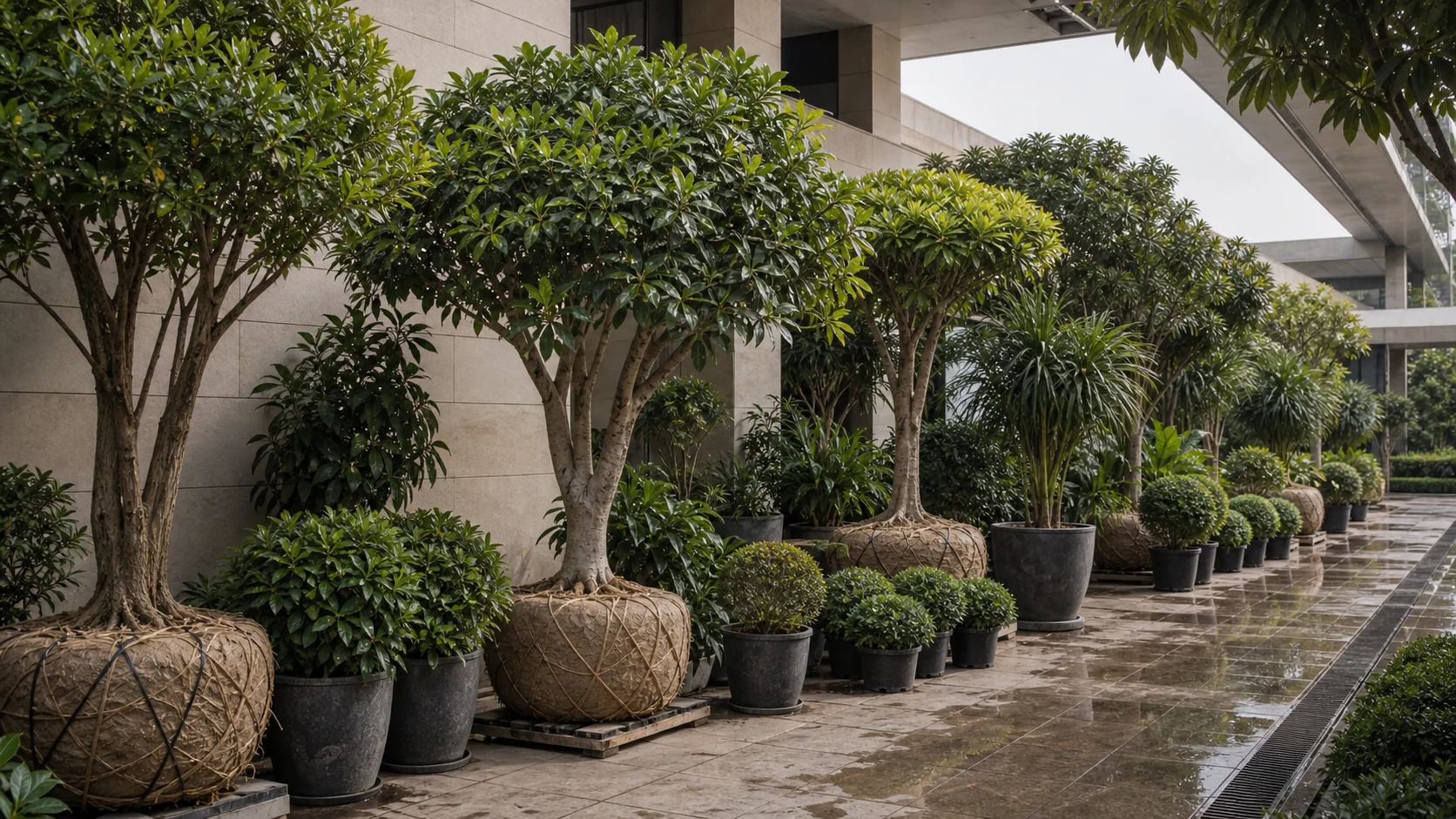
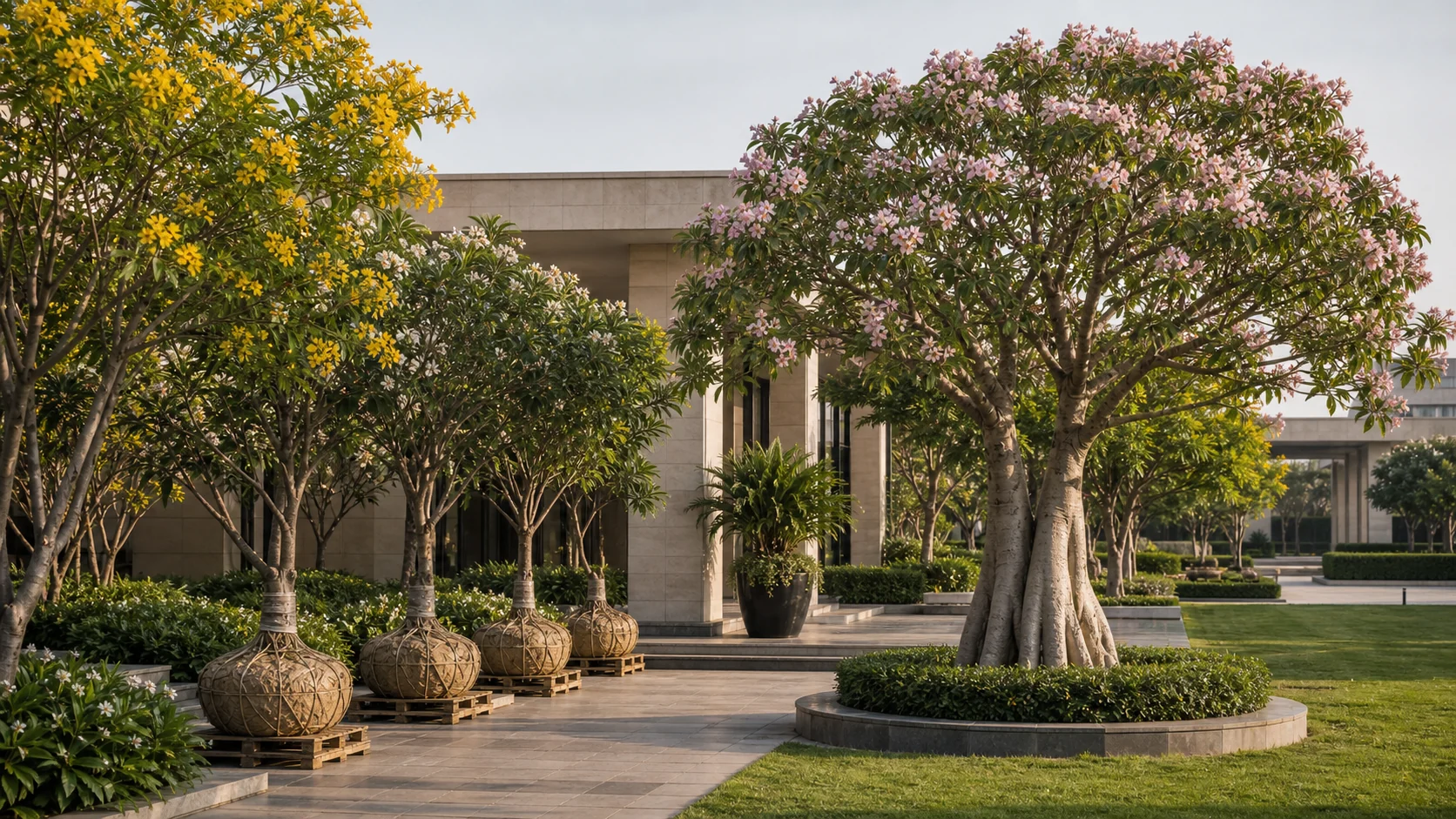
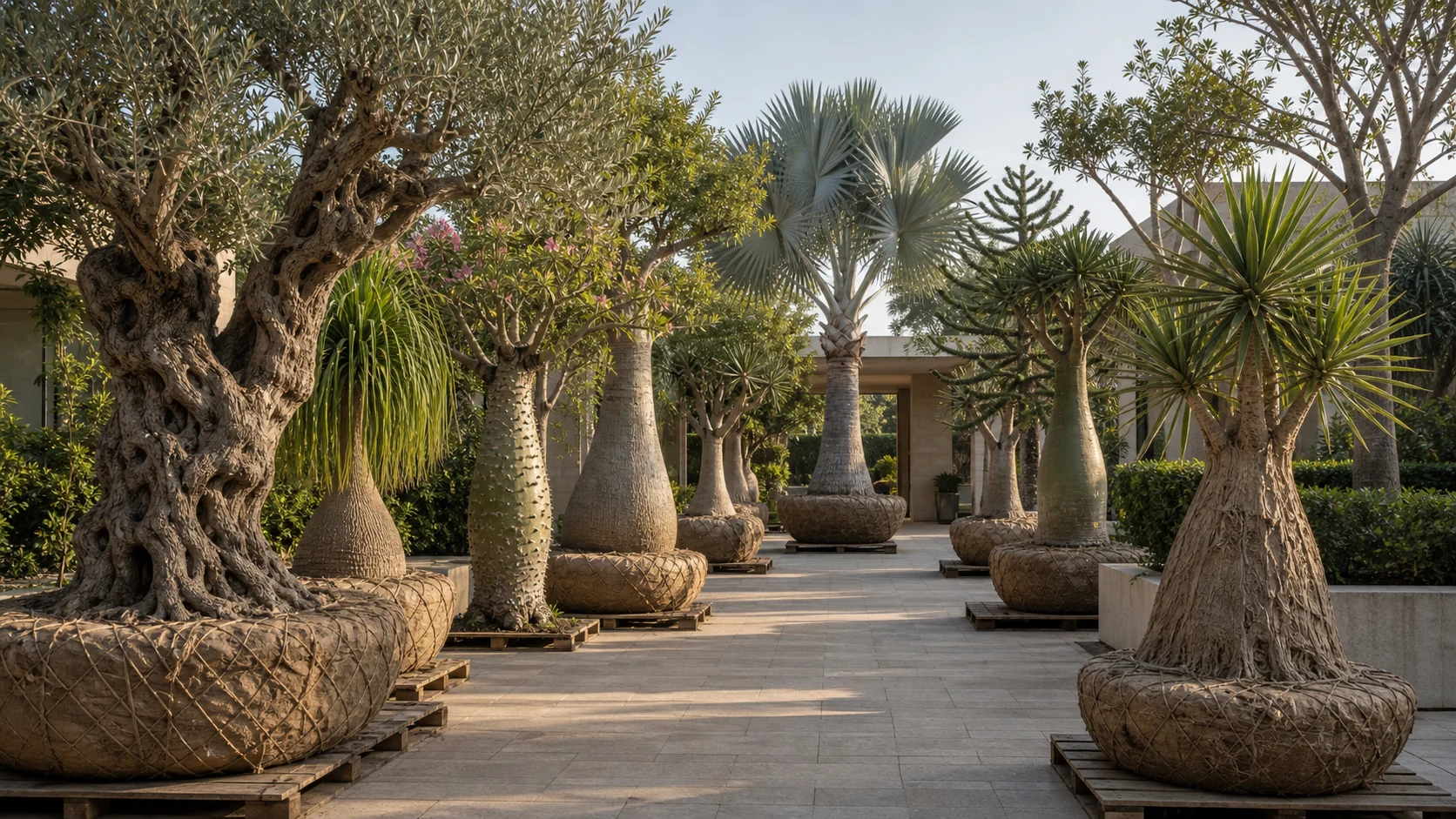
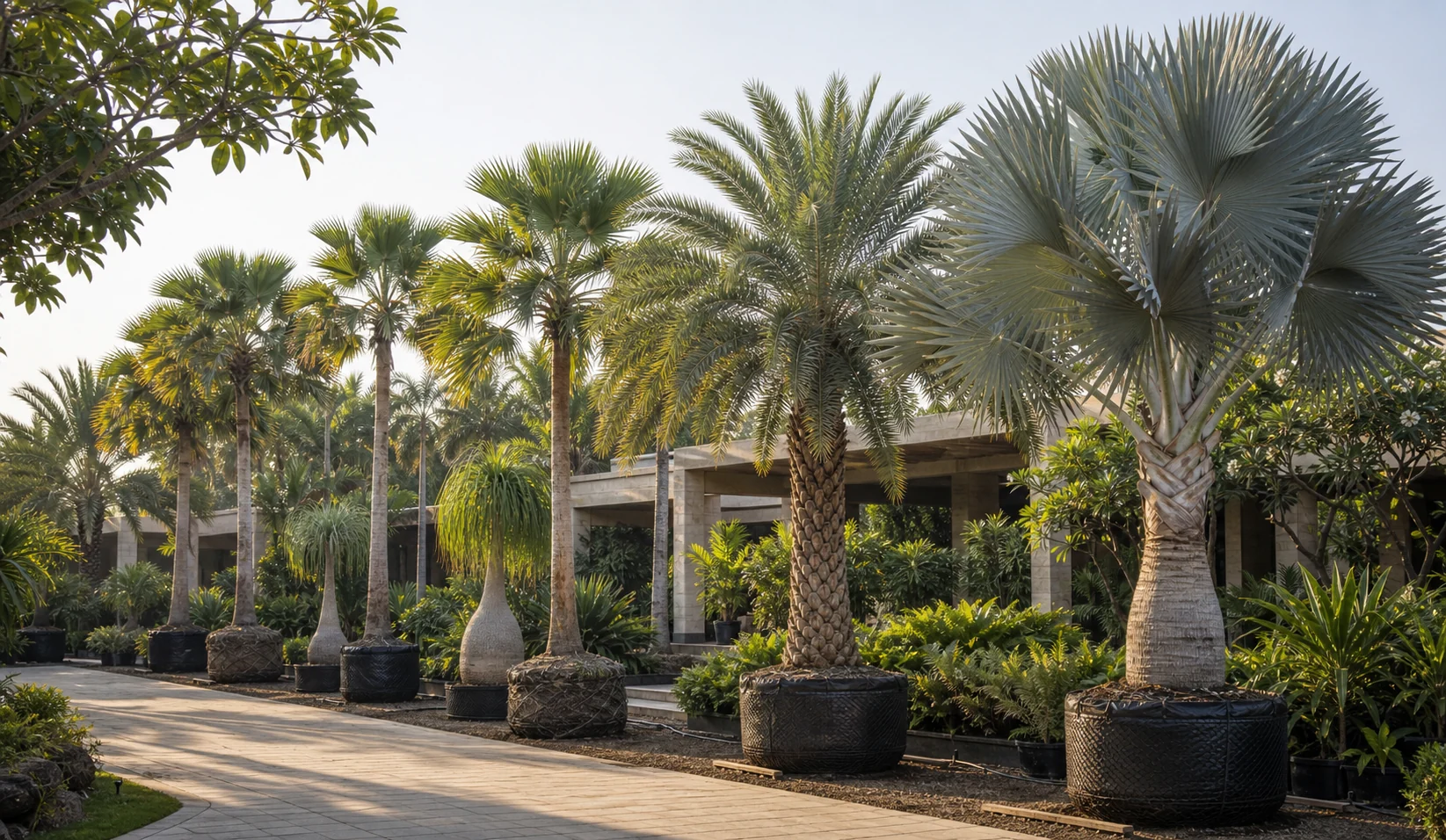
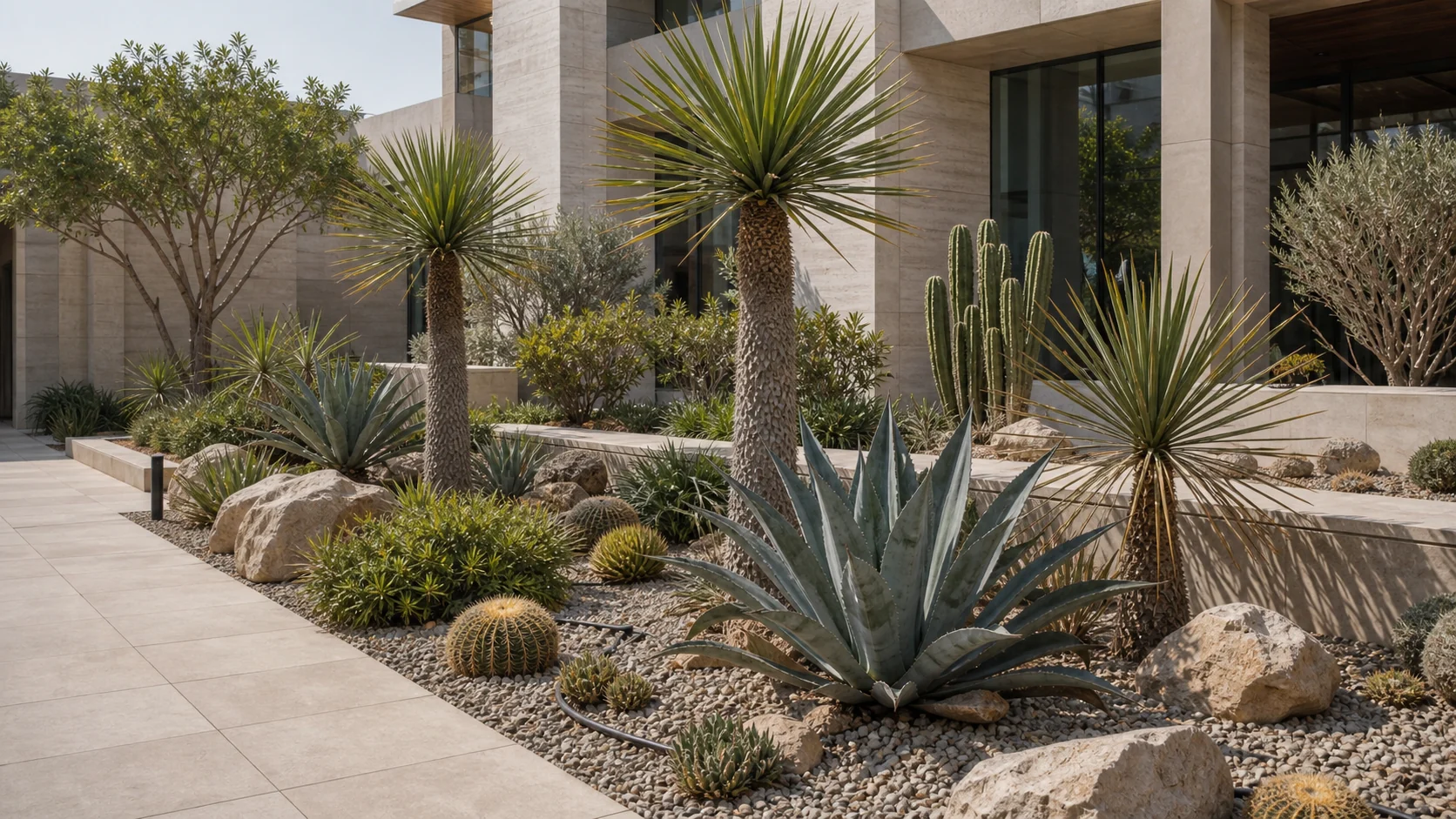
Visual context for placement, scale, handling, and landscape integration.
Section
Why projects specify cauliflorous trees
Carob, cannonball, and jabuticaba create conversation pieces at entries and internal courts where conventional flowering trees feel predictable.
Section
Climate and handling
Tropical to warm subtropical suitability; rootball access and crown clearance must be planned before delivery — many are slow-growing and costly to replace.
Section
Compliance and sourcing
Treat as regulated live-plant imports with phytosanitary documentation; build lead time into programme milestones.
Entries
In this category
Related
Related links
Services, segments, cost, and proof.
- Softscape & horticulture
- Irrigation & water management
- Landscape maintenance (AMC)
- Hotel & resort landscaping
- Luxury resort & spa landscaping
- Mall & retail landscaping
- Corporate campus landscaping
- Projects
- Commercial landscaping cost guide
- Pricing drivers (imported trees)
- Import compliance workflow
- Request a site assessment
- What does cauliflory mean for landscape procurement?
- Flowers or fruit borne on the trunk and main branches — the visual story is trunk-zone bloom, not canopy-only colour. Species pages name cauliflorous habit per tree.
- How should cannonball trees be placed for falling-fruit safety?
- Heavy woody fruits fall on paths — specify wide setback from parking, seating, and glass; AMC includes fruit removal, not guest self-clearance.
- How does dioecious carob pollination affect pod production?
- Female trees need male pollen source within range — BOQ both sexes or accept ornamental-only spec without pods.
- Why is jabuticaba slow growth a programme issue?
- Trunk-borne fruit appears on mature wood — opening-day impact needs bought size, not young whip stock.
- Do cauliflorous trees need different irrigation than standard shade trees?
- Tropical cauliflory often needs even moisture and drainage; Mediterranean carob needs dry roots — species pages split protocols.