
Cannonball tree
Cannonball tree (Couroupita guianensis)
Couroupita guianensis is the cannonball tree — fragrant cauliflorous flowers and huge woody fruits borne on the trunk, sacred as Nagalingam in Indian temple contexts. Large heavy fruits falling on paths are a serious safety hazard: specify setback from parking, seating, and guest routes; split fruit pulp smells strongly.
Spec
At a glance
- Botanical name
- Couroupita guianensis
- Family
- Lecythidaceae
- Origin
- South America — widely planted in tropical India
- Plant type
- Large tropical evergreen — cauliflorous
- Mature height
- Often 15–25 m in tropical maturity; wide spread
- Trunk / form (cauliflory)
- Cauliflorous flowers and cannonball fruits on trunk and main limbs
- Crown spread
- Large spreading crown — coarse texture
- Growth rate
- Moderate to fast in tropical heat with water
- Light
- Full sun to partial shade when young
- Water needs
- Moderate to high in establishment; tropical humidity tolerant
- India climate suitability
- Tropical lowlands — Kerala, coastal belts, humid gardens
- Cold/heat tolerance
- Frost-free only; heat and humidity OK
- Typical supply size
- Large container and field trees [Unverified]
- Install considerations
- Wide safety setback; fruit fall zone engineered; crane for large stock
- Maintenance level
- Fruit harvest/removal from fall zones; path closure during heavy fruit drop
- Cautions
- MANDATORY: heavy falling fruits — serious safety hazard away from paths/parking/seating; smelly pulp when split; large tropical tree
Gallery
Specimen visual guide
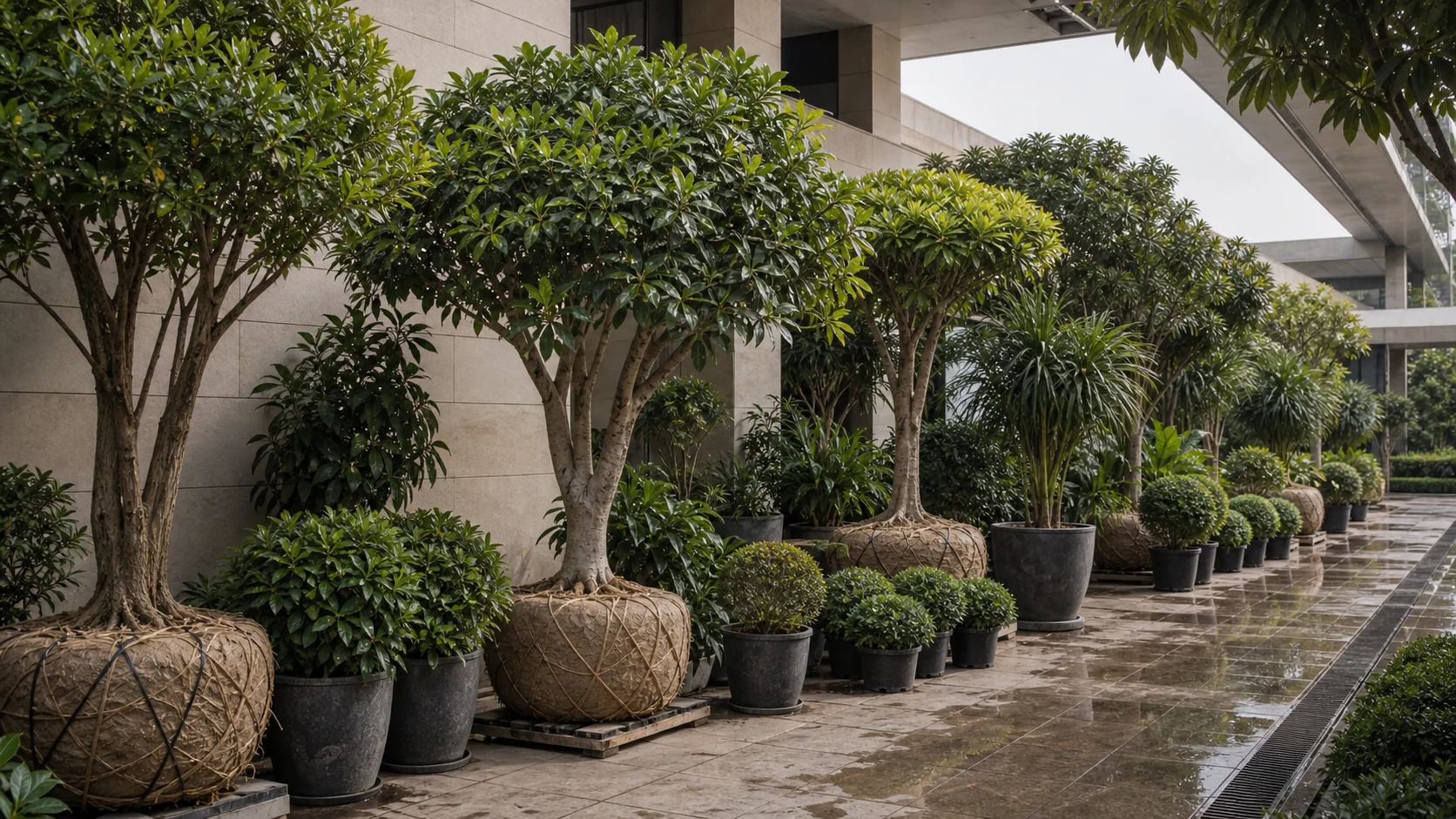
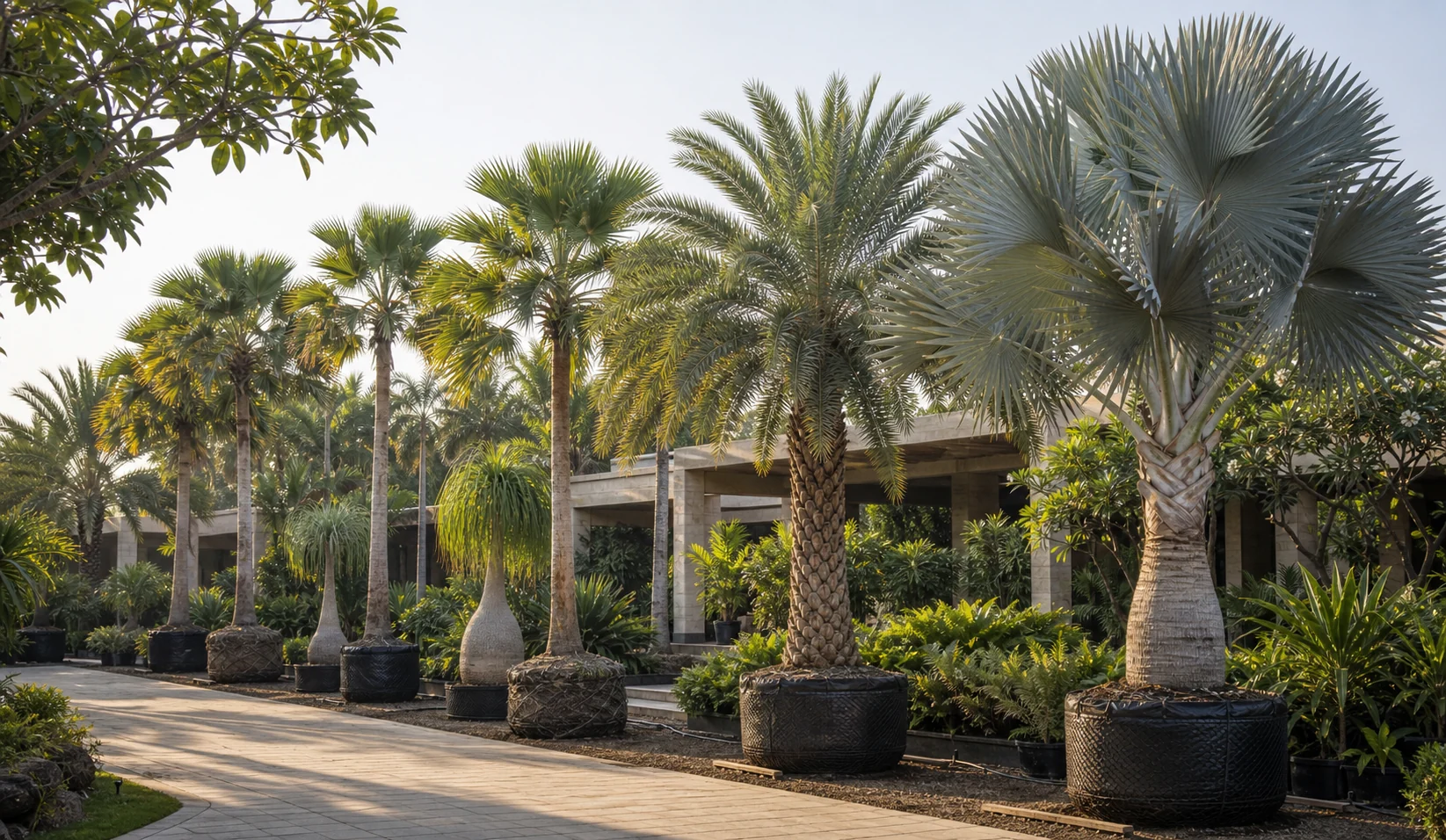
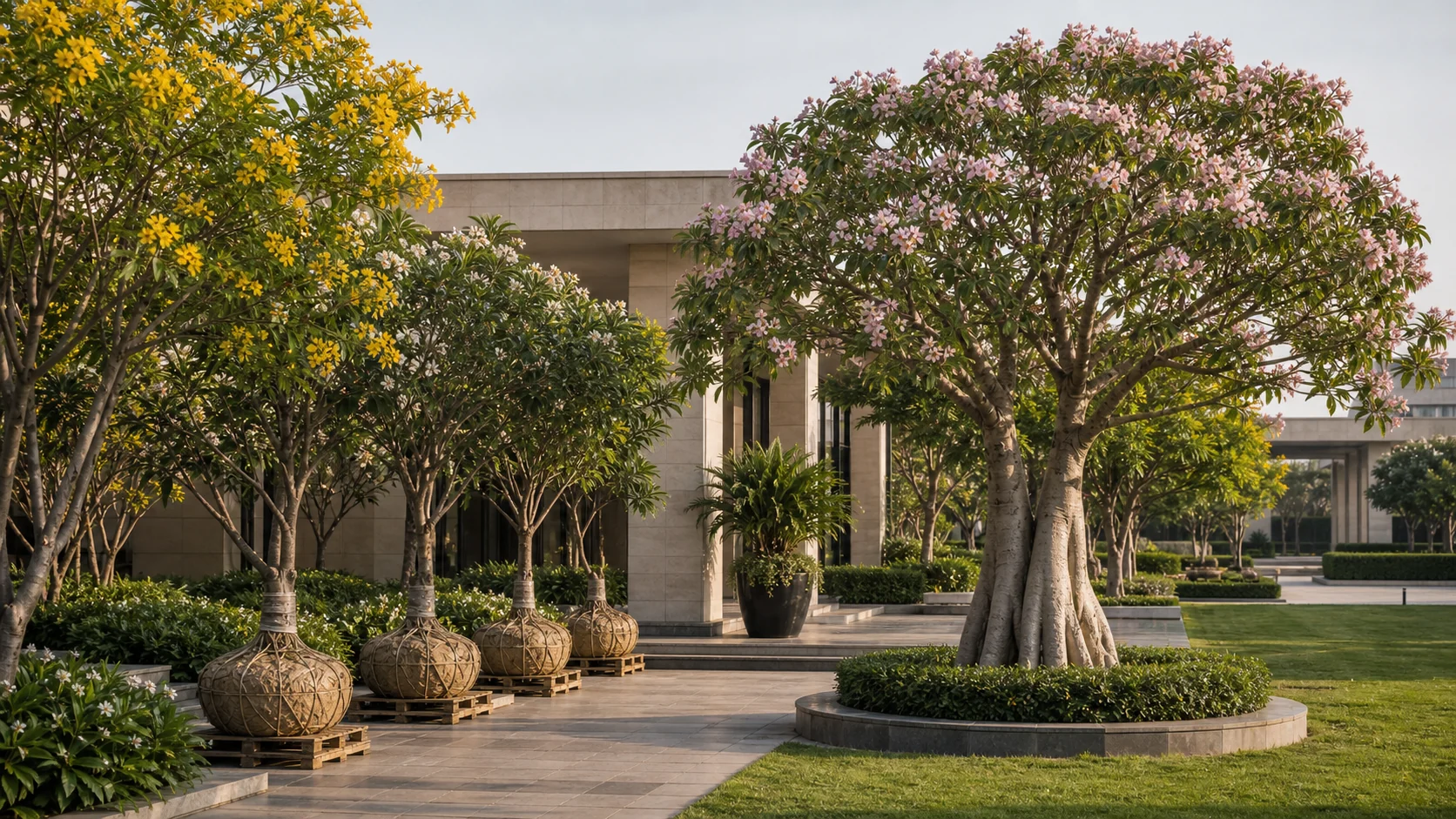
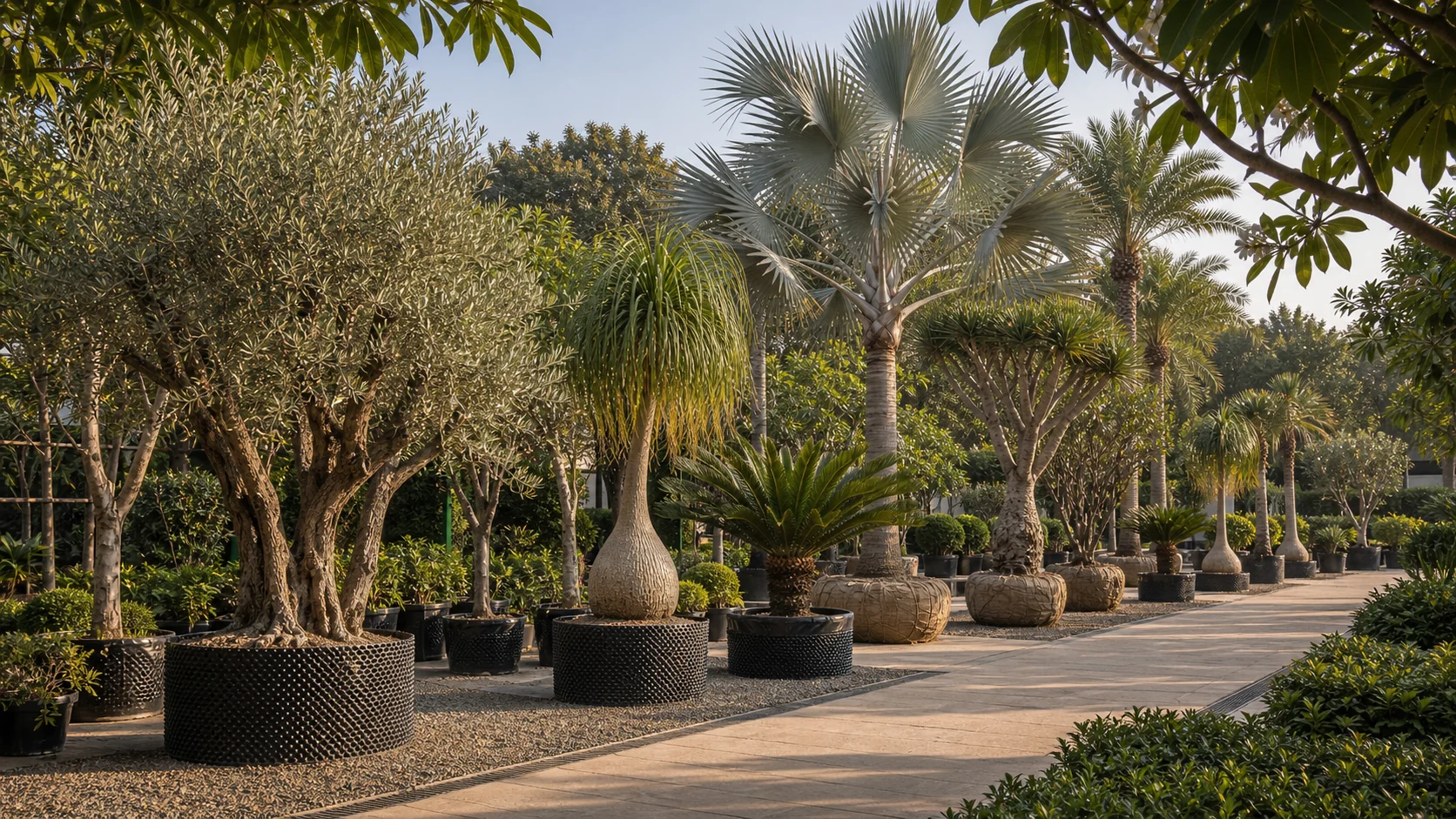
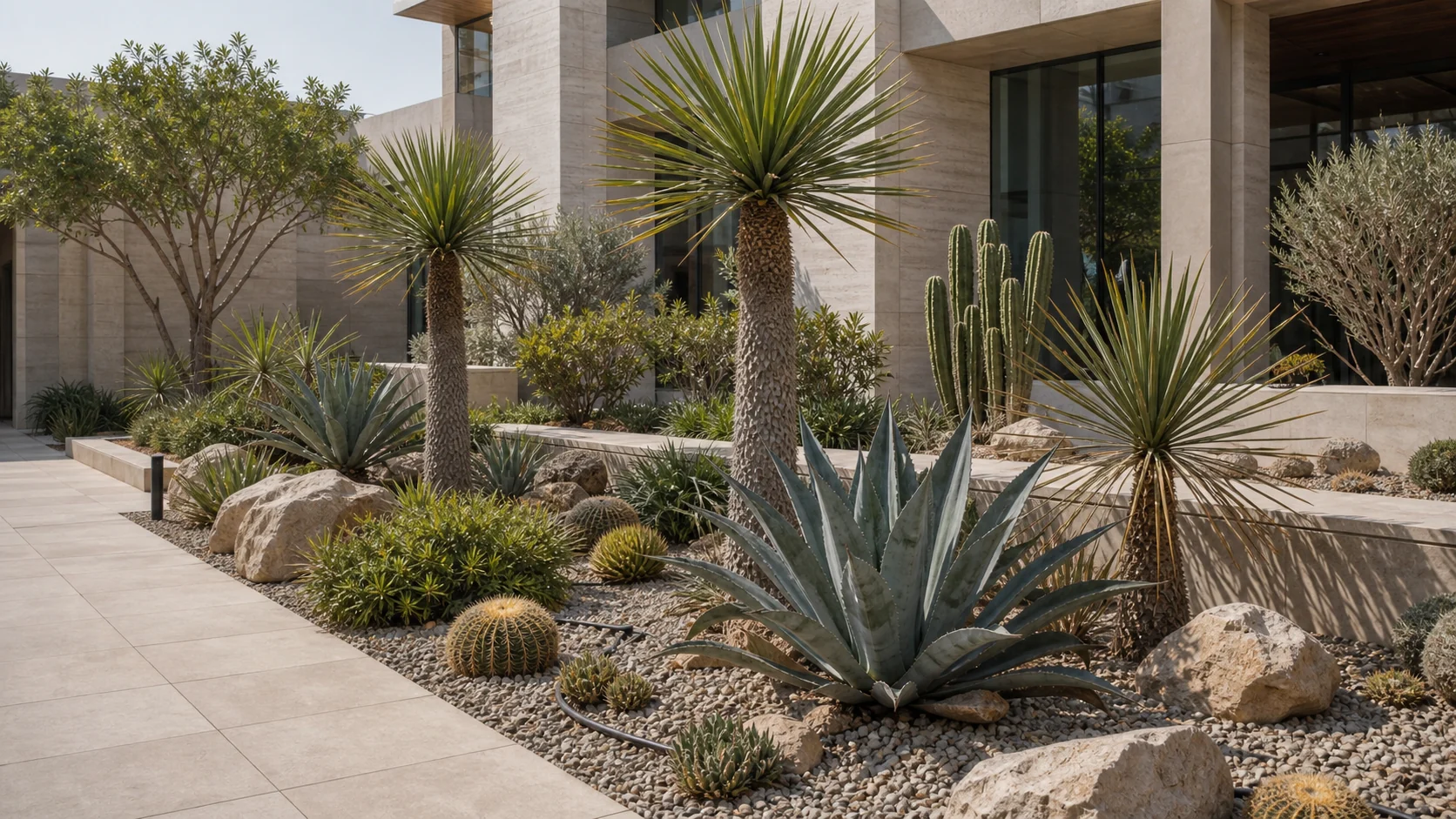
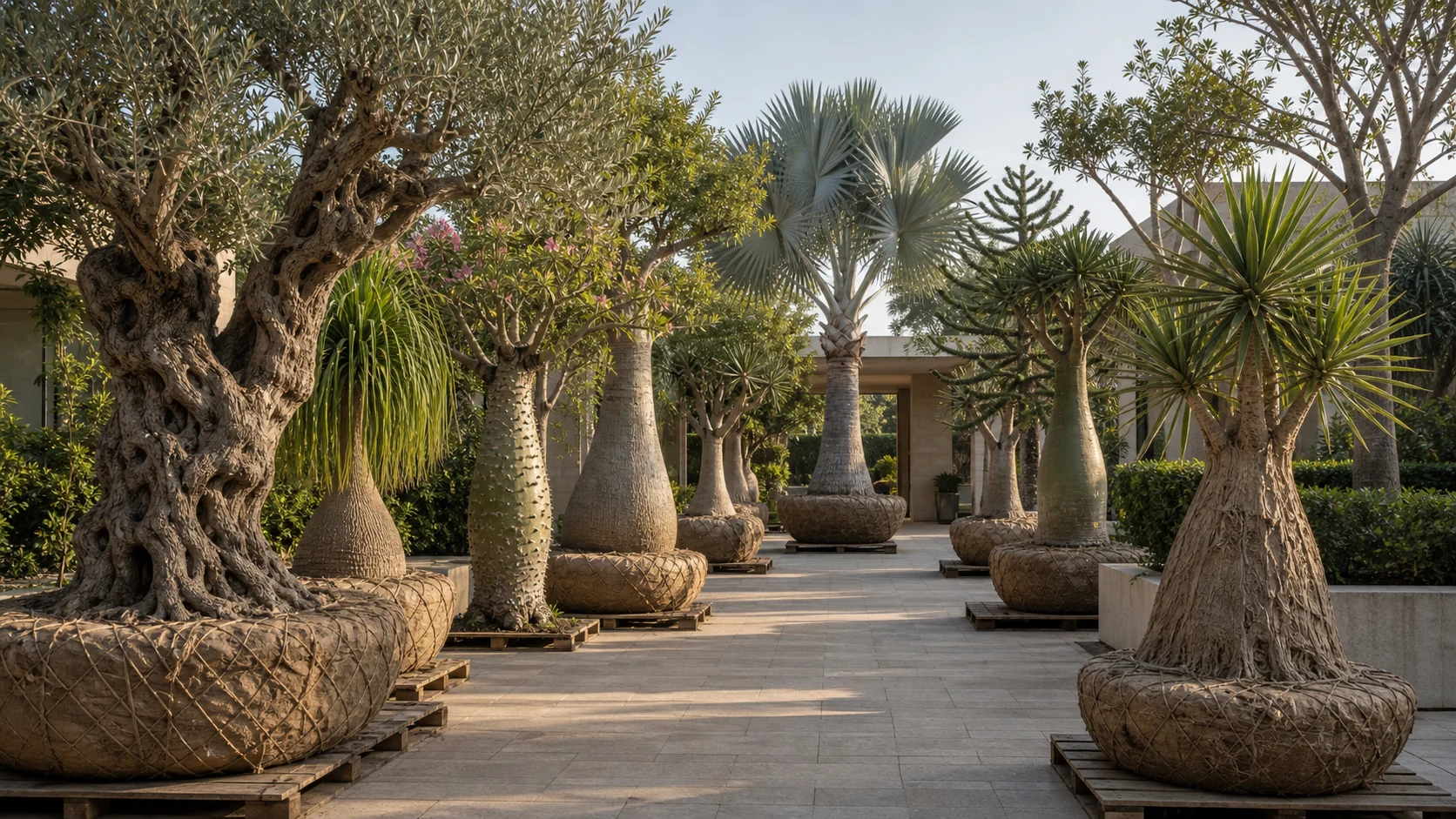
Visual context for placement, scale, handling, and landscape integration.
Section
Where it's used in premium projects
Cannonball trees anchor temple-adjacent resort landscapes and botanical gardens where Nagalingam story and trunk flowers justify scale — never as a porte-cochere street tree under parking. Night lighting on trunk flowers is spectacular with safety zoning.
Section
Climate & site suitability in India
Humid tropical India succeeds — not for Delhi frost or dry Rajasthan defaults without protected tropical biome. Fruit fall is year-round risk when bearing — AMC is safety-first, not cosmetic. Coastal wind may strip flowers — plan protected courtyards.
Section
Sourcing & acclimatisation
Buy with trunk flower scars visible if instant story matters — [Unverified: India field tree sizes.] Document safety setback on landscape hazard review.
Section
Installation (planting, safety zones, drainage)
Minimum fall zone radius on drawings — no guest seating, parking, or glass skylights under canopy. Crane install for heavy specimens; stake young trees in cyclone exposure. Signage per client policy for falling fruit hazard.
Section
Establishment & AMC
AMC patrols fall zones weekly in fruiting — remove cannonballs before events. Pulp cleanup and odour management when splits occur — crew PPE and disposal plan. Do not promise fruit-free maintenance on mature bearing trees.
Section
Cost drivers
Explore
Related
Related
Related links
Services, segments, cost, and proof.
- Softscape & horticulture
- Irrigation & water management
- Landscape maintenance (AMC)
- Hotel & resort landscaping
- Luxury resort & spa landscaping
- Mall & retail landscaping
- Corporate campus landscaping
- Projects
- Commercial landscaping cost guide
- Pricing drivers (imported trees)
- Import compliance workflow
- Request a site assessment
- Why is cannonball fruit a safety issue?
- Large heavy woody fruits fall unpredictably — can injure guests and damage vehicles; specify setback from paths, parking, and seating.
- What are the trunk flowers like?
- Fragrant cauliflorous blooms on trunk and limbs — Nagalingam association in Indian temple planting traditions.
- What happens when fruit splits on the ground?
- Pulp smells strongly — plan cleanup AMC and avoid dining terraces under bearing trees.
- Can cannonball tree grow in Delhi?
- No for frost-prone dry climates — tropical humid lowlands and protected biomes only.
- How large does Couroupita become?
- Large tropical tree — civil planning for height, spread, and fall zone decades before maturity.
- What import paperwork applies?
- Tropical tree imports need phytosanitary and quarantine inspection (informational, not legal advice).
- How should cannonball BOQs be priced?
- Match tree size, crane, safety setback engineering, and fruit-removal AMC — not generic avenue tree planting.