
Carob
Carob (Ceratonia siliqua)
Ceratonia siliqua is the Mediterranean carob with cauliflorous flowers on old wood and edible carob pods — drought and heat tolerant once established. Dioecious pollination means pod production needs both female trees and nearby male pollen sources; slow growth makes size at supply the design variable.
Spec
At a glance
- Botanical name
- Ceratonia siliqua
- Family
- Fabaceae
- Origin
- Mediterranean / Middle East
- Plant type
- Evergreen tree — cauliflorous flowering
- Mature height
- Often 8–15 m in maturity; slow in early years
- Trunk / form (cauliflory)
- Thick trunk; flowers and pods on trunk and older branches (cauliflory)
- Crown spread
- Broad rounded evergreen crown
- Growth rate
- Slow — decades to large size
- Light
- Full sun
- Water needs
- Low once established — drought tolerant
- India climate suitability
- Strong in dry belts Rajasthan/Gujarat and irrigated Mediterranean themes
- Cold/heat tolerance
- Heat-hardy; young plants need wind protection
- Typical supply size
- Multi-stem and standard trees #25+ [Unverified]
- Install considerations
- Deep pits in dry sites; stake young trees; plan male/female for pods
- Maintenance level
- Pod cleanup if near paths; structural prune for clearance
- Cautions
- Dioecious — need female + male for pods; slow; drainage on young trees
Gallery
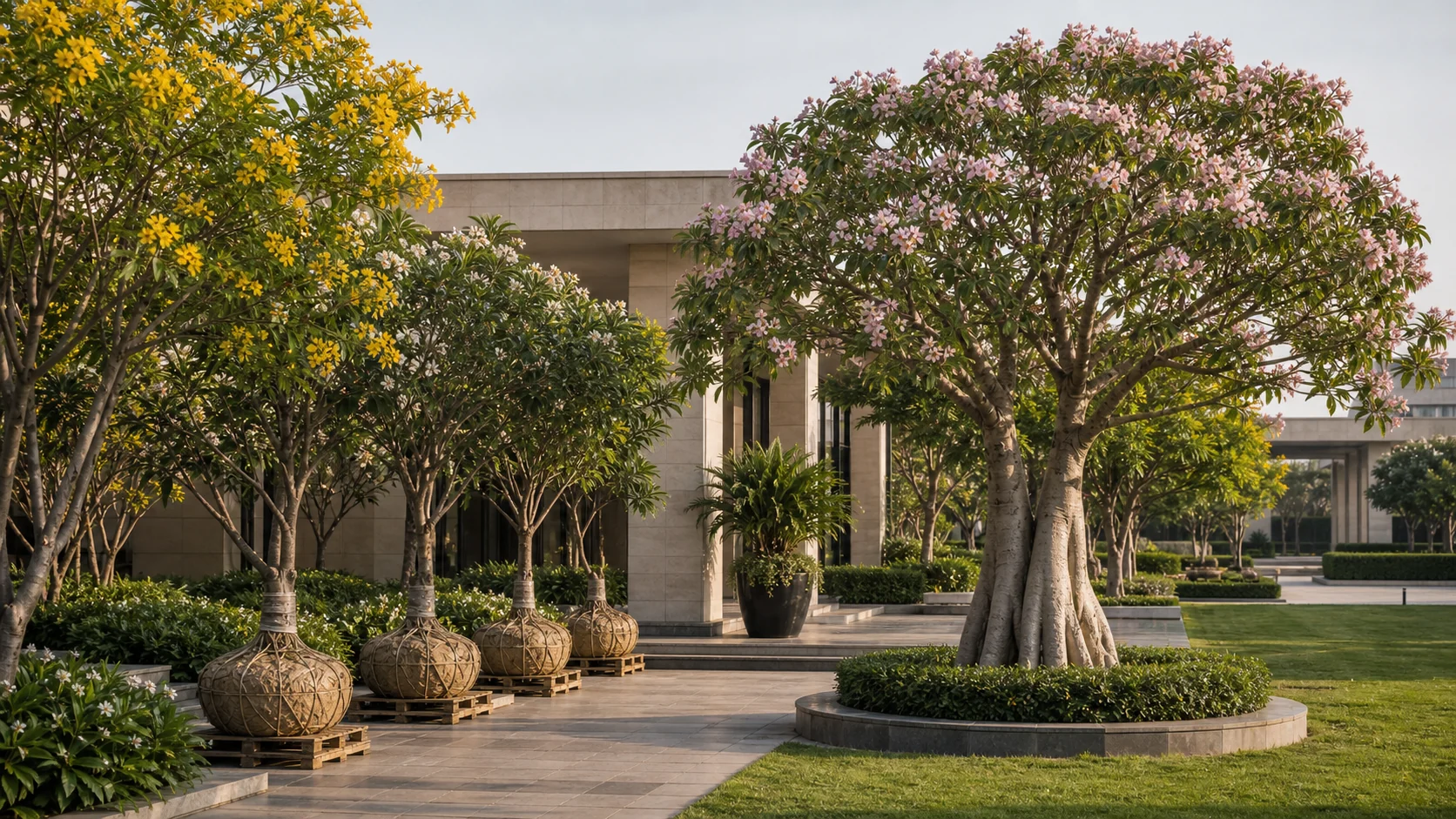
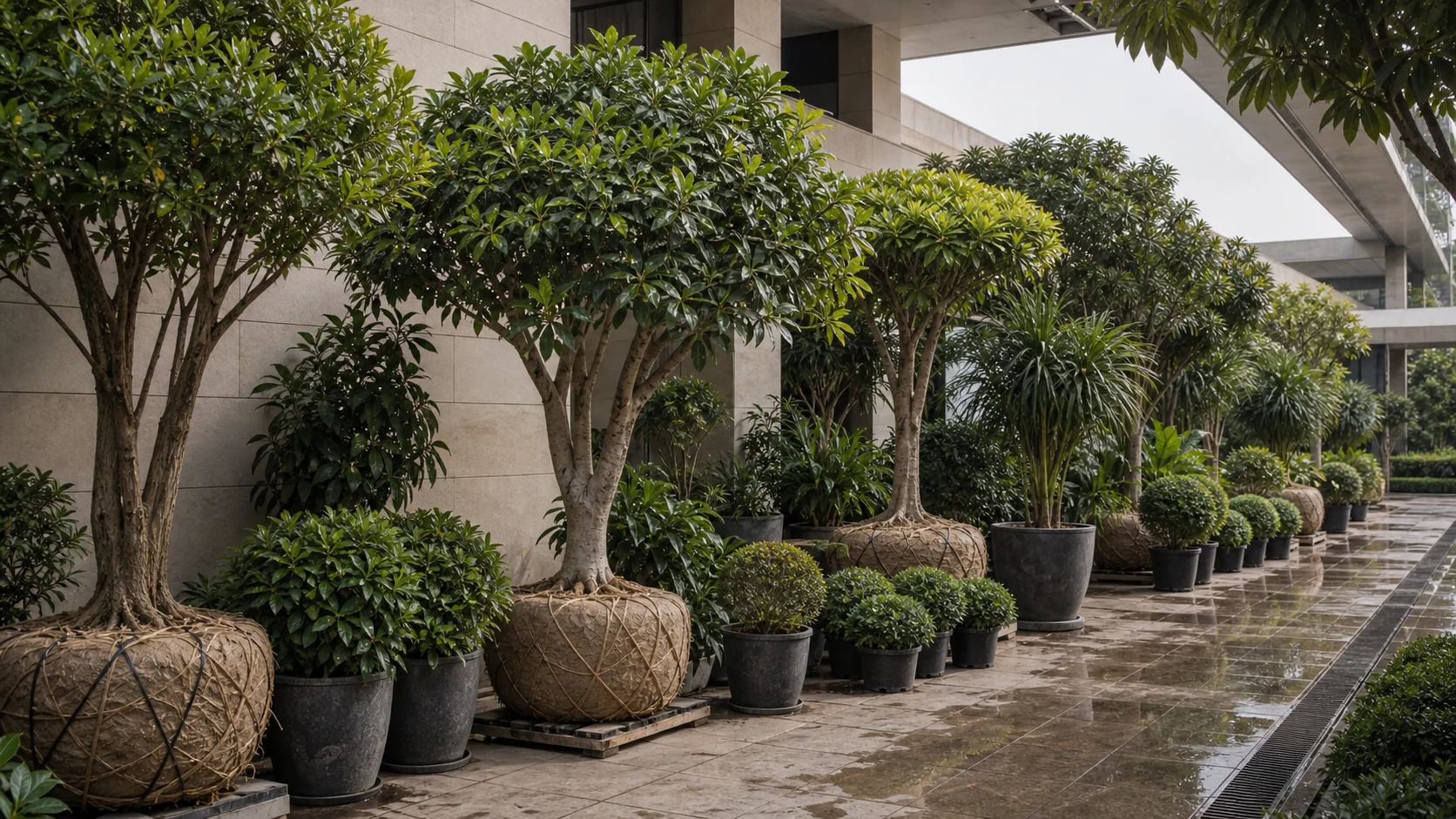
Specimen visual guide
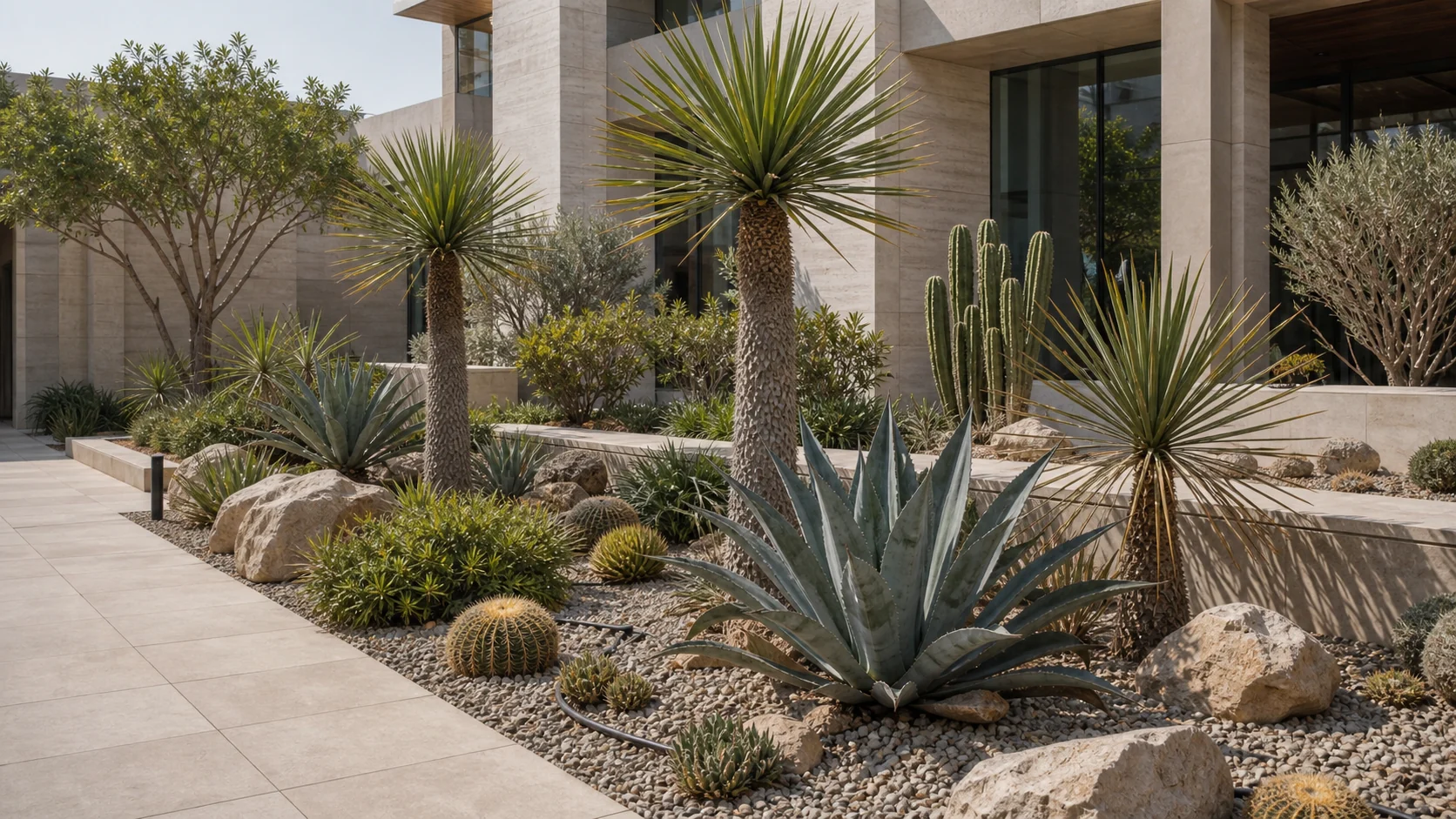
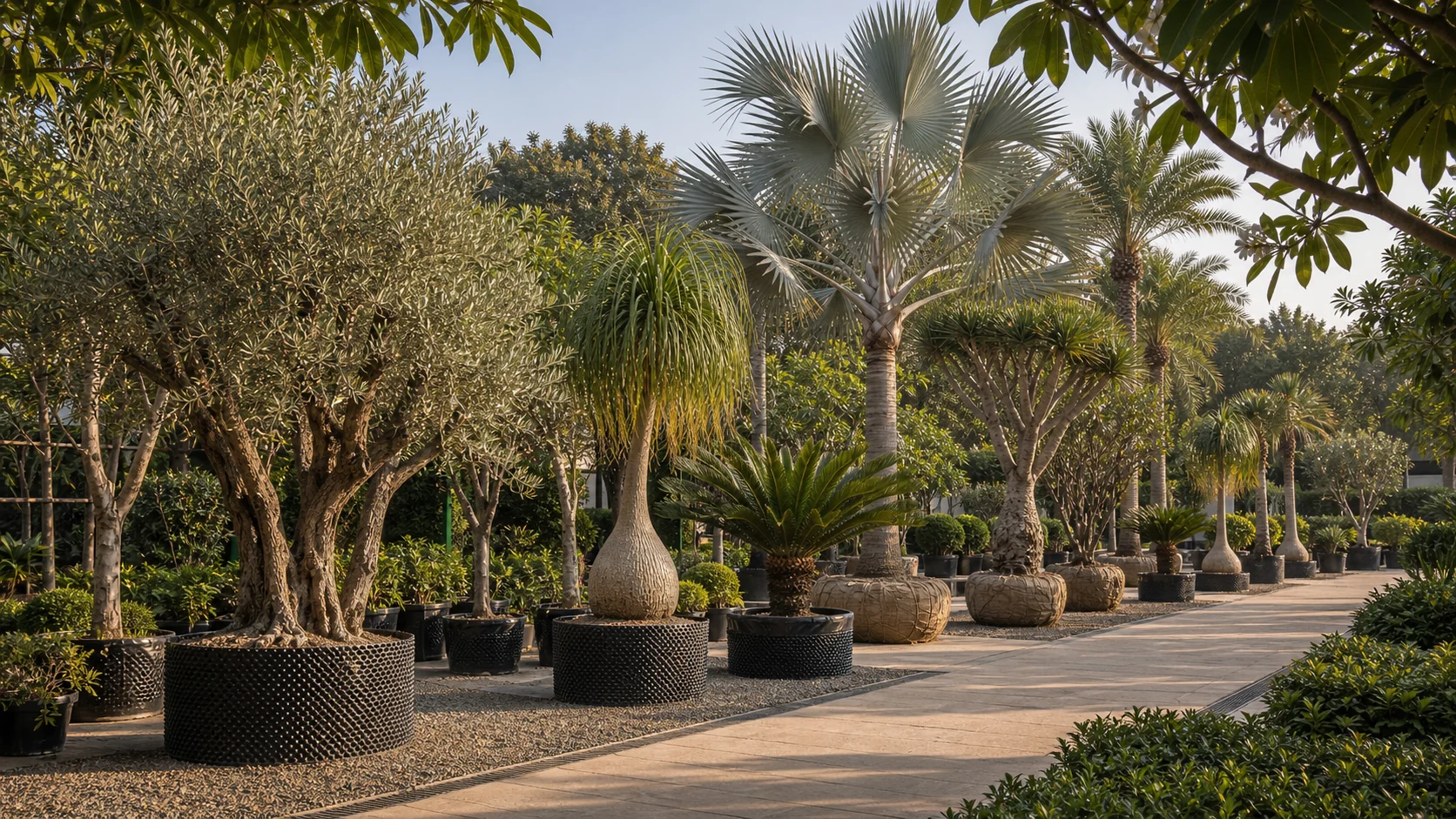
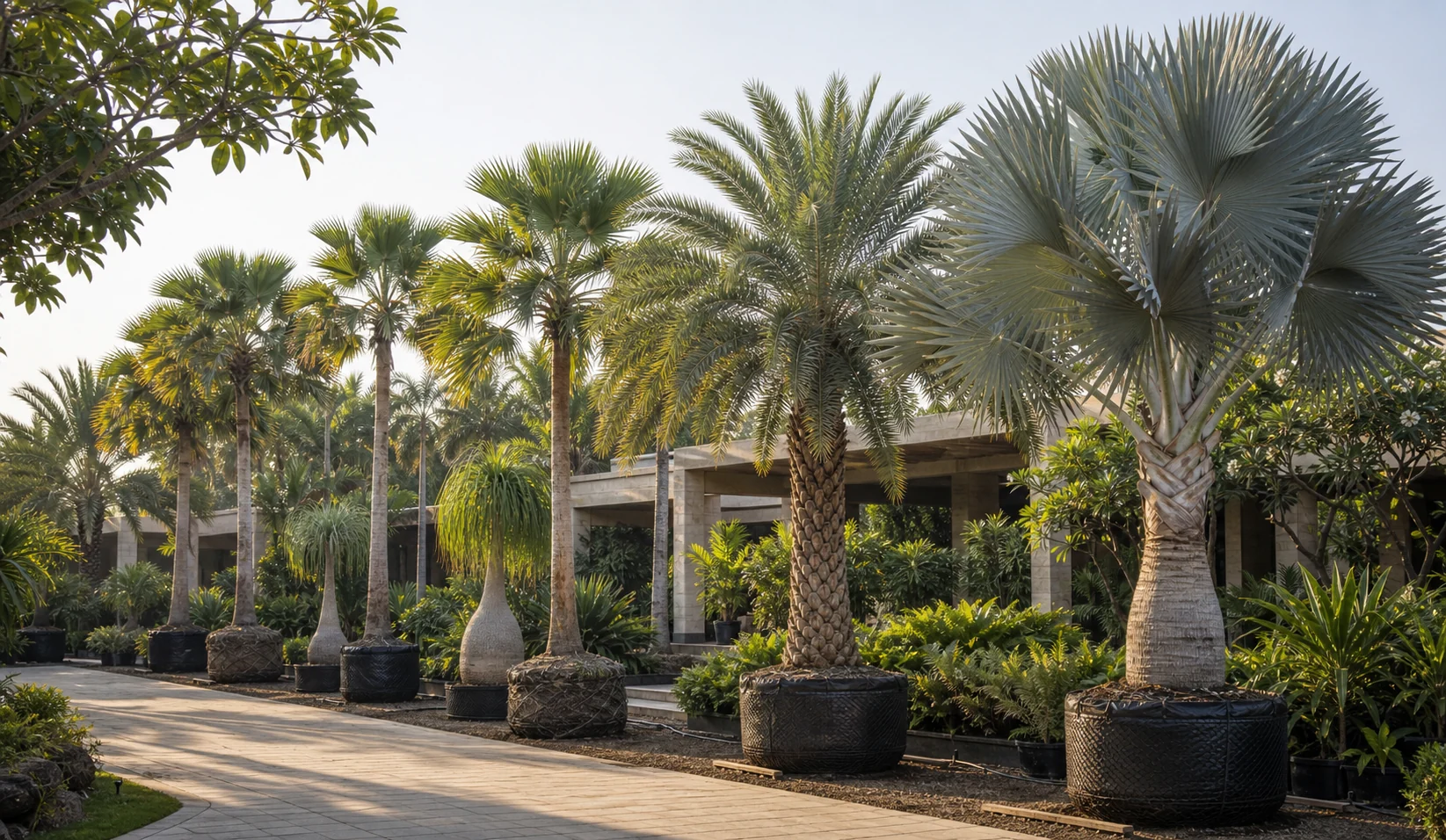
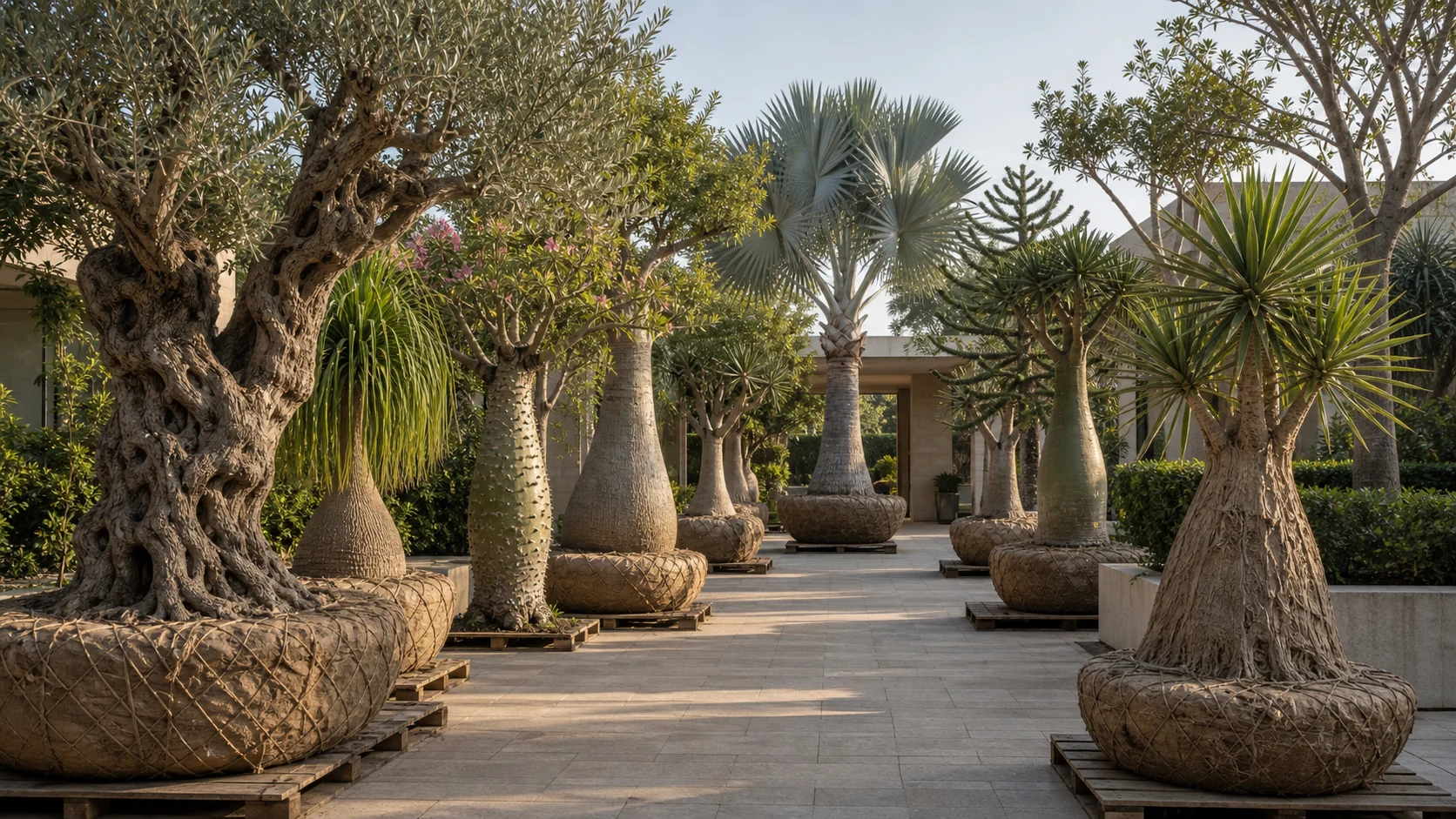
Visual context for placement, scale, handling, and landscape integration.
Section
Where it's used in premium projects
Carob anchors Mediterranean villa orchards, eco-resort food forests, and drought-tolerant arrival groves where cauliflous flowers on gnarled trunks sell authenticity — edible pod story optional but requires pollination planning.
Section
Climate & site suitability in India
Dry summer India mirrors Mediterranean ecology — excellent where irrigation budgets are honest but low. Humid monsoon young trees need drainage — rot at collar on wet clay. Pod years need heat and sun; shade reduces flowering on old wood.
Section
Sourcing & acclimatisation
Specify sex if pod production is contractual — female with documented male nearby. [Unverified: India nursery sexed stock availability.]
Section
Installation (planting, safety zones, drainage)
Large pits with drainage even in dry sites for establishment years. Stake standard forms. If pods are required, map male pollen within bee flight distance — not a single female island.
Section
Establishment & AMC
Minimal irrigation after year three in dry sites — overwatering delays drought character. Clean fallen pods on paths if slippery. AMC is structural clearance on slow growth, not hedge clip.
Section
Cost drivers
Explore
Related
Related
Related links
Services, segments, cost, and proof.
- Softscape & horticulture
- Irrigation & water management
- Landscape maintenance (AMC)
- Hotel & resort landscaping
- Luxury resort & spa landscaping
- Mall & retail landscaping
- Corporate campus landscaping
- Projects
- Commercial landscaping cost guide
- Pricing drivers (imported trees)
- Import compliance workflow
- Request a site assessment
- What is cauliflory on carob?
- Flowers and pods borne on trunk and older branches, not only outer twigs — gnarled trunk display is the design feature.
- Are carob pods edible?
- Yes — sweet carob pods when female trees receive male pollen; plan dioecious planting, not single specimens alone.
- Do I need male and female carob trees?
- Yes for pods — females produce pods with pollen from males within flight range; specify sex on BOQ.
- Does carob suit Rajasthan dry sites?
- Yes — Mediterranean drought tolerance matches dry belts with establishment irrigation only.
- How fast does carob grow in India?
- Slow — buy size for arrival impact; cauliflory display improves as trunk matures over years.
- What import paperwork applies?
- Live tree imports need phytosanitary and quarantine inspection (informational, not legal advice).
- How should carob BOQs be priced?
- Match size class, sexed stock if pods required, pollination planning, and slow-tree AMC — not fast-growing shade tree rates.