
Jabuticaba
Jabuticaba (Plinia cauliflora)
Plinia cauliflora is the Brazilian grape tree — edible grape-like fruit borne directly on the trunk (classic cauliflory). Very slow growth and preference for acidic moist soil make it a collector orchard tree in India, not a fast-opening shade solution.
Spec
At a glance
- Botanical name
- Plinia cauliflora
- Family
- Myrtaceae
- Origin
- Brazil
- Plant type
- Evergreen tree — cauliflorous edible fruit
- Mature height
- Often 3–8 m in cultivation — slow
- Trunk / form (cauliflory)
- Smooth trunk with grape-like fruit on trunk and branches
- Crown spread
- Dense evergreen crown — ornamental when not fruiting
- Growth rate
- Very slow — years between major size jumps
- Light
- Full sun to partial shade — sun for fruit
- Water needs
- Consistent moisture — dislikes long drought when fruiting
- India climate suitability
- Subtropical humid with acidic soil prep; challenging on alkaline calcareous soils
- Cold/heat tolerance
- Frost-free; protect young trees from desiccating heat without water
- Typical supply size
- Young container trees to medium specimens [Unverified]
- Install considerations
- Acidic media in raised beds on alkaline sites; irrigation for fruit
- Maintenance level
- Light feed for fruit; harvest cleanup; patience for size
- Cautions
- Very slow; prefers acidic soil + moisture; rare in India
Gallery
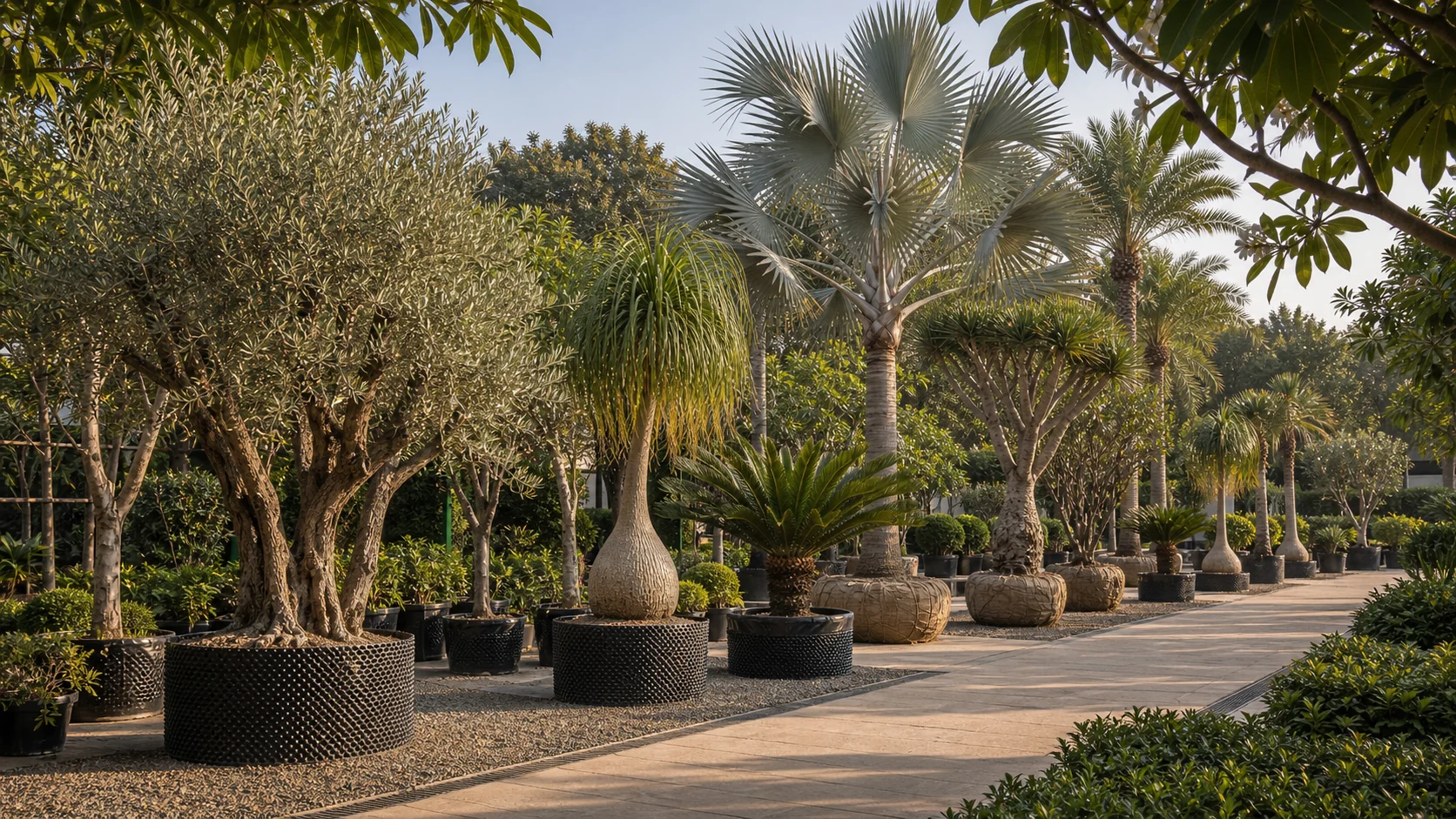
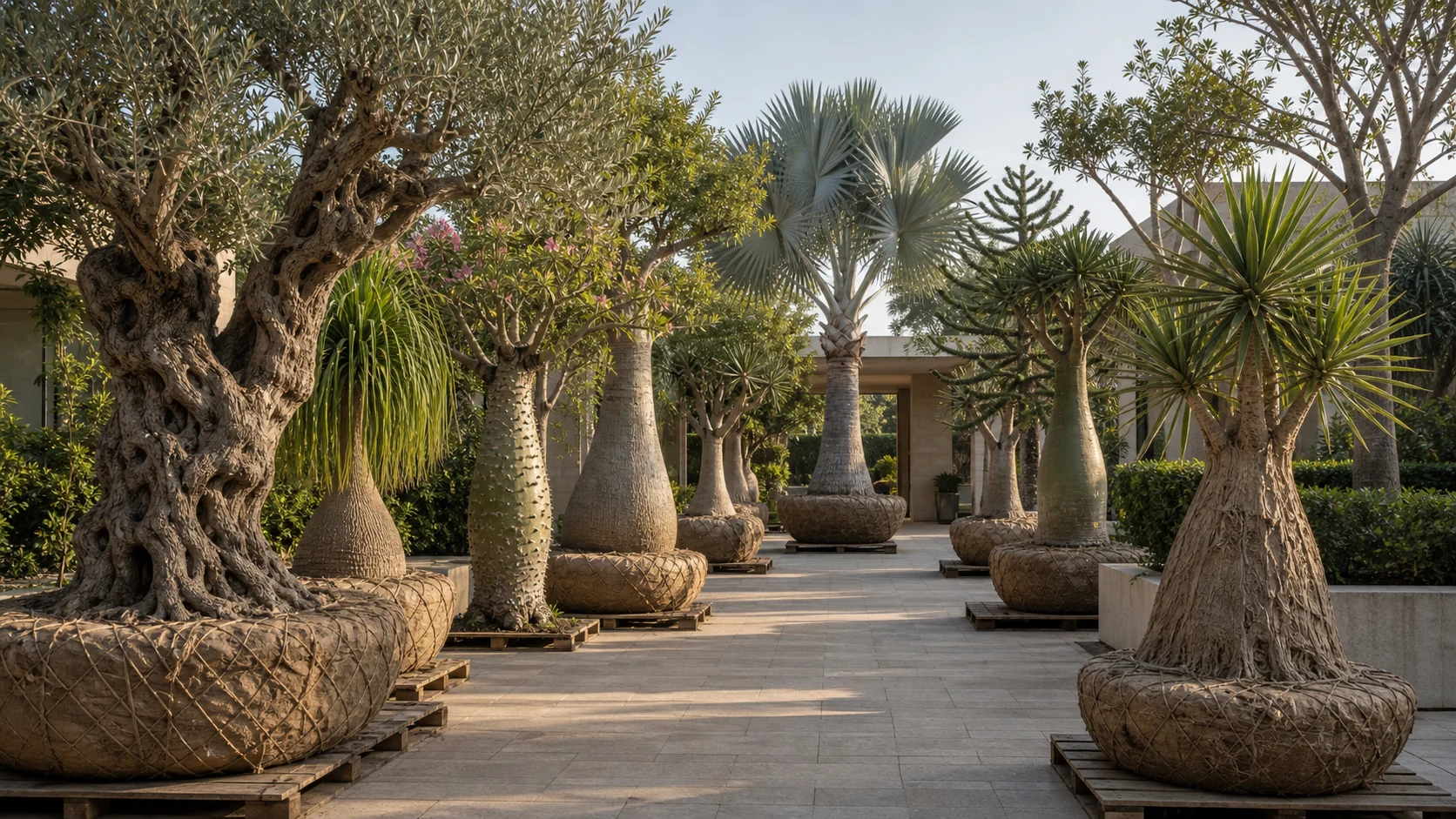
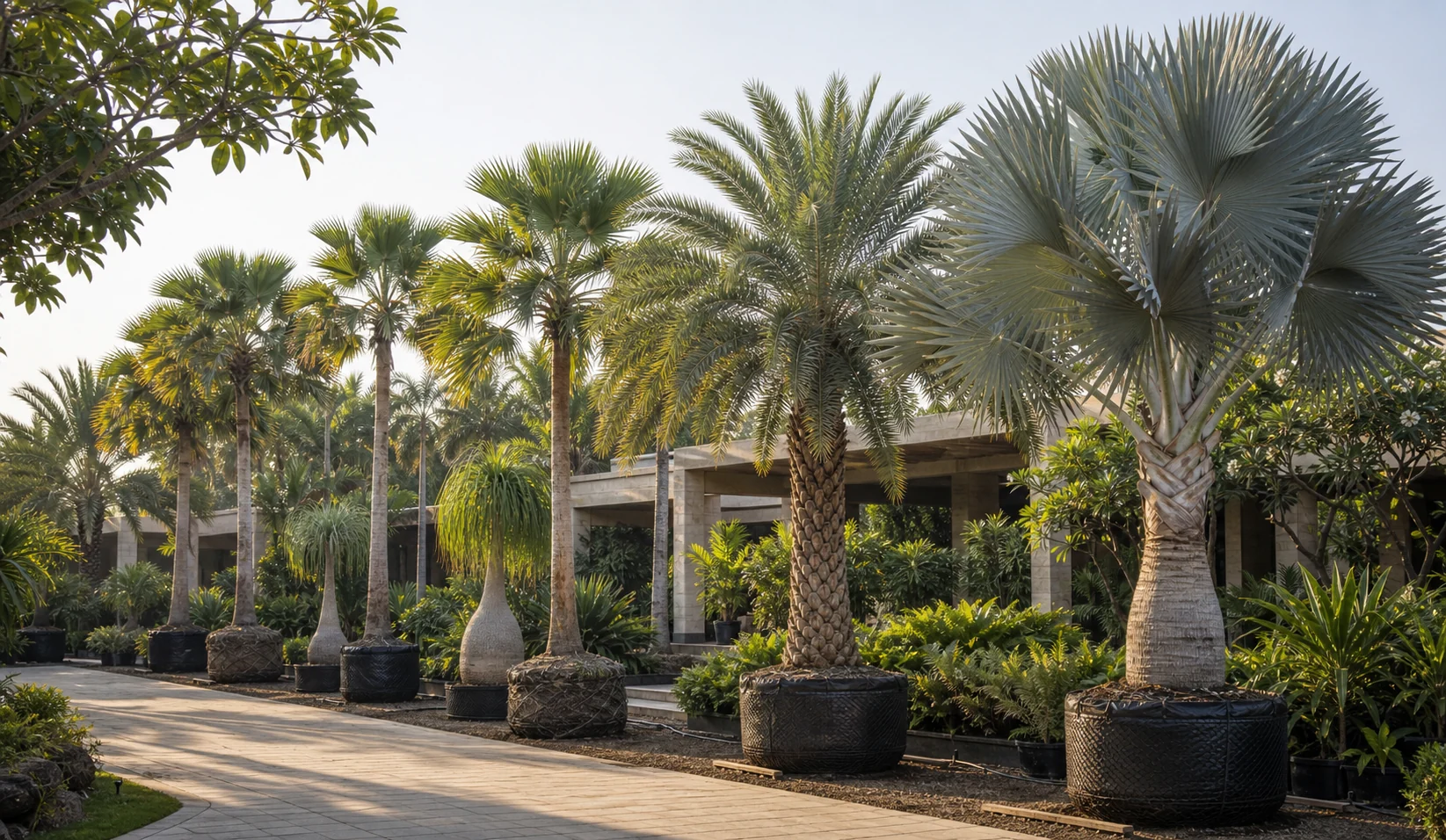
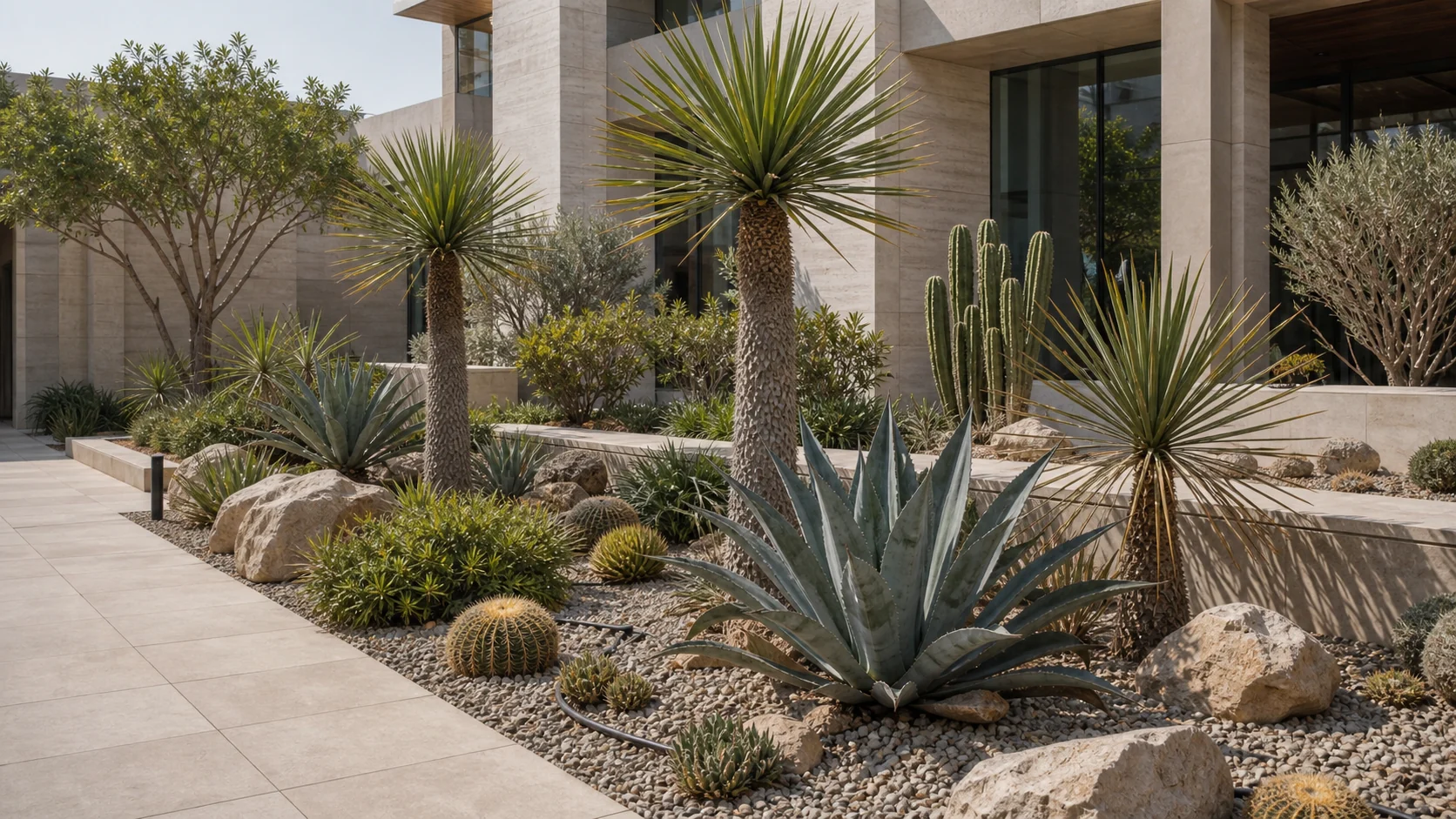
Specimen visual guide
Visual context for placement, scale, handling, and landscape integration.
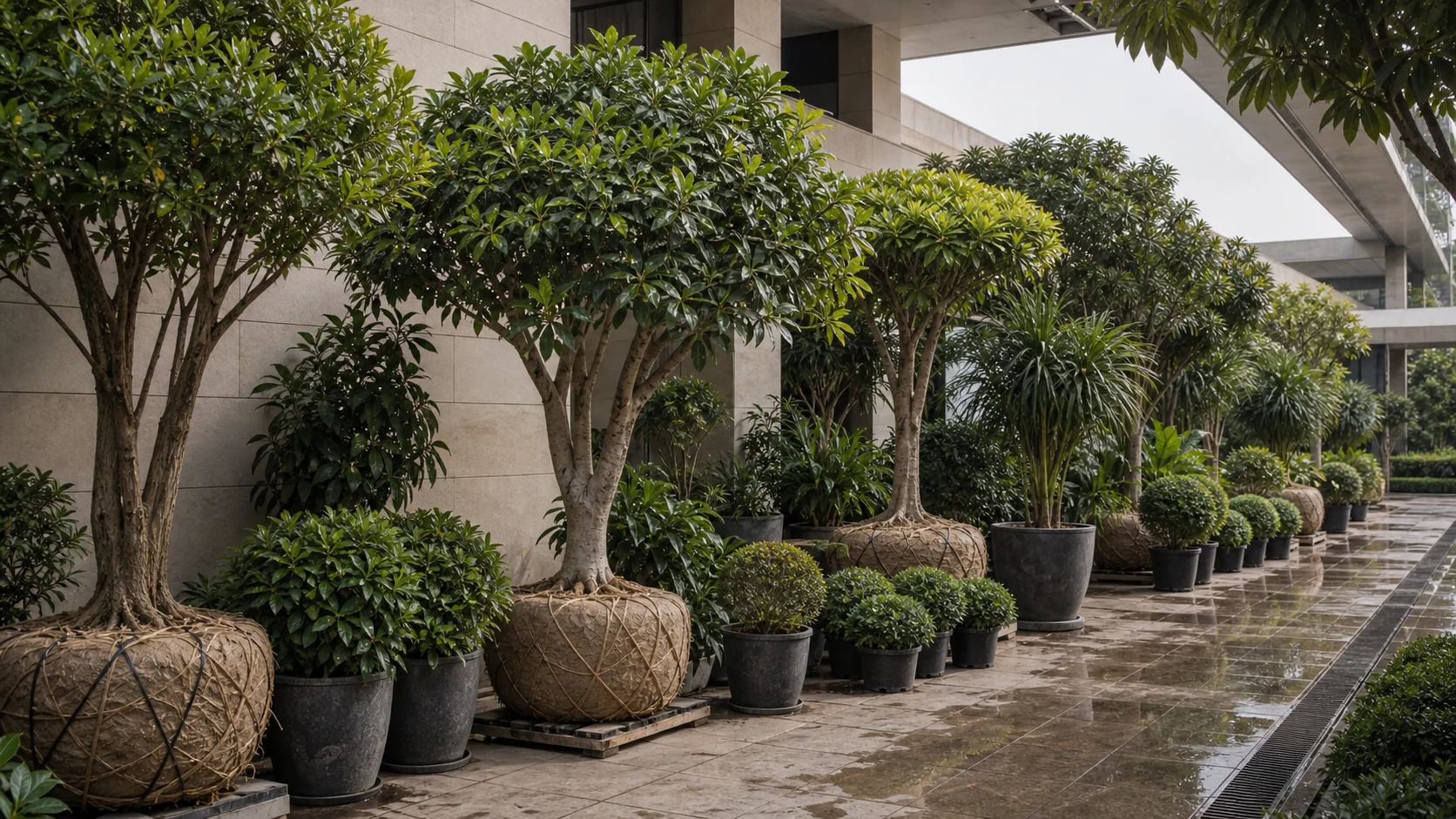
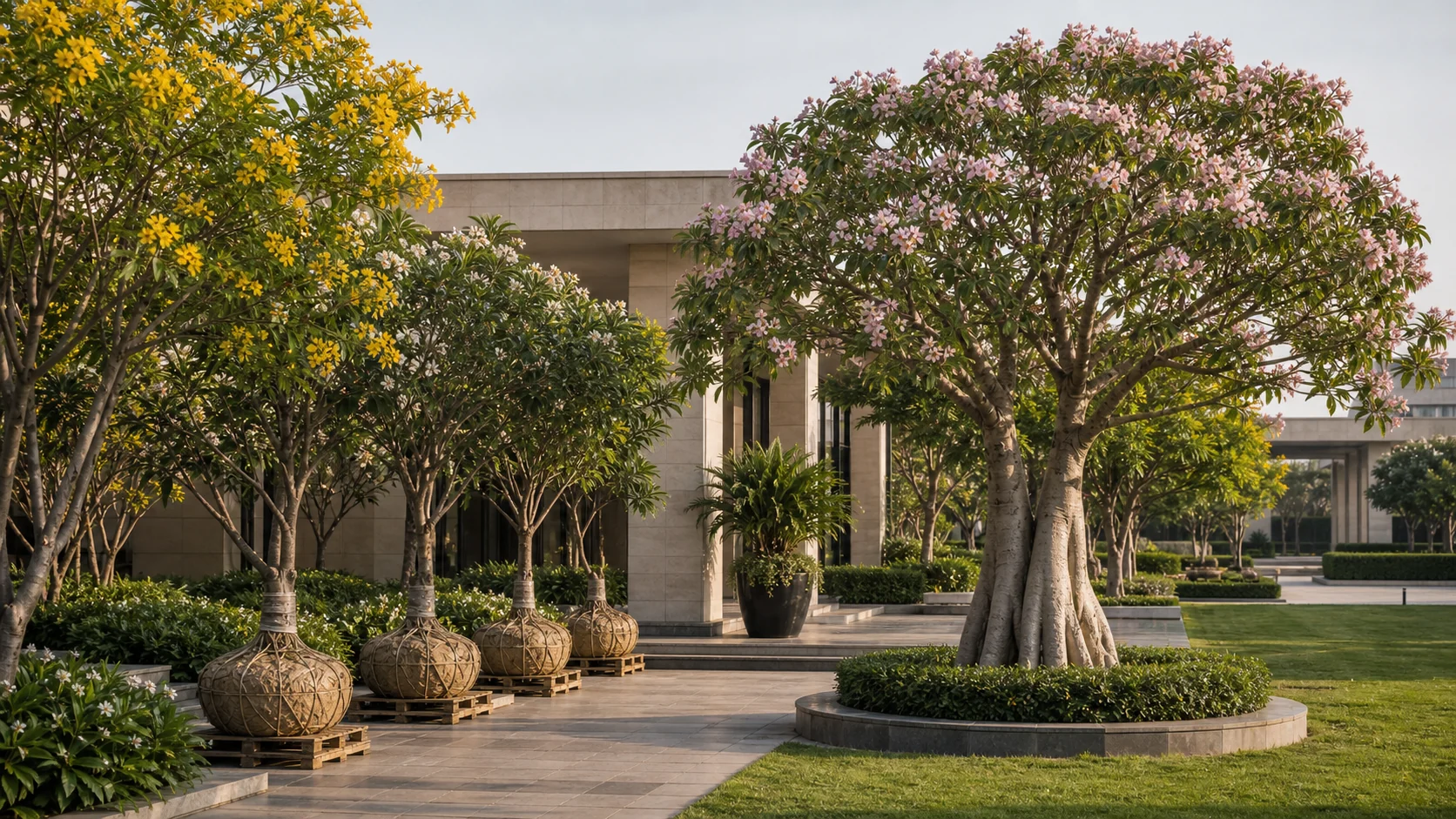
Section
Where it's used in premium projects
Jabuticaba is the food-garden jewel for villa orchards and botanical collections where trunk-harvest grapes justify wait — edible cauliflory photos sell the story. Not for highway plantings expecting instant canopy.
Section
Climate & site suitability in India
Humid subtropical belts with acidic bed prep outperform dry alkaline cities without engineering. Fruiting needs moisture continuity — not xeric defaults. Slow growth means design teams buy patience or smaller staged sizes.
Section
Sourcing & acclimatisation
Rare in India — verify true Plinia cauliflora, not confused myrtles. [Unverified: nursery import lead times from Brazil.]
Section
Installation (planting, safety zones, drainage)
Raised acidic beds on calcareous Indian soils; chelated iron programme documented. Stake young trees; protect trunks from mower damage — fruiting wood is on trunk surface.
Section
Establishment & AMC
Even moisture during fruit set — allow gentle acidifying maintenance. Harvest fruit before fall on paths if slippery. AMC is decade-scale, not hedge frequency.
Section
Cost drivers
Explore
Related
Related
Related links
Services, segments, cost, and proof.
- Softscape & horticulture
- Irrigation & water management
- Landscape maintenance (AMC)
- Hotel & resort landscaping
- Luxury resort & spa landscaping
- Mall & retail landscaping
- Corporate campus landscaping
- Projects
- Commercial landscaping cost guide
- Pricing drivers (imported trees)
- Import compliance workflow
- Request a site assessment
- What is cauliflory on jabuticaba?
- Grape-like edible fruit borne directly on trunk and branches — harvest from trunk, not only outer canopy.
- Does jabuticaba fruit in India?
- Possible in humid subtropical sites with acidic soil and moisture — slow maturation; not instant orchard production.
- Why is growth so slow?
- Natural habit — years between size jumps; buy realistic supply size, not inflated opening expectations.
- What soil prep is needed on alkaline Indian sites?
- Acidic raised media and iron management — chlorosis and poor fruit without engineering on calcareous soils.
- Can jabuticaba live on a dry Rajasthan villa?
- Poor fit without protected irrigated acidic biome — subtropical humid orchards are realistic targets.
- What import paperwork applies to Brazilian trees?
- Live imports need phytosanitary certificates and quarantine inspection — rarity increases lead time (informational, not legal advice).
- How should jabuticaba BOQs be priced?
- Match rarity, acidic bed scope, irrigation, and slow-tree AMC — not fast-growing avenue tree rates.