
Bengaluru
Imported trees in Bengaluru
Imported trees Bengaluru programmes need plateau-honest species, engineered pits, ORR access windows, and establishment AMC before handover. Four Leaf scopes specimens for tech campuses, hotels, and developers across Whitefield, Hebbal, and ORR corridors from site assessment, not assumed nursery stock. This guide covers monsoon drainage, red soil, logistics, and proof posture. Request a site assessment to shortlist species.
Gallery
Specimen visual guide
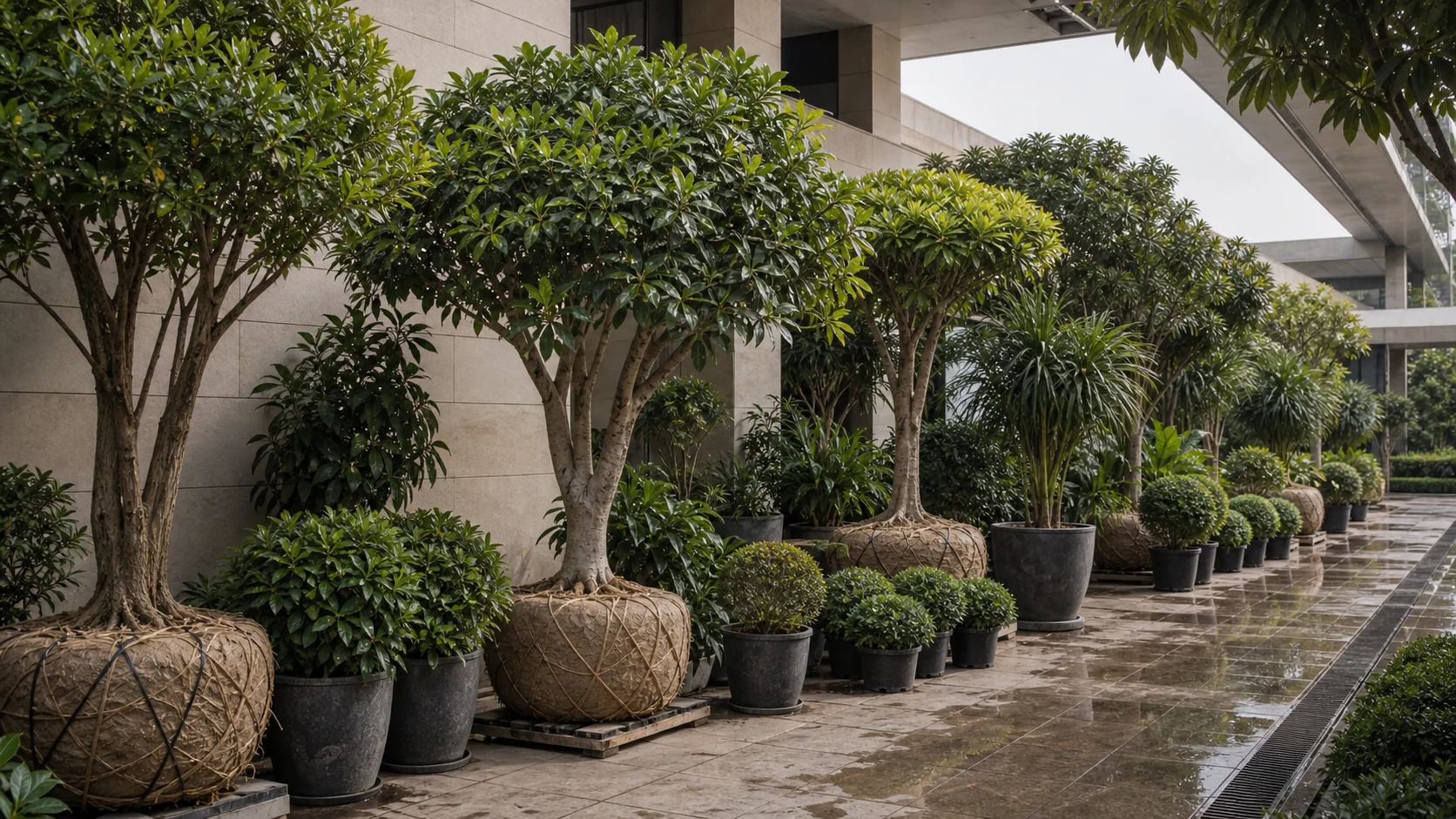
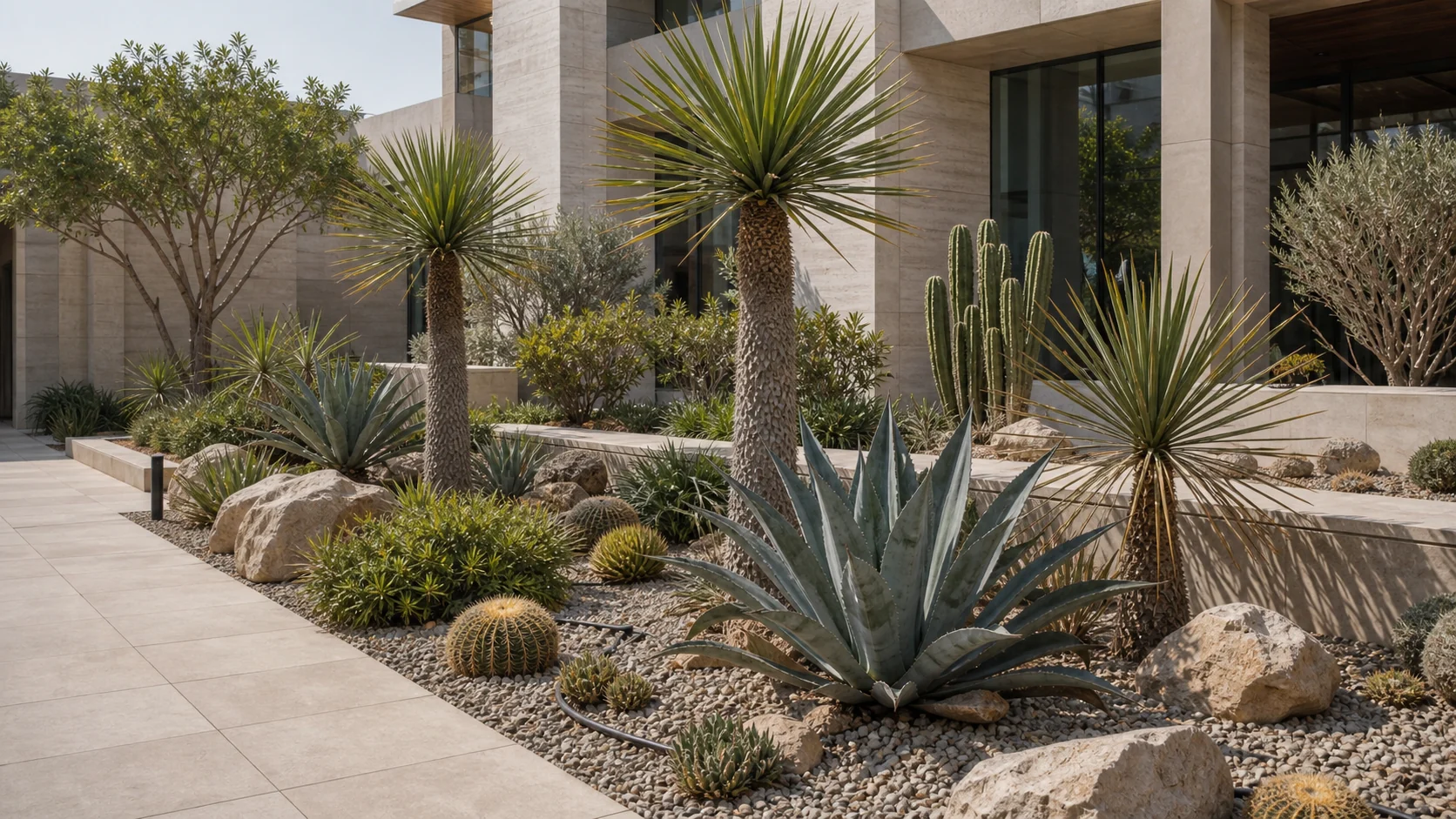
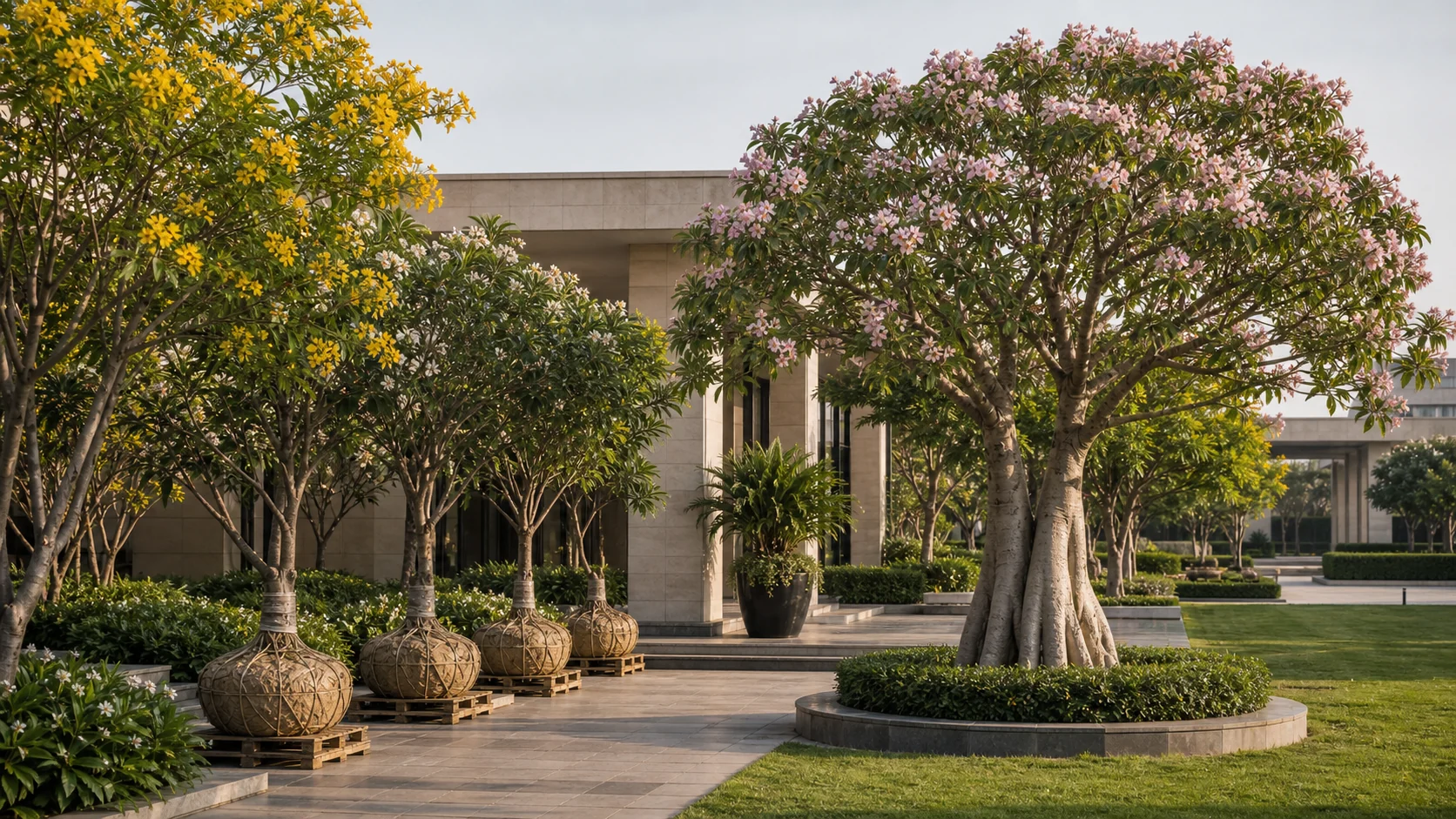
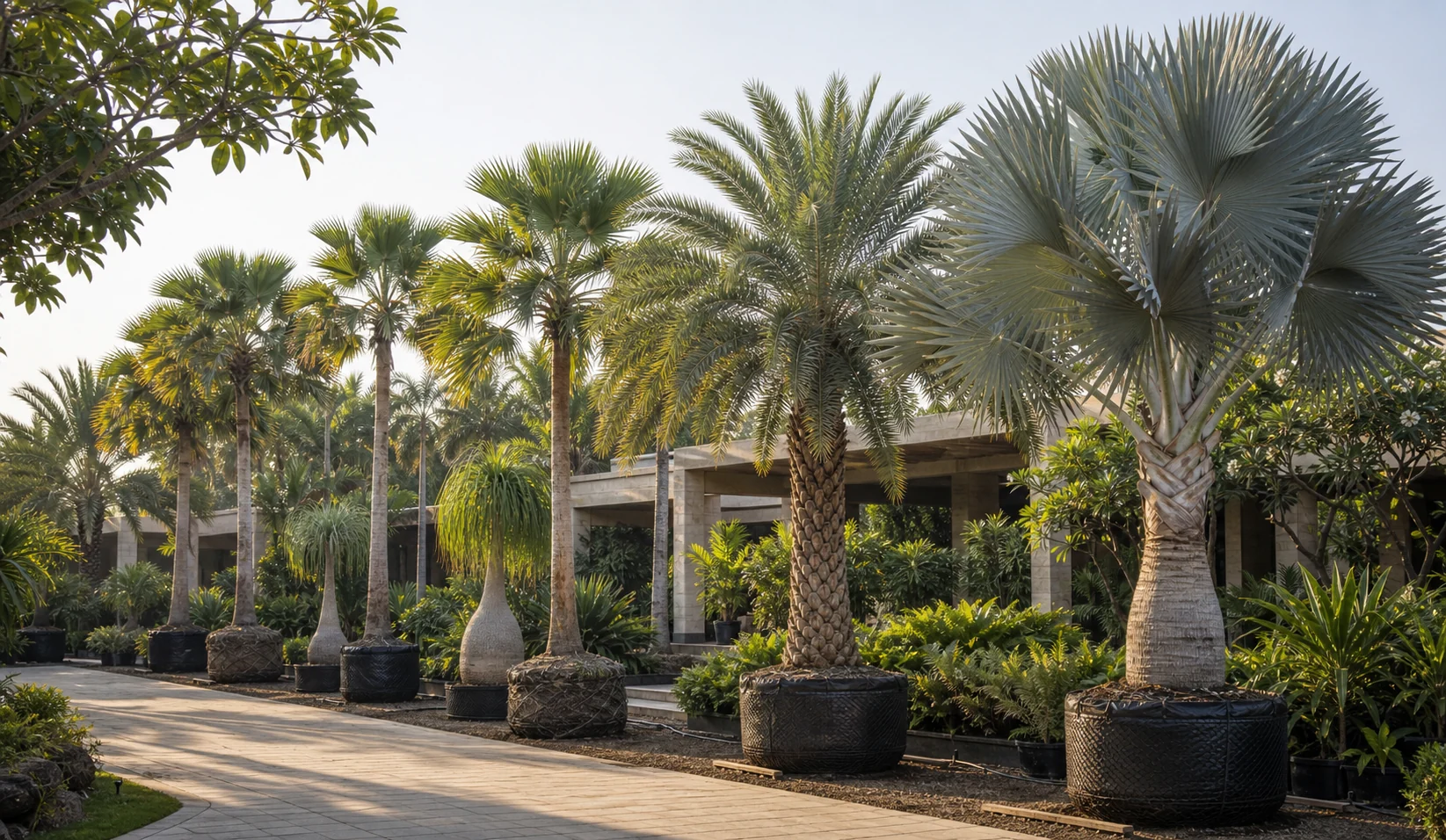
Visual context for placement, scale, handling, and landscape integration.
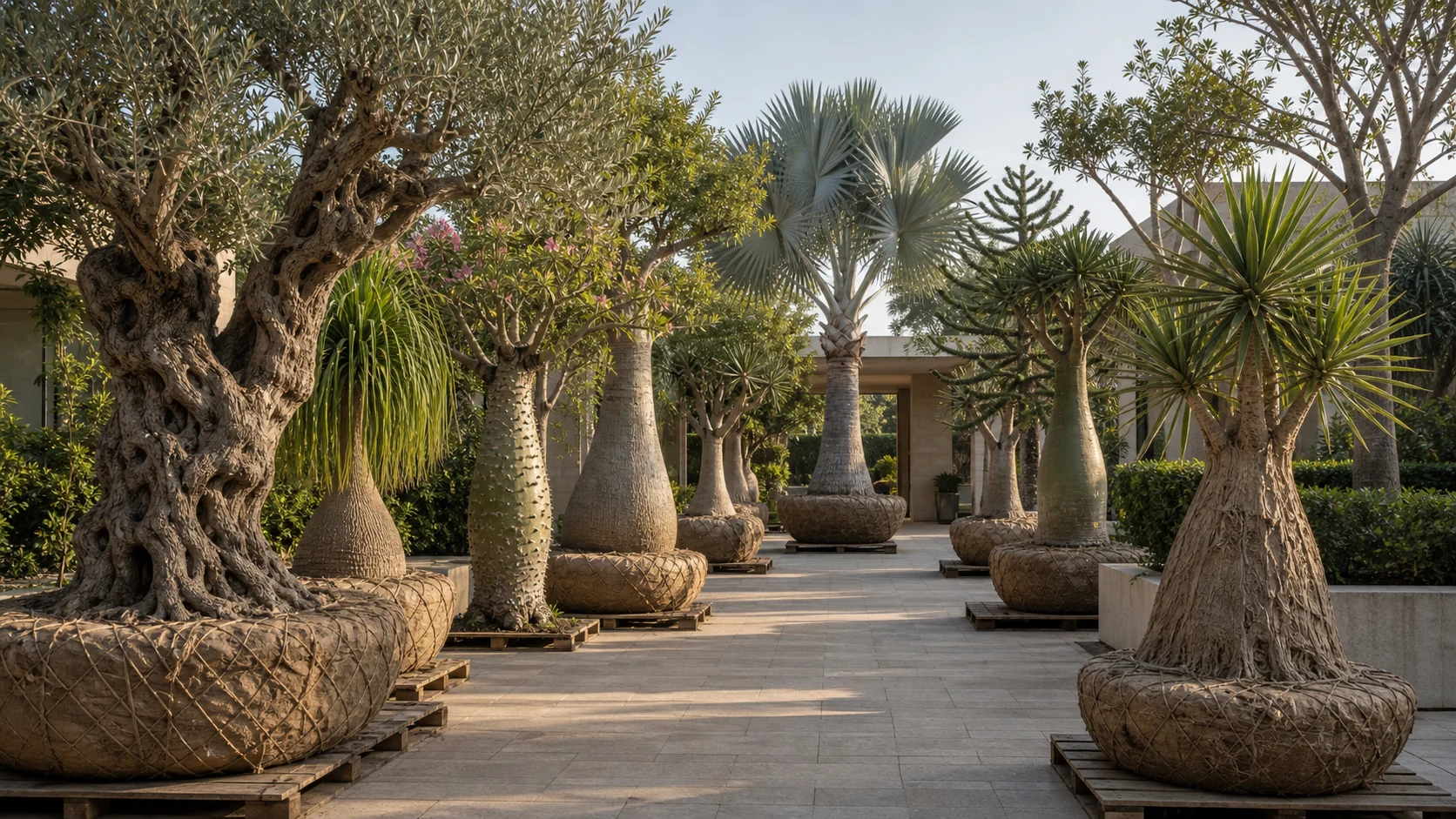
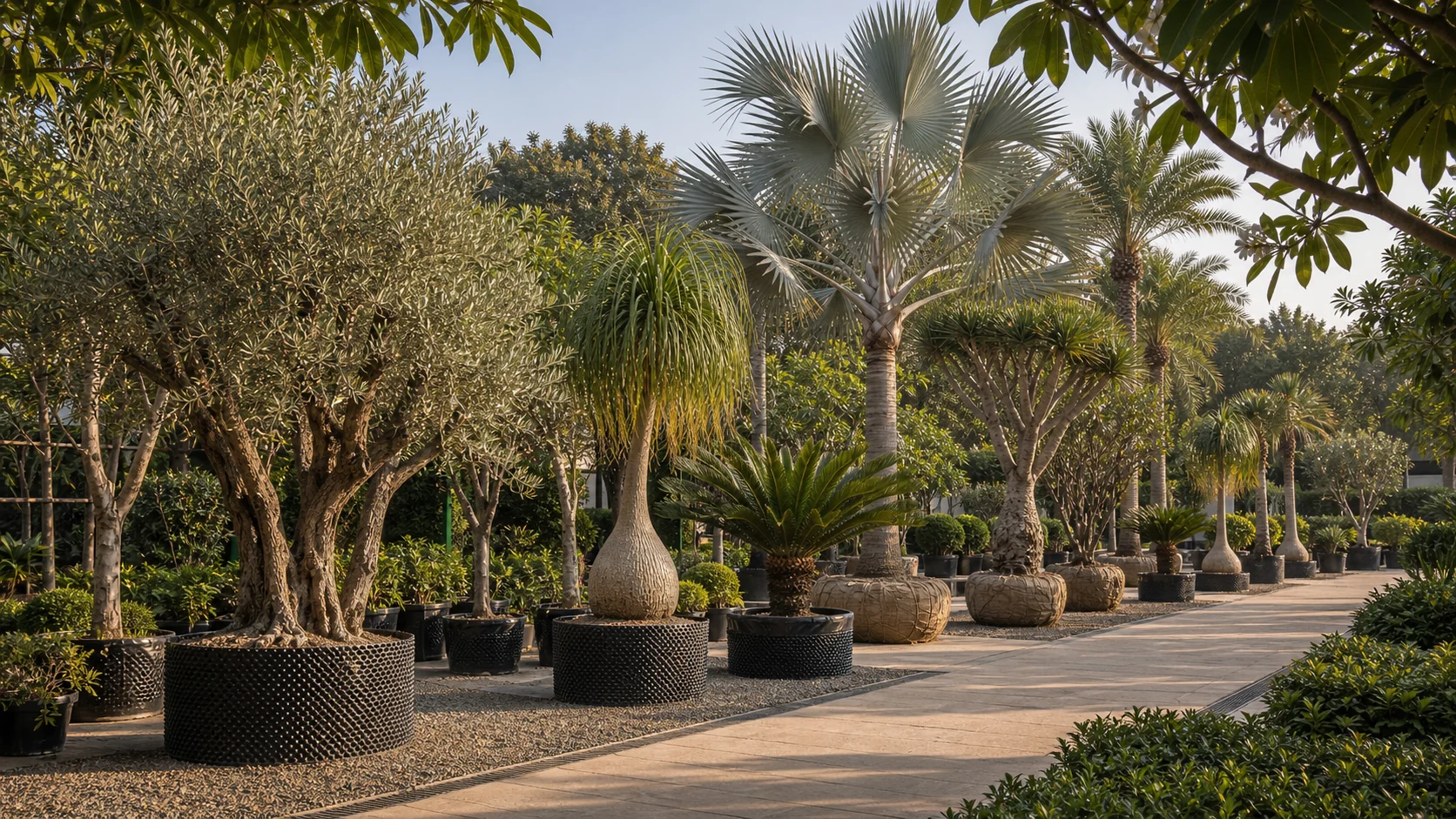
Section
Climate and site constraints in Bengaluru
Section
Crane access, logistics, and programme float
Tech parks and hotels on ORR, Whitefield, Electronic City, and Hebbal corridors face commute bottlenecks that shrink crane and oversize transport access windows. Night hoists are common on occupied campuses where campus security controls live perimeters and finished paving must stay protected. Rootball moves from truck to pit may need tracked carriers across sealed turf; sacrificial turf and paving protection belong in BOQ. Metro and utility conflicts on older campuses need as-built checks before pit dig. Vendor badges, vehicle passes, and escorted crane routes through parking structures should be locked before BOQ freeze so possession dates are not held up by security backlog. Programme float should name hold points with facility teams, reserve explicit monsoon shutdown weeks, and not assume weekend hoist access without written approval.
Section
Where Bengaluru programmes specify imported trees
Global tech campuses specify arrival statements with palms and formal topiary on axes readable in campus photography. Hotels and serviced residences near airport and CBD corridors repeat hospitality arrival patterns with pool-deck specimens where litter and bracing scope is defined. Developer clubhouses and villa plots on Sarjapur and Devanahalli corridors want day-one maturity for sales galleries; BOQ should separate specimen engineering from mass planting. Hospital and institutional campuses add circulation and shade requirements; specimen height must respect ambulance and fire tender paths. Campus FM and sustainability audit programmes often require documented AMC reporting on high-value specimens; scope reporting cadence and replacement boundaries in contract rather than vague maintenance language disconnected from specified species.
Section
Species categories for Bengaluru microclimates
Palms with moderate wind demand suit open arrivals when braced; species pages note litter class and crown spread for porte-cochere and plaza use, not catalogue glamour. Olive and Mediterranean taxa work on drained mounds in drier campus pockets; humid courtyards need cultivar review before procurement. Ficus and foliage specimens suit atrium-adjacent courts with root-barrier discipline near paving interfaces. Flowering specimen trees add seasonal interest on avenues where petal drop and AMC scope are accepted in the BOQ. Indoor categories apply to lobby volumes with measured lux, not as exterior shortcuts on open plazas. Desert taxa belong only with strict irrigation governance written in AMC. Category hubs on this vertical group by use case; each species page states hardiness and failure modes for plateau climates so procurement can reject humid-coast briefs copied from Chennai or Mumbai without engineering review.
Section
Pit engineering, drainage, and acclimatisation
Section
AMC scope and FM handover
Section
Mobilisation and project context
Section
Procurement, BOQ, and pricing discipline
Explore
Related
Related
Related links
Services, segments, cost, and proof.
- Imported exotic trees hub
- Commercial landscaping in Bengaluru
- Corporate campus landscaping
- Hotel and resort landscaping
- Developer landscaping
- Softscape and horticulture
- Irrigation and water management
- Landscape maintenance (AMC)
- Acclimatisation for imported trees
- Installation and soil engineering
- Imported tree maintenance and AMC
- Pricing drivers (imported trees)
- Import compliance workflow
- Imported specimens in Indian cities
- Bengaluru landscaping strategy
- Projects
- Request a site assessment
- Is Bengaluru easier for imported trees than coastal cities?
- Plateau climate helps some species, but drainage on new fill and traffic logistics still dominate risk. Easier is site-specific, not city-generic. Compare submittals on pit engineering and establishment AMC, not nursery photos from humid coasts that assume different drainage and salt profiles.
- How do tech-campus security rules affect crane day?
- Vendor inductions, vehicle passes, and night-window approvals should be sequenced before BOQ freeze; security delays are common on live campuses. Programme float should account for ORR traffic and escorted crane routes through occupied parking structures.
- Which palms suit wide corporate arrivals in Bengaluru?
- Shortlist from species pages by crown spread, litter, and wind; clear-trunk height and overall height both belong on submittals. Include bracing weeks, pit and drain build, and litter scope near main entrances so supplier comparisons reflect engineered install, not nursery tag price alone.
- Can olives work on Bengaluru campuses?
- On drained mounds in open sun, yes; humid courtyards and over-irrigation fail olives. Fruit and paving decisions precede install. Request cultivar submittals matched to measured trunk caliper and honest peacock-spot monitoring cadence in establishment AMC.
- What establishment AMC should campuses require?
- Moisture monitoring, pest escalation, bracing removal milestones, and litter scope near entrances, tied to acceptance criteria, not generic maintenance. Include seasonal controller profiles for monsoon versus dry establishment bands and valve charts FM teams can audit after handover.
- How does Four Leaf mobilise to Bengaluru?
- Programmes are scoped from site assessment with logistics, establishment, and AMC planned per contract; pan-India execution does not imply specimen stock on site without enquiry. Bengaluru mobilisation requires honest ORR, drainage, and security surveys before species lock.
- What should Bengaluru procurement put in specimen BOQs?
- Clear-trunk or trunk class, rootball handling, pit and drain build, bracing days, acclimatisation, pest-monitoring lines, security coordination, and AMC litter scope, not headline tree price alone. Compare pit scope, bracing weeks, and establishment visits across suppliers so silent scope reductions do not strip drain layers or acclimatisation hold.