
Delhi NCR
Imported trees in Delhi NCR
Imported trees Delhi NCR programmes need climate-honest species, engineered pits, crane access, and establishment AMC before handover. Four Leaf supplies and installs specimen trees for hotels, campuses, malls, and developers across Gurugram, Noida, Faridabad, and Delhi. This guide covers NCR heat, dust, winter cold, monsoon drainage, logistics, and proof-safe project references. Request a site assessment to shortlist species.
Gallery
Specimen visual guide
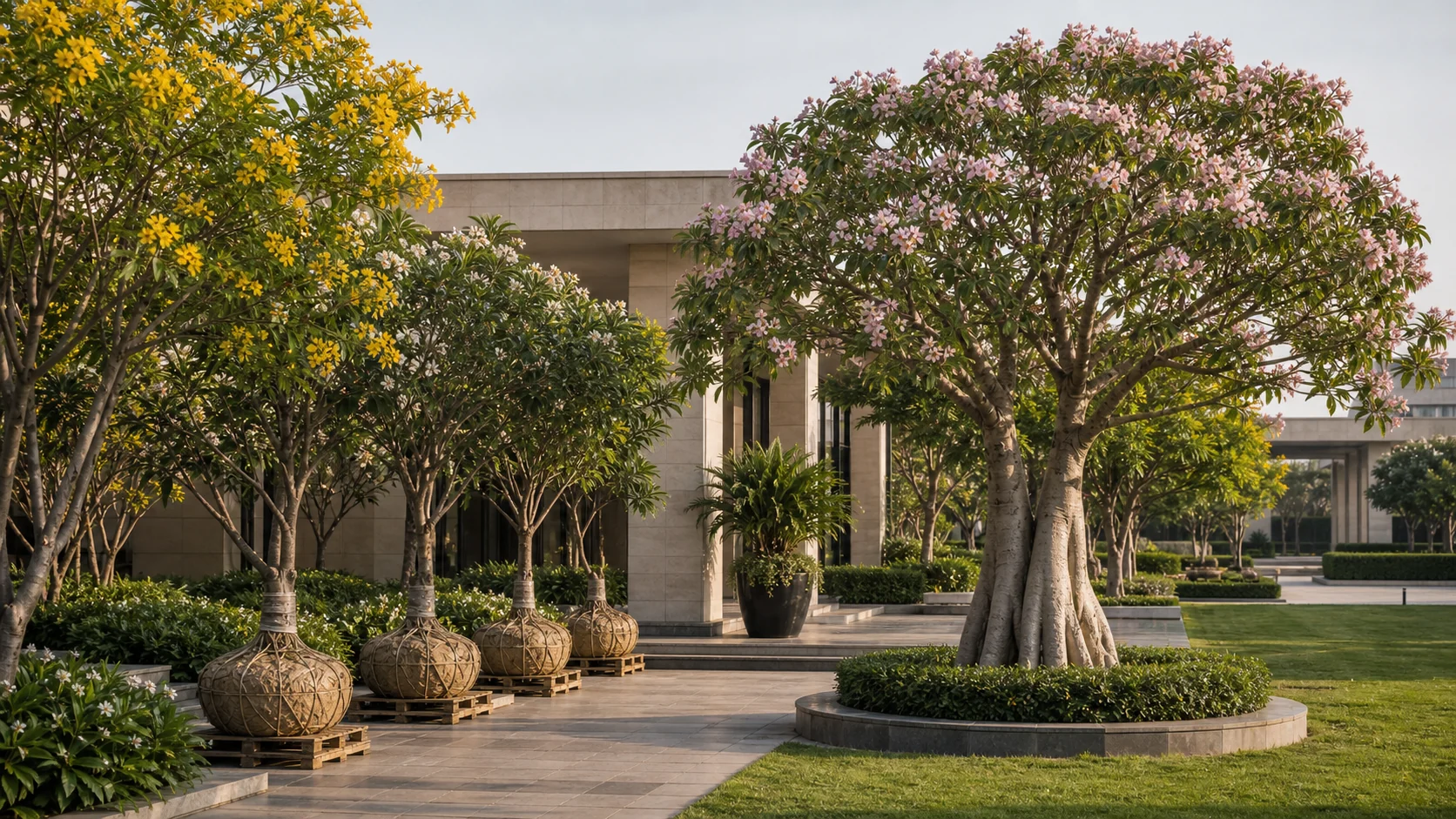
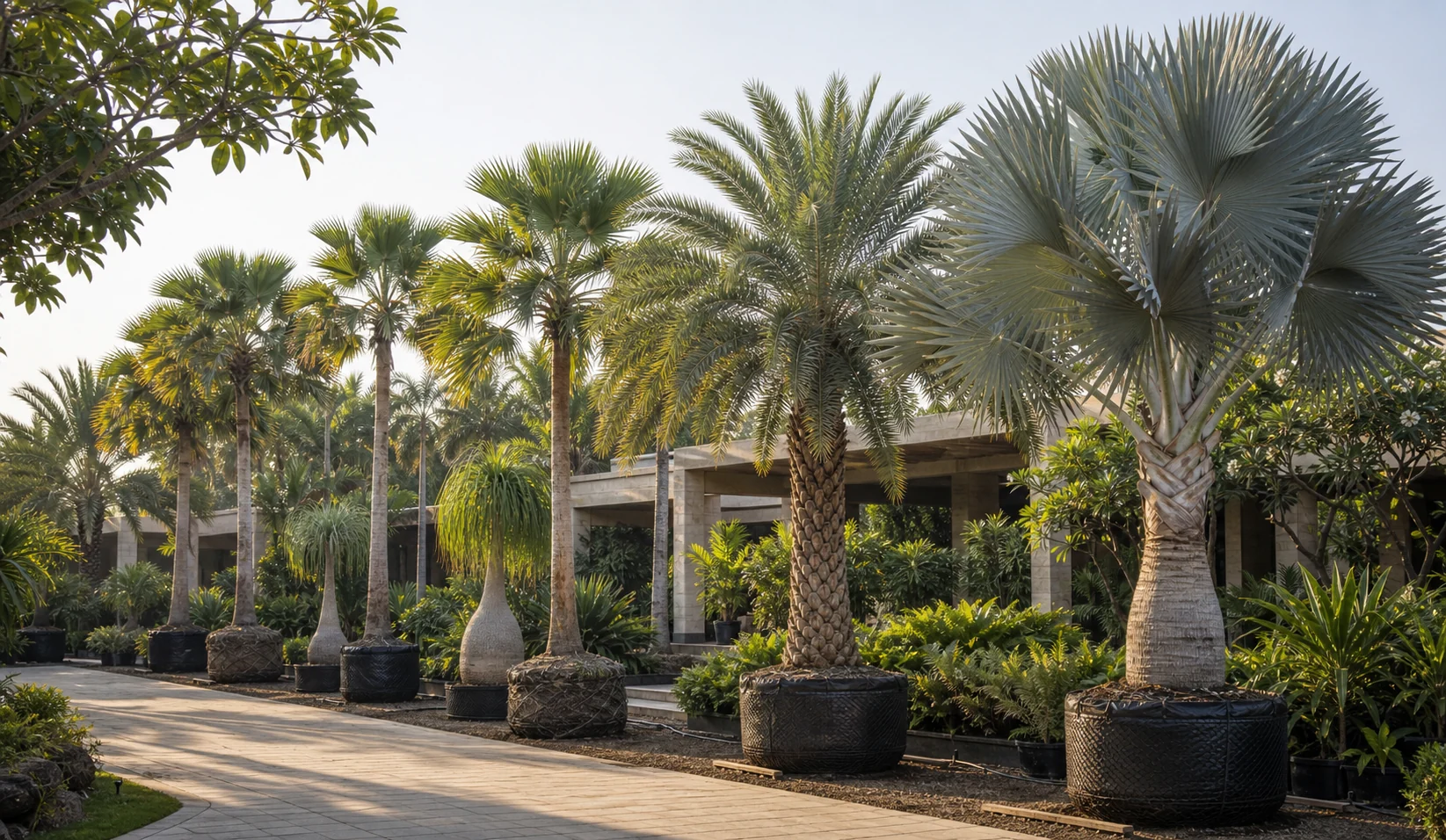
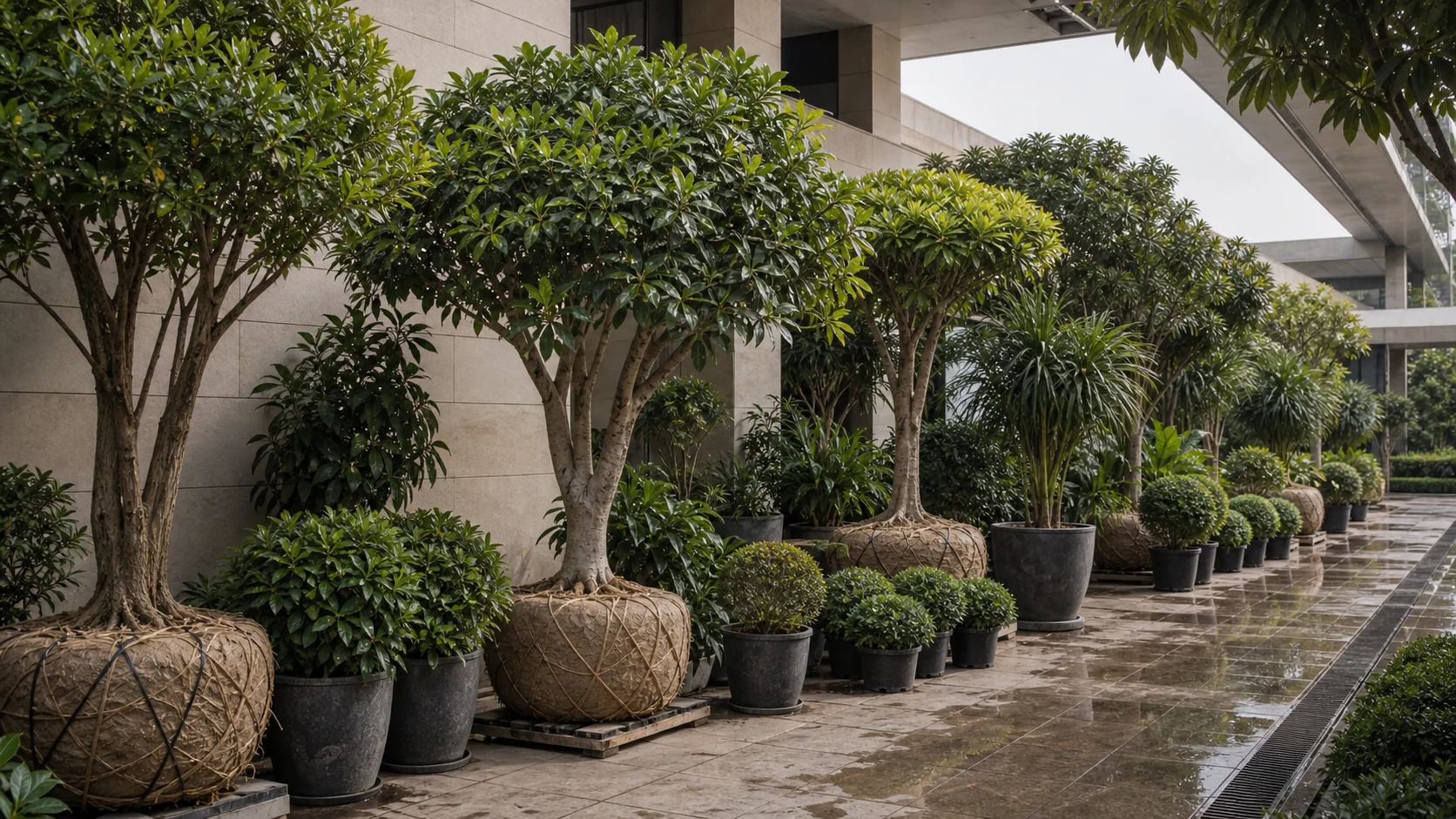
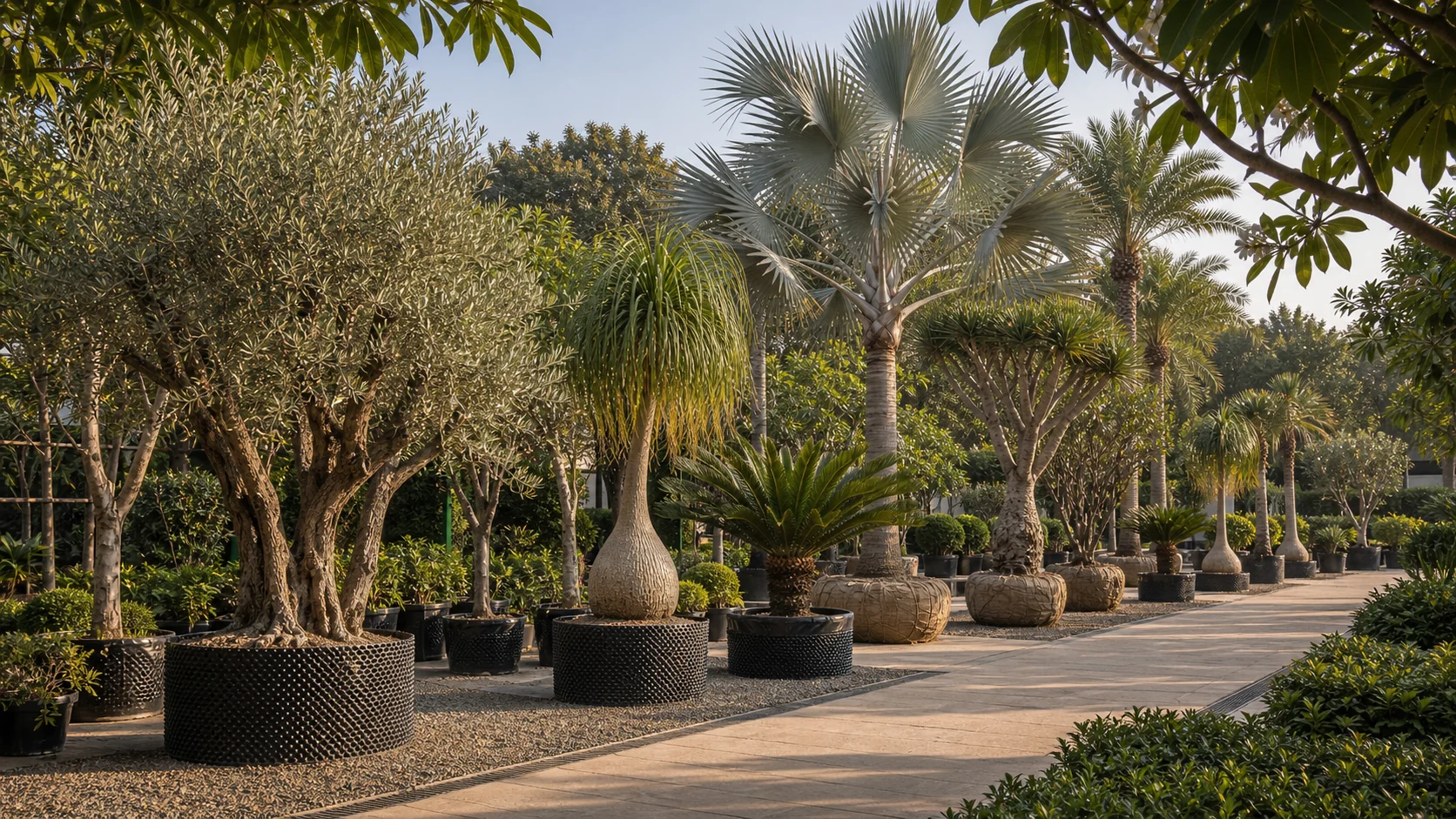
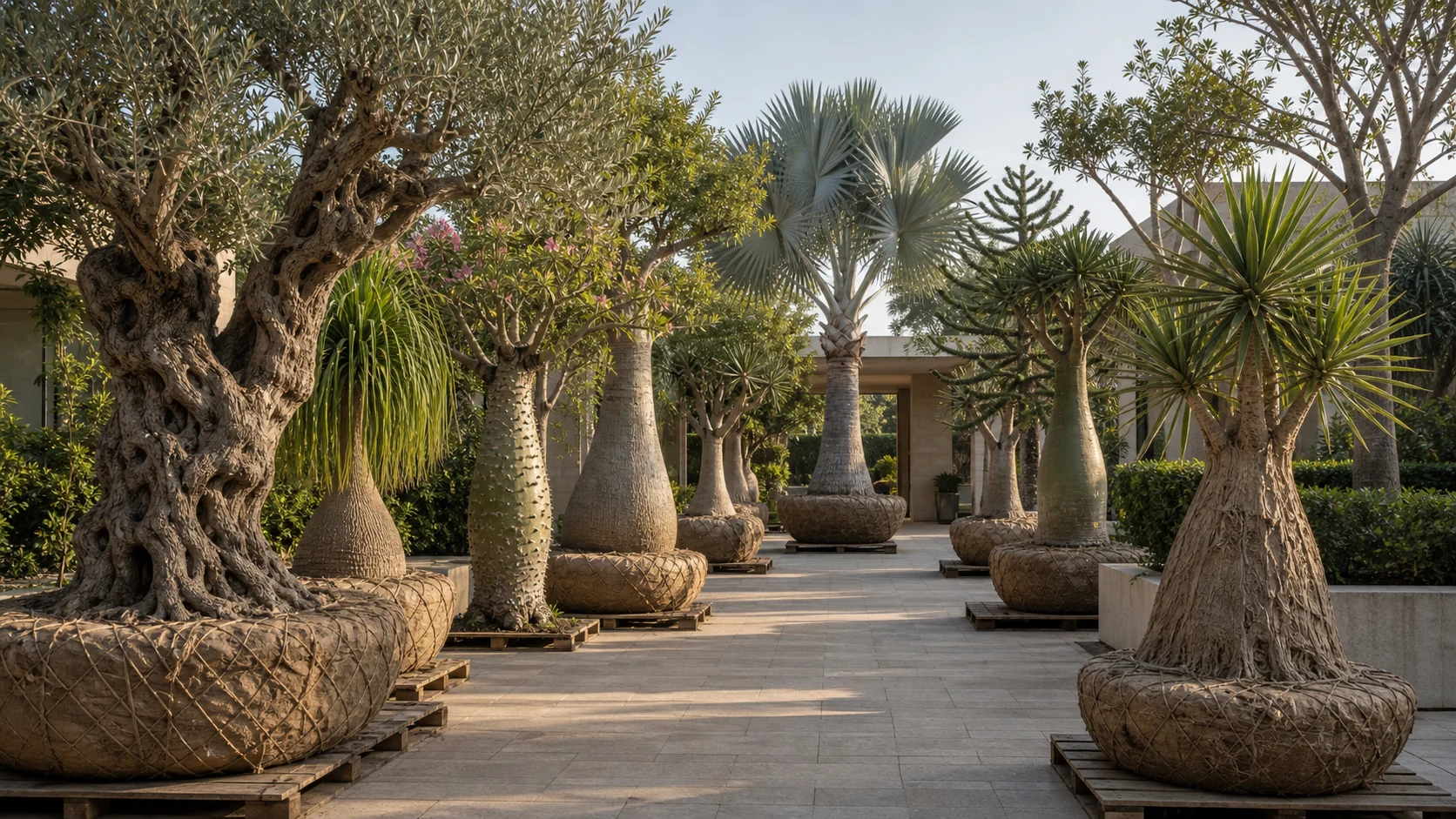
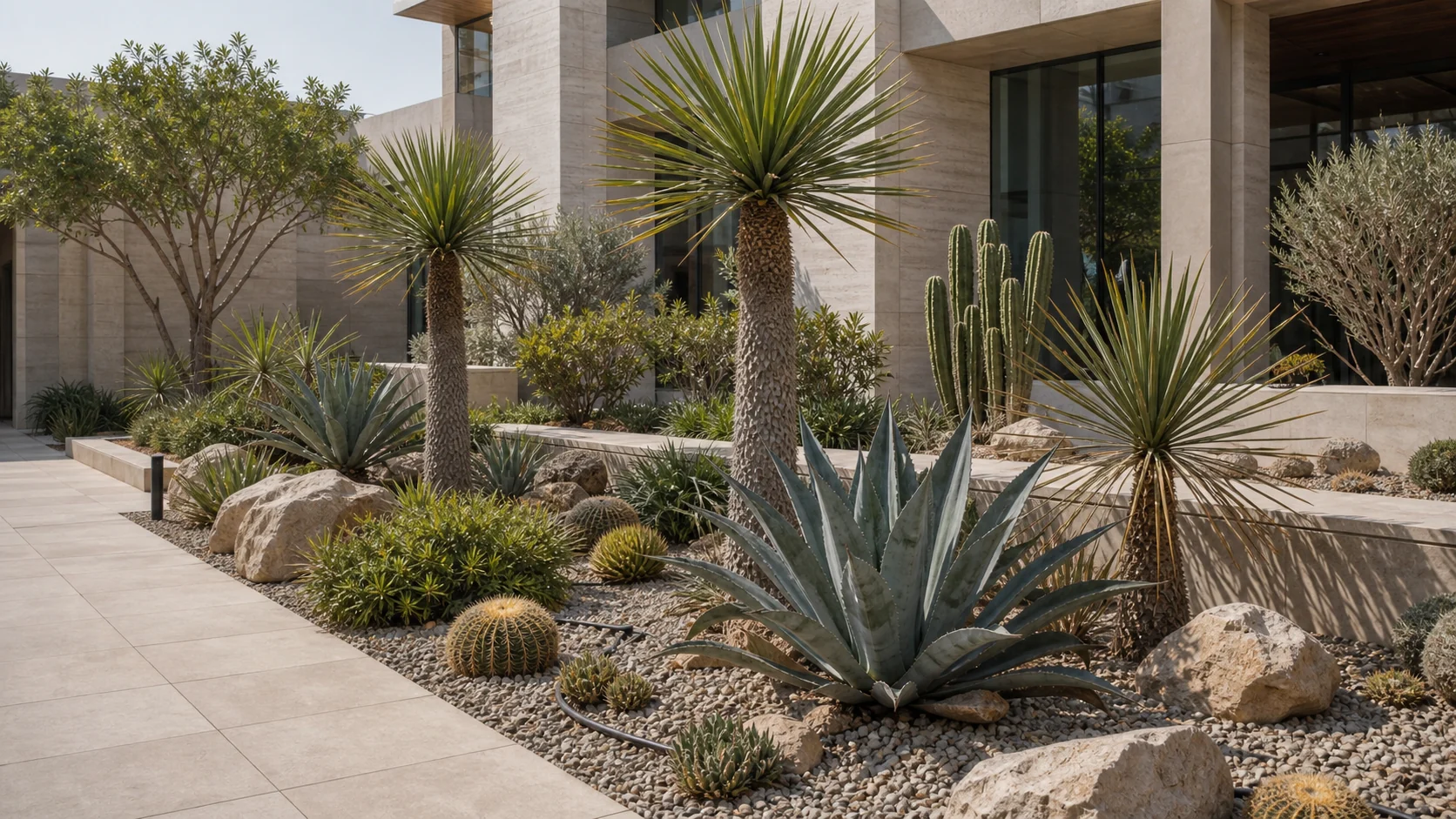
Visual context for placement, scale, handling, and landscape integration.
Section
Climate and site constraints in NCR
May-June heat precedes monsoon; July-September bursts test pit drainage on podiums and arrivals. October-November is often the strongest planting window when irrigation is live. December-January smog and cold stress tender exotics on ridges and arterial roads; olives and some palms need written winter-protection on young stock. Construction dust is chronic; foliage wash belongs in AMC. Soils range from alluvial clay to tower fill; pits follow drawings, not nursery defaults. Airport-adjacent parcels need security and clearance coordination for tall specimens. Greenfield corridors near Greater Noida need geotech-aligned pit media before species lock. Survival depends on microclimate, drainage, and AMC; see <a href="/blog/imported-specimen-trees-survive-indian-cities/" class="link-premium">imported specimen trees in urban climates</a>.
Section
Crane access, logistics, and programme float
NH8, Dwarka Expressway, Golf Course Road, and Aerocity corridors mix working hotels, live corporate towers, and developer possessions where night crane windows are routine. Specimen delivery must align with PMC hold points, guest-safety perimeters, and hoist paths that clear crown spread on fan palms and wide olive canopies. Projects near airports, major hotels, or secured campuses often face evolving access and clearance rules; programme float should reflect real coordination lead-time. Podium planters over occupied floors demand waterproofing witness before soil fill; crane paths for mature rootballs may need night permits in Gurugram IT belts. Site walks should confirm turning radius, overhead lines, and temporary protection of finished paving before species lock. Winter wedding peaks at hotels can block lawn crane routes; temporary event structures should be in the lookahead. NCR procurement should treat dust load and winter cold as AMC scope items on arrival specimens, not deferred to FM teams after possession.
Section
Where NCR programmes specify imported trees
Hotels along Aerocity and NH8 use mature palms and Mediterranean statements at porte-cochere and pool decks. Corporate campuses on Golf Course Road and Cyber City specify arrival plazas, atrium planting, and parking shade with engineered soil volumes. Malls and retail at Dwarka need phasing around soft openings and tenant fit-outs. Developer clubhouses on Dwarka Expressway and Noida Extension target day-one maturity for marketing photography, with BOQ clarity on pits and bracing. Hospitals and schools add circulation constraints; placement must respect ambulance paths, CCTV sightlines, and term-time work zones. Separate specimen-tree packages from mass shrub and turf lines so engineered install scope is not silently reduced at commercial selection.
Section
Species categories for NCR microclimates
Dry warm pockets suit olive and desert-adapted taxa when drainage is engineered; humid pockets near water features fail olives without mound planting. Tall feather and fan palms work on wide arrivals with bracing plans; Bismarckia needs full sun and generous setback for fan spread. Topiary and formal evergreens suit hotel axes where clipping cadence is in AMC. Indoor and atrium specimens belong in the HVAC and light brief, not on open dust-exposed plazas. Cycads and slow caudex forms suit controlled courtyards with security and toxicity awareness on public sites. Category hubs on this vertical shortlist by use case; each species page states hardiness and failure modes honestly for north-India heat and winter so BOQ reviewers can reject coastal catalogue photos without engineering context.
Section
Pit engineering, drainage, and acclimatisation
Section
AMC scope and FM handover
Section
Published NCR project context
Section
Procurement, BOQ, and pricing discipline
Explore
Related
Related
Related links
Services, segments, cost, and proof.
- Imported exotic trees hub
- Commercial landscaping in Delhi NCR
- Hotel landscaping Delhi NCR
- Corporate landscaping Delhi NCR
- Mall landscaping Delhi NCR
- Developer landscaping Delhi NCR
- Industrial landscaping Delhi NCR
- Softscape and horticulture
- Irrigation and water management
- Landscape maintenance (AMC)
- Acclimatisation for imported trees
- Installation and soil engineering
- Imported tree maintenance and AMC
- Pricing drivers (imported trees)
- Import compliance workflow
- Imported specimens in Indian cities
- Projects
- Request a site assessment
- Do imported specimen trees survive Delhi NCR winters?
- Many warm-climate specimens establish when pits drain and young plants are protected from cold snaps on ridge and arterial exposures. Procurement should shortlist by species hardiness pages, not assume coastal nursery photos apply to January nights in NCR.
- When is the strongest planting window in NCR?
- Post-monsoon October through November is often strong for establishment if irrigation is commissioned; summer heat before monsoon demands heavier establishment watering and shade discipline on sensitive transplants.
- How should crane access be planned on occupied hotel or mall sites?
- Night windows, guest perimeters, and crown-clearance paths should be surveyed before BOQ freeze. Fan palms and wide olive crowns exceed many default hoist assumptions.
- Can STP-treated water support specimen establishment?
- Yes where water quality is tested and emitters are specified for chemistry; filtration maintenance must sit in AMC or owner OPEX, not assumed in a one-line irrigation spec.
- Which imported categories suit NCR hotel arrivals?
- Clear-trunk palms, Mediterranean olives on drained mounds, and trained topiary on formal axes are common. Each needs species-specific pit and AMC scope, not a generic softscape rate.
- Does Four Leaf execute specimen trees only in NCR?
- NCR is our home market with dense mobilisation; pan-India programmes are scoped per contract with honest logistics and establishment planning from site assessment.
- How should procurement compare supplier BOQs for specimen trees?
- Match rootball class, pit engineering, bracing weeks, acclimatisation visits, documentation fees, and AMC boundaries, not headline per-tree figures from press ranges alone. Compare dust-wash cadence, winter protection scope, and seasonal controller profiles specific to NCR heat and cold extremes.