
Pune
Imported specimen trees in Pune
Pune alternates semi-arid winter spells with monsoon saturation on western-ghats-influenced catchments — specimen trees on corporate, hospitality, and mixed-use sites need drainage-first pits and establishment AMC that survives both dry stress and wet feet. Procurement should treat Hinjawadi and Kharadi campus cut-and-fill as drainage engineering problems before species shortlists freeze — drought marketing on nursery tags misleads BOQ reviewers when monsoon waterlogging kills roots on undrained podium pits serving show-flats and manufacturing arrivals.
Gallery
Specimen visual guide
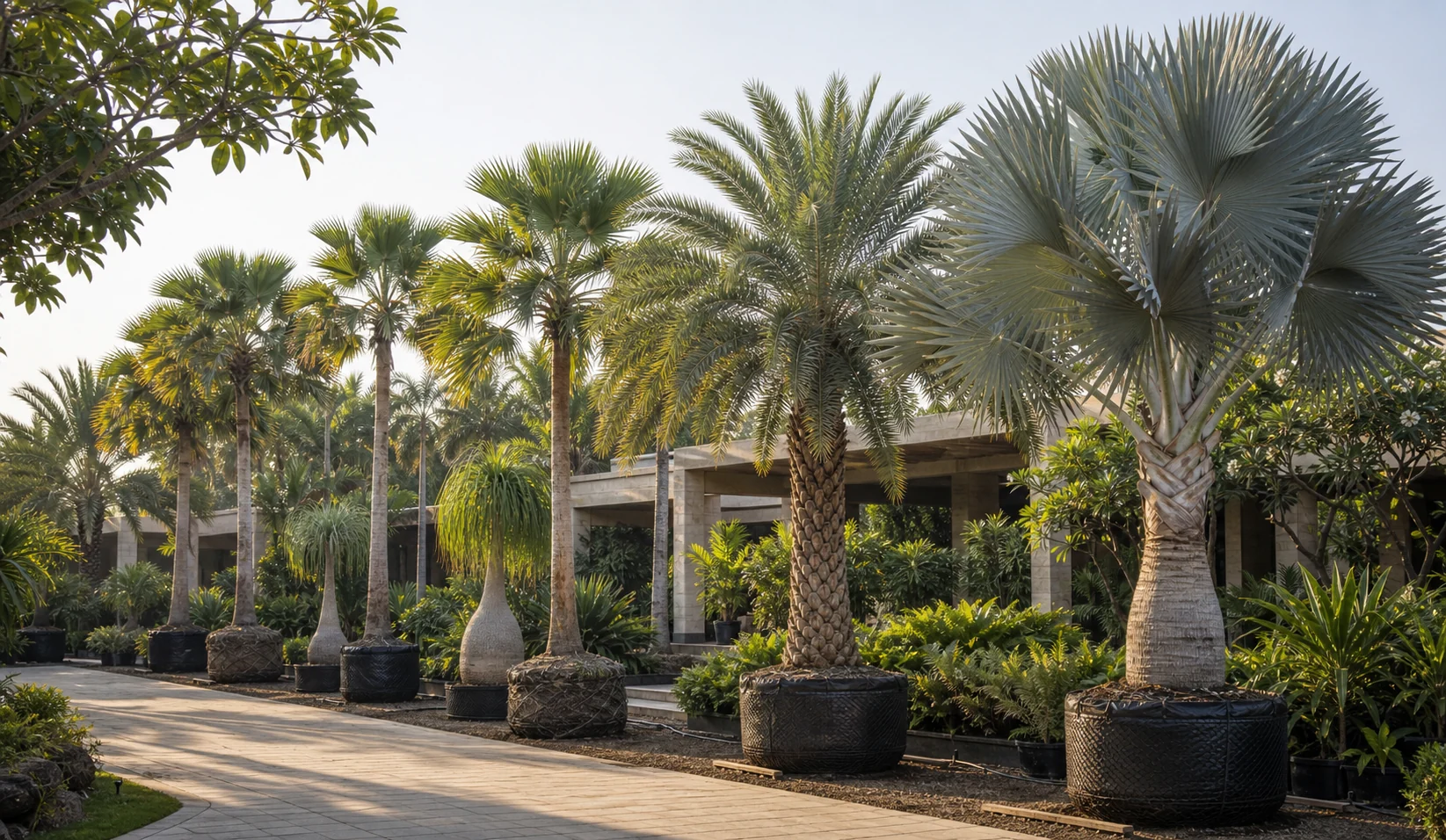
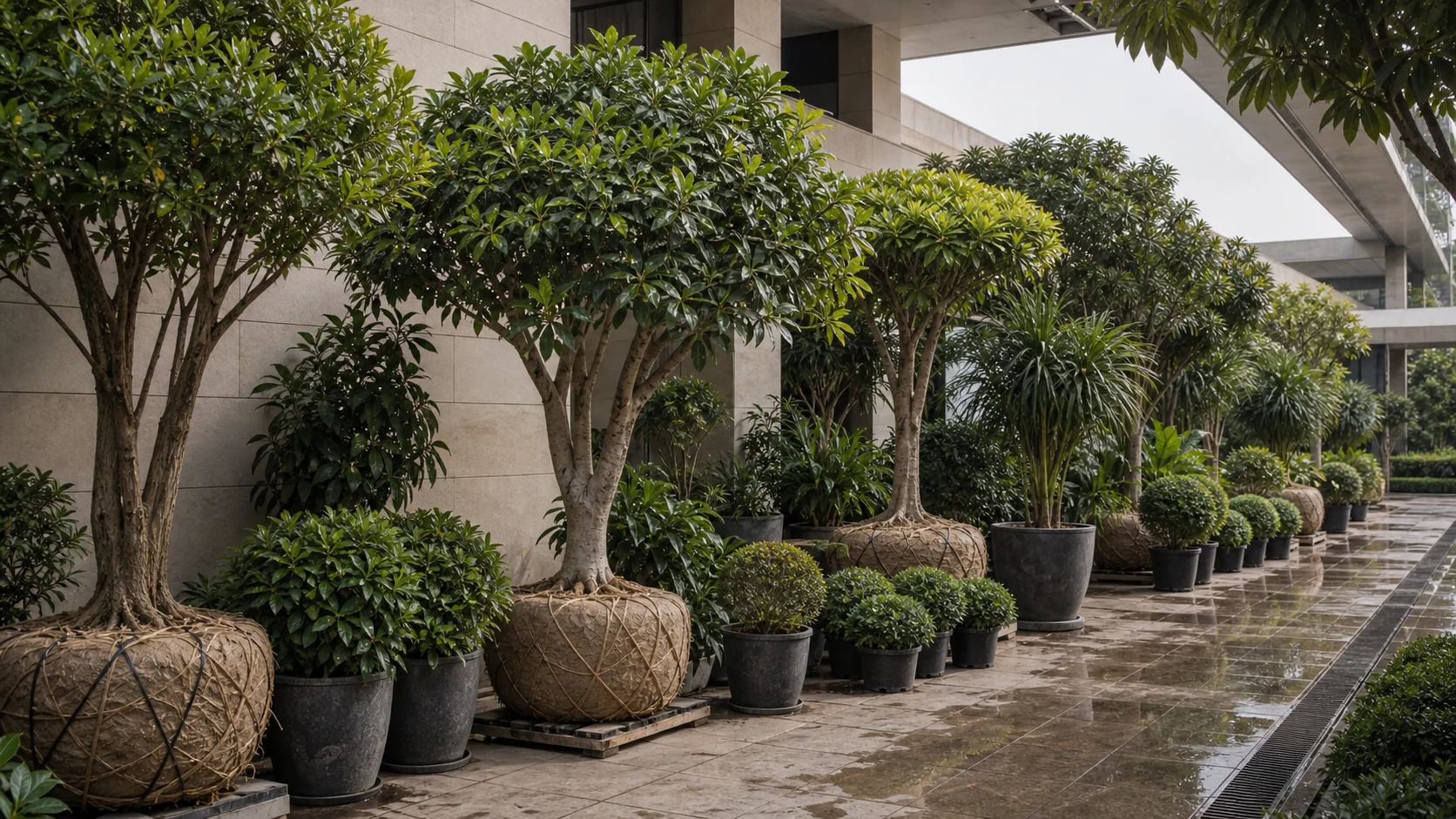
Visual context for placement, scale, handling, and landscape integration.
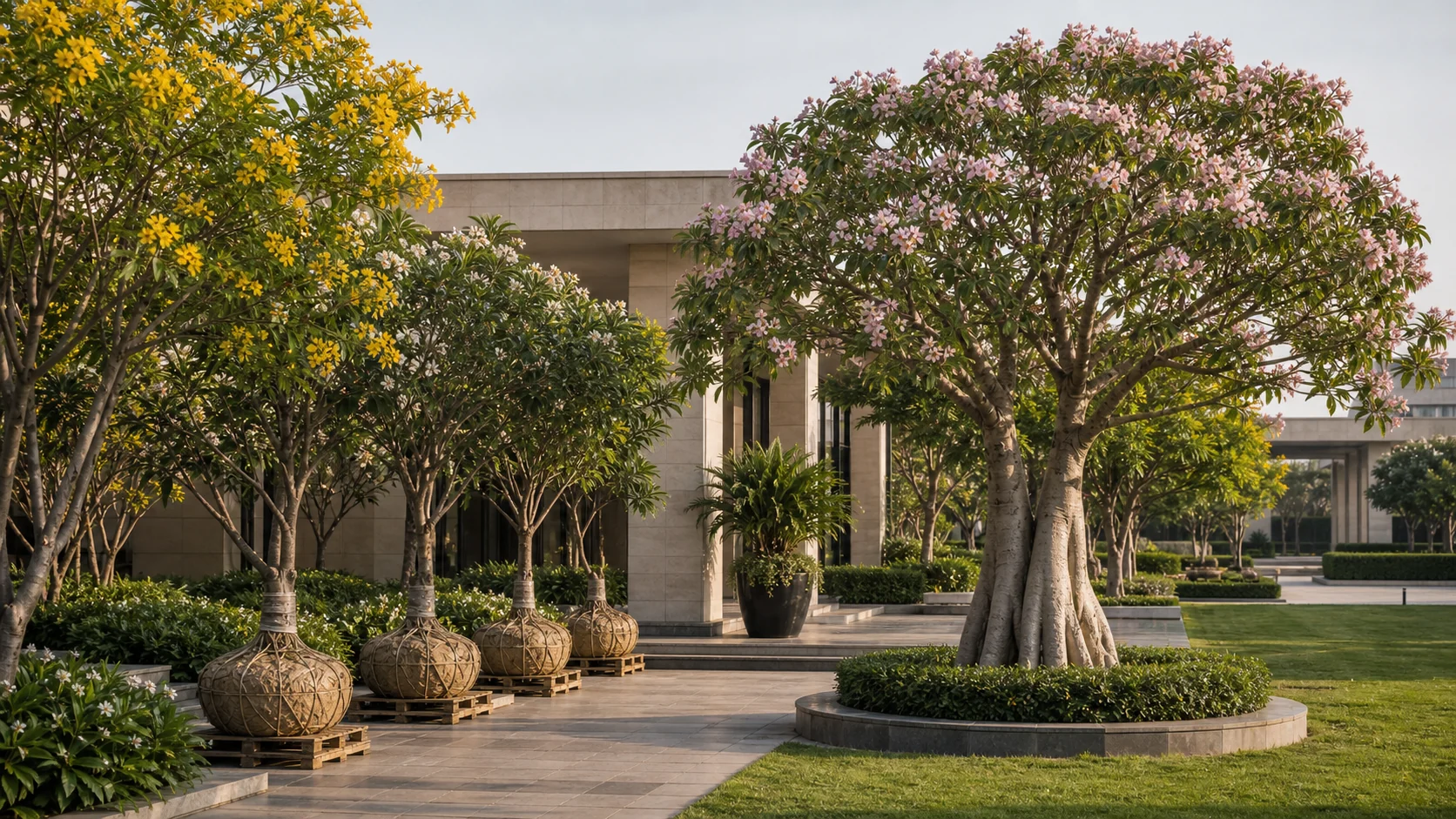
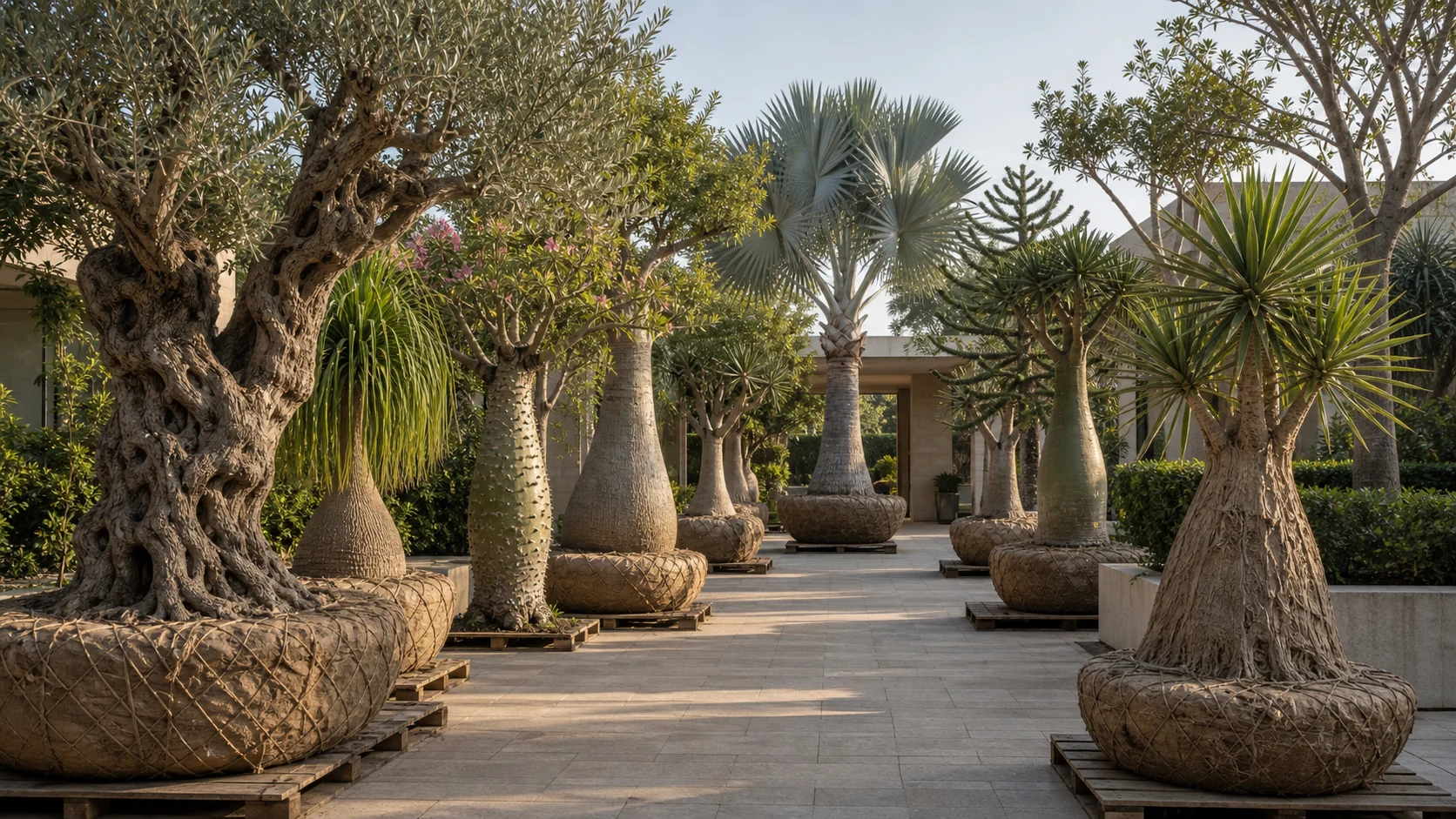
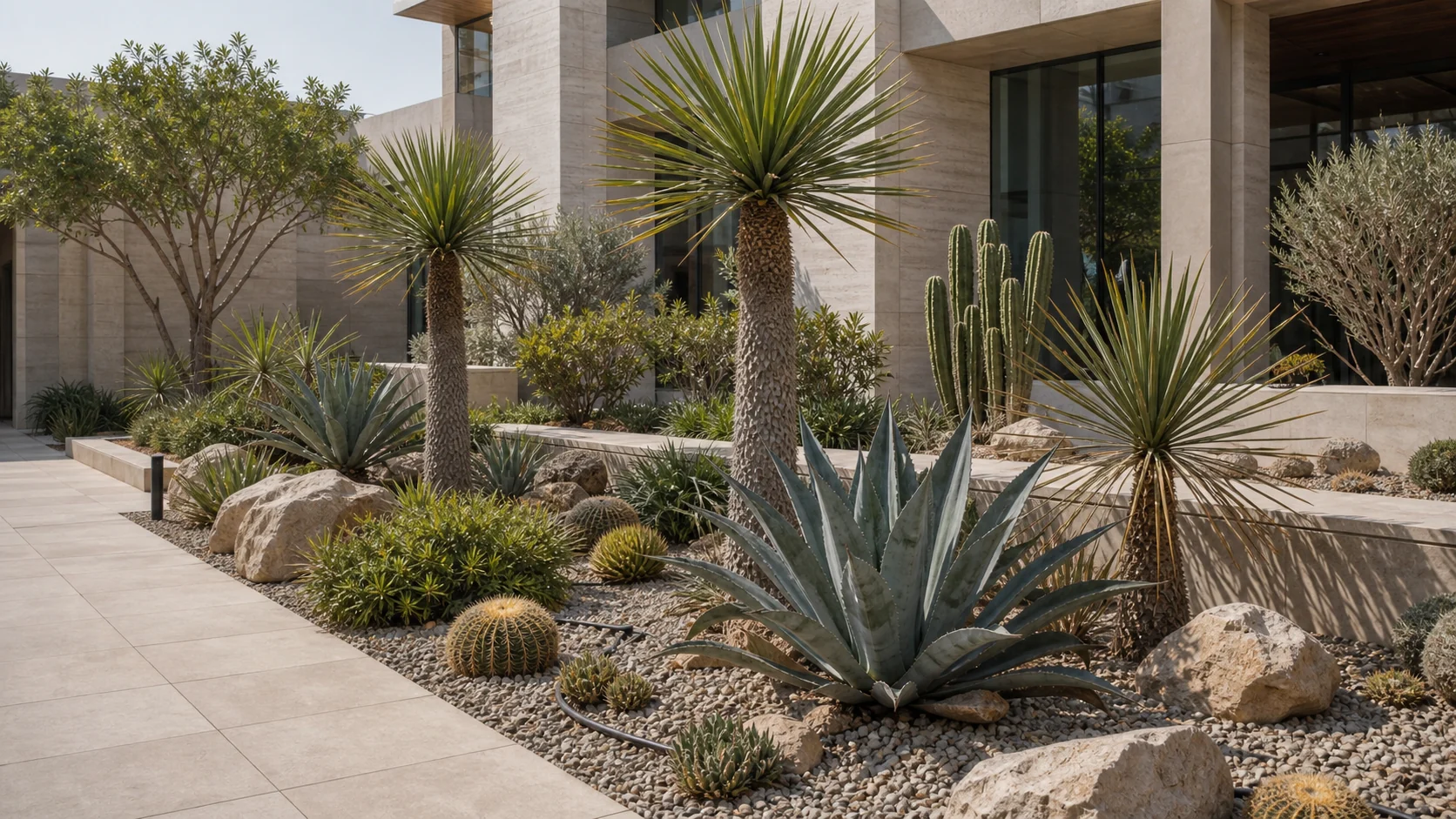
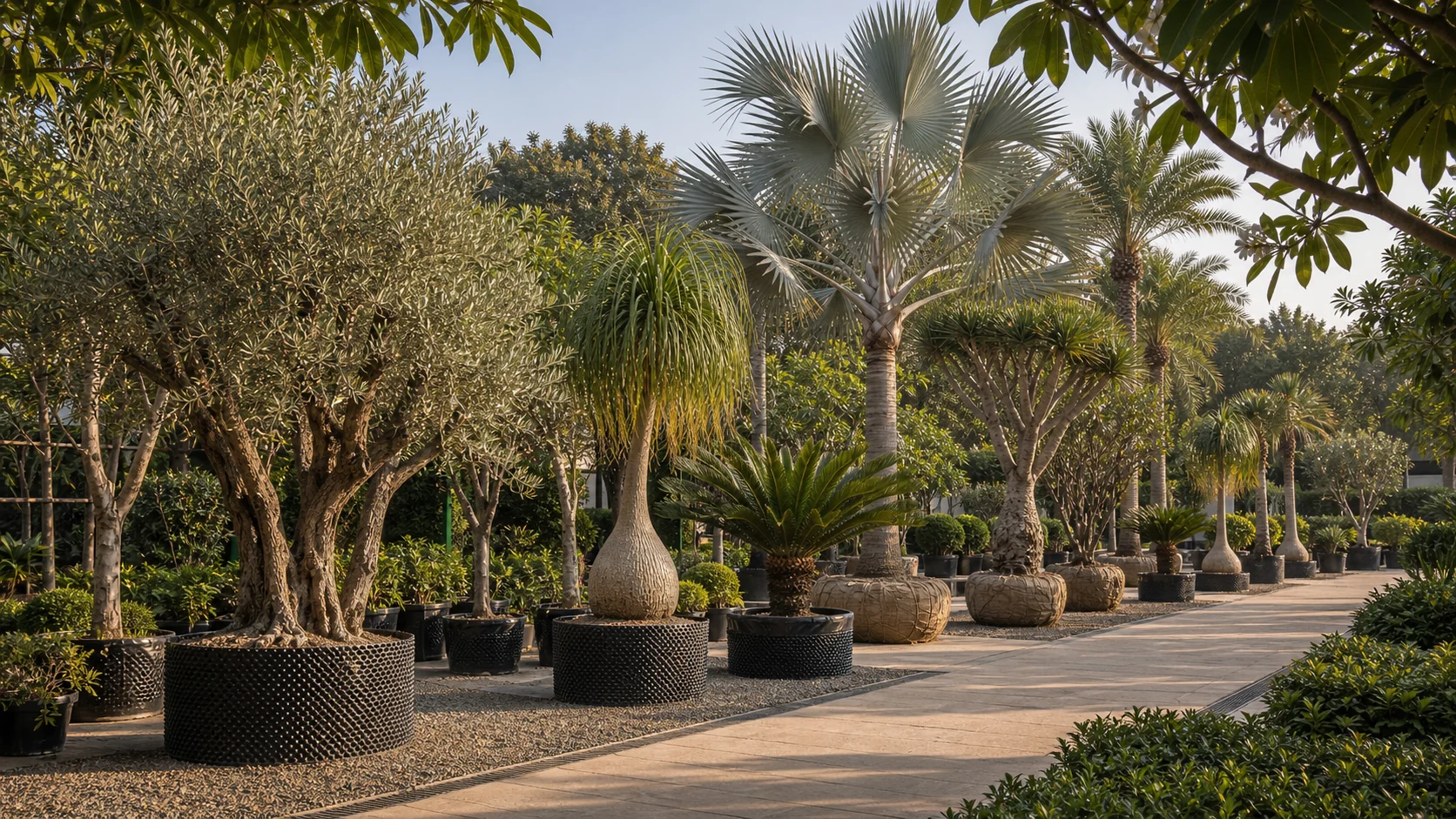
Section
Semi-arid seasons and monsoon drainage
Winter and pre-monsoon months can dry exposed arrivals on red and black cotton soils — establishment irrigation must be live before marketing photography deadlines. June through September monsoon tests podium and basement-adjacent pits; overflow tied to civil storm design is not optional on hospitality forecourts. Wind on open Hinjawadi and Kharadi campuses influences bracing on tall palms. Microclimate differs between sheltered IT courts and west-facing plazas — species fit is parcel-specific, not city-generic. Western-ghats catchment influence means some peripheral plots receive heavier monsoon runoff than central city blocks — pit overflow design should reflect local drainage surveys, not copied coastal specs. Chakan manufacturing corridor adds shift-traffic crane constraints — night hoists and security inductions should be sequenced before BOQ freeze on mature rootballs that cannot wait for ad-hoc facility approvals after tower handover.
Section
Access, industrial adjacency, and crane planning
Manufacturing and IT corridors mix oversize delivery with live shift traffic — crane windows need written approval from facility teams. Chakan and Talegaon logistics add highway distance but similar pit discipline on new campuses. Finished paving and lobby glazing require protection during rootball moves. Security perimeters on auto and tech campuses gate vendor inductions — sequence before BOQ freeze. Expressway corridor jobs may require night hoists and temporary road closures — programme float should name police and facility hold points before possession dates lock species on mature rootballs that cannot wait for ad-hoc access approvals after civil handover on occupied manufacturing and IT assets.
Section
Corporate, hospitality, and mixed-use demand
Hinjawadi, Kharadi, and Magarpatta corridors specify corporate arrival maturity — palms and formal planting visible from lobby lines. Hospitality along airport and expressway routes repeats porte-cochère and pool-deck specimens with litter scope. Mixed-use townships use clubhouse and boulevard statements for sales narrative. Hospital campuses need circulation clearance on mature spread. Auto and pharma manufacturing campuses add shift-traffic and hazmat-route constraints — specimen placement must respect emergency vehicle paths and term-time work zones without crown conflict on mature Phoenix or Washingtonia classes. Institutional buyers should issue distinct specimen BOQ sections so engineered pit scope, bracing weeks, and establishment AMC are not bundled into lump-sum shrub lines that invite value-engineering before handover photography on show-flats and sales galleries.
Section
Species selection for Pune microclimates
Palms on wide drained arrivals when braced — species pages note litter and crown spread. Olives on mounds in drier pockets; humid courts need cultivar honesty. Desert-adapted taxa align with semi-arid spells when monsoon drainage is engineered. Flowering specimens where petal-drop AMC is accepted. Topiary on formal hotel axes with clipping cadence. Ficus and foliage in sheltered courts with root-barrier discipline near paving. Category hubs group taxa by use case; procurement should shortlist from species pages with honest monsoon drainage notes rather than copying humid-coast palettes that fail when western-ghats runoff saturates undrained pits on Hinjawadi and Kharadi podium arrivals.
Section
Engineered pits and establishment
Pit media per geotech on cut-and-fill campuses — not copied from coastal specs. Irrigation establishment integrated with campus systems where present. Acclimatisation between nursery hold and hoist. Bracing until anchor metrics documented. Bore water chemistry tested before emitter lock — blanket specs create warranty disputes. Podium waterproofing witness before soil fill is routine on fast-track towers where landscape scope trails MEP commissioning — pit interfaces with structural drawings should be validated before dig on occupied manufacturing and IT campus programmes.
Section
AMC across dry and wet seasons
Controller profiles must switch monsoon versus dry establishment bands. Litter and frond management near main entries in scope. Pest monitoring on palm canopies per species notes. Replacement boundaries defined before install on large transplants. FM handover includes valve charts and escalation paths. Establishment visits should taper against measurable root-zone and anchor criteria — not end arbitrarily at possession when dry winter stress or monsoon saturation still threaten fresh transplants on poorly monitored sites. Snagging ties to approved planting plans; variations log against drawing revision so handover packs reflect actual emitter placement on shared campus irrigation systems serving both specimen and mass-shrub zones.
Section
Mobilisation and enquiry path
Four Leaf scopes Pune programmes from site assessment with pan-India mobilisation per contract. Published roster references do not confirm specimen availability on your site without walk. Request a site assessment for species shortlist, access, and pit interfaces. Share handover date, campus security rules, and bore-water availability so crane sequencing and acclimatisation hold can be planned against monsoon calendars rather than optimistic marketing photography deadlines on show-flats and mixed-use townships.
Section
Procurement and pricing
Explore
Related
Related
Related links
Services, segments, cost, and proof.
- Why do specimen trees fail in Pune monsoon despite dry winters?
- Waterlogging on poorly drained pits kills drought-marketed stock — drainage engineering matters more than seasonal marketing labels. Compare BOQs on pit scope, overflow ties to storm design, and establishment visits rather than headline per-tree figures from nursery tags.
- Which palms suit Pune IT campus arrivals?
- Shortlist by crown spread, litter, and wind on species pages — specify clear-trunk and overall height on submittals. Include bracing weeks, pit and drain build, and litter scope near main entrances so supplier comparisons reflect engineered install on open Hinjawadi and Kharadi IT campus plazas.
- Can olives work in Pune?
- On drained mounds in open sun, many sites succeed — over-irrigation after handover is a common killer. Fruit and paving decisions should precede material lock; establishment AMC should name moisture bands distinct from mass-shrub irrigation schedules on shared campus systems serving Pune IT arrivals.
- How should manufacturing-campus logistics be planned?
- Shift traffic, security inductions, and night windows should be confirmed before crane dates — delays are programme risk. Chakan and Talegaon corridor jobs add expressway distance; oversize permits and facility hold points should be sequenced before BOQ freeze on mature rootballs for Pune manufacturing campuses.
- What AMC lines belong on specimen BOQs?
- Establishment moisture bands, bracing removal gates, litter scope, pest escalation, and seasonal controller profiles. Match documentation fees and acclimatisation visits across supplier comparisons — not headline per-tree figures that omit monsoon drainage build on podium pits.
- Is acclimatisation required for locally sourced stock?
- Hold with monitored irrigation before hoist still reduces shock on large rootballs — skipping it for schedule is a risk call. Acclimatisation in open sun on nursery hold preserves crown form before crane day on Hinjawadi and Kharadi campuses where west-facing plazas add heat stress on fresh transplants during pre-monsoon establishment bands.
- How does Four Leaf mobilise to Pune?
- Site assessment first; team and logistics per contract — pan-India capability without implied local inventory. Share manufacturing-campus security rules, bore-water chemistry, and handover date so crane sequencing and acclimatisation hold align to monsoon calendars rather than optimistic possession photography on Hinjawadi and Kharadi programmes.
- Why separate specimen packages from mass softscape on Pune townships?
- Developer clubhouses and mixed-use arrivals specify architectural maturity that mass shrub lines cannot deliver — bundling specimen install with turf and groundcover invites value-engineering that strips drainage build, bracing weeks, and establishment visits before handover photography. Distinct BOQ sections with acceptance criteria tied to species submittals protect engineered scope through award and possession on Hinjawadi and Kharadi township programmes.