
Buttonwood
Buttonwood (Conocarpus erectus)
Conocarpus erectus is the fast, extremely tough evergreen with small dense foliage — specified for saline, polluted, and heat-stressed corridors where designers need quick green and clipped standards, with honest planning for water-seeking roots and pollen concerns flagged in parts of India and the Gulf.
Spec
At a glance
- Botanical name
- Conocarpus erectus
- Family
- Combretaceae
- Common names
- Buttonwood, silver buttonwood (silver form)
- Origin
- Tropical American and African coasts
- Plant type
- Evergreen tree or clipped standard
- Mature height
- Often 6–12 m; taller if unclipped
- Trunk / form
- Dense small leaves; trainable hedge or standard
- Crown spread
- Moderate; wider if grown as screen
- Growth rate
- Fast in warm sites
- Light
- Full sun
- Water needs
- Low to moderate; aggressive root foraging when stressed
- India climate suitability
- Hot coastal and urban India; over-used on some Gulf-influenced planting palettes
- Cold/heat & salt/wind tolerance
- Exceptional salt, heat, drought, and pollution tolerance
- Typical supply size
- Screen heights 2–4 m; standards 3–6 m [Unverified]
- Lead time (sourcing)
- [Unverified] widely stocked — verify green vs silver form
- Install considerations
- Keep away from drains, sewers, and foundations; pollen-sensitive guest routes
- Maintenance level
- Moderate to high if clipped — fast regrowth
- Cautions
- Aggressive water-seeking roots; pollen/allergy concerns in some markets; over-planted
Gallery
Specimen visual guide
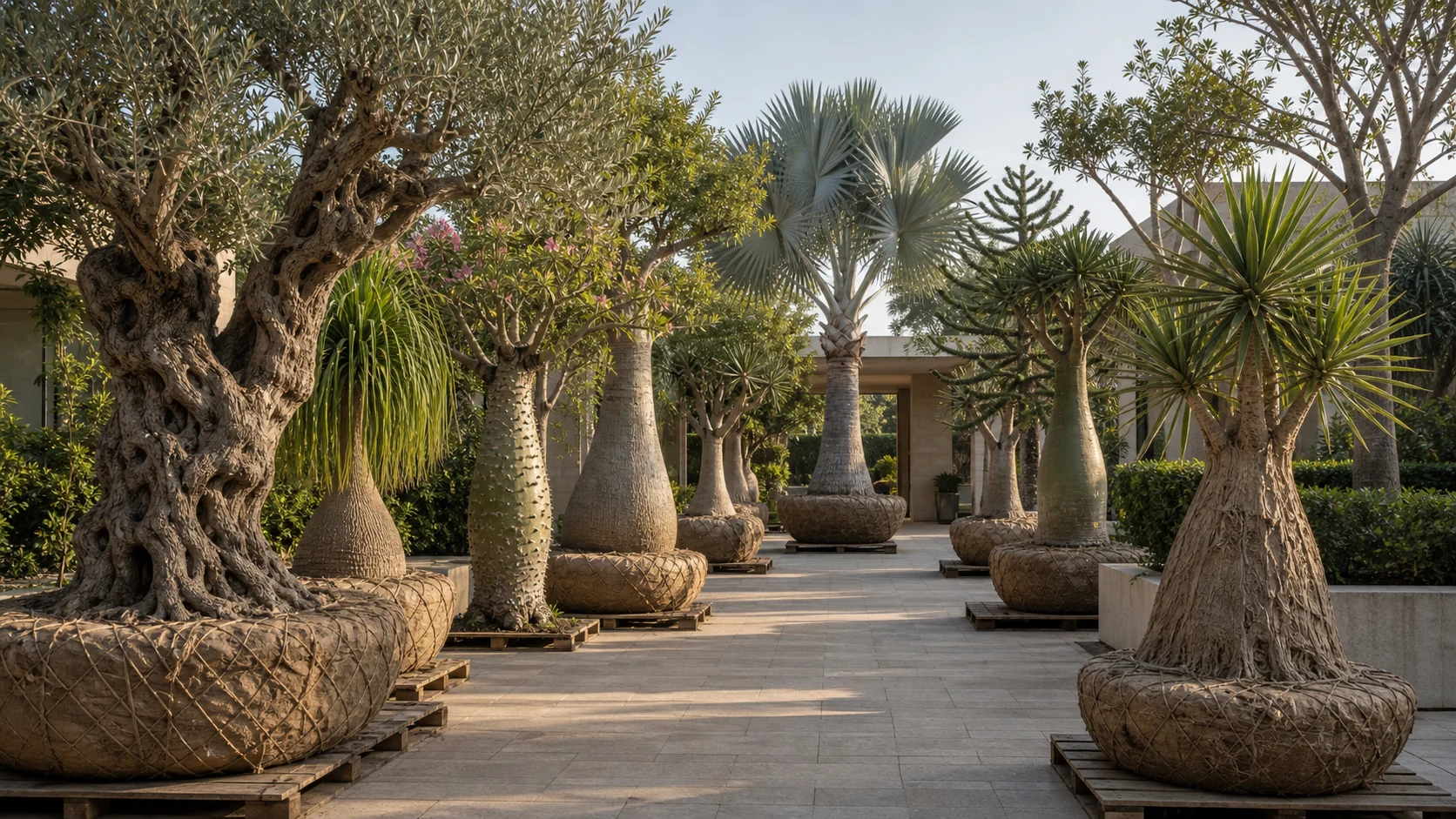
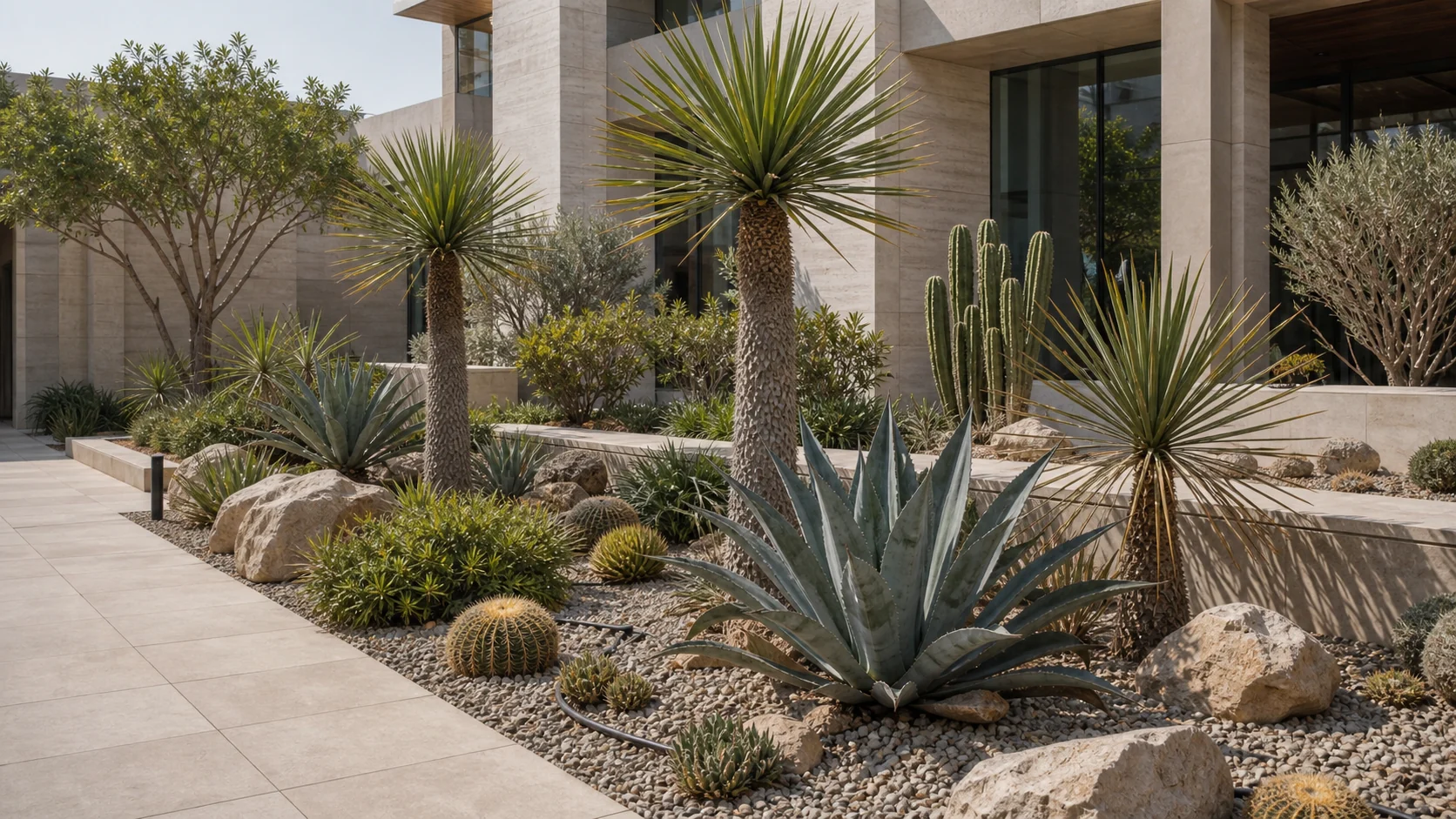
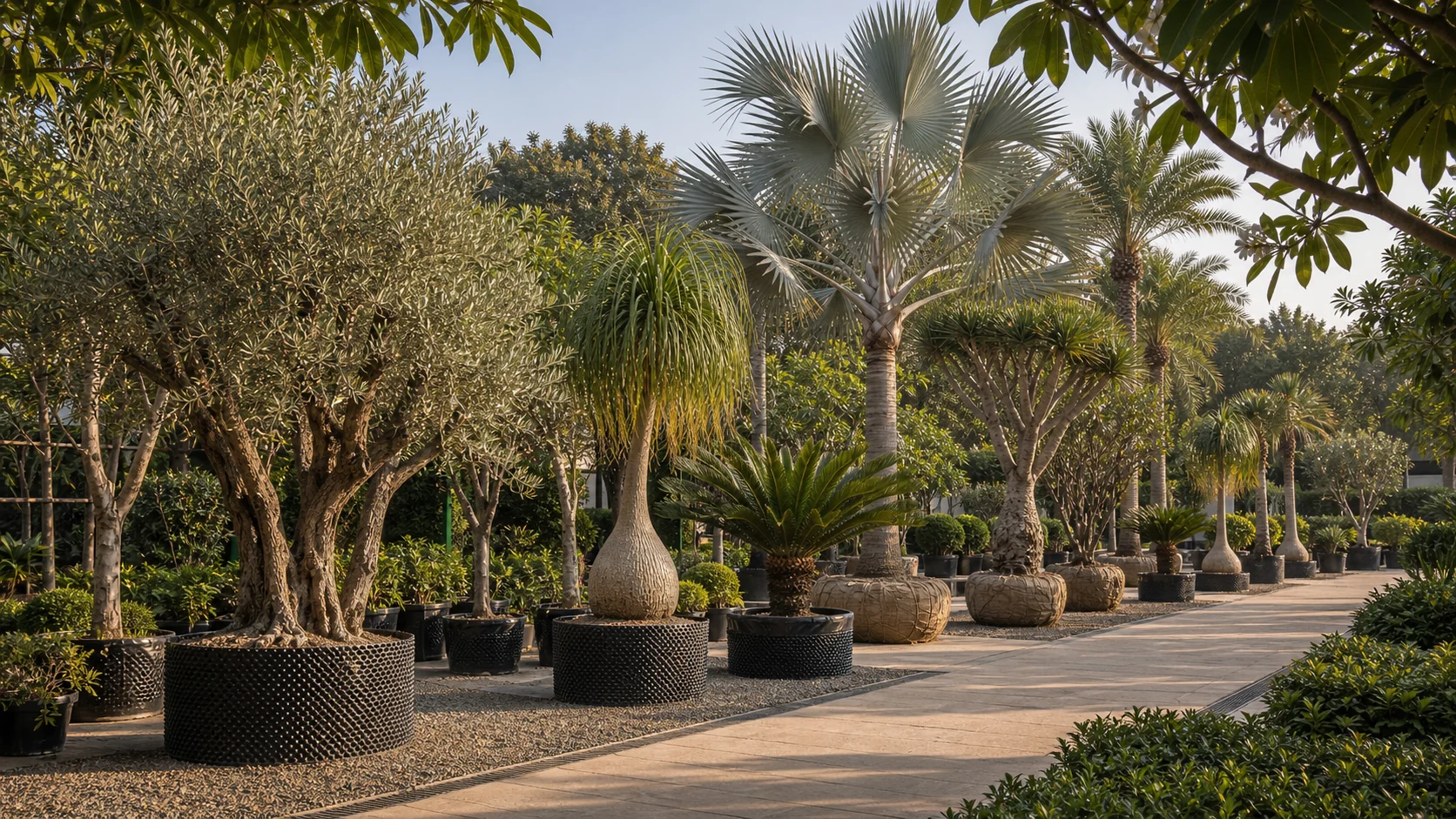
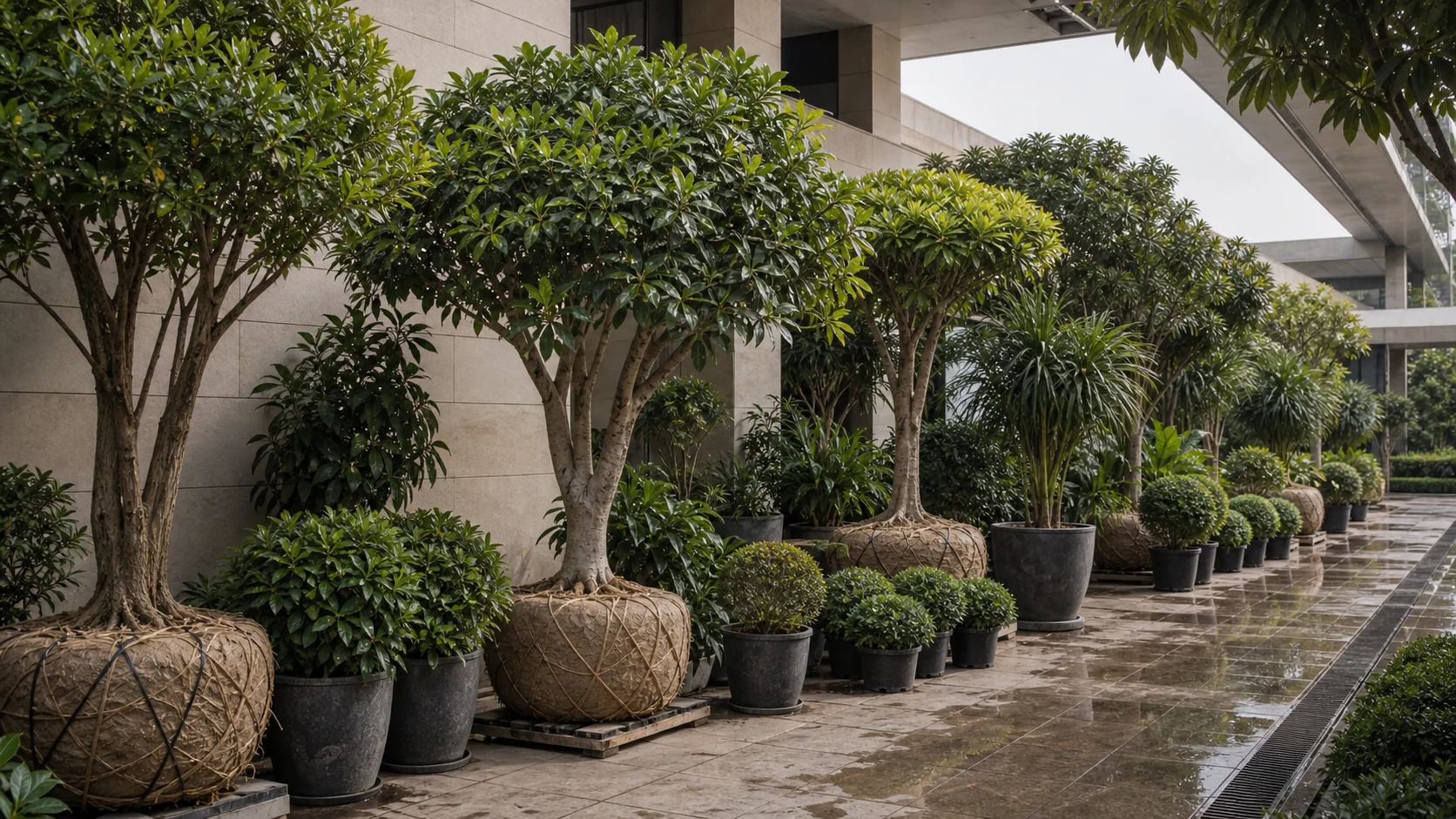
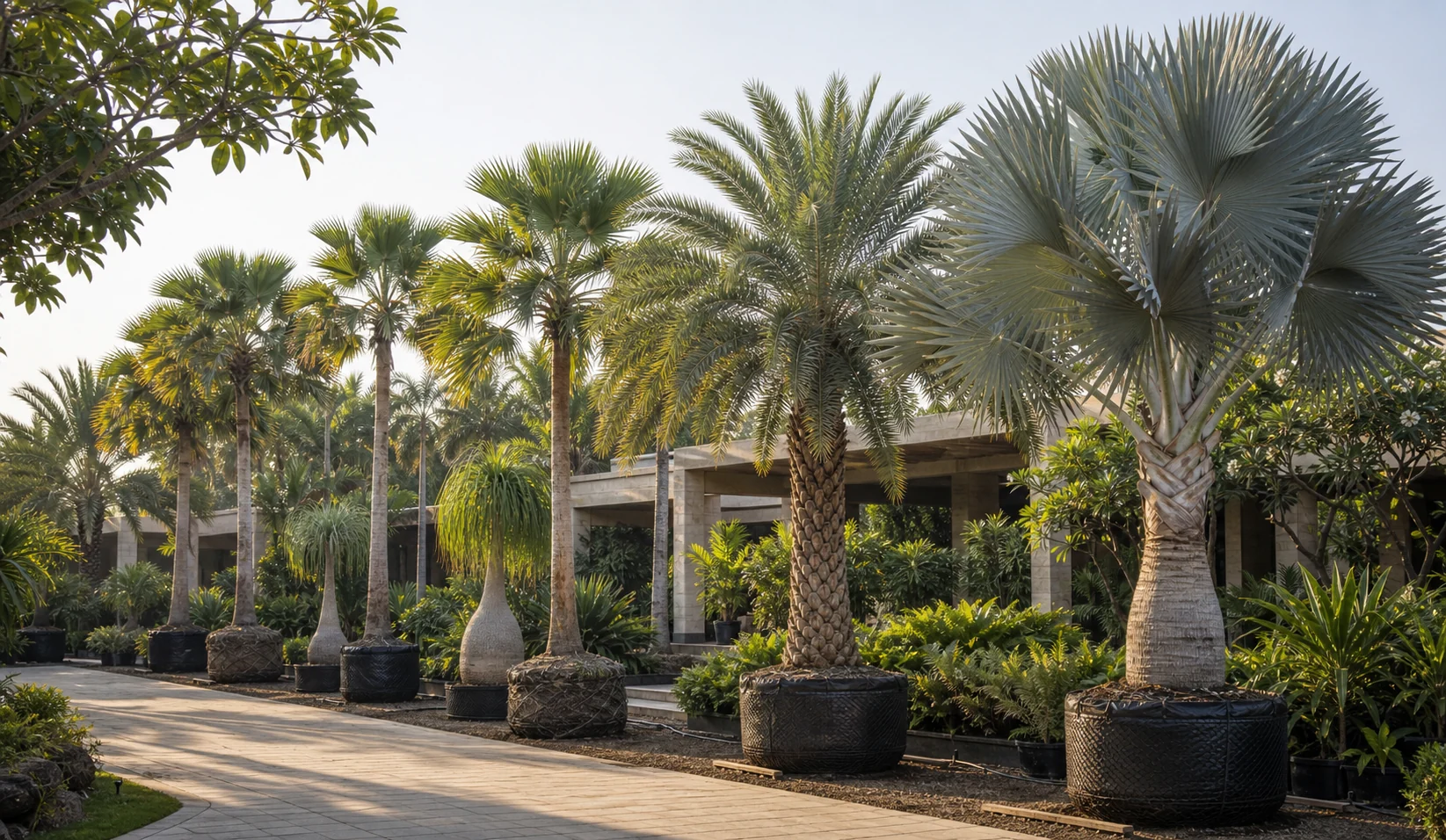
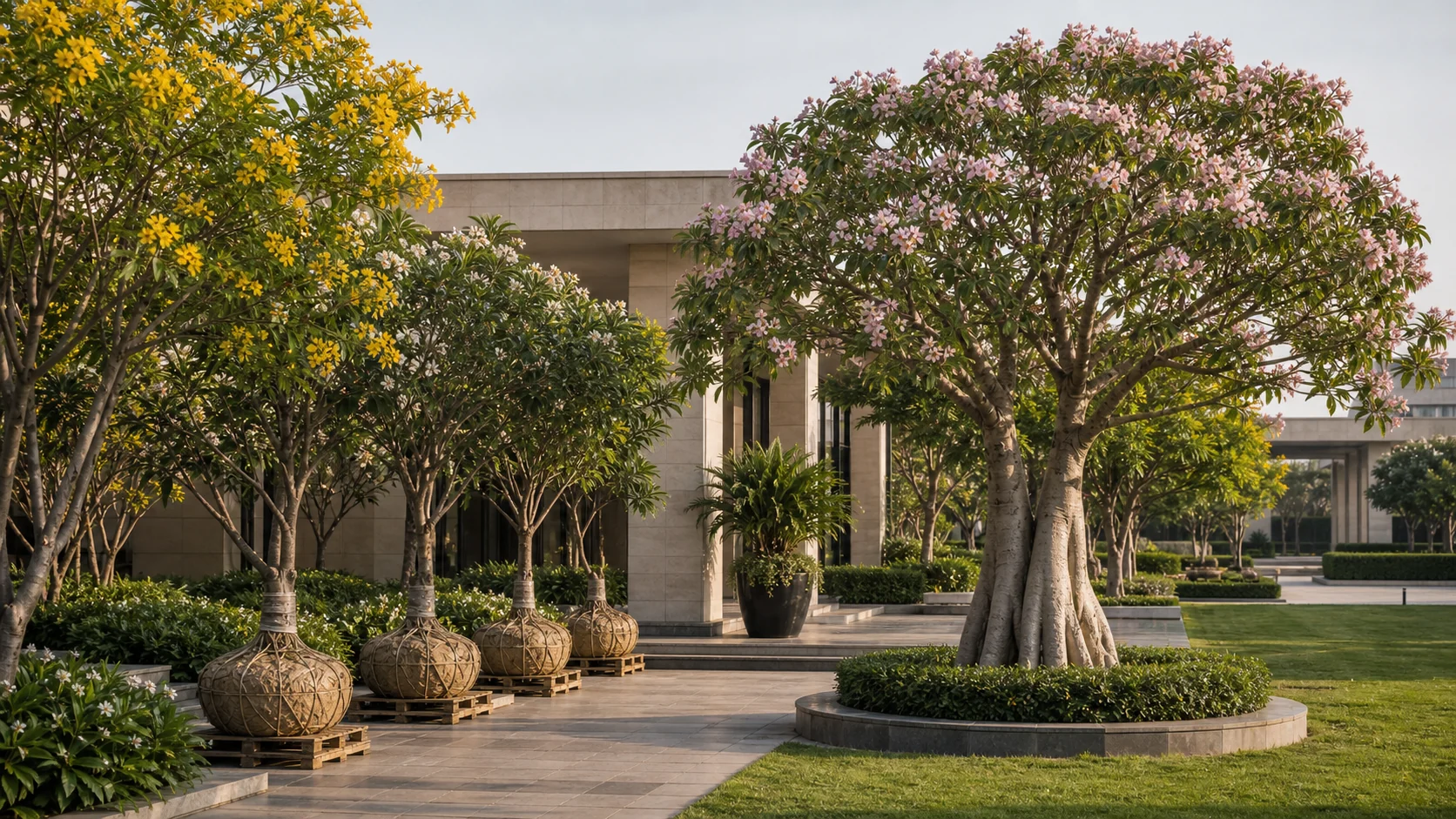
Visual context for placement, scale, handling, and landscape integration.
Section
Where it's used in premium projects
Conocarpus appears on harsh-site briefs — coastal highways, refinery-adjacent campuses, marina wind corridors, and fast green screens where salt and pollution would brown less tough species. Clipped standards frame entries when designers want small-leaf evergreen rhythm without finicky cultivars.
Section
Climate & site suitability in India
It thrives in hot coastal metros and polluted urban edges where other trees fail — that toughness is the point. Be balanced in proposals: it is over-planted in some Gulf-influenced Indian landscapes, and pollen sensitivity is widely discussed in regional horticulture press. Do not place root zones over drains or lightweight paving without barriers.
Section
Sourcing & acclimatisation
Specify green versus silver-leaf forms on BOQ — they read differently in masterplans. Fast growth means buyers sometimes under-specify mature spread. [Unverified: domestic nursery dominance versus import for standards.] Acclimatise clipped forms with post-install shear schedule so lines stay crisp.
Section
Installation (pit, soil, drainage, bracing)
Root barriers and service-route mapping are non-optional near utilities — aggressive water-seeking roots are a documented maintenance conflict, not a rare edge case. Pits still need drainage despite drought marketing. Route pollen-sensitive guest seating upwind or choose alternate species for asthma-conscious wellness resorts.
Section
Establishment & AMC
AMC for clipped forms needs frequent shear cycles — fast regrowth otherwise looks informal within weeks. Monitor paving and drain intrusion annually. If ownership flags allergy complaints, document species choice in handover packs — replacement cost is lower before roots entangle utilities.
Section
Cost drivers
Explore
Related
Related
Related links
Services, segments, cost, and proof.
- Softscape & horticulture
- Irrigation & water management
- Landscape maintenance (AMC)
- Hotel & resort landscaping
- Luxury resort & spa landscaping
- Mall & retail landscaping
- Corporate campus landscaping
- Projects
- Commercial landscaping cost guide
- Pricing drivers (imported trees)
- Import compliance workflow
- Request a site assessment
- Is Conocarpus erectus safe near building foundations and drains?
- Keep significant distance and use root barriers — aggressive water-seeking roots are widely reported; treat utility corridors as no-plant zones unless engineered.
- What are the pollen and allergy concerns?
- Regional horticulture discussion flags pollen sensitivity on some sites — be honest in guest-route planning; wellness resorts may prefer alternate evergreen screens.
- Green buttonwood versus silver form — what changes on site?
- Silver-leaf selections read cooler and lighter in coastal sun; green is denser dark mass — name the form on nursery submittals to avoid swap at delivery.
- Why is it specified despite being over-planted?
- Because it survives salt, heat, and pollution where designers need fast green — the trade-off is root behaviour and regional allergy narrative, not lack of alternatives.
- Can Conocarpus replace a fine courtyard foliage tree?
- Usually no — it is a tough screen and avenue workhorse, not a tiered architectural foliage specimen; match species to brief.
- How often should clipped standards be sheared?
- AMC should state cadence — fast growth means informal lines return within weeks on coastal sites without scheduled clipping.
- How do we compare supplier BOQs?
- Match form (green/silver), height class, clip establishment weeks, and root-barrier scope — not per-metre screen price alone.