
Bucida
Bucida / Spiny black olive (Bucida molinetii)
Bucida molinetii is chosen for fine, small leaves on horizontal tiered “cloud” branching — a dense, refined silhouette that reads at courtyard scale and holds up to salt, wind, and drought on coastal resort entries where the brief is layered foliage architecture, not a broad shade dome.
Spec
At a glance
- Botanical name
- Bucida molinetii (syn. Terminalia molinetii)
- Family
- Combretaceae
- Common names
- Bucida, spiny black olive (landscape trade)
- Origin
- Caribbean, southern Florida
- Plant type
- Evergreen foliage specimen tree
- Mature height
- Often 4–8 m in refined landscape pruning
- Trunk / form
- Tiered horizontal “cloud” plates; fine-textured small leaves
- Crown spread
- Moderate; layered horizontal planes when cloud-pruned
- Growth rate
- Slow to moderate; refinement is pruning-driven
- Light
- Full sun for dense tier definition
- Water needs
- Low to moderate once established; drought-tolerant
- India climate suitability
- Warm coastal and tropical India (Goa, Mumbai coast, Chennai); frost-sensitive inland hills
- Cold/heat & salt/wind tolerance
- Salt-, wind-, and drought-tolerant once established; small stem spines
- Typical supply size
- Pre-shaped cloud tiers 2–4 m+ [Unverified]
- Lead time (sourcing)
- [Unverified] nursery holding for tier-trained stock
- Install considerations
- Preserve tier structure in transit; generous pit; drainage; spine-safe handling
- Maintenance level
- Moderate — cloud-tier pruning, fine leaf litter sweep
- Cautions
- Small spines on stems; fine leaf litter on paving; slow to rebuild tiers after bad pruning
Gallery
Specimen visual guide
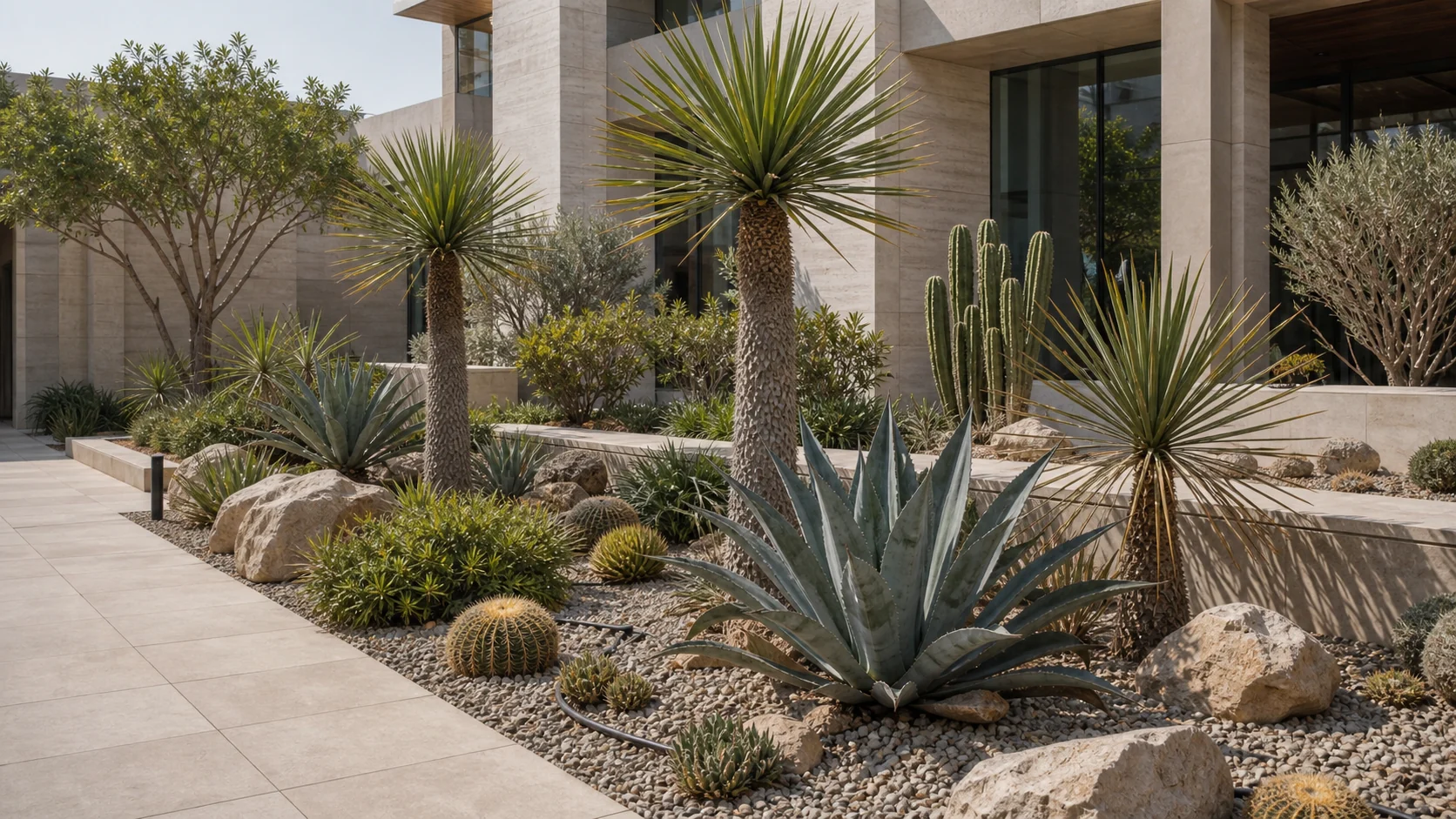
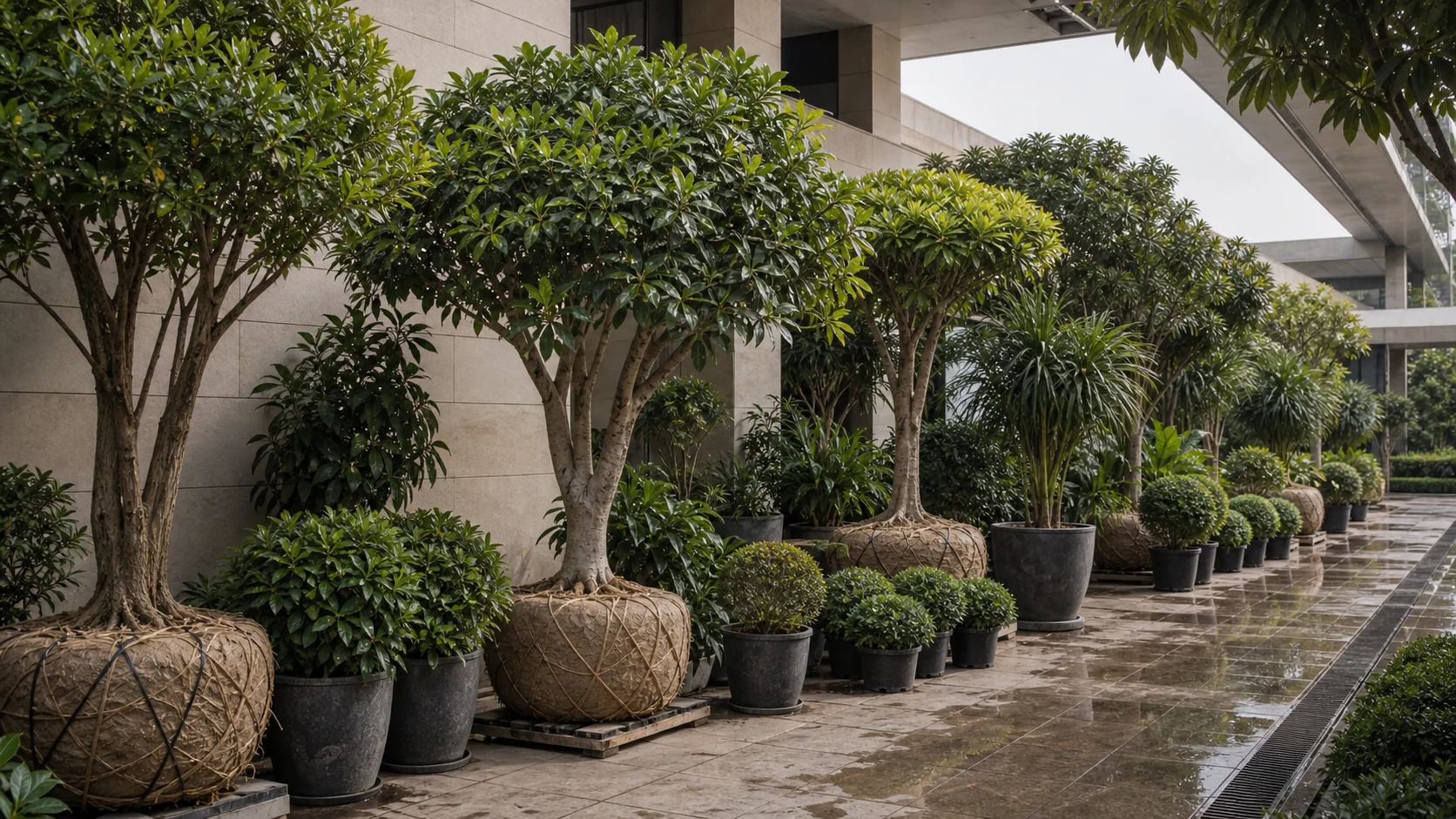
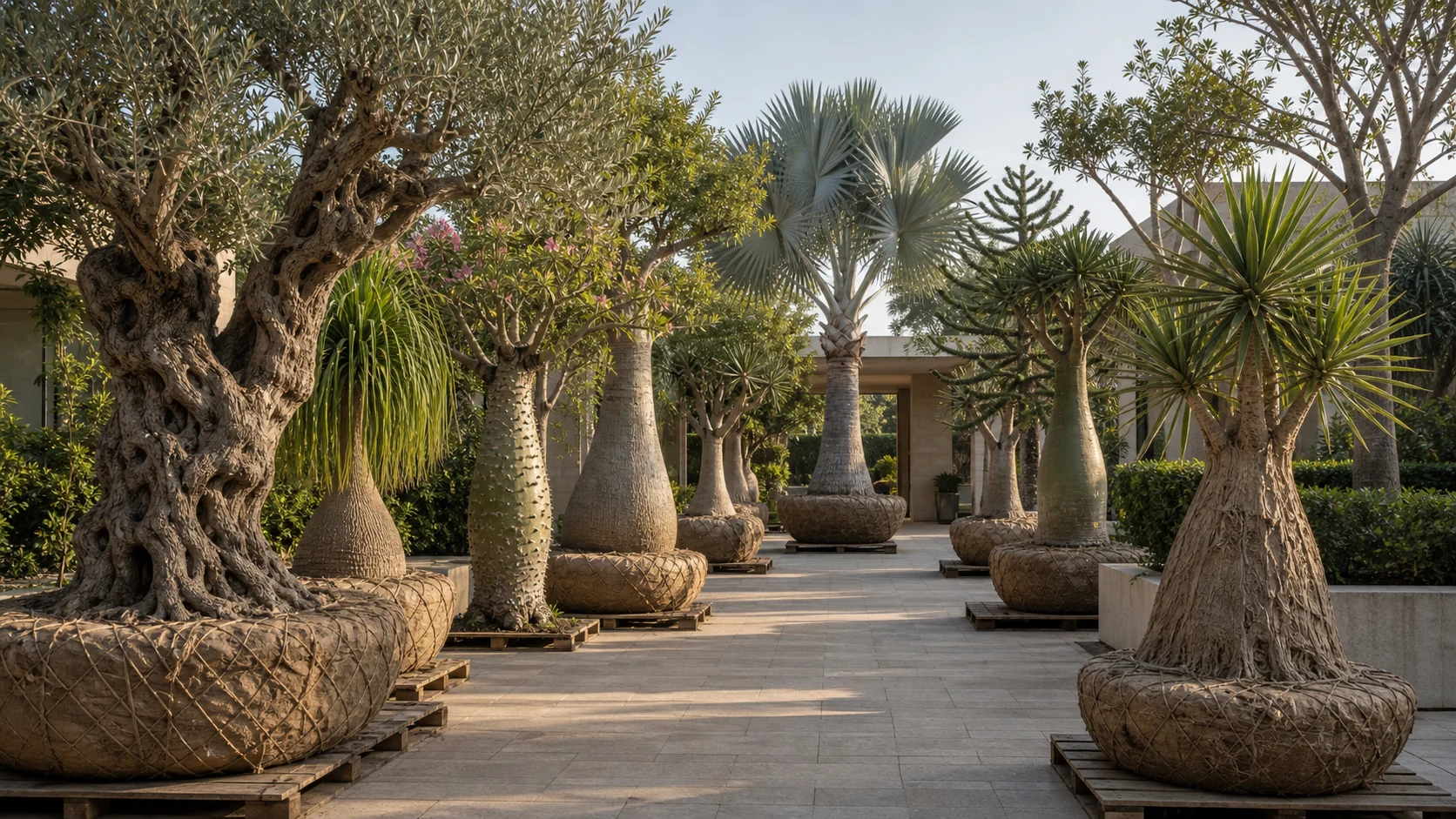
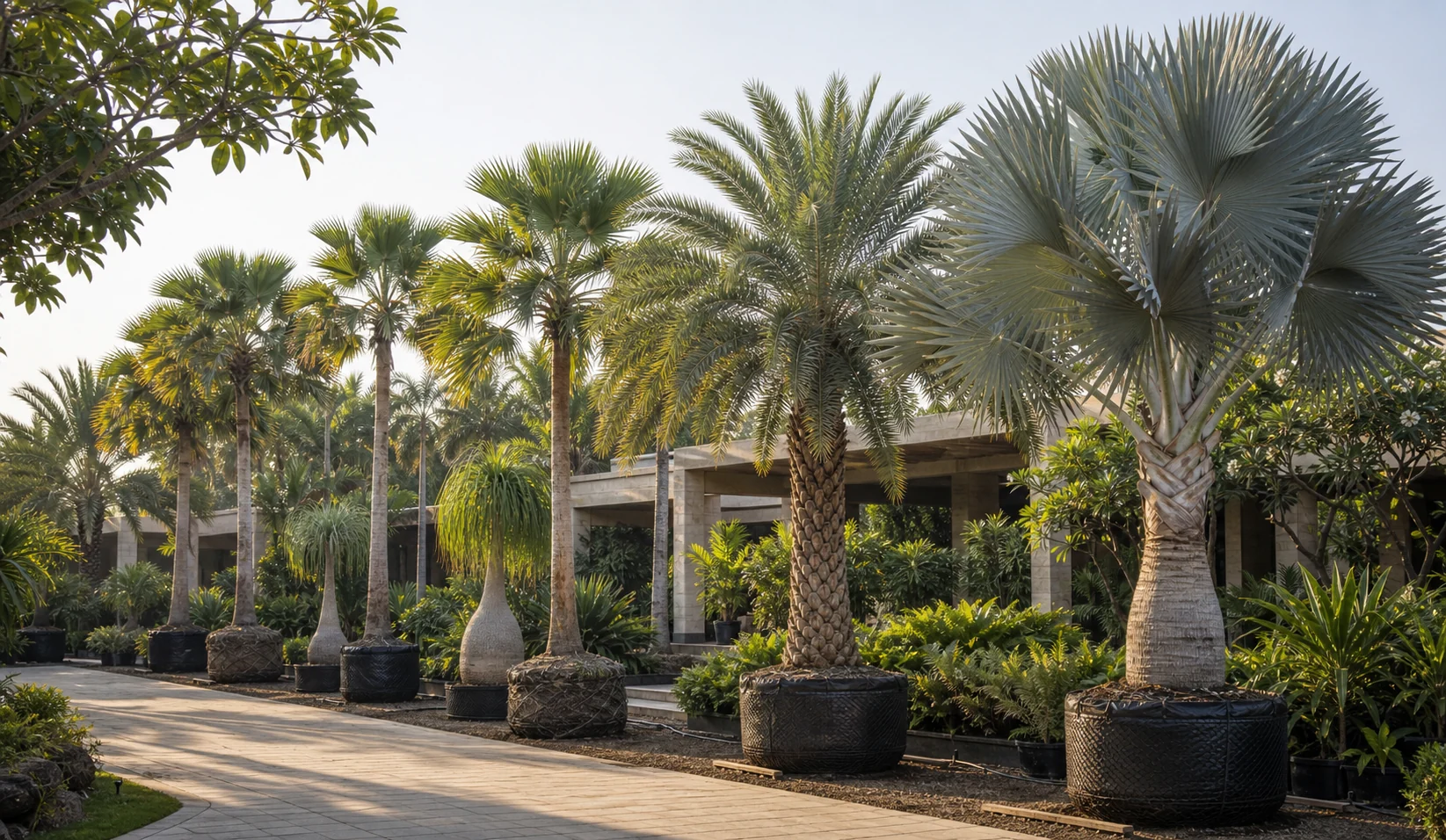
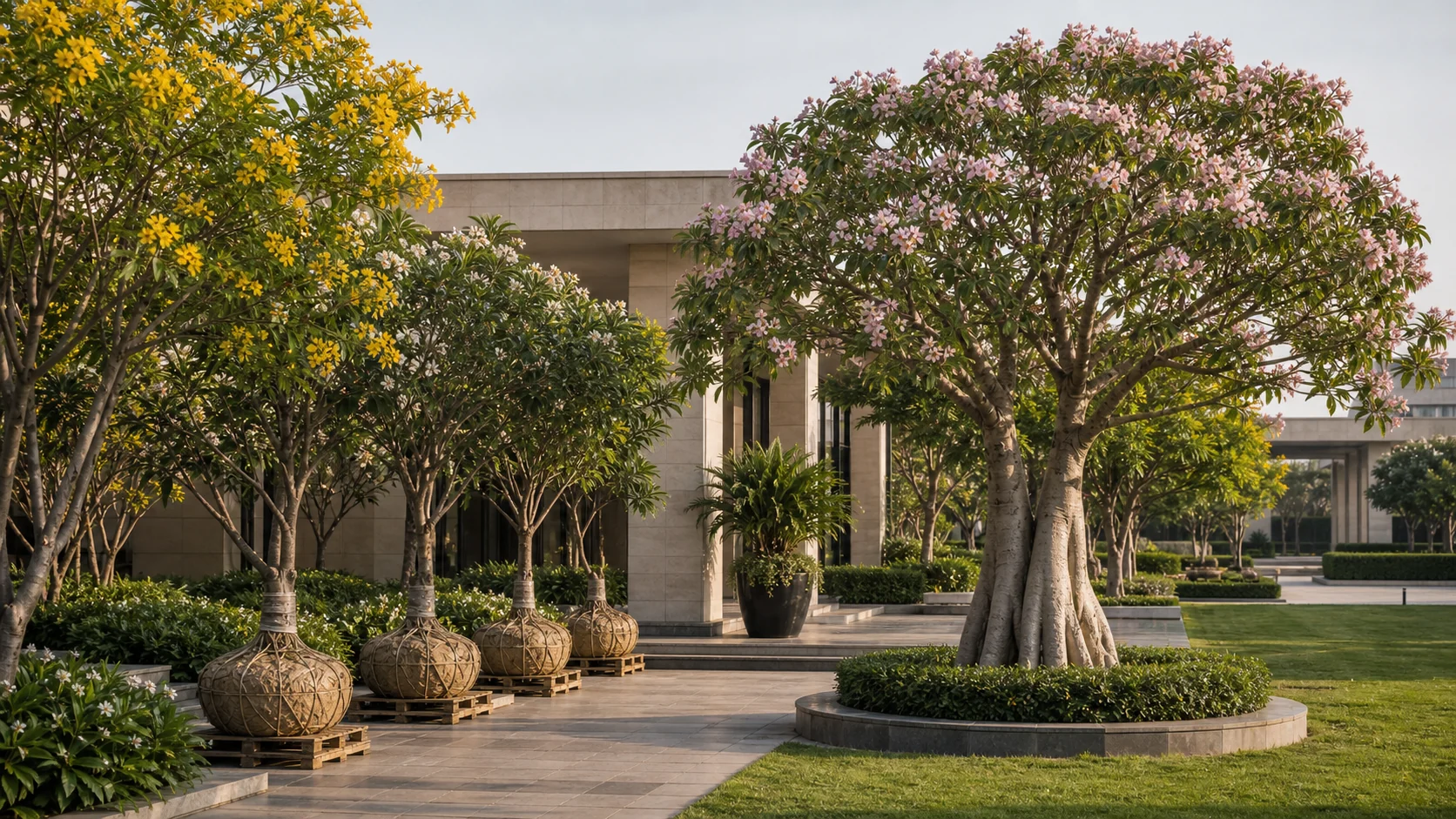
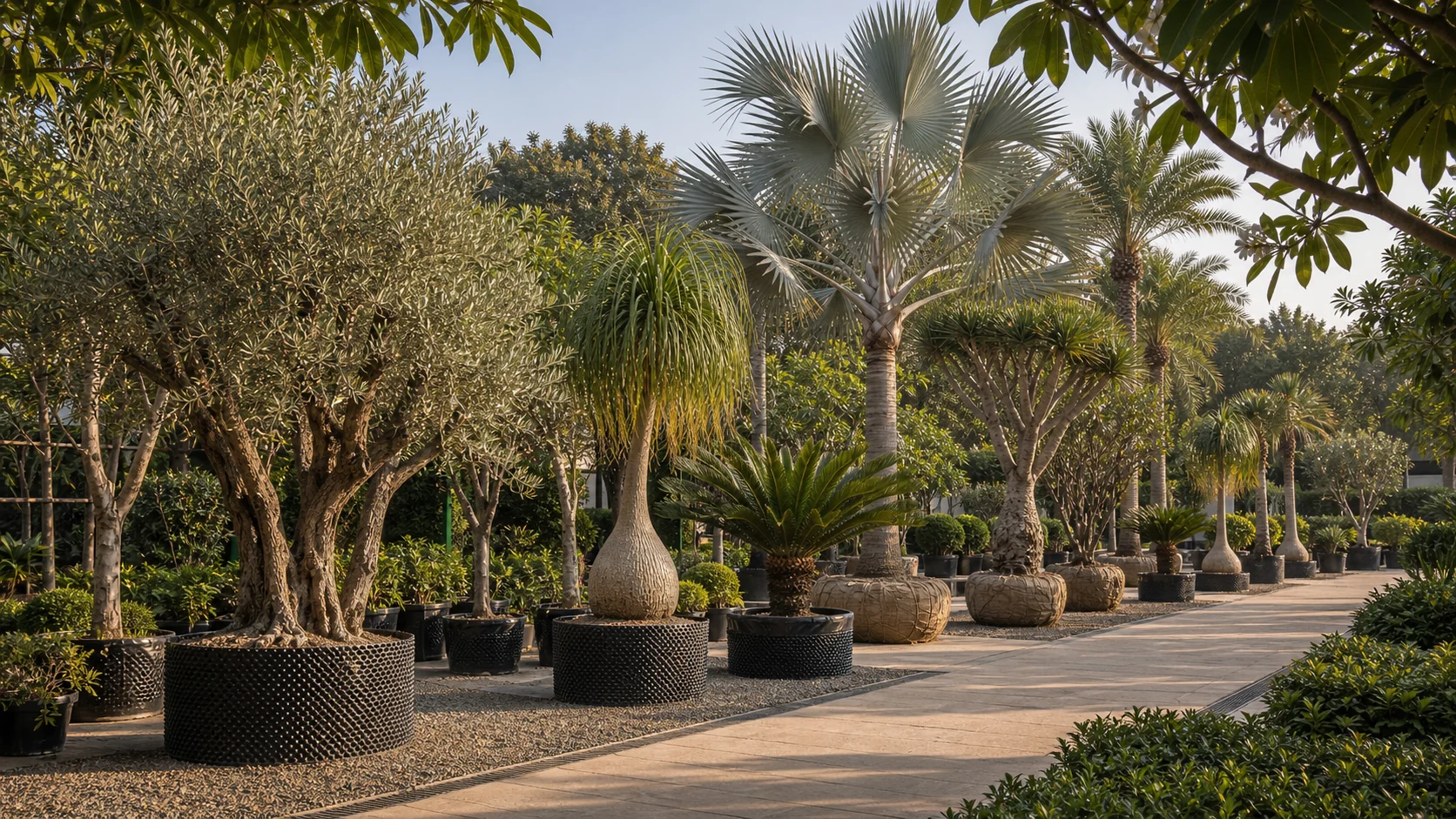
Visual context for placement, scale, handling, and landscape integration.
Section
Where it's used in premium projects
Landscape architects specify Bucida molinetii when the arrival or courtyard needs a fine-textured, layered foliage read — coastal hotel courts, marina clubhouses, and formal terraces where horizontal “cloud” plates replace a single heavy shade dome. Procurement should BOQ tier count, plate spacing, and whether the specimen is nursery-trained versus field-grown and shaped on site.
Section
Climate & site suitability in India
It suits humid coastal tropics and warm subtropical forecourts with irrigation establishment. Inland north-India winters can defoliate or stall tier refinement — microclimate review matters. Salt spray and coastal wind are strengths relative to broadleaf shade trees; still plan setbacks from glazing because fine litter accumulates on light stone.
Section
Sourcing & acclimatisation
Buy on visible tier geometry, trunk caliper, and leaf density — not generic “foliage tree” lines. Document whether stock is green Bucida versus the variegated sibling form on submittals. [Unverified: typical import versus domestic nursery mix for tier-trained specimens.] Hold under full sun at nursery so horizontal planes do not open up before install.
Section
Installation (pit, soil, drainage, bracing)
Engineered drainage still applies despite drought tolerance — monsoon waterlogging collapses tier structure on young transplants. Rigging must not crush horizontal branches; spine PPE for crews. Light staking may help until root plate stabilises on windy coastal drops.
Section
Establishment & AMC
AMC should include scheduled cloud-tier pruning to maintain plate definition — ad hoc topping destroys the design value. Sweep fine leaf litter from pool decks and light paving. Compare establishment irrigation to the variegated form only where both appear on one campus — light needs differ.
Section
Cost drivers
Explore
Related
Related
Related links
Services, segments, cost, and proof.
- Softscape & horticulture
- Irrigation & water management
- Landscape maintenance (AMC)
- Hotel & resort landscaping
- Luxury resort & spa landscaping
- Mall & retail landscaping
- Corporate campus landscaping
- Projects
- Commercial landscaping cost guide
- Pricing drivers (imported trees)
- Import compliance workflow
- Request a site assessment
- What is the tiered “cloud” form on Bucida molinetii?
- Horizontal branching is pruned into stacked plates so fine small leaves read as layered clouds — specify tier count and plate spacing on BOQ, not just height.
- How does green Bucida differ from the variegated Terminalia form?
- Same species complex — green form is the dense salt-tough cloud tree; the variegated cultivar needs stronger light to hold cream edges and pairs as a lighter courtyard accent. Cross-check both on masterplans.
- Is Bucida molinetii suitable for exposed coastal hotels?
- Yes for salt and wind relative to many broadleaf specimens — still engineer drainage and plan fine litter control on guest paving.
- Are the spines a maintenance issue?
- Stems carry small spines — route pruning and guest paths so crews use PPE and seating is not placed inside the working crown zone.
- How often should cloud tiers be pruned?
- AMC should state plate refinement frequency — neglected trees lose the horizontal architecture within one or two seasons of generic hedge cuts.
- What documentation applies to imported Bucida stock?
- Live plants follow India plant quarantine workflow — align with your compliance checklist before shipment (informational, not legal advice).
- How should we compare supplier quotations?
- Match tier geometry, trunk caliper, transport method, pruning scope in year one, and AMC — not headline per-tree numbers.