
Little Gem magnolia
Little Gem magnolia (Magnolia grandiflora 'Little Gem')
Magnolia grandiflora 'Little Gem' is the compact evergreen magnolia with glossy leaves and bronze-felted undersides, large fragrant white flowers from a young age, and a narrow upright habit — specified for refined formal entries, screening rows, and courtyards where species-scale magnolia spread will not fit, with drainage and soil acidity engineered because alkaline Indian soils commonly cause chlorosis.
Spec
At a glance
- Botanical name
- Magnolia grandiflora 'Little Gem'
- Family
- Magnoliaceae
- Common names
- Little Gem magnolia, dwarf southern magnolia
- Origin
- Cultivar of SE-USA species (Magnolia grandiflora)
- Plant type
- Compact evergreen flowering specimen tree
- Mature height
- Often 4–7 m in Indian landscape use
- Trunk / form
- Glossy leaves with bronze-felted undersides; narrow upright
- Crown spread
- Moderate — tighter than species magnolia
- Growth rate
- Slow to moderate
- Light
- Full sun to partial shade
- Water needs
- Moderate; consistent moisture in establishment
- India climate suitability
- Warm subtropical and tropical metros; chlorosis risk on alkaline soils nationwide
- Cold/heat & salt/wind tolerance
- Moderate heat tolerance; some frost sensitivity when young; not primary salt tree
- Typical supply size
- 2–3 m trained specimens on formal rows [Unverified]
- Lead time (sourcing)
- [Unverified] confirm true Little Gem clone on nursery tags
- Install considerations
- Acid-leaning soil or chelation plan; excellent drainage; large leaf litter on paving
- Maintenance level
- Moderate — chlorosis monitoring, litter sweep, slow formative prune
- Cautions
- Chlorosis on alkaline soils; large evergreen leaf litter; slower growth than fast screens
Gallery
Specimen visual guide
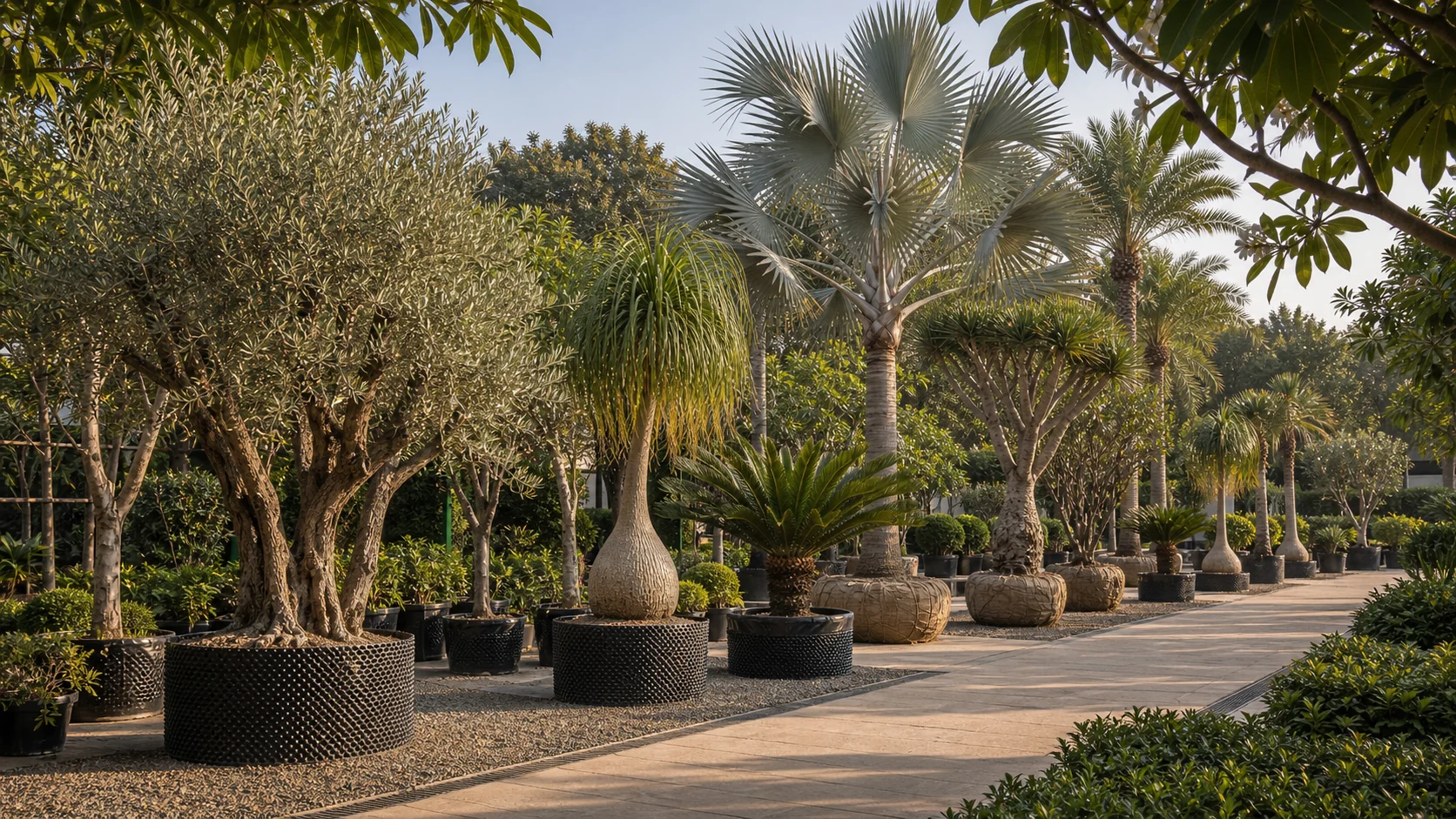
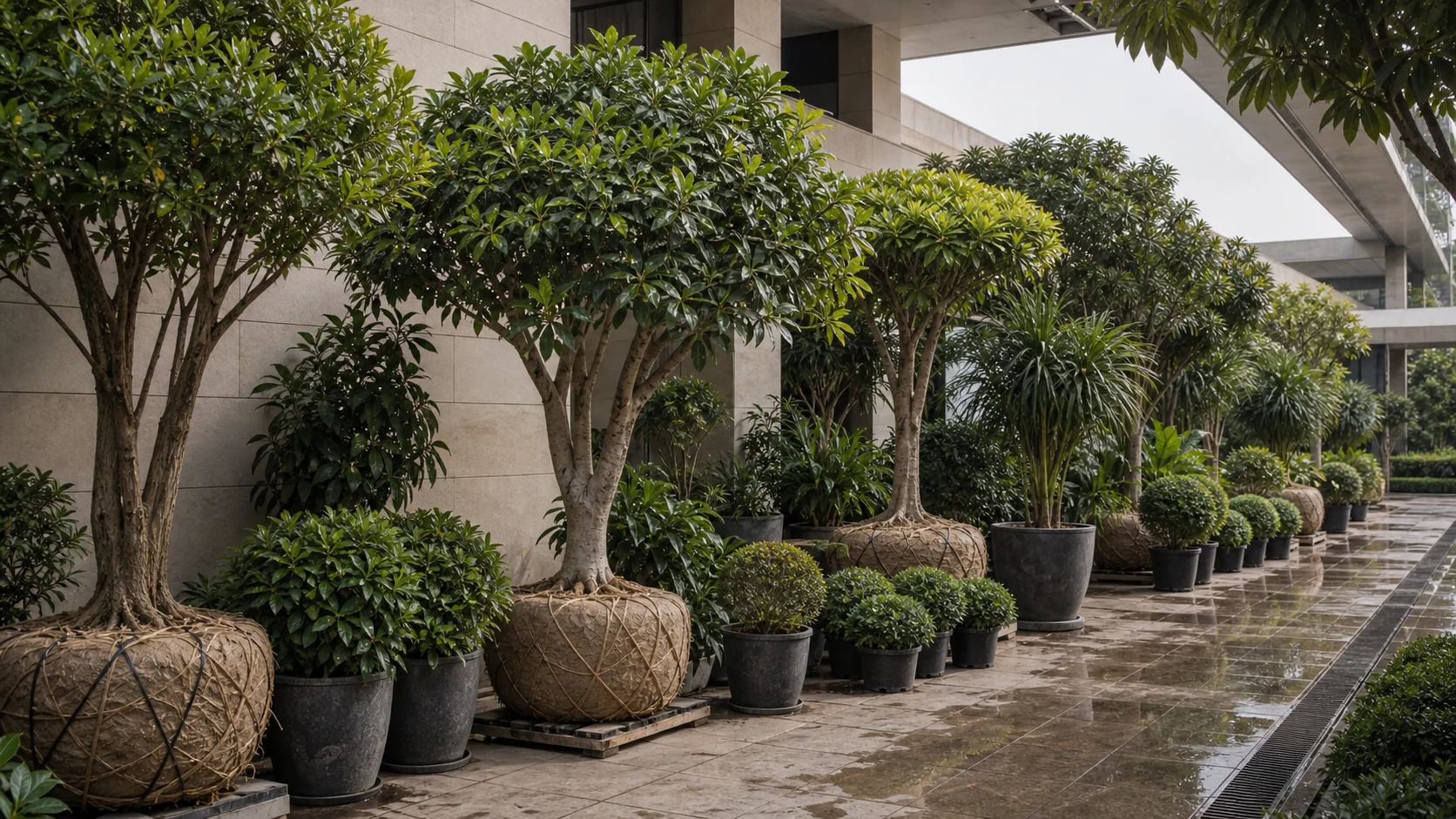
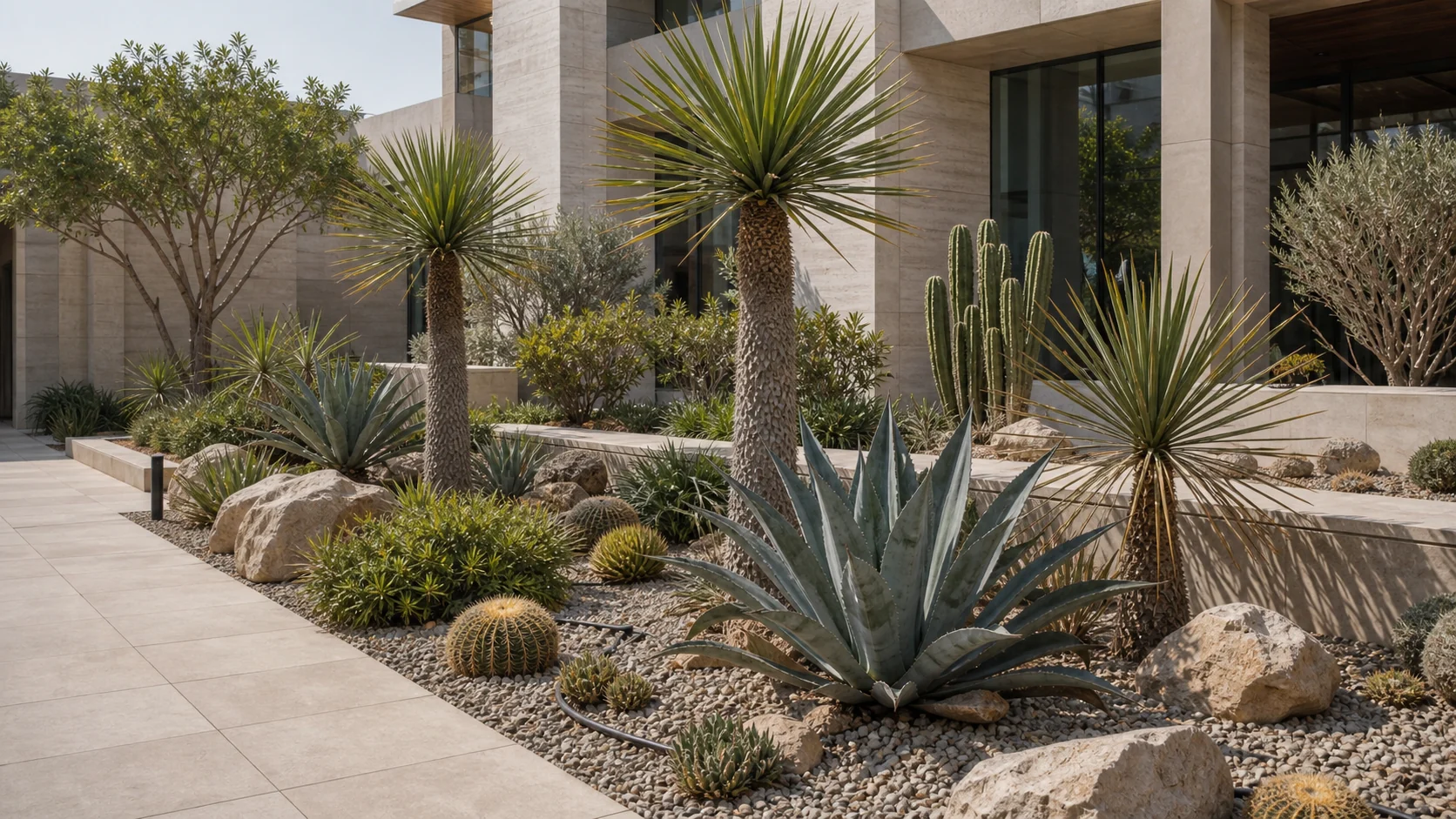
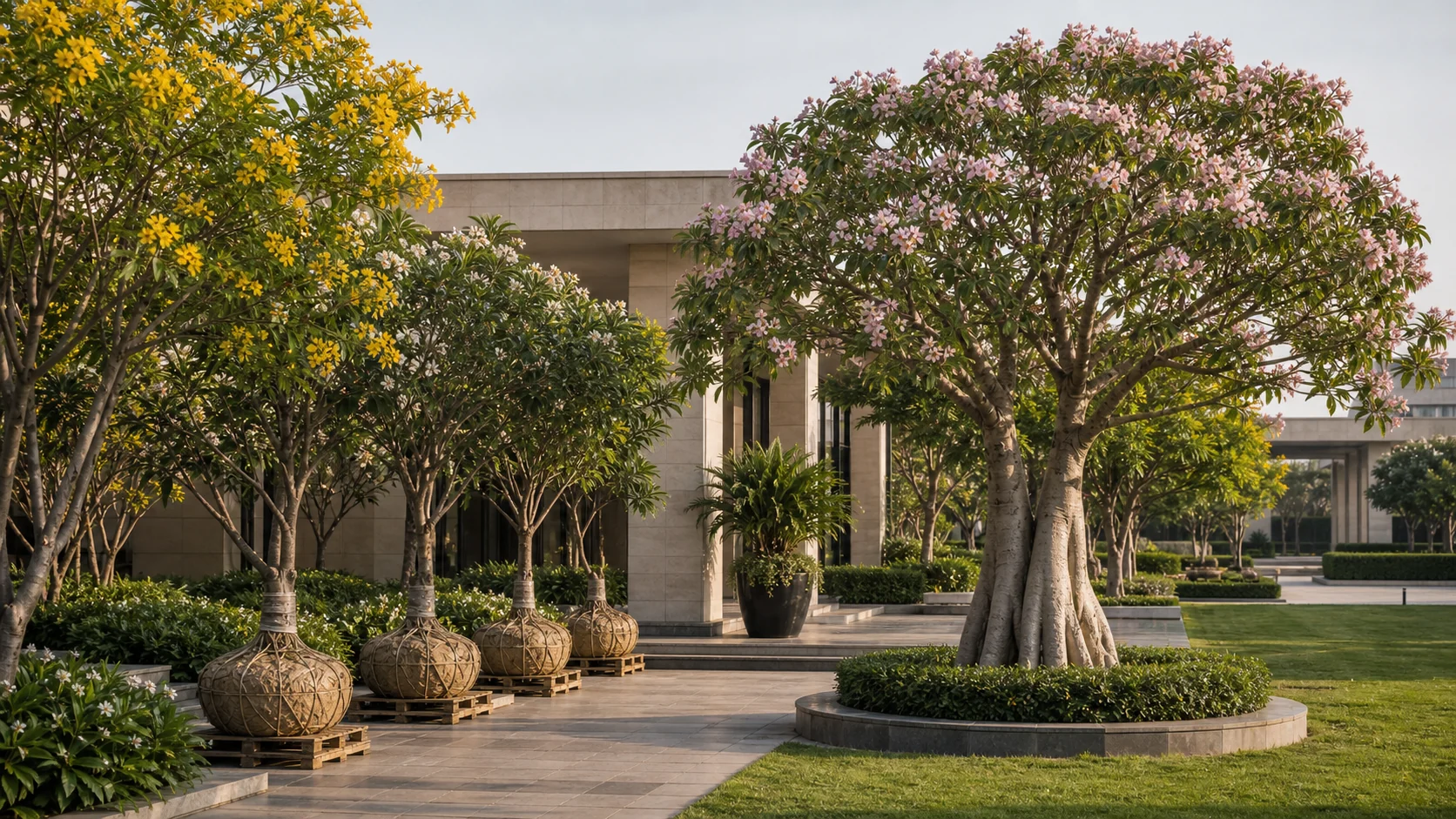
Visual context for placement, scale, handling, and landscape integration.
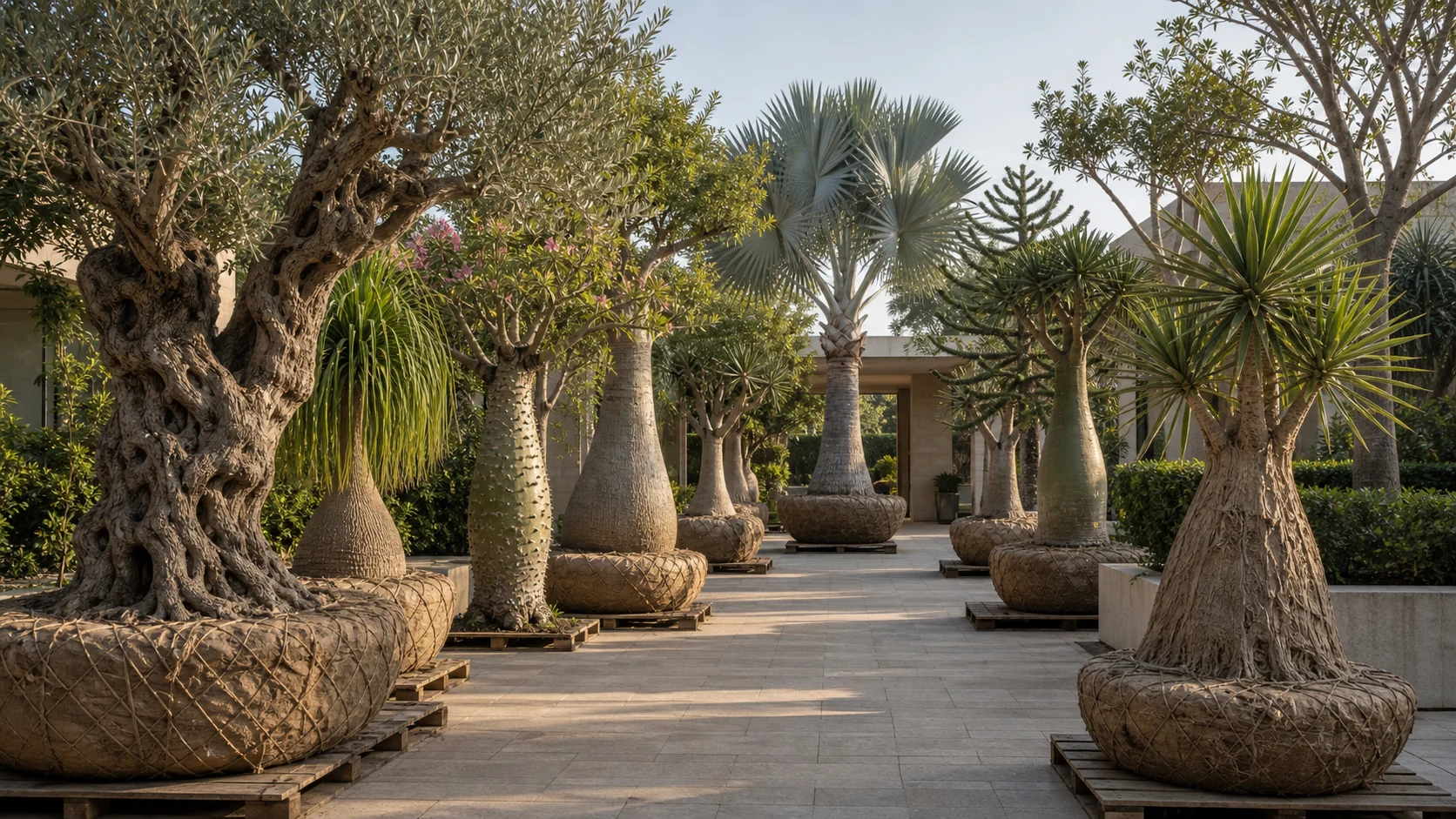
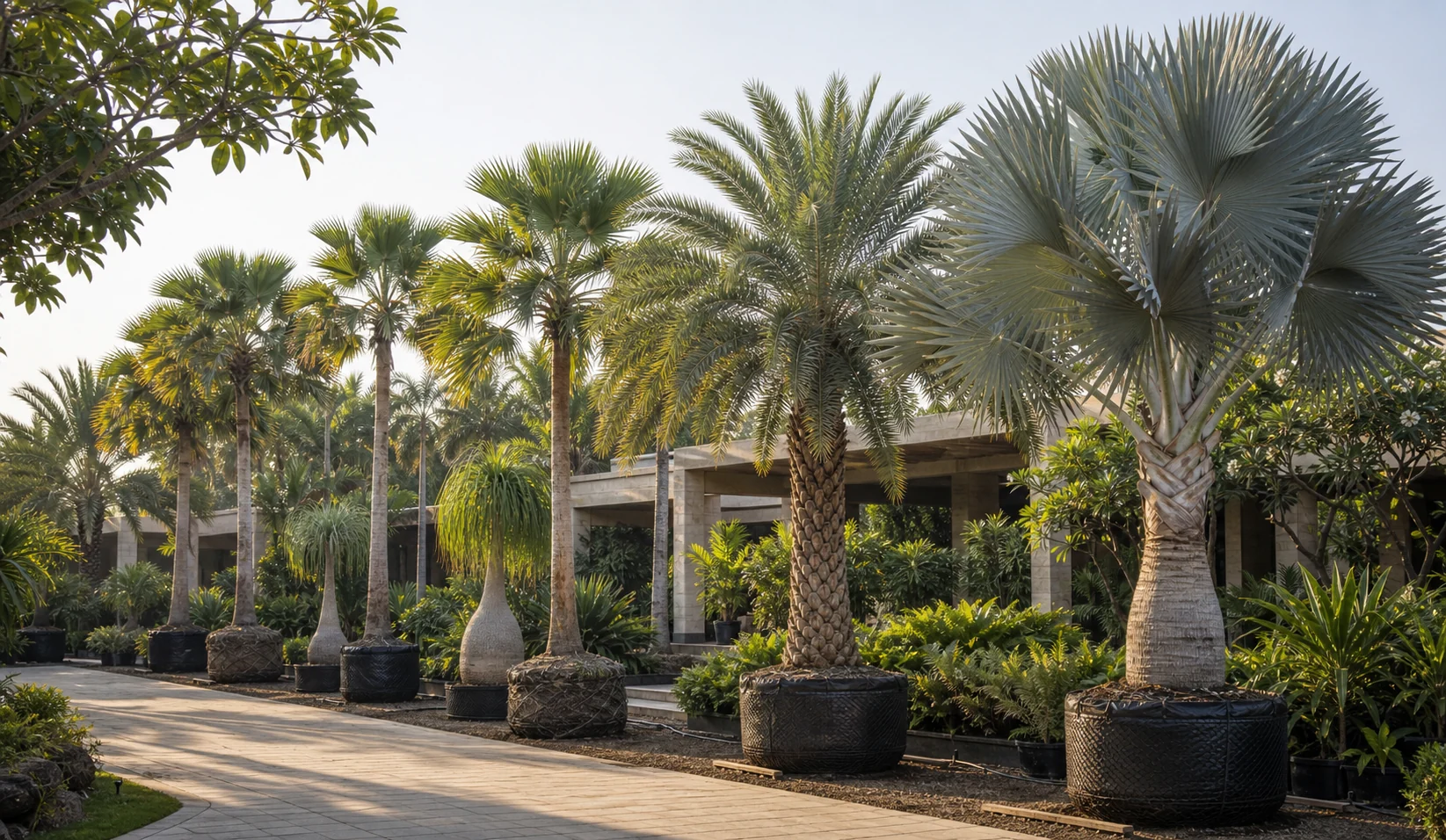
Section
Where it's used in premium projects
Little Gem magnolia earns formal hotel entries, boutique mall forecourts, and courtyard screening rows where evergreen gloss, bronze leaf backs, and repeat white flowers must read at a tighter scale than species Magnolia grandiflora — foliage and flower together, not hedge filler.
Section
Climate & site suitability in India
Warm metros with irrigation suit growth, but alkaline soils common across much of India trigger interveinal chlorosis without acid-leaning backfill or chelation programs — soil test before BOQ lock. Inland cold snaps stress young plants. Large stiff leaves drop on stress and seasonally — plan litter on light paving near entries.
Section
Sourcing & acclimatisation
Verify true 'Little Gem' clone versus generic magnolia labels — upright compact habit and early flowering are cultivar KPIs. [Unverified: typical row-stock height classes at domestic nurseries.] Acclimatise with consistent moisture; drought shock shows as yellowing before chlorosis programs even start.
Section
Installation (pit, soil, drainage, bracing)
Engineered drainage is mandatory — magnolias fail in waterlogged monsoon pits. Acid-leaning planting media or documented chelation scope where alkaline native soil remains in root zone. Light staking on row installs until root plates stabilise on windy forecourts.
Section
Establishment & AMC
AMC monitors chlorosis symptoms on new flush, schedules chelation or acidification per soil tests, and sweeps large leaves from guest paving. Slow growth means formative pruning is measured — over-thinning delays the formal silhouette designers specified.
Section
Cost drivers
Explore
Related
Related
Related links
Services, segments, cost, and proof.
- Softscape & horticulture
- Irrigation & water management
- Landscape maintenance (AMC)
- Hotel & resort landscaping
- Luxury resort & spa landscaping
- Mall & retail landscaping
- Corporate campus landscaping
- Projects
- Commercial landscaping cost guide
- Pricing drivers (imported trees)
- Import compliance workflow
- Request a site assessment
- How compact is Little Gem versus species Magnolia grandiflora?
- Little Gem stays narrower and smaller with repeat flowering from younger plants — specify cultivar on BOQ so species-scale trees are not substituted at delivery.
- Why does chlorosis appear on alkaline soils in India?
- Magnolias prefer slightly acid, well-drained root zones — alkaline site soils common in Indian metros lock iron and show interveinal yellowing without amendment or chelation programs.
- What drainage does Little Gem need?
- Excellent drainage despite moderate water needs — monsoon waterlogging kills roots faster than drought stress shows on glossy leaves.
- When does it flower in landscape use?
- Large fragrant white flowers appear on relatively young specimens in warm sites — flowering plus evergreen foliage is the cultivar value proposition on formal entries.
- Is leaf litter a paving issue?
- Yes — large stiff evergreen leaves accumulate on light entry stone; budget sweep frequency on arrival routes.
- What import compliance applies?
- Live trees follow India plant quarantine workflow (informational, not legal advice).
- How should row planting BOQs be compared?
- Match cultivar, height band, soil amendment scope, chelation AMC, and row uniformity — not per-tree catalogue pricing.