
Screw pine
Common screw pine (Pandanus utilis)
Pandanus utilis is the bold Madagascar screw pine with a spiral rosette of strappy blue-green leaves and dramatic branching stilt roots — specified as a sculptural coastal feature at beachfront resorts where salt and wind tolerance pair with prop-root architecture as the primary foliage statement.
Spec
At a glance
- Botanical name
- Pandanus utilis
- Family
- Pandanaceae
- Common names
- Screw pine, common screw pine, pandanus
- Origin
- Madagascar
- Plant type
- Evergreen coastal rosette tree
- Mature height
- Often 4–8 m+ with age and prop roots
- Trunk / form
- Blue-green spiral strappy leaves; branching aerial prop roots
- Crown spread
- Moderate rosette; prop roots expand footprint
- Growth rate
- Slow to moderate in warm coastal sites
- Light
- Full sun on coast
- Water needs
- Low to moderate once established on coast
- India climate suitability
- Warm coastal and tropical India (Goa, Kerala, Chennai coast); frost-sensitive inland
- Cold/heat & salt/wind tolerance
- Salt- and wind-tolerant coastal specialist; cold-sensitive away from tropics
- Typical supply size
- Rosette and multi-stem coastal specimens 2–4 m [Unverified]
- Lead time (sourcing)
- [Unverified] coastal nursery holdings versus import
- Install considerations
- Prop-root pit room; spiny margins on paths; coastal exposure planning
- Maintenance level
- Moderate — dead leaf strip removal, prop-root clearance
- Cautions
- Spiny leaf margins; large with age; prop roots need space; warmth required
Gallery
Specimen visual guide
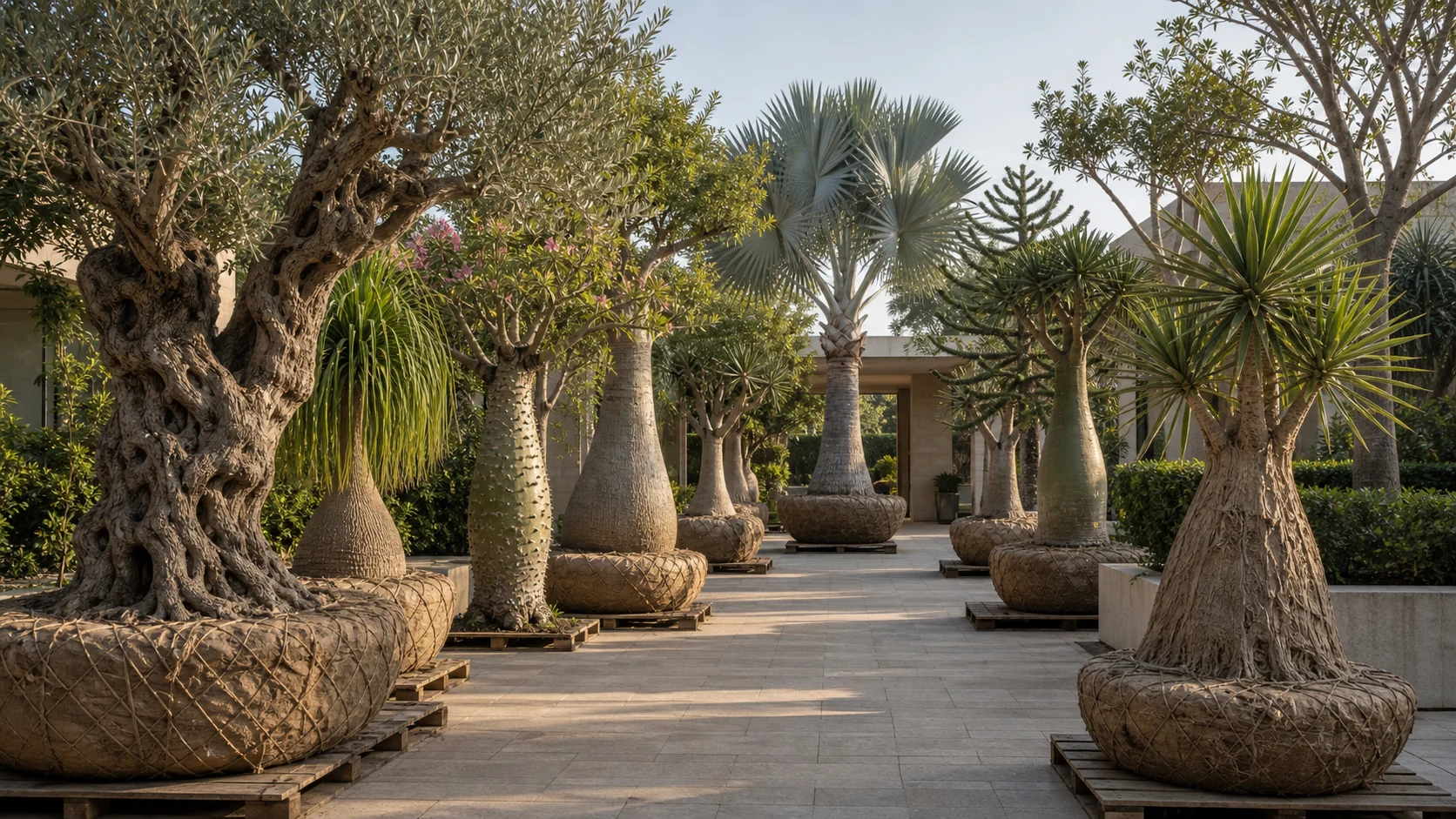
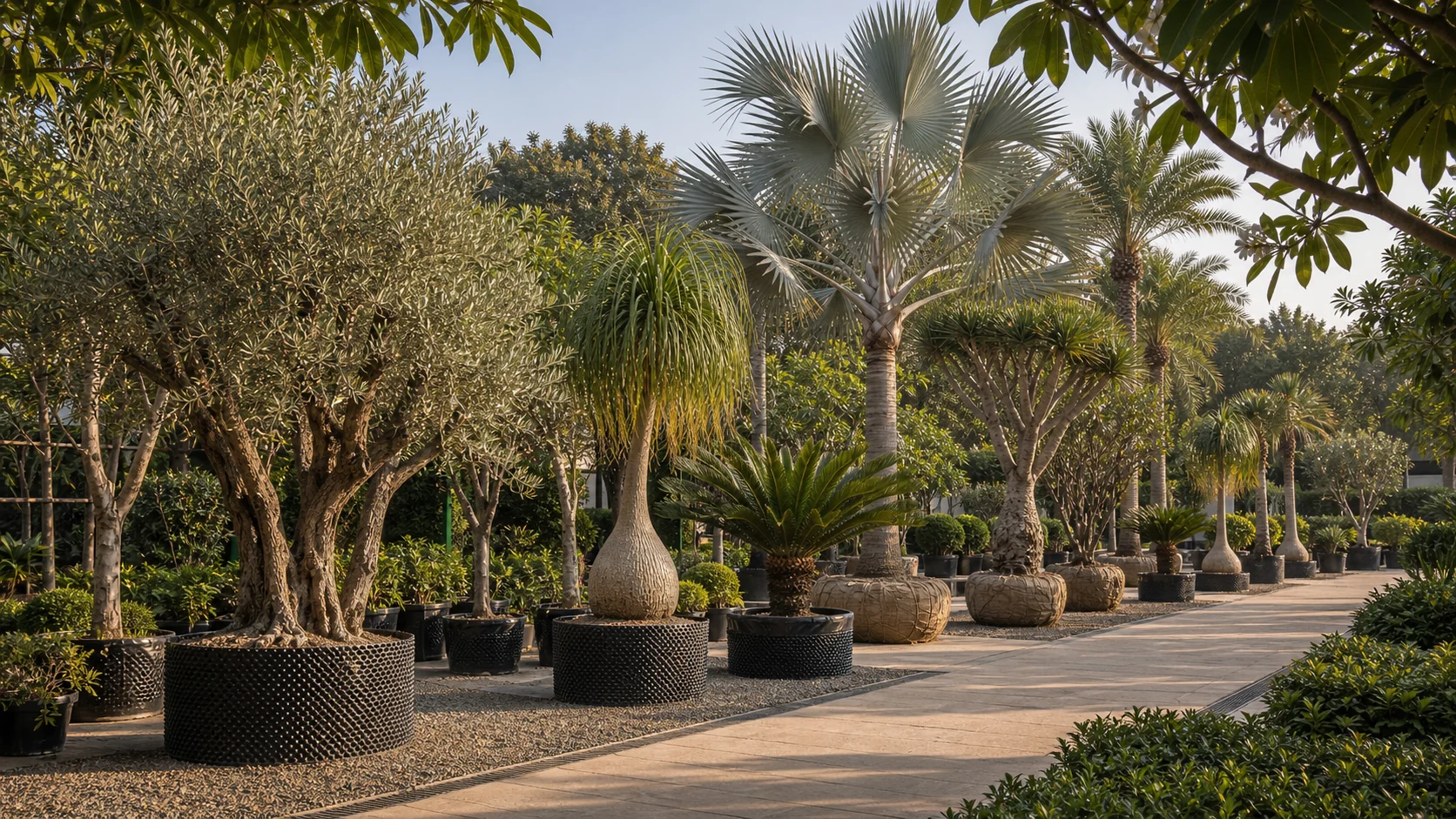
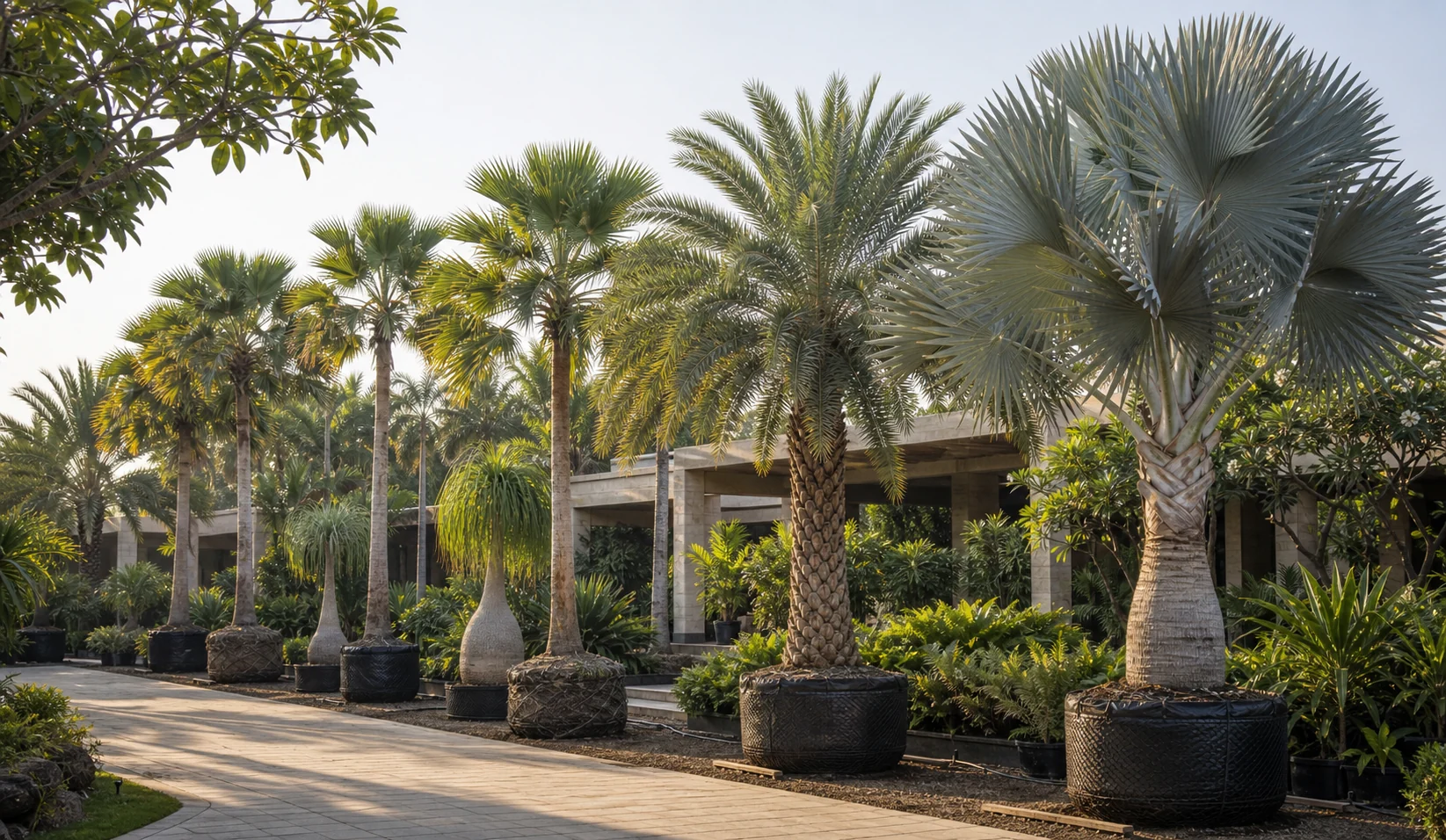
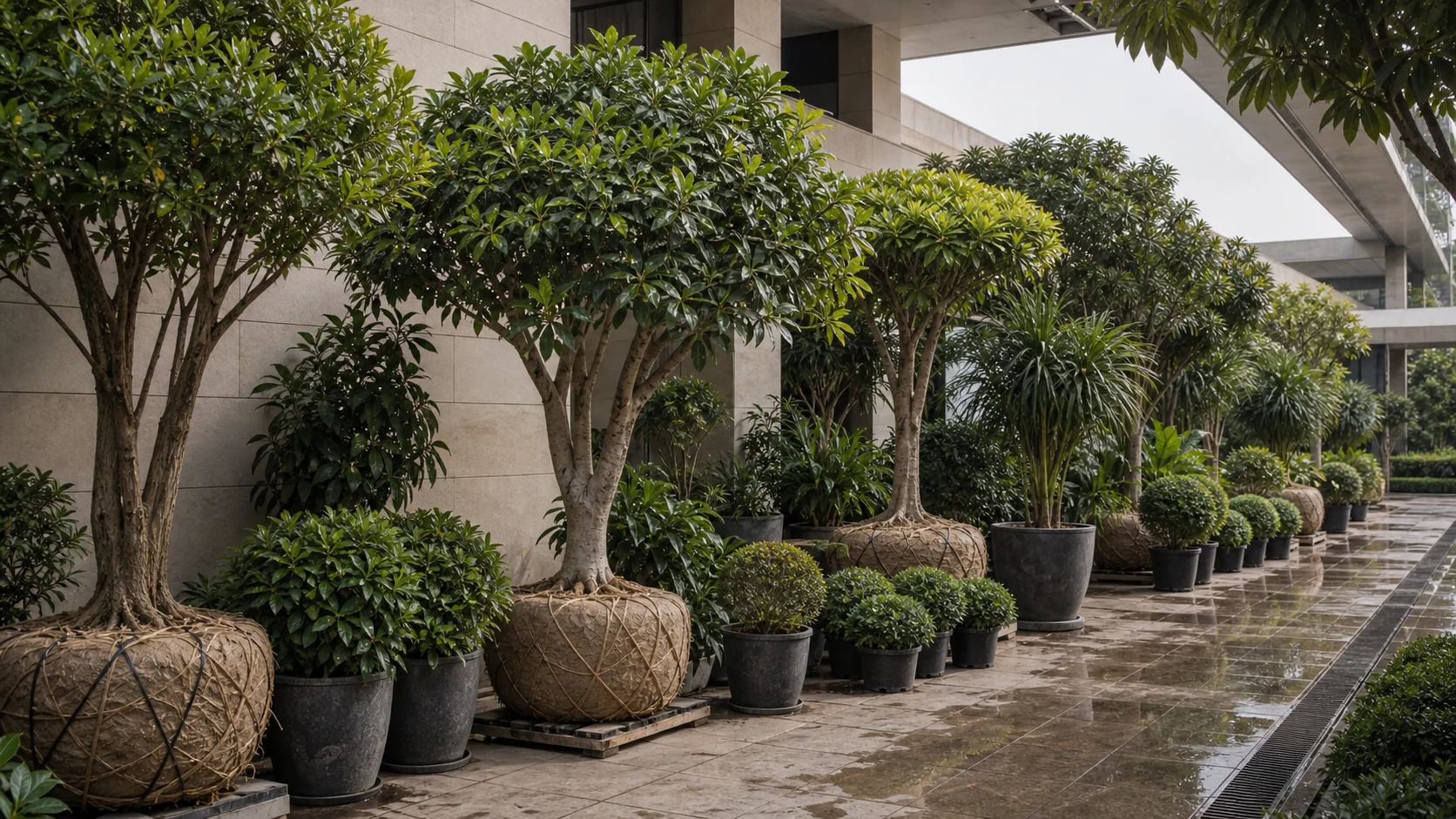
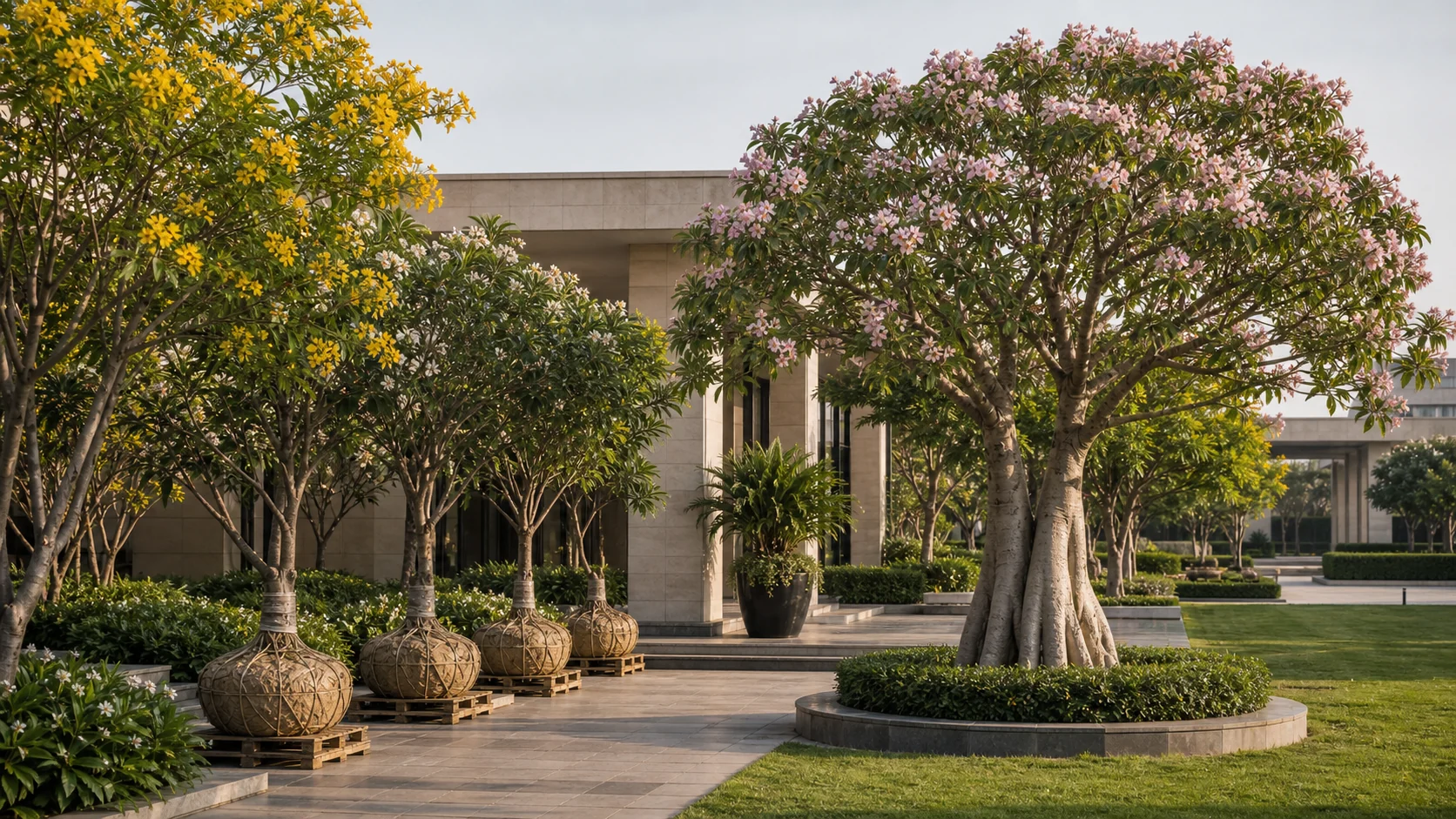
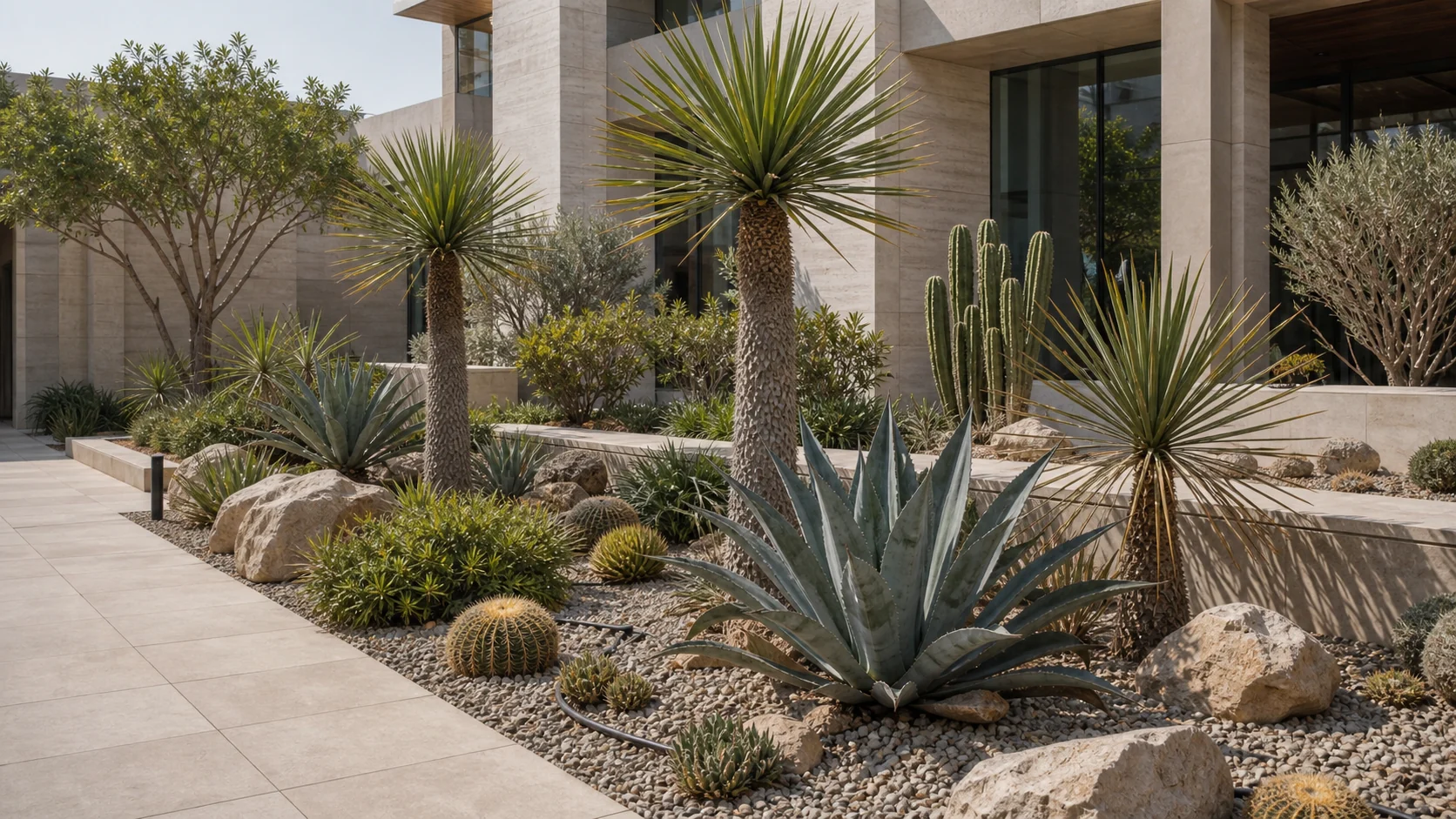
Visual context for placement, scale, handling, and landscape integration.
Section
Where it's used in premium projects
Pandanus utilis defines beachfront resort sculpture — pool edges, arrival dunes, and marina walks where blue-green spiral leaves and stilt roots read as intentional architecture, not accidental roots to be trimmed. Designers specify utilis for coastal salt sites where finer broadleaf specimens fail.
Section
Climate & site suitability in India
Humid coastal tropics are the core market — salt spray and wind are strengths relative to inland broadleaf trees. Delhi NCR and inland frost kill unprotected rosettes. Prop roots widen hardscape conflict over time — masterplans should show root architecture in section, not plan view dots only.
Section
Sourcing & acclimatisation
Buy on rosette fullness and visible prop-root development — juvenile pots under-deliver the sculptural brief. [Unverified: domestic coastal nursery share versus import.] Distinguish from Pandanus sanderi when variegation is not required — utilis is the blue-green coastal workhorse.
Section
Installation (pit, soil, drainage, bracing)
Generous pits allowing prop-root spread; do not pave tight against emerging stilts. Spiny margins routed from guest seating. Coastal sand mixes still need monsoon drainage — anaerobic pits rot roots despite salt tolerance marketing.
Section
Establishment & AMC
AMC strips dead leaves with spine PPE, keeps prop roots clear of drains and lighting bases, and monitors coastal wind damage on young rosettes. Compare to Pandanus sanderi only where yellow variegation is specified — different spine and light behaviour.
Section
Cost drivers
Explore
Related
Related
Related links
Services, segments, cost, and proof.
- Softscape & horticulture
- Irrigation & water management
- Landscape maintenance (AMC)
- Hotel & resort landscaping
- Luxury resort & spa landscaping
- Mall & retail landscaping
- Corporate campus landscaping
- Projects
- Commercial landscaping cost guide
- Pricing drivers (imported trees)
- Import compliance workflow
- Request a site assessment
- How salt-tolerant is Pandanus utilis on beachfront hotels?
- It is a coastal specialist relative to inland broadleaf specimens — still engineer pit drainage on raised decks; salt tolerance is not a substitute for root space and prop-root architecture planning.
- What is the prop-root architecture designers specify?
- Branching aerial stilt roots support the rosette and widen the sculptural footprint — pits and paving must allow this feature; do not specify tight planter strips that force prop removal.
- What mature size should masterplans allow?
- Rosettes grow taller with age and prop-root spread — allow height and footprint beyond juvenile nursery photos on arrival courts.
- Are leaf spines a guest-safety issue?
- Margins are spiny though milder than Pandanus sanderi — still route paths and loungers outside the maintenance working zone.
- Can utilis substitute for Pandanus sanderi?
- Only when variegated yellow stripes are not required — sanderi is the variegated accent; utilis is blue-green coastal sculpture.
- What import compliance applies?
- Live plants follow India plant quarantine workflow (informational, not legal advice).
- How should coastal BOQs be compared?
- Match rosette size, prop-root development, pit geometry, and spine-safe AMC — not generic pandanus container pricing.