
Mumbai
Imported trees in Mumbai
Imported trees Mumbai programmes need salt-aware species, engineered pits, crane access, and establishment AMC before handover. Four Leaf supplies specimen trees for hotels, developers, malls, and towers across BKC, Lower Parel, Thane, and Navi Mumbai. This guide covers coastal exposure, monsoon drainage, crane logistics, and mobilisation context. Request a site assessment to shortlist species.
Gallery
Specimen visual guide
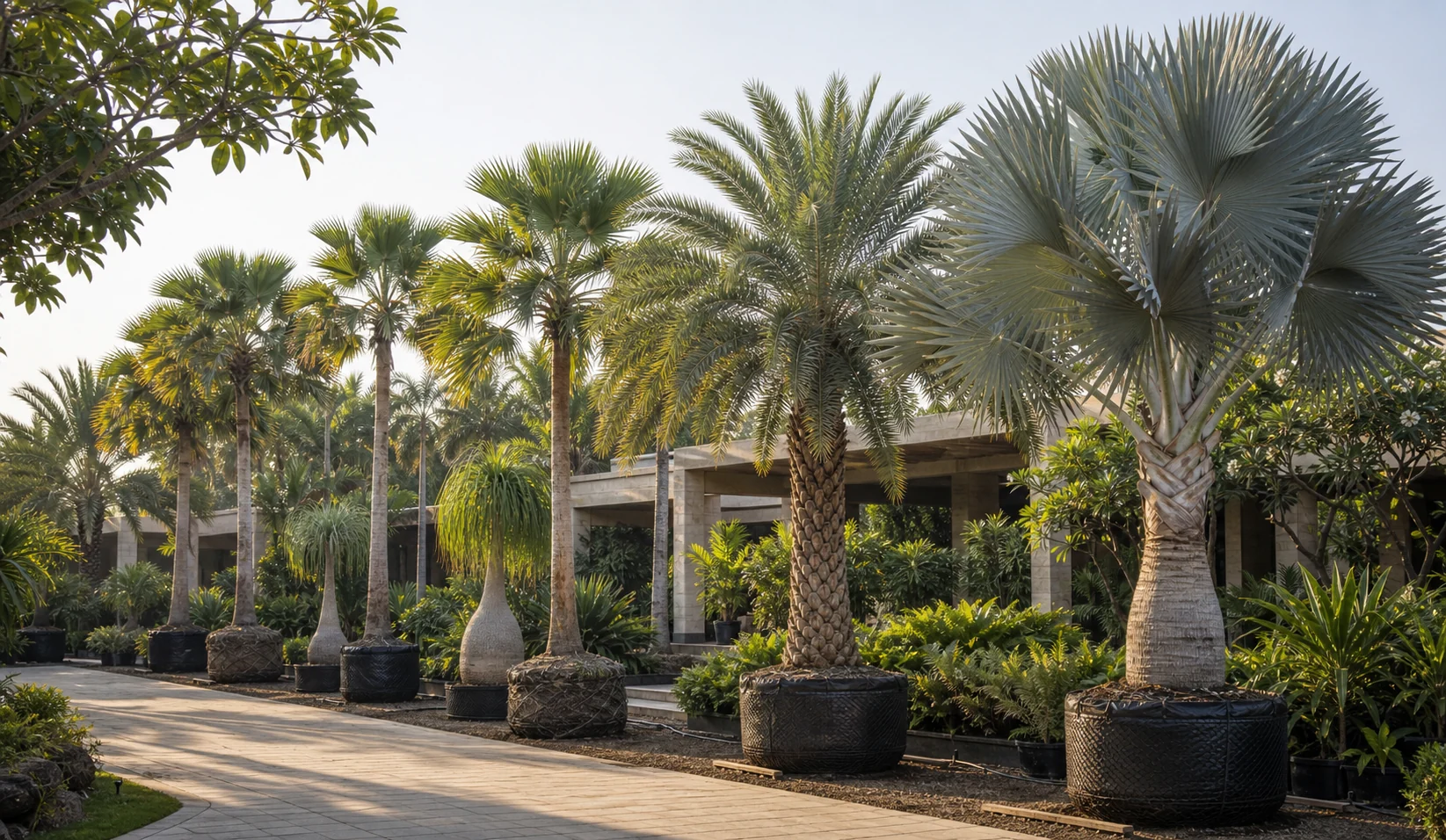
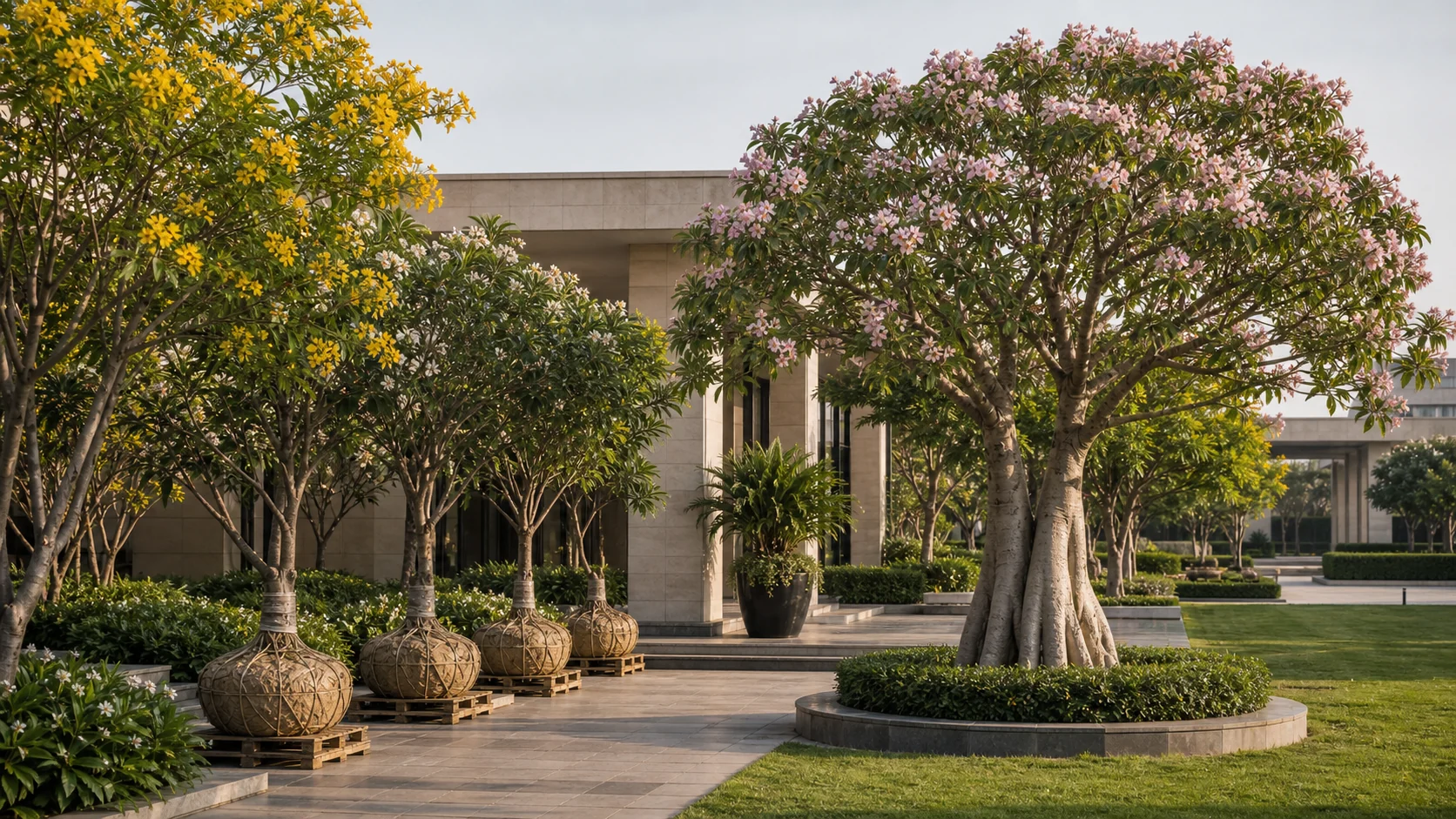
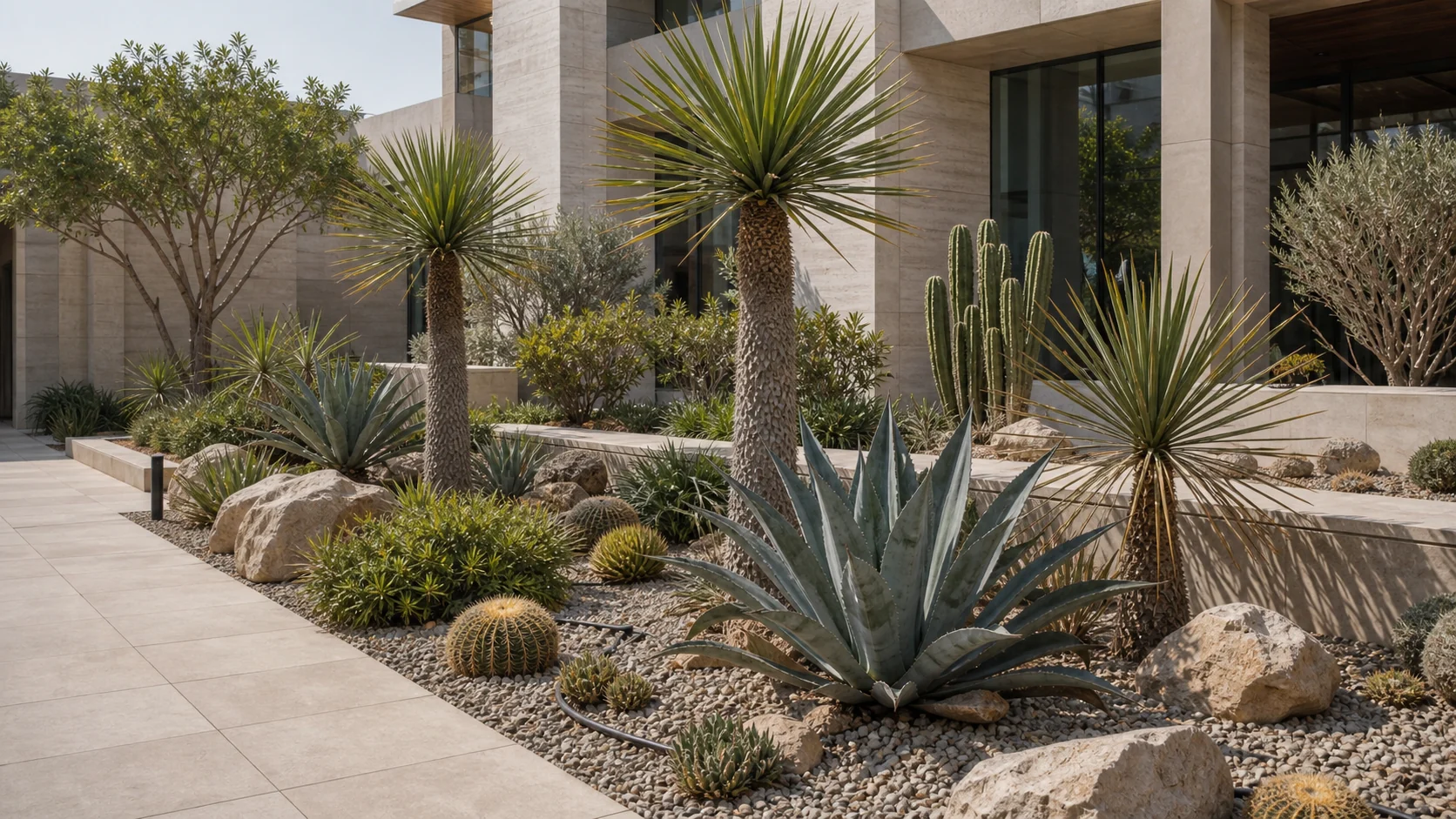
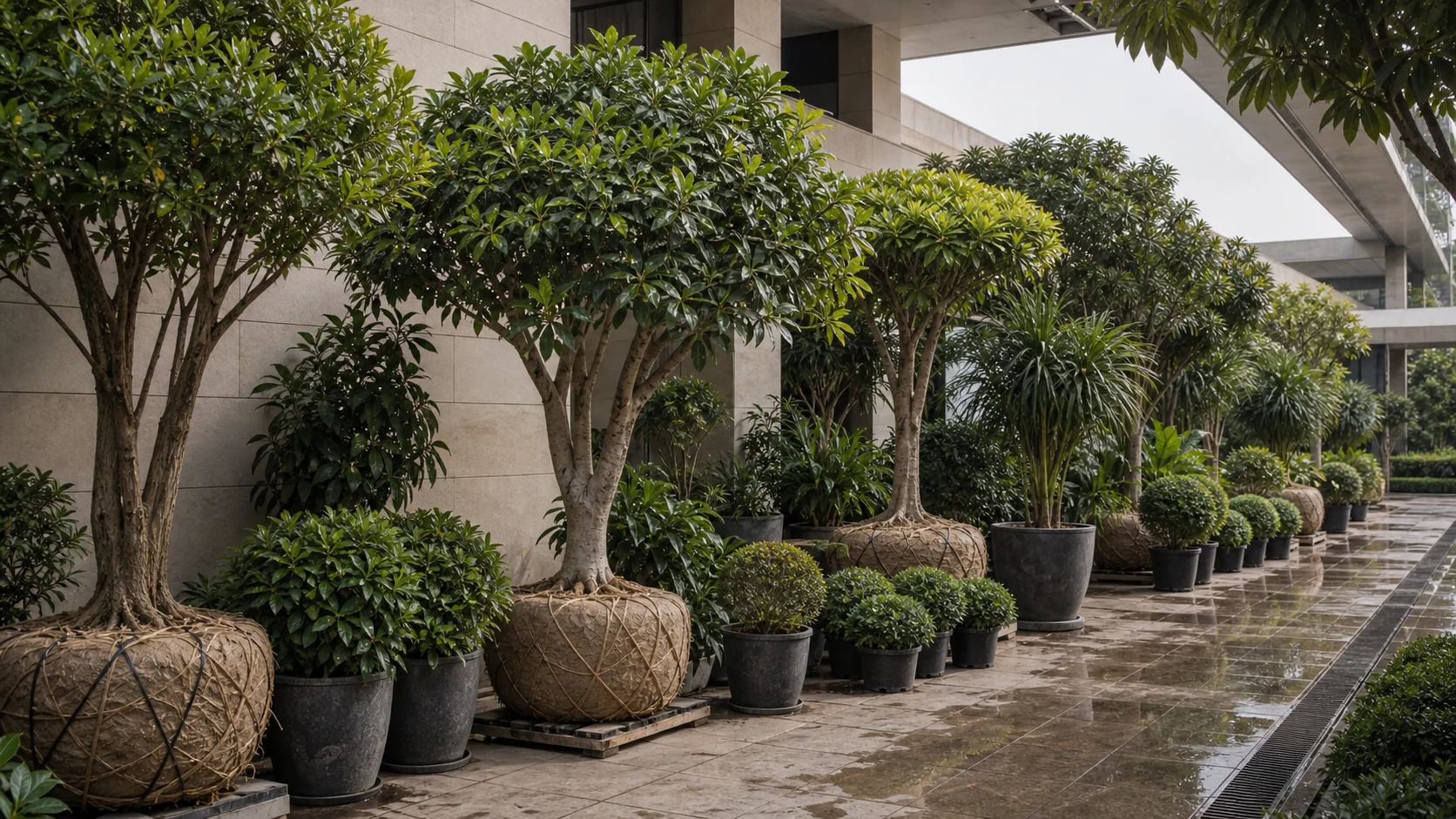
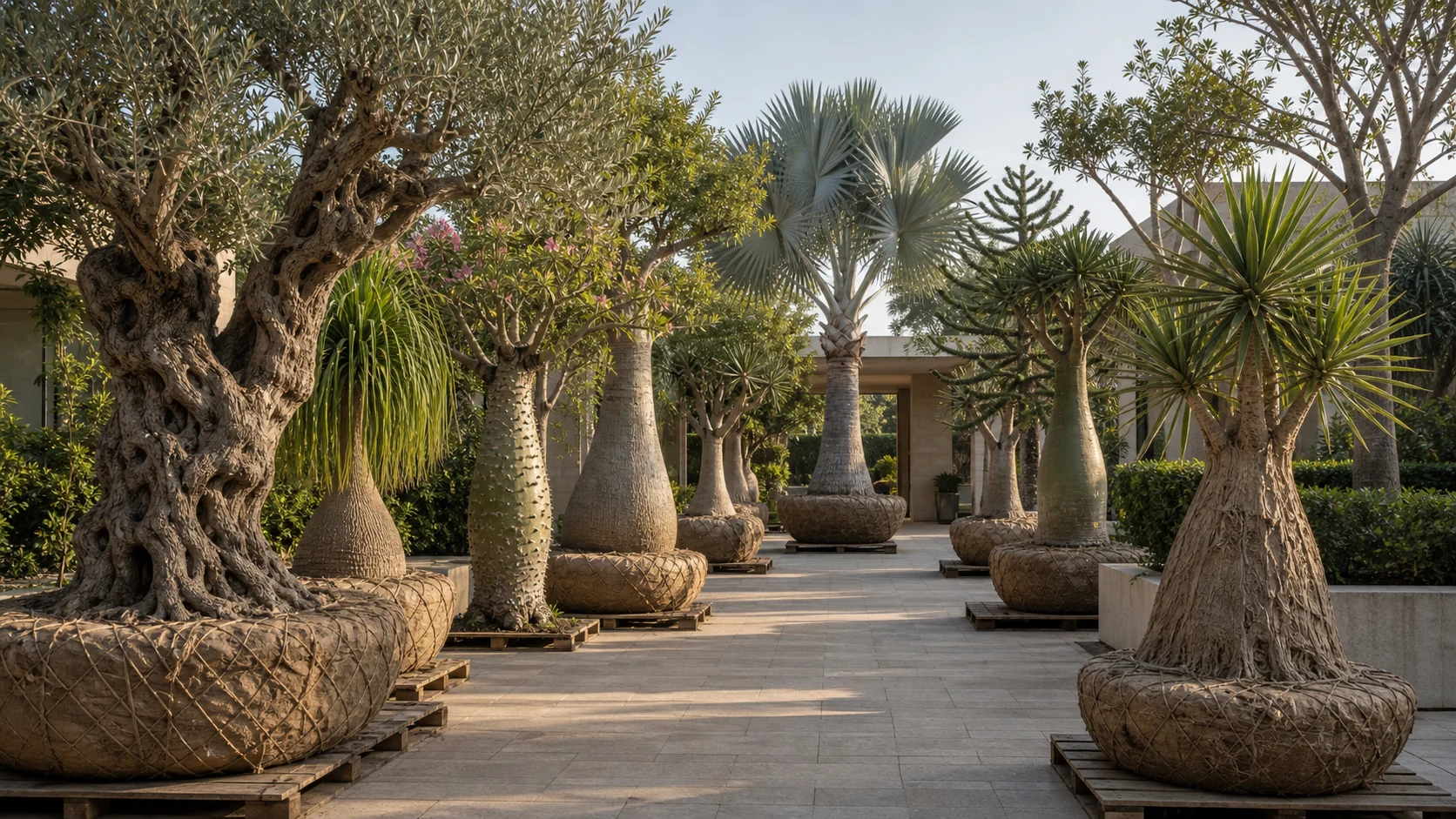
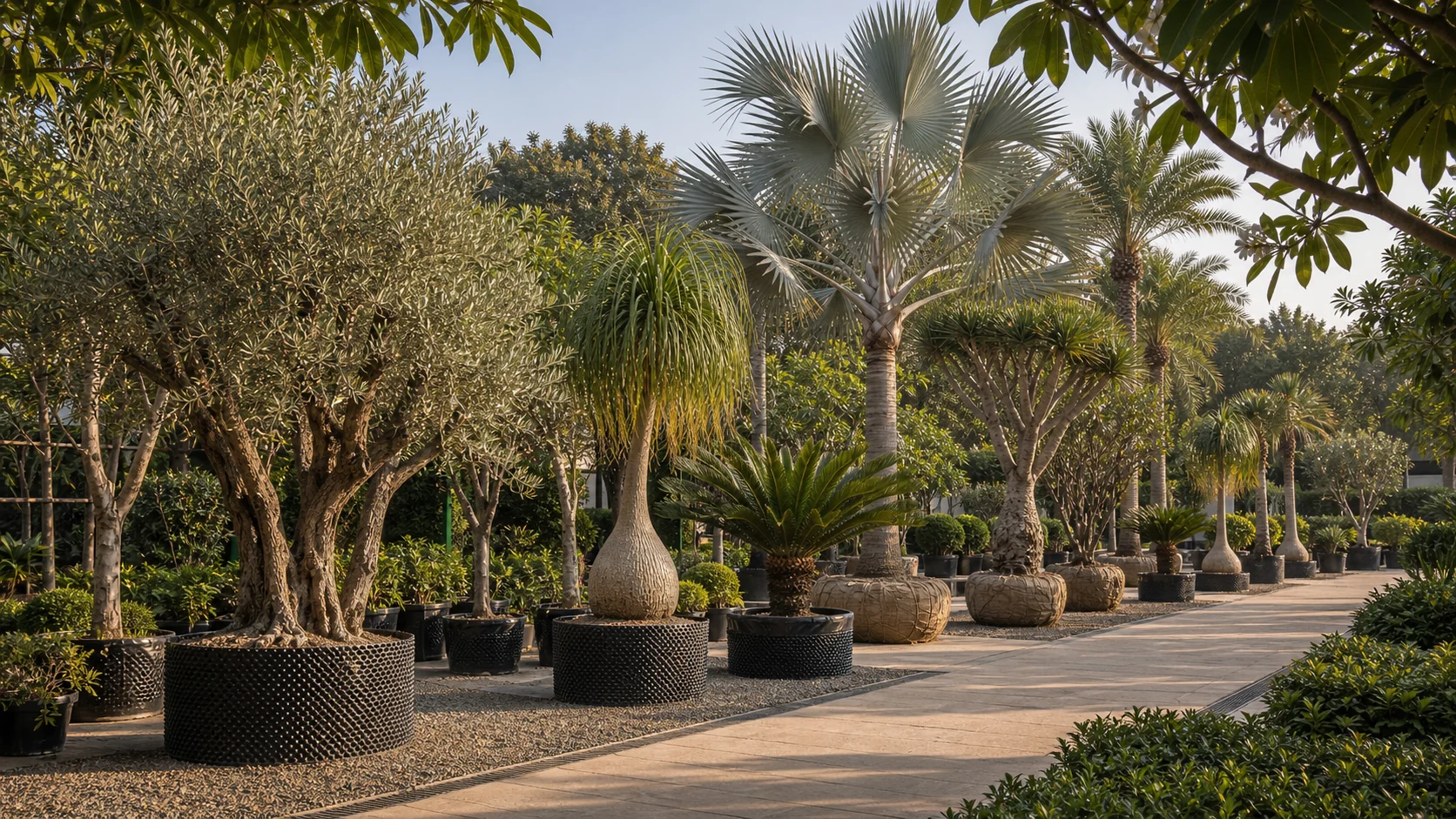
Visual context for placement, scale, handling, and landscape integration.
Section
Climate and site constraints in Mumbai
Section
Crane access, logistics, and programme float
South Mumbai, BKC, Lower Parel, Navi Mumbai, and Thane corridors mix live operations, valet lanes, and tower cranes on tight footprints. Specimen hoists often need night permits, traffic management, and protection of finished stone and glazing. Crown spread on Bismarckia and mature Phoenix classes exceeds many porte-cochere clearances; survey before renders lock species. Basement ramps and service paths affect rootball trolley routes. Working hotels need guest-perimeter discipline; malls need tenant coordination. Programme float for monsoon shutdown weeks should be explicit in proposals, not absorbed silently. Navi Mumbai and Thane add expressway haul but similar crane discipline; oversize permits and police coordination belong in the lookahead before paving closes around arrival pits.
Section
Where Mumbai programmes specify imported trees
Hotels and upper-upscale properties use mature palms and sculptural olives at arrival and pool decks where photography drives the brief. Waterfront and harbour-view projects add wind exposure as a design variable on tall specimens. Corporate and financial-district campuses specify arrival plazas with architectural scale; atrium-adjacent planting may shift to indoor specimens where salt fog and shade profiles differ from open forecourts. Developer clubhouses and high-rise podiums repeat show-flat maturity targets; BOQ must separate specimen install from mass softscape. Retail and mixed-use atria sometimes specify interior trees with HVAC and light interfaces coordinated outside the landscape package if procurement is fragmented. Rooftop amenity decks need separate species review from ground-level arrivals; wind and salt exceed lobby-adjacent assumptions on exposed upper terraces.
Section
Species categories for Mumbai microclimates
Robust feather and fan palms with documented wind and salt behaviour suit open arrivals when braced and drained; species pages note litter class near pools. Olive and other Mediterranean specimens need mound planting and cultivar honesty about peacock spot and root rot in humid districts; fruitless selections reduce paving stain near guest circulation. Ficus and foliage specimens suit sheltered courtyards more than exposed marine fronts. Desert and succulent trees belong only where drainage is aggressive and over-irrigation is contractually controlled in AMC. Indoor and atrium categories apply to lobby volumes with measured light, not as substitutes for failed exterior specs. Category hubs on this vertical group palms, olives, foliage, and desert taxa by use case; each species page states hardiness and failure modes for humid coasts so BOQ reviewers can reject catalogue photos from arid regions without engineering context.
Section
Pit engineering, drainage, and acclimatisation
Section
AMC scope and FM handover
Section
Mobilisation and project context
Section
Procurement, BOQ, and pricing discipline
Explore
Related
Related
Related links
Services, segments, cost, and proof.
- Imported exotic trees hub
- Commercial landscaping in Mumbai
- Hotel and resort landscaping
- Developer landscaping
- Mall and retail landscaping
- Corporate campus landscaping
- Softscape and horticulture
- Irrigation and water management
- Landscape maintenance (AMC)
- Acclimatisation for imported trees
- Installation and soil engineering
- Imported tree maintenance and AMC
- Pricing drivers (imported trees)
- Import compliance workflow
- Imported specimens in Indian cities
- Mumbai landscaping strategy
- Projects
- Request a site assessment
- Can gnarled olive trees succeed in Mumbai humidity?
- They can on engineered mounds with excellent drainage and honest disease monitoring; waterlogging and crown wetting fail olives faster than heat alone. Cultivar and fruit-management decisions should precede paving lock. Request submittal photos matched to measured trunk caliper and canopy spread, not nursery stock from dry regions without acclimatisation hold in humid conditions.
- How does salt air affect palm selection in Mumbai?
- Species salt tolerance varies; BOQ should reference species pages and site exposure. Open marine fronts differ from sheltered BKC courtyards. Compare submittals on documented salt behaviour, not generic palm marketing; emitter placement should limit crown wetting that compounds aerosol stress on silver foliage.
- What bracing is typical for tall palms on hotel forecourts?
- Fresh transplants with heavy crowns need staged bracing until root anchor; wind on open arrivals drives duration. Engineered notes should state removal milestones tied to anchor observations, not calendar guesswork.
- When should specimen delivery be scheduled around monsoon?
- Many programmes target pre-monsoon or post-monsoon windows with irrigation commissioned first; hoisting during peak saturation needs explicit risk ownership in contract. Monsoon shutdown weeks should appear in programme float, not be absorbed silently by the contractor.
- Are indoor atrium trees an alternative to coastal arrival specs?
- Only where the design brief is interior; light, HVAC, and container interfaces are separate engineering concerns. They do not fix a failed exterior salt exposure choice on an open marine front.
- How does Four Leaf mobilise to Mumbai?
- Programmes are scoped from site assessment with logistics, establishment, and AMC planned per contract; pan-India execution does not imply specimen stock on site without enquiry. Mumbai mobilisation requires honest crane, salt, and drainage surveys before species lock.
- What should Mumbai procurement put in specimen BOQs?
- Clear-trunk or trunk class, rootball handling, pit and drain build, bracing days, acclimatisation, pest-monitoring lines, salt-wash cadence, and AMC litter scope, not headline tree price alone. Match documentation fees, crane complexity, and marine-exposure engineering across supplier comparisons so cost reductions or scope reductions do not strip drain layers or establishment visits.