
Gallery
Procurement context
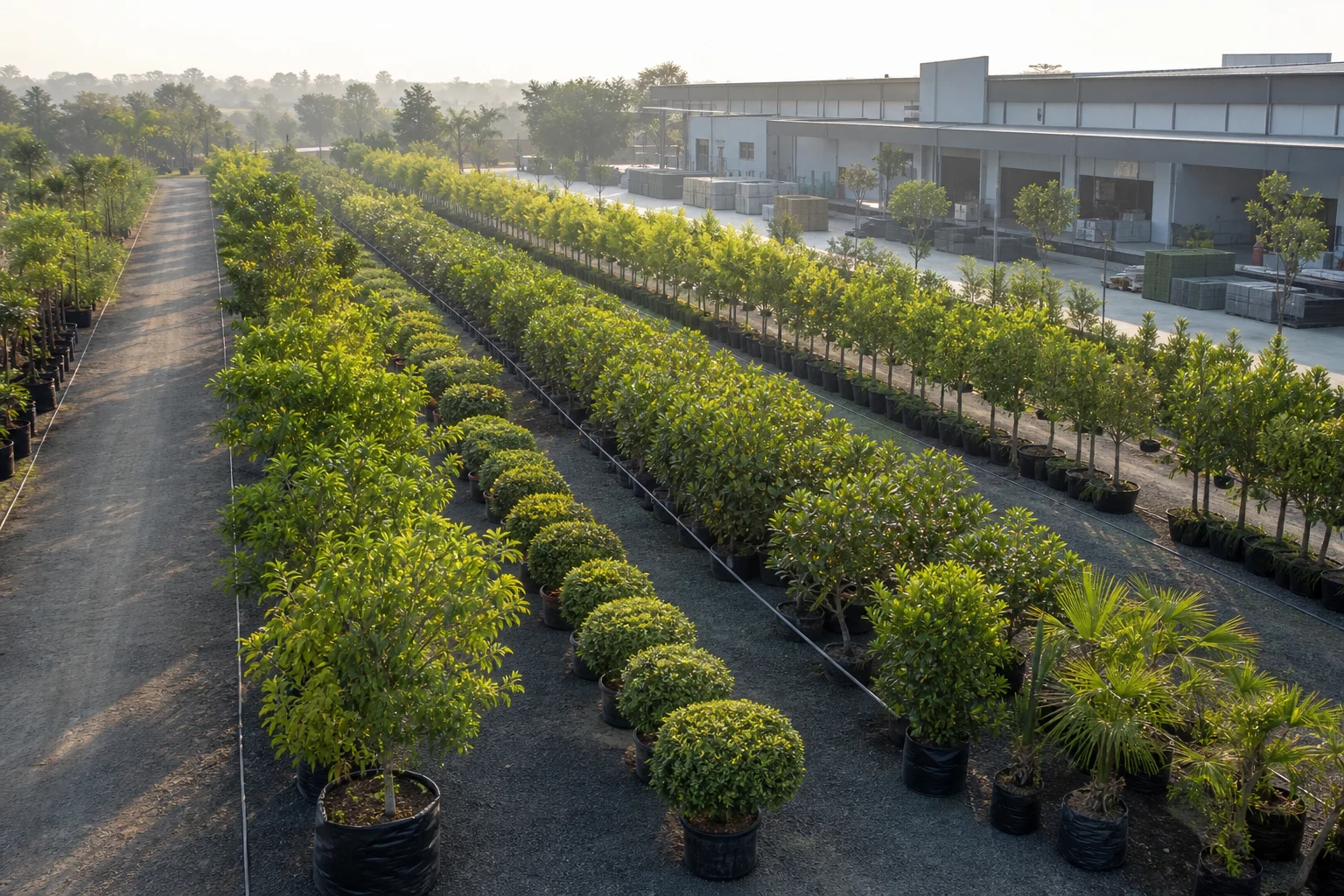
Visual references supporting this guide with landscape scope and detailing context.


What commercial scope should indoor tree procurement include?
A credible indoor tree package covers light assessment, species schedule by planter ID, container supply or client-vessel planting, growing media suited to interiors, delivery and placement engineering, establishment review windows, and documented maintenance visits.
Separate capital plant and planter supply from recurring rental or AMC lines so FM can audit opex. Large specimens may need crane or building-lift coordination. If procurement treats trees as plant-only line items without installation and aftercare, failure rates rise within the first growing cycle.
Which light and HVAC constraints must procurement validate first?
Validate effective light at the proposed tree location, not only perimeter glazing on drawings. Deep floor plates, tinted curtain walls, and LED color temperature change what foliage can sustain. Map zones with stable temperature and avoid direct HVAC discharge on crowns; high-velocity AC desiccates broad-leaf species quickly on Indian sites.
Document acceptable shade windows and any planned lighting upgrades before species lock. If facilities change HVAC setpoints or add partitions later, BOQ light assumptions may no longer hold. Agree who funds replacement when conditions shift outside agreed baselines.
How do container planning and floor loading affect outcomes?
Containers determine whether a tree can exist on a finished floor. GRP, metal, ceramic, and composite planters carry different weights when saturated. Inner liners are mandatory on marble, timber, and carpet tiles. Decorative sleeves must still ventilate roots and contain irrigation overflow.
Tender documents should list planter dimensions, media depth, irrigation model, castor needs for event moves, and delivery paths through loading docks and lift lobbies. Define access windows and floor protection in method statements before scope freeze. Saturated container weights, inner liners on finished floors, and fire-egress clearance during install are common FM dispute points.
Which tree categories work in Indian office conditions?
Low-light interiors often suit Aglaonema clusters, Zamioculcas, and selected palms rather than tall trees. Bright atriums and double-height lobbies may support Ficus lyrata, Dracaena specimens, Strelitzia nicolai, or Ravenea rivularis when light mapping confirms viability.
Reject aesthetic-only species lists that ignore measured conditions. Imported atrium specimens add compliance and acclimatisation windows; review indoor atrium tree category guidance before specifying exotics. Wrong species in dark corners decline fast and inflate replacement costs under vague AMC terms.
What installation engineering details reduce failure risk?
Installation planning should cover stable placement, bracing during establishment, protected delivery sequencing after substantial cleaning and AC commissioning, and a post-install health check within the first two weeks.
Handover should include planter location registers on floor plans, species and pot-size schedules, watering discipline notes for housekeeping, and escalation triggers for saucer overflow or pest pressure. FM training on overwatering, the most common carpet-floor failure, belongs in turnover documentation rather than informal briefings.
How should BOQ and tender scope make bids comparable?
Line items should separate planter supply by size class, tree count and species, mobilisation and lift-wait assumptions, sub-irrigation or hand-watering model, visit frequency, and replacement allowance percentage.
Compare exclusions across bidders: after-hours placement, floor protection materials, establishment replacement thresholds, and scope when client HVAC changes void light assumptions. Cross-check structure with your BOQ format guide and quotation comparison checklist before shortlist lock.
What maintenance and AMC terms prevent recurring failure?
AMC should define routine visit cadence, replacement allowances, pest and fungal escalation paths, and who owns irrigation reservoir maintenance when sub-irrigation is installed. Separate event damage from baseline care so festival decor moves do not silently consume the replacement budget.
Establishment overlap between installer and maintenance vendor must be written for the first 90 days, not left assumed. Model scope with the landscape maintenance AMC calculator and align SLA language with your maintenance scope guide before contract signature.
What proof should procurement review before shortlisting?
Request references at commercial interior scale for your property type and sample deliverables such as a redacted planter schedule, visit calendar excerpt, and handover list outline.
If the bidder cannot supply relevant portfolio examples for your tree size class or city cluster, treat that gap as bid risk rather than inferred capability from residential or small-planter work.
Which mistakes cause indoor tree failure in offices?
Common gaps include species selected without light mapping, undersized containers on tall specimens, installation before dust control and AC stabilisation, and AMC contracts with no replacement allowance or visit frequency.
A second pattern is treating indoor trees like outdoor softscape: saucer overflow on carpet, housekeeping overwatering, and pest pressure from saturated media. Document these risks in tender assumptions so bidders price realistic care.
When should procurement schedule a site assessment?
Schedule assessment when drawings cannot confirm lift capacity, crane reach, light at proposed planter coordinates, water-point distances, or after-hours access on occupied floors.
A site visit aligns bids with practical delivery paths, tenant fit-out phasing, and the handover timeline FM will run. Request a site assessment once species shortlist and BOQ structure are aligned, especially for multi-floor towers and hotel atriums where drawing elevations hide depth constraints.