
Indoor Dracaena
Indoor Dracaena specimen (D. fragrans / marginata / reflexa)
Indoor Dracaena specimens — typically Dracaena fragrans (corn plant), D. marginata (madagascar dragon tree), or D. reflexa (song of India) — tolerate low to indirect light and anchor atrium compositions with multi-cane architecture. Specify cultivar on BOQ; overwatering and fluoride tip-burn are the common failure modes, not darkness alone.
Spec
At a glance
- Botanical name
- Dracaena fragrans / D. marginata / D. reflexa (specify cultivar)
- Family
- Asparagaceae
- Origin
- Tropical Africa / Madagascar / Mauritius regions (by species)
- Light
- Low to bright indirect — no direct hot glass sun for marginata
- Water
- Moderate; allow soil partial dry-down — rot if constantly wet
- Form
- Multi-cane, branched heads, staggered heights, occasional braided stems (cultivar/work)
- Mature indoor size
- Often 2–4 m interior height under ceilings; limited by pot and light
- Growth rate
- Slow to moderate indoors
- Indoor climate / A-C tolerance
- Tolerates air-conditioned interiors; avoid cold drafts and heat blasts
- Maintenance
- Dust leaves; rotate for even growth; fluoride-aware water where tip-burn occurs
- Cautions
- Overwatering; fluoride tip-burn on leaf margins; specify cultivar — forms differ
Gallery
Specimen visual guide
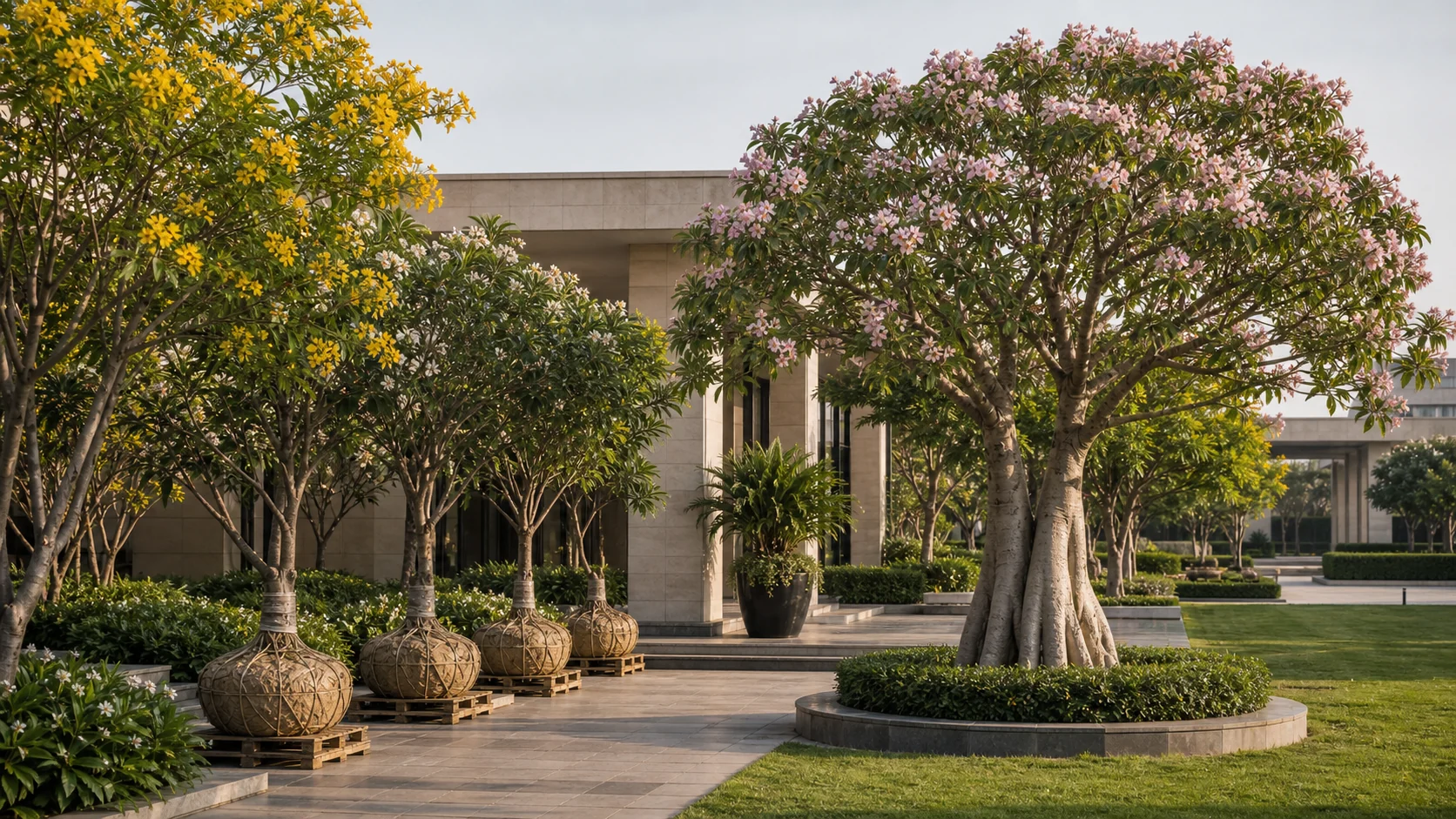
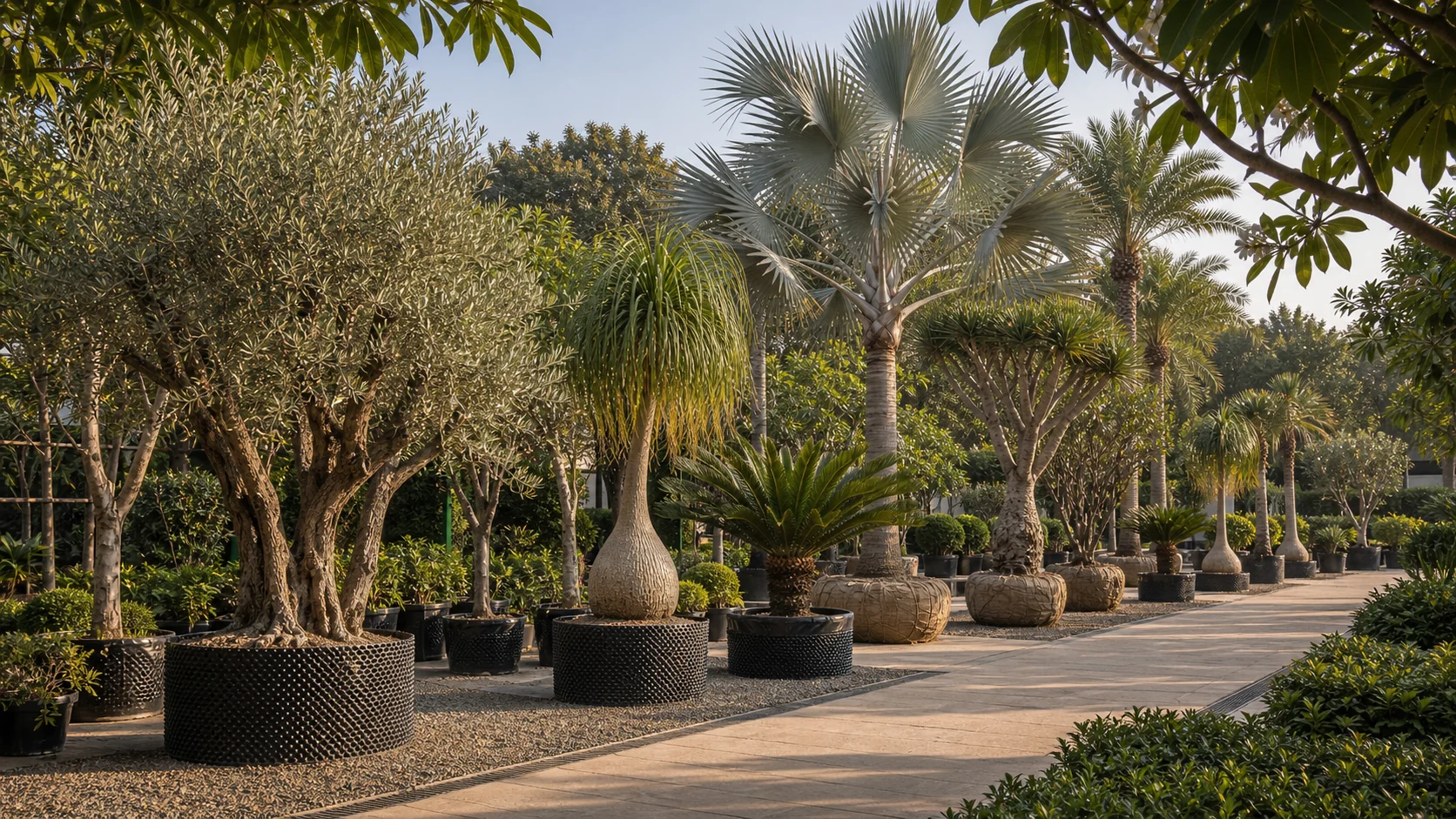
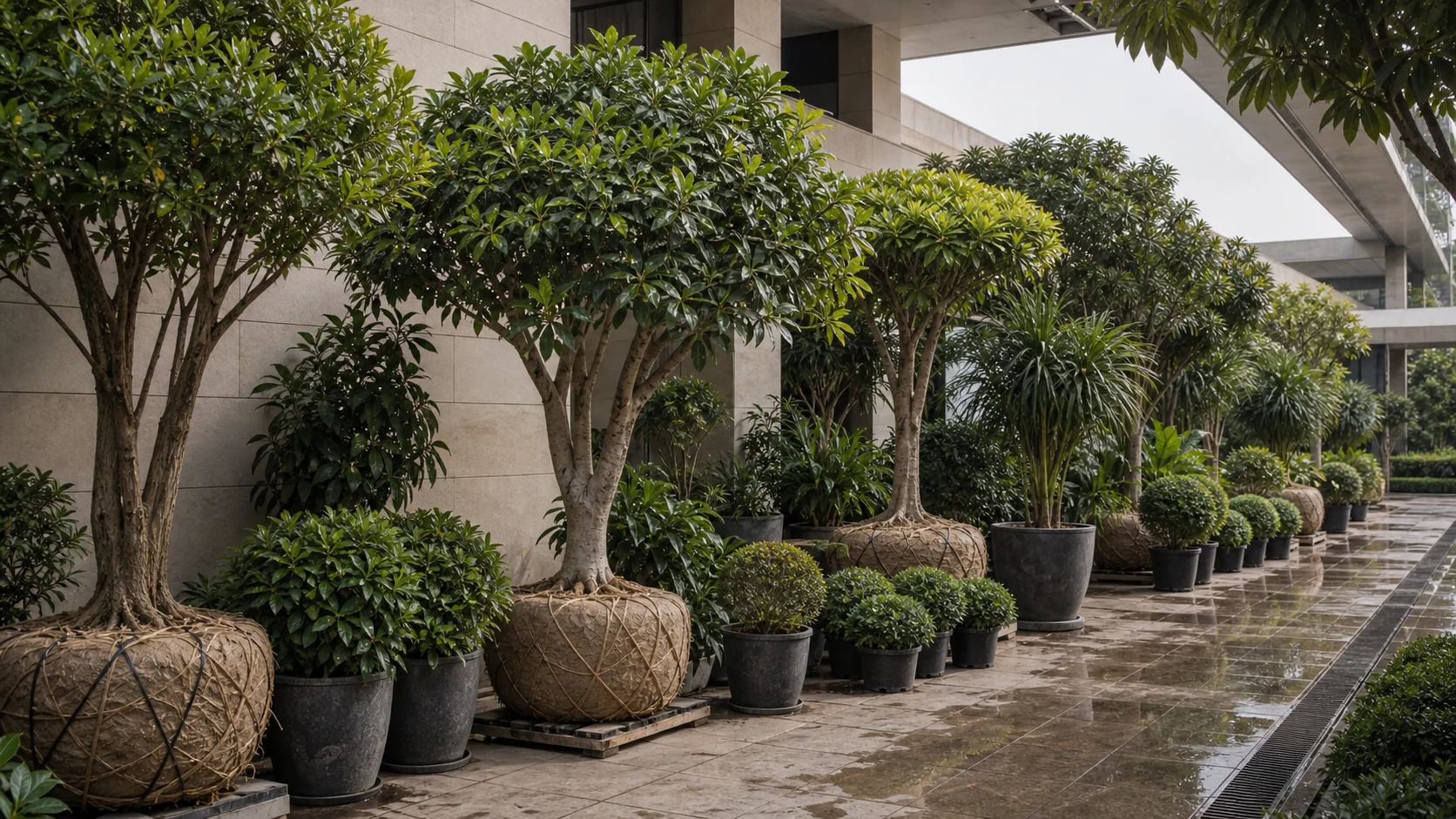
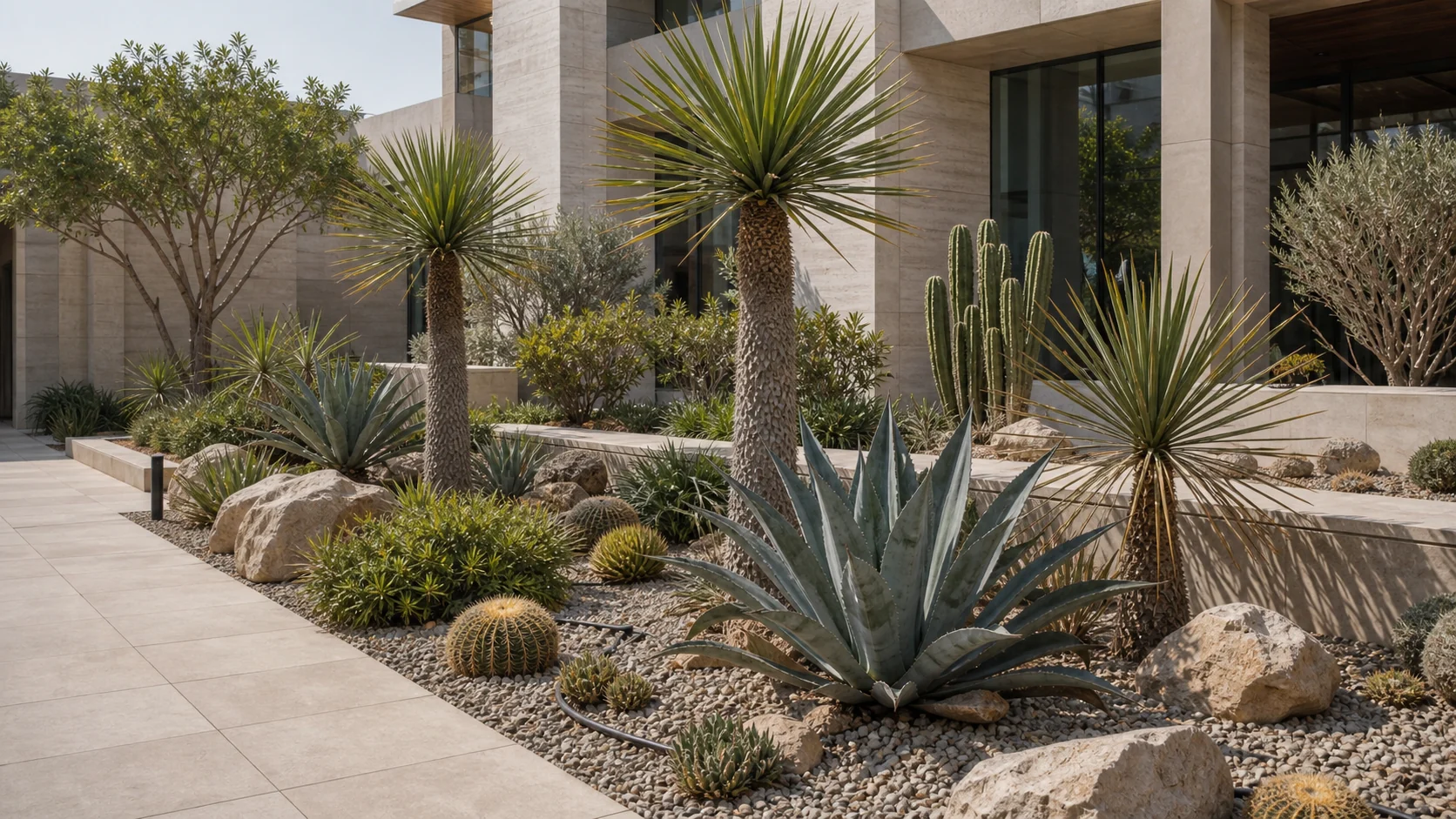
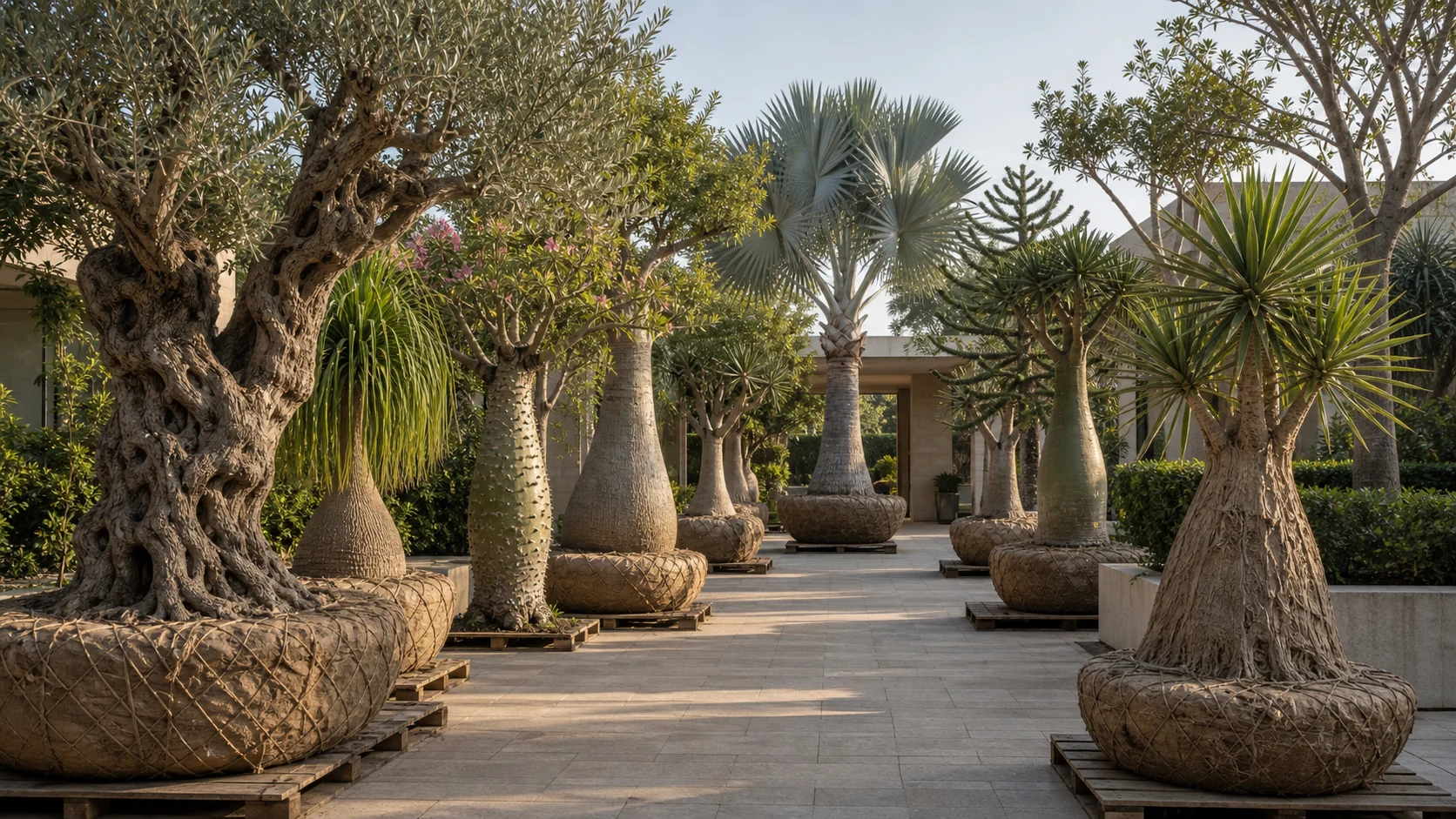
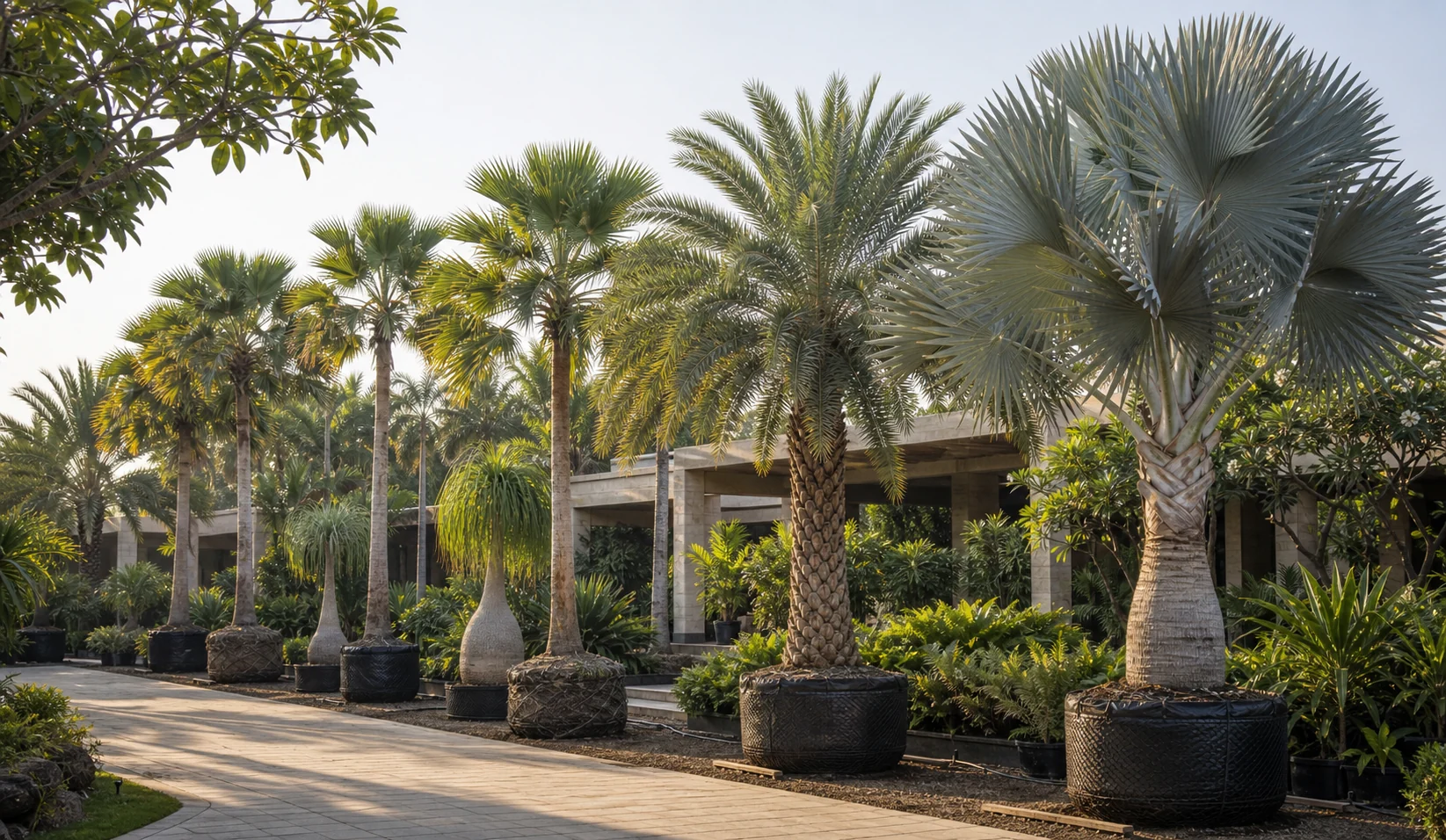
Visual context for placement, scale, handling, and landscape integration.
Section
Where it's used in premium projects
Dracaena canes repeat in hotel atriums, mall courts, and corporate lobbies where low light and vertical rhythm matter — fragrans for mass cane walls, marginata for red-edged modern lines, reflexa for yellow-variegated song-of-India accents. Interiorscape BOQ must name species.
Section
Climate & site suitability in India
Interior low light is the brief — not outdoor monsoon beds. Cold AC drafts brown marginata tips; hot glass reflection scorches leaves. Bengaluru and Mumbai atriums succeed with controlled irrigation, not landscape drip sympathy.
Section
Sourcing & acclimatisation
Specify cane count, stagger heights, and species — [Unverified: India interiorscape nursery cane specifications.] Reject pots with soft base rot smell.
Section
Installation (containers, light, irrigation)
Heavy planters with drainage; sub-irrigation only if maintenance understands dry-down cycles. Locate away from south glass without shading film. Fluoride: use low-fluoride water where municipal supply browns tips.
Section
Establishment & AMC
First 90 days: probe soil before water — overwatering kills faster than dim light. Rotate quarterly for even cane growth. AMC includes leaf wipe and tip-burn diagnosis (fluoride vs drought). Replace canes only after rot confirmed at base.
Section
Cost drivers
Explore
Related
Related
Related links
Services, segments, cost, and proof.
- Softscape & horticulture
- Irrigation & water management
- Landscape maintenance (AMC)
- Hotel & resort landscaping
- Luxury resort & spa landscaping
- Mall & retail landscaping
- Corporate campus landscaping
- Projects
- Commercial landscaping cost guide
- Pricing drivers (imported trees)
- Import compliance workflow
- Request a site assessment
- Which Dracaena cultivars are typical indoors?
- D. fragrans corn plant canes, D. marginata red-edge stems, and D. reflexa variegated song-of-India — specify on PO because form and light differ.
- How much light do indoor Dracaena need?
- Low to bright indirect — survive dim atriums but grow faster with brighter indirect; avoid hot direct glass sun on marginata.
- What causes brown leaf tips indoors?
- Often fluoride in municipal water or inconsistent water — not only low humidity; diagnose before increasing water.
- Why is overwatering common with Dracaena?
- Interior crews equate wilting with water need — soil should partial dry between irrigations; rot at base is fatal.
- Can multi-cane specimens be rotated?
- Yes quarterly for even growth toward light — document weight and planter size before moves.
- What import paperwork applies?
- Most interiorscape stock is domestic; imported specimen lots still need phytosanitary steps (informational, not legal advice).
- How should interior Dracaena BOQs be priced?
- Match species, cane count, planter engineering, interior install logistics, and fluoride-aware AMC — not outdoor tree rates.