

How to use this calculator
Enter terrace area in sq ft, then select the stack modules you expect in the BOQ: waterproofing tier, drainage cell inclusion, soil or growing-media depth, irrigation, lawn or cover type, planter material, and optional pergola. The result panel shows a planning range and itemised modules. Use it to compare assumptions across bids, not as fixed contract pricing. For wider landscape programmes that include terrace as one module, start with the landscaping cost calculator; for per sq ft bands and BOQ line-item logic, read the landscaping cost guide.
Terrace estimate inputs
Terrace cost range
- Waterproofing₹30,000 - ₹45,000
- Drainage cell stack₹5,000 - ₹11,000
- Soil & substrate preparation₹10,000 - ₹15,000
- Irrigation for terrace₹11,000 - ₹22,500
- Lawn / planting cover₹22,500 - ₹45,000
- Planters₹27,000 - ₹48,000Costed using ~6% planter coverage assumption.
Enter email and mobile number to unlock a downloadable report. We verify by email code.
Gallery
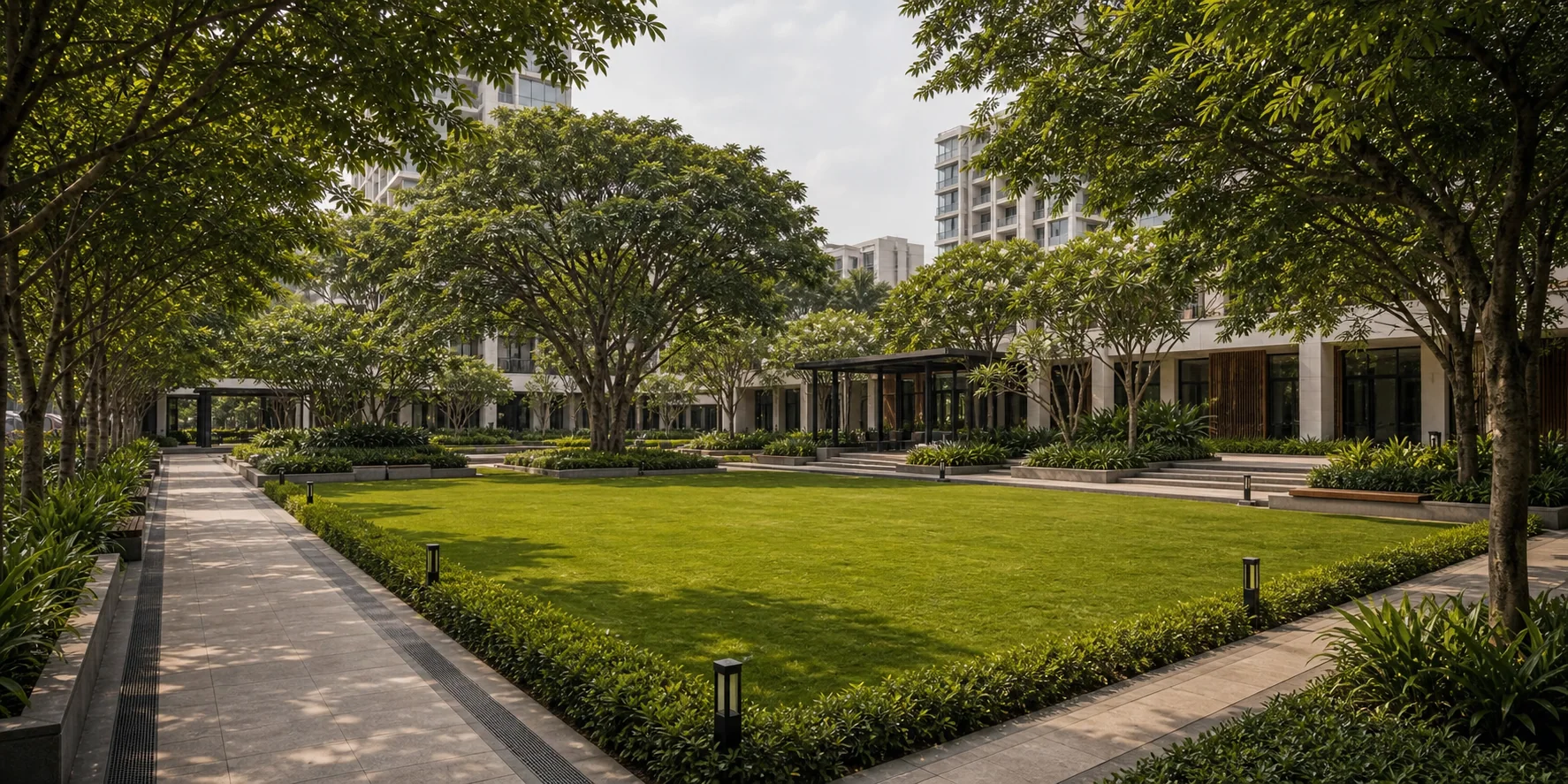
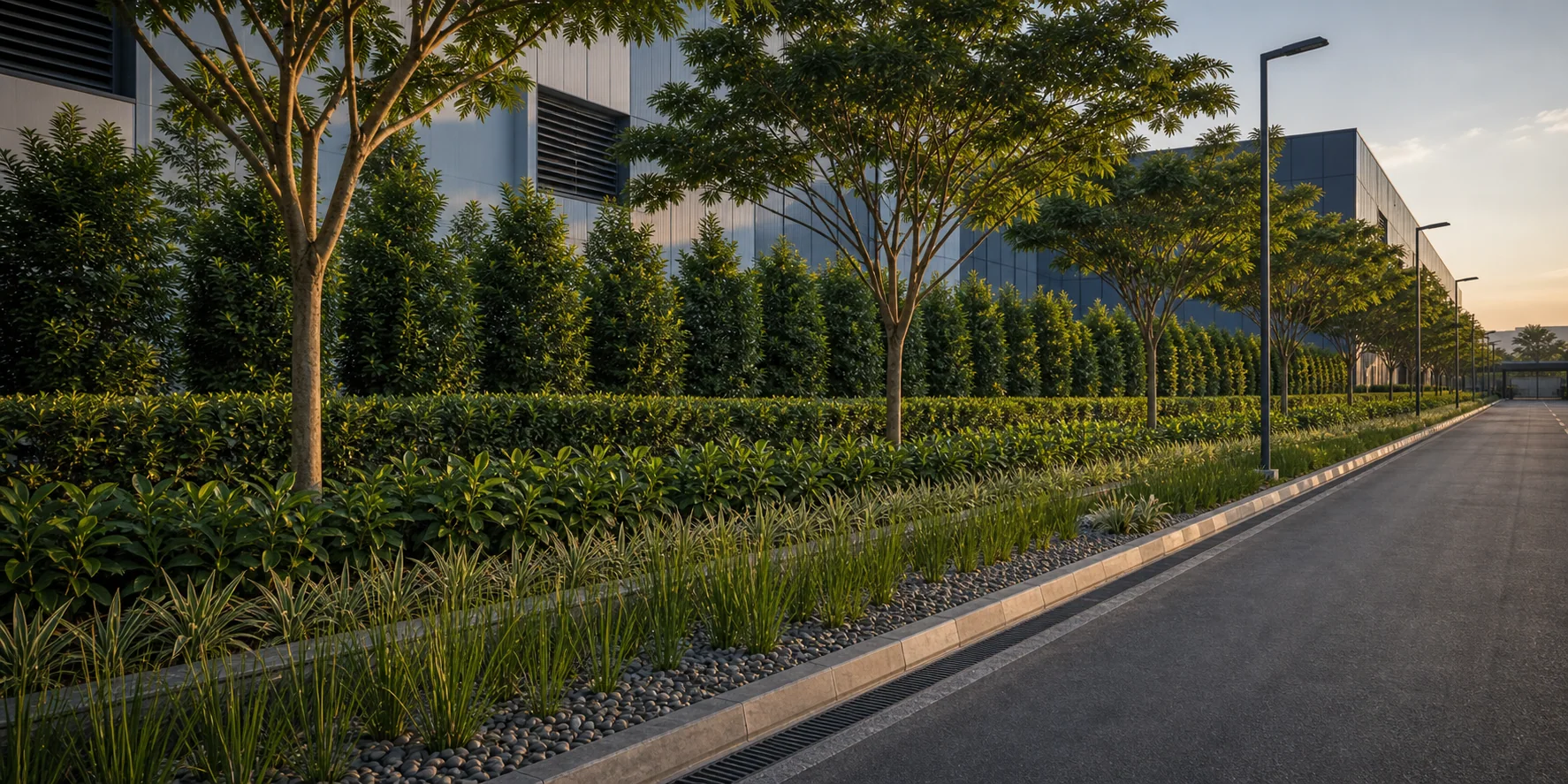
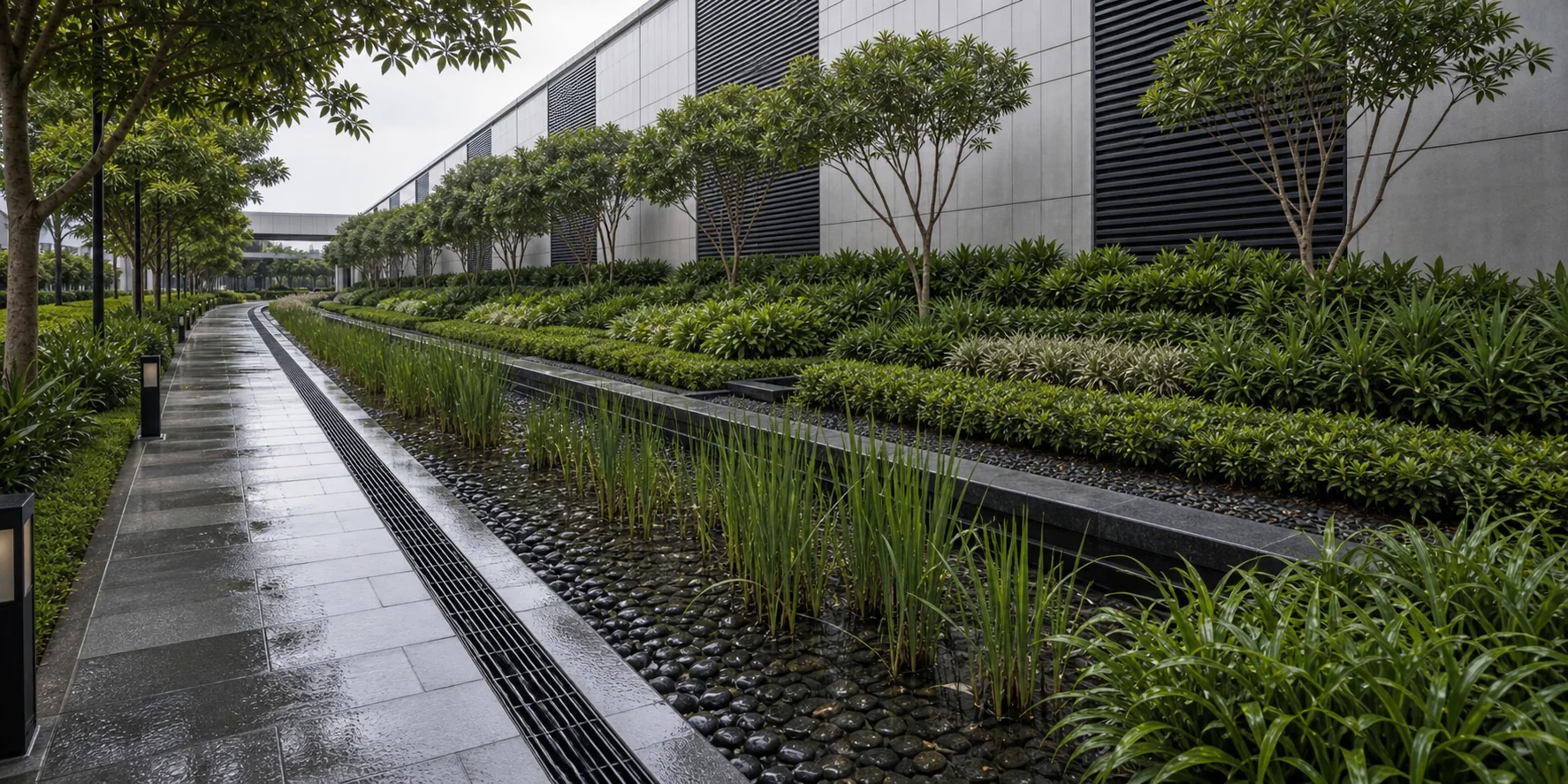
Terrace and podium stack references
Drainage layers, planted deck interfaces, and rooftop amenity contexts that shape waterproofing, media depth, and irrigation decisions on commercial sites.
What drives terrace garden cost per sq ft
Terrace and podium garden cost is built from stack line items, not area alone. Each module in the calculator maps to distinct unit bases on commercial BOQs:
- Waterproofing tier reflects membrane specification, junction treatment at penetrations, and protection during landscape works. See the terrace waterproofing cost guide for procurement drivers.
- Drainage cell stack covers filter fabric, outfall coordination, and slope/ponding control before growing media is placed.
- Soil or growing-media depth drives dead-load budgets that structural engineers must sign off before planting.
- Irrigation on terraces needs zoning, controller placement, and water-source integration without compromising the slab below. Refine irrigation totals with the irrigation cost calculator.
- Lawn, artificial cover, and terrace garden planters add concentrated cost where coverage assumptions differ from open deck area.
- Pergola or structure add-ons are costed on assumed footprint fractions; confirm structural steel and wind loads in the BOQ before tender comparison.
Site constraints that change the range
Calculator ranges assume typical commercial stack inputs, but final BOQ shifts when dead-load allowances, membrane warranty boundaries, crane access, or phasing change. Podium landscapes on developer sales galleries often need earlier visual maturity than corporate roof terraces, affecting container sizes and establishment risk. Hotel rooftop programmes and architect-led podium packages carry tighter handover and FM documentation requirements. Wind exposure on upper floors affects species and sub-irrigation assumptions. Review common failure modes in the terrace garden failures guide before locking specifications.
From calculator output to BOQ qualification
Share calculator inputs and range when you request assessment. We align waterproofing method, drainage stack, media depth, irrigation zoning, and FM handover documentation to your drawings before BOQ release. Compare quotations on the same specification level using the BOQ format guide and quotation comparison checklist. Where vertical planting shares the scope, use the vertical garden calculator and vertical garden cost guide for wall-module assumptions separate from deck area.
Maintenance and AMC after handover
Build BOQ and post-handover AMC are separate procurement decisions. Terrace landscapes need emitter cleaning, seasonal irrigation adjustments, and plant replacement within scoped allowances, with extra attention through the first monsoon. Scope annual contracts with the AMC calculator and review landscape maintenance service boundaries. Waterproofing warranties remain with the specialist applicator; landscape handover documentation covers valve charts, media specifications, and O&M notes for FM teams.
Frequently asked questions
- What does the terrace garden cost calculator estimate?
- The tool returns an indicative total range from terrace area and stack inputs: waterproofing tier, drainage cell inclusion, soil or growing-media depth, irrigation zoning, lawn or cover type, planter material, and optional pergola add-ons. The result panel lists itemised module ranges so you can see what moves the per sq ft total.
- Is calculator output the same as final contract pricing?
- No. Outputs are planning ranges only. Contract pricing follows structural dead-load review, confirmed waterproofing method and warranty boundaries, drainage outfall checks, approved plant list, and a written BOQ with clear inclusions and exclusions.
- Which inputs change terrace garden cost per sq ft the most?
- Waterproofing tier, drainage cell stack, soil depth, and lawn or artificial cover usually move the per sq ft range more than area alone. Pergola and specified planter selections add concentrated cost on assumed coverage fractions. Load constraints and civil base condition can shift totals beyond what area-based modules show.
- When should I request a site assessment after using the calculator?
- Request assessment once you have approximate terrace area, structural allowances, and a shortlist of stack modules. Priority rises when podiums tie to hotel opening dates, developer sales galleries, or FM handover documentation. Share calculator outputs so assumptions align to drawings before BOQ release.
- How does this calculator relate to the cost guide and terrace service page?
- The cost guide explains BOQ structure and commercial landscaping bands. The terrace and podium gardens service page covers scope, QA hold points, and handover documentation. This calculator tests stack assumptions for terrace-dominant scope. Use the landscaping cost calculator when terrace is one module inside a wider landscape programme.
Next step
Terrace BOQs compare fairly only when waterproofing responsibility, drainage layer stack, and media depth are written clearly. Once you have a planning range, request a site assessment so we align assumptions to structural allowances, access constraints, and FM handover requirements.